TOTALITY

IMG_2712

A dear friend is retiring in June. It will be an enormous change for him and a great loss for his employers—far greater than they appreciate, I suspect.

My husband and I have experienced our own great changes. Both of us are retired, though Gary teases me that I will never retire from teaching. The concern for students is too deeply rubbed into me. I still teach two college writing classes each year and hope to continue doing that.

Last summer—was it only then?—we drove the coast highway south in order to experience the complete solar eclipse. Gary had been alarmed by the reports of anticipated traffic jams and I was not willing to argue about it. We were going to stay home and see only the partial from home. We checked the ODOT highway 101 cameras that morning and the road looked clear so I suggested we drive for forty minutes or an hour, just to see how far we could get. We had each seen partials before. There was cloud cover and fog around Tillamook and south over the river valley. For a time we thought we might miss the event entirely, then further south I was able to look through my eclipse glasses at the sky when the sun was visible in a patch of blue. That little chip of darkness in the sun! We drove a few miles further into the zone before looking for a vantage point. There was a long line of cars on the shoulder and we pulled over behind a white car. One car pulled in after us. The couple waiting on the shoulder just in front of us had flown from Arizona to see it. They had stayed the night before in Cannon Beach, the closest they could get to the zone.

The Eclipse Chasers say the first time you see a total eclipse is life-changing. I am not sure how that is meant, but maybe so. Advice included taking photos and not taking shots, seeing the event with people. So many warnings about looking at the sun. I kept looking around at the maples behind us, the fields across the highway, horses in the distance. A field in the far distance being sprayed with water and shit from dairy cows.

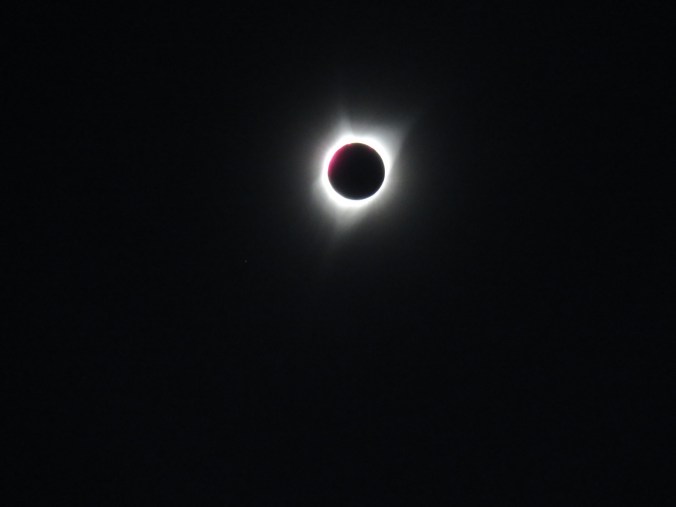
We watched through our glasses and chatted with the Arizona couple. Gary named places the Arizona couple knew, and the bright sunlight dimmed. It was unsettling and amazing. Not only the sky which we watched through glasses till Totality but because there were light waves across the ground both before and after. They shimmered across the pavement, running north to south, like ripples in beach sand before and arrows after. The air chilled and I shivered. That cold was completely unexpected. Five bats flew out in the darkness and then vanished an instant later when the first direct light returned. This photograph was taken during totality, I shot others just as the sun came back and I was not looking. A flash of pink at the upper left edge is what I saw. I have seen that in the photographs of other viewers. Several shots I took during Totality show a white disk. I imagine someone could explain why.
IMG_2659

It was still vivid in my memory days later. It is a moment I will remember. Perhaps that is enough to qualify as life-changing. There was the sense of existence beyond what I might have curled my awareness within and believed qualified as daily life.

Another event last summer changed our lives, a far more permanent event. Our dog, Yeti, died on the living room sofa. There had been several back-and-forth visits to the vet. She was unwell and only a few months past the age of twelve. We had always had dogs, since 1993. And cats too. And then last June we had no animal in the house. We are both reluctant to endure the death of another animal. I tell every dog I meet on the beach that he or she is a good dog. They all seem good to me. I think we are both lonesome for another being in our home.
IMG_4835

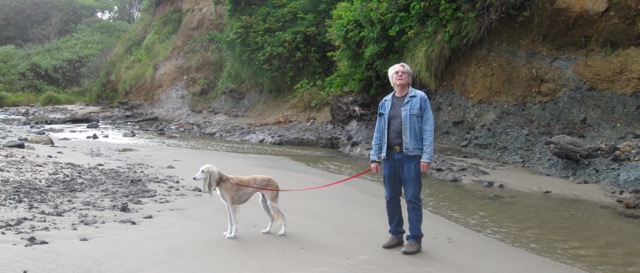
We are each the oldest members of our family. We each have severely mentally ill family members. We walk the beach and collect trash—mostly plastic—most days. The people we greet on the beach are mostly close to our age. We go to bed too early, a habit of old people. We freely admit we are old.

My peculiar owl story is short-listed with a paying magazine. That means they have told me they like it and will perhaps publish it, but they have more stories they like than space for. I have been waiting almost three months for their final decision. It is the third magazine that has short-listed the story and kept it exclusively for months. This has happened before—a story editors like, but then eventually decide against.

In the mean time, I am receiving interest in the novel I first drafted in 2016. I worked so long on it yesterday that I was ready to go to bed by 7. Gary laughed at me since he is usually the one negotiating a bed time. He insisted I stay up till 8:30.

This novel, my fifth—how can that possibly be?—seemed done, but an agent asked me to revisit fifty pages. Those fifty pages led me to more chapters that needed work. And now I am working on the entire manuscript. There were issues in the chronology of the story, serious issue I failed to address until now. Two YA writers looked at earlier drafts with limited success, and an academic I absolutely trust was helpful and encouraging. This month I hope to share the manuscript with three other readers. My timeline, since I can work fast, is not short, but I have a great deal to accomplish.

And in the mean time? In the mean time we have spoken to a realtor about the value of our home. We were honest that we had made no decision to sell, but we are looking at options. Our sons and their families are in Portland. Medical care is not good locally. Most of the homes here are short term rentals—the house to the north, the one to the eats, and the one south is a bed and breakfast.

I wake too early and read too much of the news and fret about my students and what this world is coming to.

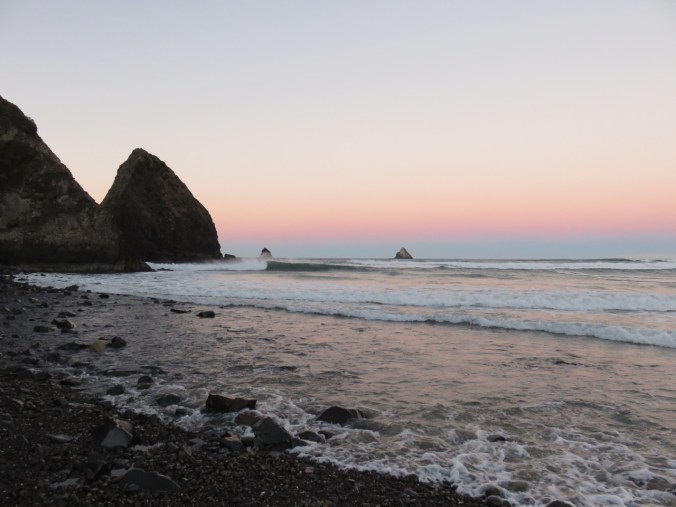
And yet, most every day, rain or merely cloudy, when the tide is low, we walk the shore.
IMG_0523

‘You Can’t Keep a Good Woman Down’

maxresdefault.jpg

We’ve seen a lot of films this past year, most of the Academy award nominees before Oscar night and others in theaters or on DVD. We didn’t get to everything. We still have not seen the sequel to Bladerunner or the animated features or the documentaries, but these will come to us eventually through Netflix. I mostly agreed with the Oscars, but I was offended by the cartoonish depiction of good and evil in The Shape of Water. It was not by any means a bad film, but I would have chosen any of the other six nominees I had seen for Best Picture.

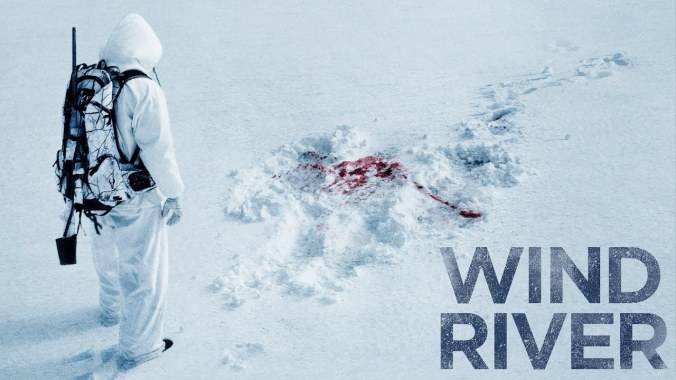
I might have chosen a film we saw on Netflix only recently, Wind River. The critics liked it and the audience loved it even more. The Rotten Tomatoes consensus declares: “Wind River lures viewers into a character-driven mystery with smart writing, a strong cast, and a skillfully rendered setting that delivers the bitter chill promised by its title.” It begins with a woman running in darkness and snow, then it shifts to daylight and a Fish and Wildlife contract-hunter shooting coyotes. Soon enough that man (Jeremy Renner) is hunting a man who so terrorized a Native woman she ran until her lungs burst. “Figure how far a person could possibly run in these conditions and then double it,” he tells a rookie FBI agent (Elizabeth Olsen). The woman was a warrior, he says. There is respect. There is conflict here between poverty and power, between Whites and Native peoples, between what we want for our children and what they are determined to have for themselves, between hope and mere survival.

I do not understand why that film was not present on Oscar night. But if I were to speculate, if I were to actually research and write about it, I suspect the reasons would have to do with race and class.

There is an opening in the film industry just now, driven by #MeToo and reactions to the well-documented bigotry of the current administration.

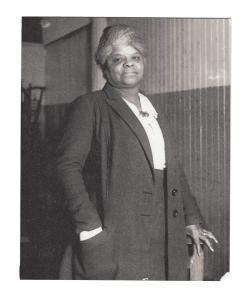
This morning, in honor of Women’s Day, The New York Times offers up obituaries for a few overlooked women. Ida B Wells was familiar to me as a historical character in Alice Walker’s short story, “Advancing Luna—And Ida B. Wells” from You Can’t Keep a Good Woman Down.

00overlooked-images-slide-VJ69-superJumbo

Wells is considered by historians to have been the most famous black woman in the United States during her lifetime, even as she was dogged by prejudice, a disease infecting Americans from coast to coast.
She pioneered reporting techniques that remain central tenets of modern journalism. And as a former slave who stood less than five feet tall, she took on structural racism more than half a century before her strategies were repurposed, often without crediting her, during the 1960s civil rights movement

Henrietta Lacks (1920-1951) was another, though even if the Times had been paying some small attention to people of color and women when she died, she would not have appeared on their pages. Her suffering and the suffering of her family, the ways she was used and abused, her contribution through the cells of her body, were concealed until Skloot’s book, The Immortal Life of Henrietta Lacks, revealed it. The Times article confesses the obvious, that most of their obituaries are of white males. Even in the past two years, only about 2 in 10 obituaries have been of women. They do not offer statistics for people of color, but I think I am safe guessing that representation is not . . . representative of our population.


In the years before I reached college, my teachers assigned dozens of novels and works of nonfiction. Aside from The Diary of Anne Frank, every nonfiction and fiction book was written by a white male. The canon was white and male authors from the US and England. I remain a great fan of Mark Twain, but I saw this bias continue in my college classes. Between terms, I devoted myself to reading works by women, by African Americans, by people throughout the world other than England—all the Others who had been ignored in my education. I went hunting.

As a teacher I offered stories and novels by people of color, by gay and foreign authors, and from the perspective of Indigenous peoples. I taught Things Fall Apart, The Bluest Eye, and stories by Louise Erdrich, Leslie Marmon Silko, and Michael Cunningham. I taught Mountains Beyond Mountains and The House on Mango Street. In electives, I offered The Rite of Passage by Alexie Panshin, a coming-of-age SF classic about a privileged Latina on a future spaceship struggling to understand the Other. I always wished I had been able to create a unit of novels representing poor people around the world. I would have started with Nectar in a Sieve, a 1954 novel by Kamala Markandaya. The goal would be to expose my mostly-white rural students to underrepresented voices from a variety of cultures and periods. The goal was to find humanity on our differences. I wasn’t the only one pursing this goal.  The Senior English teacher assigned The Color Purple, which was my older son’s favorite read in high school. But Chris has retired and no one teaches that novel now.

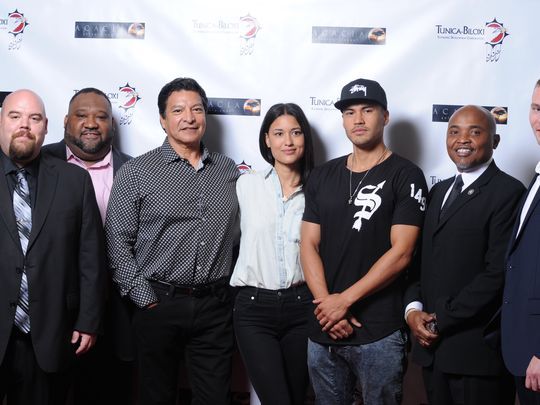
Wind River included a diverse and significant cast beyond Renner and Olsen, including Apesanahkwat, Gil Birmingham, Jon Bernthal, Tantoo Cardinal, Graham Greene, Julia Jones, Kelsey Asbille, Martin Sensmeier and Tokala Clifford. Most of the promotion was of the hunter and FBI agent who joins him, but the story of this story is bigger and more inclusive than it might otherwise seem. “The film is the latest project of Acacia Entertainment, a finance and production company that is a joint venture between the Tunica-Biloxi Tribal Economic Development Corporation, a wholly owned entity of the Tunica-Biloxi Tribe of Louisiana, and Savvy Media Holdings.”

636383191672840019-Tunica-Biloxi-Economic-DevelopmentCorporation-Members-Stars-of-Wind-River.jpg

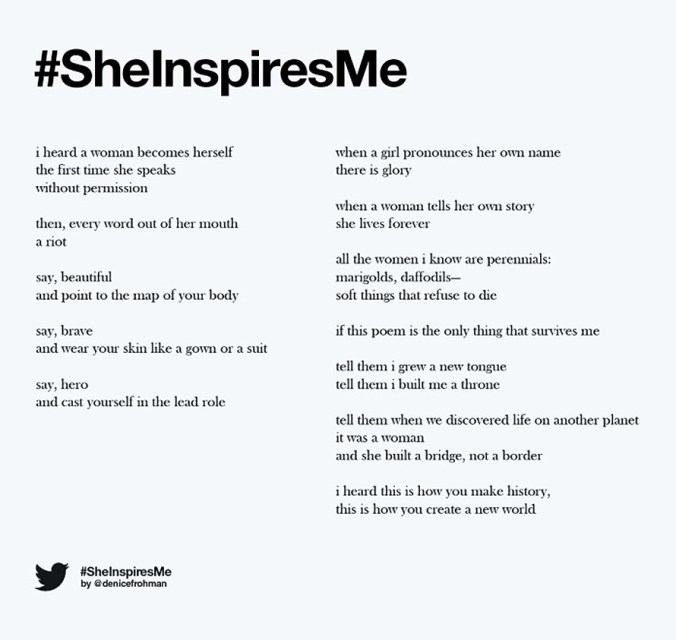
#SheInspiresMe

twitter-issa-rae-CONTENT-2018.jpg

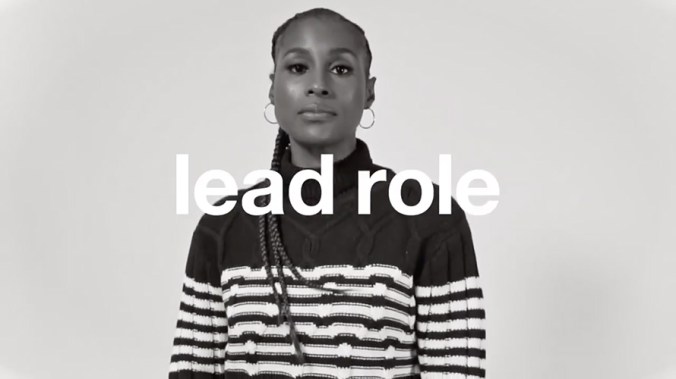
“I heard a woman becomes herself the first time she speaks without permission,” says poet Denice Frohman in the first line of Twitter’s new #HereWeAre campaign, which made its TV debut tonight during ABC’s Oscars telecast. The brilliant video was the best thing on the Oscars. I hope no one minds me linking to it and posting the words.

sheinspiresme.jpg

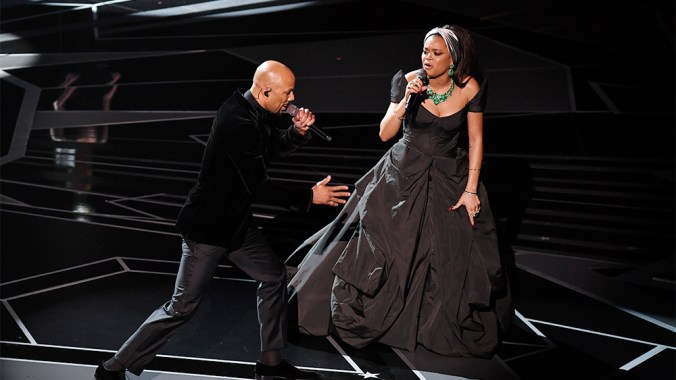
. . . until, Common (Lonnie Rashid Lynn, Jr.) and Andra Day, backed by a row of activists, sang “Stand Up for Something.” The activists included Alice Brown Otter (Standing Rock Youth Council); Bana Alabed (author and Syrian refugee); Bryan Stevenson (Equal Justice Initiative); Cecile Richards (Planned Parenthood Action Fund); Dolores Huerta (Dolores Huerta Foundation, United Farm Workers of America); Janet Mock (#GirlsLikeUs), José Andrés (ThinkFoodGroup); Nicole Hockley (Sandy Hook Promise); Patrisse Cullors (Black Lives Matter); and Tarana Burke (Me Too).

andra-day-common-oscars.jpg

Tiffany Haddish and Maya Rudolph Ask Are the Oscars Too Black Now?

And then . . . she put her Oscar on the floor, patted its head, and she was ready to rock-n-roll.

Frances McDormand explains Inclusion Rider at Oscars

That las . . . I have watched credits for more than 30 years, looking for women on crew.

INDEPENDENT THOUGHT

746883d6-c65a-4a2e-8e26-58ebae3bcc09.jpg

When I teach, I strive to give my students guidance and support as they become independent thinkers and writers.

I am not always successful.

Objective research, evaluating the credibility of sources, and teasing out the truth from propaganda and prejudice—this process is not automatic, but the result of trial and error and direction from family, teachers, and experience. Most people will stick to their bias—to what they believe as if it were truth—regardless of evidence to the contrary, and throughout their lives. Unfortunately, it is the rare individual who reconsiders what they think they know to be true. We look for support of what we already believe, and fail to seek out reality in the face of our own prejudices.

More than two centuries ago, the United States abandoned the notion of inherited privilege, of God choosing who gets to be queen and who gets to slave. Except we did not give it up. We love our princess narratives, our anointed few.

A friend of Trump’s sold stock in a company that was hit hard by the president’s recent announcement that he would implement a 25% tariff on imported steel and 10% on imported aluminum. That would be fine—buying and selling stock is one way to make money without laboring for it—except that the billionaire friend of the president sold a few days before the announcement. Maybe he was tipped off? And that would be breaking the law.

Like his much-promoted tax cuts, the advantage falls to a narrow slice of America:

“The mills and smelters that supply the raw material, and that would directly benefit from the tariffs, have been shrinking for years. Today, those industries employ fewer than 200,000 people. The companies that buy steel and aluminum, to make everything from trucks to chicken coops, employ more than 6.5 million workers, according to [the highly conservative] Heritage Foundation analysis of Commerce Department data.”

Apparently, many more people, more workers, will be hurt by the tariff than helped, and there is no indication that this disproportion has been taken into consideration when the tariff was announced. Workers and stock-owners sometimes have wildly different priorities. It should be easy to see why, especially for those of us who have lived through decades of corporate raiders.

It’s tempting to wonder if, after Trump changes his mind again, some friend of Trump who bought after the promised tariff drove some stock down will sell high after it comes back up. Buy low, sell high. That is the strategy of gambling on the stock market. However, that would rely on Trump actually having a long game, which few believe he has. The man does things without much planning other than benefit to himself.

Some Americans still cling to the fantasy that human problems are mostly self-created, at least when they judge other people. Captured and tortured as a prisoner of war? They prefer the soldier who was not captured. Struggling to pay bills on minimum wage? Workers willing to work hard do better. Your son died in the war? If you’d paid for a doctor to diagnose bone spurs, he would have lived.

Tell Job he must have done something really, really awful for God to visit such suffering upon his head.

Ironically, it is a distinctively American view, a Puritan, social-Darwinist, Power-of-Positive-Thinking fantasy that we are entitled to take whatever we can grab and that people get what they deserve in life. If your life is hard, this prejudice goes, it’s not only your tough luck, it’s no better than you deserve. If you are a billionaire, it’s not the result of luck or dishonest and brutal business tactics, but superior intelligence and better favor in God’s sight.  . . .  Really?

Many years ago, I showed A Raisin in the Sun to a class of smart 16-year olds. Lorraine Hansberry’s prize-winning play-turned-film concerns a few days in the life of a poor black family living in Chicago. Clearly struggling members of the hard-working poor, that family has ambitions: to live in a house rather than a tenement, to support his family so that his mother need not work, to have a second child, to become a doctor. Late in the film, Walter Lee Younger’s plan to open a business is destroyed when a business partner absconds with his money, money he has been entrusted with by his family. A new home, education, a better future—all their collective opportunity seems to rest in that fund. The women of his family turn on Walter Lee as he falls to his knees in despair. Four boys at the back of my classroom laughed.

I stopped the film.

The boys told me Walter Lee was stupid. He’d made a ridiculous mistake, a mistake they would never make. I took them out into the hall.

Though I did not know these boys all that well, I knew enough to recognize that three of the boys were the sons of thriving local business owners who had worked hard for their success. Their sons assumed that this meant that they, personally, had earned success as well. They assumed because their parents had accomplished so much that their lives would be free of stupid mistakes, that they were smarter and deserved more than Walter Lee. It is the definition of entitlement.

They were given an assignment to write me a brief essay defining “compassion and empathy.” And in the years following, I talked to my classes about making mistakes. If we expect to get through life without doing things we regret, without making stupid mistakes, with damage, we are delusions or doomed to disappointment.

The “best man” does not always win. The best person . . .

Have we not all experienced losing to someone who does not deserve to win? the person who did not study and does not know the material as well as we do but scores better on the test? the person who cuts us off in traffic? who snatches the bargain out from under our reaching hand? Have we always received what we deserved? Haven’t we eve, sometimes, done better that we deserved?

Success comes as the result of hard work and as a result of the luck of birth. It comes to people with enormous vision and creativity. It comes to people who are morally corrupt and willing to do anything to get ahead.

Riches come to those who deserve them, and as often they come to those who do not.

NEVER TURN YOUR BACK ON THE OCEAN

gettyimages-115921695-4cac6920f5377e35ce6debdaf441439e50ed5038-s1600-c85.jpg

Russian politician Alexander Torshin, standing next to then-Russian prime minister Vladimir Putin, attends a ceremony at the Kremlin in 2011. Torshin is a lifetime member of the National Rifle Association, and says he met Donald Trump through the group in 2015.—NPR

I intended to post about our walk this morning. My husband likes to say it’s hard to get me out, but once I am on the beach it’s even harder to get me to come back in. Today I found two pieces of sea glass and a handful of agates and interesting crystals and pebbles. Once a year or so a wave catches me. Today was one of those days. I was focused on finding agates and glass, I failed to see the huge sneaker wave, and though my husband shouted, I didn’t move quickly enough to avoid getting my feet soaked.

That was supposed to be my topic as a reward for scoring the last of a set of essays this morning.

And then I read about Russian ties to the NRA. The student essays will have to wait. It seems Russian agents have infiltrated the National Rifle Association. “National” as in the United States of America. My nation.

Rumors of Trump’s connections to Putin came out a while ago, a potential fire that Trump fanned by repeatedly expressing admiration for the despot (more than 80 times). There was talk of Putin “having something on Trump”—porn or sex scandal—but I didn’t believe that. I didn’t even believe it when Trump was revealed on camera boasting of sexually molesting women. Trump has never seemed to me to be any sort of “sport” person. Not even the sort the rumors were about. It isn’t that I think Trump is too smart to do such a thing, but Putin is that smart. Trump continually does stupid things—and a lot of people fail to object. Nevertheless, it all sounded too conspiratorial and I am so very weary of conspiracies.

Trump tends to lash out at people, especially people threatening his superiority. Trump always wants to be bigger and better. He must be bigger and better. For example:

“North Korean Leader Kim Jong Un just stated that the ‘Nuclear Button is on his desk at all times,’” Trump tweeted two days after Un made the menacing statement about the nukes.

“Will someone from his depleted and food starved regime please inform him that I too have a Nuclear Button, but it is a much bigger & more powerful one than his, and my Button works!”

And then just the other day, Putin broadcasted his own weapons boast:

A cruise missile, powered by nuclear technology, that can reach the United States. Nuclear weapons that can evade any missile defense system. Unstoppable drone submarines that can be used to blow up foreign ports.

Those are the weapons Russian President Vladimir Putin claims he now has. If true, Putin has purposefully raised the stakes in the decades-long nuclear standoff between Washington and Moscow — threatening to worsen deteriorating ties between Russia and the West.

Putin spent much of his annual state of the nation speech on Thursday talking about Russia’s improving weapons arsenal. He even went so far as to show a video of nuclear missiles striking Florida.—Vox

And Trump promptly responded . . . with silence. Sad or scary?

Many people expected Trump to fire off a volley of Mine’s-Bigger-than-Yours tweets. Most people around the world expected Trump to express some objection to what sounds like dangerous boasting. There would be reasons to hold back, but holding back isn’t Trump’s style. So now I believe the rumors of ties between Trump himself and Putin. The Russian leader has some hold over Trump. I don’t think it’s sex, but money? Yes, money seems likely. It is the only thing Trump genuinely cares for.

Trump has said “trade wars are good and easy to win.” I wonder what he would know about winning a trade war, this born-wealthy real estate developer and self-promoter? And “good” for whom, I wonder? Probably not me or mine. Good for some investors, perhaps? Not me. Trump is so goodly he would run into a trade war unarmed.

And then this morning, that woman in a Thai jail who says she has videos . . .

So now, while the sneaker rushes up behind America’s back, isn’t anyone going to shout a warning?

ENTITLEMENT

Bell Workshop Photo_Fall 2016

“Coming Out of the Kitchen—Coming Out of the Closet”*

In her young womanhood, my grandmother could not vote, sign a contract, serve on a jury, use birth control, or control her own earnings or even her children without her husband’s consent. All of this changed in her lifetime. There was no legal term for sexual harassment when she began working, and when it happened to her, no one listened to her complaints. That last seems to be changing in my lifetime. I have enjoyed many privileges and benefitted from considerable luck during my life—I am white and was raised Christian in a society that privileges white Christians. I am educated and come from a stable home. Despite mental illness and debilitating health issues, my family has been largely unimpeded by serious health issues and other marginalization. Nevertheless, I am aware that others experience their identity as a burden arbitrarily placed on their shoulders, that my fellow Americans suffer for their birth nationality, language, sexual orientation, socioeconomic situation, race, and gender. I have been fortunate but that does not make me blind to the hardships of others crippled by discrimination. Ultimately, privilege is the belief that something is not a problem because it is not a personal problem.

Recognizing how some benefit while others are punished opens awareness to wider issues of entitlement. The now-classic 1984 essay, “White Privilege: Unpacking the Invisible Knapsack,” resulted from Peggy McIntosh’s insights gained while seeking to understand the impact of sexism. It became clear to her that while women experience many disadvantages, she also benefitted from unearned privilege as a white person. She documents assumptions about events and opportunities in a list of “the daily effects of white privilege.” These include assuming that she may “choose blemish cover or bandages in ‘flesh’ color and have them more or less match my skin,” that she will be welcome in housing, travel, and cultural events geared to her as a white person, and security that her children will be safe from people who dislike them for their race. She is privileged. Building on experiences with sexism, McIntosh discovers a clearer understanding of how white privilege operates. Her willingness to explore her own marginalization makes her more alert to that of others others.

A key to countering white privilege is acknowledging that most white people are unaware of their privilege. They have done nothing to earn it, and likely have made no conscious effort to maintain it. McIntosh explains: “For me white privilege has turned out to be elusive and fugitive subject. The pressure to avoid [admitting it exists] is great, for in facing it I must give up the myth of meritocracy.” The myth people can achieve whatever they are willing to work for, condemns those who fail. It denies the impact of bigotry and simple luck. The truth is that many people work hard and never get what they deserve, often because they have disadvantages others do not. This is the point of Gina Crosley-Corcoran essay, “Explaining White Privilege to a Broke White Person,” which acknowledges the reality of white privilege but argues that poverty is another source of discrimination in America (Crosley-Corcoran). The difference: poverty can be overcome in a generation, but race and gender remain permanent and unmistakable markers of advantage or disadvantage.

Justice achieved by one group need not come at the expense of another. In his recent memoir, “Darling,” Richard Rodriguez makes the case that it is through the liberation of women from traditional roles while still valued in his church, that he, as a gay man, can overcome his marginalization. “It is because the Church needs women that I depend on women to protect the Church from its impulse to cleanse itself of me.” He draws an analogy not only between homosexual discrimination and racial miscegenation, but with the nineteenth century “condemnation [of women fighting for suffrage] that employed the adjectives of unnatural aspiration.” As victims of bigotry themselves, women defeat notions of feminine passivity, simultaneously freeing men from constricting assumptions about masculinity. Rodriguez predicts the church’s acknowledgement of women’s power will enable progress for him. Nigerian author and activist Chimamanda Ngozi Adichie supports this relationship between feminism and masculinity in We Should All Be Feminists: “We stifle the humanity of boys. . . . Masculinity is a small, hard cage, and we put boys inside this cage.” LBGTQ identities may be less observable but are still subject to societal prejudice. A gay man might choose to conceal his sexuality in order to make his way without suffering bigotry toward his sexual orientation, but this demands a denial of his identity, his essential being.

Jose Antonio Vargas experienced the secret humiliation of passing as something he is not. He completed his education, went to work as a journalist, and won the Pulitzer Prize before revealing himself as the undocumented son of undocumented parents in “My Life as an Undocumented Immigrant.” As a child Vargas was not aware that he was “illegal.” He kept his family’s undocumented status secret until coming out made sense as an act of principle. National original and first language may be disguised or denied, and in a generation they vanish, but just as Vargas came out as “illegal,” Rodriguez’s sexual orientation is personal and personally inescapable. Both these men want to be who they are, and each came out when he was in a position to set an example for others to follow. However, optimism that those who have suffered will offer a hand up to those next behind them is not always justified. Even Rodriguez concedes this. Americans whose own ancestors arrived as poor immigrants are notable among those condemning more recent arrivals. White women benefitting from white privilege may deny their racial advantage and even embrace the bigotry that limits their human potential. By refusing to acknowledge our “blessings” we are blind to the bald, unwarrantable usurpations they inflict upon others.

Some argue that acknowledging entitlements merely pits groups against one another: black against white, woman against man, gay against straight, poor against rich. An Op-Ed by Mark Lilla in The New York Times warns that “identity politics” neglects the valid concerns of white Americans, and he invokes FDR in a stirring appeal to focus on the “real foundations of modern American liberalism” that unite us as a nation. He claims Hillary Rodham Clinton chooses to speak only to some Americans and not all. Aside from misunderstanding Clinton’s message, it is clear that marginalized groups must be free to cross these divisions in the common effort for a more egalitarian nation. Lilla concedes the positive impact of Affirmative Action and Black Lives Matter but insists “the fixation on diversity in our schools and in the press has produced a generation of liberals and progressives narcissistically unaware of conditions outside their self-defined groups.”  His pejorative use of the “identity politics” would have us believe that all would be well (or at least better) if we stopped talking about discrimination. It is an appealing notion to pretend something is not there in hope it will go away. Our path is not so simple. Despite our founding principles, there is ample evidence that our nation has not yet achieved equality for all. It must be earned through our shared conviction and activism. Both McIntosh and Rodriguez celebrate justice for others as essential markers on the pathway toward their own.

Guilt about advantage is not necessary for change; objectively is. It is only when we look beyond our personal and immediate concerns, embrace the concerns of others, and recognize our participation in an unjust system that we can support productive change. Justice and liberty are the birthright of every American. We trust our government of the people and by the people to protect us from unfair attacks on our ambitions and futures based on irrelevant biases—we wanted to be judged by who we are, not what we are. To accomplish this goal we must view society with clear eyes. When we acknowledge the entitlement that some enjoy at the expense of others, we must also admit how our country places many people at a disadvantage. Race, ethnicity, gender, able-ness and health are visible factors that may result in marginalization and disrespect; language can be heard but can b changed; sexual orientation and religion might be hidden but to do so is a violation of self; all of us lucky enough to get there will one day be aged; and yet poverty is too often judged as personal failure rather than an unhappy circumstance. We have grand ideals and far to go. Our country represents for much of the world a beacon light of freedom and opportunity. It requires defending. James Baldwin warned in 1963: “I’m terrified at the moral apathy, the death of the heart, which is happening in my country.” Our shared concerns as citizens must be greater than our self-interest.

My life has been defined and limited by my gender. I am white, English-speaking, and educated—what passes for lucky in this country. I have worked hard for my education, and while my family assumed I would go to college (an advantage), it would be decades before I understood that my mother only wanted me in college to find a nice man who would support me. My educational ambition was thus the result of misunderstanding the message I received. Others are far less lucky in how society responds to accidents of their birth and circumstances, receiving messages that demean their potential. McIntosh examines racial privilege through a lens of sexism; Rodriguez’s expects the shifting roles of women to result increased acceptance of the LGBTQ community. Seeing their problems upon a background of others’ misfortune was critical to their compassion and empathy. Like them, I began with personal concerns, but also like them I must stretch my understanding if I hope to see real justice in our society. To achieve the promises at our founding, we must look beyond self-interest to the greater good, and that view must include the specific as well as the general. Our government, both through tradition and statute, must ensure that entitlements do not interfere with the rights of any American. Respecting diversity need not be an impediment to celebrating unity—it may be the only pathway toward achieving justice for all.


Adichie, Chimamanda Ngozi. We Should All Be Feminists. Anchor Books, 2015.

Brown, Jeffrey. “Oscar-Nominated Film Brings the Prophecy of James Baldwin into Today’s World.” Review of I Am Not Your Negro. PBS News Hour, 3 Feb. 2017. http://www.pbs.org/newshour/bb/oscar-nominated-film-brings-prophecy-james-baldwin-todays-world. Accessed 3 Feb. 2017.

Crosley-Corcoran, Gina. “Explaining White Privilege to a Broke White Person.” Huffington Post, 8 May 2014, huffpost.com/us/entry/5269255. Accessed 30 Jan. 2017.

Lilla, Mark. “The End of Identity Liberalism.” The New York Times, 18 Nov. 2016, http://www.nytimes.com/2016/11/20/opinion/sunday/the-end-of-identity-liberalism.html?_r=0. Accessed 6 Feb. 2017.

McIntosh, Peggy. “White Privilege: Unpacking the Invisible Knapsack.” Peace and Freedom Magazine, July-Aug. 1989, pp. 10-12, nationalseedproject.org/white-privilege-unpacking-the-invisible-knapsack.html. Accessed 30 Jan. 2017.

Rodriguez, Richard. “Darling.” Harper’s Magazine, July 2013, harpers.org/archive/2013/07/darling. Accessed 30 Jan. 2017.

Vargas, Jose Antonio. “My Life As an Undocumented Immigrant.” New York Times News Magazine, 22 June 2011, mobile.nytimes.com/2011/06/26/magazine/my-life-as-an-undocumented-imigrant.html. Accessed 30 Jan. 2017.

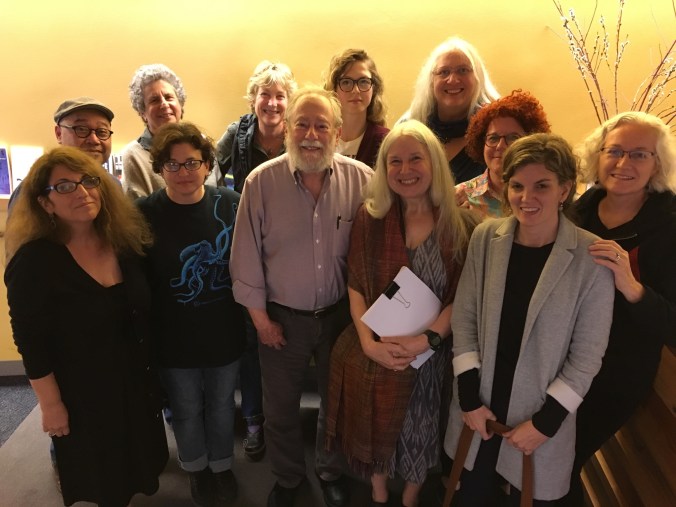
*My title is a quote from Richard Rodriguez’s essay. The photo is from a year and a half ago, starring some of my favorite poets.

STAN

Hospice_Main.gif

The ideal man bears the accidents of life with dignity 

and grace, making the best of circumstances.—Aristotle

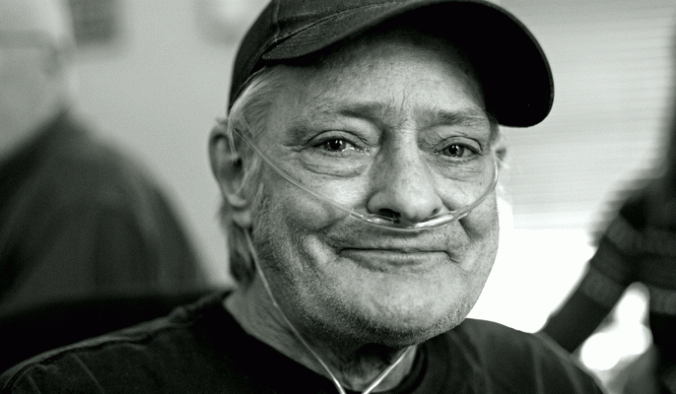
That’s Stan Foreman. I found him in the June 2016 alumni magazine from The University of Washington, Columns. Gary recognized him right away. But then yes, I could see it too.

Stan is a part of my family history, though he is (was) not family at all, and might be said to have done as much harm as good. He was a junkie soon after we met and for most of his life, but the story is a little more complicated than that.


My husband held out our university alumni magazine to me. A head shot fills more than half a page, “Stan Foreman” in the caption, and even I could see it was the Stan we once knew, still alive. He smiles in the photo, but he’s not the Stan I once knew. For many years I told my students a story about Stan, an object lesson about the kind boy who did me a good turn before he turned himself.

In Seventh Grade Art I used my own soft drawing pencil to draw, pressing hard until the paper glinted metallic black. Finally, I put my pencil down and I got up to wash my graphite-smudged fingers. When I returned, my drawing was there on the table, but my pencil had vanished. I searched the floor, turned a backwards circle. Two older boys snickered at a table behind mine. And then, a boy even shorter and slighter than me stood between us and yelled at those boys, “You took Jan’s pencil. I saw you. Give it back!” The ruckus caught the attention of the teacher, and my pencil was returned.

That is how I met Stan Foreman.

We went to different high schools after ninth grade, but our paths crossed because of shared interests and friends. Through high school, I was always glad to see that boy who had stuck up for me when I was eleven. This was the sixties. We all had such pretty dreams of flowers and peace and walks in quiet stillness when we were young. At a time when people still dated, I never dated Stan, but we met up at music concerts, parties, and picnics—Barb and Randy, Janet and Rae, people who also knew Gary, the boy I would love forever.

After high school, I went on to attend the University of Washington and I worked at the University Book Store music department. One busy day, someone came into the store as I waited on a line of customers.

“Hey, Jan!”

I looked up and beamed. “Stan! How are you?”

“I’m great, you still with Gary?”

“Yeah.”

“That’s cool, that’s cool,” he said and moved deeper into the store.

I was busy at the register when he returned to the front and opened the door to leave. “Tell Gary I said hi.”

We waved and he was gone. But there had been something odd about the shape of his Army surplus jacket, the angle of his arm when he left the store. As soon as I finished with my last customer, I walked through the store and found a bin completely emptied of records. Fifteen or twenty record albums gone just like that.

I absolutely knew Stan had done it. He had greeted me as a friend to cover his theft. I didn’t know what I felt was worst—the arrogance or the betrayal?

“Stan Foreman was in the store today and he ripped me off,” I said later to Gary as I took off my coat.

“He’s still alive?”

“What do you mean?” I said. “Of course, and he ripped off the store!”

“Well, yeah.”

“What do you mean ‘Well, yeah’? He stole a whole bin of Hundred and One Strings!”

“Yeah, that’s dumb. He won’t be able to sell them, but Stan he was probably high. You know he’s a junkie. Since school. You knew that,” he said, finally looking at me. “Didn’t you?”

And then the sordid story poured out. Stan was already using heroin in junior high school when we were in Mrs. Ice’s History class and had Mr. Shipman for English. Even then. He had, over the years, stolen money and instruments from friends and family. His father was a mean drunk and beat him. Stan beat up his girlfriend in high school. More recently, old friends did not want him to know where they lived. No one trusted him.

The boy who saved my pencil was no longer one of the good guys.

This is not the end of the story.

#

Years later at a party before Gary and I moved to Oregon in 1979, someone commented, “I saw Stan Foreman the other day.”

Three people simultaneously turned their heads and said, “He’s still alive?” I was one of the three.

He had been spotted trying to steal audio cassettes—that same old pattern. Stealing music to pay for his habit. It is terrible to say, but no one was relieved at the news of Stan’s continued existence. There was no thank-goodness tone in our remark, no how-cool-is-that?-relief. We were merely surprised he hadn’t overdosed yet. The way you might be surprised to learn the cucumber you’d forgotten in the crisper for a month had turned fuzzy but not dissolved into moldy slush.

#

In the late 80s, Gary’s brother Eric said it again: “I saw Stan Foreman the other day.”

Eric was shopping at Tower Records in Seattle where Stan was making a mess of stealing CDs. That is, he was in worse shape than ever, but accompanied by a little girl wearing a dirty dress with a strung-out, and much younger woman waiting on the sidewalk. Eric was distressed by that little girl and his breath went shaky in and out as he told the story. He wanted to laugh, but could not quite pull it off. The child was about two, he said, and he recognized her age because he had a two year old daughter of his own by then.

This is where the story I told my students ends. I would describe my dismay and disappointment that a boy I once liked had turned out so badly. I would express amazement that any junkie could live so long so carelessly. I would reveal my shocking lack of compassion for that boy I went to school with and how his life turned bad. We talked, sometimes, about people getting lost.

There were nearly thirty-four thousand students at the University of Washington in the years I attended. Stan Foreman was not among them. He held jobs, never for more than a few weeks, but according to Columns Stan was still alive. He is described as charming and not looking bad for a 64 year old man who has lived the life he has. The author reports that Stan joked how despite his long abuse of drugs, it is smoking that is killing him. The drugs Stan used those days were intended to ease his suffering into death.

The author reports Stan maintains contact with some of his family, an ex-wife and three children. I do not know if one of the children is that long ago little girl waiting on the sidewalk while her daddy shoplifts from a music store. I try not to think about her. I should feel sad for Stan. Glad for the support of family. I want to feel something different from what I feel, which is a fluttering of many things and no desire to call him up and tell him I care. I am not sure I do.

Stan did damage, maybe serious damage to people who loved him. I turn the magazine page to see the close-up photo of Stan, smiling. I have already felt sorry, for years now, about that boy who was kind to me and how he lived long enough to damage a child’s life. I stare and stare at the photos in the magazine, the picture of his tiny apartment, the books he reads, the face that echoes somebody I used to like.

Over the years my schoolmates have found their various lives and deaths. Madora and Toni and Rin are retired. Denise married three times before she found her soulmate. My old friends have accomplished remarkable things, interesting things, the ones who lived. Randy and Janet disappeared from my life. Barb and Don and Tom left forever before I could say goodbye. Kinder and smarter people did not last so long on earth as Stan.

I search in myself for the goodness to forgive him. He would have remembered me, I am sure. Maybe he would have recalled that long ago pencil, that long ago stack of record albums. Or not. Why would he need my forgiveness for stealing a rack of pop music vinyl all those years ago? Compassion struggles in my heart. What wins out in my memory, the boy in the classroom or the man in the store?

Today I return to study the photographs.

An oxygen line runs above his smile. A few days’ beard. I search for some remnant of that brave adolescent boy who befriended me. I search for sufficient virtue in myself, the right to judge. Yes, Stan’s smile charms, anyone can see the once-was sweet boy in the photographs. He tells the reporter he is grateful for the visits of hospice workers. He might have been fifteen when he took a car and drove it through a fence. It did not occur to him that was stealing, he did worse. He did whatever came up as a means to get high, stay high, and stay alive long enough to get high the next day. My husband says he was always stretching the bounds to see how far he could go before things broke. Maybe that is how he got so lost.

The article says Stan liked to tell stories of being a hippie in the 60s. Stan had Dickens and Twain and Freud on his shelter bookshelves, and I think the author of the magazine article, like me, must be drawn by that. We want to care about him, but some of us who wander are indeed lost. When the news comes, it is too late for tears, too late for reconciliation. He has died. I sit and stare at the photograph, unmoved. It is not only Stan who fails at grace.

PASS WORD

This isn’t where I thought I’d be.

Everything is increasingly complex. My husband wanted to buy a copy of a Moody Blues CD that he already owned. Except he wanted the one with the half dozen bonus tracks. He’s looked for it in stores. He looked on Amazon and Amazon Marketplace. He found a new copy of exactly what he was looking for on eBay. There was a time when I did a lot of shopping on eBay—right after my mother died and I was trying to shop my way to happiness. (Big hint: That doesn’t work.)

So there is the CD he wants, but he doesn’t remember his passwords. Neither do I.

First I had to reset my eBay password, once I figured out what my account name was.

Then I had to reset my PayPal password, and I’m still not sure what my account name is under for PayPal.

I had a password to log on when I needed to report an absence at school. I got to choose that one, but it had to be all numbers and I didn’t have an all-number password that I’d used online before. I used the same password I have on my garage door opener. The real struggle with calling in for a sub when I had the flu or appendicitis wasn’t the password, however, it was my username. My “username” for calling in a sub when I was too sick to work was also a number assigned to me, one I never would have chosen, and which relates in no way whatsoever to the rest of my life. Fortunately, I remembered this one because it has also become the number I must use to make photocopies for my students. Even better? I never have to call in a sub ever again.

Usually I use the same password and username for everything I must log in to use online. It’s a great strategy in theory. These coded accounts include my Poets & Writers page; my blogs; accounts with places I buy from including Etsy and yarn stores across the country; the online education journals I comment on; the literary journals I submit to online; Duotrope where I keep my submission records; my original retirement account with the State of Oregon PERS and my other Oregon retirement account that will send me almost three hundred dollars a month for about twenty years since I failed to wait to retire until I was 65; my health insurance account; my email account; Gale; my computer at school; the program I am required to use to take attendance at school; my Clatsop Community College account I use to submit grades; and the Oaks testing website that I never have to use again. My health records seem to be locked and the only way I can get into my internet system at home is to hunt up the  place where Ian wrote it down. I have codes for my internet provider too. Most usernames are made up from my name, but the passwords are messier.

Some accounts I use daily. A few I must use two or three times a year.

All of this wouldn’t be so bad except that each of these accounts, like my school absence account, require special details—All letters with no caps, a combination of numbers and letters or no letters at all, symbols or no symbols, case-sensitive or not, at least eight digits or less than seven. Even if I wanted to (which I do), I couldn’t use the same username and password for every account.

And then, because I am not as efficient as I might be, I occasionally forget a password. And then, like the day ordering Moody Blues, the instant purchase becomes a freakishly lengthy and irritating process as I answer security questions on my laptop in order that Gary can order a $9 + shipping CD on his computer downstairs.

Sometimes I can’t even figure out how to find or change a password. For a while, every time I tried to do a software update on my computer, Apple made me change my password, which must not be like any password I have used with them before, and then informs me that as a matter of security, my account has been locked. When I go looking for a way to unlock my account I find myself wandering about and after about a half hour, I become hysterical and have to leave the room and look at colors for the rest of the evening to calm myself. This has been going on for years.

Yeah, it’s true, I’m an idiot. My memory is going. Ordering that CD from Amazon instead of eBay would have been so easy. I actually remembered my Amazon password even though it’s nothing like any of the others. Except now I do not recall that number. My computer remembers everything, thankfully.

This isn’t how, as a twelve year old, I imagined I would spend my grown-up time.


I need to go lie down and look at pretty colors. A reminder

IMG_0773 (1)

I sent this scarf to a former student. Half the weft is hand spun wool, and the rest is Canadian hand-painted merino from Koigu.

Before I go lie down and look at pretty colors, maybe a review. I never thought I would clutter up my mind with fabricated names and passwords, that I would spend my time staring at screens

I thought I would visit Arabia and ride their horses across sand. I would wear filmy pants that fell in translucent folds to my ankles. My hair would be black and my eyes dark and my skin would tint toward golden brown.

I thought I would live on acreage and the box stalls would be extra large. The horses all had names. When I was twelve the house had creamy wool carpets and the colors were a split triad of gold, yellow-orange, and navy. Wicker furniture. Teak.

I thought I might marry, but probably not.

The life I’ve had since I was twelve was better than I could imagine. There is a tiny fear in the back of my mind sometimes, that someone might notice and come take it away.

COLLUSION

From The New York Times:

“According to the memo, officials laid out a “multipronged rationale” for spying on Mr. Page, including his past interactions with Russian spies, and informed the court of a counterintelligence investigation then underway into the Kremlin’s covert influence campaign.

“Mr. Page, a former investment banker based in Moscow, had been on the F.B.I.’s radar for years, long before his work with Mr. Trump. The Democratic memo reveals that the F.B.I. interviewed Mr. Page as late as March 2016 about his contacts with Russian intelligence agents, the same month Mr. Trump added him to his foreign policy advisory team.

The information from Mr. Steele was about ‘specific activities in 2016’ by Mr. Page, including suspected meetings with close associates of President Vladimir V. Putin of Russia during a July trip to Moscow, the Democrats said.

“The document says that the bureau did disclose to the court that it had made use of information that was gathered through politically motivated means and quotes from the application itself.”

Below, first of ten pages. The entire document is available online.

house-democrats-memo-rebuttal-master495


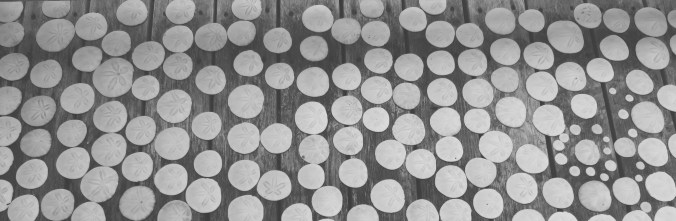
A little sweet, sand dollars on the deck:

IMG_1117

MEDIA LITERACY

I used to teach a unit on “media literacy” when I had high school sophomores. We looked at how advertising impacts consumers, the varied uses of propaganda, and the growth of social media. It was as much wanting as information. Media is not designed to be fair.

For years, I also forbade juniors from writing on abortion once I had read twenty or thirty hysterical essays. Some issues seem to provoke a sort of blindness that makes a balanced understanding of the problem impossible. For years, essays on China’s one-child policy were entirely one-sided. The girl who wrote her senior paper defending pit-bulls as a breed, cried every time she tried to revise.

Ursula K. Le Guin warned about avoiding hot-button issues. The issues that make us hysterical are rarely good subjects for rational discussion.

Cigarettes smoking was a hot button issue for me. My father and father-in-law both died of lung cancer after smoking Camels for decades. Several neighbors died at around that time, also of lung cancer. Though I was the one in my family who managed practicalities such as the sale of my father’s car, the disposition of his body after death, I could barely stand to think of the disease itself. I got over this emotional response eventually, but the spring after Daddy died I witnessed my emphysemic neighbor stopped at a light, his pick-up cab filled with smoke. I nearly rammed his Ford with my little Honda. He would also die of lung cancer in the following year.

Just as personal experience triggered my emotional response to a friend’s smoking, so too does media. The news about cigarettes killing us is true, but for centuries we believed the media image of smoking as a glamorous adult activity. The truth is that only children and the childish take up the habit these days. Anyone with common sense recognize it is a stinking, unhealthy, and expensive habit they cannot afford.

My future daughter-in-law was afraid for me to know she smoked, and out of respect for her we pretended not to know. I would have liked to celebrate with her when she finally quit, but there, officially she had never begun.

Someplace between what we know to be true and wish to be true, someplace between hating the person and their habit, between what we are warned might happen and common sense about what is possible . . .

Another popular topic I forbade was “media as monster.” These essays invariably turned into rants about imagined conspiracies. And here we are today, with the Russians actually involved in a massive conspiracy to divide our nation. It seems they have been successful in creating only irrational anger where there might be common ground. Instead, I taught students about propaganda, a topic they find far less interesting than whatever narrative they are reading on social media.

Perhaps it is time for me to accept that media is a monster. What can I do about that?


The sweet.

IMG_0683