PREPARATION

IMG_2587

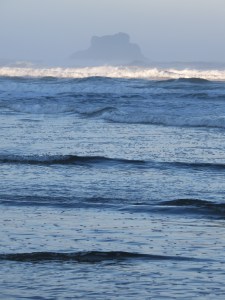
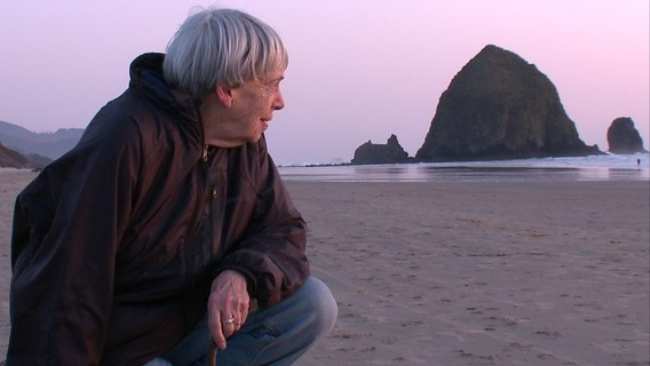
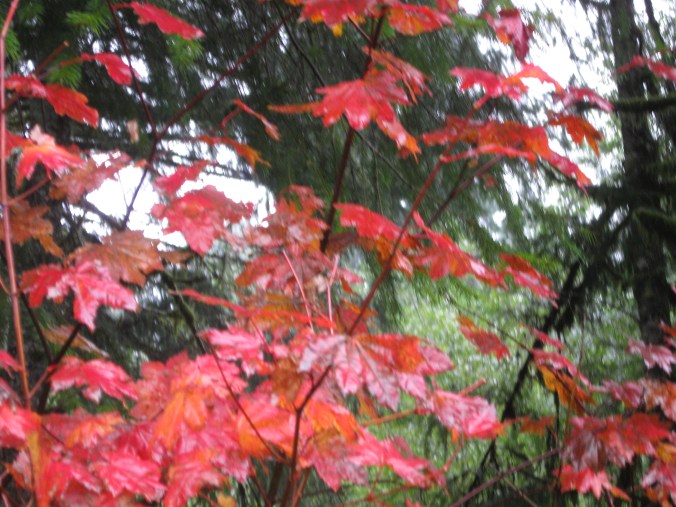
The rain is finally here, and the tide sweeps up over sand that has been dry for months. The last time we drove over the coast range, vine maples were turning scarlet and purple.

It is only October for one more day and I have been receiving weekday recommendations for holiday preparations from Apartment Therapy. I do not live in an apartment, and the therapy offered is useful to me mostly for the photographs. (I am one of those people who almost never reads magazines, not even the captions. I only admire the photographs. Now, between Pinterest and the library, I don’t buy magazines. It is a financial savings like quitting smoking, except I never smoked.)

The weekday emails have advised me to make a gift-giving list, purchase just one holiday gift, organize my holiday card strategy. Mostly I have found myself one step ahead in planning and preparation. Nevertheless, I enjoy the reminders. My favorite so far is “Do an act of kindness on Day 4. I sent a card to someone who was recently unkind to me. This was intended both as kindness and as a way of reconnecting with a person I care about.

eqyzrphyqtzfbwzzftrqlfqqwqfrjhqpsywsdypftppt~.gif

DAY 8:

Book an appointment or service you need for the holidays.

Think about that thing you always put off or forget until late in the season, when all the good appointment times are taken or—gasp!—your favorite provider is all booked up through New Year’s Day. Today, call them up or fire up the app and make the appointment.

Nothing came immediately to mind.

If nothing immediately comes to mind, here are some services that might jog your memory. If you read something and your gut screams out, “oh RIGHT,” that might be the task for you today.

  • haircuts or color
  • eyebrow grooming
  • manicures and pedicures
  • spray tan
  • facial and spa services

The list goes on quite a bit further, including pet care, house cleaning, travel, and professional photographs. But I got stuck on the first five that concern personal grooming.

I have not had my hair cut since the mid-60s. The last time I put color on my hair was a few years ago when I was playing with purple. Mostly I was fortunate in my eyebrows, which used to be quite dark and well-shaped. They are now going gray, and I cannot be bothered. I have never had a manicure or pedicure and every time I consider the process, I remember that I really do not enjoy strangers touching my body in an intimate way, and I think about nail fungus (which I dod not have and do not want). Spray tan reminds me of the person in the White House, so that’s out. Facial and spa? My skin might thank me, but it seems a waste of money.

The man whose admiration I care about, the only man I feel any need to impress, is easily impressed. Frankly, he is the only man I am interested in. Lucky, yes.

[Next month, though I have not even used mascara or lip gloss in a while, this may change. Hanging around with teenagers tends to make me feel dowdy. A little color?]

Thinking over all of this had me reviewing what my holiday preparation actually look like. I buy gifts all year long, I plan gift wrapping, which is the most onerous task of the holidays. We mail only a few gifts. I design cards (though so few people send them anymore that some of the fun is lost). I bake and decorate the house with lights and ornaments and nutcrackers.

Teaching is not part of my holiday preparation, but my part-time job teaching college writing begins next month. Three weeks sandwiched between Thanksgiving and Christmas, and right on top of Hanukkah. (It will be a busy time because I have 33 students on my role and I am scheduled to use a math teacher’s room. At least the desks are flat, though when I went in for a peak I could not find 33 chairs.)

Years ago, we hosted a holiday party on a mid-December Sunday. It was an Open House in the afternoon, usually 2 to 4 so that it was clearly not lunch. We furiously cleaned before the party. I came home after work each day and worked my way down the refreshments list, baking and freezing.

We did not serve alcohol, and that might be the secret to having a pleasant time. I made mushroom pastries and curried filo triangles, fancy cakes with nuts and fruit, a Java cake, cookies, and a dip made with homemade chili relleno and a pound or more of grated cheddar that always disappeared moments after I put it on the serving table. It was not lunch, but people could get a meal out of it.

We invited family, the neighbors and everyone we worked with. Sometimes we had over forty people in the house at once. People stood around and talked and we played the Muppets’ Christmas album or The Anonymous Four. Though I am uncomfortable in social situations, it was not a long party, and a lovely time. Post party clean-up took only a little over and hour. By dinner time the house looked neat and festive and we generally had enough leftovers that I did not have to cook for a couple of days.

[Our first Saluki, during her first Christmas party, peed in the middle of our bed in front of Ted Tallman, who asked, “Does she do that often?” No, never before or since. She disapproved of the crowd.]

One year, my brother and mother (who lived nearby) gave their excuses, did not attend, and we stopped after that. It seemed a lot of trouble with so much preparation and almost no one reciprocated.

It’s been a long time, but I think about those parties still. I miss the preparations! I miss the people!

Maybe it is time to reestablish that tradition. Either that or find a hotel and fly away.

Those parties demanded a lot of planning and cleaning and baking, but I love to bake, and the result was smiling with friends and a week before Christmas, our home was beautiful.

This morning we heard rain and tomorrow is the start of National Novel Writing Month. I will be writing each day, and for the month, if there are any post, they will likely be brief.
‘When something like this happens . . . ‘

44758674_10219065663539373_8219845102713962496_n.jpg

Many people are finding it emotionally challenging to watch the news these days. They do not feel connected to events, to politics, to the ebb and flow of our national debate. I understand that.

Just last week I was thinking over my personal experiences with accidental shootings leading to lost use of legs, to murders, and to suicides—yes, plural for each. I have known no one who was killed by a serial killer or terrorist, but people I know have been crippled and murdered, and all were the victims of white men. There is nothing unusual about that. In my country, most murderers and terrorists have been white, male, and Christian, even when the majority of citizens were not.

I love and would trust with my life, most every white male I know personally. They would not harm anyone based on color, religion, or politics. They are joined to one another through their communities and by love and respect.

So then, the past few days.

Things happen. Terrible things happen to everyone. A father commits suicide in the driveway while his daughter desperately beats on the locked car doors and windows to stop him—something similar happened to more than one of my students. A girl slept on the dirt floor of a shed, determined to stay with her homeless mother who was mentally ill and drug-addicted. A father returned from Iraq with no visible wounds but still changed beyond recognition. A student hospitalized, not for the first time, in a mental facility. Mothers and fathers died. A student drowned. Students died in car wrecks. Students killed themselves.

Ask any teacher in a weak moment and they will share their stories.

Then there was the student who slammed a school desk into a wall, the one who threw a chair, a padlock. The ones who did not want me to know what bothered them. The cruel parent, the near fatal overdose, the guilty confession of keeping score of girls, the marks on my board to count off the days without drinking.

I do not know how to adequately respond to cries for help. I have done my best as a mandatory reporter. I have offered comfort, I have listened. I have tried to be what my students needed from me, and often I have failed.

What leadership and decency look like:

“When Rabbi Joseph Miller learned of the Squirrel Hill massacre, less than a mile from his own pulpit, he ordered the doors of his synagogue locked,” Franklin Foer writes. “Despite his congregants’ terror that they would be next, they recited the mi sheberach. They didn’t pray for their own protection; they prayed for the healing of others.”

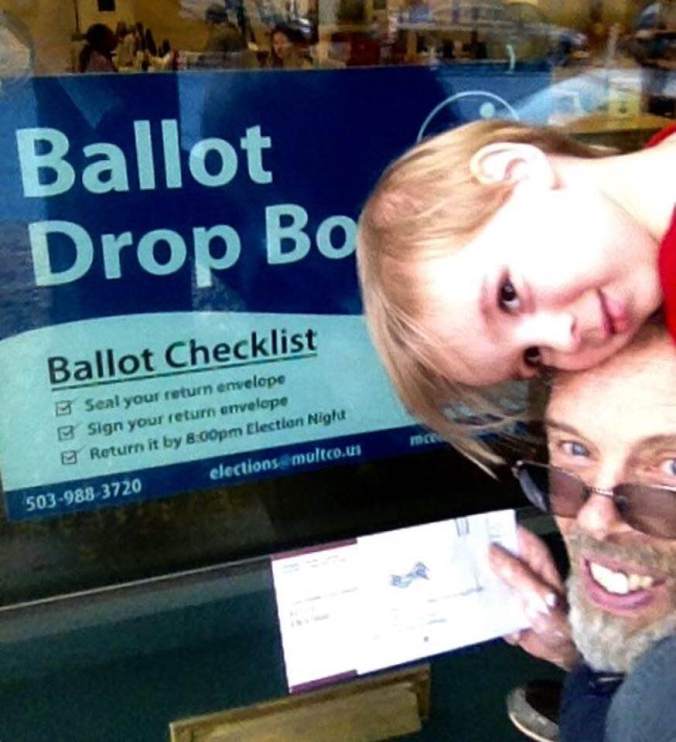
A dear friend has just managed to let those of us who were concerned know through social media that she is well, despite hospitalization with a terrible health crisis. She begs people will vote in lieu of flowers.

There is no point trying to avoid the pain. It comes and it comes. We can deny our responsibility or face what comes with compassion and care. The best we can do is take steady, honest steps toward healing our beleaguered nation.


WEATHER GAGE*

s-l1600-1.jpg

I have begun rereading Patrick O’Brian’s Jack Aubrey/Stephen Maturin novel series for the third time, this time aloud. I found the jargon and exposition early in Master and Commander hard going aloud, but we have moved on from there to familiarity with some details and absolute acceptance of the rest. My husband laughs at every bit of wit so we are having a fine time and sailing right through. (I began reading three days ago and we are already past three quarters through.) I try to stifle my impulse to explain what will eventually become clear in a next few pages or a few books. O’Brian builds tension and action wonderfully.

(I have spent too many hours in despair and crying of late. Lucky to be alive. Yes. But these are not proud times for my country.)

Perhaps O’Brian is one reason I thought about the wind so specifically during our walk this morning. Yesterday, we walked for two and a half hours, and then about another half hour later on. This morning we meant to have a short walk, but stayed out the better part of an hour, despite the stiff wind. It rained on us yesterday, but we really did not mind. Today over the ocean were blue skies, the moon still showing more than a half even as the time neared nine o’clock. Wind out of the south, gusting and sometimes holding at a light gale.

Dry sand blows over the top of wet sand, sometimes gathering they way snow will, though snow is very rare on our coast. I recall our Sequoyah, an Afghan Hound of considerable strength and sweetness, who did not like the sand piling on his toes when I walked him on a windy beach. He would pick up each forefoot in turn and shake the sand out of it, then dancing on the shore like a dressage horse. (I do miss the dogs painfully.)

We have over the years been possessed of two wind gauges—one belonged to my step-grandmother who left me the house. It was carried away during a great storm while we were in Arizona (with Sequoyah at dog shows, as it happens). The next gauge was also carried away during a storm. We were accustomed to steady winds of 45mph or more, gusts of 65 or even 70mph during an ordinary storm. A really bad wind coming from the west would bow the glass in our ocean-facing windows. It was a disconcerting sight, and the reason I was always grateful to have some sort of curtain or blind to lower against such blows.

We have had no wind gauge at all for years now, and though we can check with Cannon Beach for windspeed, because they are a larger community, we almost never do. We can feel it.

The last really impressive storm was 2 December 2007, the day a window facing the ocean blew out and I fixed in back in and wired it in place as best I could because Gary was still drugged from hernia surgery two days before. We were without power Sunday to Friday. It was dark and wet and boring that time of year with so few hours of daylight and inadequate lanterns.

The local public radio station reminded us every hour on the hour about a tree falling on their roof and never provided a speck of news about our end of the county. (I have never quite forgiven the necessity of driving to Cannon Beach in order to buy a Portland paper in order to find out what was going on.) We were warm enough with our wood stove which I cooked on. I’d made a large casserole of eggplant parmesan and we put thawing strawberries in oatmeal for lovely breakfasts, and experimented with various methods of grinding coffee beans—smashing with hammers and rolling with rolling pins—to fill the french press. It was a challenging week, but not a bad one. Rather fun, to tell the truth, though I was grateful to have hot water again by Friday night.

It was also the year my mother died, the year I graduated from my MFA program,the year our younger son married, and the beginning of the first of my still non-writing periods. I was mourning. I lost all humor from my writing, and my stories often were humorous until then.

And here, the day has worn on while I return to this posting, adding to my story and watching the weather change outside my window. The sky was clear aqua during most of our windy walk, then rain again (it rained last night off and on), and now the pale blue sky is flying overhead again.

O’Brian reminds me how one disappointment or embarrassment can dredge up a range of others long thought put to bed. There was a tide earlier this spring that cast up hundreds of crabs on shore—huge Dungeness crabs, and all male. A knowledgeable friend explained that they were likely scraped up from very deep water where they had lain for some time.

There is work to be done.

I have knitting to attend to and a partial knitting project to unravel and begin again, cards to send my grandchildren, and I am rethinking my plans for National Novel Writing Month. Last year I had intended to work on a series of short stories. I think that might be a good choice for this year. A baker’s dozen, aiming for 60k words, perhaps. So long as I write 50k of new words meant for a single book, I think that will answer.

I have already met my “writing goal” for the year of 100 rejections. Mostly because of 65 agent queries, it easily met that target a couple of weeks ago. I will not order new lamps, but move around the ones I have. I have been trying to send back the darned desk and hope to have it gone within a fortnight (finally!). I rearranged the living room sofa downstairs, shifted the one upstairs, and I will continue desk using a set-up that is imperfect but has done duty.

That is, I am rearranging the deck chairs on the Titanic (if you know the saying?) and will muddle along. That is often the way when terrible forces are at work destroying the world. The ocean is white with foam from heavy surf, though not so loud at the other morning when it seemed to be deliberately cracking on.

In a day or two, at most, we will begin the next book in this series. When we have read the twenty volumes on my shelves, I will go hunting for number 21.

*Yes, that is the preferred spelling.

ON NOT WRITING

IMG_3497

The process is frightening, this writing process. Unlike the performance, the meal, the quilt (I am knitting just now) there is no clear completion. We can only rarely say with any lasting conviction that we are finished writing.

We merely choose to stop at some point.

We live with our writing for such a long time (even if that time is only a pair of years) and there is no precise point where we can stand back and say with confidence: It is done. The work itself makes these demands upon us. It makes us doubt in return for only slivers of certainty. Those slivers, however, those instants when we feel with certainty, however rare, are slender payment for time and purpose. Our book is worth that. At the least, I would like to believe the work is worth this. In any event, I am driven to it and even when I am not writing, I dwell upon that writing process.

I have been down these past few months, not making much headway though determinedly planning to write a novel next month. This next week will be “next month” and I am unsure.

Of course I can write a novel in a month. I can rack up 75k words in four weeks. I have done it more than once. But there is that terrible doubting voice shrieking at me: What is the point? It hammers and whispers and questions and whines, yes but? until I think of setting everything aside.

I have been told often enough that I seem certain, that I appear absolutely confident and sure of my course. Yet, as I was told during a wonderful class on world religions, years ago, faith is a willingness to live with doubt. Why should anyone be surprised to learn than the future does not feel so certain from my side?

When my husband and I decided to have children (we wanted two), it took me a year to become pregnant. There was no reason I should not have conceived immediately. I had taken the pill but that was years before. I was healthy, in good weight. We certainly tried. After a year, and because I had been reading right along, and because friends had struggled to become pregnant, I knew there might never be the planned baby. We might not have children. I accepted that possibility.

During that infertile year, I considered that my husband and I had been happy together for a long time (ten years by then) and should certainly continue to be happy without children, if it came to that. I knew individuals and couple with good lives and no child. I reasoned with myself that we would be fine.

This was not a matter of planning, but of acceptance of the inevitable. It was a matter of dealing with what I could not control.

And then I was pregnant with Alan. I like to say that Ian took three days.

Writing is not childbearing. But in some ways, I feel the connection between birthing a child and a novel. It is true that childbirth could kill me, but I never feared for that. I was in labor three days with our first child, and that pain is no more vivid that the agony I have experienced writing. Both child and book must eventually be allowed to leave.

That is the struggle I feel just now. Our sons are grown and off on their own. We are grateful for phone calls and visits. They will never be so close as they once were, and that is painful at times, but also as it should be. We raised people capable of managing their own lives, not permanent infants but adults now who come to us as equals.

The novel, however, that I am setting aside . . . that remains an infant, remains dependent and with no external life.

We had dinner the other day with the owner/editor of a small press. She urged me to pursue digital publication and build a platform with followers. She also confided that her own digital sales were down from over a hundred to fewer than a dozen a month. I cannot help but feel her advice might have worked a few years ago.

I do not even own a Kindle. A friend self-published without great success. So I have my doubts.

This morning I read a comment to Allison K. Williams at the Brevity blog post:

This is spot on and infinitely encouraging. But “Two years of generating material, two years of dicking around, four years of fallow time where the manuscript reproaches me from my desktop every time I open the laptop, and two years of getting down to business” had me laughing out loud in appreciation and recognition of my own process.

I had a mentor (painting, not writing, but it applies) who told me, when I was complaining about not painting as much as I thought I should: “you’re still doing the work, even when you’re not working.” After a long dry spell, a friend came back to his work beyond where he’d left it.

There might be something coming next, but I do not yet feel it. I am not writing anything just now, except these lines. Perhaps I am only in a period of rest, The quandary has stopped me cold. As if I had managed birth only to find the baby perfect and perfectly dead.

It is time to allow this novel-child to slip away, and move on.


WHAT IS IT?

IMG_3503

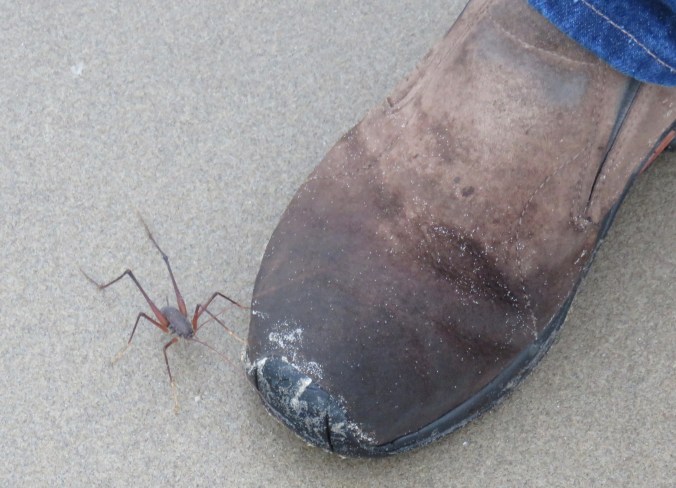
Giant cricket? Super grasshopper? It was on the beach this morning! When I asked Gary to put his size 12 foot in the frame for scale, it sidled right over and checked his shoe out. When Gary stepped away, it hopped after him. Yikes!

What?

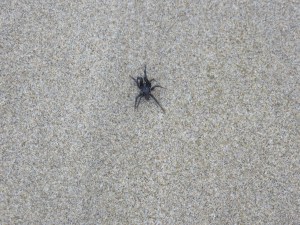
At least we recognized the thing below as a spider.

IMG_3505

THE ENEMY?

Pogo-1.jpgDoes it seem to anyone else that we have been going backwards?
When hundreds of terrified people flee violence, rape, and murder in their own country, it seems to me that the solution is to help make their country safer, not to turn our own country into a place where children are torn from their families—making my country into a scarier place than what people are struggling to escape does not sound like a viable solution. It makes us into the bad guys. I never wanted to be one of the bad guys.

“We have met the enemy and he is us.”

I have slept badly, eaten buttered popcorn (comfort food) because I am uncomfortable with the world, fearful of death, concerned for my country.

I know that America is not a perfect place, that we have done terrible things in our past. I willingly acknowledge and condemn our collusion and active violation of the rights and very lives of people indigenous to this land and to other lands. I do not need to list the abuses. We are a powerful nation and with power comes the potential for abuse.

But former abuses are not an excuse for future ones. It is not enough to say, as our current president has recently said, “You think our country’s so innocent?”

No. We have not always been innocent. But we have aspired to be great.

Failure to do the right thing in the past does not excuse our obligation to try to do better.

I used to insist my students memorize The Preamble. If you have ever seen the Constitution, it begins with “We the People” in enormous letters. The Preamble itself is specific and powerful as an outline of our goals as a nation.

We the People of the United States, in Order to form a more perfect Union, establish Justice, insure domestic Tranquility, provide for the common defence, promote the general Welfare, and secure the Blessings of Liberty to ourselves and our Posterity, do ordain and establish this Constitution for the United States of America.

The capitalizations and spelling are original.

And then there is the Statue of Liberty, which celebrated our centennial and spoke to the light of hope we offer to the rest of the world, and the poem, written by an American that is enscribed at the base:

The New Colossus by Emma Lazurus

Not like the brazen giant of Greek fame,
With conquering limbs astride from land to land;
Here at our sea-washed, sunset gates shall stand
A mighty woman with a torch, whose flame
Is the imprisoned lightning, and her name
MOTHER OF EXILES. From her beacon-hand
Glows world-wide welcome; her mild eyes command
The air-bridged harbor that twin cities frame.

“Keep, ancient lands, your storied pomp!” cries she
With silent lips. “Give me your tired, your poor,
Your huddled masses yearning to breathe free,
The wretched refuse of your teeming shore.
Send these, the homeless, tempest-tost to me,
I lift my lamp beside the golden door!”

Not to conquer but to raise the light of hope to all the world. That is our chosen destiny. Some will choose money over justice. Damned we are if that is our choice as a nation to choose profit over people. To institute brutality in response to brutality. To witness cruelty and respond with anything other than kindness—that would be a violation of our nation’s history and idealism.

We have a great deal to be proud of in our history, which is clearly flawed but always striving to be great, working to be good and just and fine toward all people in recognition of our shared humanity, in the rights of all people to seek life, liberty, and happiness.

This is my country, both imperfect and honorable. This is our principle of freedom and righteousness. May it yet prevail.

unSATISFIED CUSTOMER

95a8e252eca89dbaa7458a3c2b379aa0.jpg

The order.

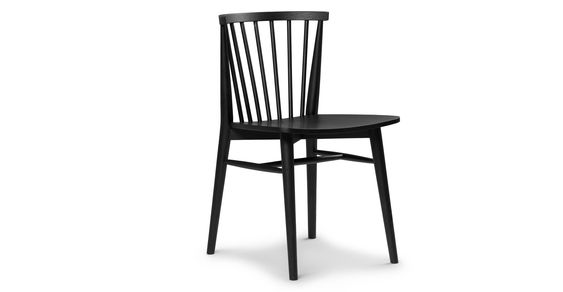
“Years and years and years ago” when Mom was still alive, I did what my mother had done and decided on solid black, spindleback wood chairs for her old dining table she’d given me. I wanted four chairs, and bought cheap, unfinished chairs and stained and lacquered them matt black. They are currently serving duty in my son’s dining room.

Our garage sale library chairs have been good, but they are too heavy to slide easily in and out at table. It was time, I decided, to get what I really wanted.

Anthropologie (see above) had chairs that looked right. Black. Spindles. Oak. I had a discount coupon. The coupon did not work, but I ordered the chairs anyway. I had not sat in them so I worried they might not be as comfortable as they looked.

They were beautiful and comfortable, apparently sturdy. We received only three, each with serious flaw—a cracked leg, a botched paint job, seat not fitting to the back legs. After a dozen emails and many phones calls, each with conflicting information and advice, the chairs are all returned, the lost one given up, the money refunded, and I have the option of ordering chairs “at any time in the future” with a 20% discount from Anthropologie. Probably not.

Then a desk I had saved for and ordered months ago arrived Tuesday and is stripy walnut like milk chocolate-colored teak. I wanted dark bittersweet black walnut swirls. Honestly, even the salesman recognized it was not what I wanted, and I think both of us hoped I would love it anyway. I don’t. I am a generation past and a generation too late for the Danish-teak-now-called-Midcentury-Modern aesthetic. I mostly did not like the style the first time around and have not warmed to its resurgence.

The desk will go back as well, and that is going to be an expensive return.

The disorder.

These are the concerns of affluence, I think, fussing over chairs and custom desks, as if they mattered. Money. I have tried to figure this out. I do love all this stuff, but lately we have been selling and giving things away, emptying closets and attic, and even my jewelry box. Most of my life I have accepted what came—furniture, people, jobs. Maybe that is a flaw in my character? A failure of common sense? Bad and good luck?

We have been shoveling out what came unbidden into our lives in order to trade up for things deliberately selected. Affluence again to have that choice. Entitlement.

What matters is that my husband and I go for our long beach walk each day, even when it’s raining. We sit at the table and share breakfast.

Spiders can hear human conversation, I am told. They know when we spot them working their way across the ceiling. They hear our alarm. They huddle down and accept our coming for them, or run for a crack in the ceiling.

Maybe I need to run away too?

We listen to and read the news and would rather worry about furniture.

Run away! Run away! Doctor Who shouts.

Yes, maybe that.

There is terrible news every day and no place to escape to. But we would like to escape from cruelty and willed ignorance and obsession over money, even our own.

Who needs a vacation?

I can count the days we have slept away from home during the past twenty years on my ten fingers. In 2003, Gary and I began calling a few hours in a daytrip to Portland our “vacation.” Since then we have had two nights in Orcas and one in Canada, two trips to Seattle and two nights at Nye Beach, a few nights with family in Portland (does that count if I have to cook?). Fifteen years and, okay, maybe we had a dozen nights away from home. More than ten nights in fifteen years. We talk about travel to Iceland and Ireland and Portugal. (I have always wanted to see Hagia Sophia and Crete.) Mostly we stay home and stare too much at our computers. Have we been investing in furniture in place of vacation?

We should try it the other way around. Or something.

Next week we will go for two nights without technology. When we come home, there will still be just two ancient chairs at the dining table, and that will be plenty for us. Perhaps the desk will have gone back to Portland by then, and I will continue to sit up in bed when I write.

In the mean time, vacations too are the concern of affluence. Give me time to think about that.

I’ll keep you posted.


PASSING

IMG_3471

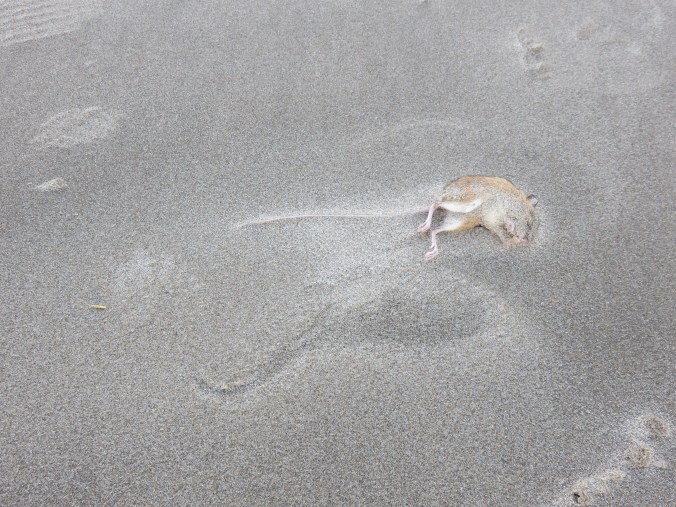
I passed this mouse on the beach—mouse?— half-covered by blown sand.

There is a novel by Nella Larson called Passing, which includes racial passing by a character. There are other sorts of passing. Passing by, passing judgement, passing the mashed potatoes. A running dog passing another is called a go-by and it’s a good thing. Passing over, we die.

Years pass too, time passes. But not really. We are only here from instant to instant, only really here. Life is not a train headed in a particular direction and we are not riding a carrousel in circles. We are here, looking ahead at what we hope or fear might be coming, basing our predictions on what we remember has already happened.

Today is my birthday. I am 66. We have already established that I am not any number of “years young.” But back in May, I decided to track my daily activities. Looking forward, I thought I should plan more decisively for writing and reading and walking and eating, taking the medication for my thinning bone, and drinking enough water, limiting alcohol—all the things my mother would tell me to do if she were alive, even while she failed to follow her own good advice.

A new post on the Brevity blog urges us to consider how easily we are distracted, not just by the distractions of phone calls and tweets, but by the time required to process and recover from them. Set priorities, set goals.

Most of the project goals I established in January and June are coming along. I lost fifteen pounds and I am walking an hour a day. I have seen my writing published eight times this year, which is fortune as much as effort. The only control I have over publication is submitting my work. Mostly I submit—terrible term—to journals that publish a tiny fraction of the work they receive. They might print a dozen stories in a year and reject ten thousand. Just yesterday I earned my 100th rejection for my writing, and it was, in fact, a writing goal for the year, one I could control by submitting my work many times. Score one for me! I passed my 52-book reading goal for the year too. I have a story that might become a novel next month during NaNoWriMo (National Novel Writing Month). In that story nearly all visible life on earth other than plants and insects dies. One woman is left alone wondering how she deserved to survive and was it punishment for something she doesn’t know she did? Too much time passes for her.

The Washington Post warns about an massive drop in insect life and the birds and reptiles that eat them on pristine tropical islands. Is it the result of climate change which impacts insects much more dramatically than I supposed? Or is this the result of the use of pesticides and defoliants? Some Devil’s Triangle of threats? Researchers can’t explain it, but they’re worried. So maybe I have my prophetic story backwards?

Or perhaps what I was told about Australian people is true, that they see humanity as forever facing the past, walking backwards into whatever unknown comes next.

I am merely passing by.


GROWING UP

IMG_3417

Yesterday, though it is October and cooling, the sun was bright overhead and we got in our two beach walks. A huge broken V of birds flew south so fast we were not able to identify the species. Not Canada geese, who fly slower and in a tidier skein and honk. Gary suggested cormorants.

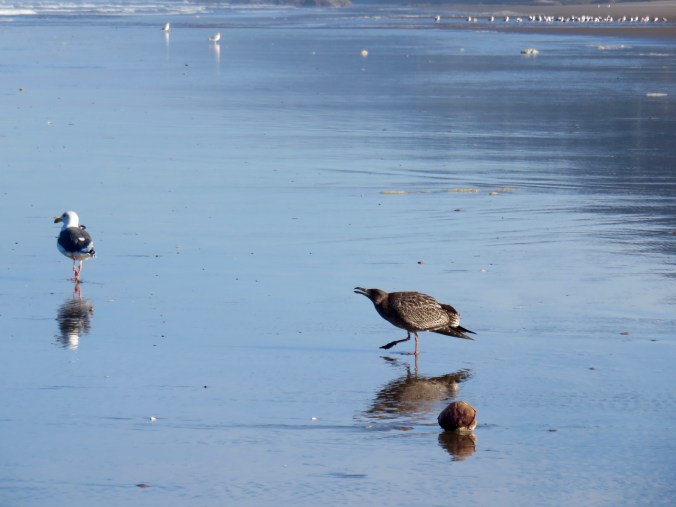
The juvenile gulls have mostly begun foraging for themselves, but we still see the occasional young bird begging its mother for food. The young gulls are fully fledged and as big as their parent, but still in dull gray child’s clothing. They duck their heads into their bodies, circle their parent and peep: “Feed me! Feed me!”

IMG_3424

The pelicans, too, seem to have fully grown children still in baby plumage, though these larger birds have more dignity, stately in size.

Hild by Nicola Griffith of Seattle is a novel about Saint Hilda, an ancient woman, who begins in this telling as a three year old. Her life is at risk, and she has been warned: Quiet mouth, bright mind. She is to listen and connect all she observes and throughout her precarious early life, she attends those around her with power: to the words of powerful people, to the scent of boggy land and new-turned earth and blossoms. She hears how the winds rattles leaves and the rustle and tuck of creatures in the wild.

Hild flies with eagles. This is not so much magic—this is medieval history, not fantasy—as wisdom. Hild connect dots in the air that no one else pays the slightest attention to. She misses things, but her seeing is not represented as a magical gift, but as the result of her openness to everything around her. She is smart and strong and very tall at a time when these qualities were often confused with the right to power. Hild seeks the pattern, sees it build and twist and turn, looks for ways to use it to advantage, both her own for the sake of weaker folk.

Times have not changed so much. We still confuse size with virtue. And even now there are people seeking a pattern to how the world changes.

There was a royal wedding, my husband tells me, and people were complaining about the cost. In Crazy Rich Asians there is an insanely expensive wedding too, but at least in the latter fictional case, the parents were supposed to have done something to earn the price. I always cry at weddings, and I even cried during that fictional one. I cried at my own wedding, which cost only a couple of hundred dollars including my dress and the gold I bought to make our rings.

I was young when I married, but Gary and I paid for the ceremony. We were already past begging our parents to feed us.

These days I think it would have been nice to have a friend who threw me a bridal shower, a father-in-law who paid for a pre-wedding banquet, a mother who insisted on all the trimmings and paying for them. But these are things I did without quite happily at the time. And they would be distant memories now, less valuable that the dress still wearable though folded away. There is no genuine regret. It was a lovely weeding in my parents’ back yard under the pagoda tree.

Seasons pass and time gathers itself in lumps of memory. How I laughed from excitement during the ceremony. How my new husband wrapped me in his arms. How our grins made our teeth click ever so gently at that first married kiss.

IMG_3418

The parent has already provided a crab meal—stripped clean here—and walks away. However it strives to appear small and dependent, it’s time for this gull to grow up.

EMBRACING THE CRONE

Ursula K. Le Guin once talked about embracing that word, “crone” as an honorific. For most, it is pejorative, inherently agist and sexist, but Ursula argued for a different take. The crone has experience and perspective, intelligence and awareness. The crone is old because she has lived long and prospered. She has earned respect, even though she rarely gets it.

“In her essay, ‘The Space Crone,’ Ursula Le Guin wrote that old women would make the best space explorers. Free from the daily tasks of rearing helpless children, free to see and comprehend without vanity, loving life because we know we may have to leave it soon, we would embark on our journey to the stars not for ego or planting flags but only for information to transmit back to our grandchildren for their future explorations. We know by then that we are part of the flow of life.”

I heard her talk about crones in the 1990s when she was about what my age is now. She wrote this essay twenty years earlier in 1976, when she was in her late 40s and I was in my 20s. It’s the first essay in Dancing at the Edge of the World, which includes her speech “Hunger” that I teach each year. Half that volume is made up of collected book reviews about writers such as C.S. Lewis, Doris Lessing, and Molly Gloss.

Kate Atkinson objects to book reviews written by authors, and particularly to a reviewer declaring her a “matron” in The New Yorker. I understand she considers the term disrespectful. I get it. She’s right. It wants to connect to “society” as in society matron, some woman with grown children who works on charitable committees without ever dirtying her hands. Matron, according to common use and the dictionary is a married woman, especially a dignified and sober middle-aged one. Like “bitch” maybe it’s time we took back the label of matron, the way Dick Gregory took back “Nigger” when he used it to title his memoir, so his mama would know that when she heard that loaded word, it was someone talking about her son’s book. Except that never quite worked and the n-word is still a bad’un.

Like racism and sexism, agism is something we’d like to pretend does not exist. In our youth-obsessed, age- and death-denying society, everyone past high school feels pressure to be young. How many times have people declared: It’s only natural to want to be young? Maybe. But in most past cultures, even the feeble old were regarded as having earned respect. They are the holders of what we now call institutional knowledge.

A woman I worked with on the local arts council assured me decades ago that “the great thing about being 70 years old is that no one expects you to look young anymore.” She made me laugh. We both laughed. I admired her home, her view, the wooden blackbird hovering over her dining table. I admired her ability to be who she was. I was 30-something at the time, no longer “young” but still uncomfortable with “middle aged.” I clung to Gloria Steinem’s incredible birthday riff about turning forty. “This is what forty looks like. We’ve been lying for so long, who would know?” Except, she was always beautiful, still is, and she’s 84 now. Gloria Steinem is old. She is even that worse thing, elderly.

I will be 66 next week, and I am old. (In medical terms, I am also elderly, but I resist that term. It belongs to my next decade and the one or ones after, should I be so lucky.) I am old, not middle-aged, not young. And I am not “66 years young” which is a pathetic claim to my mind. I am not living backwards. I am not trying to look 35 or 45. I am what I am. I am tired of guilt about youth. I am weary of being told I should yearn for youth, that I should strive for it, that I must always be forever young. I am not young.

from On Golden Pond:

Ethel: “Hey, I just met the nicest couple…. In the woods.”

Norman: “Couple of people?”

Ethel: “No, a couple of antelope. Of course a couple of people. Their name is Migliori, I believe…. They’re a nice middle-aged couple, just like us.”

Norman: “If they’re just like us, they’re not middle-aged. Middle-aged means middle, Ethel. Middle of life. People don’t live to be 150!”

Ethel: “Well, we’re at the far edge of middle age,” she says: “That’s all.”

Norman: “We’re not, you know. We’re not middle-aged. You’re old, and I’m ancient.”

Ethel: “Oh, pooh! You’re in your seventies, and I’m in my sixties.”

Norman: “Just barely on both counts”

[In fact, Hepburn was 74 when she said those lines. Henry Fonda was 76. Both were genuinely old, but not ancient. Hepburn was 94 when she died in 2003, but this was Fonda’s last theatrical film—he also made a TV movie that year. He passed early the next year, in 1982.]

There is nothing I want back from youth but the ability to run distance. I could still do that when I was 58. I would like that back. Yes, I truly would. But it won’t happen. I can walk for 2 hours and run short distances, but I will never run 6 or 16 miles again.* I mourn for the loss of that running freedom, but I honor what living, reading, and thinking have given me at my age.

I have experienced much, read many books, and thought deeply. I have never stopped reading and thinking and observing the world. There is still learning in my life. I am subject to change. That last should be another posting.

In the mean time, I have lived long and prospered. I have earned my age. Give me the credit I am due.

______________________________

*UPDATE: In October of 2022, the week before my 70th birthday, I ran a 10k in 71 minutes, 9 seconds. That’s 6.2 miles and I was 8th of two-hundred-something in the 65-69 age group. Whoo-hoo for me!

further UPDATE: I completed the same run the next year, a little slower but came in 2nd in my age group of over 200 runners because at a week before my 71st birthday, I was 70-74. Yeah, elderly now.