I had thought I would stop running after last year’s Bridge run—a 10k over the Columbia River. But even before I completed that run, slower than I’d hoped, I knew I wouldn’t stop. I love running and I’ve missed it terribly in the past when injury kept me walking. Then, after nearly four years of perfect health, Gary and I went to a movie in a theater last month and caught Covid. Coming back has been tough. So I began to wonder if quitting was coming up on me, like it or not.
I got my regular 2-mile Friday run last week in Portland. More than half that run is downhill, but though my route varies it generally begins and ends on an uphill slope. That was the second time a homeless Black man has paused long enough to tell me “good job!” He said he’d run marathons and missed running but had injured out and most recently been told he would be able to run again. I hope he does.
The poet William Stafford made a 3-mile run part of his morning writing routine. He’d run, come home to write, including an aphorism and a new poem every morning, and then use the rest of the day to revise and do whatever we people do all day. I used to hold out his example to myself. Stafford didn’t write a good poem every day of the year, but by the end he had 365 drafts to choose from and the odds were in his favor that he’d find good ones worth revising. It’s one reason he was as productive as he was with 20,000 words of daily writing and a truly astonishing list of publications. Wikipedia: “The morning of his death he had written a poem containing the lines, ‘ “You don’t have to / prove anything,” my mother said. “Just be ready / for what God sends.” ‘ ” Have a look at his book about writing, Writing the Australian Crawl. I have it somewhere here or there and first read it in 1990, three years before his death, which reminds we that I wasn’t yet running in those days.
Running is easier than waiting, and right now I am waiting to hear about my novel submissions. I reordered and revised that novel three weeks ago, six years on since I began writing it. I informed two presses that I had a new and better draft to share. One promptly wrote back: Yes, please! Then I withdrew all the submissions I could find a way to withdraw. A handful are still out there. I have a half dozen presses on my to-submit list when they open to submissions. One of those opens in January of 2025 and it is a favorite small press from way back. Another closed to submissions for this entire year and I don’t know when or if they will reopen next year. A friend in Seattle is a few months behind me in the same process.
It all takes time.
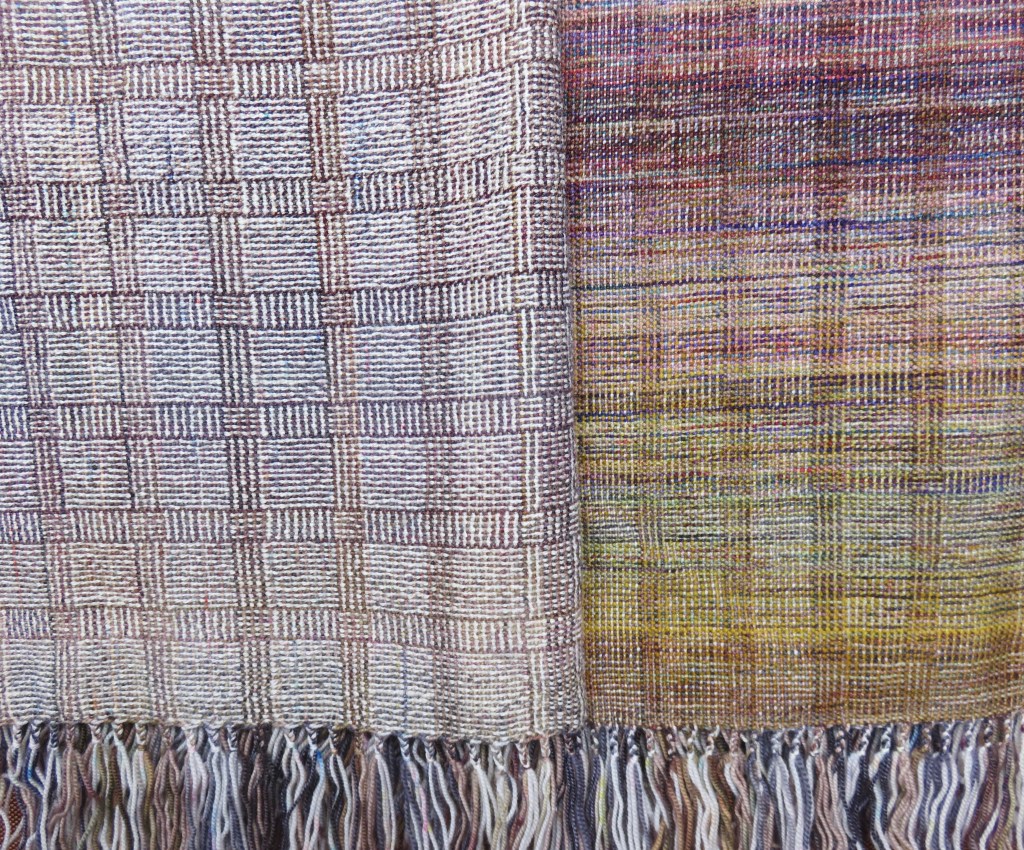
On April 1st, a crew is coming to tear out a wall of our bedroom condo as part of the process of repiping our entire building. The work won’t be completed before summer. In the mean time I should be knitting but I have recently spent hours completing the “Dusk” warp in two distinctive shawls.

 IMPERFECT PATIENCE