NAKED

IMG_3557

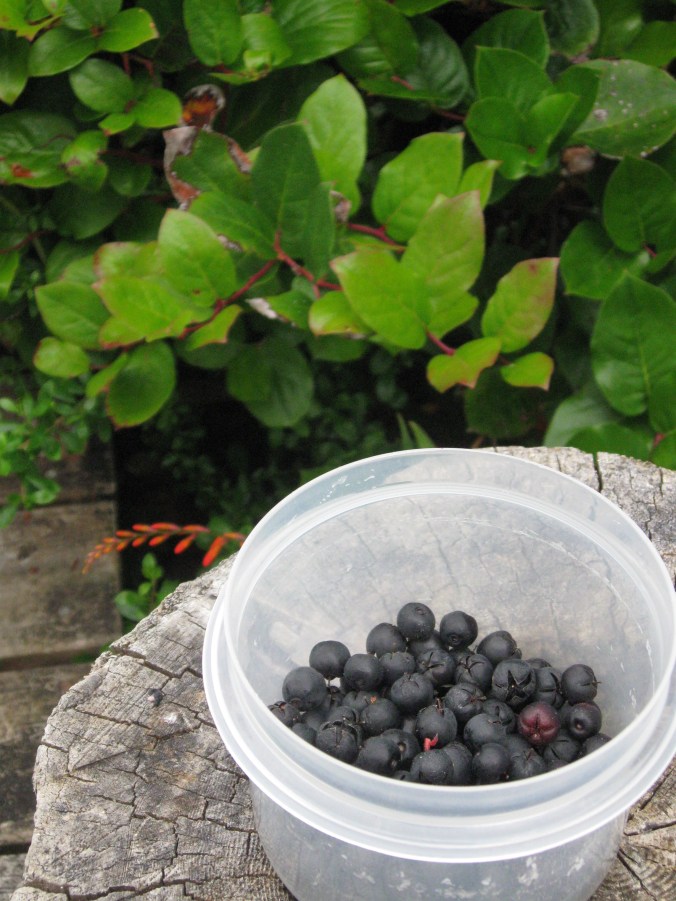
I made salal muffins yesterday morning. The berries grow wild in our hedge and ripen over a period of weeks or months. The muffins were made with organic flour and eggs, butter and some maple syrup for sweetening. I had two with butter for my breakfast. That’s about 400 calories, which is allowed and also delicious.

A couple of months ago, I glanced at myself in the mirror. Then I looked at myself. Naked. I was taken aback. I see myself in the mirror every day, and I got over my cellulite decades ago. But I had intended, in February, to lose 11 pounds, and instead, I went the other way and gained 11 pounds. I had simply refused to see it.

My feet hurt and my lower back and many of my clothes no longer fit. It was one of those seeing-without-seeing periods. I would like to blame this inattention on someone else, but, you know, I just ate too much. Then I refused to see.

Last summer we went to the Oregon Country Fair for the first time. We went early on the first day, and much of what we saw was colorful and wonderful, but mostly we noticed it was hot, dusty, and insanely crowded. I caught only the end of the belly dance demo, which I would have wished to see. I found a doll-maker who turned out to be a good friend of one of our oldest friends. I bought two leather masks. An owl mark is probably destroyed by now by our grandson. I wore the plain red mask for several hours, forgetting completely that I even had it on. I just didn’t notice.

What Gary failed to notice was the nakedness at the Oregon Country Fair, which is well-known for people walking about with only body paint and glitter, at least on the upper half of their bodies and sometimes just the glitter and no clothing at all. It was warm enough. Gary insists he did not see any naked people because he was overwhelmed by the general chaos.

Life is naked chaos.

Since the first of June I have been paying attention to what I eat, and I have been drinking more water. We usually walk for over an hour each morning, and we emptied the attic and I have put a couple of gallons of paint on walls and ceilings. I have read 40 books so far this year, had 6 essays and a story accepted for publication, been rejected by 62 literary agents and a couple dozen literary magazines. I attended the memorial for Ursula K. Le Guin and in a couple of weeks we will have 13 people in our house for the annual summer reunion.

By the reunion I might be back where I started in February. I am nearly back to that weight. Not quite, but it’s been pretty painless. I can stand to look at myself naked again. My back still hurts, but now it’s because I am not sitting properly in my desk chair.

And I have begun rereading Rite of Passage by Alexei Panshin (1968), a book I have read ten times already. Panshin describes an insecure girl looking for a way forward and challenged by her study of ethics—and many more dramatic events I will not attempt to describe here. It is my favorite book, probably of all time. I enjoy each reading.

It seems I never quite let go of some goals and habits, like reading books, while others, like noting how many glasses of water I drink in a day, are acquired through time, and some, like looking in antique shops, fall away.

Just now I am close to done sorting spools of thread by color and fiber. The polyester thread will be given away. I have at least four shoeboxes filled with thread, sorted into war colors, cool, neutral, and black and white. Some are nearly empty, some full. Many are on wooden spools. It is notable that aside from half a dozen spools of hand quilting thread, I did not purchase any of this thread. My step-grandmother’s color pallet is clear as I stand over the boxes. I will probably find a way to keep the cotton and silk.

I have become less sentimental about most other accumulations. We gave away and sold the gatherings of generations. Our garage sale netted a few hundred dollars, mostly items sold for a quarter or a dollar. My one sale was two scraps of cloth for a dollar-fifty. In the next week, we will have a charity come and pick up the furniture and other reusable items. What has been moved out and now fills our atrium will not be welcome back into the house.

After purging my home of so much stuff, I am not eager to fill the vacancies. I like the slices of nakedness on my walls, the space between objects, gaps on bookcases, the way I can sweep all my clothing to one side of the closet, because there is somewhat less of it.

There are riches elsewhere.

Two little pound cakes came out of the oven. I made stock yesterday or the day before and made a lentil soup with coconut milk, vegetables, and spices. We had friends coming for dinner and a couple of nights. There is homemade ice cream in the freezer and local salad greens in the crisper. Gary vacuumed and mopped most of the floors downstairs.

There is space in our lives now that we are retired, and because both of us spent most of our adult lives working and caring for children and pets and indulging in hobbies and muddling along as best we could. There was hardly time to look around.

Home now feels a little like we just stepped out of the shower, all clean and new. Naked.
 

FLOOD WATERS

IMG_2658

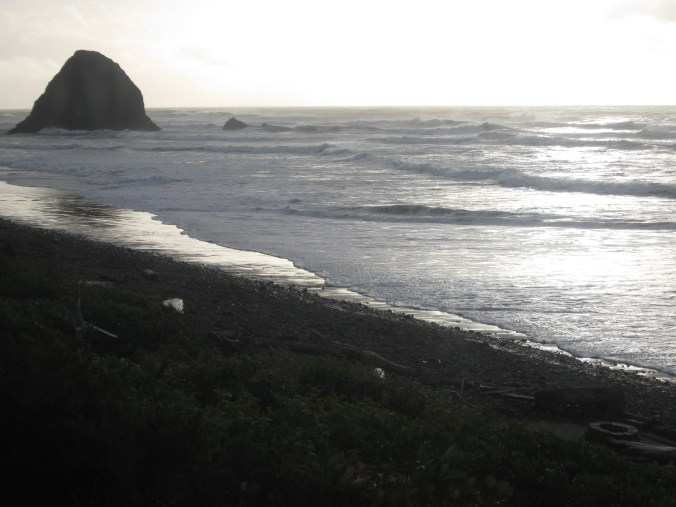
We live right onshore, just a few bare feet above sea level. Every day we watch the Pacific Ocean wash in and out just beyond our front yard. Since 1979, the ocean has slid through the path in the hedge and onto the grass just twice. The Cascadia Fault is a concern, but like most coastal residents, we are in deep, deep denial. (Not that the rest of you are not.)

When it inevitably comes, the quake will be strong enough to knock me down, unless I am already lying or sitting. It will be vigorous enough and last long enough to topple trees and drop buildings. Some areas with sand instead of soil will liquify and what was supported a moment ago will sink—quicksand. Our garage and other doors will go out of plum and refuse to open ever again.

My running shoes are beside the fireplace, where there has been a masonry pile for over a hundred years. It is the only part of our house that has not moved, not even a millimeter. I put on my runners.

I will head out what we call the front door, assuming it opens. Or perhaps the other door just twenty feet further east. Either one takes me into the atrium, a long roofed area with fiberglass far overhead. Normally I would go out the garage door, but the electricity is out and the shaking has caused enough damage that I assume the garage door will not open manually. I pull Gary’s maul from the workbench, close my eyes against flying glass, and bash the sliding glass door. The gate on the side of the yard will be hard to open, but I will manage. The shortest route would be north and then south, but that would take me through fifty feet of dense underbrush and wetland. I will run two hundred feet south, turn left, and then head for the highway, north to St. Peter the Fisherman, and then straight east and up hill.

Somewhere along the way, and aftershock will strike.

CLASS WARRIOR

“When even the unpopular girls are rich, if not always pretty, how will they attempt rebellion and nonconformity?”

I haven’t read this new satirical novel about an elite private school in Australia. I probably never will. When I got to the line above in The New York Times review, I thought, “Why would I care?” and decided I should stop reading.

I know, I know, rich white kids have problems too. Their lives are not perfect just because their parents have money. Sure. Sure. I get that. I still don’t want to read about them struggling to find a way to rebel when . . . what? They aren’t overcoming racism, finding their next meal, moving every six months? So sad for them.

I say I don’t care, but the truth is I am merely annoyed.

“Ziggy makes friends with the social outcasts Lex, who was adopted from Bangladesh by aging white Australians, and Tessa, who lost an arm to cancer and wears a prosthetic.”

So I get it, her friends have a tidy assortment of struggles.

There was no getting around it, I had to read the entire review. Being a teenager is miserable for most. Even those who are popular often have something terrible going on behind the scenes. Not to mention the shallow work involved in maintaining their popularity. It doesn’t help that people are still lying to high school students about “the best years of your life.” Trust me, it gets better.

““Inappropriation” is certainly intelligent and has its finger on the zeitgeist of the Instagram and Tumblr generation, but it also paints the worst possible picture of teenagers trying to understand themselves. Who is the book’s intended audience, really? Those of us who understand our own complexities and nuances, and can laugh at the book’s exaggerations of them? Or those who think that all identity politics is nonsense? Surely both groups will enjoy it, but for very different, and in the latter case perhaps troubling, reasons. In satire as in life, there’s a difference between laughing with people and laughing at them.”

The teenagers I taught came from a wide variety of backgrounds. All of them had struggles. Even the most together, confident, and consistently cheerful person in the world genuinely suffers in his or her life. None of us get by in perfection, at least no one I ever taught. I never found their pain and confusion entertaining, much less funny. There have been any number of novels making best-seller lists while focusing on a narrow demographic. This seems to be another one.

I just finished reading the post-war utopian novel Walden Two by behavioral psychologist B.F. Skinner. Skinner honestly believed he was creating a (fictional) cultural paradise, a utopia where everyone could achieve a pleasant life regardless of gender or race. Big, big fail, not to mention many of the details about child rearing and eliminating envy, competition, and jealousy are naive at best, downright abusive at worst.

Childhood is tough. Shows like Jimmy Kimmel find entertainment in causing kids to cry. It’s okay, because it’s only a joke? Because the kids’ parents lied? Because no one should cry over candy? Why not tell them their dog died?

Kimmel is just crass exploitation. The novel review suggests Frieman’s novel has very little more to offer. Skinner’s novel is a trainreck in many ways, but at least he had an objective. If you believed you could make everybody happy (not cry), wouldn’t you try to do it?

I still don’t think I will read the book, but I am glad to have read the review.


GARAGE SALE

IMG_3108

We gathered. I gathered some of it, not counting what my mother, aunt, grandmother, and other relatives failed to deal with. There were unsorted boxes in the attic that NO ONE wanted to deal with. We tried to give away a lot of things that were immediately useful—to someone else—but much of that stuff has been weighting us down for decades now. Some family was resentful about selling, but I feel they should have, and would have been welcomed to, deal with it themselves.

Some people deal with objects immediately. When I gave a gift to a friend recently, she immediately disposed of all the packaging in the restaurant where we eating. I suspect she does that with everything. She will say she lives in a small house, but it’s more focused than that. She has set some sort of internal line and chooses in every moment not to cross.

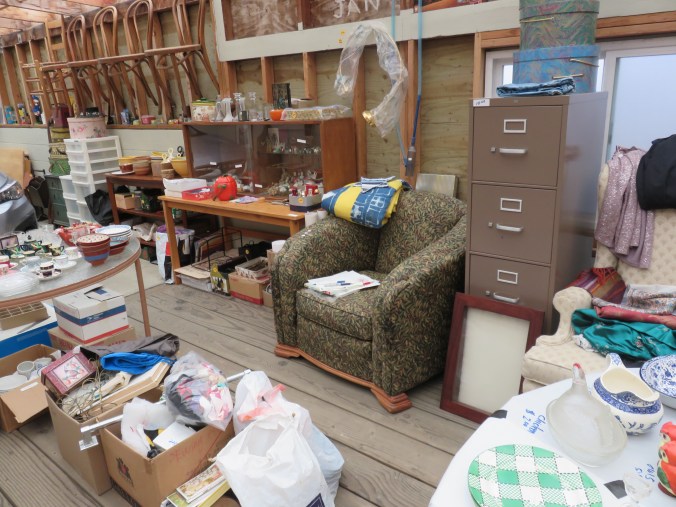
Our garage sale has many, many beautiful, useful, and valuable items. It’s not that we do not appreciate them, but we have other valuable and useful items already in use. These lived in boxes for too long. It is time they found a more appreciative home. Time for them to be used.

READING SCIENCE FICTION, pt. 1

IMG_3093

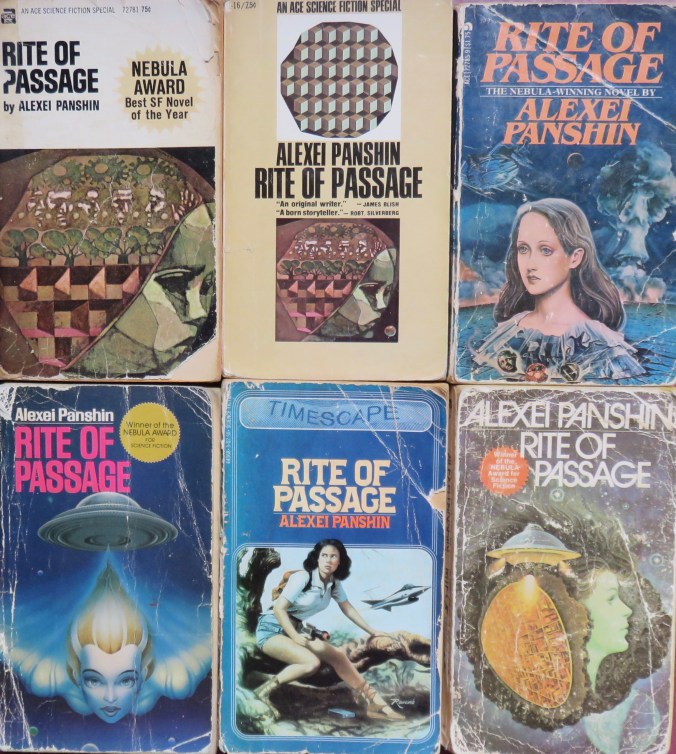
I could pretend to love The Left Hand of Darkness, but I never did. I could acknowledge that I do love many other novels such as Ursula K. Le Guin’s The Dispossessed, Vonda McIntyre’s Dream Snake, and Molly Gloss’s The Dazzle of Day. But my favorite science fiction novel is Rite of Passage by Alexei Panshin. Above are a few of the covers of this science fiction novel title.

The first time I read it, I was in college and about the age of the main character as she tells her story.

Rite of Passage is a science fiction novel by American writer Alexei Panshin. Published in 1968 as an Ace Science Fiction Special, this novel about a shipboard teenager’s coming of age won that year’s Nebula Award, and was nominated for the Hugo Award for Best Novel in 1969.—Wikipedia

This is the dystopian coming-of-age novel people should be reading, what is known as “hard” science fiction because there is no magic, no fantasy, only scientific possibility. There are also no clear villains, just people doing the best they know how to take care of the themselves and their own. The “heroes” are flawed, the ethical choices are not clear cut and tidy, and no one is shot with an arrow.

Mia Havero is a “little black-haired, black-eyed girl” of about 12 at the start of the story she tells of her rite of passage. Few of the covers I have seen indicate that the designers had actually opened the book, much less read it. Upper left and middle are solid. Sometimes what you see is not what you get.

I was reminded of this a day or two ago when I found a meme in my feed with a misquote of the Constitution of the United States. The meme contended that if the President were impeached, he and all his people (VP on down) would be forced from office. A lot of people liked the meme. People who have college degrees and should know better. And I will admit that I would be happy to see the back of Pence and the rest of Trump’s minions, but that is not what would happen.

That so many people accepted this meme as true was disappointing. I was left wondering if no one else remembers anything from our Constitution?

Does no one verify their sources anymore?

The left has been eager to throw up their hands at the ignorance of those supporting Trump. I have witnessed this again and again. Sadly, there is plenty of evidence that those on the right believe exactly what they want to believe. It is so much easier than actually finding out what is true. Those on the left do that too sometimes.

There is this simple black-and-white view of the world that is not the least helpful to accomplishing anything. It’s comfortable to discard another’s viewpoint just because it differs from our own, to ignore the demands of people we do not identify with. Working to hammer out solutions is messy compared to simply “laying down the law.” The Russian interference in our national conversation has done further damage to thinking that already viewed “compromise” as a dirty word.

We seem unwilling to understand that the world is not a YA dystopia with an evil force (them) fighting to take down those fighting purely for good (us). Reality is a whole lot of people with different ideas about how to achieve justice and liberty. When we acknowledge that complexity, we will get farther as a nation. There are times when the only solution is an imperfect one, when you get a little of what you want and I get a little of what I want, but no one gets buried in the process.

I read science fiction to find a laboratory for possibility. I already know how things can go wrong. I am interested in how things go right without the intervention of comic book heroes. Plenty of science fiction and fantasy is just another world struggling for power, but some science fiction and fantasy looks hard at difficult ideas. Not the dark lord or evil empire, but really people struggling to do their best.

Mia Havero is a Latina name. The author is American, and his book is back in print.

“The Nebula Award-winning novel, back in print at long last!

“In 2198, one hundred and fifty years after the desperate wars that destroyed an overpopulated Earth, Man lives precariously on a hundred hastily-established colony worlds and in the seven giant Ships that once ferried men to the stars.

“Mia Havero’s Ship is a small closed society. It tests its children by casting them out to live or die in a month of Trial in the hostile wilds of a colony world. Mia Havero’s Trial is fast approaching and in the meantime she must learn not only the skills that will keep her alive but the deeper courage to face herself and her world.

“Published originally in 1968, Alexei Panshin’s Nebula Award-winning classic has lost none of its relevance, with its keen exploration of societal stagnation and the resilience of youth.”—Fairwood Press

HEDGEBROOK

Today I applied for a Hedgebrook residency. I have applied ten times before for this residency, which is limited to women. My first experience at a women’s writing residency was The Flight of the Mind in the 1990s. The first time I attended, I completely failed to anticipate the impact of spending a week with eighty women who were concerned only about the written word. That initial week was life altering, and I was fortunate to attend several times. Each time I was terrified at the start and came away brimming with hope.

It frightens me to ask. The last year I attended The Flight of the Mind, I carried the acceptance letter home from the post office and stood sobbing in my garage. I had not admitted to myself how much it meant to me. That was also the last year Flight was held.

Hedgebrook is on my bucket list, and occasionally I threaten not to apply again. But then I do. This year because I have a challenging concept for an SF novel that requires slow work and contemplation, I want the residency very much. But many others need this opportunity. At the least, my application fee will serve a good cause.

CAN YOU HAVE TOO MANY BOOKS?

tlmcgb68mogpbd6ewbnh.jpg

I saw a meme on Facebook the other day. The wording was something like: “I decided I needed to lose 10 pounds last year, and after six months I am doing great—12 pounds to go!”

That is the irony when our best intentions go backwards. I have some personal experience with that. I have been watching my eating, drinking, and walking for the past 7 weeks and have lost the 8 pounds I gained since last December after deciding I needed to lose 14 pounds. I sleep better and my feet feel better when I weigh less.

During that same time, I taught two college writing classes, read 38 books, completed weaving three 82″ lengths and seamed them into a 75″ x 82″ blanket + fringe, planned a quilt, submitted stories and poems and essays, several published pieces and a story due out next month plus an essay out in September. (I will inflict links to these publications upon you once they are live.)

We walk the beach most days for at least two hours. I have picked up a few hundred pounds of trash since January, and 98 bits of sea glass so far just in July. People ask Gary and I all the time what we are finding. “Do you find agates?” they invariably want to know. We always find agates. We don’t even gather most of the agates we find, not even a quarter of the agates we find. What we carry away is mostly plastic trash. You knew that.

I watched the second season of the Netflix series, Anne with an E, which I loved from the first episode and this second season more than ever with challenging issues of sexual orientation and race. The novels are pretty “safe”, but the series takes chances and flashes back to the early years not only in Anne’s life but in Marilla’s and Matthew’s lives. The characters are thus more well rounded and meaningful, more real and less white-washed cardboard characters. The Irish actor playing Anne really is not “pretty” by the standards of those days, but bursting with energy and imagination as she should be. Green Gables is depicted here in the same way that Wicked seems to portray a genuine Oz. All the magic, but a grown-up and serious version—charm without flinching.

My own flinching is mostly about too much stuff.

My goals for the year, my husband’s and my goals for the year, include gutting the house. Going leaner, you might say. We are emptying out closets and shelves, the dozens of pretty pictures that have no walls to hang upon. Gary took everything out of the attic which still had things from my mother’s house, unexamined items from her sister’s home, boxes of ceramics I made in college decades ago now.  Nothing goes back in the attic. I am about to empty four bookcases of nonfiction and poetry. A lot of the books and at least one bookcase will go out the door. We are preparing for a garage sale and major gifts to Good Will in the near future. I keep going through books and moving stacks out of the house.

Despite all that, I ordered a book the other day. I ordered three towels on sale and I ordered two skeins of yarn, even though I have SO MUCH YARN! Too much. Too many books. Too many Christmas ornaments. Too many family pictures in frames. Too much stuff. The greatest appeal about moving into a smaller house—something we fantasize about from time to time—is the need to divest.

More important than divesting is the imperative to stop accumulating. It is possible to stop. I believe it is possible, but I have to skill in that direction.

The Green Gables house in the new series is sparse and clear. The table is set for dinner in a dining room that has no other purpose but dining. The meal is eaten, the table cleared, the ceiling is the primary decoration. Beautiful unpainted boards.

No cell phones, no music but what people made for themselves. I am not so foolish and as wish myself back in that era. Dentistry. Vaccinations. Voting rights. I know what I would lose.

But Anne’s daily walk through the woods. Writing with pen and paper. A fox in the forest. People who make immediate use of nearly everything, or they do not keep it at all. Anne has little, but holds so very much. She is creative and imaginative and loving and kind. Her ambition is generous and heartfelt. She asks for little, but the best of everything. Her best is not about gilded rooms or extravagant praise. She might enjoy those things, but there is something precious and few about her longings. More does not mean better, as I was warned in childhood.

May I at least have more of Anne? And maybe a few pounds less of me.

BOOKS I TAUGHT

phony.jpg

A student wrote to me the other day to thank me for assigning Mountains Beyond Mountains when she was  junior in my class. The young woman is in her third year of medical school and credits Tracy Kidder’s true story of Dr. Paul Farmer for inspiring her ambition. It was not the only nonfiction I taught, but it was the only nonfiction book I taught.

I showed films to introduce my students to other lives and other times. I am proud that I taught the novels Their Eyes Were Watching God, The House on Mango Street, Things Fall Apart, and A Yellow Raft in Blue Water.

A self-proclaimed “non-reader” in my regular English class agreed to keep reading Yellow Raft after I’d read the first chapter of part one “Rayona” but could not read “Christine” because she was “too much like my own mom.” So we struck a weekend bargain. He would read seven pages and if he still couldn’t stand to read that part of the book, I would given him a summary and he wouldn’t have to read the rest. He came back to class on Monday and declared he “loved Christine.” She helped him understand his own family and the fictional character remained her favorite in the novel.

Sometimes we find ourselves or people we need to understand in a novel.

I taught both The Catcher in the Rye and The Adventures of Huckleberry Finn for over 20 years. 

I generally shared William Raspberry’s column about Huck Finn, and worked hard to introduce my students to satire. The novel was a consistent failure in my Honors classes. These “good readers” were unwilling to slow down and hear Huck and Jim speak, they were too good at skimming. As a result they found the novel unfunny and boring. However, when my voice could manage it, for several years I read nearly the entire novel aloud to my “regular” students. They got every joke.

Huck is a poor boy with a rotten father, a racist boy who eventually learns to respect and honor his friendship with the young man, the slave Jim. He is on a hero’s journey but he fails because he does not figure out that slavery is wrong. He cannot overcome society’s instruction about what is decent and proper. Even at the end, he believes it is a sin to help a runaway slave. Nevertheless, he is willing to go to hell rather than betray a friend: Jim, who is far craftier and kinder than Huck recognizes. Jim reveals himself as one of the view decent adults in the novel when he risks his life staying with the critically wounded Tom. Some students responded to the moral lesson in the novel and the humor throughout. Many missed it completely.

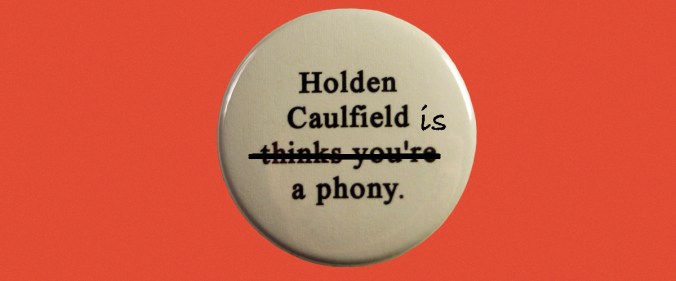
By contrast, for more than twenty years, students loved Holden Caulfield in The Catcher in the Rye.

Holden is a rich white boy attending elite private schools but with neglectful parents. He is grieving and riddled with guilt. He does not overcome these challenges. Parents of my students sometimes balked at the language, but the real problem with this novel, from this parent’s perspective, is that Holden is suicidal throughout and in a mental hospital as he relates his story and he’s been there for months and still lying about where he is and why.

Teaching this novel allowed students to develop understanding of “voice” in literature, and to realistically extrapolate Holden’s future (they were never optimistic). One girl waited after class to speak to me and sobbed that Holden would not like her if they met. Sadly, she was right. Holden’s tolerance for most people is slim.

I used Jane Smiley’s ridiculous take-down of Huck Finn and Calvin Trillion’s questionable 50th anniversary review of Catcher in order to introduce my students to opposing views, to critical thinking, and evidence-based argument. The more they liked the novel, the more passionate was their response to the reviews. To be fair, however, even people who had not initially liked Huck Finn sometimes became fans after recognizing the false equivalency of Smiley’s comparison of Huck Finn to Uncle Tom’s Cabin. As if Jane Austen failed because she did not write novels more like Charles Dickens.

Eventually the tide turned for Holden, and one year a majority of readers found Holden “annoying.” I gratefully replaced him with Jason Taylor in Black Swan Green by David Mitchell. That book also contains language, but deals with bullying and class. Jason is also a relatively affluent white boy, but younger and in many ways nicer than Holden. He is not oblivious to social injustice. He is not so obsessed with his own suffering that he is largely incapable of noticing others’. 

We read all of The House on Mango Street aloud in class, each student choosing a story to read and I read the rest. It is brilliant and a superior trigger for personal stories. We talked about fiction and creative nonfiction and prose poetry. It’s all there.

I taught Toni Morrison’s first novel The Bluest Eye for 25 years. I warned students about content. I advised them to skip pages or call me if they had trouble. I had an alternative and more euphemistic novel in the wings. But Toni Morrison is our only living Nobel novelist, and she is among the best writers to ever exist. There are no substitutes. She writes about love, including the love of little black girls, the most neglected of all. She teaches paradox of pain and beauty, of survival when someone loves us and tragedy when we are unloved.

Isn’t that what all novels are about?

UP?

IMG_3079

I have spent two days trying to get online with WordPress. Yesterday the site told me that I did not exist—not my password or email.

Yet here I am.

I have no idea what happened.

Am I back? Fingers crossed.

Yesterday I finished seaming three woven panels together. The yarn up above is on its way to being something later this summer. I cleared off my work table and folded the leaves back in. Gary is preparing for the garage sale we plan for next Friday. Lots of Christmas ornaments and other lovely vintage and antique items.

I have ordered a desk, which Gary has been nudging me to buy for months. I had saved more than half the cost and perhaps the garage sale will allow me to pay it off.

There were 200 yards of sand at the end of our walk. We found 26 bits of sea glass. On our way home from the long walk, a woman asked Gary if his trash bag had oysters in it. Oysters? No. Beach trash and a strange rock—oysters do not grow on our shore. They like a sheltered environment, a bay or cove. We have mussels and razor clams. Just now the Dungeness crabs have been molting and the little sand crabs (seagull eat them) are laying eggs.

The horizon is still misty after 10am.

LOST and FOUND

IMG_2010

There was fog and some low clouds in the coast when we went out just after 6 this morning. We walked north, as we usually do, picking up trash and hoping for beach glass. I found three pieces in three colors, but my husband had no such luck and thought he would be skunked again.

On our way home, Gary saw what he assumed was a clear jelly fish cast onshore. As is his habit, he gave it a nudge with his foot. Instead of wobbling, the clear object spun around on the sand. Gary had his sea glass. A huge piece found.

In the mean time, fog closed in and as we walked further south toward home, both the waves to our west and the houses fronting the shore to our east became mere suggestions. This reminded both of us of a time my old dog show partner, Bonita, was here with her husband and children. We went for a walk and fog closed in so thick that visibility was reduced to perhaps ten feet. It was extraordinary!

One of Bonnie’s children became lost and searching for the child was impossible, like search for a penny on the floor in absolute darkness. Moments later, as best I recall though it seemed like hours in frantic effort, the child was found. The father began to yell, a reaction I remember from a day long before that when Alan went missing in Lower Woodland Park in Seattle. Gary and I were both nearly hysterical. My mother was with us and commented mildly that Alan had probably gone to the bathroom. But his parents were panicked and running everywhere to search. It was my mother who strolled over to the public restroom and returned our toddler (perhaps he was 4?). Our immediate impulse was to yell at him, but my mother calmed us both.

When we lose those we love, even for an hour or a moment, the adrenaline and sorrow can overwhelm good sense.

That is what we spoke of on our way home. We recognized the faint rooflines silhouetted against the brighter eastern sun.

A friend and his wife have lost a baby at 20 weeks gestation. They are handling this with grace, from what I can see. Hundreds of miles away, I am not there to offer physical comfort. Is there any comfort to be had? I cannot imagine. What they have lost will not be found again. Perhaps they believe in another life and reunion then, but for now, that child is gone as if never was. Lost in fog.

When we have fog like today in summer, this is generally a sign that Portland will have a 100° day. It is what is forecasted. It is a best guess, but only an educated one, not a certainty. There few things certain in life other than morning and loss. We all lose people we love during our lifetime. It is rare to survive to adulthood without gathering ghostly memories of people we will never see again on earth.

Just now, I want to remember the little girl walking out of the fog, my son grasping the hand of his grandmother. Those children are grown now. They, like my friend who lost his baby, will experience the entire range of human losses. They will also find courage and companionship. They will find meaning where they can. They will create and consume. They will share good intentions and make mistakes. And sometimes what they most love will seem lost.

Like all those before them, they will take their losses in hand and search for meaning. And they will, sometimes, find what they need to walk on in the fog.