One of Linde’s renderings of the Embassy.
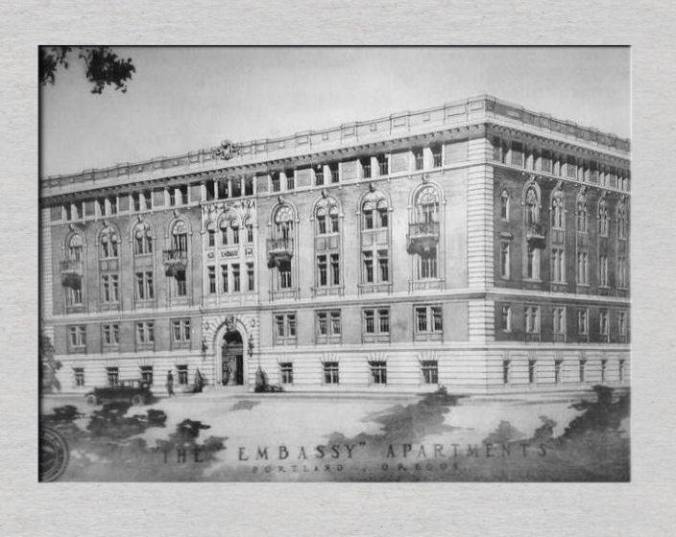
The 1923 elevation drawing by architect Carl L. Linde, a copy of which is hung opposite the elevator on the first floor, does not indicate the colors for the entry facade. The drawing does seem to show the surround as somewhat lighter than the tinted concrete and the doors as quite dark. Dark, varnished “Philippine Mahogany” was used throughout the building and survives on the back of the outer doors and the inner entrance doors, and the hall side of each apartment door. Though somewhat damaged, this woodwork remains beautiful and original. The outer doors have, aside from scratches and gouges, rot at the bottoms. Ideally, the doors should be taken down and repaired or completely rebuilt to the original design, which would be very expensive.
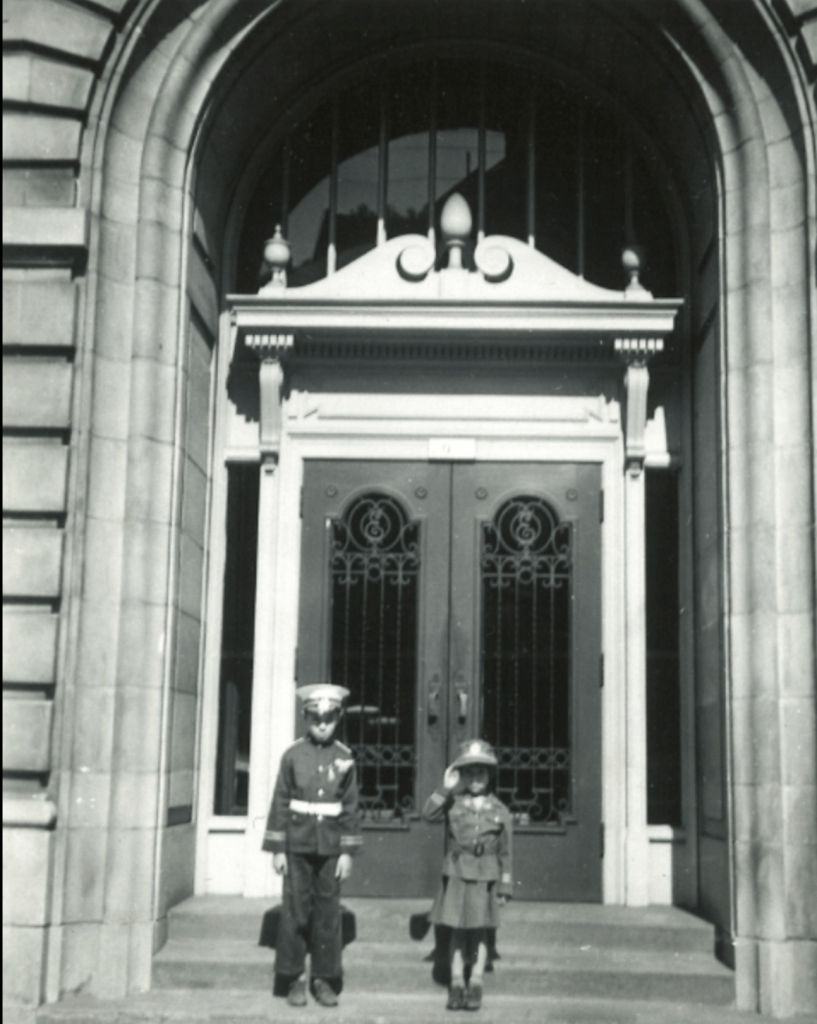
This B&W photo from WW2 shows the contrast between the very pale-painted surrounding woodwork and dark mahogany doors. The iron grillwork on the doors was removed years ago, but the Association has one as a model that could be used to replicate them.
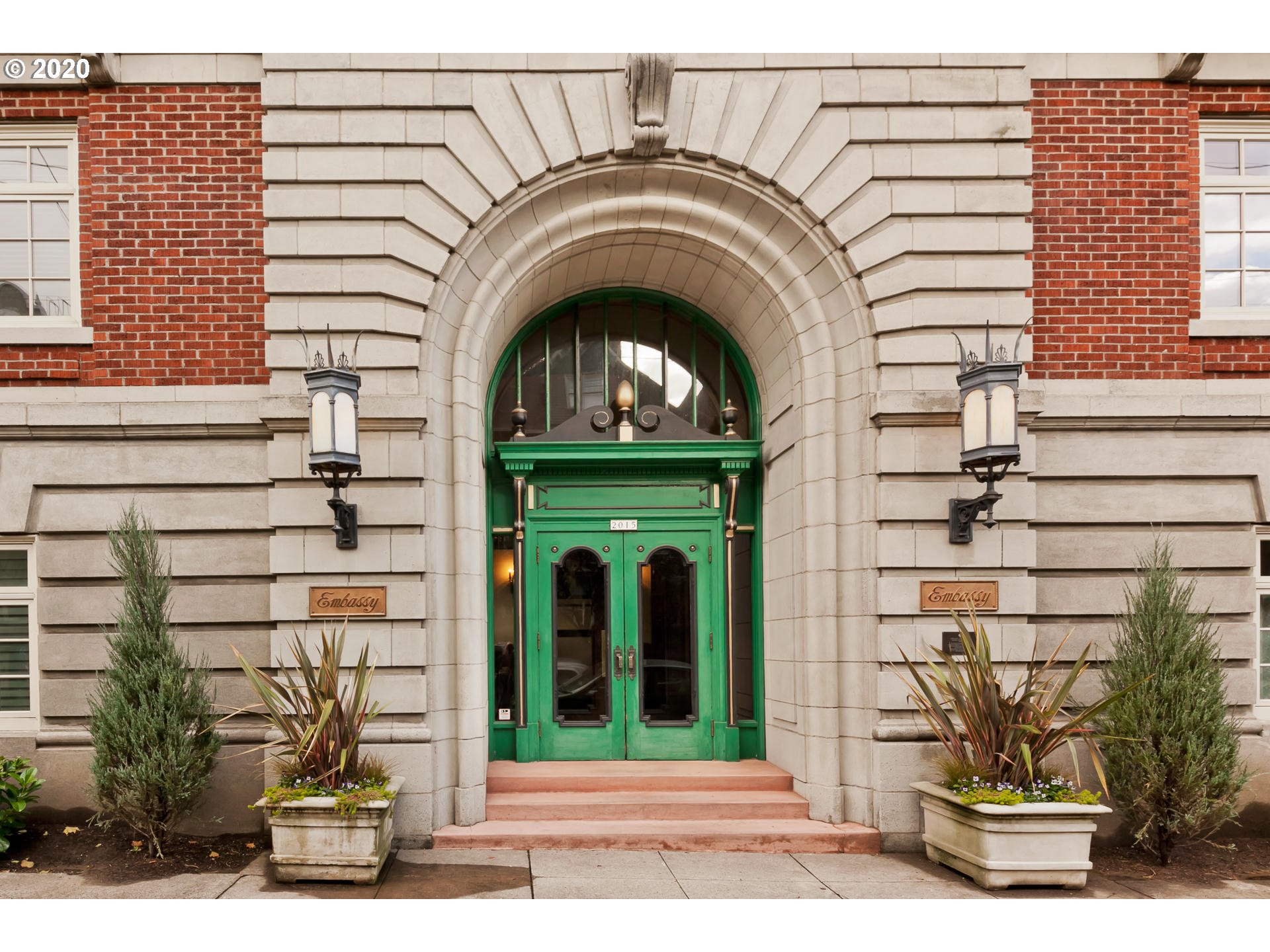
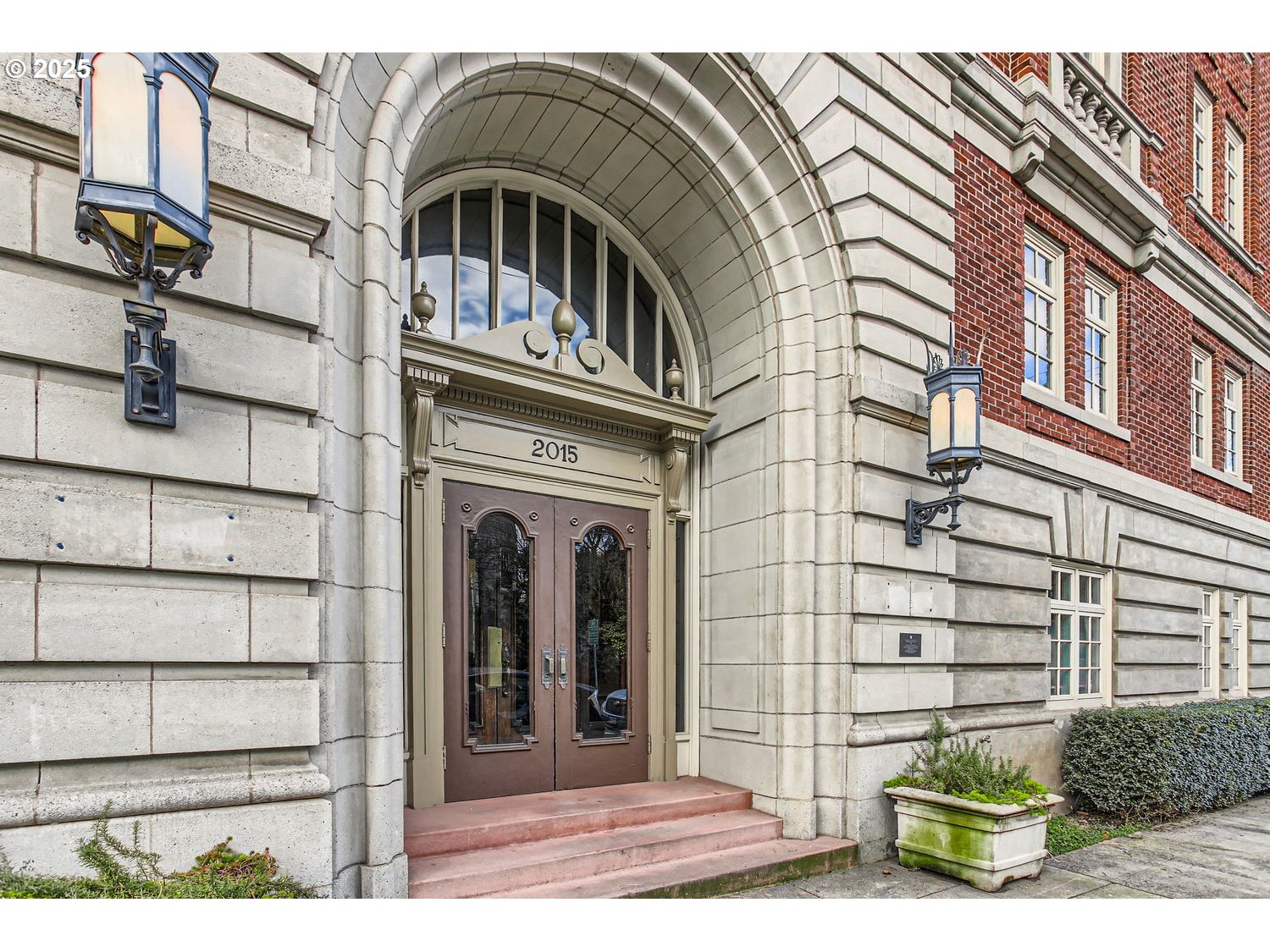
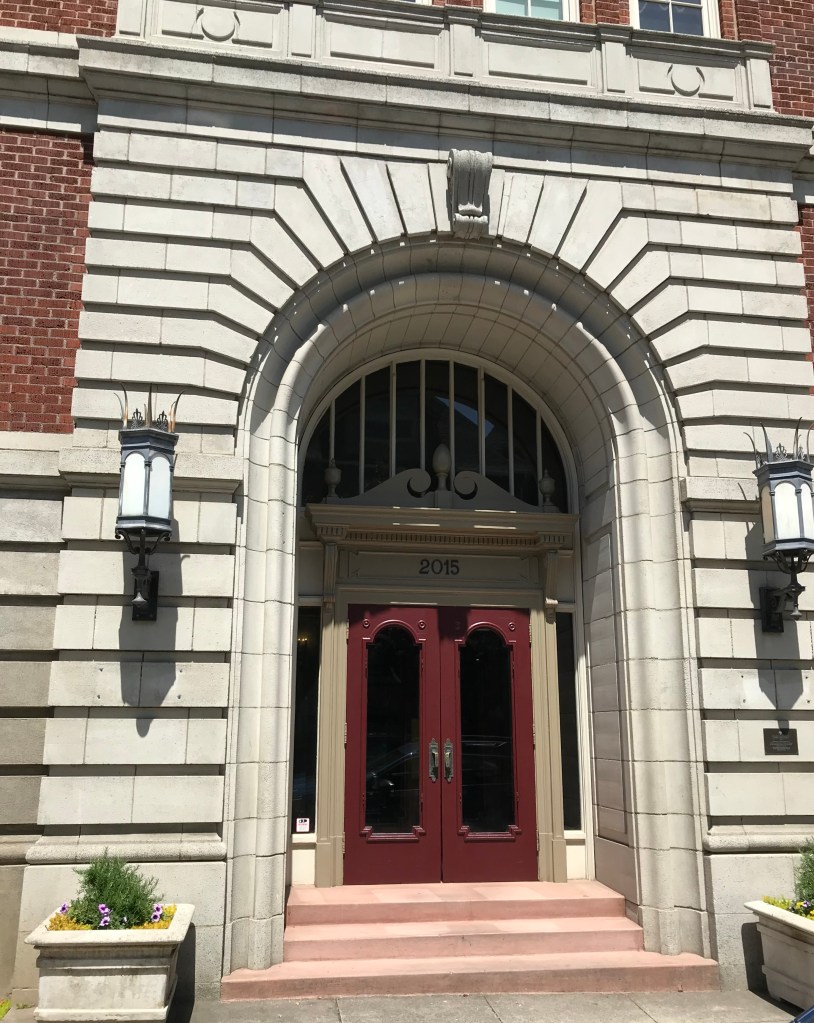
LEFT: This is how the entrance looked four years ago. Many residents loved this. The painted black and gold surround and green doors were cheerful and distinctive. Nevertheless, the color choices are totally out of line for the period (1924) and had detractors who viewed them as inauthentic. RIGHT: This is the way the entrance looked yesterday. The value of the surround is closer to the original facade, but in a pale cream and a putty that’s darker than the original. The brown chosen for the doors themselves was also wrong—too light and the hue is not close to the originals of this building on the National Historic Register.
The aim was to approach with paint the hue (color) and value (darkness or lightness) of the original doors. At a local paint store someone color-matched dark-stained Philippine Mahogany, a mahogany-like color. It’s a couple of steps darker than a paint color original to the building and still found on the inside of the storage room doors, so there was some historical consistency.
That same someone prepped and put one coat on the doors. The first resident passed while walking his dog right at the start of the repaint. “What are you doing?” “Painting the doors.” He said, “Not good.” By the time it was half done, several passing people complimented the new color. A resident loved it. Another resident was expected to yell, did at first, but then said thank you.
The cost of repainting the doors and surround in green, black, and gold has been bid at least $6k. Here is a stylish upgrade for no cost to the Association at all.
The goal was to take the front doors back close to their original appearance. The very dark red-brown shows up with elegance against the putty and cream of the surrounding woodwork and plays to the color of the hundred-year-old brick.

28 September 2025: My intention in this post was to explain what I did and why. Because I have recently been called out for failing to apologize for breaking “the rules we all agree to” I will confirm that I immediately apologized to the Board months ago, in writing, and now add to everyone in the Embassy: I am sorry for offending community standards and breaking rules.



 IMPERFECT PATIENCE