An imperturbable demeanor comes from perfect patience. Quiet minds cannot be perplexed or frightened, but go on in fortune and misfortune at their own private pace like a clock during a thunderstorm.—Robert Louis Stevenson
The air is clear here and has been good for days now. Rain has settled smoke out of the sky and made fighting the fires more possible in other parts of the state. Two weeks ago a powerful windstorm knocked leaves off trees, stripped some alder trees almost bare, stripped flowers and leaves from the lacecap hydrangea in our yard, and knocked down trees and power lines locally. Our fallen power mast has been replaced and insurance will pay all but the $1k deductible. No one was hurt, but that and the smoke might explain the behavior of some birds. The clean air explains this morning’s sky tinted pink the way it should be, and two skinny trees are still clinging to the cape.
Our sons and their families are well. As Gary said just a few minutes ago: We did the best we could and not a bad job raising our boys. Now it’s up to them.
We walked long yesterday and creek to creek today. The baby crabs have continued to surprise us in their variety. There was a seal just offshore the other day. We heard but did not see our favorite black oystercatcher child. The young eagles have moved on, the ravens are about, fifteen crows have been hanging together on the sand, in trees, in flight. An extended family.
Ruth Bader Ginsberg has left the building. I read some comments in major newspapers that blame her for not retiring earlier while Obama could have replaced her. Why pretend it’s her fault for not guessing she would die? Why pretend McConnell would have allowed anyone with her heart, honor, and steel to replace her? Why not blame how people ought to have voted in the last Presidential election? Why not go back to the 90s and blame the failure to eliminate the Electoral College? Why not blame . . . well, this does no good at all.
We all did the best we knew how. Now it’s up to us all to find a way to make it better.
Today is the last full day of summer. Gary and I sat on the deck and talked about repairs and gardening and tidying that we will begin now and complete . . . probably never. There is always something that needs doing. Something we must put on a list and check off after it’s done.
This past year has seen many changes for us. A marriage is coming apart, but not ours. I vowed to buy no more than eight items of clothing during this entire year and it looks like I will manage that. We stopped gathering trash off the beach, though Gary still carries an old plastic bag in case of syringes or fluorescent lightbulbs cast onshore—we’ve gathered many. We gave up all seafood at New Years and going-on nine months in, I think we do not miss it much. We are fully vegetarian. I have only the frame and border to sew onto a quilt top and I expect to finish it tomorrow. I have lost count of how many quilts and weavings I have completed so far this year, but there is a present waiting for me to pack it up for mailing to a dear woman and a wedding present for a former student who is having a virtual ceremony next month. I am invited to participate in a couple of events virtually that I would not have been able to attend in person. It is the new normal, in a good way.
I painted the stair treads dark green. I let the front yard grow wild. I have hung things on my walls that I have been meaning to hang for years. The painting by Jeanie Tomanek never arrived. “Soul Queen” is lost forever, but I have “Bramble” on my wall. The handmade Russian doll by Marina Glebova took four months to arrive and I am more than half convinced that customs took her apart before sending her on. Now she lives under a glass dome on my dressing table that once belonged to my mother.
“Soul Queen” by Jeanie Tomanek
But RBG is gone and members of my family are way beyond “unwell” and into what I cannot call anything less than “mentally ill.” One of them spills madness into my husband’s ear on the phone, believing all the conspiracy theories and that everything is ugly and cruel. But then so do other people I know (and many I do not know) believe in cruelty—people who are not even schizophrenic. While I was writing this, one of them tried to post a vile comment about Ginsberg, but I will not approve it. I am not such a “toad” or “fool” as to allow space to someone who posts hate, and anonymously. That poster meant only to hurt, and succeeded. Yippee for them. I would prefer to be hurt than hurter.
Stories stir in my head, but I am not yet writing them. I think maybe in November I will try NaNoWriMo here. I have an essay coming up on 16 October on Brevity, the day before my birthday. I thought I didn’t have anything left to say, but then I did.
I am taking a break from this blog. This is my last post for a while. I thank my readers for being here, for reading, and for their thoughtful and often kind comments. I expect to be back. Maybe in a few weeks, or in winter or the new year or even sooner when something wonderful happens.
I cannot begin to do her justice. She was an uncaped crusader, an advocate for justice at every stage of her life—the finest role model I can think of. Ginsburg expressed a modest view of a Supreme Court justice’s role: “Judges are something like firefighters. They don’t make the fires, but they do their best to put them out.”
Supreme Court Justice Ruth Bader Ginsburg, a diminutive yet towering champion of human rights who became the court’s second female justice, died Friday at her home in Washington DC. She was 87.
“Joan Ruth Bader was born in Brooklyn, New York, in 1933, the second daughter in a middle-class family. Her older sister, who gave her the lifelong nickname ‘Kiki,’ died at age 6, so Ginsburg grew up in Brooklyn’s Flatbush section as an only child. Her dream, she has said, was to be an opera singer.
“Ginsburg graduated at the top of her Columbia University law school class in 1959 but could not find a law firm willing to hire her. She had ‘three strikes against her’—for being Jewish, female and a mother, as she put it in 2007.
“She had married her husband, Martin, in 1954, the year she graduated from Cornell University. She attended Harvard University’s law school but transferred to Columbia when her husband took a law job there. Martin Ginsburg went on to become a prominent tax attorney and law professor. Martin Ginsburg died in 2010. She is survived by two children, Jane and James, and several grandchildren.
“Ginsburg once said that she had not entered the law as an equal-rights champion. ‘I thought I could do a lawyer’s job better than any other,’ she wrote. ‘I have no talent in the arts, but I do write fairly well and analyze problems clearly.’ ”—Associated Press
The loss is enormous. Our loss. The nation’s loss. The loss to humanity.
Mourners gather at the steps of the Supreme Court.
from Heather Cox Richardson’s post “Letters from an American”:
Tonight, flowers are strewn on the steps of the Supreme Court, where “Equal Justice Under Law” is carved in stone. More than a thousand people gathered there tonight to mourn the passing of Justice Ruth Bader Ginsburg, who died today from cancer at age 87.
Justice Ginsburg was born in Brooklyn, New York, on March 15, 1933, in an era when laws, as well as the customs they protected, treated women differently than men. Ginsburg would grow up to challenge the laws that barred women from jobs and denied them rights, eventually setting the country on a path to extend equal justice under law to women and LGBTQ Americans.
Joan Ruth Bader, who went by her middle name, was the second daughter in a middle-class family. She went to public schools, where she excelled, and won a full scholarship to Cornell. There, she met Martin Ginsburg, and they married after she graduated. “What made Marty so overwhelmingly attractive to me was that he cared that I had a brain,” she later explained. Relocating to Ft. Sill, Oklahoma, for her husband’s army service, Ginsburg scored high on the civil service exam but could find work only as a typist. When she got pregnant with their daughter Jane, she lost her job.
Two years later, the couple moved back east where Marty had been admitted to Harvard Law School. Ginsburg was admitted the next year, one of 9 women in her class of more than 500 students; a dean asked her why she was “taking the place of a man.” She excelled, becoming the first woman on the prestigious Harvard Law Review. When her husband underwent surgery and radiation treatments for testicular cancer, she cared for him and their daughter, while managing her studies and helping Marty with his. She rarely slept.
After he graduated, Martin Ginsburg got a job in New York, and Ginsburg transferred to Columbia Law School, where she graduated at the top of her class. But in 1959, law firms weren’t hiring women, and judges didn’t want women—especially mothers, who might be distracted by their “familial obligations”– as clerks. Finally, her mentor, law professor Gerald Gunther, got her a clerkship by threatening Judge Edmund Palmieri that if he did not take her, Gunther would never send him a clerk again.
After her clerkship and two years in Sweden, where laws about gender equality were far more advanced than in America, Ginsburg became one of America’s first female law professors. She worked first at Rutgers University– where she hid her pregnancy with her second child, James, until her contract was renewed—and then at Columbia Law School, where she was the first woman the school tenured.
At Rutgers, she began her bid to level the legal playing field between men and women, extending equal protection under the law to include gender. Knowing she had to appeal to male judges, she often picked male plaintiffs to establish the principle of gender equality. In 1971, she wrote the brief for Sally Reed in the case of Reed vs. Reed, when the Supreme Court decided that an Idaho law specifying that “males must be preferred to females” in appointing administrators of estates was unconstitutional. Chief Justice Warren Burger, who had been appointed by Richard Nixon, wrote: “To give a mandatory preference to members of either sex over members of the other… is to make the very kind of arbitrary legislative choice forbidden by the Equal Protection Clause of the Fourteenth Amendment” to the Constitution.
In 1972, Ginsburg won the case of Moritz v. Commissioner. She argued that a law preventing a bachelor, Charles Moritz, from claiming a tax deduction for the care of his aged mother because the deduction could be claimed only by women, or by widowed or divorced men, was discriminatory. The United States Court of Appeals for the Tenth Circuit agreed, citing Reed v. Reedwhen it decided that discrimination on the basis of sex violated the Equal Protection Clause of the Fourteenth Amendment to the Constitution.
In that year, Ginsburg founded the Women’s Rights Project at the American Civil Liberties Union (ACLU). Between 1973 and 1976, she argued six gender discrimination cases before the Supreme Court. She won five. The first time she appeared before the court, she quoted nineteenth-century abolitionist and women’s rights activist Sarah Grimke: “I ask no favor for my sex. All I ask of our brethren is that they take their feet off our necks.”
Nominated to the bench by President Bill Clinton in 1993, she was confirmed by a vote of 96 to 3. Clinton called her “the Thurgood Marshall of gender-equality law.”
In her 27 years on the Supreme Court, Ginsburg championed equal rights both from the majority and in dissent (which she would mark by wearing a sequined collar), including her angry dissent in 2006 in Ledbetter v. Goodyear Tire & Rubber when the plaintiff, Lilly Ledbetter, was denied decades of missing wages because the statute of limitations had already passed when she discovered she had been paid far less than the men with whom she worked. “The court does not comprehend or is indifferent to the insidious way in which women can be victims of pay discrimination,” Ginsburg wrote. Congress went on to change the law, and the first bill President Barack Obama signed was the Lilly Ledbetter Fair Pay Act.
In 2013, Ginsburg famously dissented from the majority in Shelby County v. Holder, the case that gutted the 1965 Voting Rights Act. The majority decided to remove the provision of the law that required states with histories of voter suppression to get federal approval before changing election laws, arguing that such preclearance was no longer necessary. Ginsburg wrote: “[t]hrowing out preclearance when it has worked and is continuing to work to stop discriminatory changes is like throwing away your umbrella in a rainstorm because you are not getting wet.” As she predicted, after the decision, many states immediately began to restrict voting.
Her dissent made her a cultural icon. Admirers called her “The Notorious R.B.G.” after the rapper The Notorious B.I.G., wore clothing with her image on it, dressed as her for Halloween, and bought RBG dolls and coloring books. In 2018, the hit documentary “RBG” told the story of her life, and as she aged, she became a fitness influencer for her relentless strength-training regimen. She was also known for her plain speaking. When asked how many women on the Supreme Court would be enough, for example, she answered “nine.”
Ginsburg’s death has brought widespread mourning among those who saw her as a champion for equal rights for women, LGBTQ Americans, minorities, and those who believe the role of the government is to make sure that all Americans enjoy equal justice under law. Upon her passing, former Secretary of State Hillary Clinton tweeted: “Justice Ginsburg paved the way for so many women, including me. There will never be another like her. Thank you RBG.”
For many, she seemed to be the last defender of an equality they fear is slipping away. Robyn Walsh, a University of Miami religion professor, watched the outpouring of grief after Ginsburg’s death and wrote “It says a lot about us that the loss of one voice leaves women and their allies feeling so helpless. I am grateful for RBG, her advocacy, and her strength. I’m enraged that we find ourselves here.”
That rage, prompted by the prospect of a Trump appointee in Ginsburg’s seat, led donors to pour money into Democratic coffers tonight. Democratic donors gave more than $12.5 million in two hours to the ActBlue donation processing site, a rate of more than $100,000 a minute. The effect of the loss of her voice and vote on the court will become clear quickly. On November 10, just a week after the upcoming presidential election, the court is scheduled to hear a Republican challenge to the Affordable Care Act, also known as Obamacare. In 2012, the court upheld the law by a 5-4 vote.
Ginsburg often quoted Justice Louis Brandeis’s famous line: “The greatest menace to freedom is an inert people,” and she advised people “to fight for the things you care about, but do it in a way that will lead others to join you.” Setting an example for how to advance the principle of equality, she told the directors of the documentary “RBG” that she wanted to be remembered “Just as someone who did whatever she could, with whatever limited talent she had, to move society along in the direction I would like it to be for my children and grandchildren.”
Upon hearing of Ginsburg’s death, former U.S. Attorney and law professor Joyce Vance tweeted, “We should honor the life of RBG, American hero, by refusing to give in, refusing to back down, fighting for the civil rights of all people & demanding our leaders honor the rule of law. This is our fight now.”
Rest in power, Justice Ginsburg.
Tonight, flowers are strewn on the steps of the Supreme Court, where “Equal Justice Under Law” is carved in stone. More than a thousand people gathered there tonight to mourn the passing of Justice Ruth Bader Ginsburg, who died today from cancer at age 87.
Justice Ginsburg was born in Brooklyn, New York, on March 15, 1933, in an era when laws, as well as the customs they protected, treated women differently than men. Ginsburg would grow up to challenge the laws that barred women from jobs and denied them rights, eventually setting the country on a path to extend equal justice under law to women and LGBTQ Americans.
Joan Ruth Bader, who went by her middle name, was the second daughter in a middle-class family. She went to public schools, where she excelled, and won a full scholarship to Cornell. There, she met Martin Ginsburg, and they married after she graduated. “What made Marty so overwhelmingly attractive to me was that he cared that I had a brain,” she later explained. Relocating to Ft. Sill, Oklahoma, for her husband’s army service, Ginsburg scored high on the civil service exam but could find work only as a typist. When she got pregnant with their daughter Jane, she lost her job.
Two years later, the couple moved back east where Marty had been admitted to Harvard Law School. Ginsburg was admitted the next year, one of 9 women in her class of more than 500 students; a dean asked her why she was “taking the place of a man.” She excelled, becoming the first woman on the prestigious Harvard Law Review. When her husband underwent surgery and radiation treatments for testicular cancer, she cared for him and their daughter, while managing her studies and helping Marty with his. She rarely slept.
After he graduated, Martin Ginsburg got a job in New York, and Ginsburg transferred to Columbia Law School, where she graduated at the top of her class. But in 1959, law firms weren’t hiring women, and judges didn’t want women—especially mothers, who might be distracted by their “familial obligations”– as clerks. Finally, her mentor, law professor Gerald Gunther, got her a clerkship by threatening Judge Edmund Palmieri that if he did not take her, Gunther would never send him a clerk again.
After her clerkship and two years in Sweden, where laws about gender equality were far more advanced than in America, Ginsburg became one of America’s first female law professors. She worked first at Rutgers University– where she hid her pregnancy with her second child, James, until her contract was renewed—and then at Columbia Law School, where she was the first woman the school tenured.
At Rutgers, she began her bid to level the legal playing field between men and women, extending equal protection under the law to include gender. Knowing she had to appeal to male judges, she often picked male plaintiffs to establish the principle of gender equality. In 1971, she wrote the brief for Sally Reed in the case of Reed vs. Reed, when the Supreme Court decided that an Idaho law specifying that “males must be preferred to females” in appointing administrators of estates was unconstitutional. Chief Justice Warren Burger, who had been appointed by Richard Nixon, wrote: “To give a mandatory preference to members of either sex over members of the other… is to make the very kind of arbitrary legislative choice forbidden by the Equal Protection Clause of the Fourteenth Amendment” to the Constitution.
In 1972, Ginsburg won the case of Moritz v. Commissioner. She argued that a law preventing a bachelor, Charles Moritz, from claiming a tax deduction for the care of his aged mother because the deduction could be claimed only by women, or by widowed or divorced men, was discriminatory. The United States Court of Appeals for the Tenth Circuit agreed, citing Reed v. Reedwhen it decided that discrimination on the basis of sex violated the Equal Protection Clause of the Fourteenth Amendment to the Constitution.
In that year, Ginsburg founded the Women’s Rights Project at the American Civil Liberties Union (ACLU). Between 1973 and 1976, she argued six gender discrimination cases before the Supreme Court. She won five. The first time she appeared before the court, she quoted nineteenth-century abolitionist and women’s rights activist Sarah Grimke: “I ask no favor for my sex. All I ask of our brethren is that they take their feet off our necks.”
Nominated to the bench by President Bill Clinton in 1993, she was confirmed by a vote of 96 to 3. Clinton called her “the Thurgood Marshall of gender-equality law.”
In her 27 years on the Supreme Court, Ginsburg championed equal rights both from the majority and in dissent (which she would mark by wearing a sequined collar), including her angry dissent in 2006 in Ledbetter v. Goodyear Tire & Rubber when the plaintiff, Lilly Ledbetter, was denied decades of missing wages because the statute of limitations had already passed when she discovered she had been paid far less than the men with whom she worked. “The court does not comprehend or is indifferent to the insidious way in which women can be victims of pay discrimination,” Ginsburg wrote. Congress went on to change the law, and the first bill President Barack Obama signed was the Lilly Ledbetter Fair Pay Act.
In 2013, Ginsburg famously dissented from the majority in Shelby County v. Holder, the case that gutted the 1965 Voting Rights Act. The majority decided to remove the provision of the law that required states with histories of voter suppression to get federal approval before changing election laws, arguing that such preclearance was no longer necessary. Ginsburg wrote: “[t]hrowing out preclearance when it has worked and is continuing to work to stop discriminatory changes is like throwing away your umbrella in a rainstorm because you are not getting wet.” As she predicted, after the decision, many states immediately began to restrict voting.
Her dissent made her a cultural icon. Admirers called her “The Notorious R.B.G.” after the rapper The Notorious B.I.G., wore clothing with her image on it, dressed as her for Halloween, and bought RBG dolls and coloring books. In 2018, the hit documentary “RBG” told the story of her life, and as she aged, she became a fitness influencer for her relentless strength-training regimen. She was also known for her plain speaking. When asked how many women on the Supreme Court would be enough, for example, she answered “nine.”
Ginsburg’s death has brought widespread mourning among those who saw her as a champion for equal rights for women, LGBTQ Americans, minorities, and those who believe the role of the government is to make sure that all Americans enjoy equal justice under law. Upon her passing, former Secretary of State Hillary Clinton tweeted: “Justice Ginsburg paved the way for so many women, including me. There will never be another like her. Thank you RBG.”
For many, she seemed to be the last defender of an equality they fear is slipping away. Robyn Walsh, a University of Miami religion professor, watched the outpouring of grief after Ginsburg’s death and wrote “It says a lot about us that the loss of one voice leaves women and their allies feeling so helpless. I am grateful for RBG, her advocacy, and her strength. I’m enraged that we find ourselves here.”
That rage, prompted by the prospect of a Trump appointee in Ginsburg’s seat, led donors to pour money into Democratic coffers tonight. Democratic donors gave more than $12.5 million in two hours to the ActBlue donation processing site, a rate of more than $100,000 a minute. The effect of the loss of her voice and vote on the court will become clear quickly. On November 10, just a week after the upcoming presidential election, the court is scheduled to hear a Republican challenge to the Affordable Care Act, also known as Obamacare. In 2012, the court upheld the law by a 5-4 vote.
Ginsburg often quoted Justice Louis Brandeis’s famous line: “The greatest menace to freedom is an inert people,” and she advised people “to fight for the things you care about, but do it in a way that will lead others to join you.” Setting an example for how to advance the principle of equality, she told the directors of the documentary “RBG” that she wanted to be remembered “Just as someone who did whatever she could, with whatever limited talent she had, to move society along in the direction I would like it to be for my children and grandchildren.”
Upon hearing of Ginsburg’s death, former U.S. Attorney and law professor Joyce Vance tweeted, “We should honor the life of RBG, American hero, by refusing to give in, refusing to back down, fighting for the civil rights of all people & demanding our leaders honor the rule of law. This is our fight now.”
Rest in power, Justice Ginsburg.
May her memory be a blessing.
•
Generalizations about ‘the way women are,’ estimates of what is appropriate for most women, no longer justify denying opportunity to women whose talent and capacity place them outside the average description.
Justice Ginsberg, 1996, in arguing that Virginia Military Academy (a public educational institution) should open admission to women
There is a spruce tree falling off the headland—you can see it sticking out not quite at the top. Even nature changes direction over time.
This year I developed a new habit with books. As I finish a book, I make the decision: Will I ever want to read or refer to this book again? Will I want to lend it to a friend or give it to someone as just right for them? A couple of years ago, I went through my books and sorted out the ones I knew I’d read but didn’t like well enough to miss. Even so, I have thousands of books. Whatever anyone tells you, you CAN have too many books. When there is no longer room to place one more bookcase against a wall, start making the hard choices.
attempted comment on “Aspirational Clutter”
My comment (above) is awaiting moderation on a website I frequent. It’s been there for an hour. I cannot see how to either delete it or fix it. I do not know what I should fix. That’s never happened to me before. I was invited to describe personal decluttering challenges, and that’s what I did. I understand there is some sort of logarithm that determined my post might have violated the site’s “community standards”, I just can’t figure out what I did wrong. Can you? No vulgar words here. No personal attacks. It does not contradict another person’s comment—quite the opposite. Is the use of all caps in “CAN” the problem? But someone else did that too.
The editors are not censoring me. They only want me to be polite. At least I hope that’s the goal. They also want to protect their brand.
Of course I monitor all the comments on my own blog. I try to address them immediately, though I can do this only from my laptop. The only ones I do not let through would be spam, and the WordPress filter pretty much always catches that before I do.
That got me thinking: Surely the filters for FaceBook and Instagram could do better than this. They must. Assuming the effort is made to keep lies and cruelty off the sites?
On the other hand, the reason I left FaceBook was that I was tired of putting out fires. Metaphorical fires, but the similarity to the literal fires we are suffering from here in Oregon might stand. Ugly lies are spread because people believe them and fail to factcheck. Factchecking was about 20% of what I did when I was grading persuasive essays written by teenagers as a teacher. I got to be pretty good at it. And as a teaching professional, I took it upon myself even before FaceBook to confirm or debunk claims.
In the 90s, a medical resident who was also poetry editor for a prestigious literary journal foolishly (imo) revealed on a literary chat-site how he sorted the poetry submissions as they came to him. The first cut was whether they got his name right on the outside envelope. Then he tossed the ones that were not typed, had typos, etc. People were outraged, they threatened his safety, questioned his humanity. To be fair to the editor, the man received thousands of submissions in a week. Working through his inbox would be a nightmare for anyone, and he was almost a doctor. He was an unpaid volunteer doing the best he could. Plus publication in the highly-respected journal he worked for would be a professional coup for any poet. If the submitter didn’t care enough to spell the editor’s name correctly or know enough to type their work, they probably are too new to have earned publication. Let those who have devoted years to their craft advance to the front of the line. Younger, newer poets found his strategy for shortening his to-read pile arbitrary and cruel. I tried hard to balance acknowledgement of understandable outrage with the overwhelming and unpaid task the editor faced.
There have been other verbal firestorms I have attempted to douse and nearly always without effect. It was hard for me to accept that. I wanted to help, my intention was always to be helpful, but there is a kind of arrogance in that thinking—assuming I know best, and all that. Most people do not appreciate being corrected even if they are actually wrong and will resist changing their minds on principle. While trying to put out fires I sometimes fanned the flames.
Literal fire, on the other hand, is dangerous in other ways. The West is on fire and the very air we breathe is unsafe. However much we might want to place specific blame—the campfire that got out of hand, the homeowner allowing brush to build up to close to their home, the lack of funding to research wildfires and develop a proactive approach to fire—the truth is complicated and deadly.
The West is on fire, and I came to understand why east coast newspapers were giving so much space to the smoke when I realized it had drifted over Iceland and was approaching the European mainland. What happens here affects people many thousands of miles away.
Gary has a brother in Tennessee and a niece in Kentucky, but the rest of our close family lives in the PNW. Some of our friends and relatives are Trump supporters, some are solidly democratic. We have a friend who recently transferred his loyalty from Trump to Jesse Ventura. There is just no telling people what or who to believe.
In The Fire Next Time, James Baldwin explored the roots and responses to systemic racism. That is another fire we seem finally to have decided to fight—the burning devastation of bigotry. I highly recommend Baldwin’s book. Baldwin is brilliant, compassionate, and true. And yet, the feds have recently outlawed training that confronts “white privilege”. That term comes from an essay by feminist Peggy McIntosh, who made it simple in “White Privilege: Unpacking the Invisible Knapsack.” There are many versions of this 1989 essay available, and I can recommend it. I can also recommend a powerful response from another woman: “Explaining White Privilege to a Broke White Person” published in 2014. Between the two, they might just start a fire for anyone willing to read and think about them.
Some foresters have been trying for decades to explain why not all fires are bad, that some are necessary to make us safer in the future.
What we do here and now affects not just those around us but our entire world. What we are willing to research and factcheck makes a difference. Many fires are burning. The solutions are not simple, but they rely on all of us if we hope to thrive.
I have too many books, more than I can find space for on shelves. That doesn’t mean I will stop reading.
We’ve had our walks yesterday and this morning and did not smell smoke at all. I smelled only ocean yesterday, just purely ocean. Today, also chlorine in a stream and then something unidentifiable and sweet in the air.
Heavy fog when we went out just after low tide today—so thick we found the sweet spot where we could see neither shore nor surf. It is a rare thing and did not last till we turned around for home. The fog lifted as the sun rose. Every receding wave has left a line of spruce needles on the sand—a dozen lines—where usually there is only a single line of broken shells, seaweed, and feathers. Whole trees and shrubberies were nearly stripped of leaves during the wind last week. The sun was red coming up today, but my camera cannot capture that effect.
Overhead blue sky with clouds like thin curdled milk.
Gary was out scrubbing and refilling the bird bath yesterday. He says Steller’s jays have been picking up and moving rocks around in the garden. Not tiny rock, but rocks he thought were too big for them to lift. He watched them doing it but can’t explain why. Perhaps they are teasing.
There is a new pair of scrub-jays in the spruce trees next door. We have never seen them here before. (We saw them last summer in the NE corner of the state and so did others who were told by an officious biologist they were absolutely wrong because such birds could not exist there. Gary and I said nothing but exchanged a look and shrug. [photo below] I was told by a man in 2005 that I could not possible have seen Steller’s jays in Portland as a child or at the coast. He had lived in the PNW for a little over a year. “Men explain things to me.” Ha!)
The black oystercatcher pair have successfully raised a baby this year—the species is struggling but the juvenile seems well (see above). There were no birds resting at Asbury Creek north of our home this morning. [Current maps show Shark Creek as a tributary of Asbury, but my 1941 map shows Shark Creek reaching the beach further north where my online map shows a different, unnamed waterway.]
On the way home we saw several gulls eating stranded crabs.
The bald eagles have also successfully raised two babies.
Hundreds (Gary says thousands) of brown pelicans have flown over with fourteen in residence this season. When we moved here in 1979, we saw no brown pelicans because they were on the endangered species list. Today they are “of least concern.”
Thank Rachel Carson and her warning book Silent Spring.
Below is yesterday’s entire post from Heather Cox Richardson that arrived in my inbox after midnight. I know people do not read my blog for political wisdom, but I need to clear the air. My grandchildren can’t breathe. Richardson has more than enough wisdom to share. I wish more people were reading her. It can be empowering to remind ourselves that the majority of Americans care about democracy and our nation, are concerned about truth and justice—what in my childhood was termed “the American way of life.” This is a reminder to vote.
Exactly a year ago, after about a six-week hiatus during the summer, I wrote a Facebook post that started:
“Many thanks to all of you who have reached out to see if I’m okay. I am, indeed (aside from having been on the losing end of an encounter with a yellow jacket this afternoon!). I’ve been moving, setting up house, and finishing the new book. Am back and ready to write, but now everything seems like such a dumpster fire it’s very hard to know where to start. So how about a general overview of how things at the White House look to me, today….”
In my roundup, I noted that we had just learned that a whistleblower from within the intelligence community had filed a complaint that the inspector general of the intelligence community, Michael K. Atkinson, deemed “credible” and “urgent.” This meant that it was supposed to go to the Director of National Intelligence to be cleared of anything that needed to be hidden, and then sent on to the House Intelligence Committee. But, rather than sending it to the House as the law required, Trump’s then-acting Director of Intelligence, Joseph Maguire, had withheld it. On Friday, September 13, the chair of the House Intelligence Committee, California Democrat Adam Schiff, had written a scathing letter to Maguire, telling Maguire he knew about the complaint—we now know that Atkinson had alerted him– and that Maguire had better hand it over. Schiff speculated that Maguire was covering up evidence of crimes by the president or his closest advisors.
Readers swamped me with questions. So I wrote another post answering them and explaining the news, which began breaking at a breathtaking pace. Within a week, we had learned that the day after Special Counsel Robert Mueller had testified before Congress and seemed to shut down any further investigation of the 2016 Trump campaign’s ties to Russia, Trump had tried to pressure Ukraine President Volodymyr Zelensky into announcing an investigation into former Vice President Joe Biden’s son Hunter. On July 25, Trump suggested to the new Ukraine president that he would release funds Zelensky badly needed to continue Ukraine’s fight against Russian incursions only after such an announcement. And people asked more questions, and I wrote another post…
And so these Letters from an American were born.
In the 365 days since then, we have lived through the Ukraine scandal, which revealed that the president was secretly running his own foreign policy team whose goal was to strong-arm Ukraine into helping the president’s reelection campaign. Their attempt to get Zelensky not to run an investigation but rather simply to announce one reflected backward onto the 2016 campaign. The 2016 Trump campaign hammered on the Clinton email “scandal,” and badly damaged her candidacy. But, in mid-October, the final report from the State Department concluded that there was no systematic mishandling of information, that people tried to follow the rules, and that none of the information that did get mishandled was classified at the time (some of it was retroactively classified by the Trump administration).
We lived through the abrupt withdrawal of U.S. troops from northern Syria in early October 2019, leaving our former Kurdish allies to be murdered by Turkish troops, just as experts had warned would happen if U.S. troops pulled back. ISIS freed compatriots from jails and launched new attacks, and Russian troops moved into the positions we had held in the region.
We have lived through the House impeachment hearings in October and November, when it became clear that the Republicans were not, in fact, interested in whether or not Trump had committed “high crimes and misdemeanors,” but rather in badgering witnesses to provide sound bites that could be stitched together into a fictional narrative on social media and the Fox News Channel. Then, on December 18, for the third time in history, the House voted to impeach a president. Driven by the Democratic majority, it impeached Trump for abuse of power and obstruction of Congress.
We lived through the Senate impeachment trial early in 2020, where Republican Senators refused to hear witnesses or subpoena documents. On February 5, the Senate acquitted the president of the charges. All but one Republican senator voted to acquit. Utah’s Mitt Romney voted to convict on abuse of power.
We lived through the purge of career government officials and their replacement with Trump loyalists that began two days after Trump’s acquittal. On February 7, Trump dismissed Lt. Col. Alexander Vindman from his position on the National Security Council, where he was an expert on Russia and Ukraine. Vindman had been on the July 25 call and testified before the House Intelligence Committee under subpoena, that White House officials had put the transcript of the call onto a high security server, where national security secrets are held. Vindman also explained that the readout Trump provided the public did not contain key parts of the conversation: Trump had explicitly mentioned both Burisma—the company on whose board Hunter Biden sat– and the Bidens themselves. Trump also ordered the ouster of Vindman’s twin brother, Lt. Col. Yevgeny (Eugene) Vindman, an Army officer on the NSC staff. Since then, Trump has continued to replace career officials with his own loyalists throughout the government everywhere from the Department of Homeland Security and the United States Postal Service through the CDC and the Voice of America.
On the same day he was retaliating against the Vindmans, Trump picked up the phone and called veteran journalist Bob Woodward to tell him there was a deadly new virus spreading around the world. It was airborne, he explained, and was five times “more deadly than even your strenuous flus.” “This is deadly stuff,” he said. He would not share that information with other Americans, though, continuing to play down the virus in hopes of protecting the economy.
This, almost 200,000 of us have not lived through.
And now, as the coronavirus continues to ravage our country, our people, and our economy, the president is trying to win reelection by dividing us, convincing enough voters that “radical leftists” are destroying “Democrat cities” that he can emerge as a “law and order” president. He is suggesting that any result other than his own reelection will be illegitimate, and that he should get a third term because of how badly he has been treated in the first.
It has been quite a year. Those of us who are exhausted have earned it.
But from the chaos and crisis of this past year has emerged a renewed dedication to democracy. You see it in Lt. Col. Vindman telling his father that he would be all right if he testified before Congress against the president, because “this is America… and here, right matters.” You see it in the incredible work of the House impeachment managers and their constant invoking of our Constitution, our laws, and our principles. You see it in how Americans have come together to take care of each other when the federal government went AWOL during the pandemic, and in people of all ages and background mobilizing for Black lives.
You see it in people donating money to candidates and causes, organizing voter drives, and making sure their children and their parents and their cousins and their friends are registered to vote and have a plan to do so. You see it in people working for a cause that is important to them, calling their elected officials at all levels, writing letters to the editor, and pushing back on the false narratives that spread through social media and from there to our communities.
For me, though, I see it most of all right here. I see it in how many of you bother to read these long and complicated letters and who write to ask questions, send me news articles or personal stories, make corrections, and say how afraid you are that we might lose American democracy. I see it in your insistence on facts and accuracy, your constant questioning, your dismissal of trolls and bots, and your kindness to the community you have built. Most of all, though, I see it in your overwhelming support.
I am not exaggerating when I say I have come to see myself simply as a translator. I could not do this without you.
Allegretto Lentissimo

Rain on our rooftop, dribbling, draining down
the side of the house and across the concrete
walkway my grandfather poured, all of this new
moisture pouring back toward the sea. The air
moves counter-tempo, slow rolls from ocean
onto land, a white mist upon thirsty soil, smoke
overlaid, rain gathering, silencing fetid reek
with wet. I am so very grateful for the patter
on skylights, the cooling air, the way my husband
wraps his arms around me as we look to changing
weather. Chosen, explored and confronted, it might
promise something beyond metronome ticking,
the warning of this new pattern, this heat. Dim
puddles from our past and of our future. Time
passes through like wind over water.
This is as clear as Castle Rock has appeared since Monday. It’s right there just left of center, 0.6 miles offshore. Much of the week we have not been able to see it at all, even though we know just where to look. Smoke between here and there has turned the air yellow, the sun, even at noon, no brighter than an orange ball in the sky.
My tongue tastes copper metallic. My throat feels the smoke. Sand blew in the skylights open at the beginning of the week.
Gary and I live in my grandfather’s house on the Oregon coast. My family has been here for 109 years. My mother recalled the Tillamook Burn, the first one. She and her sister played in an ocean that was warm and returned to the house covered in soot. She said it was wonderful fun, but their mother was exasperated. All water in 1933 had to be hauled by hand and warmed on a wood stove. There was not yet a road to leave and my grandfather only came on weekends. Thinking over that story my mother told me, I think my grandmother must have been terrified.
That first of the Tillamook Burn fires began 14 August 1933 and was not extinguished until rainfall put it out the 5th of September. My mother was eight years old. All told, 350 thousand acres burned during those weeks. While that fire still burned, my mother, her sister, my grandmother and grandfather drove north on the beach and then east to escape to Portland, Oregon where they lived nine months of the year.
(The second fire burned 190 thousand acres in 1939, the third burned 180 thousand acres in 1945, and the fourth 32 thousand in 1951 before I was born. These mostly burned over the same ground.)
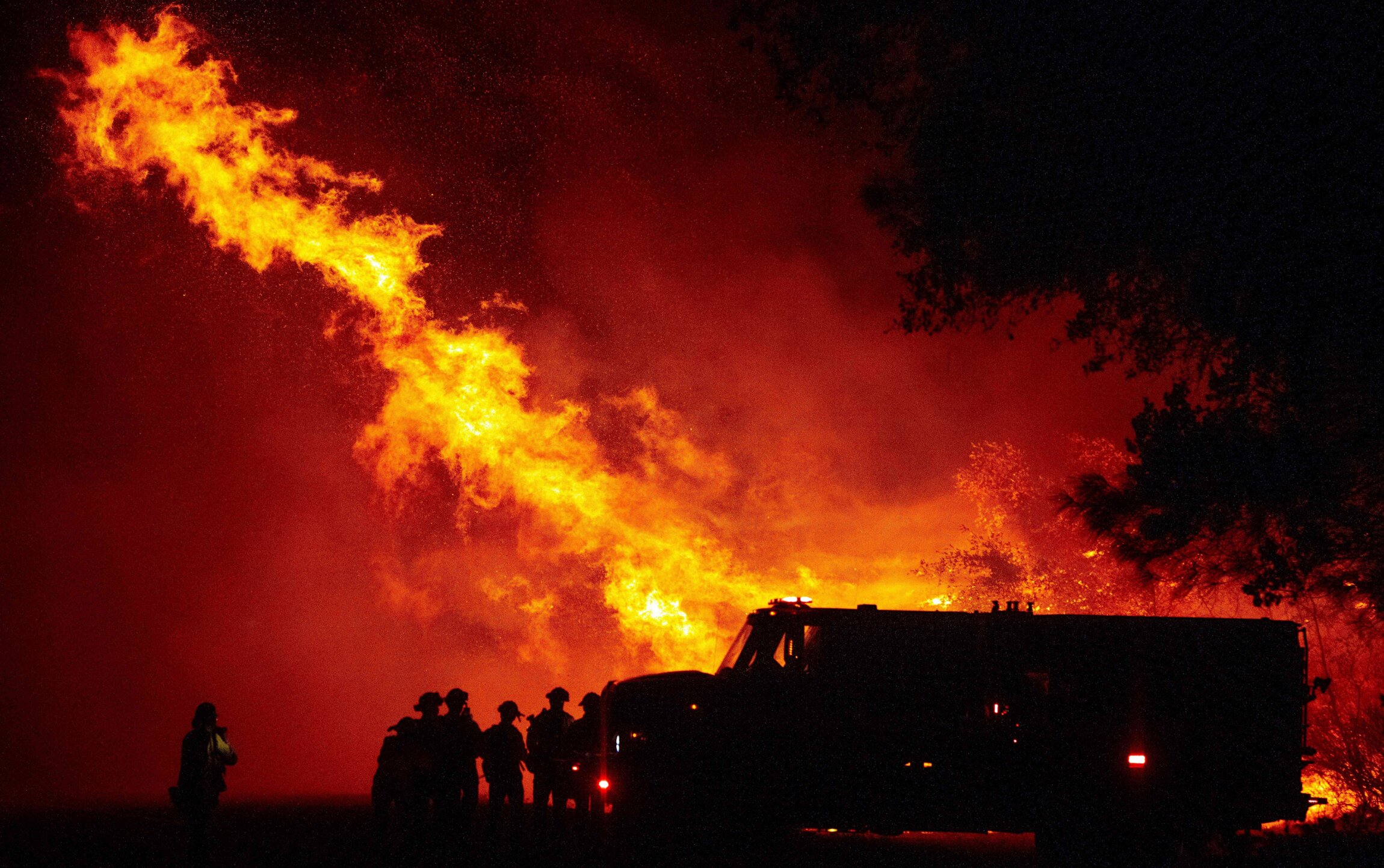
Yesterday, Portland had the worst air quality of any city in the entire world. By this afternoon more acres had burned in the past three days than during all four Tillamook Burns put together. People died—no one is certain how many in my state. Nearly a million acres have burned in Oregon. Many fires are still completely out of control, “uncontained.” Some are predicted to continue burning right through Autumn and into Winter. Firefighters (30% of them college students) are overworked and tired.
The number of acres that have burned in the state in the last three days is almost double the amount that typically burns in an entire year. “We have never seen this amount of uncontained fire across the state,” Governor Brown said.
—The Oregonian
Here, visibility has closed off views north, south, east, and west. The smoke has been so bad sometimes that we could not take our daily walk or open windows. It is worse in the Willamette Valley and further down the coast.
Irresponsible locals blew illegal fireworks into the air at the edge of the State Forest a few days ago. People walk toddlers on the sand. Tourists who arrived yesterday in the rental house next door are burning a wood fire in the fireplace. We shake our heads.
Isn’t it obvious why a smokey fire is a terrible idea? Even on vacation? While forest fires make breathing “hazardous” in nearly the entire state and thousands are homeless? They probably put the air conditioning on because the weather has been unseasonably hot. (But no, they opened windows.)
The yellow sky holds a blood red disk.
The air burns orange, the light
all tinted brass. Take care, dear friends,
it's dangerous. We all still hope
we'll survive this year, more than that:
live to see a yellow sun again,
a blue sky, clouds, and rain in puddles.
Share my faith in future better times,
in quiet walks, a song hummed, truth
told, the news of birds returned to nest.
• from the State of Oregon:
Stay safe from wildfire smoke
As wildfires continue throughout the state, please continue to take care of yourselves and those around you. Keep an eye on local conditions in case evacuation levels change and find resources at wildfire.oregon.gov.
With wildfire smoke creating unsafe air quality conditions that are expected to persist for several days, please remember to follow these tips to protect yourself and your family:
Stay indoors as much as possible.
Limit activity outdoors.
If you have heart or lung disease or respiratory illnesses such as asthma, follow your health care provider’s advice about prevention and treatment of symptoms.
Reduce other sources of smoke, such as cigarette smoking and wood-burning stoves, for example.
Check current air quality conditions. Go to oregonsmoke.blogspot.com to find the current air quality and wildfire smoke resources.
Stay hydrated. Drink plenty of water.
Remember that while cloth masks and face coverings do not protect you from wildfire smoke, they do offer protection against COVID-19. N95 respirators may offer some protection if properly fit-tested and worn. Otherwise, they may create a false sense of security. N95s are not available in children’s sizes.
Learn more about the dangers of wildfire smoke and how you can stay safe by visiting healthoregon.org/wildfires.
•
It is probably fair to note that the State officially asked people to avoid outdoor fires in April. April.
Smoke was easy to see over distance. The western sky was brown. This is not an accurate photo of the what the sun looked like yesterday evening. It was blood red and we could look right at it a couple minutes after this photo was taken, with no after-image at all.
A “boffin” is a pejorative term for the cliché absent-minded professor or scientist.
We are still in summer.
Yesterday, as a result of strong winds beginning the evening before, the power was out here and everything with it. Our flip phone had only two bars and we expected it to run down any second. Even so, Gary was on that phone first thing yesterday morning and found an electrician to have a look at the downed mast that serves our duplex and the power company to disconnect that mast until it can be repaired. The repairs are happening now.
So, more than a day without power, expensive repairs, and so much continued wind and smoke from fires around the state that it remains unsafe to go outdoors for our walk.
And it’s summer.
I spent much of yesterday knitting and plan to do that again today while I watch No Highway in the Sky (1951) on DVD. Jimmy Stewart plays the boffin, a Rhodes scholar who never went home but has continued his scientific research in England at an aircraft company. The film has its roots in Nevil Schute’s novel No Highway with an epigraph from “The Wanderer” by John Masefield:
Therefore, go forth, companion: when you findNo Highway more, no track, all being blind,The way to go shall glimmer in the mind.
Theodore Honey (Stewart) has a theory about vibration causing metal fatigue. As a result the metal in tailpiece of a passenger plane will fail and the tail itself fall off after a measured number of hours of service. Honey is interested in theory alone, not the realities of planes carrying passengers and crew crashing in the wilderness. And that has already happened: a plane has crashed killing all passengers and crew. The tailpiece is missing from the crash. A new administrator at the aircraft company places great faith in Honey, in science over convenience, but others think the boffin is simply crazy.
So here we are. We dismiss the warnings of science at our peril.
Global warming, or “climate change” if you prefer, has been predicted and tracked for decades by scientists. It was controversial at one time, say sixty years ago—that is, there was a time when thinking people disagreed. Rachel Carson, author of Silent Spring (1962), accurately predicted the devastating results of use of DDT. When the poison was outlawed bird species began recovering. In the forty-one years we have lived here, we have seen the return of eagles and pelicans (both endangered in the 60s), as well as two species of jay, ravens, and others. Carson believed in the 1950s that climate change was not human-caused but the result of natural shifts in weather.
Carson died as a result of complications from breast cancer in 1964 before she could see what she started. Despite her background as a marine biologist, she wrote Silent Spring to warn of the dangers of 20th century pesticides, herbicides, and other poisons because no one else would. In the end, people listened to Carson’s warnings and outlawed some of the poisons. She was right about that but she was wrong about global warming.
More than fifty years later, there is no real controversy among scientists about global warming. The cause of climate change is human activity destroying forests, burning fossil fuels, and so on. Human activity will destroy human populations just as DDT destroyed bird populations. It is happening now and has been happening for a very long time in human years; it’s just that we have been hundreds of years noticing. Since the start of the Industrial Revolution. The world is warmer than it would have been without our greed for energy. Temperatures rise of even a few degrees is enough to alter weather patterns that cause drought, melt glaciers, raise sea level, generate more hurricanes and other storms, and other aberrations. Human behavior is the cause, just as we were the cause of near extinction of eagles and brown pelicans.
Technically this is just the beginning of fire season in the western United States, and already millions of acres are burning, records are being set for high temperatures, and firefighters choke on smoke.
And it is still summer. We saved some of the birds. I would like to think we could save us all.
Butte County firefighters watch as flames tower over their truck at the Bear fire in Oroville, Calif., on Wednesday. Fires are burning from Washington state to Southern California.
“In southern Oregon, people in parts of Medford, Talent and nearby communities were ordered to evacuate the area immediately on Tuesday, with officials citing the imminent threat of fast-moving fires. The entire town of Phoenix [Oregon] — which has several thousand people — was told to leave. …
“Deputies in Clackamas County, southeast of Portland, spent the night going door to door to make sure residents knew they had to get out, the county sheriff’s office said. …
” ‘We’re in an unprecedented fire event,’ Oregon Gov. Kate Brown said, urging people to follow evacuation orders, ‘try to reduce your smoke exposure – and take care of each other.’ …
“Across the region, 15 new large wildfires were reported on Monday alone, the National Interagency Fire Center said. That makes at least 87 large fires, which have burned more than 2.7 million acres. Even in places where flames haven’t reached, massive amounts smoke have filled the sky, making it difficult to breathe.”—NPR
Yesterday evening we could not breathe the air that came through an open window. Before summer ends, no rain predicted.
The tail is falling from our plane, and the boffin is still shouting to be heard.
•
Do I need to note that there is a burn ban in effect? Perhaps I should. Yet tourists and less reputable locals have burned cordwood and drift on the beach each evening . . .
“DEQ, in conjunction with the Oregon Department of Forestry, Oregon State Fire Marshal’s Office, Oregon Department of Agriculture and Oregon Health Authority, is asking people to refrain from all outdoor burning activities until further notice.
Updated 9/8/2020: The fire restrictions maps below are having technical issues. Please no burning or campfires while a red flag fire weather warning is in effect until further notice.
Crime tenting cities—my side,
your side, my vision, yours.
Sometimes there is a right side.
Sometimes truth clamors beside
us, riding our hearts, crying,
crying in the night to be heard.

In the sweating darkness,
the red lights scream brightness
against the tender stars, the sirens
and screaming, sweat dripping
salty into open mouths,
their righteousness unbolden.

Is there never a time when violence
does not excite, when tears
fail to touch the rim of our glass?
Everything shatters, everything ends,
is that the truth we long to hear
or the angels of our better nature?

So dear to clearing fog, a mist
rises before us as we walk north,
and to the west there is a stone at sea,
a waiting monument to patience,
a vision, a warmth of community.
Our witness crowds the horizon.
Who was the boss of me? Most often that would have been my mother. Corporal punishment was extremely rare in my childhood. I ran wild in the woods and rode for miles on my bicycle. I came home with frogs and splinters and muddy clothing with the knees worn through. I do not recall being punished for any of that. On the rare occasion I was in deep trouble, I was sent to my room. (“Time Out” had not yet been invented, but “Go to your room until I tell you that you may come out” was pretty much the same thing.) Sending me to my room, I would eventually overhear in adult conversation, was not entirely successful. It seems I liked being in my room and would draw or read books without noticing my punishment.
Mostly I was well behaved. I said please and thank you as I’d been taught. I asked permission. I do not recall ever being deliberately rude to anyone except maybe my brother. Even sibling harassment (which flowed both ways) rarely occurred within earshot of my parents. That definitely led to banishment to my room. I was given rules about how to treat other people. Talking back, disrespect, refusal to do my chores—none of that was tolerated. “Think how the other person must feel,” my mother would say. Think how the other person must feel. I heard it a hundred thousand times. I believed her when she said it was important. She was almost always right, and I wanted to be good.
One painful example of my failure to be good involved thank-you notes. The very idea of writing a thank-you note made my stomach twist. I remember the feeling clearly all these years later, and also that I did not know what to write or how to do it. I suggested that Mom write the note and I would sign it. She actually did that once before she gave up entirely. My resistance was a mystery to me even as a child. Why couldn’t I write the thing? Sixty years later, I think I know. I really really did not know how to do it. There were no lines on the inside of the card, the card was very small, and I was used to lines and big pages and a fat pencil. I needed a model, or for my mother to help me create a model of a thank you note. All I had as an example of writing to my grandparents was watching my mother write letters. A hundred lines of neat writing on thin stationary was not something I could imagine doing.
It sounds ridiculous now to say that I did not know how and needed a model with the words “Thank you Gaga and Papa for the toy rabbit. I played with it all day. Love, Janice,” but I think it’s true. I needed my mother to write out the words for me on a sample piece of paper so that I could understand where to start and where to end. I dearly loved my grandparents. I just did not know how to fit my words on the card.
When I was teaching English to 16 and 17 year olds, I often found myself taking students step-by-step through tasks and ideas that seem obvious to most adults. We memorized The Preamble, wrote essays, took notes in several styles, and we studied the difference between fiction and nonfiction, considered how a person may be wrong without lying, and that it is important to thank the person when completing a personal interview.
When I insisted my Honors students address and mail me a one-page letter proposing their research topic, writing the letter was only half their battle. For a few years, when college applications were still on paper, I insisted they mail the letter to me. They were horrified. (Seriously.) I gave them a printed template for the letter—an outline for four brief paragraphs in full block business letter form with directions—and handed out #10 envelopes. (It was not safe to assume they had access to envelopes at home.) I drew an envelope large on the whiteboard, and demonstrated where to write their return address and the address they must send it to. Yes, they would have to buy a stamp. I told them what it would cost.
No one complained that they already knew this stuff. Almost none of them had ever mailed a letter before. Several told me after the fact that they had never before entered the Post Office, even though many of them did not even have home delivery of mail. They knew how to do many difficult things, but there were massive gaps in their experience even on simple tasks. This was not anyone’s fault. They were smart students, capable and generally willing, but like the definition of “pejorative” and typing an m-dash, they had no experience of how to do it. I needed to explain step by step.
That was me writing a thank you card when I was six. It is like taking a bus, filing taxes, changing a tire. Basic, maybe even essential skills, but someone has to show us the first time. [Full disclosure: I cannot use a smart phone. Yes, I can text—though I don’t—and search the internet, and I am confident I could manage more if it were necessary, but no one has offered to show me how to do anything, and so long as I can avoid figuring it out on my own, I will.]
When I finally sent a colored pencil drawing of a dragon as my thank-you, my grandmother unfolded and pressed it flat, framed it, and Papa put it up on the wall. I was astonished. I had not thought how they would feel. But my mother would continue to remind me.
Simple courtesy is not automatic. If there is crude language or anger or name-calling in the home, a child does not learn that these are unacceptable in the world at large. [I was sent home from school with a note when I was six or seven because I had used a swear word I’d heard at home. That was a mistake I struggled not to repeat with my own children.]
Students deserve respect. And that sometimes meant a detailed explanation of the difference between vulgar language and actual swearing and why the latter is particularly offensive to some people. I assured my students that I was not personally offended by most language, but that it was likely hurtful to some of their peers. In addition, I absolutely did not tolerate racist, sexist, ablest, homophobic, or other bigoted language. I told them such bigoted remarks were personally painful, that I hoped they would show respect toward me as I did toward them. Am I ranting? I do not think so, not quite.
But wait, there’s more. I insisted on some courtesies as necessary to life, just like changing a tire or using a phone. Know how to ask a favor, how to express gratitude, how to respond to someone who has lost their temper. Think about how the other person must feel.
The danger, as I saw it, was that without considering how others felt, my students were likely to be far from home some day and unknowingly offend a person they had absolutely no intention of hurting. That would be sad, I told them, wouldn’t it?
[For years, I also suggested in conversation the very real danger that when they were far from home they would use bigoted language that would get them “stabbed through the heart.” And then that happened to a student I knew. The boy lived, but being rude to some smaller, harmless-looking individual, he discovered they had a bigger cousin.]
Think how the other person must feel. Teasing, loudness, cruel words—think how the other person must feel.
It’s easier, lazier I would argue, not to hold standards, to give in or fail to follow through and strive to be consistent, fair, and clear. Isn’t that the perennial complaint: Kids these days! I hear that even from people younger than myself. But I think they are wrong that kids these days are different. Kids have not changed. Parenting is not harder or easier. I don’t think it was any different for me or my mother or her mother before that. Maybe we can do better.
My mother did not always exercise perfect judgement. She was not perfect. She made her mistakes. But she was the boss of me—as was my dad, grandparents, teachers, and other trusted adults. Mom set standards for my speech and other behavior that continue to guide me in the right direction. She did not necessarily reason with me as a child; she told me that certain words, attitudes, and behaviors were unkind or dangerous. You are not to do that again. It was not a negotiation. It was a rule.
One of the most helpful parenting tips I ever received had to do with the presentation of important rules. Some rules you can work on (guidelines, aspirations?), some are absolute and should not be followed by “okay?” I hear it all the time, that near-automatic request as if for agreement from the child. Do not hit the cat, okay? is not the message you want to deliver. Try: Do you understand? Do you promise? Don’t ask them to agree or disagree unless you are prepared to have them respond to your okay? with no!
I hear that “okay?” at the end of all sorts of parental directions, as if the child has a choice. But sometimes they do not. No toys at the table because banging metal cars dents the wood. You will brush your teeth in the bathroom because it’s easier to clean spit off the mirror than this couch. You will not say mean things to your grandfather because he is trying to help you and you will hurt his feelings.
It’s fair for a child to ask for reasons, and it is fair that a parent does not budge if the reasons seem unreasonable to the child. It is not okay to hit the cat. Not ever.You will not hit the cat, full stop. I want you home for dinner. Call me when you get there. Do not use that word when you are at school. There is no discussion or negotiation about such rules. The child does not have to like these rules or agree to them. They are about proper behavior.
“You will write a letter proposing your research topic, put it in an envelope, and ensure it will arrive in my P.O. Box by next Tuesday.” A discussion follows of how that may be accomplished, of how the mail is delivered, what happens if the letter is late or incomplete. I can explain and defend the need to do it. They have a choice of topic and thesis, Helvetica or Times New Roman font. Not writing the letter is failure of the assignment. Write the letter and mail it. , okay?
The other parenting tip I learned was about threats. Never threaten to do anything you will not actually do. If you threaten to send a child to her room for the entire morning if she hits the cat again, you better be willing to follow through. Mean what you say, make rules only about what is necessary, and if you give directions, do not ask for permission that they be followed but whenever possible offer choices or options you can live with.
As parents, our job is to provide guidance and rules. Maybe we can reason with the child, but if they do not care to listen about the danger of turning the oven on without permission, we insist anyway. Maybe we bargain about playtime and chores and bedtime. We negotiate: do this and you can have that. We do not always give them options. Sometimes we must be the parent: we insist this is what must happen. Behaviors with the potential for injury, pain, offense, unkindness are not subject to negotiation. We do not ask them if it’s okay. We can and certainly should explain the how’s and wherefores of accomplishing what is necessary, but certain behaviors are not acceptable. You will not hit your brother. You will eat your dinner if you want dessert. I am proud of you for holding your temper. I am glad to see you being so careful not to hurt the cat. I know you are disappointed, but I love you anyway.
My mother was the boss of me. During a shopping trip she told me that the four-poster bed I admired was a stupid choice. I was forty years old that day. Mom was still trying to tell me what to do and I was a mother of two teenagers. It made me shrug and change the subject. Well, Mom was not perfect, but she was a good mother and taught me a lot. She irritated me, but I didn’t argue. We moved on to look at chairs because she needed a chair. I bought that bed twenty years later after she died. I laugh when I tell the story because I love her and she loved me. Right or wrong, she was still trying to do her job.
And I was thinking about how the other person must feel.


 IMPERFECT PATIENCE