TEACHING READING

This morning, I read a wonderful Brevity essay by Deborah Ann Lucas, a woman who struggled to read as a child. Her disability was never diagnosed as a child and only found out from her brothers partner as an adult. For years she was insecure about her abilities. The need to tell her story drove her to the page even so. This “Unlikely Writer” is a memoirist and concerned about others who struggle to read.
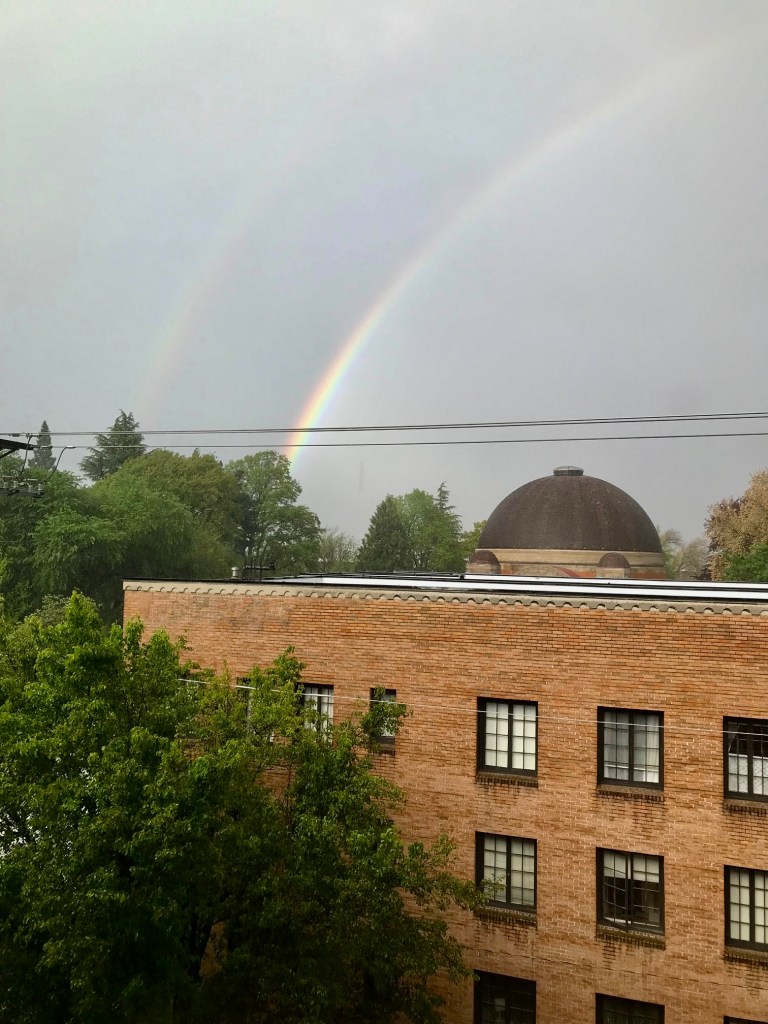
A double rainbow… always a good sign.

Hers is a wonderful story of persistence and determination, and her struggle is familiar to my experience. I taught high school for almost 40 years. Students exhibited learning issues and needs I could address in the way I assigned, presented, and defended assignments. Some students needed blow-by-blow, some needed to hear and ask questions, most benefited from a model of a successful assignment. Always, I told a story. Always, I had multiple goals to share. Always, I did the assignment too.

Continue reading
FRIENDS & FAMILY

I was reading an article about why older people need more friends and suggestions about how to find them (do something different, take up a hobby or join a club) when a woman we met on the beach a couple of times this week and chatted to, rang our garage doorbell and offered her contact information.

Life is wonderful that way sometimes. Full up with wonder.

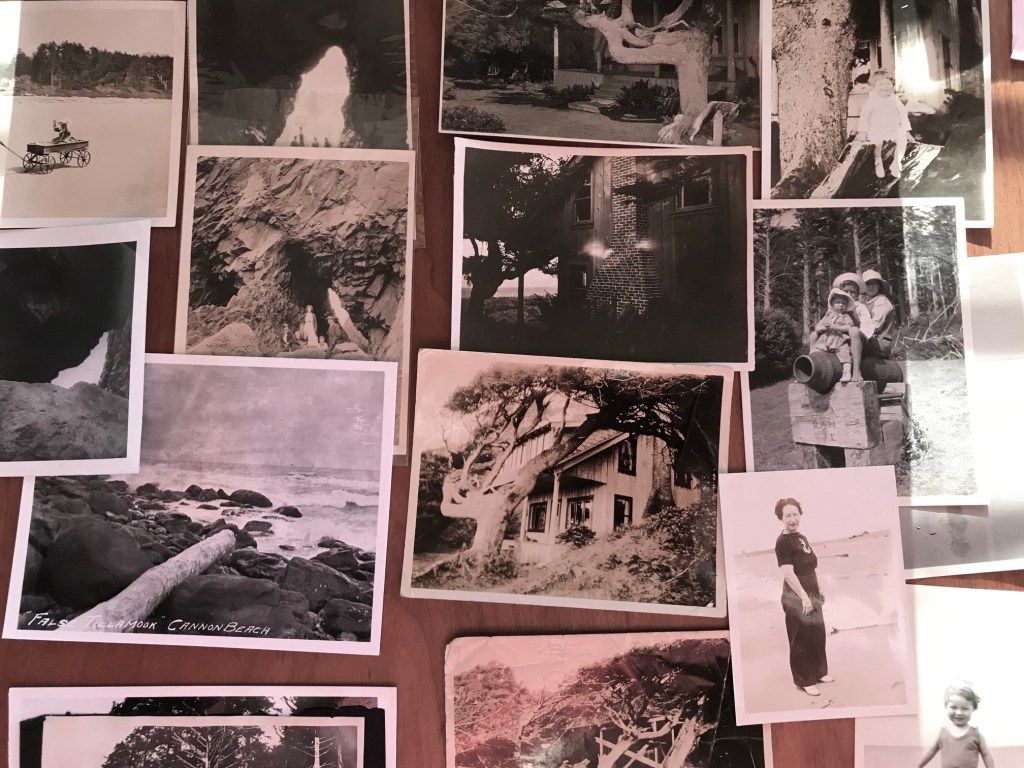
Early snapshots from my family’s summers at Arch Cape. One at left is dated 1913 when this was still called Cannon Beach. In the middle is the old “beach house” my family used Memorial Day to Labor Day until the 1940s. At right is the first cannon found onshore in 1846 (rediscovered in 1898 according to Wikipedia), my grandmother Fay Fletcher Jackson Smith just after the Great War, and my Aunt Marcia as a toddler in 1925. Gary insists we sort them all by the end of summer. He warns: “It’s going to take weeks.”
Continue reading

FORM & FUNCTION

When I was showing dogs back in the 1970s, we had an unpopular bloodline, an unpopular “type” of Afghan Hound. Our dogs were descended from early imports out of Afghanistan and specifically from a Dutch kennel, van de Orange Menage of Eta Pauptit who was a horsewoman to start with. She cared about soundness. She insisted that her dogs be functional. Their feet and frame, the musculature and minds of dogs from the vdOM kennel were consistently tough. They were smart during a period when Afghans were being bred to be flashy. Sturdy when during a period where breeders were choosing fine bones and narrow heads, what a local breeder bragged was “swan”-like.

Our dogs were strong.

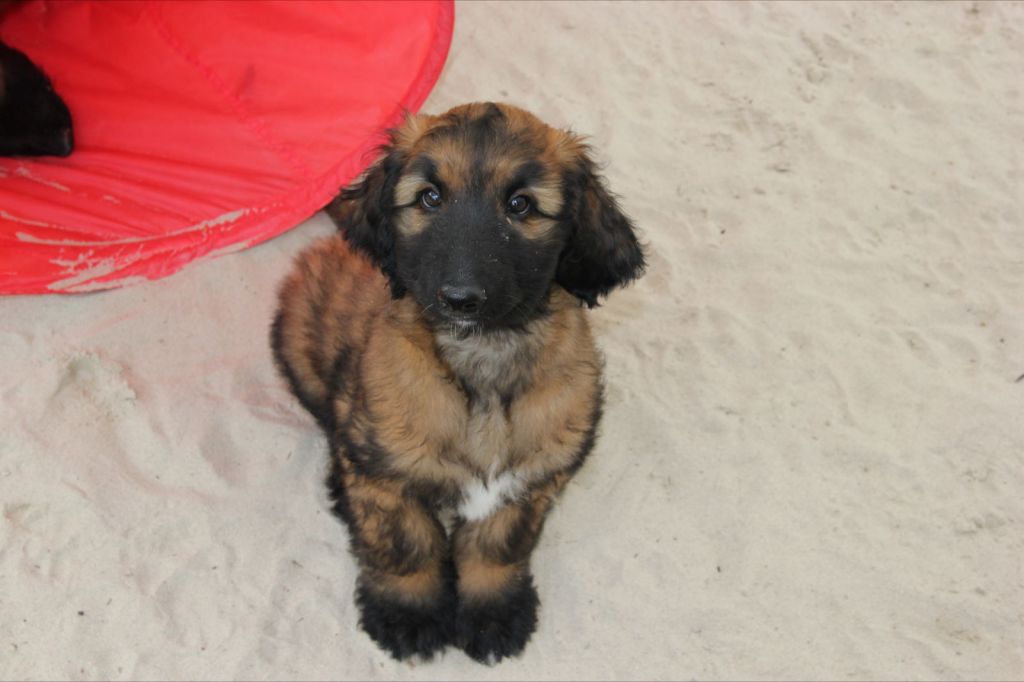
I’m not certain who this is, he’s not one of our pups but what most of ours looked like at five or six weeks. The black edging mostly grows out, leaving a black-masked red dog. Gary’s dog Manny looked like this. Grown, he had ears red as an Irish Setter. In the afghan I crocheted out of different colors of Afghan hair, it’s easy to pick out Manny’s ears. While a black mask on an otherwise red or gold or cream dog was the typical color of early Afghan Hounds, it wasn’t trendy when I was showing dogs of that color.
Continue reading

‘JOLENE’

I took guitar lessons in my teens, and that was a long time ago. The late 60s. I still have the guitar, an unusually sweet Aria nylon-string that I haven’t played in fifty years. Gary cares for it. My lessons from Cathy Mack at Shoreline Music focussed on Childe ballads that Joan Baez was singing. I could finger-pick along with singing “The Trees They Do Grow High” and “The Cherry Tree Carole.” Anyone could play “the House of the Rising Sun” and pretty much every garage band of the day covered that one, though it really only made sense with a woman singing it.

Somehow, that brings me to “Jolene.”

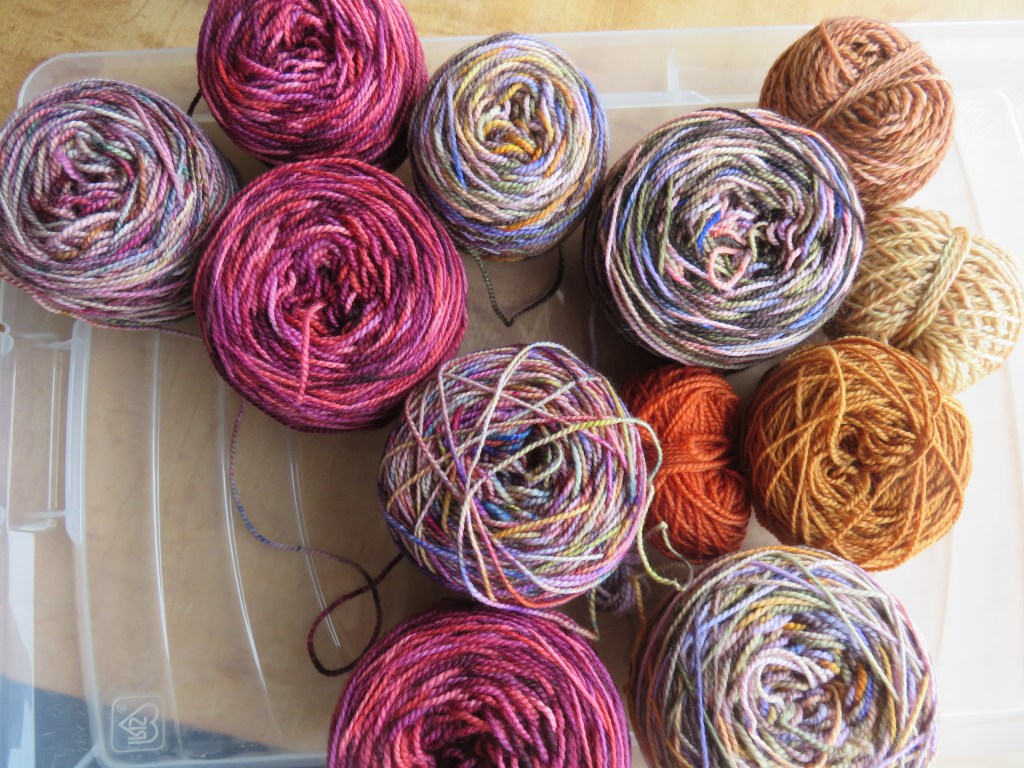
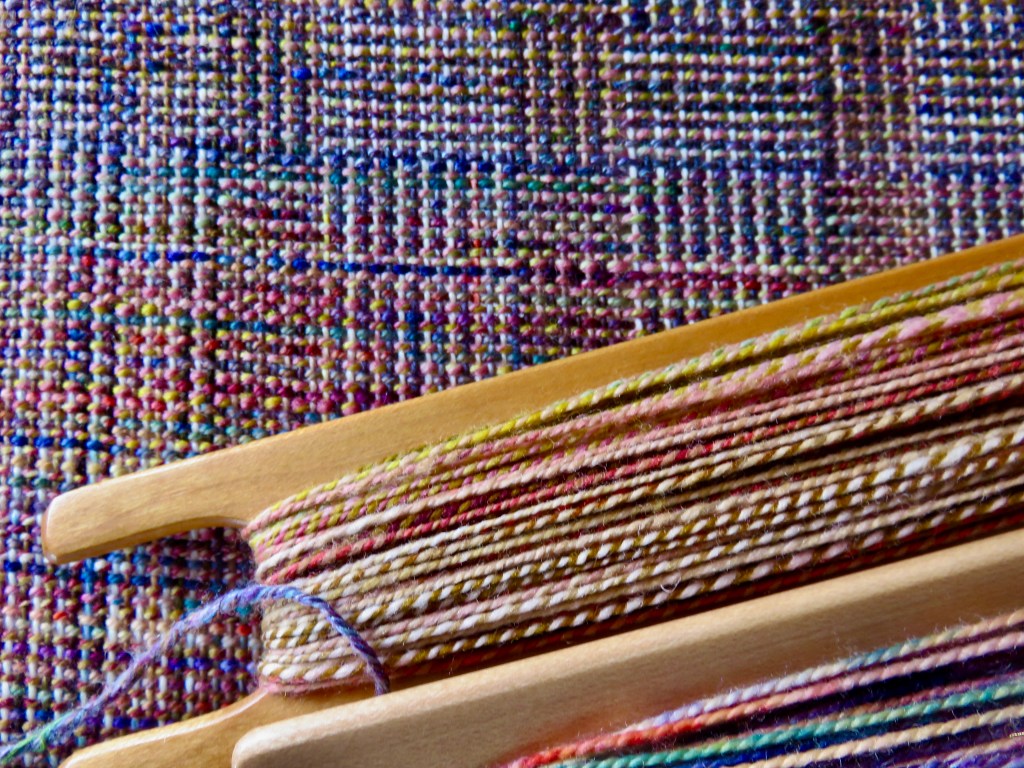
Here are the skeins for the next warp I’m winding. The “Rose Petal” warp is Koigu, which, despite my efforts to find something else, works best as warp and fringe. I’m not sure where that leftover bit of bittersweet orange will land. The weft will be almost entirely handspun. My goal over the last couple of years has been to weave down my stash. I had eight medium bins and a large one. I now have just two medium bins left plus handspun, and I am highly skilled craftsperson in my weaving, not an artist.
Continue reading

WHY I RUN NORTH

I witnessed a baby seal playing in a tide pool. I was too close when it came to the surface from swimming in forward rolls. I backed away fast as I could. Mamma would be out fishing. A while back a woman refused to put her dog on leash. The dog chased a baby seal and I couldn’t stop it. There are federal laws protecting marine mammals from any direct or indirect interference —“including harassment, hunting, capturing, collecting, or killing”. “You’re too close if an animal starts to stare, fidget, or flee into the water. Even if you don’t see these reactions, keep yourself and your pets at least 50 yards away (1/2 a football field). Keep your dog on a leash around seals or sea lions to prevent bites to the dog and the seals or sea lions. And never feed or attempt to feed a seal or sea lion—it’s harmful and illegal.”

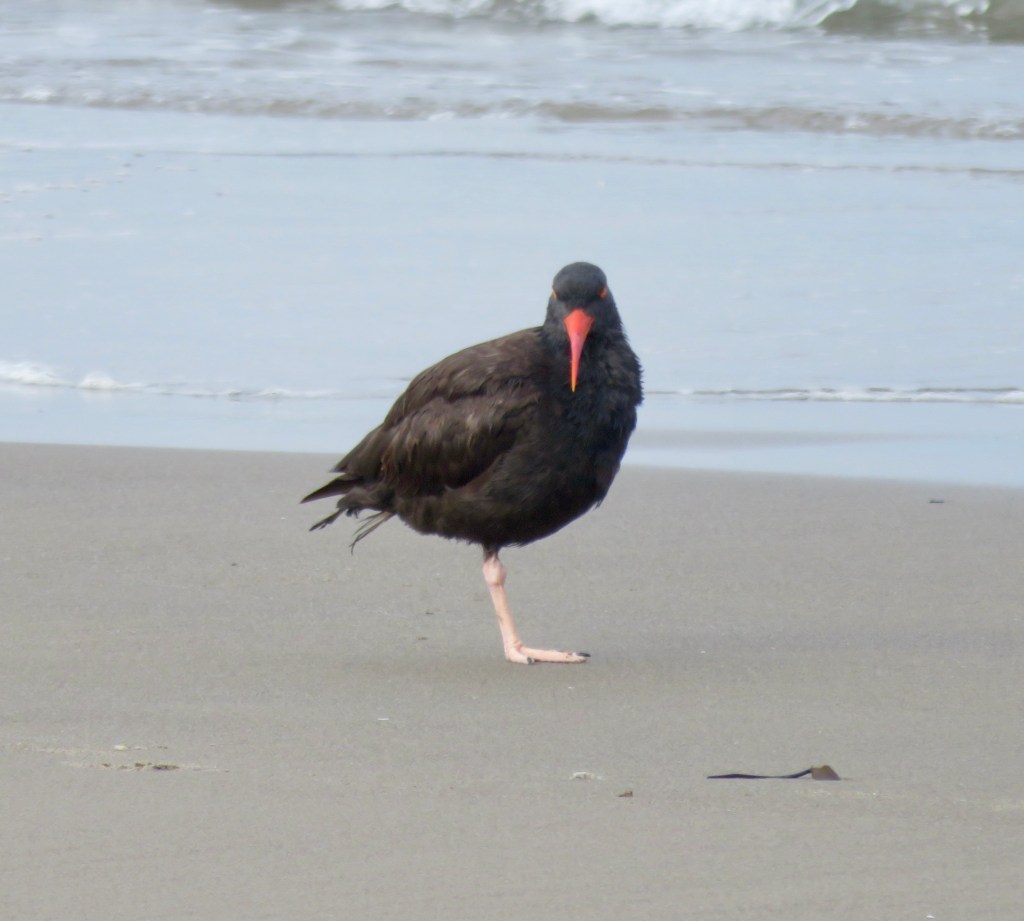
This is a black Oystercatcher and I am a long ways away from it, using a zoom to get this shot. My husband and I are partial to this species and their distinctive call. [It stands on one leg in the photo, but has another tucked up.] The pair north of us have successfully repopulated our shore. We see five at once these days. One time the parents made quite a fuss to distract me from their youngster, who was forty or more feet above me on the rocks. I still backed away so as not to further distress the parents.
Continue reading

TOOLMAKER

During my next-to-lastone of my MFA residencies an Advisor commented, to me and another student, that he thought people who believed in the Bible were “stupid”. Though I am not a literal believer, I was both shocked and offended. “It is a beautiful and important book,” I think I said, though this was seventeen years ago, “it contains wisdom. Have you even read it?” Religions always reflect wisdom, definitions of right and wrong, warnings and promises. There is ample evidence that most people and in all times have believed in truths beyond themselves and personal experience. It is not the only reason most of the characters in my novel are clearly people of faith.

When I was a girl and at least into my teens the conventional wisdom and current science contended that only “man is the toolmaker” and this capacity distinguishes human being from the “lower animals.”

That definition changed. Wikipedia: “Nearly all chimpanzee populations have been recorded using tools, modifying sticks, rocks, grass and leaves and using them for hunting and acquiring honey, termites, ants, nuts and water.” Awareness of that toolmaking ability among chimpanzees was demonstrated in work of primatologist and anthropologist Jane Goodall, a fact Wikipedia notably fails to note. She corrected what we thought we knew about humanity.

Continue reading