THE TRIAL

CH-MacKinnon-09_29_2018_original.jpg

“It’s not funny,” my husband said after staring at the cartoon above.


There is a nasty rumor I found on the Facebook page of someone trying to friend me. It claims Ford’s father was a CIA assassin. Seriously? This should be reported to Mulder immediately. And Scully.

Today, I wanted to turn away from all this ugliness. I wanted to weave and wind yarn, and begin knitting a cat sweater for my granddaughter.

Insane accusations will be given credence because we enjoy a good thriller. I do not think the past few days have been fun.

All I think is absolutely certain is that Kavanaugh drank way too much while a boy and a young man, and he failed to come to grips with that drinking in any useful way—he was still bragging about it in public a few years ago. On tape. So forgive me for not applauding his repeated remark in his well-rehearsed speech about liking beer. Did you notice he expected a laugh at the end of those lines the first time he delivered them? He waited for laughter. It was supposed to make him more human. “I like beer” that last word expanded to two syllables.

His own written notes in his yearbook, his own speeches, and the numerous recollections of people who knew him and the crowd he hung with confirm his drinking behavior. He admitted to falling asleep but not to passing out from drink? No, I do not believe him.

I found his testimony embarrassing, evasive, bombastic, arrogant, disrespectful, and often hysterical. I think people who fail to see this are not people I can respect.

I believe Ford. I believe the others who have come forward. I think he remembers enough to want to protect his behavior from public view.

Of those asking questions? I give a pass to Cory Booker who made me cry too. They rest can take their political messages elsewhere. They are beside the point.

The men in my family and in my life would not behave the way all these men behaved. They would not talk this way. They would not pass judgement before the trial. For the past two years I have listened to “locker room talk” that might be typical of vulgar 13 year old boys, but is not acceptable, is deplorable in a grown person.

Every woman I have talked to in the past few days has had her own stories. I have mine. The testimony Dr. Ford offered was entirely believable. She has nothing to gain and has already suffered death threats and attacks from Senators. He is in danger of losing the golden ring—the prize he has pursued all his life, from his tony prep school beginnings to the Appeal Court (a position, btw, which was not achieved without considerable controversy—it is a lie that his reputation was “without blemish”.)

On Facebook my posts since Thursday have been consistently supportive of Dr. Ford. They have been public. Why is this man at the other end of my county, who has reported over and over about Dr. Ford’s father’s supposed record, trying to friend me? We have many mutual friends, but he does not seem to be a former student. If he has looked at my page he knows I disagree with his own public hysterical claims.

How I see it: I think Brett Kavanaugh was brought up to be a good Catholic boy. I think he also felt enormous pressure to achieve—nothing wrong with that. By all reports he was generally quiet and respectful in his youth, when sober. But he is also, by many reports, anxious about belonging to a particular powerful group. He wanted to be cool. Very badly. He went where they went. He did what they did. He drank because they drank. I do not know if he lied about blacking out while drunk. No one I knew who drank during high school parties drank merely because they “liked beer”, they drank to get drunk, they drank to excess to falling down drunk. Often. I do not know if he lied about remembering his abusive behavior, in each case egged on by classmates he admired, whose position he envied. 

I see he is a judgmental man barely in control of his emotions. That alone should make him unfit to serve on the Supreme Court. In his hysterical claims during his opening statement and his ugly attitude toward those asking calm and reasonable questions, he reveals partisanship.


“Judge Kavanaugh’s troubling record on protecting the rights of the most vulnerable in our society convinces us that he is not suited for a lifetime appointment to the court,” [Southern Poverty Law] wrote. “Our concerns about him have been exacerbated by his seeming lack of candor during the confirmation process.”

What I think is that he remembers just a bit of his aggressive and out-of-character behavior while drinking. He remembers more than he wishes he did, and that is why he has been at such pains to publicly support women while also attacking our rights as human beings. He is an ambitious and aggressive man. That was clear from his opening address during testimony. I think he believes his most recent actions have made amends for those early transgressions. I think he believes he is among the entitled elite and no longer subject to question.

This last is clear to me, with all objectivity. He believes he is beyond the law.

We are on trial in America. We are on trial for our honor and willingness to do what is right, on trial for our capacity to reveal compassion.

Our rights as free human beings are on trial.

IMG_3360

VIOLATION


IMG_3354

The rape scene is explicit. I taught The Bluest Eye for 25 years. It is an extraordinary novel told from multiple perspectives. A little girl is ruined, driven insane and lost. The language is stunning, beautiful, masterful. I introduced the novel with an early event where a narrator describes being sick and feeling her mother’s anger. This anger is not toward her daughter, but toward the sickness, which the narrator eventually understands: “Love, thick and dark as Alaga syrup . . . welled up in that house”

The first pages tell the story. I always warned my students about the graphic description of the rapes so that they could skip those pages if they wished. Sometimes they asked to read another book, which I offered. I reread the novel every year with my students, but truthfully, I did not reread those pages myself every year. They are brilliant. Brutal paradox  is set up immediately in the book when Claudia McTeer describes how her vomit sticks to itself “so neat and nasty at the same time.” Ultimately about love, the eloquent revelation of pain never lets up. It is sharp and bloodying. Toni Morrison claims there is no understanding the why of her Pecola’s father violating his 11 year old child, of a community destroying her. We must be content with how.

Morrison accomplishes more than that, in my opinion. I always told students they might understand why Cholly Breedlove rapes his little girl, but that Morrison does not require us to forgive him. We are not asked to forgive him. We understand, but even so his actions are not forgivable.

______________________

The rape scene before me was explicit. I stood up and walked out of the room. My thoughts fluttered. Why? Generally, I am a determined viewer. I do not watch porn, but I do not enjoy scenes of sex in books or movies. Nudity does not bother me a bit, but violence with sex makes me cringe. Rape drives me out of the theater, off the page.

For most of my adult life, I struggled to understand why I reacted so badly to rape scenes in films and avoided them in books. I was never raped. I was never violated. It made no sense that I had such a visceral reaction to violation in fiction.

I wondered if I had suffered some trauma I had repressed? I raked through my memories for truth. Nothing. All through this, I was aware of an ugly experience from the age of 7 or 8. I knew it had happened, but my understanding of that event minimalized my experience. It was not so bad, I would think for many years after. After all, much worse things happened to others. Much, much worse things happened all the time.

“It isn’t necessary to minimize one group’s pain and suffering in order to legitimize another’s,” a former student posted on my Facebook page.

I think enormous stigma and shame is what all survivors share. Insistence that some suffer more than others—while certainly true in a general way—serves to separate us and undermine our shared felt reaction.

There is a reason that even today only a tiny fraction of rape victims of either sex report the crime. Recently, I have posted elsewhere that I was molested on the playground by a group of boys who held me still. I never told anyone at the time and did not even admit it as an act of molestation to myself or characterize the experience as a sexual assault for almost 50 years.

As a young teenager, men exposed themselves to me and I did not tell.

The one time I tried as a college freshman to report an event, I was treated very poorly. And I knew this was my fault. I had no words to describe it as anything else by mine. I had been told in an infinite number of ways from the sex education I received at home and at school to the general attitude of my culture, that if I was victimized, if something “nasty” happened to me, I had done something to “ask for it.” My fault.

Are we not still in that terrible place?

Being loud, insistent, bombastic even, seems to convince some people. When it comes from a man. Tears. Denial. The silence or the soft (female) voice is refuted. Why not talk about it immediately? Why talk about it at all. What did you do?

Society weaves a thick blanket of blame and certainty over who I was then. That absolute judgement that what happened to me, if it happened at all, did not matter. That, I knew.

And now I unweave this memory. I examine it. I consider the glee in the faces of those boys. Those boys who never had paid me the slightest attention in the past, a wonder to me, approaching me with grins on their faces. I was small, small for my age, and youngest in the class.

I could not tell you the boys’ names or the date it happened. I could describe the light, their faces, the buzz cut of the boy who violated me. I know where I was standing on the playground. I remember the weeds I ran through after running from the blacktop playground. I was surprised to have escaped. My arms had been pinned, boys all around me. Perhaps my passivity, my well-trained smile, left them unprepared for my explosion. I escaped, but they had already gained what they wanted. Hadn’t they? They were done with me. They let me go.

It felt like escape at the time. I had not escaped. They were through.

The story of that day never left me. I simply ignored the warning.

If, as a victim, I could not admit even to myself the trauma of those boys surrounding me on the playground, holding on to my body, and one boy thrusting his hand into panties, my abrupt realization of what he was doing, and my scream and abrupt break. Running away. My tears. I told not a single soul. I did not, in 1960, even have words to describe what those boys and that boy had done. I pushed the memory away. I told myself it was a minor event.

So many people have suffered so much worse.

PARING DOWN and going out

IMG_0046

In our continuing effort to tidy the house, I am following an online series of articles on how to edit and tidy my home. Fifteen days of advice on how to eliminate clutter, and basically sort “stuff” into giveaway, toss, and keep-but-put-away.

The process began by suggesting that I have a “monster pile” someplace in my home. It was true. I had a pile that was a couple of feet high and three by six feet. By the time I’d cleared other areas of my house my monster had grown to four times that size. Even made tidy into straight lines and contained by boxes, it filled the center of my workspace. My online article told me to remove three items from the pile and find a place for them or scoot them out of the house. The next day it gave me a different area to tackle, but then reminded me to take three things out of the pile. That’s mostly how it’s been ever since.

A junk drawer is not necessary only in my kitchen, I was told, there should be one in each room. That made me laugh. I had already sorted out my sewing “junk drawer” but kept the little plastic bin of miscellaneous stuff that needed to be somewhere but did not belong in the baskets with thread, the drawer with scissors, or any other particular place. I have an orderly junk drawer in my kitchen and one in the bathroom vanity. The dressing table in my bedroom contains scarves and miscellaneous “junk” too. All this has been sorted recently, but each day I try to turn the home-tidying advice into practice.

Yesterday, I was told to edit my freezer, fridge, and pantry with specific attention to outdated items or foods I had tried but did not like. While I was upstairs reading these instructions on my computer, my husband was downstairs actually emptying one shelf at a time in—you guessed it—the freezer, fridge, and pantry. He sorted. That afternoon I went through his piles as a second reviewer. Trash, giveaway, and keep. He cleaned the shelves too. The resulting order went well beyond what had been suggested, and even though I didn’t do most of the work, I felt accomplished!

I have been advised to spend a limited time sorting one specific area each day. I did the entire linen closet. I was advised to remove three items from the “monster pile” and sometimes I eliminated an entire cardboard box from the room.

I spent some extra time with my monster pile after dinner, choosing not three items but a mini-pile or box to sort, several days in a row, while the television played something in English where I did not have to read subtitles. My monster is mostly gone, though it seems to be rebuilding.

However, the attic is completely empty. I still have space on my book shelves. (I ruthlessly sorted books again this summer, but there are still eleven bookcases upstairs and more than that downstairs.) We took a small painting to be framed in a wooden frame that came out of the attic. On Friday we hope to take a tiny print up to be placed in another frame from the attic. I gently oiled, sanded, and waxed the beautiful walnut veneer.

Over the past summer, I painted the entire upstairs, ceiling included.

There is still work to be done. Next summer we need to move all the furniture out of the living and dining rooms and varnish the floors. The kitchen, too. The entry and hall floors have a different finish on them and I plan to paint over it. I suspect I missed the weather window for floor paint, so that will likely wait till next year. I sorted through everything in the lower half of my grandmother’s secretary, but there is still the top half.

The Christmas ornaments are at home in a downstairs closet. I have completed most of my Christmas shopping. There is paper and tissue and green velvet ribbon waiting for me to wrap.

I have put a warp on my loom for a pair of scarves and begun knitting a third. These are straight forward, simple projects I can do without thinking much. But I also have less than five weeks to knit my granddaughter a sweater with a cat on it for her birthday.

My laptop is getting a little creaky, but I have been putting off buying a new one. This morning it abruptly turned itself off, screen went black. Later it was fine. Not a very good sign, though. My older son told me before I replaced my last one (after nine years) that laptops have a half-life of about 18 months. The one I am using now is going on six years and unlikely to last much longer, I fear. I want a lighter laptop. I enjoy the screen on my 15″ MacBookPro, but it weighs four and a half pounds. How about two pounds? I am thinking a tiny screen and two pounds, but I have a couple of bills to pay first. In the mean time, I am backing things up.

I made a ginger plumcake the day before yesterday, which we had for breakfast and then broccoli for lunch.

It is also Wednesday and I am sitting in the high school library for Open Library. Three sophomores were working on Chemistry lab write-ups, but they’ve left. Last week I helped a freshman with his Geometry. I’m not sure he finally had the correct answer to the last problem. He’d done it wrong the first time and I did my best to steer him in the right direction. Next week I am promised a few frantic juniors working on the infamous Reading for Writers. I would rather have customers than not.

I have committed to NaNoWriMo this year, and begun notes on an SF novel. That cat sweater has to be done. Maybe that is something I should start tomorrow?

IMG_3365

HONORING ERROR

IMG_3343

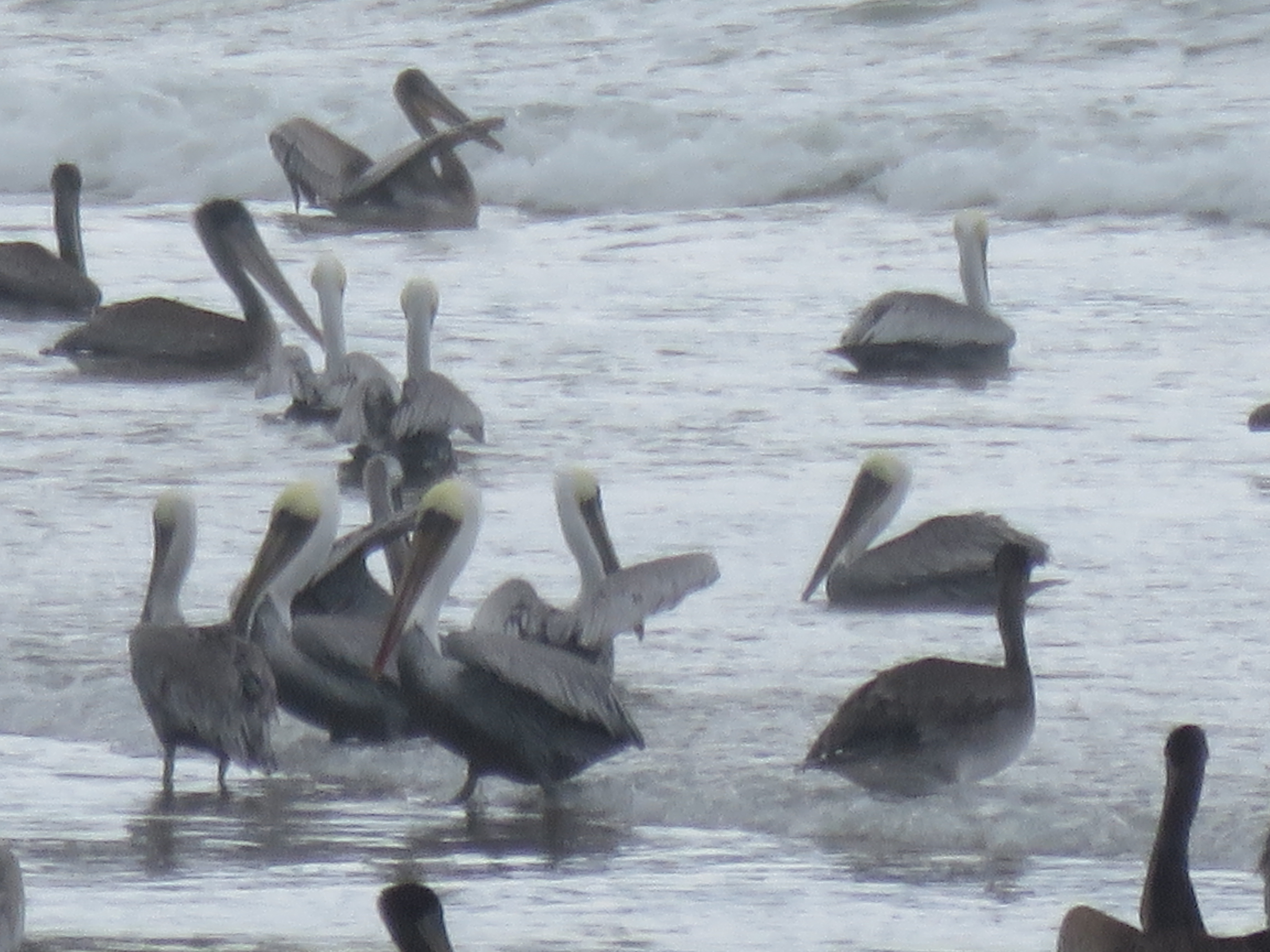
Several dozen brown pelicans stopped by on their way south last week. A smaller group or 13 or 14 has arrived in the summer during recent years and generally stayed into the fall. 

When I was in high school, we told a joke: This life is a test. It is only a test. Had this been an actual life you would have been told where to go and what to do. 

We can choose what we do with ourselves and we can choose to seek meaning. But we must also accept that not everything that happens is within our control. Some things just happen.

There is a story about a man who was living a good life. He was thoughtful and kind, virtuous and loving. But then things go wrong for him. His family dies, his occupation dissolves, the very earth itself seems to rise up and spit in his cup.

“What have I done wrong to deserve this?” he begs the universe. He examines his behavior, seeking an explanation for his abrupt change of fortune. Has he erred without knowing? Has he committed some sin and failed to notice. Whom has he offended?

His friends ask him too: “Oh, man, what did you do?”

“Nothing!” the poor man cries. He reviews his own life for some explanation of his punishment and can find no answer.

After a lot of begging and eventual anger he understands that people should know better than to demand an explanation. There is none.

Bad things happen to people. Job, the man in the story, had more than his share of hardship arrive all at once. At one point all his family and wealth are gone, and he lies on a heap of manure, his body covered in sores. Job certainly experiences more than his share of bad stuff. He is warned not to look for a reason. He is assured that if there is a reason behind his suffering, he will never understand it. He shouldn’t even try.

This is life sometimes. Terrible things happen. Sometimes we bring that bad stuff right to our own door. Other times, it’s no one’s fault and there is no one to blame and nothing to be done with the sorrow and grief that come our way. 

We can only go on.

Success is like this too. Good and ill befall each of us. Some of our fortune we worked hard to earn—by kindly, wise choices or skillful ones. We learn from mistakes, they say, or we do not.

Eventually we are old with have more years to look back on than we can imagine right now, and like all old people who are worth anything at all, we will have regrets. We will look back at mistakes and wish we could rewind and repair them. We want to think we are wiser, perhaps, than when we were young. All those years of hard work and love and loss and suffering and hope. Surely those experiences made us better people.

Maybe it will even be true.

We will know more. Maybe we will read too many books. Maybe we will attend college and develop a passion for anthropology or linguistics or software engineering or Renaissance poetry. Stranger things have happened. A work-study job in a hospital will take us through nursing school instead of electric engineering. A terrible accident will cripple your future and suddenly instead of working as a personal trainer, we work in a London nonprofit aiding children of war torn nations. We thought we would study history and find ourselves doing pure math. We thought we wanted to live in the SW and find ourselves in Manhattan. Our life course will probably change and those experiences will change us. Some of our life experiences will take us wholly by surprise.

But who we are is who we are. We will not begin tomorrow or sixty years from now. Real life isn’t something that begins later, when we have more time; it’s something we’ve been living all along.

What’s true is that every choice we make, moment to moment, on the hardest days: on the day we think we are too tired to get up in the middle of the night to check the baby; on the afternoon we snarl at the Safeway cashier and realize too late that he’s doing the best he can; on the days we cheat and tell ourselves it doesn’t count because we are not that kind of person. Yes, we are. That’s who we are. At our best and our worst, often trying hard to do what should be done and sometimes failing. We are the person who let the baby cry for half an hour, the one who yelled at the mentally disabled clerk, the one who cheated. That is us.

But we are more. We are the same person who helped the woman with the screaming toddler get her groceries into the back of her car, the same one who smiled at our own little boy’s hideous handmade birthday gift, the same person who took an extra breath and admitted we didn’t get the work done on time, but tomorrow we’ll do better. And then tomorrow we do better. That is us too. 

I’m not saying there are two kinds of people in the world. I’m saying there are a lot of situations, and all of us, every single one of us with an ounce of introspection will have good and bad moments. Every single one of us will have to face terrible things. Sometimes we will not do our best. Sometimes we will have to forgive our own failures and mistakes and go on hoping to do better next time. If you think that’s easy, think again. 

Don’t pretend you haven’t made mistakes, but don’t forget that you need to forgive yourself for them. And when you do well, when you do something kind and generous and honest and open-hearted, notice that too. How you get to that place where you can stop blaming and starting forgiving—that’s called growing up, taking responsibility. It’s called being good. 

You need to go. You are far from the end of your journey.

This isn’t a test. It was never a test. This is your life, the only one you get. You have been told to go on and you have been told to do the best you can. It’s your life. Make good use of it.

People have been telling me lately that I look tired. Oh yes, it’s also how I feel. So very tired. Not enough sleep. Lying awake worrying. Unable to run off my stress. 

But here’s the other side of a hard day several years ago: The cat was asleep at my knees. Ruby had “called” twice to talk to her grandpa. Three students who worked very hard to get there will attend the colleges of their choice thanks to a Gates and two Fords. It was Saturday of a long weekend, and though I had two boxes of essays to review, that was the good news. I had a lot of students who had done their job that week. Some of them still had long labor before them, but they seemed willing to do it. I was thankful for their hard work. 

I am thankful for my own hard work—something I could not have said when I was seventeen and about to start college. I am thankful for my family, friends, and the people I work with. We all wish we could do more or have more at times, but it’s good to recognize what we already have, what we have survived and earned, that we have stumbled and stood back up, and that there are places we still want to go.

I understand the limits of my power. I no longer expect or even desire wealth. I try to make a difference, a positive difference in the lives of people I know. I have my regrets, but I accept my disappointments and I forgive my own failures. It’s never too late to do the right thing next time. I just have to see, really see what is here before me right now. I have to look ahead to the path I intend to follow. And then…

I walk on.

THE WORDS I WANT

IMG_1157

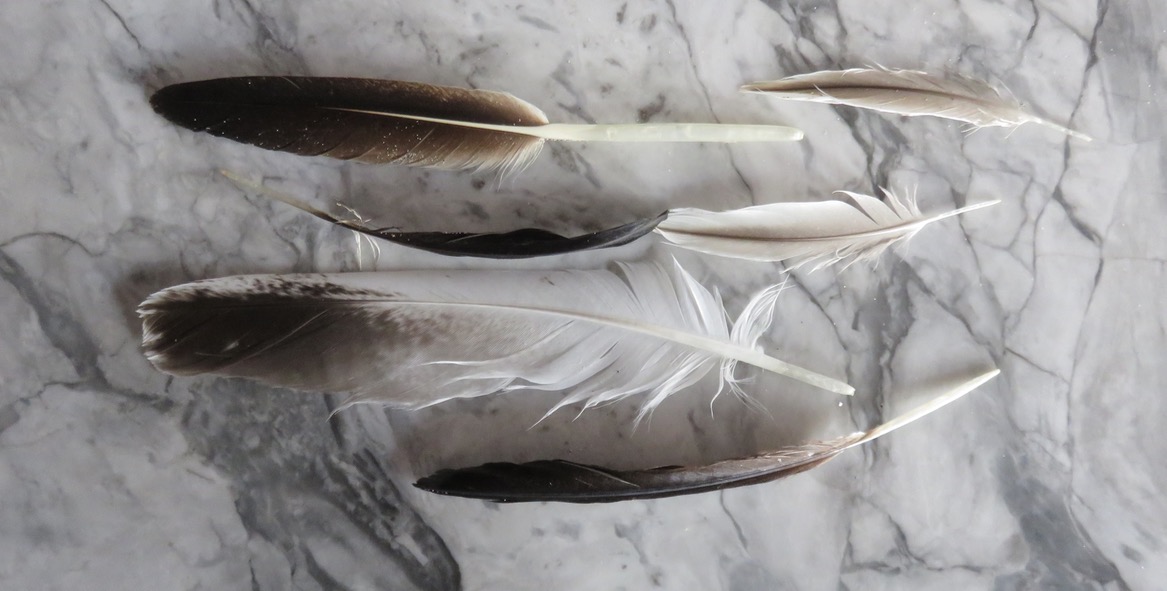
Most days I find glass during my walk on the beach, but I always find agates. Rarely I will pick up a feather. I lean down slowly, sliding my hand down my thigh, and even so my head throbs when I pluck a treasure from the sand.

Ten days ago I suffered a concussion in a fall that threw me hard on my back. Two days ago I sat on the edge of a too-soft chair, leaning forward while I played Scrabble with a friend for an hour. That has my back acting up.My head hurts when I wake. I drink plenty of water. Today I will try to stay off my feet and off the computer, but here I am typing.

Sometimes you just do what you want, what you might even pretend you must do. I could be knitting now or winding a warp. I could be watching television or reading. There are other satisfying, creative outlets. None of them reward me as writing does.

I have completed many stories, I could not even guess how many. Novels, and collections of writings, children’s stories and a novel probably suitable as YA, craft essays and creative nonfiction. Poems.

On the other hand. (She had warts.)

On the other hand, writing troubles me. Writing takes longer than anything else I do, longer than baking, knitting, piecing a quilt top, planning, teaching, a long walk on the beach. Reading a book. It is less certain. There is no absolute I-am-done point with writing. There is no clear reward, in most cases there is no reward at all. Few people ever see my knitting, weaving, and few eat my baking. Fewer read my words.

The novel that I have been sending out since last winter has been rejected 68 times. So far. Is that enough? Am I done? May I set this writing aside and move on? Should I?

But still, it is the words I want.

CROWS STORY

IMG_3239

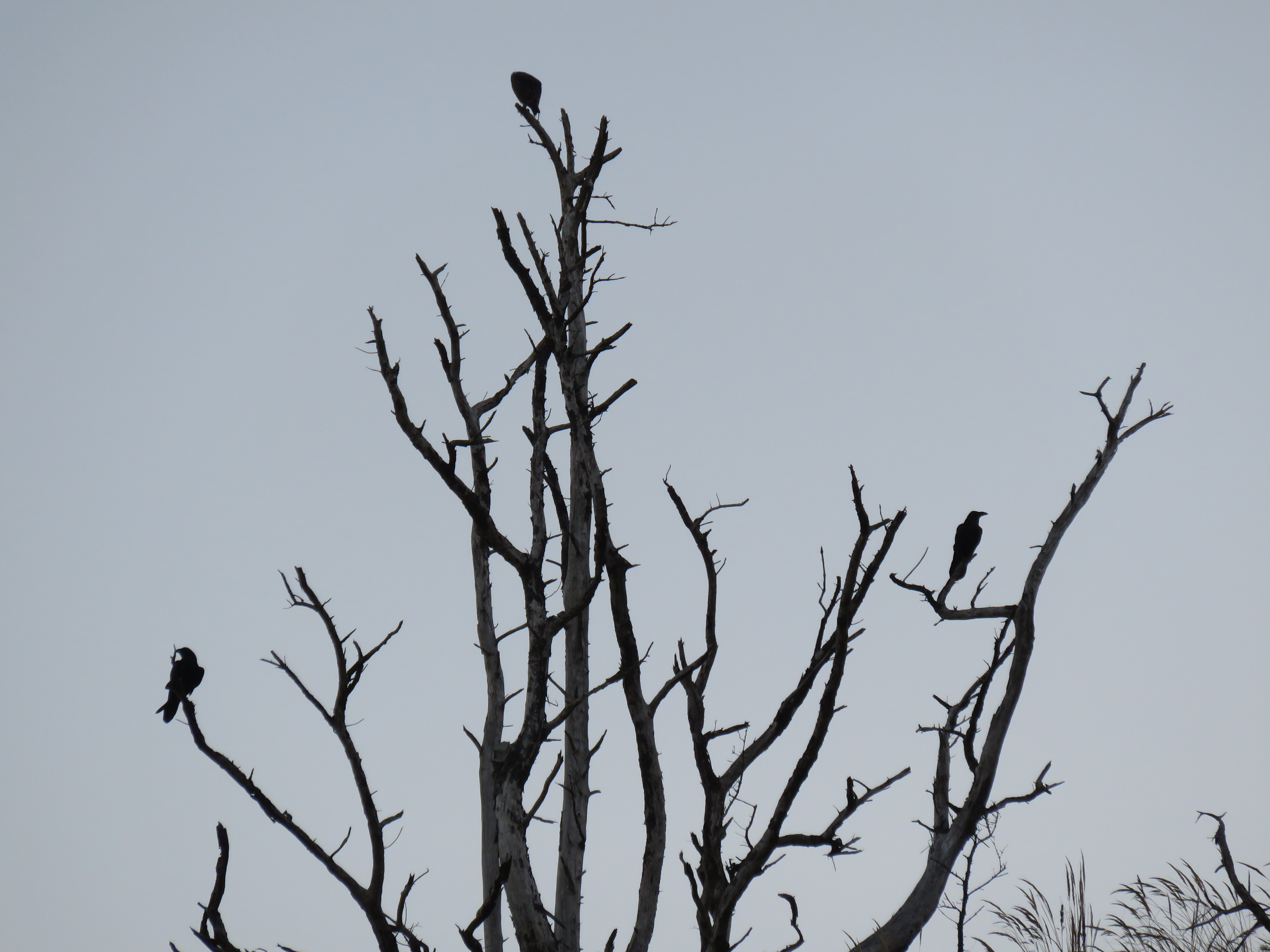
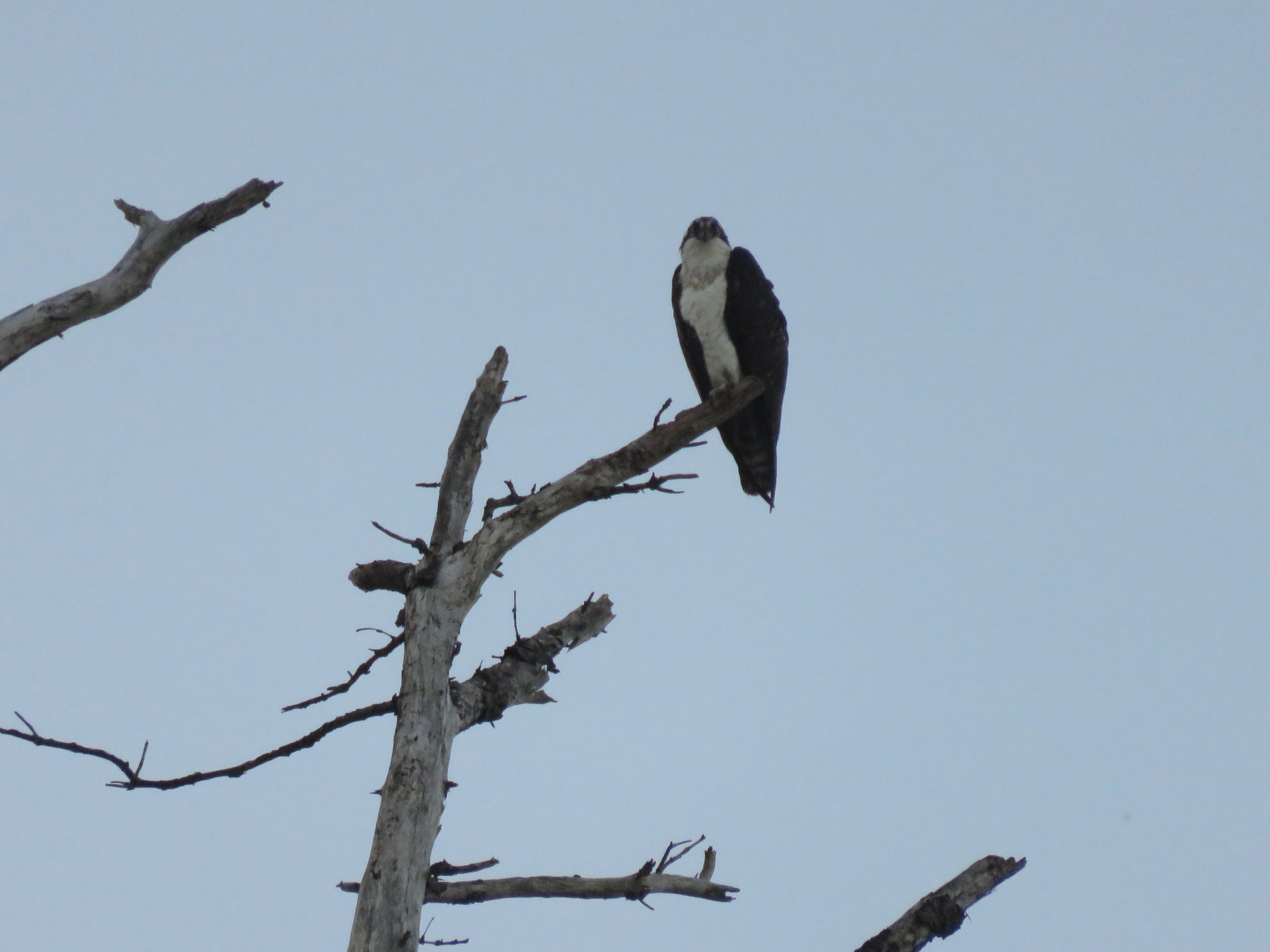
Two ravens and one of the local ospreys, top.

I have a brief creative nonfiction essay in issue 59 of Dinty Moore’s Brevity. All the work there is nonfiction and very short (under 750 words). My true story, “A Murder of Crows,” recounts an event from some years ago at a local summer camp.

This journal’s website has been a valuable resource for my college students over the past ten years. Students read essays and write précis on craft essays found at the same site. Then they go on to write their own creative nonfiction.

My work has been featured several (8? 9?) times on the Brevity blog.*

IMG_3243

The osprey from another angle. (I know this should be a photo of crows.)

  • I went to the Brevity blog and did a count. Thirteen times. Who knew?

HELP, I’VE FALLEN BUT I GOT BACK UP

IMG_3294

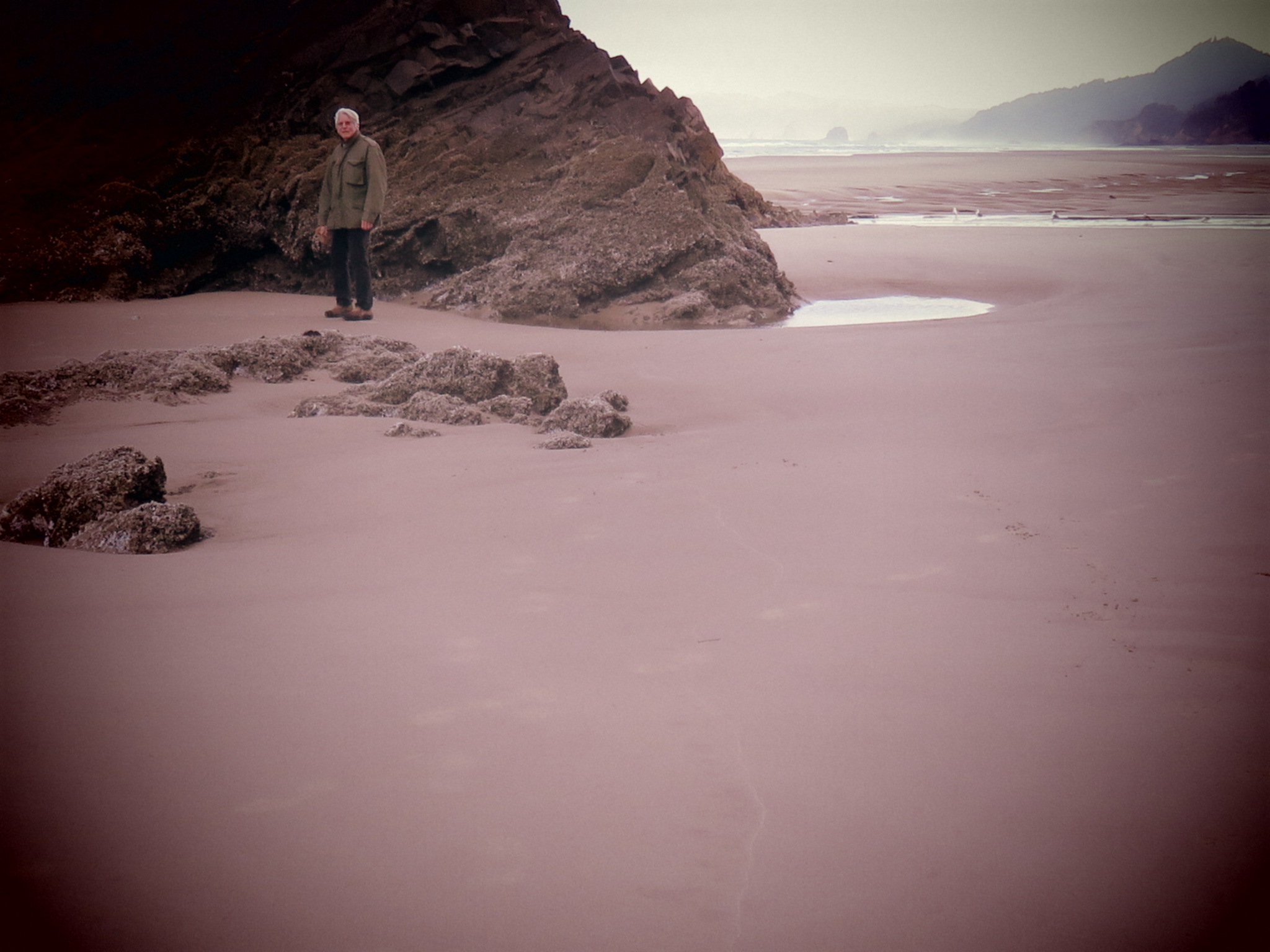
I fell hard yesterday. I was doing something stupid, trotting backwards as I tried to photograph my husband and a seastack and he kept walking right out of my frame. (If he knows he’s being photographed, he mugs or frowns. Photos of Gary smiling are pretty rare.)

So I was backing up to keep Gary in my photograph, and I tripped over a rock poking out of the sand that I had failed to notice and landed hard on my back. The smooth wet sand was hard as concrete. I did not land on the rock.

Still on the sand, I held still to discover how badly hurt I was. Would I be able to stand up? Had I broken my pelvis? I hurt. Gary had been watching me and wondered what I was doing. He says he thought, “Why is she trotting backwards? She’s going to hit that rock.” Then I did and he trotted over to me.

When he arrived, he said: “What are you you trying to do?” I snapped back at him, and he considered that a good sign. I hurt.

When I was pregnant with our first child I tripped and landed in a seated position. I damaged my tailbone. The doctor said it might have been cracked, but they couldn’t Xray because of the baby, and “there’s nothing we could do for you anyway.” Time would heal me, not any treatment they could offer beyond over-the-counter pain meds such as Tylenal. That was almost forty years ago, but I remembered that pain and considered that I might have cracked something in my pelvic area, but there wasn’t much to be done about it.

Aside from, maybe, my little toe and the little finger on my right hand, I have never actually broken a bone. Usually, I am a good faller. I could probably recall every time in my life I have ever fallen. Never from a tree, but once on my bike as a child. I jumped from a second story window, but that was a stupid choice, not a fall. I’ve been thrown from horses without a mark. One fall while pregnant, once I tripped over the oversize shoes my podiatrist insisted I wear, before I was used to them. About fifteen years ago, I fell while running hills when I missed my footing at the edge of pavement on the highway. I got right back up and kept running. This time was not like that.

After a half minute assessing my condition, flat on the sand, I rolled carefully to the side and got up. Yes, hurt. Not broken, not flashing or searing pain, nothing stabbing or worse on standing. We continued our walk, stopped when we got to a stream we could not cross without getting wet, and turned for home. I took two aspirin, sat carefully, discovered what movement hurt more or less, and went back to work on a quilt. A few hours later I took another dose of aspirin, and that’s all I have done. A former student, now nearly a nurse, warned me not to use aspirin, so I stopped.

Gary told our older son on the phone about my fall, which I had not planned to reveal to anyone. Like their dad, sons worry.

When I got out of bed this morning, I felt odd in my head—not pain, but fluffy, disconnection. I lay back down for a time, considering the possibility of concussion. When I got up again, I felt the same wooly-headedness, and I was careful.

So maybe a cracked bone, certainly some bruising though nothing shows, and maybe a concussion—I hit the back of my head hard. I will take it easy for a few days. I will not think too hard since research suggests that an active mind after a concussion slows recovery. I think about my students who were in car crashes, suffered concussions and came back too soon. I think about the coach who put his own son back into a game after he suffered a concussion. I think about my age and that I am too old to risk the loss of brain function. I think worrying probably isn’t good for me.

My husband brings me coffee in bed each morning. My favorite grandparent, my step-grandfather Lavin Hansen, whom I called “Papa,” brought coffee to my grandmother in bed each morning.

The mind travels even when the body is in pain.

PURSUIT OF FLYING

IMG_3225

Linking to an article about “lawnmower parents” triggered an interesting discussion on my Facebook page. Some were defensive about “rescuing” or failing to “rescue” children. Others pointed out that some children genuinely need more guidance than others due to disabilities and disadvantages that may not even be visible.

As a private and public school teacher, I saw how it worked both ways. Most parents are doing the best they can, and doing fine, I think, but I saw this over-correction now and again all the years I was teaching. I saw it among privileged kids in the prep school where I first taught, and I saw it among local elite teaching in a public school, especially athletes, whose parents and school officials placed the ability to play above every other consideration. Perfectly capable students would not contact me, but sent their parents in to ask for favors. Parents would defend a students who had deliberately abused the system. Parents did their students’ work for them. Other students had no advocacy at all.

The article defends support for students with genuine needs, which may be entirely invisible. For example, friends thought it was ridiculous that a young woman was afraid to take the bus downtown alone. When I found out she’d been in the foster system all her life, it made sense to me. She may have aged out of the system, but she likely had little support at any point of her life. My brother-in-law is schizophrenic and could not complete his paperwork even though he was halfway through high school at the time. Such young people need guidance and support more than most, and often longer than might seem necessary to the casual observer.

On another note, one reader described arriving at college and finding herself incapable. “I did not have parents [who over-protected me] but I still had the reaction described after my first difficult college class at 18: ‘Begin planning for the inevitable destruction of their college career/future; Assume they failed because they’re stupid; Collapse in on themselves and give up completely and stop trying.’ ” She could not handle the experience and left college after her freshman year.

Many very bright and capable students arrive at college without the skills they need to thrive, and this may have little to do with parenting. My brother began college without the academic skills necessary to manage the major he was pursuing. As a teacher, he was determined to challenge his students in ways that allowed them to do well later on. My own experience was almost the reverse. I was extremely well prepared for my major and when I began teaching I was determined that my students would feel the same confidence I enjoyed in college. Resilience in both my brother’s and my own case was based less on our self-confidence than on genuine, earned capability.

I had the added disadvantage of being female. And women are given confusing signals about behavior. To be successful in any endeavor demands skill and a modicum of self-confidence. Some situations demand diplomacy and tact, while others demands assertiveness. Women receive a mash of conflicting messages pretty much from the moment they were born. No one ever lifted Sojourner Truth over any mud puddle, but she was expected to project the same retiring and gentle femininity as a white woman expected to spend all her days tatting lace without distressing the menfolk.

The recent flap over Serena Williams behavior during a tennis tournament and the response of a referee is a case in point. In the opinion of many observers, Williams was clearly being targeted, and the penalties were out of line compared to responses to male players exhibiting the same behavior.

Of course, what do I know?

I know that when we protect too much in the classroom, when our response to children facing difficult challenge is always to make the work “easier” we teach them that they are incapable. Telling a class day after day that work is easy (whether this is true or not) leads them to assume that the scarier reality of struggle means they are “stupid” instead of simply learning.

My goal in the classroom is to make difficult concepts as managable as possible. I do not pretnd that what I am asking from students in “easy.” It is not easy, it is very hard. My job is to make the work managable, to break it down, support growth, and promote self-confidence through acheivment of earned skill. Students must have the skills they need to be confident in school. They should be encouraged to do more than is entirely comfortable. They should be inspired to sustain their purpose and goals even in the face of fear. They need to be taught that they can overcome obstacles and that struggle is someone everyone deals with every day.

Many activities human beings actively pursue are very hard and very scary—many sports, bungee jumping, mountain climbing—yet somehow that high does not transfer well to education. There is a rush of adrenalin from pursuing a complex idea that we cannot quite wrap our mind around, just as there is when pursuing a sport. Maybe that mental rush is something we would all do well to pursue.

Do better because you can.

USE YOUR WORDS

Last year a student argued that black people were not being unfairly targeted by police because unarmed white people had been killed by police too. Entirely absent from the student’s research was some simple math which would have revealed, that yes, it’s true Whites as well as Blacks are killed, but black people are disproportionately likely to die, even while unarmed, at the hands of police. According to research by a Nebraska criminologist, in 2016, “police killed 38 unarmed blacks and 32 unarmed whites. Whites accounted for 49 percent of all 2015 fatal police shootings, while blacks constituted 26 percent.” According to the U.S. Census Bureau, 12.3% of the U.S. population is black, over 76% are white. Being Black in America is dangerous.

Black Lives Matter was formed to address this terrible reality.

I think most people know this, unless they just don’t want to know it.

Beyond that, I am a person committed to language, to the use of “every day” when I mean something that happens each day, and “everyday” when I mean it is ordinary.

How we use our words matters. I have thought a lot about the “All Lives Matter” slogan, which entirely misses the point, and other wording that is offensive. My husband has called a Portland television station when he heard the term “gypped” used. He explained patiently that it is a racist and bigoted term.

On the other hand, sometimes a little knowledge is a tricky thing. A video on Facebook declared “Gypsy” so offensive that it was written “G—y” and bleeped. Well, maybe, but some Romani people actually embrace that term, and the video utterly failed to address the many other self-proclaimed terms used by Romani around the world.

And then there is “white trash” which is definitely a bigoted slur against poor white people during a period when many Americans have been told that their poverty is their own fault. “White trash” is also something else, perhaps something worse than a slam against poor whites. Think about how it sounds when someone says it: “white trash.” The emphasis (the accent) is on “white” as if distinguishing between this poor “trashy” person from all other trashy people? from others who are not white? “Don’t be trashy like . . . ?” You might think I am being picky here, but I don’t think so. The use of the term and the way it is said implies a depth of insensitivity and racism that even the user might not recognize.

I know, I know, I am going to have to hear about “political correctness” which is itself a misunderstood and misused word. The left brought it to America as satire fifty years ago, adopting a communist term and using it ironically. It was a joke. Today, almost no one uses it except as a slam against people choosing language and ideas intended to be courteous. Notice, next time you hear it used. “You are being politically correct.” Hear that sneer? Someone is trying to shut up another person, most often a person who is merely attempting to be polite.

Language matters. We misspeak, we are rude out of ignorance . . . and we apologize. We try to avoid offense because it matters that we not hurt others’ feeling. That is at the basis of a civil society.

It is an everyday struggle. If you are at all astute about political realities, you do not say what Ron DeSantis said the other day. An ordinary person in some all-white rural backwater might hear such a thing without immediately recognizing the loaded language DeSantis used. It is impossible to believe a smart politician was unaware.

“At a dinner with Mattis and Gen. Joseph F. Dunford Jr., the chairman of the Joint Chiefs of Staff, among others, Trump lashed out at a vocal critic, Sen. John McCain (R-Ariz.). He painted the former Navy pilot as cowardly, falsely suggesting he took an early release from a prisoner-of-war camp in Vietnam because of his father’s military rank and left others behind.

“Mattis swiftly corrected his boss: ‘No, Mr. President, I think you’ve got it reversed.’ The defense secretary explained that McCain, who died Aug. 25, had in fact turned down early release and was brutally tortured during his five years at the ‘Hanoi Hilton.’ ”

For an ordinary person to have gotten this story wrong is one thing, for the leader of our country, it is pathetic. The rest of the world is paying attention.

That is, ordinary people in their own homes are allowed to misspeak—we all make mistakes and inevitably will. Our leaders are supposed to be better than this. Public speakers are supposed to think first. Every day.