“Weak as women’s magic”

IMG_3903

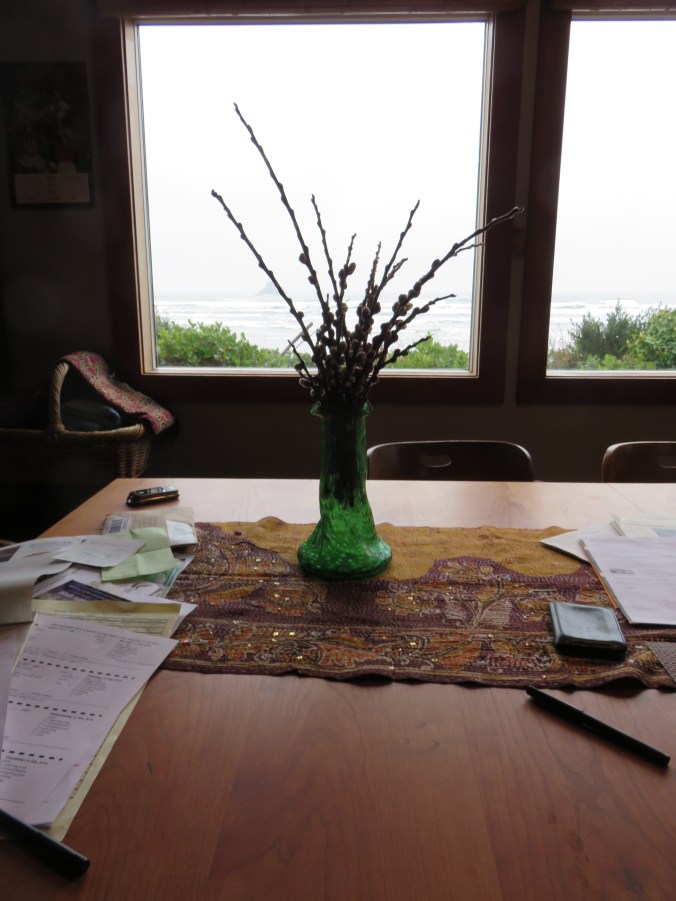
The spring after my mother’s death, I remained deep in grief and P.C. asked me if I had anything I did with or for my mother that I might do to continue that sense of connection. Her suggestion was wise. I began picking pussywillows for my mother when I was no more than 6. I still do.

I am a feminist deep down into my gut. I inherited my respect for women from both of my parents and from self-respect, and from my own experience that men and woman are more alike than different and equally deserving of respect as human beings.

When I began seriously reading fantasy and science fiction as a teenager and in college, I specifically looked for novels where gender was no longer the most critical fact about characters. This was the late 60s and early 70s, Ms magazine was new of the shelves and I read The Feminine Mystique. My father, a research librarian, complained about women who changed their professional name, scattering their scientific work all over the shelves.

Science fiction and fantasy offered the possibility of riveting stories involving characters interacting in a post-sexist universe. I was there for space travel or fairy princesses. I wanted a future I could live with.  I found novels with powerful men and women, with weak men and women. I found novels with characters.

When I read the line above in Ursula K. Le Guin’s A Wizard of Earthsea, I put the book down on my lap and thought for a long time about whether I wanted to keep reading. I did. Le Guin got so many things right, I figured she was allowed to have a character speaking from his culture. And she more than repaid my patience in her later work. Further, I admired her ability to change her mind—such a rare thing—and to discuss a change of her view publicly rather than trying to cover it up.

I cannot say the same for other books. I have read or reread a great many children’s and young adult classics as well as the new hits. I worked with teenagers for a long time and wanted to know what my students were reading. I had never read A Tree Grows in Brooklyn as a girl, and I was shocked at what I found there.

From A Tree Grows in Brooklyn:

“Remember Joanna. Remember Joanna. Francie could never forget her. From that time on, remembering the stoning women, she hated women. She feared them for their devious ways, she mistrusted their instincts. She began to hate them for this disloyalty and their cruelty to each other. Of all the stone-throwers, not one had dared to speak a word for the girl for fear that she would be tarred with Joanna’s brush. The passing man had been the only one who spoke with kindness in his voice.”

“Most women had the one thing in common: they had great pain when they gave birth to their children. This should make a bond that held them all together; it should make them love and protect each other against the man-world. But it was not so. It seemed like their great birth pains shrank their hearts and their souls. They stuck together for only one thing: to trample on some other woman … whether it was by throwing stones or by mean gossip. It was the only kind of loyalty they seemed to have.”

“Men were different. They might hate each other but they stuck together against the world and against any woman who would ensnare one of them.”

At one point Francie and her mother discover that they can bond only over their mutual distrust of women.  I found a drunken father beloved by her daughter, and a mother who scrubbed floors on her knees and was blamed. I never felt that was fully redeemed, though she later says she will make an exception for her mother. I still find the lines quoted above misogynistic. There is the child molester, there is undeniable antisemitism. I could not understand how an Irish woman could write a book so hostile toward Catholics (she prefers the protestant Bible?) and the Irish until I researched the author. A Tree Grows in Brooklyn was written by a German-American Protestant about Irish American Catholics and is heavily invested in the prejudices and bigotry of the period.

Yes, other authors are racist. The Jungle Book comes immediately to mind, but most stories in that book are not about race or even people. I had to ignore the racism in Normal McLean’s A River Runs Through It. I grieved for McLean’s remorse. I often find I must overlook bigotry of various kinds, even in books I love. Even when I was young, I noticed that while most of the human heroes in the Oz books were girls, nearly all the non-human ones were male. (The glass cat and Patchwork girl were notable exceptions.)

Lately many children’s books and YA books of the past have come under scrutiny. The Little House series, and Anne of Green Gables. I didn’t read them as a child, but sexism and racism and other forms of bigotry were common in the novels I read as a child. Today, handing books to my grandchildren, I must be more cautious. I have made mistakes and regret them deeply.

I wonder now how I would have handled the bigotry that is so clear to me had I read A Tree Grows in Brooklyn as a child? Would I have noticed and objected or would I have accepted her judgement? I like to think I would have objected. Even though, I was as susceptible as any child to such effectively written messages about the evils and necessary inferiority of myself as a girl. I like to think I would have judged Francie was a fool to side continually with her drunken father against her mother. I like to think I would have objected t that word “ensnare”, that I would been offended at the depiction of racial and religious minorities had I read the book when I was nine yers old.

I would like to think that.

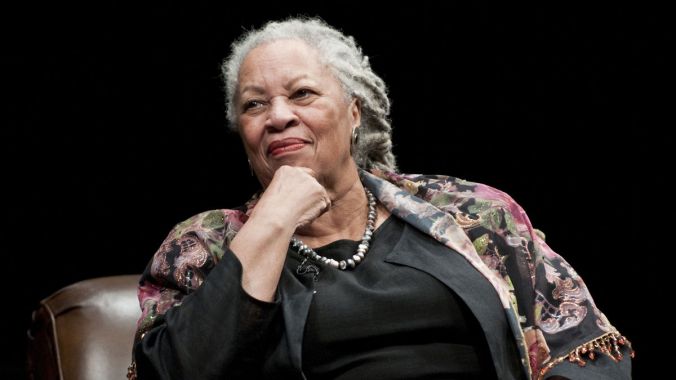
TONI MORRISON

For many years I taught The Bluest Eye in the second term of Junior English. Chris Gilde taught The Color Purple in the senior year, another incredible novel about the black experience in the United States, and a provocative read, a beautiful read. He played jazz and introduced other cultural elements relevant to the novel.

A tall door rises up into this nothing; its hardware is heavy, secure. No bell invites your hand. So you stand there, perhaps, or move away and, later, sticking your hand in your pocket, you find a key that you know (or hope) fits the lock. Even before the tumblers fall back you know you will find what you hoped to find: a word or two that turns the “not enough” into more; the line or sentence that inserts itself into the nothing. With the right phrase, this sense becomes murky, becomes lit, differently lit. Through that door is a kind of freedom that can frighten governments, sustain others, and rid whole nations of confusion. More important, however, is that the writer who steps through that door with the language of his or her own intellect and imagination enters uncolonized territory, which she can claim as right- fully her own — for a while at least.—The Source of Self-Regard by Toni Morrison

I wish I could have taught Beloved in the senior year, but I never did. Instead I did my best to introduce the voices I never heard in my own k-12 education—the stories of women and and people of color, Native peoples and immigrants from around the world.

When I was allowed, I taught stories and novels and poetry from many continents. Things Fall Apart by Chinua Achebe was life-altering for me and I enjoyed teaching it. If I read it aloud, even less attentive, less skilled students were drawn in. I would have liked to teach the Indian novel Nectar in a Sieve by Kamala Markandaya, but did not find an opportunity to add it to the curriculum.

The Junior year was traditionally focused on, and at first mandated to focus on U.S. literature. The novels and memoirs I tried were not always successful. Ceremony was a challenge, but A Yellow Raft in Blue Water and Black Swan Green were great favorites. I taught and love still Adventures of Huckleberry Finn. My students loved that novel only if I read it aloud. Bright students generally skim more often than read and lost patience for jargon and slang if they had to read it on their own. They had more patience with Their Eyes Were Watching God. For many years students loved The Catcher in the Rye, though I never did quite love it. Ironically, The Bluest Eye was harder and painful, but it was the one novel I was likely to hear about later. Students in college often wrote their thanks for the introduction to Toni Morrison.

I taught four to six novels every year to high school students, at least a dozen short stories, newspaper articles, a month of poems in the spring, and writing, writing about everything. Students completed four to five essays in multiple drafts each term. They wrote an on-demand essay each week. We wrote fiction and memoir and poetry.

An easy class only teaches students they are weak. Demanding their best reveals how grand their best can be.


CHOOSING BOOKS

IMG_2574

Yes, you can have too many books. People who believe this is impossible? Well, that’s fine for them. I have thousands of books in my house. My husband has a thousand more of his own. I only read about seventy books a year, plus newspapers online, stories and poetry in journals and, again, online.

Sometimes I read a book I do not like. If it does not “spark joy” I do not have to keep it. I don’t have to keep it if it is one of seven copies of the same title or if I liked it somewhat but will never read it again or if I read the first chapters and felt no desire to continue reading or if have have not and never will read it for the first time.

Even so, I have thousands of books. I have more books than my 17 bookcases can hold.

How do I choose what to read?

COVER. I picked up Gregory Maquire’s Wicked and David Mitchell’s Black Swan Green, both while still in hardcover, for their covers. They remain among my all-time favorite reads. I taught Black Swan Green for years. My students loved it too. There are plenty of books I have ordered online for their covers and found myself irritated because the insides did not match the promise of the outsides.

FIRST PAGE. In my hands, I read a bit. Black Swan Green had me laughing halfway down the first page. This is the safest way to choose, in my experience. I have rarely been disappointed after enjoying a five minute introductory read.

AUTHUR. Some you know you are safe. You know you will love the book because you loved the last one and the one before.

DISTRACTION. I began reading science fiction just to appease my father. Foundation is sexist and homophobic, but still . . . all through college I read SF. I chose books written by women or with a woman on the cover, so long as she was not being carried a la Conan. The Women of Wonder story collections edited by Pamela Sargent introduced me to more authors. I read SF to find a world in which my gender was not all that mattered about me.

ASSIGNMENT. I detested Mrs. Stevens Hears the Mermaid Singing required for a class by a wonderful instructor, but after considerable struggle, I was able to respectfully and usefully identify what bothered me in May Sarton’s novel. Sometimes people hand me exactly the right book at exactly the right moment. Things Fall Apart was probably the best book I was assigned as an undergrad. Though I never warmed to the recommended stories of Flannery O’Connor in my masters program, I assign “A Good Man Is Hard to Find” and both versions of Carver’s “Beginners” and “What We Talk About When We Talk About Love” and allow my students to judge for themselves.

RECOMMENDATION. I loved Middlemarch recommended by a former student and I’ve read it twice. Toni Morrison came to me as a friend’s recommendation. I have read and reread Patrick O’Brian’s 20-volume series. Currently I am in the middle of the seventh book. It is as good or better this time around. Aubrey and Maturan deserve a full shelf all to themselves and they have one.

CHANCE. I don’t remember how I found some of the books on my shelves, the ones that stay. I saw Dorianne Laux’s chapbook What We Carry at Powell’s turned out on the shelf and bought it after reading the title poem. I picked up Black Swan Green and Wicked for their covers.

RE-VISION. I change my mind. The first time I read Maxine Hong Kingston’s Woman Warrior I gave up less than halfway through. Four years later, I picked up a different edition and loved it. It was not until I arrived at the exact page where I had previously abandoned the book that I remembered how disappointing I’d found it the first time and somehow it became brilliant in th years since. I read but failed to be particularly impressed the first time I read Alice Munro’s “Meneseteung” in Best American Short Stories. A few years later, in a class exercise involving reading short stories, a student picked it out as her favorite. It won over the entire class and more than a decade later I wrote my critical essay for my MFA on that story.

The ones that fail to stay?

  • Did I enjoy reading this book?
  • Did it teach me something?
  • Do I remember the story?
  • Will I reread it?
  • Do I know someone else who will enjoy it?

It’s always about choosing.

WELLNESS

IMG_3881

Early in the first episode of season 14 of Silent Witness, a hospital doctor completely loses it as he observes patients in an outdoor lounge smoking dope and cigarettes and drinking beer and soda. He knocks smokes and cans out of their hands, shrieking: “What is the point?!” They will not regain health if they continue their unhealthy behavior.

There are all sorts of magical diets and pills available for people looking to live healthier lives. In the mean time, they avoid addressing the obvious: sleep, diet, exercise, focus. Someone I know ate a restaurant salad, had an “allergic reaction,” and concluded she was responding to tiny bits of cheese she ate by mistake. Maybe it was the lettuce? About 20% of E.coli infections come from leafy greens. Most of us cannot be troubled to change our behavior unless we are offered that change as a near-magical cure for what ails us.

Sometimes we are depressed because our lives are depressing. We can’t always do anything about that. Sometimes only time will heal us—everyone is depressed when a loved one dies. Taking a pill might not help at all, though we have faith in pills.

Improved health for most of us is simpler than medication. It might come down to getting enough sleep, eating better, avoiding soft drinks and alcohol, taking regular walks, and stilling our minds.

Until there were anti-depressants and an irrational percentage of Americans making Big Pharma billions, nearly everyone with clinical depression recovered with or without treatment within a few months. Medication today has its role, but most anti-depressants need a couple of weeks or months to become effective. While we wait, we might try taking better care of ourselves. This might not be the only answer, but it is a good place to start. And for most of us, it is exactly what we need.

A minimum of eight hours of sleep a night was considered normal for at least a hundred years. That recommendation has dropped to a range of seven to ten hours, and may continue to drop in response to the amount of time we actually sleep. We want to believe our sleep patterns are “normal” and theories seem to evolve in order to support our desires. Is it natural for anyone to “need” only a few hours of sleep? Perhaps not.

A hundred years ago and more, we slept more because it was dark at night. Today we sleep less because we are on our devices with electric lighting. For a long time the belief about sleep was that it kept human beings out of trouble. Except for our intelligence, the reasoning went, we are a harmless and relatively defenseless species. We do not see well in the dark compared to most predators. Curling up someplace safe and sleeping, biologists assumed, kept us out of trouble. They were wrong.

Some medications, advancing age, and brain damage all impact sleep. But sleep does a great deal more than keep us out of trouble. Research into Daylight Savings Time revealed a connection between that one lost hour of sleep and an uptick in heart attacks. We now know that the various stages of sleep allow us to sort and save information (remember), cope with daytime concerns, repair the synapses in the brain, and heal. Lack of deep sleep contributes to dementia. Lack of REM sleep makes us fractious. Lack of sleep can lead to weight gain by making us hungrier, but also has an impact on depression, anxiety, and suicidality. “Add the above physical and mental health consequences up, and a scientifically validated link becomes easier to accept: the shorter your sleep, the shorter your life.” (The Guardian)

Get your sleep. Stop eating a few hours before bed. Turn off devices. Avoid caffeine and other stimulants. Make the room dark and go to sleep at a decent hour.

What we eat makes a difference too. It is amazing to me sometimes how readily people accept that sugar impacts the behavior of small children, but how resistant these same people often are to the impact of what they eat and drink on their own mental state. Sugar, too much meat, refined grains, alcohol and other drugs—all these impact mood.

“Eat food. Not too much. Mostly vegetables.” advised Michael Pollan in The Omnivore’s Dilemma. He’s right about that. Though Pollan does not have the formal training to be considered an expert in nutrition, he has earned his prestige. Because I am largely vegetarian, people like to call themselves “carnivores” when we eat together. No. No, we clearly are not. Look in the mouth of a cat, research the structure of their digestive system. Cats are carnivores. Humans do not have the mouth, teeth, digestive chemistry, or other physiogomy to survive on a meat-based diet. Peoples in the far north such as the Inuit can because 98% of them have a genetic mutation allowing them to exist on fish and mammal flesh. They are genetically adapted to the cold and a meat-centered diet.  For most human beings, nothing about us is adapted to eating that way, though many of us have one of the several genetic mutations allowing us to consume milk after childhood.

Wheat has been part of the human diet for at least ten thousand years. We have been cooking foods for at least hundred thousand years. (There is no physical proof yet, but many anthropologists and evolutionary biologists believe that cooking foods, especially foods that are easier to digest such as legumes, is the reason humans became the smarter, smaller-toothed species we are today.) The wheat found today is somewhat genetically different from what our very distant ancestors consumed. The animals we consume today are also very different genetically, far removed from what our distant ancestors consumed. They are also fed and raised differently. There is nothing remotely Paleolithic about today’s beef, pork, or chicken.

Of more significance is that most of our food (not to mention our water and air) is contaminated. All foods, domesticated plants and animals, are weighted down with chemicals our ancestors could not have known. Pesticides, herbicides, and broad-spectrum poisons that were invented only in the last century. Our drinking water in major cities has trace amount of antibiotics, anti-depressants, and other chemicals as well. You already know about the lead.

Eat better. Save sugar for a rare special occasion. Avoid alcohol and refined foods, packaged foods, “foods” containing chemicals, most meats and conventionally raised food.

There is overwhelming evidence that regular exercise results in improved physical and mental health, less disease and longer life. Fifteen minutes a day could do it.

Meditation or even just sitting quietly for a few minutes each day lowers blood pressure and relieves all sorts of symptoms. The mental rest disconnects us from day-to-day stresses. Turn off social media and stop stewing over things we cannot control. “Relax!” they tell us.  We hear it all the time, and it is excellent advice.

Social interaction is healthy and so is reading a cheerful book. Maybe turn off the news, social media, the gloomy or horrific Netflix movie. Watch something funny. Read a hopeful novel (honest, it’s a proven-effective therapy), and refuse to discuss politics with your raging-reactionary uncle.

Getting enough sleep, eating a healthy diet, moderate exercise, and giving our emotions a clear break from day-to-day stresses and demands absolutely result in improved mental and physical health. Seriously. No doubt about this at all. Trusting that making such healthy changes also triggers hope and hope is another essential. It is likely the primary benefit of most anti-depressants. Taking that little pill each day triggers hope that we might feel better tomorrow. That impact will wear off if the problem is actually untreated mental or physical exhaustion, or if the underlying problem is grief. Everyone feels depression and reveals the symptoms of clinical depression after a beloved family member dies. Such grief mostly needs time for a cure.

SLEEP. DIET. EXERCISE. REST. TIME.

All this is hard if we are depressed. I get that. Depression means it is hard to care much about anything. It’s hard to get out of bed. But if we can care enough to take ourselves to a doctor, perhaps we can care enough to listen to soothing music or take a walk, eat a little better or have a conversation with a friend.

“Dorian Deshauer, a psychiatrist and historian at the University of Toronto, has written that the chemical-imbalance theory, popularized in the eighties and nineties, ‘created the perception that the long term, even life-long use of psychiatric drugs made sense as a logical step.’ But psychiatric drugs are brought to market in clinical trials that typically last less than twelve weeks. Few studies follow patients who take the medications for more than a year. Allen Frances, an emeritus professor of psychiatry at Duke, who chaired the task force for the fourth edition of the DSM, in 1994, told me that the field has neglected questions about how to take patients off drugs—a practice known as ‘de-prescribing.’ He said that ‘de-prescribing requires a great deal more skill, time, commitment, and knowledge of the patient than prescribing does.’ He emphasizes what he called a ‘cruel paradox: there’s a large population on the severe end of the spectrum who really need the medicine’ and either don’t have access to treatment or avoid it because it is stigmatized in their community. At the same time, many others are ‘being overprescribed and then stay on the medications for years.’ There are almost no studies on how or when to go off psychiatric medications, a situation that has created what he calls a ‘national public-health experiment.’ ”—“Bitter Pill” The New Yorker

We have survived as a species for 200,000 years, and we’ve had anti-depressants for only the past few decades. Today, one American in five is taking medication for something no one had access to until recently. Suicide rates have been going up instead of down ever since the introduction of anti-depressants. Let that sink in.

Toward the end of the episode, Nikki is exhibiting symptoms, which a doctor diagnoses as depression: “My soul has the flu.” As it turns out, her brain is not sick nor is her chemistry out of order. Something in her life causes the problem. She experiences anxiety and sadness, and even depression as part of the normal range of emotions every human experiences in life. She does not need medication. Mostly Nikki needs some sleep, a better diet, regular exercise, some mental rest and decompression, and a little time to recover.

We all do.


LOVING JONI

joni-mitchell.jpg

As a child I hated green olives and blue cheese. Today these two foods are among my favorites. Coffee. And napping—once resisted absolutely. Brushing my teeth. Boredom. I have changed my mind many times and about a lot of things.

Sometimes what we love and who we are seem to be at odds. There is a disconnect that might last for an instant. Perhaps for a lifetime. Sometimes that relationship between aspiration and daily life shifts and our point of view shifts with it.

Zadie Smith has written of this in an article in The Guardian, with an unfortunate title that uses the words “political correctness.” (I have been at pains to explain to students that the term “politically correct” is a pejorative.) Smith insists that change is inevitable and desirable.

“In an essay in her collection, Feel Free, she investigated one such change in herself, when she fell in love with the music of Joni Mitchell, a singer she had despised when she was a mixed-race teenager growing up on a London housing estate. ‘The reason for hating Joni Mitchell was that I didn’t listen to classical or “white” music,’ said Smith.

“ ‘Then I had an epiphany, and suddenly realised that her voice was beautiful. It’s a responsibility to be as open as you possibly can to the world as an aesthetic object.’ ”—The Guardian

Smith speaks about risking characters in her novels who are dissimilar to herself, and the risk of “collective identity.” That last is a new term to me, but Gary immediately recognized it as a term used in social psychology, also known as “referent group.” That is the term I learned.

“Polletta and Jasper defined collective identity as ‘an individual’s cognitive, moral, and emotional connections with a broader community, category, practice, or institution.’ ”—Wikipedia

The term has changed, the existence of identity has not gone away.

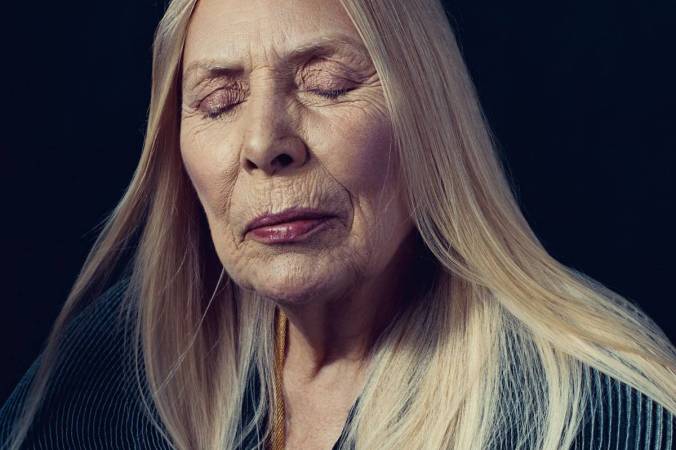
Joni Mitchell is Canadian, famous, a musician, a visual artist, and very ill. She is still alive and I am deeply grateful for her music. No one in my college writing class had ever heard of her. I played “A Case of You” for them and they were unmoved, blank and staring.

Maybe later.

I knew I should have played one of the early ones they were more likely to know. Instead I played the song from Blue because I heard her debut that album in Seattle back in the day. And because although I do not like change any more than anyone, I immediately fell in love with that particular reinvention of Joni Mitchell. “Michael from Mountains” is still stunning, but I moved on to new sounds right with Joni Mitchell.

We change our minds. We reinvent ourselves, and we sometimes do this over and over as experience and people around us push us along. Such changes are not always desirable. PTSD might inspire unwarranted responses to previously harmless situations or people. But growth is a complicated thing. We might need to twist with the wind or bend around obstacles in search of the light.

We are allowed. We are allowed to be ourselves and for that self to be re-framed throughout a long life as many people, as Chicana and then Latina, as artist and then song-writer, as woman, citizen, ally, professional, parent, sister, daughter, as elder, crone, as they, and ancient. Our referent group is not stable throughout our life because we ourselves change and find connections, we shift, slide, and reform.

We are allowed.

unAMERICAN

60b587cf-b5f5-4c1b-8d37-7173c7b1cc69.png

We have been enjoying the BBC production of Victoria. At the same time, I am mystified by Americans’ obsession with royalty.

The radical Chartist Movement is featured in the current Victoria series. It is well to appreciate that what these people asked for should not sound radical to Americans. They were asking for what seems perfectly rational and reasonable today. They asked for rights we should take for granted. That anyone would dispute these demands sounds about as outdated and absurd as arguing whether women have souls. (Yes, this happened repeatedly, and even in America.)

The Chartists’ six main demands were:
• votes for all men;
• equal electoral districts;
• abolition of the requirement that Members of Parliament be property owners;
• payment for M.P.s;
• annual general elections; and.
• the secret ballot.

It’s all taken for granted today. (Payment for M.P.s would have allowed ordinary working men to run for office without starving. Wealthy men who then held these positions could afford to attend Parliament because they had no job; they were rich.) At that time, rich men had complete control beyond the Crown. This was considered right and proper because they believed a person’s position in society was ordained by God. If you were born a tenant farmer, God meant for you to work hard all your life and to do as you were told. If you were born to an aristrocratic family, you were supposed to be respected, bowed to, and to be the ones doing the telling.

This is not an American value. We’re not supposed to believe that some people matter more than others at birth. The Declaration’s insistence that “all men are created equal” was a radical departure from Old World God-ordained dogma. Americans are not supposed to believe that some people are born inherently more important or privileged  than the rest of us.

And yet, according to a recent headline, America’s favorite redhead is a British prince?

Why do we care?

It is unAmerican.

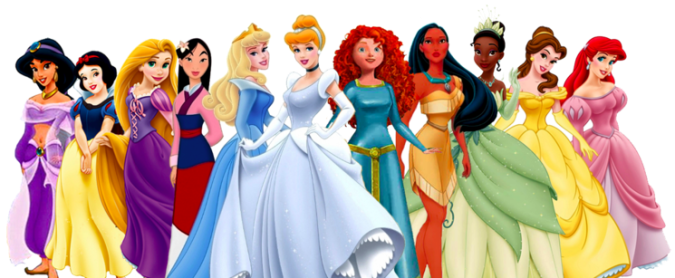
Is it a harmless fantasy? I refuse to believe that such assumption of inherited entitlement is “harmless.” Indeed this belief undermines the very ideals of every modern democratic society. Yet we cling to this pretty story, especially for girls, this notion that the story of a pretty princess, born to power matters.

The princess stories, even the more empowered princess stories are unAmerican. Why feed this propaganda to our daughters? The “princess” is a woman who, by accident of birth alone, matters more, is valued more, who possesses greater power and influence and personal importance.

Did you miss it?

That’s unAmerican.

Americans are not supposed to stand for such nonsense. We’re not supposed to believe that some people are born to rank and privilege. Our nation is founded on the belief that we are all equal at birth. Our destiny is not infinite, but neither is it defined by our birth. Someone, please, inform Disney.

True, our founders, most of them, even the ones who wrote the words, believed some people mattered more than others, and those founders had been born to superior rank and actively perpetuated their own privilege. But still . . . in theory, they recognized a better world. They recognized ideals beyond their current existence.

And in that better world they imagined, a Queen is merely a wealthy woman, poorly educated, and participating in an archaic system of privilege and posturing. Princes are mere men who have done nothing personally noteworthy other than being born.

And the “princesses” in those stories? However decorated and enlightened, however brave or capable, however dressed or redressed, whatever their race or ethnicity—they are mere girls, never even women, just pretty female children born to rank.

It is a subtle indoctrination. It is propaganda.

And that, my dears, is unAmerican.

It is fundamentally wrong.

BE WHAT WE EXPECT

50064337_815356815478205_5354791712269008896_n.jpg
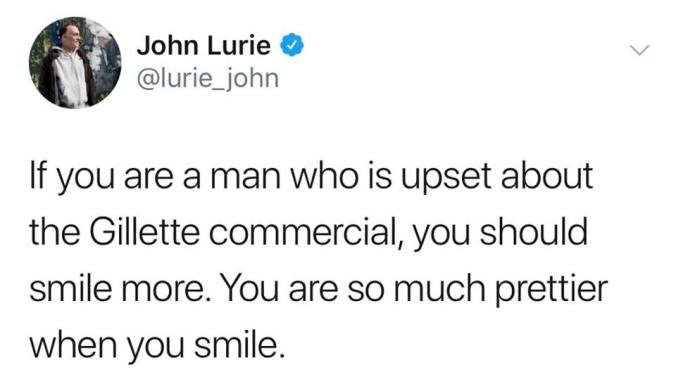
The Gillette commercial announces the company’s revised motto: Instead of “The best a man can get” they urge men to be the best they can be. The response from a narrow group of men has been nearly hysterical. They accuse the commercial of everything from unrealistic to emasculating. Most people I know, including men, including men actively hostile to feminism, find the commercial empowering.

One man tweeted in response to a furious “let men be men Let boys be boys” pundit: “It’s about balance. No one is suggesting men can’t be men. It’s about being a good person as a man. Historical behavior is no longer in tune with todays equality. You can be a tough guy, a manly man but still a man with values and appropriate behavior to help guide your kids.”

What we demand from ourselves is dependent on a lot of things, including what we are told about ourselves as men and women.

Girls have been outperforming boys in school for a long time, but this somehow magically swaps around . . . not in gradeschool or high school. Not even in college where women are still doing better. But somehow, in interviews and promotions, despite decades of women outperforming men, men abruptly do better. There are plenty of explanations for this. Nature or nurture? Natural aptitude? Inherent differences? Self-confidence?

I read a historical review that insists women have always outperformed men in school going back over a hundred years. (Anecdotal evidence from my life and my family supports that.) I think we only began to worry about this in the past 30 years because of popular books like John Gray’s Men Are from Mars and Women Are from Venus and Susan Faludi’s work. The assumption from some studies is that women were not actually smarter but simply socialized to be “nicer” in school, which is not so different from the claim in this article.

My psychiatrist friend says it’s hormones.

The New York Times report points to something simpler. “The study adds to a growing body of research suggesting that boys’ underperformance is not because of anything innate to boys. Instead, it seems, it’s largely because of something external: their school environments and peer influences.”

“Girls are encouraged to be diligent, cooperative and ambitious — all things that serve them well in school. Boys are more sensitive than girls to environmental influences, according to a variety of research, and they feel pressure to be strong, tough and athletic. They get the message that doing well in school is not masculine, social scientists say. Even in peer groups that prize good grades, it’s considered uncool to seem to try hard to earn them.”

The gender gap, with girls performing ahead of their male peers, historically reverses as the children age. After more than a decade of encouraging girls to be perfect students, we discourage girls from being smart. My brother used to talk about the gender gap in math in the US and how in Japan at the time the gap was reversed. It was assumed in the US that girls were “not good at Math” and they fulfilled that expectation. In Japan, Math was assumed to be mechanical and repetitive and exactly what girls were good at, and so the girls did well in Maths. In the 80s I would sub for the Math department and there would be no girls taking higher math classes at all at SHS. It was shocking. The head of the department in those days assured me that girls were naturally weak in abstract thinking. I assured him I had been in the 99%tile when I was tested.

Despite beginning Pre-Algebra when I was 10 and Algebra the following year, no one blinked when I stopped taking math my Sophomore year of high school. I often think how differently my life might have gone if everyone had not assumed I would eventually marry and be supported by a husband.

In my experience, I see how boys and girls receive vastly different treatment and expectations. A colleague with twins treated them differently from the instant they were born, and I was shocked he failed to even notice. The girl, despite being pounds heavier at birth than her brother was handed around like a fragile jewel. The boy, despite being underweight and subjectively fragile was passed about like a sack of flour. This is about more than pink and blue blankets.

We train them young to be what we expect and want them to be. Both boys and girls do their best to satisfy our expectations.

This may be changing.

Personal relationships are indeed personal, but our existence as people, as members of human society, should guarantee a certain level of respect and absolute justice. Not everyone benefits or suffers in identical and visible ways from sexism, but I would hope we all value the right of each individual, regardless of demographics, to life and liberty and the pursuit of happiness. At least one study of relationships between men and women over the past 50 years suggests that our expectations are changing. The assumption used to be that the man in a heterosexual marriage must have a superior education, but a “key finding is that the relative stability of marriages between educational equals has increased. These results are consistent with a shift away from rigid gender specialization toward more flexible, egalitarian partnerships and provide an important counterpoint to claims that progress toward gender equality in heterosexual relationships has stalled.”

That should mean that we are allowed to find out our personal interests, strengths, and weaknesses instead of having them arbitrarily defined for us.

KIDS TODAY

fullsizeoutput_e9f

I am ill. Sick. Not sick as in vomiting, which is what that word means in England. This is not England. I have a cold. I have not been this sick in almost five years.

The last time I had my morning walk was a week ago. I have been outside the house once since last Thursday, that was to visit the Walk-In Clinic in Seaside. My lungs and ears and sinuses are clear. I have a bad cold, a fever, major congestion, and until I took the NP’s prescribed Cherratussin (generic Robutissin) Sunday night, I had not slept more than an hour or two at a time for several days. The NP told me to go home, stay home, and get some rest. She capped it. REST.

Yes, I am become an old person talking about health.

My country is not so very healthy either, but there are hopeful signs. Gillette announced their new slogan is not about the best a man can get, but the best a man can be. See it for yourself. If you judged the content of the PSA by the outraged, even hysterical responses posted by a tiny but highly vocal minority of men, you would think it was an emasculating horror. Instead, even a former student who declares himself “a harsh critic of feminism” finds it perfectly reasonable. So do I. As another man I do not even know tweeted: “It’s about balance. No one is suggesting men can’t be men. It’s about being a good person as a man. Historical behavior is no longer in tune with today’s equality. You can be a tough guy, a manly man but still a man with values and appropriate behavior to help guide your kids.”

A friend posted: “I think some object to the idea that there is even a problem that needs to be addressed, and if that isn’t privilege, I don’t know what is.”

The first really powerful statement I read of the need for men to be the change was written by a man.

Times change. I am frequently asked how students have changed since I began teaching. I suppose I most object to the assumption that teenagers have changed. Teenagers are people, just like everyone. They come from a variety of backgrounds, have suffered a variety traumas, are blessed with a variety of natural gifts and of earned ones. They are teenagers—pinched between childhood and adulthood. It is still a terrible time where individuals enjoy little power, suffer screaming hormones, and possess no clear sense of what is coming. I was not a particularly happy teenager, and like students even today, I was assured this was the best time of my life and I should be enjoying it! Dear heavens, you mean it’s all down hill from here? I knew it for a lie, and I frequently assure my students that this is probably not the best time of their life. They look relieved when I say that. They are not so different. There are few changes. They are people. Sometimes they are dense as bricks and sometimes they are scared.

They have cell phones.

At my school, the economic advantages of some are not more marked than they were 40 years ago when I first subbed for my own former Junior High School Science teacher. Perhaps the bigotry of some is more openly condemned? Perhaps they are more aware of injustice? Perhaps they are less likely to avoid coming to school because of bullying?

Perhaps not? But perhaps.

As I say, I am ill today, my ramblings are not reliable. My personal list of grievances and gripes is long, but I will not rant. We all have our disappointments.

So here is what I think about my students. My students are not snowflakes. They are not fragile flowers. They need to be more curious. They need more skepticism and less cynicism. They need critical thinking skills. Someone should convince them that not all parents or teachers or politicians are right or even their enemies. Something should matter to them more than games and sport. They should read enough news to understand it. They should have moral goals and beautiful dreams and they should work hard to see those dreams bloom.

It’s a lot to ask, but they are strong. They need the confidence that genuine accomplishment can give. They are young to have that.


COLLEGE DEBT

48386319_2924621820882110_2663996230333366272_o

Never trust memes. Verify.

My mother first explained “where the money went” to me when I was about eight years old. “Here is how much your father earns each month . . . ” She wrote out mortgage payments, utilities, food . . .

The budget of Trevor Klee is making people hysterical. Where does some 25-year-old get off paying $825 a month in rent? There are all sorts of cruel comments all over the internet. How can he do this? A sample:

This is ABSURD.
A) how many 25 yr olds make that much?
2) where’s the student loan payment?
3) $615 for donations? 🤣🤣🤣🤣 I don’t know any 25 yr olds that do that, because they’re spending all their money on rent and student loans.
4) $20 for internet?? Since when??
5) $825 for rent?? If they make that sort of money, and only spend $130 on transport, they live in big city, big city = big rent. That amount would get you a closet in NYC if you were lucky.
So many more issues, just… wow.

“How dare he earn $100k/year! How dare he pay only $825/month in rent!” How? The answers are simple. He tutored while in college and recognized he was good at it. He worked for an exam-prep company in Singapore after graduating from Princeton before starting his own company. Though he could afford to pay more for a studio of his own, he chooses to share a house with four other people. His rent is $4125, split five ways. His actual income varies because he runs his own business so he budgets for his low monthly income. The people freaking out about this meme would know all that if they read his story. The people who made this meme know the facts because they would have had to read the article in order to compile their outraged pie chart.

So he earns a lot more than me. So?

Klee worked while he was in college and likely had grants that paid his tuition. He got into Princeton. Maybe he has rich parents, maybe not. Princeton will pay the entire difference between what students can afford and their actual costs. Many notable private universities do that. If you can get in to Stanford or Harvard or Brown and you come from a low-income family, the university will ensure you can afford to attend. That doesn’t mean students don’t go into debt.

On the Princeton website: “Students admitted to the Class of 2022 who applied for aid with family incomes up to $160,000 typically pay no tuition.”

A former student of mine who had no help whatsoever from his family. worked three jobs while he attended a private university out of state. That was nothing new. He’d done that all the way through high school. When he graduated from college six years later, he went to work for a large company and could afford the payment on a condo on Copley Square. Be very, very impressed. I am. Did he graduate without loans? I never asked, but he might have. In hard and harder times, with and without parental help, some people manage to do that. Some do not.

Even when I was in college in the ’70s and tuition at the University of Washington was a fraction of what it is today, I knew plenty of people who were paying off student loans for many years after they graduated. A friend went to Hawaii during Spring Break one year and had student loans she was paying off a decade later. When she complained about her debt, I shrugged. Hawaii must be nice, but I never went.

I graduated without loans because:

  • I attended the local public university and lived at home for two years
  • my husband and I managed a really trashy apartment building near the UW and that covered most of our rent
  • we did not smoke, drink, or party
  • no coffee
  • no car unless we borrowed one from our parents. Instead we walked most days, including to the grocery store, and took the bus once a week
  • no vacations
  • entertainment was the $1 movie night at the Movie House, where we walked
  • dinner out was the 2-for-one coupon dinner once or twice a term
  • no help from our parents (other than the rare use of a car)
  • our only expensive activity was getting an education

Even then, graduating without debt was unusual. I knew people who lived in dorms because their parents were helping with their expenses. They borrowed. We lived like paupers and did not mind because we knew it was temporary. We both worked part time year around. Gary worked full time in summers and during Rush at the book store. I worked in a record store and sold my art work.

I knew a woman whose monthly food allowance for two people was $30 a month. I budgeted more than that for our food, and we were still bickering about who ate the last slice of bread or drank more than their share of the milk. But my friend was more impressive than that in her spending. She donated $100 a month to charities. At the time, I could not imagine how she and her husband could do that. My family did not give to charities, perhaps because both my mother and father came from single-parent households in the Depression? But I thought about what my friends was doing and I began giving too. I started with $5/month to Public Television because I watched that channel so often in college.

This month we gave $200 to Partners In Health, $100 to Southern Poverty Law Center, $100 to Wikipedia, and $100 to Amnesty International. I can’t afford to do that every month, but during the rest of the year I donate to projects and people I believe in.

As best I can recall, my mother wrote out her monthly budget in order to prove to her young daughter that we could not afford for me to keep a horse in the backyard. I had read a British horsecare book that detailed the expenses of farrier and feed. I knew keeping a horse was expensive. Even if we’d owned the field behind our tiny ranch house, we could not afford oats. Many years later when I mentioned how early exposure to budgeting had made me conscious of the need to be responsible, Mom confessed she’d lied about the family income. Never mind. It was true: We could not afford a horse.

At age 25, Trevor Klee gives over $600/month to charities. He does it because he can afford to do it, even in the leaner months he brings in $3000. He is careful about his money, but he is also generous. He chooses to share.

Why don’t people scream about that?


THE ODYSSEY

51INarXj18L._SX327_BO1,204,203,200_.jpgTranslations are a bitch.

If readers—especially those with no great interest in other cultures or mythology—want a fast-moving, understandable fantasy tale, this might be just the ticket.

I want history and truth and anthropology. I want art. This translation is modestly literate and probably relatively accurate. Despite imposition of semi-iambic pentameter and use of modern expressions, it does nothing fancy or self-promoting. It is easy to read. Is it an accurate translation of this ancient poem?

I used to explain the challenge of translating poetry to my students this way: You have the form (the structure of a poem in rhythm and rhyme), the meaning, and the music. In translation, there may not be a simple word meaning exactly in English what it means in the original. Wilson is concerned that prose versions become longer. She’s right about that, prose does tend to become wordier. However, making the lines shorter than the original defies my understanding. When is it ever possible to consistently and accurately translate in fewer words than the original language? Thus, reading back and forth between translations, I found information missing from Wilson. To maintain her line-by-line translation she was forced to leave things out.

Plus all words gather baggage through cultural connection and acquired connotation. (The young woman in the beautiful long white dress—is she a bride, an unmarried young woman, or in mourning for her father? Is the story American, Vietnamese, or Chinese?) If something must be sacrificed, do you choose form, meaning, or music?

I would give 2 stars for music (maybe only 1), 3 stars for meaning (maybe 4, maybe only 2), and 2 stars for form. Also mostly 4 stars for her introduction, though even there . . .

I wanted to love this translation—I expected to love it. It is the first translation by a woman. I prepared and took notes. I read the introductions to several translations in preparation, beginning last year. Once I had Wilson’s translation in hand, and began reading I felt I was missing details and worked back and forth between her translation and Penguin’s Rieu translation, which is wordier prose but includes line numbers on the side. Each has its flaws.

What I liked about the new one: Wilson provides a lengthy introduction that includes how the poem has been viewed in the past, when and how it might have been composed and first written down, and how other translators have approached the work. In this introduction she points out specific misunderstandings and provides critical cultural context. References to dogs, for example, especially in relation to the actions and appearance of women, do not have the same connotation they would in modern English. A dog-like face is not ugly, but suggests something else (perhaps devotion, or a need for attention). Wilson has her doubts that anyone named Homer existed. She provides some evidence that the epic is much older than usually assumed. She works hard to provide a poem-like translation. Wilson points out that prose translations inevitably become longer than the original. This attempt to provide a straight-forward translation in iambic pentameter cuts length and makes for fast reading.

What I did not like: The attempted iambic pentameter. Most of this translation is in 10-beat lines but some is not, and much of it is not in iams at all. The challenge of fully conveying meaning in fewer syllables than the original was beyond this translator. (Homer’s dactylic hexameter, which I do not claim to understand, has a longer beat line.) With the aid of an actual poet, she might have managed it, but I am convinced meaning would have been distorted in the effort. Wilson also claims, and so do other introductions (I read four) that no one person could have composed and memorized twelve thousand lines. That is a foolish assumption since many oral societies, even within historical times, have managed just that. And her effort to use terms familiar to modern audiences includes “scot-free” among other colloquialisms that seemed out of place in such a setting, not to mention I would guess many young readers would not understand them all, thus undermining the attempt to make the text more “relatable”. In her introduction, she also dismisses the possibility of the composer having been a woman.

While she is likely correct that the composer was a man, I found part of her argument against a female bard short-sighted. A woman, she asserts, would not have adequate knowledge of the battlefield to support the detail found in the poem. But I find nothing in her translation (or any other) of battle scenes that could not have been pieced together from post-battle remains, guesswork, and survivors’ accounts or tradition, by a woman or a blind man. She also fails to note the ordinary household details, meticulously described, which would have been equally inaccessible to a male poet and far less likely to have been preserved by men. In the end, I argued with her assumptions about gender. She inadvertently, reopened the question for me. Would any man go on and on about household textiles spun, dyed, woven, and cared for exclusively by women? [NOTE: Robert Graves assumed the epics were written by two people, The Odyssey by a woman. His novel Homer’s Daughter, based on this assumption, was not particularly successful, imo, but there you are. A woman should have written it. He missed most of the more convoking details that would have convinced me.]

No introduction I read focussed adequately on how several “inconsistencies” support the elite quality of the actors in this story. The men eat only meat and drink mostly wine except under severe hardship. Though there is frequent mention of gardens and orchards, the characters do not eat fruits and vegetables. The faces of significant characters, men and women and even including some suiters, are described as “god-like.” Men are bathed and their skin oiled, their clothing is wool, fine-spun, and frequently purple. In fact, though many dyes would have been available, purple is the only color mentioned. Men may wear mantels of purple, sleep under blankets of purple, and women spin purple-dyed fleece. If that last is accurate, that the fleece was dyed before spinning, then it was first washed before dying. It would have been oiled before it could be spun and there is a passage that references oil dripping from a weaving, a detail translated differently in each version I checked. Some translations specify olive oil, others do not. Use of precious olive oil to spin the wool is unlikely, but intended, perhaps, to convey the elite status of the characters. Failure to appreciate how people lived and spent their time results in shallow understanding and translation. The purple dye comes from a Mediterranean shellfish, tyrex, the “royal purple” first discovered during the Bronze Age when this story is set. The displays of wealth in use of meat and oil and purple dye and descriptors using the term god-like all promote the stature of the cast. These are not ordinary people, but people of rank.

A swineherd is addressed directly by the narrator, “You, Eumaeus” and he becomes one of Odysseus’ three supporters in the slaying of the suitors, a rare character who is named, but not an aristocrat or of immortal family. More important, I suspect, he first greets Odysseus on his return, treating him with the proper care and respect, though he does not recognize his master. He does what is right and proper and due to a stranger. The Penguin translation claims the composer so loved his creation, he honored him in this way. I would argue that here is a commoner, a slave and swineherd, who is important to the story. The rare use of direct address acknowledges this.

Every introduction I have read has emphasized the oral roots of the poem. Wilson writes that The Odyssey may have been composed from an oral tradition, how and when it came to be written, and how the text version might have altered any previous spoken version. Yet, not enough is said about the nature of the oral tradition. Every high school English teacher will tell you that iambic pentameter aids the actor in memorization. I have heard actors in Ashland, Oregon, describe how memorization was much more challenging when they worked on a modern play after Shakespeare.

But poetic rhythm is also an aid to the listener. Just as the form aids the performer, so form and repetition aid the listener who can predict and appreciate sound when it is held in a poetic form. While the reader might reread, turn back a page, as I frequently did while studying these translations, the listener must grasp the story in the moment it is told. Homer (whoever that person or persons might be) tells and then reviews the telling, caps each character with a descriptor of his or her heroic trait. Penelope is prudent, Odysseus is cunning, for example. These words preface their names over and over again regardless of how the characters behave in the scene. Most translators vary these words but also frequently leave them out entirely. On the page, they seem redundant. To the ear, they are a formal reminder of the characters we are hearing about: ultimately, even if he is foolish in leaving his starving men with the cattle, Odysseus is a cunning hero.

The Penguin edition also speaks of how the story was composed, assuming it is fiction. Even Wilson likes to comment on characters as creations. From a modern perspective, this is sensible, but tradition is always based in fact. Everyone assumes these are very ancient stories, likely already old before The Odyssey was first spoken or written. Yet many details remain in question, despite what seems to me to be obvious. Penelope, for example, is the subject of a great deal of speculation. When does she recognize her husband returned after 20 years? Does she recognize him early on and keep this to herself? Even Wilson describes her actions as confusing. Telemachus is frequently described as immature.

Here is my teasing out of the story from a broader (Penelope’s) perspective: Odysseus was about to go to war. Before he leaves, he tells his wife he hopes to see her again, but if he dies, she must raise their infant son to manhood and then remarry. This backstory is a part of what we find in The Odyssey. After 17 years, suitors for perhaps-widowed Penelope begin to arrive, her son is not yet a man, and she concocts the deception involving weaving a shroud for her husband’s aging father. She weaves by day, unweaves by torchlight in the night. After three years, she is caught out, betrayed by a slave. Over a hundred suitors arrive and would like to have her and the kingdom she has managed through this long absence. Telemachus as an unprotected minor is at risk. The disguised goddess Athene sends the boy off to visit other survivors of Troy, and this accomplishes two things: it introduces the young man to his peers who are then in a position to support his claims, and it keeps him out of the clutches of men who would kill him and take his inheritance. Their avaricious intentions are clear because, we are told repeatedly, taking his wealth is what they are already doing by eating and drinking the wealth of the household. They plan to murder Telemachus. Though she is described as beautiful, marrying Penelope is primarily a political tactic.

Penelope hides herself from the men when she can, but also keeps each one dangling with messages when she cannot hide. Her position is precarious. Eventually she must either choose a new husband or abandon her son to the ambitions of these men. Either way, stalling remains her best option. When Telemachus returns from his travels, she announces she will marry the man who can do what her husband once did, string his massive bow and thread an arrow through the handles of a dozen axes. None is able to string Odysseus’ bow, much less use it, though his own son comes closest to accomplishing the feat. Does she hope all will fail and thus she will buy more time for the son who is stronger than her suiters, nearly as strong as he will ever be? Or does she recognize Odysseus? It is worth noting that when men lie in this story, this deception is immediately called out in the poem. If Penelope were lying, the poet would have told us. Instead, Penelope has been stalling from the beginning as she protects her son in his childhood, but now she must fulfill the second part of her obligation to her presumed-dead husband. There is no mystery here. Penelope is a dutiful wife. As a widow, she must remarry. Does she love her absent husband and mourn for him? Absolutely. Everyone, everyone cries in this story. Men cry from fear and loneliness and loss. Penelope cries for her absent husband. Her sincerity in grief is never in question. She has done her best to fulfill her husband’s directions.

I have not found any gloss or introduction that deals with these issues.

A recent The New York Times review of Robert Alter’s 3-volume translation of the Hebrew Bible by Avi Steinberg, describes how Alter manages to both respect the poetry of the original and honor the meaning of the original as none has done before. In part, he does this by breaking convention:

Alter told me about his decision to reject one of the oldest traditions in English translation and remove the word “soul” from the text. That word, which translates the Hebrew word nefesh, has been a favorite in English-language Bibles since the 1611 King James Version. But consider the Book of Jonah 2:6 in which Jonah, caught in the depths of a giant fish’s gut, sings about the terror of near-death by water. According to the King James Version, Jonah says that the Mediterranean waters “compassed me about, even to the soul” — or nefesh. The problem with this “soul,” for Alter, is its Christian connotations of an incorporeal and immortal being, the dualism of the soul apart from the body. Nefesh, to the contrary, suggests the material, mortal parts, the things that make us alive on this earth. The body.

“Well,” Alter said, speaking in the unrushed, amused tone of a veteran footnoter. “That Hebrew word, nefesh, can mean many things. It can be ‘breath’ or ‘life-breath.’ It can mean ‘throat’ or ‘neck’ or ‘gullet.’ Sometimes it can suggest ‘blood.’ It can mean ‘person’ or even a ‘dead person,’ ‘corpse.’ Or it can be ‘appetite’ or something more general: ‘life’ or even ‘the essential self.’ But it’s not quite ‘soul.’ ”

But, I asked Alter, doesn’t “soul” help dramatize the scene’s intense emotion? I mentioned another instance of the word nefesh, the terrifyingly evocative line from the King James’ translation of Psalm 69: “For the waters are come in unto my soul.”

“Oh, yes,” Alter said, with a smile. “That one does have a certain emotional resonance to it. But it’s not what the poet had in mind. And, I would add that the line ‘for the waters have come up to my neck’ … is also rather dramatic.”

. . .

Alter regularly composes phrases that sound strange in English, in part because they carry hints of ancient Hebrew within them. The translation theorist Lawrence Venuti, whom Alter has cited, describes translations that “foreignize,” or openly signal that a translated text was originally written in another language, and those that “domesticate,” or render invisible the original language. According to Venuti, a “foreignized” translation “seeks to register linguistic and cultural differences.” Alter maintains that his translation of the Bible borrows from the idea of “foreignizing,” and this approach generates unexpected and even radical urgency, particularly in passages that might seem familiar.

It is this sense of an ancient text that I miss in Wilson’s translation. She has so thoroughly domesticated Homer that he is entirely lost.

What did I want? What do I want? Perhaps a three-part text: the original Greek, a translation, and footnotes on the side, on the same double-page spread. This modern nonsense of endnotes where I must flip to the back to find comments and then not find an explanation of a term of history when I do look is exasperating. I want literal translation as well as poetic translation. I want consistency. If names have literal meaning, either choose to translate or footnote (Wilson endnotes one time, translates another—give me both but in parallel). If “his face drained of color” makes more sense to readers because it is the conventional phrase used today, I still want a side note explaining that the literal translation of the Greek means his skin turns “yellowish green” because I have seen that. I have seen death.

Or perhaps I want something more straight forward and difficult: I want art. I want poetry.

Someone, please, do for Homer what has been done for Shakespeare or, more precisely, what Robert Alter has done for his Bible. It is a lot to ask. I know.

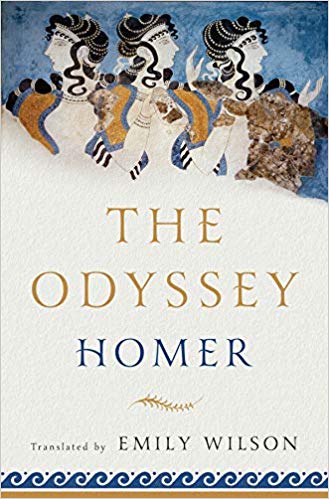
The cover art is gorgeous—one of my favorite Minoan mural paintings, but from a period and culture completely unrelated to the story. Like this translation itself, it is an attractive choice and it is wrong.