TIME OFF

IMG_3640We went away for the weekend.

Such a simple thing to do though rare for us because for all of our marriage until recently, we had the animals to consider. There were dogs, usually five or six of them. There were the cats, only one at a time. Zora bit. Leakey pined. This recent trip was easy too because the friends we stayed with took us to an island without internet, a quiet place. And they spoiled us completely. Fed us and entertained us and managed our travel. The silence was dream-like and I dreamt so clearly and with such authenticity that that I was certain it was real.

Perhaps that was because the silence and beauty overwhelmed imagination.

Backing up, late afternoon on Thursday my new computer arrived. I can never get Apple to accept a password or change it or manage it at all, but my Time Machine transferred all data. The next challenge was passwords because my old computer knew them all and this new one does not, but must be taught. [Eventually Apple allowed me to change my password, after at least nine years of receiving the message “This action cannot be completed at this time”, but then I had to reteach the new computer website passwords again.] I opened the newer version of Pages and searched for features hidden in different places. But already this new Pages is old, and I have been prompted to download the newest version, free, but another adjustment.

I was perfectly content with how things worked with my old version. On the plus side, this new laptop weighs two and a half pounds less that my last. The trade-off is that it is smaller and no quicker, but the battery is spry. As I type this, I have been on the internet, Pages, and email for over two hours and used 13% of the battery. I did not even remember to turn down the backlighting of keys.

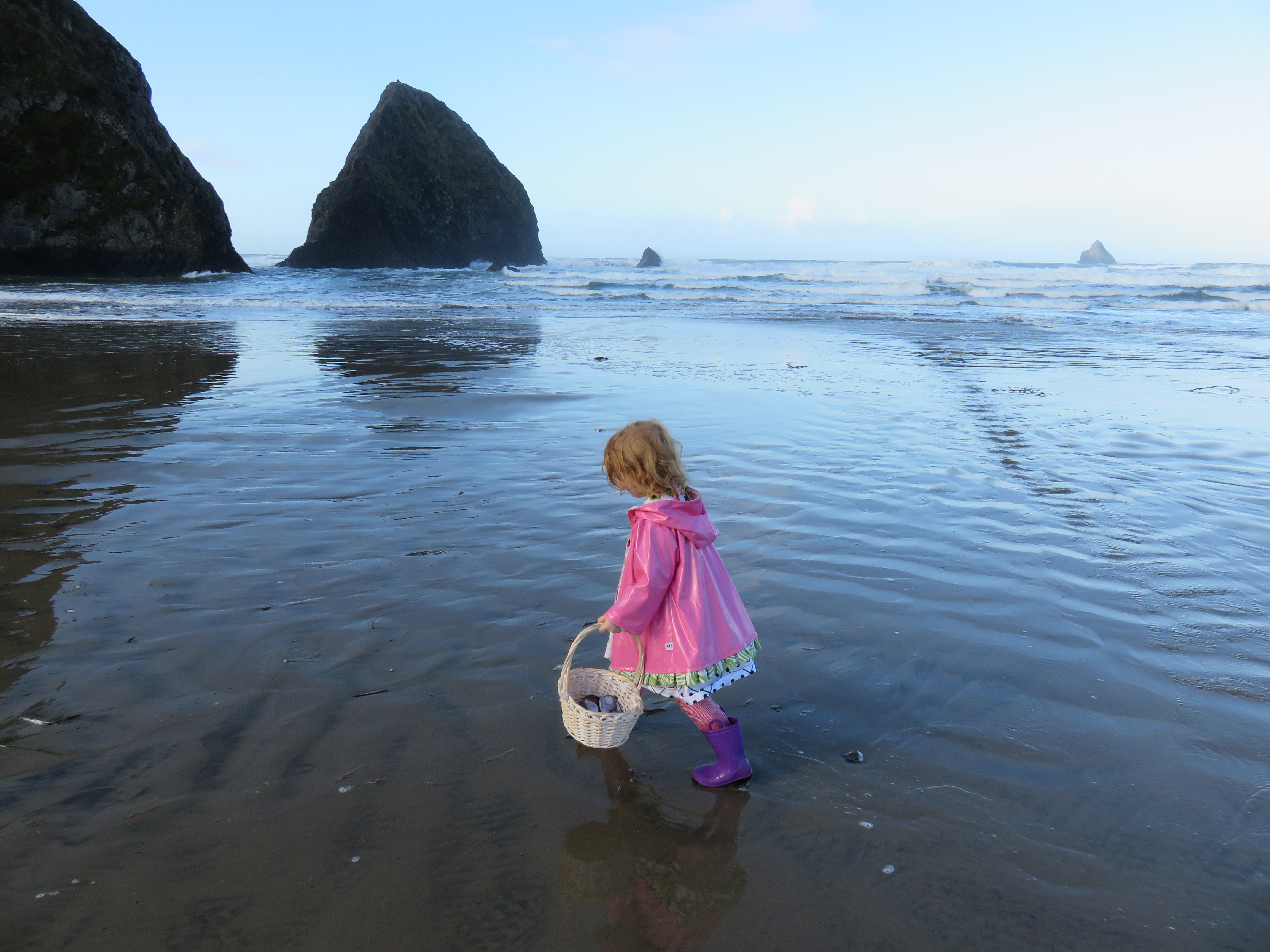
In any event, I left my new laptop at home and we have only a flip-phone, nothing smart at all, so for three days we avoided news and I was spared word-processing. I walked beaches with such a foreign assortment of pebbles and gravel and stones that I hardly knew what to look for. On our beach, the rocks lining the beach are basalt with occasional sandstone or agates, shells, feathers, and trash. We gather trash. I confess I gathered trash on the beaches in the San Juans too. Impossible to ignore the habit. Plastic and styrofoam, but no beach toys.

I am overwhelmed by the hospitality we received over the weekend.

I brought back a fistful of what I term “pinkies”—tiny pinkish pebbles. I found as many as I already had found, though what I already had was collected over months and years in a narrow stretch of beach. On the island, I found agates the size of a five-year-old’s fist and one in the shape of a heart. I found a beautiful granite egg.

Monday morning I completed my NaNo officially, but I was not done at 52k words. I wanted at least 8k more, preferably 70k, which has been my minimal goal with novels in the past two years.

Today and for the foreseeable future I will be struggling with Apple. Everything was fine on this new laptop, at first. There were the normal struggles to locate information and actions that I was used to finding in another place, but I could access my files, the internet, and email. Now I cannot access my email—the old messages show, but I cannot send or receive new messages. This has something to do with the iCloud and two-part authentication, a level of security I do not even want.

I am near throwing this little laptop through a window. Of course we have double panes . . .

RELATIVE

IMG_3580

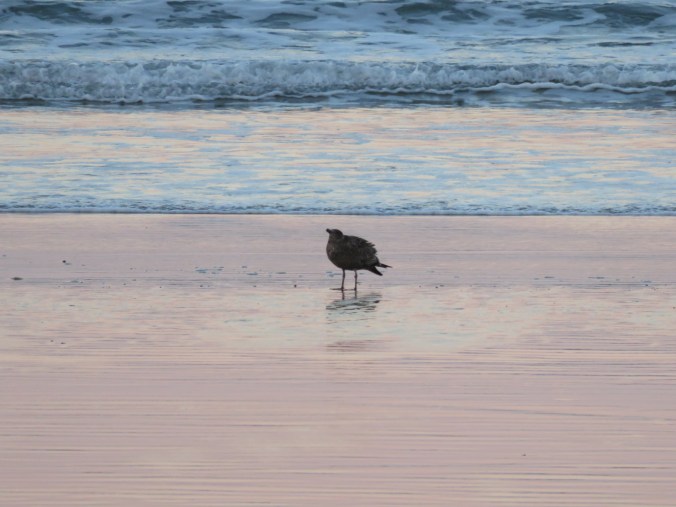
This young seagull was peeping for its parent, but that adult flew away.

When my husband was young, sometimes he would sit on the back steps in a parched Arizona payday waiting for his dad to get home with groceries. Another family of four children was left alone for the weekend that turned into a week or maybe two. The woman who told me about her childhood was not sure, only that even the mustard was scraped out of the jar by the time Child Services showed up.

My own childhood was not so deprived. I went without dental care and my mother mixed powdered milk and when I first tasted a real butter pat, it was like candy to me. In kindergarten, I had two skirts and three short-sleeved Orlon sweaters. For Easter, I had a new cotton dress. It is odd the things you remember. But we were never hungry, and my father’s mother and aunt had enough money put by that it was safe to assume we could borrow money if things got desperate, which they did on occasion.

This is to say, I was not raised poor. Raised poor is hunger and no one to turn to who is better off. “Poor” is so bad that we make up euphemisms like “economically challenged” or my students say a person is “not very rich.” No, poor is not having enough money to pay bills even though you live cheap. Poor is embarrassed because even when everyone in the household is working hard to earn money, money is still “tight” and bills are sometimes late. Poor is being blamed in our country.

And that isn’t fair. Innumerable studies show the sort of income necessary to pay for housing in different parts of the country. Recent studies are equally clear that poor children almost never receive the quality of education wealthier parents give their children. Their health care isn’t as good. What they suffer damage in childhood that their ability to improve their lives, quite permanently.

The truth is that wages have not kept up with inflation—they have been falling behind for decades. Telling someone that if they want to earn money, they should get a better job is like telling a person waiting in a wheelchair to run to the head of the line, like telling the five year old to reach something down from the top shelf, like asking someone who is starving in a third world country: “Well, for heaven’s sake, go to the store and buy some food!”

Sometimes we simply fail to pay attention.

Poverty is lousy circumstance, not a character defect.

I am reading Adrienne Rich’s essays in her new collection, Essential Essays: Culture, Politics, and the Art of Poetry, edited by Sandra M. Gilbert. Rich was a force of nature, a woman who found compassion for others when she granted it to herself. She reminds me that compassion is necessary, that affluence is not a free pass to righteousness, that everyone faces difficulties in life and it’s a good thing to remember that sorrow and trouble come to each of us.

Here is the first poem I ever read of hers:

Prospective Immigrants Please Note

Prospective Immigrants Please Note
Either you will
go through this door
or you will not go through.

If you go through
there is always the risk
of remembering your name.

Things look at you doubly
and you must look back
and let them happen.

If you do not go through
it is possible
to live worthily

to maintain your attitudes
to hold your position
to die bravely

but much will blind you,
much will evade you,
at what cost who knows?

The door itself makes no promises.
It is only a door.

Thoughts from Adrienne Rich

I believe that poetry is asking us to consider the quality of life. And it is reflecting on what makes it possible for us to continue as human. Under the barrage of brute violence, numbing indifference, trivialization, shallowness, that we endure.

Even when I was very young, I was reading poetry, looking for what it could tell me about how to live. For me, poetry has never, ever been just an escape from the world, an escape from history.

I think in this poem, what I am talking about is the choice that we can make, to move deeper into things, or simply to live worthily, maintain your attitudes, hold your position, even die bravely, but not to see what might have been seen. Not to grasp what might have been grasped. And that is a choice, for us all, whether in poetry or in life.

Our country has many truths, but certainly one of them has to be that this was never a democracy. That this was a hope of democracy, an enormous, an enormous hope for true democracy, and that it failed many people from the outset and it’s failing more people now.

I think that more and more people feel uncared for, feel that their lives are not only unvalued, but meaningless. Feel that though they may care for their lives, no one else will. Feel that the only way that they can protect their survival and their interests is by the gun. I’m afraid that many people feel an enormous desperation which plays into the propaganda of hate.

I think that poetry speaks beyond that, to something different. And that’s why it can bring those parts of us together, that are both in dread, and which have the surviving sense of a possible happiness, and a possible collectivity, a possible community, a loss of isolation.

These reflections are excerpted from an interview Bill Moyers did with Adrienne Rich in 1995 as part of The Language of Life series. Rich died in 2012 at the age of 82. You can read the transcript of her entire interview with Bill in our archive and read more of her poems at Poetry Foundation website.

‘When something like this happens . . . ‘

44758674_10219065663539373_8219845102713962496_n.jpg

Many people are finding it emotionally challenging to watch the news these days. They do not feel connected to events, to politics, to the ebb and flow of our national debate. I understand that.

Just last week I was thinking over my personal experiences with accidental shootings leading to lost use of legs, to murders, and to suicides—yes, plural for each. I have known no one who was killed by a serial killer or terrorist, but people I know have been crippled and murdered, and all were the victims of white men. There is nothing unusual about that. In my country, most murderers and terrorists have been white, male, and Christian, even when the majority of citizens were not.

I love and would trust with my life, most every white male I know personally. They would not harm anyone based on color, religion, or politics. They are joined to one another through their communities and by love and respect.

So then, the past few days.

Things happen. Terrible things happen to everyone. A father commits suicide in the driveway while his daughter desperately beats on the locked car doors and windows to stop him—something similar happened to more than one of my students. A girl slept on the dirt floor of a shed, determined to stay with her homeless mother who was mentally ill and drug-addicted. A father returned from Iraq with no visible wounds but still changed beyond recognition. A student hospitalized, not for the first time, in a mental facility. Mothers and fathers died. A student drowned. Students died in car wrecks. Students killed themselves.

Ask any teacher in a weak moment and they will share their stories.

Then there was the student who slammed a school desk into a wall, the one who threw a chair, a padlock. The ones who did not want me to know what bothered them. The cruel parent, the near fatal overdose, the guilty confession of keeping score of girls, the marks on my board to count off the days without drinking.

I do not know how to adequately respond to cries for help. I have done my best as a mandatory reporter. I have offered comfort, I have listened. I have tried to be what my students needed from me, and often I have failed.

What leadership and decency look like:

“When Rabbi Joseph Miller learned of the Squirrel Hill massacre, less than a mile from his own pulpit, he ordered the doors of his synagogue locked,” Franklin Foer writes. “Despite his congregants’ terror that they would be next, they recited the mi sheberach. They didn’t pray for their own protection; they prayed for the healing of others.”

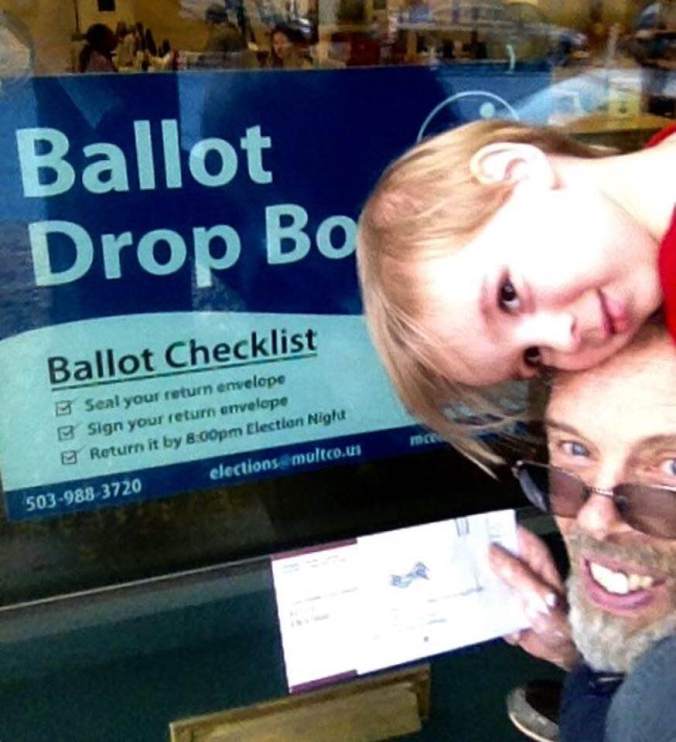
A dear friend has just managed to let those of us who were concerned know through social media that she is well, despite hospitalization with a terrible health crisis. She begs people will vote in lieu of flowers.

There is no point trying to avoid the pain. It comes and it comes. We can deny our responsibility or face what comes with compassion and care. The best we can do is take steady, honest steps toward healing our beleaguered nation.


RANDOM FACTS

IMG_3392

Years ago, long before non-GMO became a common label on foods, before Safeway even had an “Organics” section, and before “gluten-free” became a thing, a junior came to class with an idea for her research paper. “It sounds interesting. They are altering the genes of food,” she said about the NPR broadcast she’d listened to on her way to school. ”

“What do you think about it?” I asked.

“I don’t know,” she said. “I want to find out.”

Her eventual essay included the word “Frankenfoods” in the title, so we can see where that led.

Over the years, students rarely choose to write about topics they begin by knowing little about, but those papers are most often the best. Writing a research paper should be as much about finding out truth as proving it.

Changing our mind is probably one of the greatest struggles any of us have. We get an idea in our head and simply cannot move. For a teenager to research a topic with an idea already clear in their head about what they want to say is pretty typical. For a reversal to occur is rare indeed.

Recently, a junior was writing about forcing sports teams to change what some perceived were racist logos. She argued this would be unnecessarily costly and inconvenient, would destroy honored traditions and history, and anyway, “racism” was not the intent and probably not even effect of these logos. She got through two drafts, and then the day before the next draft was due, the one that was supposed to be done other than minor word-smithing, she came to see me after class.

“I have a problem,” she said. “My thesis is wrong, or anyway I disagree with my thesis. I made a mistake and now I don’t know what to do.” She had, the night before, read an opinion piece about the damage racist stereotypes, including the images used as sports logos, do to young people living on reservations. Such images preserve and inflate prejudices and contribute to a sense of exclusion and hopelessness for children already living in poverty and on the margins of society. “I’ve seen that,” she said. “It’s true.” She had worked as a volunteer on a reservation.

“Change your thesis,” I said.

“But I don’t have time to start over.” She sounded surprisingly reasonable, given her sense of her dilemma. This had to feel like a disaster in her world and she was struggling to maintain her calm. She began to rattle off all the arguments that supported her original thesis.

“But one article convinced you that you were wrong.”

She nodded.

“So use everything you already have, and then show me how you were convinced. Concede everything—inconvenience, costs, fan outrage—and show me how there is something more important at stake. It convinced you; convince me as a reader.”

She did it too. Changed her hook, reversed her thesis, fiddled her body paragraphs, and concluded with a bang. Her argument was logical and emotional, reasonable and persuasive.

It can be done. We can change our minds.

Long ago, another junior showed up before class, the day before a draft of the same assignment was due. She was in tears. “They have to shoot them,” she wailed. “They have to do it as a symbol, and the sea lions aren’t even the real problem.” She had been writing a paper to argue against killing the sea lions that were eating salmon at the base of a dam spillway. She could prove that the sea lions were not the cause of dwindling wild salmon populations, but she also came to understand that the issue was not as simple as she’d hoped.

Another student, in his senior research paper (SRP) was struggling to prove his thesis, that welfare recipients should be drug tested as a condition of receiving public assistance. Why should people on public assistance be allowed to abused those funds? The trouble was that drug-testing had been tried and had proven that few people do abuse drugs and it cost a great deal more to test for drug abuse than was gained by cutting such people off from public services. Ten or twenty times more. There were also issues related to privacy and other forms of public assistance and contracts that he did not even want to address. He had not changed his world view, but he did change his point of view on this particular policy.

Students have proposed legislation that was eventually adopted (hat off to you, Russell for advocating pleasure boat pilot licenses), as well as the use of artificial turf, graphite bats, and golf carts during tournaments. I read about forty essays on allowing or banning abortion, most of them on both sides rather hysterical and unconvincing, before I banned the topic altogether. One senior cried so hard every time she tried to work on her pit bull essay that I chose to put that topic, too, on the banned list.

Religious arguments? Mostly banned. When a student used Thomas Jefferson’s faith as part of his proof that we are a Christian nation, I suggested he had better read the work of our third President. When his mother argued that no Christian ever owned slaves, I gave up trying to reason with her. In order to use a faith-based argument, you would first have to convert your audience. I was teaching in a public school.

I readily confessed the obvious. I have opinions. I am opinionated, but I am more interested in the writing. I have been convinced by students, and even when I am not convinced, my purpose is to evaluate their skill, not to make them agree with me. One of my all-time favorite essays, one I still recall vividly and with respect, was written to support preserving “under God” in the Pledge of Allegiance. It was a hot topic one year because of a California lawsuit. Three students wrote supporting restoration of the original form of the Pledge. Two wrote supporting the current form. One of those last was brilliant. I still don’t say “under God” because my mother taught me not to, but I respect and honor that student’s essay. Her exploration of the history and implications of the Pledge were more complete than anyone else. She won me over.

It is one of the side gifts of teaching researched persuasive essays: I learn a lot. Sometimes I find I know random facts I cannot even explain. I have no reason for knowing about water rights and road-building, statistics about rape and fishing, the costs of medical insurance and how many student athletes are injured by sport. Part of scoring their papers involves reviewing their research, verifying their claims, checking for additional overlooked aspects of a problem. I read a great deal.

And as determined as students are to avoid interviews, talking to the right person will yield solid facts and details available no other way. Even so, the right questions of the right person are critical. A student asked an engineer working with nuclear power via email what health risks were associated with nuclear power? The man emailed back that he was “unaware of any health risks.” The student quoted this as proof that nuclear power was non-polluting and harmless. I had to break it to the student that “he may be joking.” An engineer would not be the right person to ask about health issues, and he needed to research nuclear accidents. Plus, you know, the long term effects of The Manhattan Project . . . “Look it up.”

I am a good researcher, and with the internet and experience evaluating sources, it is surprising even to me what I can find out if I look hard enough. The key is a willingness to look beyond what supports my prejudice.

Skepticism is a good thing, I have found. Finding multiple sources to confirm the same information is important. Avoiding the crazies. Doing the math. Recognizing that a minority opinion is not necessarily wrong. But it isn’t necessarily right either. What’s worth arguing is never simple.

In the face of personal experience, we might alter our perspective. In the face of evidence and logic, we must be willing to consider other perspectives.
 

READING OUT OF THE SHELL

IMG_3388

The student working on the research paper was well and truly stuck. He walked from the back table to where I sat at the front and asked me for help. “I am really far behind,” he said as if this were a permanent condition. He had the research. He had an idea of what he would say. He told me about what he knew and showed me the research. When I asked him questions about supporting information and about complications, about the opposition to him claims, he was able to answer.He had nothing written down. I helped him create a simple graphic of pros and cons. Then I gave him chocolate and 20 minutes and when I came back his page was completely blank. Time had passed and his fear stared him down.

Last year, when I suggested to a friend that reading for 10-15 minutes a day would result in reading a complete book every 3-4 weeks, she commented wryly, “You could say that about a lot of things.”

Well, yes, I could.

Let me put this another way. If you stayed off Facebook and your cell phone for 10-15 minutes a day, you would have time to exercise, write an actual letter, do some yoga, meditate, cook oatmeal for breakfast, make a salad . . . or read.

Making time is not so hard. It is impossible. Time is not created, it merely passes. How we pass with that time is choice. Recently I binged an Australian television series, walked the beach, played Scrabble with a friend, and laid awake worrying about family in the middle of the night. I wrote blog posts and helped a student with Geometry while volunteering in the local high school library and yesterday I helped a student with his Senior Research Paper. I made bread of bananas just in time, and each morning I read the news. I read novels and nonfiction. Just now there are two books on the shelf behind me.

I never begin a book I do not hope to love. Sometimes I am disappointed. More often I am amazed. Reading transports, instructs, teaches—if I am willing to allow that to happen, if I am willing to stretch and learn, to participate in a process. I am willing to invest the time to read.

A new post on the Brevity blog discusses time for change. The author and her husband have sold their house and are moving to a much smaller house in another state. It is a thoughtful essay about movement, both exterior movement and interior movement, about simplification and change, about making those choices to be somewhere and perhaps even someone new.

My sense is that significant change is almost entirely interior, that large or small house, New Mexico or Florida, and perhaps even near family or far away, we carry ourselves along as the primary baggage. Our capacity for becoming, for changing our lives, breaks down to our willingness to use time in new ways. That is less about external than internal geography.

No matter where we go, there we are.

In the mean time, I have avoided knitting and weaving and a story because I fear I will do projects badly. I have a plan but things are not looking promising. Last night while giving good advice and deadlines to a student, time passed. I experimented with point of view (tried third person thanks to Ursula) in fiction. He eventually had a list of paragraphs to be written and a start. That student had an introductory paragraph, I had 500 new words of a story. Like the student in the library, I had stared too long at my blank page, certain I was doomed.

I was not doomed, I was trying to wait out time. Time merely passes.

As he was leaving, the student said, “I have a month to finish it.” But he doesn’t have a month. He had that evening for an hour, and he needs to use an hour each day until he’s done. If he thinks of the month, he will wait to begin. He will slide along without progressing because there is a month, then three weeks, then less and less time left as he allows it to pass. Thinking like that will land him in the same spot he started yesterday evening, a blank page before him—the way we all end up staring at the same spot because we have an hour to start the work or a lifetime to begin a new life.

It is always there for the start.


VIOLATION


IMG_3354

The rape scene is explicit. I taught The Bluest Eye for 25 years. It is an extraordinary novel told from multiple perspectives. A little girl is ruined, driven insane and lost. The language is stunning, beautiful, masterful. I introduced the novel with an early event where a narrator describes being sick and feeling her mother’s anger. This anger is not toward her daughter, but toward the sickness, which the narrator eventually understands: “Love, thick and dark as Alaga syrup . . . welled up in that house”

The first pages tell the story. I always warned my students about the graphic description of the rapes so that they could skip those pages if they wished. Sometimes they asked to read another book, which I offered. I reread the novel every year with my students, but truthfully, I did not reread those pages myself every year. They are brilliant. Brutal paradox  is set up immediately in the book when Claudia McTeer describes how her vomit sticks to itself “so neat and nasty at the same time.” Ultimately about love, the eloquent revelation of pain never lets up. It is sharp and bloodying. Toni Morrison claims there is no understanding the why of her Pecola’s father violating his 11 year old child, of a community destroying her. We must be content with how.

Morrison accomplishes more than that, in my opinion. I always told students they might understand why Cholly Breedlove rapes his little girl, but that Morrison does not require us to forgive him. We are not asked to forgive him. We understand, but even so his actions are not forgivable.

______________________

The rape scene before me was explicit. I stood up and walked out of the room. My thoughts fluttered. Why? Generally, I am a determined viewer. I do not watch porn, but I do not enjoy scenes of sex in books or movies. Nudity does not bother me a bit, but violence with sex makes me cringe. Rape drives me out of the theater, off the page.

For most of my adult life, I struggled to understand why I reacted so badly to rape scenes in films and avoided them in books. I was never raped. I was never violated. It made no sense that I had such a visceral reaction to violation in fiction.

I wondered if I had suffered some trauma I had repressed? I raked through my memories for truth. Nothing. All through this, I was aware of an ugly experience from the age of 7 or 8. I knew it had happened, but my understanding of that event minimalized my experience. It was not so bad, I would think for many years after. After all, much worse things happened to others. Much, much worse things happened all the time.

“It isn’t necessary to minimize one group’s pain and suffering in order to legitimize another’s,” a former student posted on my Facebook page.

I think enormous stigma and shame is what all survivors share. Insistence that some suffer more than others—while certainly true in a general way—serves to separate us and undermine our shared felt reaction.

There is a reason that even today only a tiny fraction of rape victims of either sex report the crime. Recently, I have posted elsewhere that I was molested on the playground by a group of boys who held me still. I never told anyone at the time and did not even admit it as an act of molestation to myself or characterize the experience as a sexual assault for almost 50 years.

As a young teenager, men exposed themselves to me and I did not tell.

The one time I tried as a college freshman to report an event, I was treated very poorly. And I knew this was my fault. I had no words to describe it as anything else by mine. I had been told in an infinite number of ways from the sex education I received at home and at school to the general attitude of my culture, that if I was victimized, if something “nasty” happened to me, I had done something to “ask for it.” My fault.

Are we not still in that terrible place?

Being loud, insistent, bombastic even, seems to convince some people. When it comes from a man. Tears. Denial. The silence or the soft (female) voice is refuted. Why not talk about it immediately? Why talk about it at all. What did you do?

Society weaves a thick blanket of blame and certainty over who I was then. That absolute judgement that what happened to me, if it happened at all, did not matter. That, I knew.

And now I unweave this memory. I examine it. I consider the glee in the faces of those boys. Those boys who never had paid me the slightest attention in the past, a wonder to me, approaching me with grins on their faces. I was small, small for my age, and youngest in the class.

I could not tell you the boys’ names or the date it happened. I could describe the light, their faces, the buzz cut of the boy who violated me. I know where I was standing on the playground. I remember the weeds I ran through after running from the blacktop playground. I was surprised to have escaped. My arms had been pinned, boys all around me. Perhaps my passivity, my well-trained smile, left them unprepared for my explosion. I escaped, but they had already gained what they wanted. Hadn’t they? They were done with me. They let me go.

It felt like escape at the time. I had not escaped. They were through.

The story of that day never left me. I simply ignored the warning.

If, as a victim, I could not admit even to myself the trauma of those boys surrounding me on the playground, holding on to my body, and one boy thrusting his hand into panties, my abrupt realization of what he was doing, and my scream and abrupt break. Running away. My tears. I told not a single soul. I did not, in 1960, even have words to describe what those boys and that boy had done. I pushed the memory away. I told myself it was a minor event.

So many people have suffered so much worse.

PARING DOWN and going out

IMG_0046

In our continuing effort to tidy the house, I am following an online series of articles on how to edit and tidy my home. Fifteen days of advice on how to eliminate clutter, and basically sort “stuff” into giveaway, toss, and keep-but-put-away.

The process began by suggesting that I have a “monster pile” someplace in my home. It was true. I had a pile that was a couple of feet high and three by six feet. By the time I’d cleared other areas of my house my monster had grown to four times that size. Even made tidy into straight lines and contained by boxes, it filled the center of my workspace. My online article told me to remove three items from the pile and find a place for them or scoot them out of the house. The next day it gave me a different area to tackle, but then reminded me to take three things out of the pile. That’s mostly how it’s been ever since.

A junk drawer is not necessary only in my kitchen, I was told, there should be one in each room. That made me laugh. I had already sorted out my sewing “junk drawer” but kept the little plastic bin of miscellaneous stuff that needed to be somewhere but did not belong in the baskets with thread, the drawer with scissors, or any other particular place. I have an orderly junk drawer in my kitchen and one in the bathroom vanity. The dressing table in my bedroom contains scarves and miscellaneous “junk” too. All this has been sorted recently, but each day I try to turn the home-tidying advice into practice.

Yesterday, I was told to edit my freezer, fridge, and pantry with specific attention to outdated items or foods I had tried but did not like. While I was upstairs reading these instructions on my computer, my husband was downstairs actually emptying one shelf at a time in—you guessed it—the freezer, fridge, and pantry. He sorted. That afternoon I went through his piles as a second reviewer. Trash, giveaway, and keep. He cleaned the shelves too. The resulting order went well beyond what had been suggested, and even though I didn’t do most of the work, I felt accomplished!

I have been advised to spend a limited time sorting one specific area each day. I did the entire linen closet. I was advised to remove three items from the “monster pile” and sometimes I eliminated an entire cardboard box from the room.

I spent some extra time with my monster pile after dinner, choosing not three items but a mini-pile or box to sort, several days in a row, while the television played something in English where I did not have to read subtitles. My monster is mostly gone, though it seems to be rebuilding.

However, the attic is completely empty. I still have space on my book shelves. (I ruthlessly sorted books again this summer, but there are still eleven bookcases upstairs and more than that downstairs.) We took a small painting to be framed in a wooden frame that came out of the attic. On Friday we hope to take a tiny print up to be placed in another frame from the attic. I gently oiled, sanded, and waxed the beautiful walnut veneer.

Over the past summer, I painted the entire upstairs, ceiling included.

There is still work to be done. Next summer we need to move all the furniture out of the living and dining rooms and varnish the floors. The kitchen, too. The entry and hall floors have a different finish on them and I plan to paint over it. I suspect I missed the weather window for floor paint, so that will likely wait till next year. I sorted through everything in the lower half of my grandmother’s secretary, but there is still the top half.

The Christmas ornaments are at home in a downstairs closet. I have completed most of my Christmas shopping. There is paper and tissue and green velvet ribbon waiting for me to wrap.

I have put a warp on my loom for a pair of scarves and begun knitting a third. These are straight forward, simple projects I can do without thinking much. But I also have less than five weeks to knit my granddaughter a sweater with a cat on it for her birthday.

My laptop is getting a little creaky, but I have been putting off buying a new one. This morning it abruptly turned itself off, screen went black. Later it was fine. Not a very good sign, though. My older son told me before I replaced my last one (after nine years) that laptops have a half-life of about 18 months. The one I am using now is going on six years and unlikely to last much longer, I fear. I want a lighter laptop. I enjoy the screen on my 15″ MacBookPro, but it weighs four and a half pounds. How about two pounds? I am thinking a tiny screen and two pounds, but I have a couple of bills to pay first. In the mean time, I am backing things up.

I made a ginger plumcake the day before yesterday, which we had for breakfast and then broccoli for lunch.

It is also Wednesday and I am sitting in the high school library for Open Library. Three sophomores were working on Chemistry lab write-ups, but they’ve left. Last week I helped a freshman with his Geometry. I’m not sure he finally had the correct answer to the last problem. He’d done it wrong the first time and I did my best to steer him in the right direction. Next week I am promised a few frantic juniors working on the infamous Reading for Writers. I would rather have customers than not.

I have committed to NaNoWriMo this year, and begun notes on an SF novel. That cat sweater has to be done. Maybe that is something I should start tomorrow?

IMG_3365

PURSUIT OF FLYING

IMG_3225

Linking to an article about “lawnmower parents” triggered an interesting discussion on my Facebook page. Some were defensive about “rescuing” or failing to “rescue” children. Others pointed out that some children genuinely need more guidance than others due to disabilities and disadvantages that may not even be visible.

As a private and public school teacher, I saw how it worked both ways. Most parents are doing the best they can, and doing fine, I think, but I saw this over-correction now and again all the years I was teaching. I saw it among privileged kids in the prep school where I first taught, and I saw it among local elite teaching in a public school, especially athletes, whose parents and school officials placed the ability to play above every other consideration. Perfectly capable students would not contact me, but sent their parents in to ask for favors. Parents would defend a students who had deliberately abused the system. Parents did their students’ work for them. Other students had no advocacy at all.

The article defends support for students with genuine needs, which may be entirely invisible. For example, friends thought it was ridiculous that a young woman was afraid to take the bus downtown alone. When I found out she’d been in the foster system all her life, it made sense to me. She may have aged out of the system, but she likely had little support at any point of her life. My brother-in-law is schizophrenic and could not complete his paperwork even though he was halfway through high school at the time. Such young people need guidance and support more than most, and often longer than might seem necessary to the casual observer.

On another note, one reader described arriving at college and finding herself incapable. “I did not have parents [who over-protected me] but I still had the reaction described after my first difficult college class at 18: ‘Begin planning for the inevitable destruction of their college career/future; Assume they failed because they’re stupid; Collapse in on themselves and give up completely and stop trying.’ ” She could not handle the experience and left college after her freshman year.

Many very bright and capable students arrive at college without the skills they need to thrive, and this may have little to do with parenting. My brother began college without the academic skills necessary to manage the major he was pursuing. As a teacher, he was determined to challenge his students in ways that allowed them to do well later on. My own experience was almost the reverse. I was extremely well prepared for my major and when I began teaching I was determined that my students would feel the same confidence I enjoyed in college. Resilience in both my brother’s and my own case was based less on our self-confidence than on genuine, earned capability.

I had the added disadvantage of being female. And women are given confusing signals about behavior. To be successful in any endeavor demands skill and a modicum of self-confidence. Some situations demand diplomacy and tact, while others demands assertiveness. Women receive a mash of conflicting messages pretty much from the moment they were born. No one ever lifted Sojourner Truth over any mud puddle, but she was expected to project the same retiring and gentle femininity as a white woman expected to spend all her days tatting lace without distressing the menfolk.

The recent flap over Serena Williams behavior during a tennis tournament and the response of a referee is a case in point. In the opinion of many observers, Williams was clearly being targeted, and the penalties were out of line compared to responses to male players exhibiting the same behavior.

Of course, what do I know?

I know that when we protect too much in the classroom, when our response to children facing difficult challenge is always to make the work “easier” we teach them that they are incapable. Telling a class day after day that work is easy (whether this is true or not) leads them to assume that the scarier reality of struggle means they are “stupid” instead of simply learning.

My goal in the classroom is to make difficult concepts as managable as possible. I do not pretnd that what I am asking from students in “easy.” It is not easy, it is very hard. My job is to make the work managable, to break it down, support growth, and promote self-confidence through acheivment of earned skill. Students must have the skills they need to be confident in school. They should be encouraged to do more than is entirely comfortable. They should be inspired to sustain their purpose and goals even in the face of fear. They need to be taught that they can overcome obstacles and that struggle is someone everyone deals with every day.

Many activities human beings actively pursue are very hard and very scary—many sports, bungee jumping, mountain climbing—yet somehow that high does not transfer well to education. There is a rush of adrenalin from pursuing a complex idea that we cannot quite wrap our mind around, just as there is when pursuing a sport. Maybe that mental rush is something we would all do well to pursue.

Do better because you can.

AUGUST

IMG_3206

It is the last of August, and this ending could not come too soon. It’s been a memorable month.

There are great things about August: my wedding anniversary, the birthday of my older son, and surely something else.

In the old days, August is the month I began playing solitaire compulsively—with cards, not on the computers. Wikipedia suggests that about 79% of games are winnable, but I am fortunate to win a tiny fraction of that number. I have no idea what I am doing wrong. I can play a dozen hands of the game without winning.

That’s how August feels to me.

And too many tourists, preparing for company, cleaning up after company, completed projects.

The real reason August is a depressing month is that I am eager to start my teaching year. Until I retired, August simply stood between me and a new school year. Now I only teach one class each in Winter and Spring terms. The end of August means I still have 12 weeks to go.

I need a project.

When I finally checked my class list, I discovered 36 students listed in my Writing 121 class. No college or university I know would inflict that many students on a writing instructor. It is likely a few will drop, but I am thinking about how to fit that many into a classroom. I am mentally adding hours each week to my grading time. They have moved my students into two different rooms, new to me since last year and the year before, and years before that. No one contacted me about any of this, I was unable to schedule a meeting with my department, I did not receive the schedule letter from the school, and the principal was briskly friendly when I stopped by earlier this week. This is merely to say that my high school, like all public schools, is struggling.

I just read a pair of articles about pay at public school districts, one about the highest starting pay, and the other about pay scales that dip into six figures. One reality of teaching is that schools generally hire as cheaply as possible. You might observe that this is true for any business, but you might be missing a key difference about hiring teachers. A public school seeking a new principal (or a law firm seeking a contract lawyer) can find the candidate they want to hire and then negotiate a salary commensurate with desired skills and experience. That is, they know what they want and hire the best person for that job.

Public education doesn’t work that way. The districts with the highest starting pay, offer more money to beginning teachers for two reasons: they are building a stellar school system or no one wants to move to Wyoming. School districts with exceptionally high pay can do that because their tax base is exceptionally high, cost of living is high, and because they are building exceptional schools. They are throwing their money down to hire the best teachers. If you are tempted at this moment to repeat that old saw, “You can’t solve a problem by throwing money at it,” you are both right and wrong. Throwing money around is pretty pointless. But having money to spend can allow a school to hire the best and brightest teachers.

Almost no district can afford the best and brightest teachers. They have limited funds and overfilled classrooms. They hire the best teacher that they judge they can afford. Whether 80 or only 12 apply for the job, districts hire first-year teachers because they are cheaper. They might hire a teacher with 3-5 years of experience, but they can’t afford more years, or anyway, they do not afford more years of  experience. Each year of experience means additional pay, and they do not budget for that extra pay.

Districts offering the highest starting pay assume that this is one way to find and keep teachers. If they can keep them for a few years, those straight-out-of-college teachers who chose to go somewhere for the high starting pay will find they are not desirable candidates anywhere else. The longer a teacher stays in a position, the less likely another district will spend the money to hire them away.

Compare that to most other industries where experience not only costs employers more, but is actually valued more. In schools, this only seems to work for administrators.

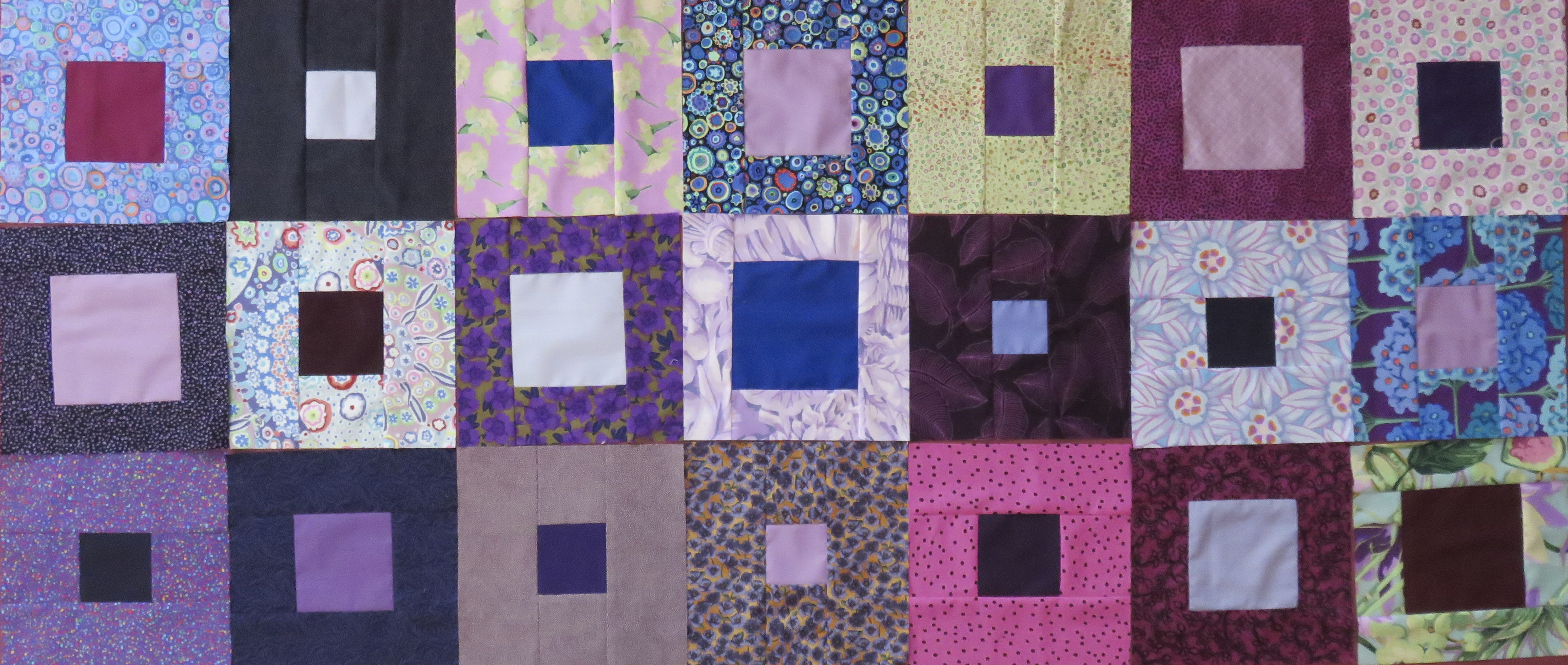
And yet. And yet, I am eager to begin. I will visit classrooms and volunteer my time in the school library on Wednesdays, and I am eager to begin teaching. In the mean time, I am piecing a quilt and playing solitaire.

“There are four types of hands [playing American Solitaire, or Klondike]: winnable games, theoretically winnable lost games (the player made a selection that resulted in a lost game, but could not know what the correct selection was because the relevant cards were hidden), unwinnable games (there is no selection that leads to a winning result), and unplayable games.”—Wikipedia

I am playing blind.

BECOMING

IMG_3182

Our tenant, Greg, brings his cactus outdoors when it blooms, a rare semi-yearly event.

One day my favorite design teacher, Hazel Koenig, saw me walking to a metals class in the Art Building. She stopped me to ask if I would be willing to help out at a state art education conference. That would have been about 1974. Later, she got me my first teaching job. I thought of myself as an artist, and I still do. My work space where I write and make things is not a “craft area” as someone recently called it. It is studio space, work space. Calling myself a writer was harder somehow that calling myself an artist. I was exhibiting while I was still in high school. It took years to become a published writer of fiction. I had many articles published in dog magazines, I didn’t count them.

Calling myself a teacher also took time. I came to teaching relatively late in my arts education. I had avoided thinking too much about how I would make my living. I was in a five-year BFA program, most of the way through a BFA in Ceramic Art, when I “moved up the hill” from the Fire Arts building to the great facility in the Metal Arts wing of the Art Building on the Quad at the University of Washington.

From 1970 to 1976, I was a student at the UW. By 1974 or 1975, I was thinking about my future in a more realistic way. I toyed with transferring to a Botany major. I considered the law. I had wanted to be a an architect since I was no more than 11, but somehow failed to pursue it, though I took the non-major architecture history series from Gustav Pundt and then finagled my way into the majors-only series. Later I would make a decent supplementary income drawing plans for clients and for an architect.

Anyway, somewhere along the way, I realized that I was always teaching. Maybe I liked telling people what to do. Maybe I was good at explaining things. Maybe teaching was the creative and professional outlet that I needed. Maybe I was still under that favorite delusion that I would have “three months off every summer” and time to do my own art. That last one for sure, and even working half time as an art teacher, I never got “my own work done.” Teaching is more than full time work.

Even as a student, I knew classroom management would be my greatest challenge. Part of my educational preparation was brief field assignments in classrooms from Kindergarten through high school. When it was time to begin a longer term field placement, I asked for middle school. It was the hardest assignment and the right choice. I earned a k-12 certificate and later taught Art at a girls’ prep school for three years.

Then I moved back to Oregon and my husband and we began our family. For a few years I drew plans for clients and Jay Raskin. When I looked at teaching opportunities on the Oregon coast, I chose Social Studies as a second subject endorsement. I learned to write essays in my SS classes, how to reason and think. I began coursework, but then took an NTE exam and was awarded Social Studies certification.

I subbed for teachers all over the school district, our children were born and graduated and went off to make their lives. After substitute teaching for 11 years, I taught English for 25 years, earned an MFA in writing, and now I teach only two college classes, Writing 121 and Writing 122. I have my 10 weeks of summer and then another 12 weeks in the fall without teaching. In November, I write a novel. I am not inclined to do nothing. I will be busy Winter and Spring with my two college classes.

All this summer, Gary and I have been sorting possessions. We are each of us the end of the line. I have personally cleared the possessions to my parents, aunt, step-grandmother, and even my step-grandmother’s second husband’s brother. People gather unto themselves. Going through tiny professional pins with my son, Ian, I found I had no explanation for the pin from the carpet business in Portland, the mysterious Mason’s pendant from a hundred years ago. I know how they came to me, but there is no one to ask why they exist or what they mean.

Today, we went through the “treasure chest” and the linen closet together, and eliminated a great deal of “stuff” we didn’t need. Blankets and sheets and linens, bits of wrapping paper and ribbons from past holidays. The habit of my mother and her mother before her: keep what might be useful in the future. But I do not think I will ever want that rest of the red eyelash yarn I used to wrap packages a dozen years ago. There is also the joy of finding things I’d forgotten I possessed, the occasional gift I do not remember ever having.

Then I sorted my jewelry. The small jewelry box is completely empty, while the other is neatly sorted. The ladies in my family are going to do well this Christmas.

A necklace I used to wear every time I flew needs to be restrung. I have been putting that off. It is a luck piece, plain elephant ivory beads. I like to think the ivory did not come from a slaughtered elephant, but that is not a story I possess. I only know the beads are nearly 200 years old and when I was in a plane, I folded my hands over their smoothness and stroked them for comfort.

I finished the last of the blackberry crisp this afternoon. I sipped a half glass of wine as a reward for my industry. I feel enlightened.

When I go looking for something, I will know where it is, but I also know the greater value I possess. I know myself to be teacher, writer, artist.