COLLEGE ADMISSIONS

fullsizeoutput_ed6

Sourdough cranberry and pecan bread. We ate half the loaf for lunch.

Soon after I entered the University of Washington in the 70s, my mother returned to work. She was an admissions officer at the UW through the 80s. Foreign students were a significant and invaluable presence when I was there. That diverse presence ended soon after I graduated because the State insisted on favoring local students. I was alarmed to hear someone blaming foreign students for the difficulty of getting into college. I learned as much about the world from Nigerian and Haitian students as from my professors.

After graduation I taught for three years in a private prep school—ALL my students got into their first-pick colleges. This year I retired after teaching in a small, rural, and poor school district for 40 years. Over those years I was teaching high school English, I wrote recommendations for students who went on to graduate from high-prestige schools. Sometimes, the school they chose was predictable reflection of their families’ social standing and privilege, but not always. A doctor’s son went to the state school (not even the Honor college) and the daughter of a teaching assistant went to Brandeis. Some students of modest means went to Duke and Reed.

One student confessed that during his adolescence he feared he would not be allowed to attend college. His impression was that playing sports was necessary to enter college. By his senior year, he knew better and laughed at his previous naiveté. But he was not alone. A girl who would go one to earn a Masters of Fine Art in writing was bullied by her parents into playing sports—they did not think she would be accepted without extra-curricular sports on her résumé. A boy believed that winning on the football field would make up for Cs in English—maybe for a handful of students each year, but not for him. My community emphasizes sport at the expense of nearly everything. Extracurriculars can help a student gain admission to college, but almost never when the tradeoff is academics.

First generation students—those whose parents never entered college—have the hardest time. There is rarely anyone in their family who can encourage or guide them. An educator who has written on this explains that there is no reality for such students. Teacher may be the only people these students talk to who have a college education, and teachers are not models for their futures. Their siblings play sports, but sport is not the model they need.

The recent scandal concerning parents paying to get their students into college is nothing new. When I was at the UW, there were separate admissions requirements for athletes. That policy has changed and today many colleges require football players and wrestlers to meet the same standard as the PolySci or Econ major. That’s not true everywhere.

The excuse for spending millions on basketball and football and golf teams is that these sports bring money into the educational institutions. That is often true. The flip side is that nearly all of these programs cost more than they earn. College sports programs cost a great deal of money for facilities, coaches, travel, educational support, and so forth. I went looking for an article I’d read a few years ago about how seldom colleges actually benefit from their pre-pro athletic programs. I Googled: “how many universities profit from athletics?” 170,000,000 results. Suffice it to say: Not many.

The NCAA reported a couple of years ago: “Only 24 FBS schools generated more revenue than they spent in 2014, according to the NCAA Revenues and Expenses of Division I Intercollegiate Athletics Programs Report. That figure jumped from 20 schools in 2013, but it has remained relatively consistent through the past decade.”

Athletic teams are a prestige thing, a show-off thing, and largely divorced from any overall monetary benefit to the colleges and universities that maintain them. Hundreds of millions, sometimes billions are spent on glorified entertainment, and only a tiny minority of these game programs even break even. The vast majority lose. They are often partially financed through mandatory student fees, and often through the general fund at the expense of academic programs.

They also often fail to benefit the athletes themselves. These players may graduate with a weak academic record and provide a pool of potential professional athletes. Few will be fished out of that pool. They played for four years and then they were done. If they counted on a life in sport, too often they are disappointed.

I attended a fine program for writers at Pacific University, earning an MFA in 2007. When Pacific surveyed alums about opinions about beginning a new football program, I said no. My education was not a game, and I did not attend in order to watch others play. I knew the odds were that my alma mater would spend far more than it gained from a football team and I resented that. I have not sent them a dime since. Let the football alums help them with this.

One of my students searched colleges and universities across the entire nation before attending Bard, chosen specifically because it had no athletic program.

It was never easy for “ordinary” people to get into “top” schools when I was young, it is still not easy, and that is unlikely to change any time soon. But some of my students worked hard, had impressive resumes, and great stories to aid their admission. And luck. All had luck, all had persistence and support. I know three who went on to become professional athletes. One of those was in rodeo. Another played handball. I am more proud of the doctors and lawyers, the nurses and teachers, the personal trainers and parents and shopkeepers and bartenders and hairdressers and biologists.
DESIRE & PANIC

2260552.jpg

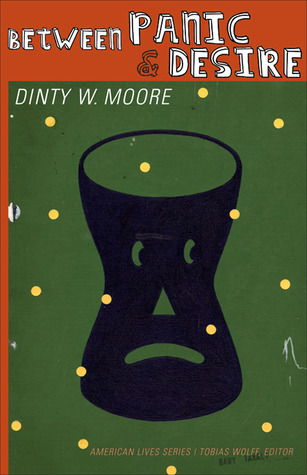
The author had my attention from the hilarious introduction to his memoir, Between Panic and Desire. I recognize the world he describes. Unlike his parents, my father never left; it was my grandparents who all divorced, some remarrying, some not. But while he was not yet 6 years old during the Bay of Pigs, I was already 8. I remember. My parents were fierce supporters of JFK, and Boeing Field was just down the road. However, living on the West coast, in the suburbs of Seattle, my life was never at risk during those tense days. The bombs could not reach so far. The eventual fallout, WW3, escalating tensions? I recognized those risks even as a child.

Fifty years ago, shortly before midnight on 16 April 1961, a group of some 1,500 Cuban exiles trained and financed by the CIA launched an ill-fated invasion of Cuba from the sea in the Bay of Pigs.—BBC

Dinty W. Moore recalls the period of our shared youth and I recall all the events he does—the international crises and threats, Squeaky Fromme, the assassinations, the same presidents, the same falling Towers. All the events that haunt his childhood memories. He yearns for his absent father, and goes looking everywhere for a replacement.

Moore was about 12 when Fromme joined the Manson “family”; I was not quite 15. I had to look that up because I never found her the least bit interesting. I remember Martin Luther King Jr.’s death as vividly as JFK’s. The balcony. The black horse, my mother explained, was “spirited because our president was spirited.” I never considered any of the presidents to be father figures, and I got over southern accents with LBJ. Happily, I met the person I would marry (whom I also mistakenly assumed on first sight was otherwise connected) at the age of 16, so I was spared Dinty Moore’s years of lonely drug abuse. My husband was not a user. However, Dinty Moore and I did not experience the 60s in the same way. My memory has a great deal more music and fewer cars. Many of my friends died. Peace marches. Feminism. Later, the AIDs epidemic. Identification as a visual artist. A long period of yearning for a country life. Moore had other concerns. I still do not consider that our failure to develop a strategic response to terrorism might have been a serious oversight. I wanted then to address the cause: ongoing imperialism. The corroding root.

When Dinty W. Moore lost his father, I was worrying about the world population explosion. By junior high school, my best friend was African American. Perhaps this is because I lived on the other side of the continent. I still do. I met the Dinty Moore in 2002, while attending a novel writing workshop with Bret Lott in Milledgeville, Georgia. He and Bret sat on a wide porch smoking cigars in the dark. (Perhaps only Brett smoked—I could be wrong about that.) Dinty will not remember me. I was the one typing on my laptop about twenty feet away, the Mac logo glowing.

While I was in Georgia that week, my mother drove the few blocks to her local Post Office and found she could not get out of the car. She drove home, crawled into her house, and called for help. My husband called me in Georgia on a landline and had to leave a message. I borrowed a phone to call him back. I wanted to fly home immediately, but this was the start of Memorial Day weekend and there were no flights available. The workshop organizers made no effort to help. Still, I got home on Monday, in time to sit in the waiting room while Mom had back surgery. Her surgeon promised immediate improvement. There was none.

This did not go well, I realize now, because she’d already been taking Fosamax for years and that bone-building medication actually interferes with the healing of bone. There was research suggesting that even then, but no one considered it for my mother. She was eventually placed on a deadly combination of opioids and benzodiazepines, failed to drink enough water, and was mostly housebound or hospitalized for the remaining five years of her life. Many, many trips to the ER. Broken bones. Slow healing. Pain. There is probably a way to make this a funny story, but I do not have the gift Moore does.

I have quit teaching, but the third essay in this collection, “Double Vision”, has a masterful structure, and I immediately and inevitably considered how I would use it as a model for student essays. There is no self-pity but considerable humor concerning his diplopia. He nails the short form. Well, what would I expect?

The award-winning memoir is elegant in structure and voice. These are very funny stories, a masterful and unique memoir of absent fathers, drug abuse, and eventual insight. Now I shall have to find a copy of The Accidental Buddhist.

LETTING GO

IMG_3931

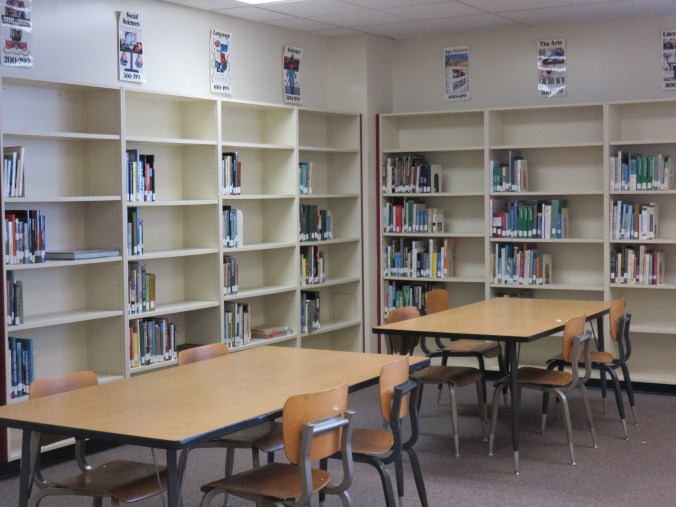
In preparation for the move to a brand new campus in the next couple of years, the Library has been downsizing. Books that had not been actually checked out recently were disposed of, some were pulped. (Yes, I find this distressing.)

The other day a relative posted a meme with hideous and clearly inaccurate images and information. Further investigation revealed the creator of the meme was a Danish neo-Nazi spouting appalling anti-Semitic and anti-immigrant and other hate messages. I can’t help wondering if his profile is a fake Russian bot spreading discord and disinformation. As a good researcher, I am distressed to witness such careless disregard for truth.

On Tuesday morning, while I was administering a final exam, two women burst through the door to set up for their own presentation. When most of my students had left, believing I was overstaying on their room reservation, I invited them in. They bustled about the room, chatting while they set out snacks and handouts. I had allowed students to work long in order to finish, but eventually I asked the women what time they expected their people to arrive. It came out that they were two hours ahead of their time, that their presentation was scheduled for the afternoon. I asked them to note that students were testing and they stopped calling to one another across the large room. A very polite student confided he had made the decision to drop my class the next term. Teenagers often decide to coast their last term. I understand this.

I should let all this go, I know I should. There have been a great many disconcerting things. This day was it. The tiny proverbial straws that broke the camel.

As a result, though these are not legitimate reasons, not reasons at all, not the real ones, I made two key decisions despite how much I love reading what people are up to on Facebook, and even despite my genuine affection for my current students.

Last week, I went off Facebook, at least for a while.

Yesterday, I quit my job teaching.

The English Department Chair immediately accepted my decision. I told the Pacifica Project Director I would not be creating the program this year, participating in rehearsals, or scoring the presentations themselves—that nearly brought tears. (Mike and I have a long shared history of commitment to public service.) I told the person in charge of the bulletin to take Open Library off the schedule “for now” as I was asked to do, and informed the Library Aide the same thing. I touched base with a couple of people to let them know I was leaving. I returned my key to the college.

Breaking my contract means no more than a dozen students might need to rearrange their Spring Term school schedules (only 8 showed for the scheduled WR122 meeting that afternoon). I have made a problem and I am sorry for letting them down. After speaking directly to students who expected me to teach next term, I also sent an email to everyone in the class just ending, CCing a copy to admin. As I always do, I offered to provide editing and references later and to share with them the materials I would have taught them in that class. I am honored when they take me up on it.

Perhaps the school will find someone else to teach these classes. It is time for me to step away.

It is done.

Once my late student hands in a final essay, I may enter grades for Winter term. I will be able to do that after next week.

I love teaching. Everyone must know I do.

Way back to the beginning of the Pacifica Projects, a service-learning project required of all seniors, we hoped to challenge students in a grand manner. Among our prime goals was to allow students to put the full range of their skills learned throughout their education to use. Other aspects of the program include a public presentation and a persuasive essay. The goal of the paper was to allow them to achieve excellence, to demand excellence, and to support them in getting to that level. Students are almost never required to produce excellence. Some do, of course, but that is on them. We almost never demand it of them and support them through a lengthy process to that achievement. The Senior Research Paper was intended to be like that—a completed work so strong that students were impressed with themselves for having made something excellent. Not genuine perfection, perhaps, but something close enough to that ideal from a teenager, a work standing in witness to their persistence and power.

That was always my goal, to drive and challenge students, to reveal to them their own strength.

Well, now I am pretty much ranting. I am not angry or even particularly upset. Tired. Fighting the tail-end of a cold. More than a little sad. Glad to have decided. Wishing they had tried earnestly, if fruitlessly, to talk me out of my decision to leave (they didn’t and never have) or shook my hand or something. I am resigned that, at least, they may let me go without much fuss. A concern seemed to be that I might tell students something unpleasant about my decision. Even if I had something unkind to say (I don’t), how would that serve anyone?

I know I have served my students well in the past, and believe I might have gone on teaching for years, as I planned. I am sorry to stop. Sorry to miss future students. Most often I am appreciated, eventually, and I continue to treasure the relationships I have built with students over the years.

So why leave? I might come up with a list, but these would all be trivial complaints. I recognize this. No one really wants that list, least of all me. None of what really matters is lost, but lately I have sometimes felt more concerned about the trivial than teaching, and that is not right.

I will move on and do something different, something productive and not because I am broken.

This camel might write a book.


IF YOU’RE SO SMART WHY ARE YOU STILL TEACHING?

My first teaching job was at Forest Ridge a school of the Sacred Heart, an elite Catholic girls’ prep school in Bellevue, Washington. Sr. Bunny Flick hired me in 1976 to teach 6-12th grade Art part-time. She was eager to see her students both challenged and supported in their education. At the same time, she never seemed quite comfortable in her role as a school administrator, but she was kind to me. Midway through my time at the school, Bunny left for a new job and, though she might not even remember me, I still check in on her online from time to time. She is a generous, good-hearted woman committed to education. I wish I could let her know that I think of her patience and guidance, and I’ve continued to grow. I’m a better teacher now than when she hired me.

My last principal was also committed as an educator and as a supporter of educators. I mention this because I am about to criticize administrators, and I want to make clear that my concerns do not apply to all administrators and they certainly do not apply to my favorites.

I have written elsewhere defending teachers. I chose to become a teacher because I realized that I was good at it, and that teaching was a role I had been committing to at every opportunity since I was young. I have worked at the profession for a long time and I think I’m mostly a good teacher.

Bad teachers are rare, I contend, because they usually don’t last very long in the profession. Shortly after I posted an essay about this, a student came to me, having read it, and asked if I really believed bad teachers were rare. Well, yes, I do. I think most teachers are doing the best they can and most of them are doing a good job. There are exceptions, but here’s another problem: There are bad and indifferent administrators.

This matters to teaching because, other than the teachers themselves, only administrators have the position and power to improve teaching.

This is where I admit there are bad teachers, and it’s true that some teachers are mean and some have unrealistic expectations or absurdly high (or worse: pathetically low) standards. These aren’t necessarily the bad ones. Even mean teachers take the choir to State and prepare teenagers for independent thought and college. Students learn to let the meanness roll off their back. “Unrealistic” can become reality in about two flicks and then students are doing stuff no one else thought they were capable of. Students survive the high standards, and sometimes they even thrive because of them. So for now, let’s set aside the “mean” and expectant ones.

Let’s look at the teachers who wish they were doing something else—something else in particular or anything else. These are the teachers who really wanted to go on playing high school sports for the rest of their lives, or who thought teaching would be an easy job, or that working with children would be good practice for being a mom, or that they would have weekends and holidays off. There are teachers who don’t really care much about their subject. The ones who fell into the job and never really wanted to teach to begin with. The ones who think they have chosen a 40-hour-a-week job. The ones who don’t like students. The ones who don’t want to work that hard. And the ones who discover they simply don’t like teaching.

Most teachers who are unsuited to the profession don’t last. In fact, teaching has among the highest attrition rates of any profession in the United States. Studies find various results, but up to 50% of teachers leave the profession within five years. Imagine if, after five years of training and with less than five years of work, half the plumbers, electricians, and lawyers chose another profession. (That this is not true for teachers in some other countries might give us pause. In Finland, for example, teachers are not paid differently but the job has more respect and time. Top college students in Finland flock to teaching, and they stick.)

What do teachers who leave the profession do instead? Tend bar, start a small business, sell real estate, join the family business, study law. I’ve considered some of those jobs and others, but I am forever becoming a teacher.

Some teachers become administrators. My observations suggest that, like the reasons for entering education to begin with, there are a few less productive reasons for studying administration. Some would-be administrators are bad teachers who don’t want to choose another field. Some are looking for a job where they don’t have to work so closely with students. Some are looking for more money. Some want power. Status. Some see administration as a natural advancement, like becoming the manager of a retail store. Some want more respect from their community, more autonomy in how they spend their days, or less face time with children. These are all good reasons, I suppose, but not one of them concerns wanting a meaningful roll in improving education and in supporting the educational process with teachers, students, families, and communities, which are better reasons for becoming an administrator.

Administrators work hard. Most of them work hours as long as mine and for another month out of the year. They, like me, are never quite off the clock and always engaged with educational concerns, even during down time, though most have more flexibility.

But some administrators are not skilled at their jobs. Some can’t manage the thousand discrete and sometimes competing demands of community, teachers, students, and finances. Some were well-intentioned but bad teachers and perform no more effectively with peers than they did with students. Some cannot imagine how to get from where they are to where they need to go. They have no vision. Some see the world in black and white and cannot cope with an occupation that is many shadings. Some do not actually like or feel comfortable around students or their parents. Some do not even like children. Some do not respect the choice of others to continue teaching instead of seeking a “promotion” to administration. I’d like to believe these issues are all pretty rare. I see this in other occupations too—electricians, dentist, doctors, small business owners who wish they were doing something (anything) else.

Years ago The Oregonian published an Op-Ed about the disrespect that teachers face every day, including the disrespect from administrators with the attitude that if teachers were really smart, why are they still teaching? I get that a lot. Teachers are sometimes treated as if they were their students. For eleven years I was a substitute teacher in my district and there were principals who treated their teachers like the children they taught. This was especially grating when I subbed at an elementary school where the principal treated teachers like young children. (And if you’ve never worked all day with a room of 26 nine-year-olds, you really do not know what exhaustion is.) Because I teach children does not make me a child myself.

I’ve also been patronized and ignored by college professors, including people who teach Writing and Lit. at community colleges, who have never published anything of significance, and who have barely been alive as long as I have been teaching. I merely taught high school for close to 30 years. Now with a decade of college level teach, I suspect my experience, concerns, and observations still matter less than theirs. Perhaps I did not matter at all.

Elsewhere I have complained about the expectation of some people that everyone must commit to teaching as if it were a sacred vocation rather than a job. Sr. Bunny Flick is a nun. I am not even Catholic. I loved my job, though it is not a sacred obligation, it’s something I choose. But there is some whiff of truth in that expectation of commitment. No one does this job to get rich, but it is an occupation that should suit the practitioner, one they will do their best for even in the moments when it’s hard and unrewarding. They should be paid decently for their expertise and responsibility. (No teacher expects to get rich, but securely middle class is not an unreasonable expectation after a minimum of 5-6 years university education.) I also think it’s a reasonable expectation that if teachers do their job well they should be treated with the respect due to anyone in a skilled profession.

Teaching first graders is not easier than teaching college Physics.

Teaching is not easier than acting as an administrator.

We all work hard in education and administrators and the public can make things easier for everyone. Or not.

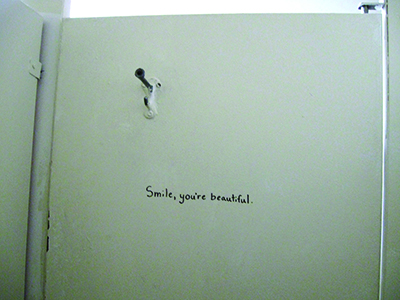
“Smile, you’re beautiful.”

Priddy-21.jpg

from 19 April 2013 in The Humanist

This afternoon a student passed me, grinning. She’d just visited the eastern-most toilet stall in the “senior” bathroom. The room is decrepit, the soap dispenser is often empty, and the stall doors don’t latch. But on the inside of one door is a hand-written message: “Smile, you’re beautiful.”

I’ll admit that part of the reason I smile when I read this is because it’s spelled and punctuated correctly. But there’s more to it—a student wrote that note. It’s something to think about.

I have always loved teaching. I love sharing what I know. I love seeing the glow when a student gets it and realizes they can achieve excellence. I love watching worlds open up. I love being around young people on the cusp of life—fully aware and capable of thinking and questioning and growing. Their lives flutter with possibility.

But there are days when it’s hard to smile. As a fellow teacher posited to me: “It shouldn’t be this hard to be a kid.” A student discovers she will be homeless this weekend, and the boy across the room hasn’t had a full meal since his free lunch ticket expired two weeks ago—his mother is too embarrassed to fill out the forms. Another girl couldn’t go home last night because the crack dealer next door burned out the entire apartment building, and the boy beside her couldn’t go home for other reasons. One boy sees violence as an inevitable solution because it’s the only one he’s ever seen garner results. Another won’t listen to facts if they favor a viewpoint other than his own.

I’ve often been told that teenagers think they’re immortal. They don’t. They behave like cocky animals and they talk big and they take risks and make stupid choices because they know they’re going to die. They’re terrified and worry their lives will end before they can make a difference in the world.

“What does Egypt look like?” a female student asks during a class discussion about protests around the world, including the strategies of Henry David Thoreau, Mohandas Karamchand Gandhi, and Martin Luther King Jr. “Is it sandy like in the desert? Are there buildings like in India with goats in the streets?” I talk about Cairo’s 17 million people and modern hotels, adding, “but yes, there is sand.”

“What do they want?” she asks. “Why are they in the streets?”

I tell her I can’t say for sure, but that they probably want the same things she does. They want a free country, they want some power over their lives.

I’m intrigued by her questions. This student has been practically nowhere and seen almost nothing. Usually shy, she stares off, perhaps imagining camels and traffic jams. “I want to go and see it,” she says.

Not one student in three classes has ever heard of Thoreau before today. A few recognize the name of Gandhi. “Mahatma,” one boy suggests.

“That means  ‘great soul,’” I inform them.

One girl knows he went on a hunger strike to protest British rule in India. But no one has ever heard of how American men and women sat down at luncheon counters to order a cup of coffee and were abused, spat upon, beaten, and finally arrested merely because they were black. My students are shocked. I hope they’re equally impressed by the courage of those sitters who took abuse to call attention to injustice, and were incarcerated in order to publicize their goals. They have their place in making the world a better place. We talk about that.

The goal in school is to get an education, but for some students the overwhelming goal is survival. They are hungry, homeless, embarrassed by their clothing, their transportation, and by their families. They have no quiet place to study and no one at home to encourage them. They have undiagnosed and untreated health and emotional issues. They deserve so much more than they have. They deserve someone to expect more from them. All of them—every one—wants to be successful, but only rarely do they have a personal, practical, or emotionally satisfying image of what success looks like.

“Make a list of things you want to do before you’re old,” I tell them.  “A bucket list,” they say back. They want to graduate and make money. They want to make their parents proud. Some say they want to buy their mom a house. Or go to Egypt. One wants to dance in the street in Chelsea. It’s good that they dream. They need these grand and beautiful dreams.

Too often high school culture concerns nothing much beyond sports and clothing, grades and money. Earning a living is necessary, but money by itself is a sterile goal. They worry too much about prom—it’s unlikely they’ll ever get to dress that way again—and not enough about mathematics. They read all their friends’ posts on Facebook and not nearly enough novels or history books. They use technology without mastering it. They know how to slip through the system without understanding that it’s here to serve their future. They earn grades without gaining an education. They worry about the wrong experiences of high school.

I can’t say who is at fault. Parents tell them the great lie: this is the best time of your life. I warn them that it shouldn’t be true. Life doesn’t go downhill after age eighteen. “It’ll get better,” I tell them. There is so much more.

Teachers try to provide incentives and rewards. I see possibility spread out before my students, waiting for them to find their way. I try to throw doors open to the world, but find students are too busy keeping on their feet to venture out. I see the world wide open to them, but they fear electric fencing. They fear failure. They fear the future. And because of these fears, some of my students will remain right where they are all their lives, turning in ever smaller circles, wearing a hole in their own tiny scrap of rug. I’d like them to fly. Get on a magic carpet and out the door. I’d like them to know the world.

Smile, you’re beautiful. Who wrote it? I wonder. All these students who walk the halls of my school—the future is still open and some of them will make beautiful lives despite bumps along the way, and they’ll return one day to tell about it. And even on a day like today when too many children are moving in frightened circles, I smile. They’re beautiful.

GREEN SPACE

fullsizeoutput_ebd

Sometimes the tide reveals the remains of a long-lost forest. This log in the foreground is waterlogged, usually buried under sand and rock, and probably hundreds of years old.

My husband and I made two simultaneous and life-changing decisions in 1979. We would move to my family’s property in my home state of Oregon, and we would begin a family. We had been living just a few blocks from the Woodland Park Zoo in Seattle and often spent time in the wild Lower Woodland area east of the zoo. Gary had worked in the zoo ands recently returned to college for a masters degree in education. He planned to teach elementary school. But the illness of his father threw his family into chaos and too much of the emotional burden seemed to fall on him. His sisters called most evenings, his youngest brother is mentally ill and his older brother, in California, did not make the trip north for the funeral when their father died.

Our new home in Oregon offered the ocean, the broad beach, and a forest behind our backs. Both Gary and I had grown up playing in wild places. It felt right that our children would have that same opportunity. Recent research suggests our choices were fortunate for the future mental health of our sons.

Urban residence is associated with a higher risk of some psychiatric disorders, but the underlying drivers remain unknown. There is increasing evidence that the level of exposure to natural environments impacts mental health, but few large-scale epidemiological studies have assessed the general existence and importance of such associations. Here, we investigate the prospective association between green space and mental health in the Danish population. Green space presence was assessed at the individual level using high-resolution satellite data to calculate the normalized difference vegetation index within a 210 × 210 m square around each person’s place of residence (∼1 million people) from birth to the age of 10. We show that high levels of green space presence during childhood are associated with lower risk of a wide spectrum of psychiatric disorders later in life. Risk for subsequent mental illness for those who lived with the lowest level of green space during childhood was up to 55% higher across various disorders compared with those who lived with the highest level of green space. The association remained even after adjusting for urbanization, socioeconomic factors, parental history of mental illness, and parental age. Stronger association of cumulative green space presence during childhood compared with single-year green space presence suggests that presence throughout childhood is important. Our results show that green space during childhood is associated with better mental health, supporting efforts to better integrate natural environments into urban planning and childhood life.—from the recently U.S.-published Danish study: “Residential Green Space in Childhood Is Associated with Lower Risk of Psychiatric Disorders from Adolescence into Adulthood” by Kristine EngemannCarsten Bøcker PedersenLars ArgeConstantinos TsirogiannisPreben Bo Mortensen, and Jens-Christian Svenning, published in PNAS

Both Gary and I thrived in a generation that allowed children to run free. We ran and walked and biked sometimes for miles. We followed trails in woods or scanned the desert, climbed trees or rocky cliffs, swam in local ponds and sloughs, and experimented with all sorts of dangerous stunts.

It is a wonder we are alive. Perhaps.

Or maybe these early childhood opportunities are the reason we are alive. No one should fall for the fallacy that various threats to childhood are something new. There were bullies in my childhood. I nearly drowned in tiny Echo Lake. Gary and his friends stretched a rope across a road in the absurd attempt to catch a truck. I climbed so high into a tree in the cow pasture that the top flopped over, leaving me upside down and close to a hundred feet in the air.

Yet, here we are.

A man up the street used to strip his children and beast them with a strap. The hunting dogs kept in a pen in the back yard of the house across the street were widely viewed as dangerous. The adult son of the owner of those dogs was in prison. The pastor living in a brand new house behind our back yard famously piled up old furniture in the empty lot, poured lighter fluid over it, set it alight, and drove away with his family. This was 60 years ago. I know children have always been at risk both from experience with my peers throughout school and from reading.

My experience also suggests that hovering over children encourages their misbehavior and fears. I built a fort in our yard when the boys were little, a distraction from the beach, which was not a safe place to play when they were very small. The threat of a sneaker wave was very real and I did not allow them out on the sand without being there myself. On the other hand, I found that my sons would hang off their new fort in the most dangerous manner while I watched. I realized they assumed I would protect them from harm. This was true even when they walked along the railing eight feet from the ground and while I was not close enough to catch them. They seemed to have some magical faith in rescue.

If I went into the house and watched from behind the blinds where they could not see me, they stopped hanging upside down and balancing on railings. It took me a while to figure this out. Maybe it isn’t always true.

Whenever our children were doing something they shouldn’t, the best response was distraction. Gary was especially good at this. Are they throwing the little plastic animals? Gary will have them lining up all the plastic pigs. They want our attention, but pointing that out is not useful. Young children want our attention, not to hear about the psychology of their needs.

As a grandmother now, I mostly keep my observations to myself unless I am asked. (I am not usually asked.) I wish my grandchildren had a wild wood in their front yard, but their parents take them often to play in parks. I wish my sons had studied behavior modification and educational theory that urges only positive reinforcement and redirecting attention rather than relying on threats. But they do pretty well without my help.

I suppose most people do.


WHY TEACH?

IMG_3522

There is a long tradition of public service in my family, and perhaps that’s why.

I scored a dozen essays yesterday and my students will all be disappointed with their grades. Nevertheless, they wrote better essays in two weeks than they did in two months just last fall. They haven’t thought much about that yet, but we will talk on Monday after I finish marking up the other dozen essays. They will write a new draft, and if it is not yet as impressive as it might be, we’ll do a draft after that. Each time they work through the process, they become stronger. The essay is less important than their appreciation of the process.

There were a lot of things I could have done with my life. I am a wife and mother, but I did well in college. I was an art major, but I considered law as a career, or botany, or graphic design. I considered other fields, and I worked in several, but eventually I chose teaching as my profession.

My first three years as a teacher were in a private girls prep school east of Seattle. I wasn’t a very good teacher in those days, but I did the best I could as a very young woman in ideal circumstances. My students were elite—the daughters of affluent and actually wealthy parents who already lived in excellent public school districts but who could afford to buy an even better education for their girls. It was and is a great school, but if I’d had daughters I would not have sent them there. I believe in public education.

When my husband and I moved to my family home in Oregon, I had a variety of jobs: working both the back and front of a bakery, drawing plans for a local architect, designing freelance graphics, and for eleven years I was a sub in my local public schools. I worked one or two days a week and in Kindergarten through 12th grade, every subject including high school foreign languages I could not speak, Physics and Calculus, Band and Choir, Resource Room, and P.E. when all the offices and equipment were in the boys locker room. I went to work on those days masquerading as someone else, struggling to keep up for eight hours. I came home exhausted and hopeful I would work the next day too. After a while kids got to know me and my job was a little easier.

There are plenty of important reasons to become a high school teacher. Here are a few:

  • You want to teach because you discover you are good at it.
  • You want to teach in order to make a difference.
  • You want to teach because students deserve to have people in their lives who care about them, teachers who like them, and teachers who have other options that pay better but choose to teach anyway.
  • You want to teach because students deserve teachers for whom high school was not the best time of their life—they need to be assured that whoever is telling them that high school is the best time of their life is either lying or has led a very, very sad life indeed.
  • You want to teach to make the world a better place, and you want the opportunity to help other people find hope and promise in the world.
  • You want to teach to work hard, to engage deeply with ideas and people, and to know that what you do is important.

And the big one we should all care about—

  • You want to teach because a strong public education system is the greatest tool for developing democracy that exists. It makes us one people. It makes us known and useful to ourselves and to our communities.

There are, in fact, teachers who do not love their job. Most leave within four years for other work. There are teachers who chose to teach high school because that was the best time of their life while they played sports and they want to hold on to their teenaged dream. There are teachers who do a job, and that is the extent of their commitment. I don’t think that last is anything but rare.

My husband likes to say I am “never off the clock.” Most teachers are like that.

I’ve been a teacher for over forty years. And though a few of them have been very hard, I regret none of those years. I am grateful for a few thousand fascinating people who entered my room and listened to me, who sometimes even laughed at my stupid jokes and teased me, who agreed and disagreed with my opinions, who asked me questions I couldn’t answer, who taught me about baseball and boats, computers and dance, 4-H livestock, music, theater, science, and how very, very hard life is for too many teenagers today. Sometimes I made them angry, I hope more often I gave them the skills and the knowledge that they had a right to expect me to share. I hope I sent them away wanting to be better people and that what they learned in my classroom was useful in that effort. I hope they left possessing greater faith in their own abilities, greater trust in the process and in themselves. I know many of them have been grateful for assignments I gave them that didn’t seem important at the time, but showed their value later.

Teaching is one of the great accomplishments of my life. Most days it makes me proud and hopeful. I hope to keep doing it until I die.


A follow-up: Less than a month after I wrote this post, I quit teaching in the local school district. I had enjoyed teaching college classes, but in those last months everything became awkward, difficult. I do not regret this decision, though I miss teaching very much. Perhaps I was trying to convince myself of something, because I cannot properly explain my abrupt decision. No one really wanted to know. Why is it that people who are paid a great deal of money to administrate so often fail?

I am not done teaching. It is the great habit of my life, and there are many avenues for pursuing my vocation.

Out of the blue I was recently asked to teach an adult writing workshop next year, and I am looking forward to that. My visual art has been accepted for a show in a local gallery late next year—I had applied on impulse. I look forward to both of these opportunities and home to do well in both.

WHY YOU DON’T WANT TO BECOME A TEACHER

IMG_3874

Snow fell off and on a couple of weeks ago. On the coast we understand a few feet of rain better than a few inches of snow. On a Monday, school was closed.

read “Become a Teacher.”

This happened in 2011 too, but back then it was on a Thursday. I had stayed till 7pm the night before, watching the roads on the internet to ensure the snow didn’t start sticking before I got home. On Wednesday evenings I sat in the school Library (with a math teacher for a few months when we were both paid—I did it for 20 years without pay) to keep the workspace open for kids who needed help, were retaking tests, or who needed computer access. When I packed up for home I lugged the tests I needed to score home but left an eight-inch stack of essays in my room. I would get to them the following weekend and adjust the due date for the other essay that students were supposed to hand in the next day.

The 24th of February 2011 was a snow day, and I was loving it. I had a lot of work to get done but I was taking the day off. This is what I wrote because I could:

I love my job. I say that all the time and it’s true. I’m good at it and I still have a measure of autonomy in my classroom. I can be creative and innovative and my administration actually appreciates me for doing it (I think). I’ve gone gray in this profession. I love my job. I’m proud of the work I do.

Many of my former students have become teachers or are thinking of becoming teachers. And I love them for that too, but it also makes me want to cry, because teachers are not in the same position they were when I was young, or even when I entered the profession.

Ten reasons you don’t want to become a teacher:

  1. The pay is less than you think. I read on Facebook that if you want “abundant wealth” you should choose the private sector.
  2. There is no longer job security. My school lost ten teachers last year.
  3. Your pension isn’t safe—it looks like a pile of money to the public, waiting to be looted.
  4. Parents don’t trust you.
  5. The community thinks you have too much time off. They need to hire a sitter for those stupid planning days.
  6. Even if you teach that kid to read and get him off the streets and are answerable about whether he passes or does not pass all the new tests, you are not heroes like police officers and firefighters—who receive better pay and a sweeter pension package.
  7. If you have a personal blog, watch your words because freedom of speech doesn’t apply to teachers.
  8. Summers you will either be working a second job or going to school or both.
  9. For the same amount of education you could be a nurse with a specialty making twice as much money and no homework on the weekend. You could be a lawyer and work as hard for a lot more money, or a doctor, X-ray technician, plumber, electrician…

The number 10 reason not to become a teacher, the critical reason:

10. Everything is your fault.

  • You’re a lousy teacher. If students are unmotivated, tired, hungry, sleepy, sick, absent, homeless, or in jail, you should have motivated them to show up to school every day and complete their homework.
  • You make too much money. Compare your income with seven or more years of university education, Masters degree, and twenty years of experience to the wages of the drop-out pumping gas (who you should have motivated to stay in school) and you are paid way too much. You have all that time off and we don’t want to hear any whining about class planning and scoring papers and all that.
  • You cause social injustice. If you marry another teacher—surprise! you have an actual middle class income capable of paying for your own children’s college education. But wait! That’s okay for professionals. Everyone understands that if two doctors or lawyers marry they will have a double income. If teachers do that it’s simply unfair. Teachers should be paid less so that if they marry another of their kind they won’t be earning over a hundred thousand dollars between them… after a combined 14 years university education and 30 years of teaching experience. [Seriously, I’ve heard this argument.]
  • It’s your union’s fault the economy is a mess. That pension and all those great benefits like health coverage—all that stuff your union got for you—is just too much. You may have paid in, but if we could just take that money we promised you’d get back eventually and spend it on other stuff, we wouldn’t have to raise taxes.
  • And another thing, your union and tenure are allowing lousy teachers to ruin kids’ education. If it weren’t for unions and tenure there would be no bad teachers. Look how well that approach has worked for politicians, plumbers, and physicians.

[Trump just wants a profit and his Secretary of Education wants to entirely dismantle our education system and turn it into a money-making scheme.] Obama wanted the same thing Bush wanted, a better education system without having to pay more for it. “You can’t solve a problem by throwing money at it.” Right? “You get what you pay for” is another cliché. There’s truth in both, but diamonds cost more than glass. A couch from Ethan Allen is going to cost more than one left on the curb, and anyone who thinks they can rely on a junk store couch having the quality of the new custom-built model is deceiving themselves. Try sitting on them. If we want better schools and better teachers, we’re going to have to find a way to make working in schools more attractive. We could start by offering more money and security and respect.

Unions don’t protect bad teachers. Neither does tenure, assuming you have it in your state. (It’s long gone for K12 teachers in the State of Oregon.) I watched two teachers pushed out of the profession while we still had tenure and it wasn’t any harder than it would be to get rid of a factory worker management didn’t want, and it was a heck of a lot easier than getting rid of a bad doctor, and doctors technically don’t have a union. What doctors and lawyers have is the ability to command a professional salary and to move to another hospital or firm that offers them a better deal. Teachers can almost never do that.

Teachers are paid on a set scale that compensates their labor based on years of education and years of experience. However, no school district hires the best qualified teacher—they hire the one they can afford. That means they will start any new teacher at the lowest level they can get away with. Fresh out of college, inexperienced teachers are cheap hires and a cheap hire saves the school district money. Those new teachers last, on average four years, because the work is harder than they expected. A strong and experienced teacher, by contrast, would cost more, even though districts can almost never afford to pay them a wage that would coax them away from a current employer—and isn’t that how it’s done in professions? If a firm wants that better lawyer, they offer him or her more money. (The only education people who negotiate their pay is administrators. When my district insisted it was too broke to offer a raise, not even cost of living raises, administrators still received raises.) A great carpenter with a great reputation commands top dollar.

No one in another district would hire me for what I am paid in my current job. If I left for another district, a school in Portland for example, I would be credited with only 7 years of experience rather than the 24 I have and I would be paid less. They can’t afford to start a teacher on my pay. It’s not in their budget. And if I wanted to move, I couldn’t afford the pay cut. It would take me 8 years to recover my current salary. [Or actually something less than 8 years since my rural school district pays a lot less than Portland.]

What this means is that if school districts wanted to hire the best available teachers, they would have to revamp the way teachers are paid. I’m not talking about paying people for raising their students’ test scores—recent research shows this isn’t effective—it means we’d need some way to offer better teachers (“better” by some standard) higher wages. And, most critically, it would mean schools would have to have the extra money lying around to lure those “better teachers” away from their current employer. They don’t.

I am 66, and I’ve taught since completing 3 undergraduate degrees with honors and Phi Beta Kappa from the University of Washington. I have a masters degree in my field and enough graduate hours for a masters in education too. Until I retired, I worked at least 50-60 hours a week (and all-too-often 70) and throughout the holidays and I STILL had to listen to complaints about my imaginary 3 months off every summer and how tenure protects bad teachers (remember, we have no tenure in Oregon public schools) and how my pension is breaking the state budget (I paid into my pension). I’m supposed to be better qualified, better trained, work harder, and do it all on less salary and with no guarantee that the terms under which I was hired will be honored. Those terms have not been not honored and what I was expecting upon retirement was halved.

…Speaking only for my frugal self, I had no complaints about my salary, but I would have to work full time through my 70s before my retirement income would come close enough to my salary after working in this profession since 1976. I took time out to stay home with my sons, but I had 25 years teaching in my district before a very bad year of stress-induced illness convinced me to retire. Teacher pensions had already been gutted in my state and the public seemed to want more from me for even less respect and autonomy, not to mention less security in my old age.

People who could barely tolerate being in the same room with their own sons and daughters while they were teenagers blame me when I can’t get them to do their homework. It wears me out.

A post on Facebook from a former teacher turned wealthy self-described “Capitalist” explained that if people want “abundant wealth” they will have to leave teaching. He illustrates this with an analogy: “Should trash collectors be paid more than the avg worker? Th…ink about it….Who would you miss more the garbage man, or some Nuclear Physicist?” [I’m not sure if teachers are the trash collectors or the scientists in this scenario.] “Bottom line is– tax payers pay the bill in the public sector… Therefore, it is expected to be a life of service for those who work in our communities…Not a life of abundant wealth…If one is concerned with earning top dollar, then they need to find a job in the ‘private sector,’ where one because of ‘Capitalism’ can earn as much as they desire. So either one should choose to serve the people, or take their talents elsewhere. Teachers work for the public and have to expect a life of service.”

More and more, the person some people seem to want in their schools is not a teacher, but a nun, someone to work purely out of the goodness of their heart. And it’s true that it takes a lot of heart to teach, but that doesn’t excuse blaming teachers for everything the public thinks is wrong with schools. It does not excuse paying teachers second rate wages just because they work in public schools. Second rate earns second rate.

If we are willing to settle for second rate teachers, we’ll have to expect second rate in all public sector jobs. And I do not want second rate air traffic controllers or safety inspectors or police officers or teachers. I don’t think we can expect anyone to work out of the goodness of their heart, as the Facebook poster above seems to expect. When I was a girl I had fantastic teachers… because they were women with limited opportunities and men on the GI bill and the first generation to climb out of hard blue collar jobs.

Today those people find work in other fields that pay better. I think we’re going to have to pay for what we get or we’re going to get what we pay for. That’s true whoever is doing the hiring.

If we want to improve teaching and teachers, it only makes sense that we expect to pay for it.

And it’s likely why excellent public school teachers are in short supply just now.


WHAT THEY NEVER TOLD US

I taught high school beginning in 1976, and except when my sons were little, I taught in private and then public schools until I almost-retired a few years ago. I am grateful forever that I fell into teaching, that I was honored to know and work with thousands of people, many of whom remain my friends. If some wondered if the hearts I sent on birthday greetings were sincere, I can say that every day tears come to my eyes when I think about my students. When they share joy I cheer; when they experience loss, I am saddened.

Most of what I recall about students is tender and delightful and cherished, but there are some incidents that still trouble me. Wednesday evening another high school teacher announced that she wanted to teach a class for future teachers with everything we were never taught in teacher training. We compared notes. 

We cannot save them all. We will make mistakes that haunt us. Students will ask questions we cannot answer and need help we are unqualified to give. Our students will die. They will die in car crashes and of drug overdoses. They will suicide. They will make horrific mistakes and never recover. 

They will test our ability to allow them to be wrong because that is how they want their world to be. It is not our right or responsibility to remake them in our image. When they seem gullible or cruel, I have to step away because it is not my place to stop them.

In a Junior Research Paper, many years ago, a student advocated for the slow death by torture of anyone convicted of a serious crime. That was how the thesis was written: People convicted of a serious crime should be slowly tortured to death. 

Hamid Debashi wrote an Op-Ed on Aljezzerra saying “What the US was doing to the world at large is what Americans now fear Trump might do to the US.”

“Liberal America is now scared that Trump will do to America what America has done to the world. It was just ‘foreign policy’ when America set up lunatic puppet dictators just like Trump to torture, maim, and murder their own people around the globe to protect its ‘national security interest’.

“It was just something ‘Daddy’ did at work. When he came home he was all good, kind, and cuddly—just like Obama. Now the Daddy is about to become a nasty, vicious, domestic abuser—like Trump.

“Trump is the poetic justice of the world. So long as America was only doing to the world at large what America now fears Trump may do to America, there was no outcry. There was consensus. The world deserved what America did to the world.”

Well. I guess the author is speaking to me. I hear him. I know that his outrage and anger are not without foundation. I have tried over the years, as gently as I could manage, to open the eye of students living in what has been a largely white and isolated Oregon community. 

Allow me to be clear. It is not my job to reinforce or alter the deeply held convictions of my students. It is a part of my job to help students understand that there are other people in the world who may not share their view. 

I asked the student with the the death-by-torture thesis for clarification: Define “slow.” At least two or three days. Define “serious crime.” Yes, the student meant the serial killer, but also the robber, mugger, and someone who holds up a bank. I took a breath and pointed out the obvious, that our Constitution forbids “cruel and unusual punishment” and that studies suggest about 1 in 20 murder convictions are in error, AND that the paper needed to address strong opposing positions. In the end, the paper acknowledged that sometimes mistakes are made and an innocent person might be tortured to death, but “that is the price you pay for living in America.” Those words. 

The completed paper followed the assignment. It was weak in either conceding or countering the opposing view, but the student completed required research, drafted, and finished with a good grade. I did not tell the student that the paper was horrifying, though I did confide this judgement to another teacher. 

I will never forget it. 

I was raised to believe in a different America. I was raised to believe that We the People, live together to protect and serve the general Welfare not only of today but of our Posterity. 

I still believe that. It is in our Constitution. And a final word about students who make “horrible mistakes and never recover”—the truth is that most do recover. They might wander in the desert for forty years and then find themselves someplace they never thought would be theirs. They hang on and hang on, and then one day realize they are safe and happy at last. Sometimes being lost is the only way we are found.

TEACHERS AS STUDENTS

Cameron-Diaz-in-Bad-Teacher.jpg

I have not seen and never will see this film. Up the Down Staircase, a novel, was written by a lifelong teacher. Most people who write books about their incredible experience and wisdom as teachers last 1-3 years in the profession before moving on to something that pays better.

A message arrived this morning via email with the image above and the headline below:

Why Teachers Make the Worst Students
As a snarky high school teacher, here’s what I came up with: Teachers don’t make great students.

The author offers a list of reasons teachers are bad students and she is pretty much spot on that they are uninterested in educational or brain theory, have too much to do already and resent being pulled from their classroom, and generally behave like the difficult and only marginally teachable students sitting in the back of their own classrooms. She doesn’t know quite why this is true and asks for help in explaining why teachers are often so unteachable.

It’s a funny post and she uses the complaints of her own students to illustrate common teacher complaints. She’s spot on.

Me? I am generally a sit-at-the-front sort of person with an exceptional academic record. Honest. I read newspapers each day. I have a lot of books in my house, fiction and nonfiction, and I have read those books. “Metacognition” is not an annoying word I dismissed once I knew it was no longer going to appear on a test I had to pass but a concept critical to my profession. I am fascinated by brain theory and willing to stir up curriculum even though it makes more work. I like the work. It’s why I teach.

My own explanations for why some high school teachers are such terrible students:

  1. Teachers are already waaay too busy trying to keep up with classwork to take time out of their day to attend a poor presentation. Liz Oppelt was right on target with this one. This is always true and is the biggest reason for their inattention. They already have a job waiting for them and truly do have more important things to do and most would prefer to be doing those things. Unless the in-service helps make that job easier, they would prefer to be doing their job.  or perhaps . . .
  2. That one teacher would rather not be there at all. There was a teacher in my building who was smart and effective in front of students but also only pretended to grade work and was easily swayed by fellow-travelers who charmed their way through their education. Being clever was enough. Another teacher in my building lay down each day during his prep period and napped or read the newspaper or anything rather than scoring papers or preparing for a class or counseling students. Some rare teachers kept a 40-hour work week schedule. This sort of behavior is not typical among teachers, probably less common than in some other professions. I have known shopkeepers who fail to ring out the registers, health care professionals who never bother to review records, bookkeepers who ignore illogical figures. It is incredibly rare to find a lazy teacher, but this 1-in-100 teacher is texting during in-service presentations. The rare Administrator too.
  3. The presentation is a genuine waste of time. We know bad when we see it because it’s our job. Yes, some presentations are bad. Sometimes really bad. Once in a long while a mandatory presentation is entertaining and held during an in-service week when teachers are in a great mood, even though the lesson doesn’t teach much other than how to play for an hour without actually learning more than four words in Spanish. But more often it is delivered by a hired person who was never a very good teacher to begun with (and maybe that’s why they went to work for the ESD or a private company or administration, jobs that all pay much better and involve shmoozing), or they are presenting material under contract and they do not themselves understand or care about it, or they have forgotten everything they once might have known about teaching and now want to tell about how much they love skiing or about their recent divorce. Or all of the above. (Seriously, this happens.)
  4. Some teachers do not want to be taught. Some teachers are bad students because, frankly, they were never very good students to begin with. (see #2) They are still not any more curious or proactive or ambitious about their subject or teaching as a profession than they were in high school. (Again, I see this in every profession—bankers, contractors, health care providers, small business owners who merely drift through their job.) Some teachers only want to get through their day. (see #1) They are not interested in how to do their job better. If they are teachers, they don’t care about educational theory or brain science now and never were interested because they do not care how people learn and never did. They want activities to keep students busy, or they want to be entertained, which is why they liked the terrible art/Spanish lesson delivered in Spanish that required an hour to teach four words and no art. (See #3)

Some people enter teaching because they thought teaching would be easy. It isn’t. But some small minority of teachers keep no books in their homes, waste time at school, never their profession whenever they walk out the door, and are incurious. They never do the best job they could because that would require too much work.

I love teaching and I love teachers. Most often we are overworked and tired. (see #1 again). We are inattentive because we have more important concerns on our minds as we do our best to educate. Give us something to help us do a better job for our students and you will have our full attention. We are always trying to do a better job.

But seriously, we know a bad presentation when we see one.