People often tell me they grew up “poor” and I know they didn’t. Maybe their parents had a modest income, but not the genuine poverty that their rich, affluent, or middle class families have never known.
My husband grew up poor and so did his mother. Really poor—a dozen kids clothed from the second hand store, empty fridge, underfed and skinny, sitting-on-the-porch-waiting-for-dad-to-get-home-on-payday-poor. Ann dustbowl Depression poverty was generational poverty, and such people often see see their situation as unalterable. Gary’s childhood was like that for a while, six kids and never enough bedrooms to go around.
I was raised in a one-bedroom house and then a larger three-bedroom 800 square foot house with one bath. I remember my mother hiding from the paperboy because she could not afford the $1.35, and powdered milk and no snack foods or soda, running out of heating oil in winter, down at the hardware store figuring out what tube was blown on the B&W television. But I came from a college-educated father and a mother who had two years of college, self-supported. My parents borrowed money from family more than once in order to pay bills—there was someone to go to. I never actually thought of us as “poor.” We never once took a hotel vacation but I was never hungry.
That said, while working my way through college without parental help, I rarely stinted on the supplies I needed as a studio art major. I bought sterling and better clay because I didn’t drink coffee or alcohol, I walked or took the bus, a night out was the $1.00 Movie House.
A friend used her grant money to go to Hawaii over Term Break. I bought supplies and paid my tuition. She went out for beers; I baked. She graduated with loans she was paying off for the next decade or more; I graduated without a debt, and with Honors and Phi Beta Kappa. Those were the days I lived. I worked year around and managed an infamous apartment building for my rent reduction to $35.
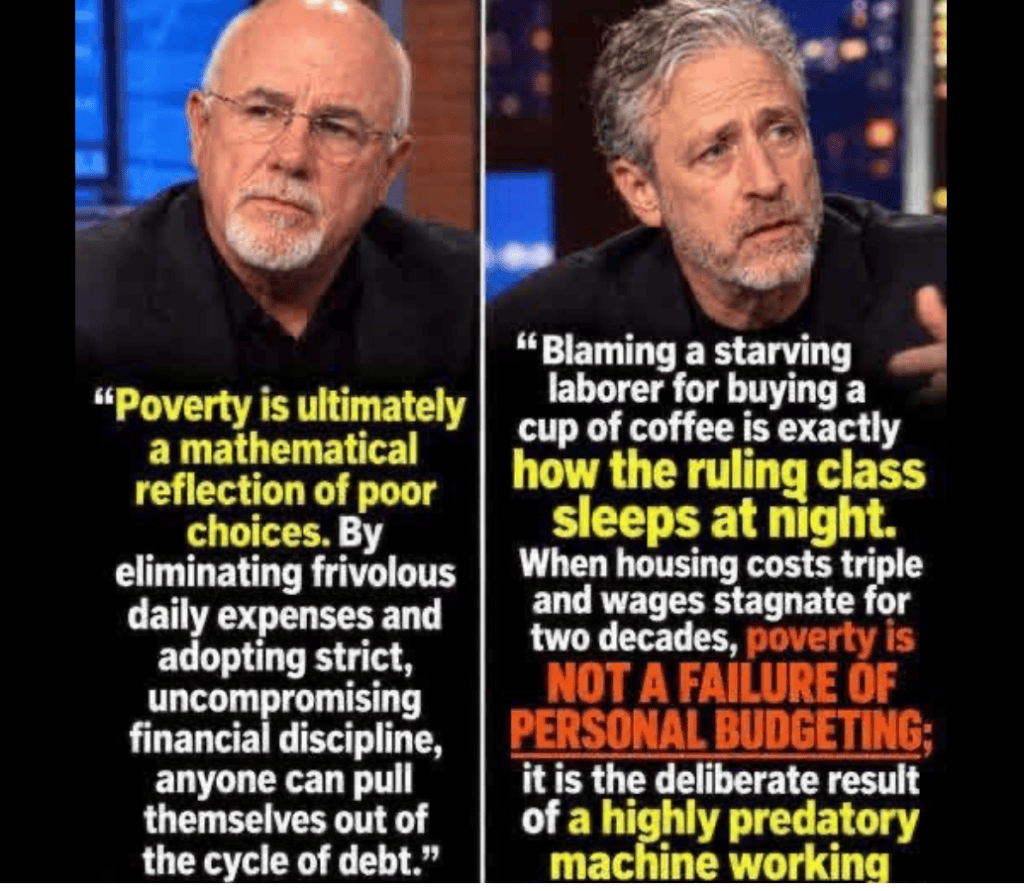
Three bucks for a cup of coffee these days sounds like nothing much, but one each day (only one?) means about $60/month for Monday through Friday, nearly$100 for seven days a week over the course of a month. So yes, that cup of coffee can make a difference. Homemade coffee over the next ten years might yield enough for a low down payment on a house you still can’t afford.
The point is that it isn’t poor choices that makes people poor, it’s a system where-by rich people get to complain about their taxes, while ordinary people working full time can’t afford a coffee break.


Dad was a teacher and paid once a month. I remember we didn’t get the newspaper at the end of the month and our refrigerator was less full. Not poor
LikeLiked by 1 person
Yep, my dad too, working for the Bureau of Commercial Fisheries. We ran out of fuel for three days one winter, Mom hid from the paperboy more than once, powdered milk and margarine, but we weren’t actually poor. When my dad retired early on disability, Mom went back to work full time and loved it. But they still didn’t contribute to my years in college. I didn’t think much about that at the time, but now I read about people whose mothers worked extra hours to pay their child’s way through school and it makes my heart ache a little.
Gary and I were genuinely poor during those years in college but we knew it was temporary. Our 1974 wedding was in my parents’ back yard and I made the cake and paid for my own wedding dress (Beduin, embroidered and vintage from La Tienda where I briefly worked). Our honeymoon was a 4-hour ferryboat trip to Blake Island given to us by a schoolmate of Gary’s who was the captain of that ferry.
People with parents who paid their tuition and could afford to live in dorms, went to Hawai’i over spring break, ate in real restaurants while in college, and only worked summers for pocket money are forever telling me how they were “poor” students. No comparison at all.
LikeLike