June is ridiculously busy, which is not something I can say about most months. Most months my busy is entirely self-inflicted. I read, sew, knit, run, post online. Scrub floors. Gary and I drive to Portland and home from Portland, we walk across the city or walk five miles north on the beach. [We did this recently. Once. Ten miles round trip. Probably not again.]
Yesterday, I had two simultaneous Zooms. I wanted to see both poets. I did try. Blood. Language. Words. Family. Heritage. Hope. The stories we tell. While Naomi Shihab Nye was in Portland talking about the inconceivability of war, Beth Piatote was in Pendleton talking about treaties and preserving language. Naomi was teaching at The Flight of the Mind the first year I attended. She gave a shout out to Ruth Gundle and Judith Barrington for their program that brought writers together for a week on the McKenzie River, two sessions each summer for many years. Beth talked about learning the first word of her people’s language. So did Naomi. Each shared stories about Oregon, about the land, about hanging on, about respect and hope. “Medicine filled the land.”
On Sunday, we will attend the final performance of Beth Piatote’s riff on Sophocles’ Antigone. More about ANTIKONI later.
I attended The Flight of the Mind five times with Charlotte Watson Sherman (1996, fiction), Janice Gould (1997, poetry), Lynne Sharon Schwartz (1998, fiction), Molly Gloss (1999, fiction), and Gish Jen (2000, fiction). Those weeks changed my life. I have always regarded myself as a feminist, from the time I learned the word. When I was accepted to Flight the first time, I wasn’t sure an all-woman conference was needed anymore. I liked to think we’d progressed beyond that. I was so very wrong. For those weeks, I walked and ran and hiked with women, heard them read their stories and poems, sang and ate with them, and talked with them about nothing except writing. Each morning a shower, each evening a reading by the teacher/mentors or by students like me. Toi Derricotte brought me to sobbing tears during her reading; sitting before Naomi at the mike, I recognized the page she turned to and whispered the title, “Jerusalem,” and she looked up at me. I taught Naomi’s and Toi’s poems and I was taught by their poems. Even writing this all these years later, tears come.
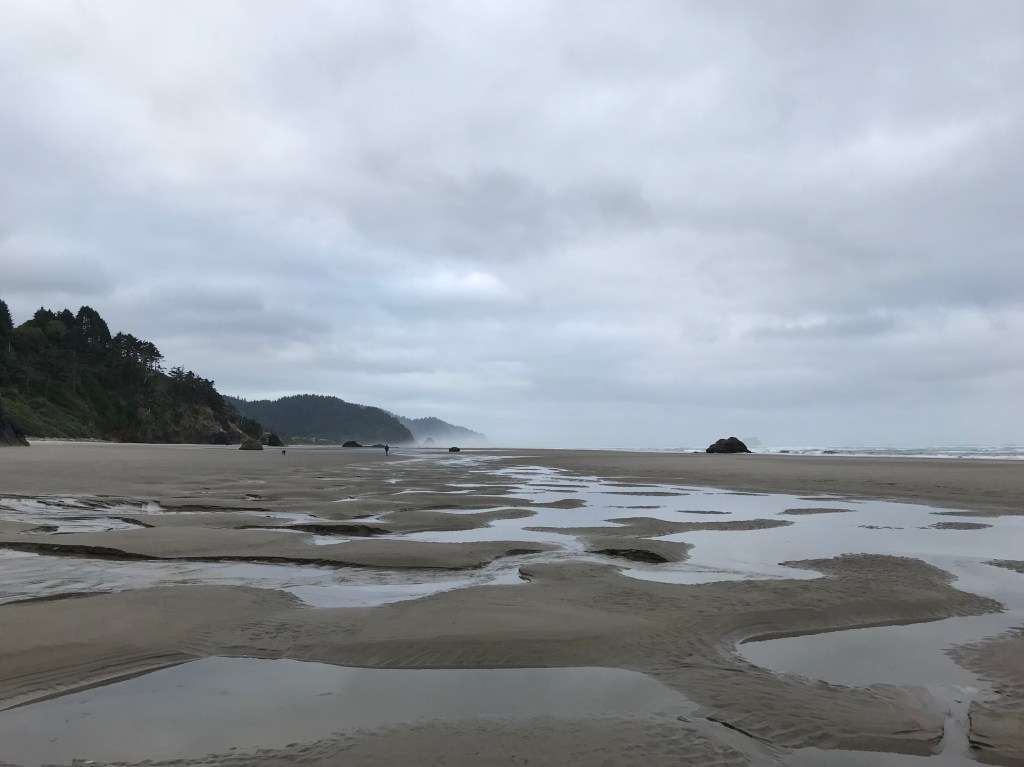
We have names for many of the places we pass on our walks. There is the “Flagpole Path” and the “Pitbull Palace.” What most people call “Sally’s Alley” is, to me, the “Swimming Pool House” because I went in that pool when I was little, though it’s been gone now for decades.
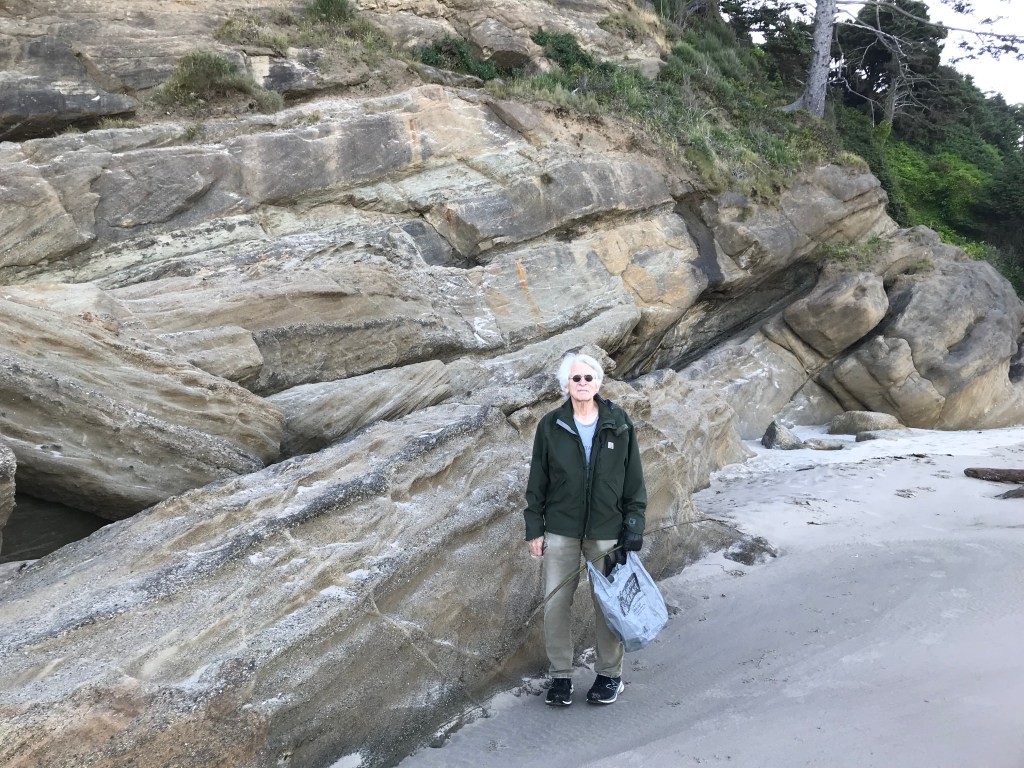
The dry sand in front of my family home squeaks if you shuffle your feet through it. That doesn’t happen north of Tillamook Head. I read, long ago, the reason our sand squeaks.
 IMPERFECT PATIENCE
There is so much here I wish to hear more about. Your memories (with help from your journals or workshop notes) would make good chapbooks or blogs about Flight of the Mind. Many would enjoy reading them–not just those who were there, but younger feminists and others who’d like to know what those times were like. All of your years along the same area of beach–with the given names, and your childhood names–would make a wonderful chronicle of change, showing a gathering of photos (from you and neighbors, over the years) along with your captions. Maybe you would find community help with this, so that the anthology or website or blog could be co-curated. And if AI had to be involved, perhaps it needs to be trained to correct the spelling of “seasick” (when you clearly meant seastack) …or maybe “alter” instead of “altar” was intended as a nod to the the irony of verb instead of a bow to the alluded gods (and goddesses)? I enjoyed this regardless. Looking forward to hearing your take on Antikoni. I have a ticket for tonight, and will see & hear Naomi Nye tomorrow night. In person, alive on the stages. A weekend rich in ancient myths rendered with a different pespective, and poetics in conversation. One of the many reasons I treasure this life I returned to here in Portland. Too bad we won’t be in the same audiences. But it’s so good to read your musings.
LikeLiked by 1 person
Thanks for the catch on seastack and altar, which I did correct at least twice and also again in this comment! Autocorrect wants sea stack as two words. I fear “alter” might just be me. Molly is seeing Antikoni on Saturday (autocorrect freaks out about that play title too).
I have always kept paper journals that no one, not even I [me?], will ever reread. But I thank you for your interest and kind words. When Ruth was compiling a history of Flight, I sent stories and photos. She put together a beautiful online pack. I don’t think one of my favorite memories was included. Lynne, tough New Yorker that she is, confessed to her class at the end that she’d taken the gig as a way to get to the west coast since her daughter was in Alaska, but she’d been genuinely touched by the experience. She actually cried. This was my own experience each year I attended.
The last year, and I knew it would be the last, I shook and sobbed when I opened my acceptance letter. I was so very lucky to have been allowed to attend. Judith’s readings and teaching us how to use a mike are memorable, but it was Ruth who taught me how to give and receive feedback, how to design a reading, how to warm up, and how to respect the emotional response of an audience*… I kept every scrap she handed us, even in the years I purged too much from my file cabinet, reducing nine drawers to one.
*Years later, the directer of a program specifically asked writers about their public readings to be wary how they presented “difficult” material out of respect for a diverse and sometimes youthful audience. One writer specifically chose the most sexually violet passage to read, and got others to do the same. My high school students attended that community reading, and I was shocked at the lack of consideration. That writer was determined that no one should tell them what to do, how dare they! Zero consideration for the audience.
I remember the student readings at Flight, which often involved raw and painful, even deeply disturbing material, but Ruth ensured the emotional pieces were always presented in a way that allowed safety for the audience. She met with each reader, reviewed what was to be shared, and helped find cuts for pieces that were too long (mine) because the overall impact of the reading mattered, not just what one reader got to share, but that the audience was offered a respectful and enlightening performance.
LikeLiked by 1 person
but wait there’s more…,
LikeLiked by 2 people