“Weak as women’s magic”

IMG_3903

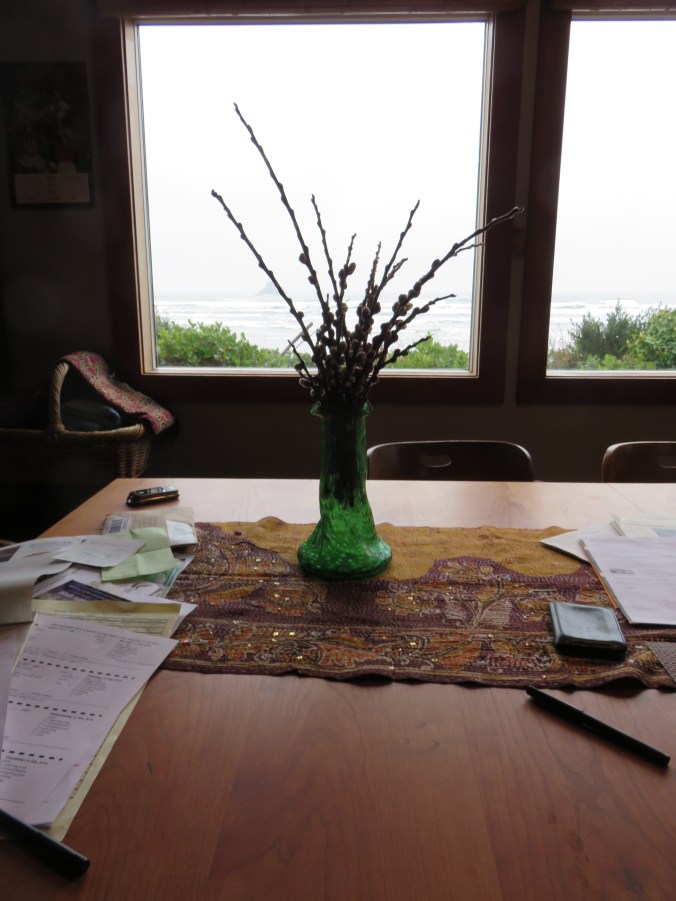
The spring after my mother’s death, I remained deep in grief and P.C. asked me if I had anything I did with or for my mother that I might do to continue that sense of connection. Her suggestion was wise. I began picking pussywillows for my mother when I was no more than 6. I still do.

I am a feminist deep down into my gut. I inherited my respect for women from both of my parents and from self-respect, and from my own experience that men and woman are more alike than different and equally deserving of respect as human beings.

When I began seriously reading fantasy and science fiction as a teenager and in college, I specifically looked for novels where gender was no longer the most critical fact about characters. This was the late 60s and early 70s, Ms magazine was new of the shelves and I read The Feminine Mystique. My father, a research librarian, complained about women who changed their professional name, scattering their scientific work all over the shelves.

Science fiction and fantasy offered the possibility of riveting stories involving characters interacting in a post-sexist universe. I was there for space travel or fairy princesses. I wanted a future I could live with.  I found novels with powerful men and women, with weak men and women. I found novels with characters.

When I read the line above in Ursula K. Le Guin’s A Wizard of Earthsea, I put the book down on my lap and thought for a long time about whether I wanted to keep reading. I did. Le Guin got so many things right, I figured she was allowed to have a character speaking from his culture. And she more than repaid my patience in her later work. Further, I admired her ability to change her mind—such a rare thing—and to discuss a change of her view publicly rather than trying to cover it up.

I cannot say the same for other books. I have read or reread a great many children’s and young adult classics as well as the new hits. I worked with teenagers for a long time and wanted to know what my students were reading. I had never read A Tree Grows in Brooklyn as a girl, and I was shocked at what I found there.

From A Tree Grows in Brooklyn:

“Remember Joanna. Remember Joanna. Francie could never forget her. From that time on, remembering the stoning women, she hated women. She feared them for their devious ways, she mistrusted their instincts. She began to hate them for this disloyalty and their cruelty to each other. Of all the stone-throwers, not one had dared to speak a word for the girl for fear that she would be tarred with Joanna’s brush. The passing man had been the only one who spoke with kindness in his voice.”

“Most women had the one thing in common: they had great pain when they gave birth to their children. This should make a bond that held them all together; it should make them love and protect each other against the man-world. But it was not so. It seemed like their great birth pains shrank their hearts and their souls. They stuck together for only one thing: to trample on some other woman … whether it was by throwing stones or by mean gossip. It was the only kind of loyalty they seemed to have.”

“Men were different. They might hate each other but they stuck together against the world and against any woman who would ensnare one of them.”

At one point Francie and her mother discover that they can bond only over their mutual distrust of women.  I found a drunken father beloved by her daughter, and a mother who scrubbed floors on her knees and was blamed. I never felt that was fully redeemed, though she later says she will make an exception for her mother. I still find the lines quoted above misogynistic. There is the child molester, there is undeniable antisemitism. I could not understand how an Irish woman could write a book so hostile toward Catholics (she prefers the protestant Bible?) and the Irish until I researched the author. A Tree Grows in Brooklyn was written by a German-American Protestant about Irish American Catholics and is heavily invested in the prejudices and bigotry of the period.

Yes, other authors are racist. The Jungle Book comes immediately to mind, but most stories in that book are not about race or even people. I had to ignore the racism in Normal McLean’s A River Runs Through It. I grieved for McLean’s remorse. I often find I must overlook bigotry of various kinds, even in books I love. Even when I was young, I noticed that while most of the human heroes in the Oz books were girls, nearly all the non-human ones were male. (The glass cat and Patchwork girl were notable exceptions.)

Lately many children’s books and YA books of the past have come under scrutiny. The Little House series, and Anne of Green Gables. I didn’t read them as a child, but sexism and racism and other forms of bigotry were common in the novels I read as a child. Today, handing books to my grandchildren, I must be more cautious. I have made mistakes and regret them deeply.

I wonder now how I would have handled the bigotry that is so clear to me had I read A Tree Grows in Brooklyn as a child? Would I have noticed and objected or would I have accepted her judgement? I like to think I would have objected. Even though, I was as susceptible as any child to such effectively written messages about the evils and necessary inferiority of myself as a girl. I like to think I would have judged Francie was a fool to side continually with her drunken father against her mother. I like to think I would have objected t that word “ensnare”, that I would been offended at the depiction of racial and religious minorities had I read the book when I was nine yers old.

I would like to think that.
CREATURE OF HABIT

IMG_2180

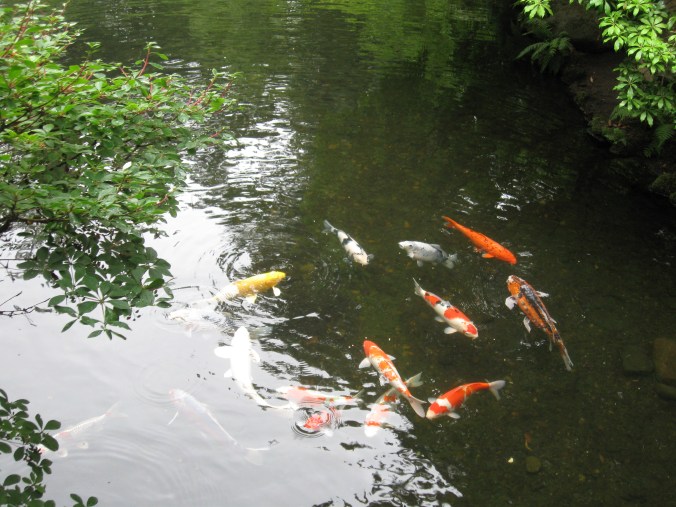
A baker’s dozen of koi at the Japanese Garden in Portland, Oregon.

“Good dog.” These days we pet any dog that comes near us on the beach. They all like to be told they are good dogs. Even the slightly dangerous ones, the ones that growl or charge, if they gave us a chance, would get a good rub on the occiput and be told they are good dogs.

Our aged goldfish died when we fed it tainted fishfood from China. You might not recall that scandal. That was years ago now. Our last cat and the dog are gone now and we have not had the heart to risk another, though for many years we had five or six sharing our home.

I went to a commercial website the other day, just to get my koi fix. Now their ads show up each day in my Facebook feed. I looked at goldfish too. I imagined refilling the enormous Chinese pot where we having kept goldfish in the past. Koi need running water so they have never been in the program. Still, I miss having fish. I miss having pets—no dog no cat in our house, cluttering up our furniture. No dog to swipe the slice of cheese off the table. No need to be careful of doors open or closed, food left out, getting home in time to walk the dog.

Why would we miss that?

Yet, we do.

SAFE

fullsizeoutput_ea8

Friday, on my drive to work, I listened to an NPR interview with a high school senior whose sister was shot and killed last year. Asked if the death of his sister had altered his beliefs, he responded that his “support for the 2nd amendment” had not changed.

This led me to wondered about that capacity for changing my own mind. My personal experience with guns suggests that people are foolish to place faith in guns to protect themselves. Everyone’s experience is different. Mine tells me that a lot of entirely untrustworthy people have way too many guns, that hiding a gun in a place no one will ever find it is a doomed fantasy, and that expecting even good people to consistently handle weapons with care and accuracy is a pipe dream. 

I need a license to drive a car. There’s nothing in the Constitution guaranteeing my right to do that. Our founders did not anticipate cars, and they did not anticipate a weapon capable of firing a dozen rounds in seconds. No ordinary citizen needs such a weapon. I am not entirely happy that our military has them.

About once a week an American toddler finds a gun and shoots someone, usually themselves, and about half the time that little boy or girl dies. Forty thousand Americans died last year from guns, usually shooting themselves on purpose. But even more telling is the risk to bystanders. Even highly trained police most often miss their target. This doesn’t happen at a target range, of course, but out in public when faced with an emergency, most police officers miss.

In my adult life, knowing local people who fill their freezers, as a vegetarian, I changed my mind about hunters.

I am continually amazed at how frightened some otherwise reasonable men become if they think they might have to walk around unarmed. 

I have walked around unarmed all my life without injury. I walked in the middle of the night in my suburban neighborhood where I grew up and walked through the University District at all times of the day and night while Ted Bundy was killing young women who looked exactly like me. I have been harassed and taunted and experienced all sorts of visual and verbal abuse, but I never needed a gun to be stay safe. No one hit me or assaulted me or shot or knifed or otherwise attacked me.

And I was unarmed.

Woman up.

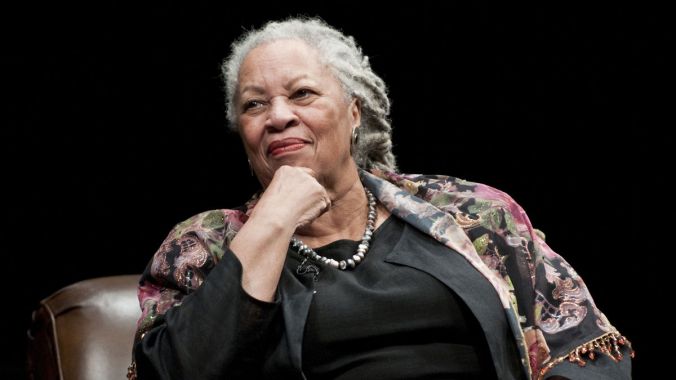
TONI MORRISON

For many years I taught The Bluest Eye in the second term of Junior English. Chris Gilde taught The Color Purple in the senior year, another incredible novel about the black experience in the United States, and a provocative read, a beautiful read. He played jazz and introduced other cultural elements relevant to the novel.

A tall door rises up into this nothing; its hardware is heavy, secure. No bell invites your hand. So you stand there, perhaps, or move away and, later, sticking your hand in your pocket, you find a key that you know (or hope) fits the lock. Even before the tumblers fall back you know you will find what you hoped to find: a word or two that turns the “not enough” into more; the line or sentence that inserts itself into the nothing. With the right phrase, this sense becomes murky, becomes lit, differently lit. Through that door is a kind of freedom that can frighten governments, sustain others, and rid whole nations of confusion. More important, however, is that the writer who steps through that door with the language of his or her own intellect and imagination enters uncolonized territory, which she can claim as right- fully her own — for a while at least.—The Source of Self-Regard by Toni Morrison

I wish I could have taught Beloved in the senior year, but I never did. Instead I did my best to introduce the voices I never heard in my own k-12 education—the stories of women and and people of color, Native peoples and immigrants from around the world.

When I was allowed, I taught stories and novels and poetry from many continents. Things Fall Apart by Chinua Achebe was life-altering for me and I enjoyed teaching it. If I read it aloud, even less attentive, less skilled students were drawn in. I would have liked to teach the Indian novel Nectar in a Sieve by Kamala Markandaya, but did not find an opportunity to add it to the curriculum.

The Junior year was traditionally focused on, and at first mandated to focus on U.S. literature. The novels and memoirs I tried were not always successful. Ceremony was a challenge, but A Yellow Raft in Blue Water and Black Swan Green were great favorites. I taught and love still Adventures of Huckleberry Finn. My students loved that novel only if I read it aloud. Bright students generally skim more often than read and lost patience for jargon and slang if they had to read it on their own. They had more patience with Their Eyes Were Watching God. For many years students loved The Catcher in the Rye, though I never did quite love it. Ironically, The Bluest Eye was harder and painful, but it was the one novel I was likely to hear about later. Students in college often wrote their thanks for the introduction to Toni Morrison.

I taught four to six novels every year to high school students, at least a dozen short stories, newspaper articles, a month of poems in the spring, and writing, writing about everything. Students completed four to five essays in multiple drafts each term. They wrote an on-demand essay each week. We wrote fiction and memoir and poetry.

An easy class only teaches students they are weak. Demanding their best reveals how grand their best can be.


CHOOSING BOOKS

IMG_2574

Yes, you can have too many books. People who believe this is impossible? Well, that’s fine for them. I have thousands of books in my house. My husband has a thousand more of his own. I only read about seventy books a year, plus newspapers online, stories and poetry in journals and, again, online.

Sometimes I read a book I do not like. If it does not “spark joy” I do not have to keep it. I don’t have to keep it if it is one of seven copies of the same title or if I liked it somewhat but will never read it again or if I read the first chapters and felt no desire to continue reading or if have have not and never will read it for the first time.

Even so, I have thousands of books. I have more books than my 17 bookcases can hold.

How do I choose what to read?

COVER. I picked up Gregory Maquire’s Wicked and David Mitchell’s Black Swan Green, both while still in hardcover, for their covers. They remain among my all-time favorite reads. I taught Black Swan Green for years. My students loved it too. There are plenty of books I have ordered online for their covers and found myself irritated because the insides did not match the promise of the outsides.

FIRST PAGE. In my hands, I read a bit. Black Swan Green had me laughing halfway down the first page. This is the safest way to choose, in my experience. I have rarely been disappointed after enjoying a five minute introductory read.

AUTHUR. Some you know you are safe. You know you will love the book because you loved the last one and the one before.

DISTRACTION. I began reading science fiction just to appease my father. Foundation is sexist and homophobic, but still . . . all through college I read SF. I chose books written by women or with a woman on the cover, so long as she was not being carried a la Conan. The Women of Wonder story collections edited by Pamela Sargent introduced me to more authors. I read SF to find a world in which my gender was not all that mattered about me.

ASSIGNMENT. I detested Mrs. Stevens Hears the Mermaid Singing required for a class by a wonderful instructor, but after considerable struggle, I was able to respectfully and usefully identify what bothered me in May Sarton’s novel. Sometimes people hand me exactly the right book at exactly the right moment. Things Fall Apart was probably the best book I was assigned as an undergrad. Though I never warmed to the recommended stories of Flannery O’Connor in my masters program, I assign “A Good Man Is Hard to Find” and both versions of Carver’s “Beginners” and “What We Talk About When We Talk About Love” and allow my students to judge for themselves.

RECOMMENDATION. I loved Middlemarch recommended by a former student and I’ve read it twice. Toni Morrison came to me as a friend’s recommendation. I have read and reread Patrick O’Brian’s 20-volume series. Currently I am in the middle of the seventh book. It is as good or better this time around. Aubrey and Maturan deserve a full shelf all to themselves and they have one.

CHANCE. I don’t remember how I found some of the books on my shelves, the ones that stay. I saw Dorianne Laux’s chapbook What We Carry at Powell’s turned out on the shelf and bought it after reading the title poem. I picked up Black Swan Green and Wicked for their covers.

RE-VISION. I change my mind. The first time I read Maxine Hong Kingston’s Woman Warrior I gave up less than halfway through. Four years later, I picked up a different edition and loved it. It was not until I arrived at the exact page where I had previously abandoned the book that I remembered how disappointing I’d found it the first time and somehow it became brilliant in th years since. I read but failed to be particularly impressed the first time I read Alice Munro’s “Meneseteung” in Best American Short Stories. A few years later, in a class exercise involving reading short stories, a student picked it out as her favorite. It won over the entire class and more than a decade later I wrote my critical essay for my MFA on that story.

The ones that fail to stay?

  • Did I enjoy reading this book?
  • Did it teach me something?
  • Do I remember the story?
  • Will I reread it?
  • Do I know someone else who will enjoy it?

It’s always about choosing.

EDITING & BREAD

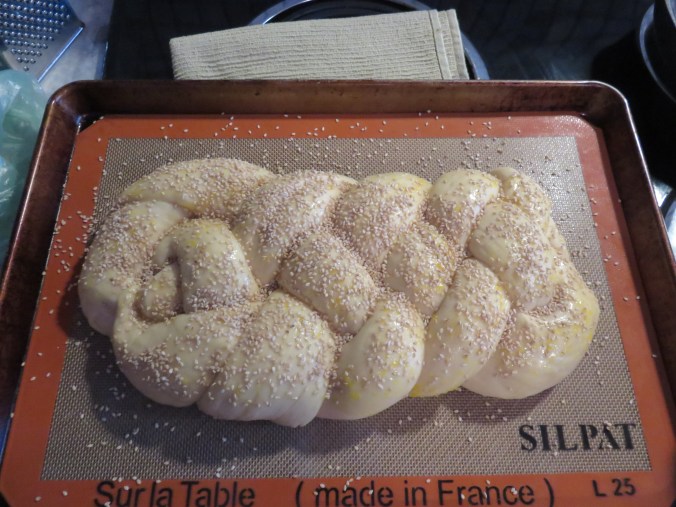
IMG_3900

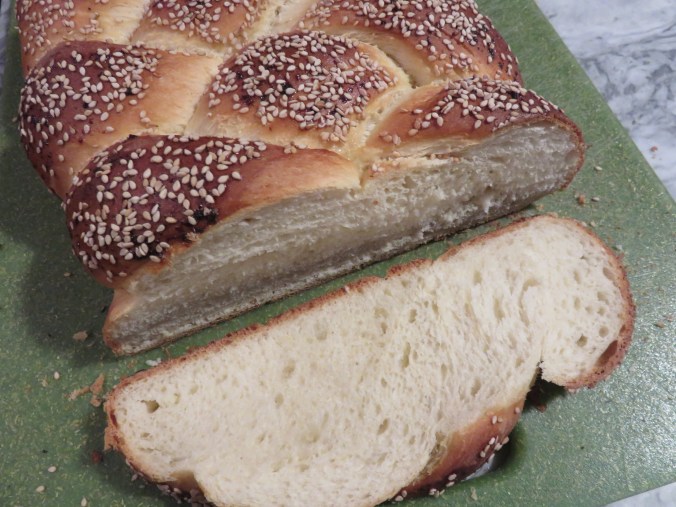
This first challah is light and tender, soft, finer grained than this photo shows. I used some bread flour (“strong flour”) and no whole wheat, but I think I miss the wheat flavor.

I suppose this means I should complete my editing before posting.

On 8 February 2019, I found I had 100 followers. That makes my day. Seriously. This is true especially because I wrote about common-sense self care as part of countering depression. Every time I have tried to post anywhere about depression, I’ve been attacked. People who were friends and generally seemed to like me, went off on my comments have apologized for using language in response to my post. “You don’t know anything about depression . . .”

The thing is, I do know about depression. I am not as self-assured as some people seem to assume. I know depression. I won’t describe details here, but I have been depressed and I have a strong thread of serious depression and anxiety disorders in my family. Maybe I cover it better than most? Maybe I was told I should smile about a thousand times when I was six and I acted on that suggestion.

In any event, I am not writing a memoir, but a blog. I am not telling the story of my childhood here today. I write about myself too often as it is.

Most often I write as often in direct response to something in the news as to anything happening in my life. Friday I played Scrabble with a friend and in the afternoon I had challah rising. I used to make a huge braided loaf each week, but it’s been decades since I did that. Most of my life has passed with only occasional loaves cooling on the counter.

Baking bread each week was one of the things I swore to do now that I am mostly retired. And challah—in a dead tie with brioche for best bread in the world. (For now we can set aside cinnamon buns and panettoni, which are sweet breads rather than bread loaves.)

So the bread was in its first rise. I’d have taken a nap if it hadn’t needed to be punched down and shaped in about 10 minutes. I recall three rises (or proofing a sponge and then proofing twice, which is the same thing) before shaping, but fingers crossed. That first attempt on Friday would have only two rises, one in the bowl and the second as a braided loaf. Most of the kneading was done with a dough hook by my electric mixer.

I first learned to make bread from my mother who had a recipe for four loaves, lost now. [There was a typo here. I noticed it and fixed it five minutes after I posted. sigh] Though she never enjoyed cooking or baking, her loaves were marvelous. In college, I made whole wheat bread in a very large crockery bowl, stirring by hand with a wooden spoon (I broke a spoon one time) until I turned it out onto a board to knead. I quite liked kneading; it reminded me of wedging clay and as a Ceramic Arts major I had a lot of experience wedging clay.

My first job in Oregon was in the old Cannon Beach Bakery, which baked the “Haystack Loaf” in a brick oven, one of the last remaining fired brick ovens in the state and gone now. Harrison’s Bakery in Seaside, with its marvelous “Beach Bread” is gone too.

My old recipe for challah is also long gone. There were 7 cups of flour and 6-8 eggs and butter and honey and cardamom, as best I can recall. It made an enormous loaf, almost too big for my tiny apartment oven. I wish I had my old recipe, the one I used in college 45 years ago. I thought it came from the Tassajara Bread Book, the source of my ordinary whole wheat recipe, but I’ve looked and there is no recipe for challah. Challah is not supposed to have lemon peel, but I recall I put it in anyway and I will today too. None of the recipes I found online were quite right in other ways—not enough eggs, sugar instead of or in addition to honey, and oil rather than butter—so I used my best guess, and when I make bread again today, I will make any necessary adjustments. I used oil the first time.

“Like thousands of cooks of my generation, I have in my kitchen an ancient volume of The Tassajara Bread Book, its cover gritty with flour, its spine cracked from use, its pages stained with molasses, and dog-eared with decades of perusal. It is the book that taught me how to make bread and its simple wisdom has been present in every loaf I have baked. I will recommend it with enthusiasm to a new generation of cooks.” —Steve Raichlen, author of The Barbeque Bible

That’s the book. Sometimes, back in college, I made a loaf in two layers, a three-strand on top of a six, but I generally made a 4-strand braid, and that is what I did on Friday. It had a rest and second rise while I was writing this. When I took a break from writing, I preheated the oven, mixed an egg yolk and honey wash, brushed it, scattered sesame seeds, and baked for however long it took. Recipes I found recommended temperatures from 325° to 425° and times from 20 minutes to the better part of an hour. I aimed for someplace in the middle, and 25 minutes in a 350° oven seems to have done the trick. Maybe I was writing in between baking bread and not the other way around?

IMG_3895

The first rise was in a bowl, the loaf shaped and allowed to rise again. Here is my 4-strand braided loaf ready for baking.

I have a couple of dozen blog posts drafts saved that I will never finish. I begin posts and never go back to them. But after I’ve posted, I do always go back. I correct typos, add a link or another photo. Sometimes I correct information or even add an entirely new paragraph. With so many people reading (I hope), it’s about time I corrected typos before posting, don’t you think?

There is a second baking scheduled today after our walk, and I want to celebrate. Over a hundred people have chosen to receive my posts. That is worth celebrating. It also reminds me of that bad habit I need to change. I write fast and post, and almost immediately people receive my blog post as an email. I am grateful when they “like” my post because that gives me a sense of the success of what I have written.

Finding those “likes” on my posts is something like my husband asking for a third and fourth slice of bread, fresh out of the oven. Except I get to see him smile.

WELLNESS

IMG_3881

Early in the first episode of season 14 of Silent Witness, a hospital doctor completely loses it as he observes patients in an outdoor lounge smoking dope and cigarettes and drinking beer and soda. He knocks smokes and cans out of their hands, shrieking: “What is the point?!” They will not regain health if they continue their unhealthy behavior.

There are all sorts of magical diets and pills available for people looking to live healthier lives. In the mean time, they avoid addressing the obvious: sleep, diet, exercise, focus. Someone I know ate a restaurant salad, had an “allergic reaction,” and concluded she was responding to tiny bits of cheese she ate by mistake. Maybe it was the lettuce? About 20% of E.coli infections come from leafy greens. Most of us cannot be troubled to change our behavior unless we are offered that change as a near-magical cure for what ails us.

Sometimes we are depressed because our lives are depressing. We can’t always do anything about that. Sometimes only time will heal us—everyone is depressed when a loved one dies. Taking a pill might not help at all, though we have faith in pills.

Improved health for most of us is simpler than medication. It might come down to getting enough sleep, eating better, avoiding soft drinks and alcohol, taking regular walks, and stilling our minds.

Until there were anti-depressants and an irrational percentage of Americans making Big Pharma billions, nearly everyone with clinical depression recovered with or without treatment within a few months. Medication today has its role, but most anti-depressants need a couple of weeks or months to become effective. While we wait, we might try taking better care of ourselves. This might not be the only answer, but it is a good place to start. And for most of us, it is exactly what we need.

A minimum of eight hours of sleep a night was considered normal for at least a hundred years. That recommendation has dropped to a range of seven to ten hours, and may continue to drop in response to the amount of time we actually sleep. We want to believe our sleep patterns are “normal” and theories seem to evolve in order to support our desires. Is it natural for anyone to “need” only a few hours of sleep? Perhaps not.

A hundred years ago and more, we slept more because it was dark at night. Today we sleep less because we are on our devices with electric lighting. For a long time the belief about sleep was that it kept human beings out of trouble. Except for our intelligence, the reasoning went, we are a harmless and relatively defenseless species. We do not see well in the dark compared to most predators. Curling up someplace safe and sleeping, biologists assumed, kept us out of trouble. They were wrong.

Some medications, advancing age, and brain damage all impact sleep. But sleep does a great deal more than keep us out of trouble. Research into Daylight Savings Time revealed a connection between that one lost hour of sleep and an uptick in heart attacks. We now know that the various stages of sleep allow us to sort and save information (remember), cope with daytime concerns, repair the synapses in the brain, and heal. Lack of deep sleep contributes to dementia. Lack of REM sleep makes us fractious. Lack of sleep can lead to weight gain by making us hungrier, but also has an impact on depression, anxiety, and suicidality. “Add the above physical and mental health consequences up, and a scientifically validated link becomes easier to accept: the shorter your sleep, the shorter your life.” (The Guardian)

Get your sleep. Stop eating a few hours before bed. Turn off devices. Avoid caffeine and other stimulants. Make the room dark and go to sleep at a decent hour.

What we eat makes a difference too. It is amazing to me sometimes how readily people accept that sugar impacts the behavior of small children, but how resistant these same people often are to the impact of what they eat and drink on their own mental state. Sugar, too much meat, refined grains, alcohol and other drugs—all these impact mood.

“Eat food. Not too much. Mostly vegetables.” advised Michael Pollan in The Omnivore’s Dilemma. He’s right about that. Though Pollan does not have the formal training to be considered an expert in nutrition, he has earned his prestige. Because I am largely vegetarian, people like to call themselves “carnivores” when we eat together. No. No, we clearly are not. Look in the mouth of a cat, research the structure of their digestive system. Cats are carnivores. Humans do not have the mouth, teeth, digestive chemistry, or other physiogomy to survive on a meat-based diet. Peoples in the far north such as the Inuit can because 98% of them have a genetic mutation allowing them to exist on fish and mammal flesh. They are genetically adapted to the cold and a meat-centered diet.  For most human beings, nothing about us is adapted to eating that way, though many of us have one of the several genetic mutations allowing us to consume milk after childhood.

Wheat has been part of the human diet for at least ten thousand years. We have been cooking foods for at least hundred thousand years. (There is no physical proof yet, but many anthropologists and evolutionary biologists believe that cooking foods, especially foods that are easier to digest such as legumes, is the reason humans became the smarter, smaller-toothed species we are today.) The wheat found today is somewhat genetically different from what our very distant ancestors consumed. The animals we consume today are also very different genetically, far removed from what our distant ancestors consumed. They are also fed and raised differently. There is nothing remotely Paleolithic about today’s beef, pork, or chicken.

Of more significance is that most of our food (not to mention our water and air) is contaminated. All foods, domesticated plants and animals, are weighted down with chemicals our ancestors could not have known. Pesticides, herbicides, and broad-spectrum poisons that were invented only in the last century. Our drinking water in major cities has trace amount of antibiotics, anti-depressants, and other chemicals as well. You already know about the lead.

Eat better. Save sugar for a rare special occasion. Avoid alcohol and refined foods, packaged foods, “foods” containing chemicals, most meats and conventionally raised food.

There is overwhelming evidence that regular exercise results in improved physical and mental health, less disease and longer life. Fifteen minutes a day could do it.

Meditation or even just sitting quietly for a few minutes each day lowers blood pressure and relieves all sorts of symptoms. The mental rest disconnects us from day-to-day stresses. Turn off social media and stop stewing over things we cannot control. “Relax!” they tell us.  We hear it all the time, and it is excellent advice.

Social interaction is healthy and so is reading a cheerful book. Maybe turn off the news, social media, the gloomy or horrific Netflix movie. Watch something funny. Read a hopeful novel (honest, it’s a proven-effective therapy), and refuse to discuss politics with your raging-reactionary uncle.

Getting enough sleep, eating a healthy diet, moderate exercise, and giving our emotions a clear break from day-to-day stresses and demands absolutely result in improved mental and physical health. Seriously. No doubt about this at all. Trusting that making such healthy changes also triggers hope and hope is another essential. It is likely the primary benefit of most anti-depressants. Taking that little pill each day triggers hope that we might feel better tomorrow. That impact will wear off if the problem is actually untreated mental or physical exhaustion, or if the underlying problem is grief. Everyone feels depression and reveals the symptoms of clinical depression after a beloved family member dies. Such grief mostly needs time for a cure.

SLEEP. DIET. EXERCISE. REST. TIME.

All this is hard if we are depressed. I get that. Depression means it is hard to care much about anything. It’s hard to get out of bed. But if we can care enough to take ourselves to a doctor, perhaps we can care enough to listen to soothing music or take a walk, eat a little better or have a conversation with a friend.

“Dorian Deshauer, a psychiatrist and historian at the University of Toronto, has written that the chemical-imbalance theory, popularized in the eighties and nineties, ‘created the perception that the long term, even life-long use of psychiatric drugs made sense as a logical step.’ But psychiatric drugs are brought to market in clinical trials that typically last less than twelve weeks. Few studies follow patients who take the medications for more than a year. Allen Frances, an emeritus professor of psychiatry at Duke, who chaired the task force for the fourth edition of the DSM, in 1994, told me that the field has neglected questions about how to take patients off drugs—a practice known as ‘de-prescribing.’ He said that ‘de-prescribing requires a great deal more skill, time, commitment, and knowledge of the patient than prescribing does.’ He emphasizes what he called a ‘cruel paradox: there’s a large population on the severe end of the spectrum who really need the medicine’ and either don’t have access to treatment or avoid it because it is stigmatized in their community. At the same time, many others are ‘being overprescribed and then stay on the medications for years.’ There are almost no studies on how or when to go off psychiatric medications, a situation that has created what he calls a ‘national public-health experiment.’ ”—“Bitter Pill” The New Yorker

We have survived as a species for 200,000 years, and we’ve had anti-depressants for only the past few decades. Today, one American in five is taking medication for something no one had access to until recently. Suicide rates have been going up instead of down ever since the introduction of anti-depressants. Let that sink in.

Toward the end of the episode, Nikki is exhibiting symptoms, which a doctor diagnoses as depression: “My soul has the flu.” As it turns out, her brain is not sick nor is her chemistry out of order. Something in her life causes the problem. She experiences anxiety and sadness, and even depression as part of the normal range of emotions every human experiences in life. She does not need medication. Mostly Nikki needs some sleep, a better diet, regular exercise, some mental rest and decompression, and a little time to recover.

We all do.


LOVING JONI

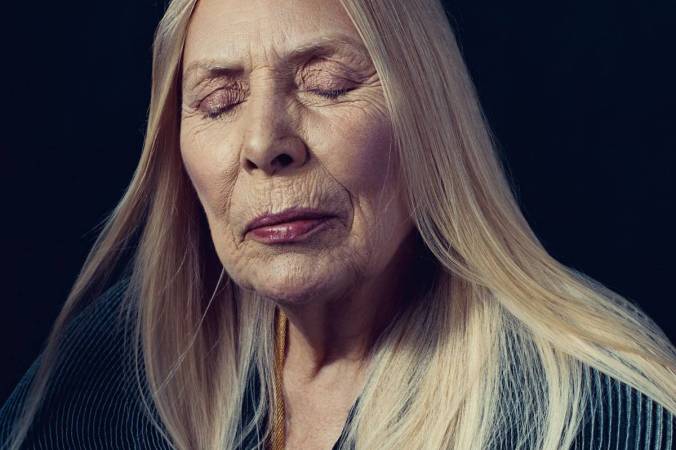
joni-mitchell.jpg

As a child I hated green olives and blue cheese. Today these two foods are among my favorites. Coffee. And napping—once resisted absolutely. Brushing my teeth. Boredom. I have changed my mind many times and about a lot of things.

Sometimes what we love and who we are seem to be at odds. There is a disconnect that might last for an instant. Perhaps for a lifetime. Sometimes that relationship between aspiration and daily life shifts and our point of view shifts with it.

Zadie Smith has written of this in an article in The Guardian, with an unfortunate title that uses the words “political correctness.” (I have been at pains to explain to students that the term “politically correct” is a pejorative.) Smith insists that change is inevitable and desirable.

“In an essay in her collection, Feel Free, she investigated one such change in herself, when she fell in love with the music of Joni Mitchell, a singer she had despised when she was a mixed-race teenager growing up on a London housing estate. ‘The reason for hating Joni Mitchell was that I didn’t listen to classical or “white” music,’ said Smith.

“ ‘Then I had an epiphany, and suddenly realised that her voice was beautiful. It’s a responsibility to be as open as you possibly can to the world as an aesthetic object.’ ”—The Guardian

Smith speaks about risking characters in her novels who are dissimilar to herself, and the risk of “collective identity.” That last is a new term to me, but Gary immediately recognized it as a term used in social psychology, also known as “referent group.” That is the term I learned.

“Polletta and Jasper defined collective identity as ‘an individual’s cognitive, moral, and emotional connections with a broader community, category, practice, or institution.’ ”—Wikipedia

The term has changed, the existence of identity has not gone away.

Joni Mitchell is Canadian, famous, a musician, a visual artist, and very ill. She is still alive and I am deeply grateful for her music. No one in my college writing class had ever heard of her. I played “A Case of You” for them and they were unmoved, blank and staring.

Maybe later.

I knew I should have played one of the early ones they were more likely to know. Instead I played the song from Blue because I heard her debut that album in Seattle back in the day. And because although I do not like change any more than anyone, I immediately fell in love with that particular reinvention of Joni Mitchell. “Michael from Mountains” is still stunning, but I moved on to new sounds right with Joni Mitchell.

We change our minds. We reinvent ourselves, and we sometimes do this over and over as experience and people around us push us along. Such changes are not always desirable. PTSD might inspire unwarranted responses to previously harmless situations or people. But growth is a complicated thing. We might need to twist with the wind or bend around obstacles in search of the light.

We are allowed. We are allowed to be ourselves and for that self to be re-framed throughout a long life as many people, as Chicana and then Latina, as artist and then song-writer, as woman, citizen, ally, professional, parent, sister, daughter, as elder, crone, as they, and ancient. Our referent group is not stable throughout our life because we ourselves change and find connections, we shift, slide, and reform.

We are allowed.

CREDIBLITY

50317398_10156272443924482_4991198949428690944_o.jpg

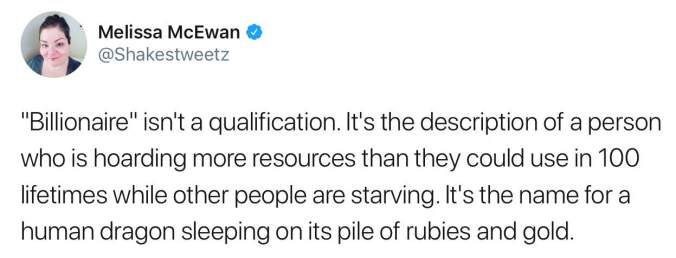
Normal human beings want to take care of the people they love. Poor children, asked to imagine what they most want, most often want to buy their mother a house. Normal people, given more money than they need, share. If their best friend is hungry, they offer half their sandwich. If they see them hitchhiking on the road, they offer a ride. If an old person falls in the crosswalk, they lift them up. If I child falls in the lake, they jump in after. If a person is unconscious on the floor, they carry them out of the burning building.

Normal people care.

But human dragons . . .

SANDRA CISNEROS

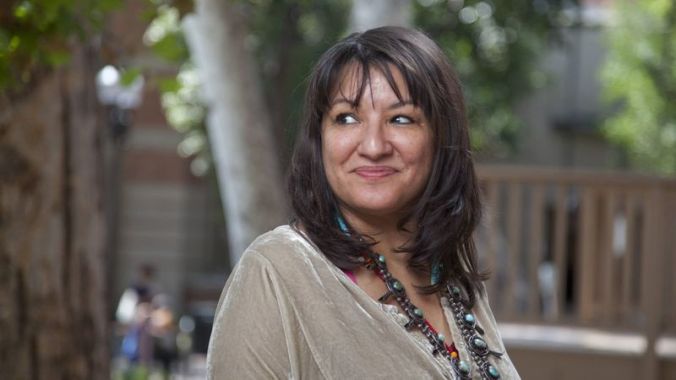
la-1549308487-nxhqz5iowg-snap-image.jpg

“Sandra Cisneros, the Mexican American novelist whose books “The House on Mango Street” and “Woman Hollering Creek” are widely considered contemporary classics of American literature, has won the PEN/Nabokov Award for Achievement in International Literature.

“Cisneros is the third author to win the annual award, after Syrian poet Adonis in 2017 and Irish novelist Edna O’Brien in 2018.”—LA Times

Literary critic Claudia Sadowski-Smith has called Cisneros “perhaps the most famous Chicana writer.” She has long supported other Chicana and Chicano writers, notably using much of her MacArthur Fellowship and other awards to fund programs and has been instrumental in building a strong community in San Antonio among other artists and writers through her work with the Macondo Foundation and the Alfredo Cisneros del Moral Foundation

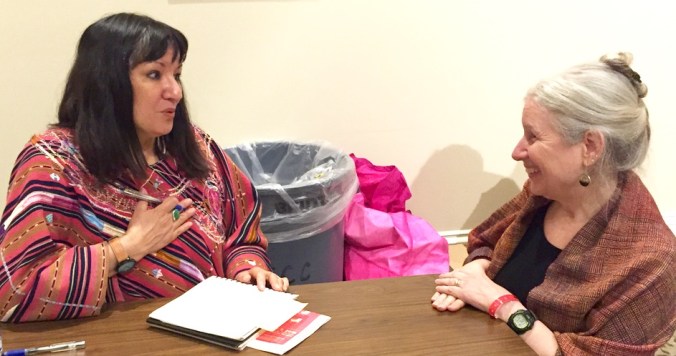
She has long been one of my favorite people. I talked to her when she visited WordStock in Portland. I told her how I taught Mango Street and she urged me to share that approach, which I did. She held my hands. She was marvelous. She is a marvel.

image1.jpg