BIRDS BIRDS BIRDS

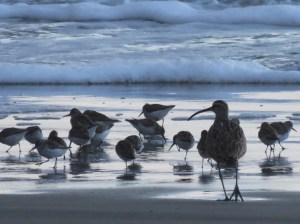
fullsizeoutput_1208By the time my watch alarm went off at 6:30, we were already on the beach. Not much luck with glass today, but two dozen whimbrels. (Gary counted fifty-one gathered the evening before in front of our house.) They moved out of our way as if we were just another harmless animal. And that is what we are. Gary will tease seagulls by calling “Kitty kitty kitty” but we are both careful not to disturb the whimbrels. They were not here when we first moved to the coast in 1979. They had been here, of course, but many of the birds we treasure each day had mostly vanished and have begun reappearing in the decades we have walked the shore.

fullsizeoutput_11f9

one whimbrel and part of the large flock of very fat sandpipers.

Yesterday we saw a large flock of Western sandpipers and were hailed on twice during our morning walk! When I was a runner, I was always too hot and I enjoyed cool, damp days. But even then I drew a line at hail. Yesterday we came home soaked but the little hailstones did us no harm. The sun burned off all the clouds before we’d fully warmed back up in the house.

The rest of the day was all blue skies and tourists. Today there are high clouds but no sign so far of rain. If the beach remains empty, we might even get our second walk.

fullsizeoutput_1204

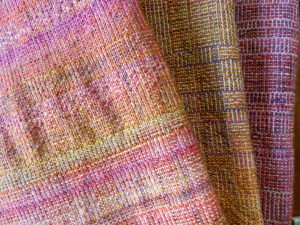
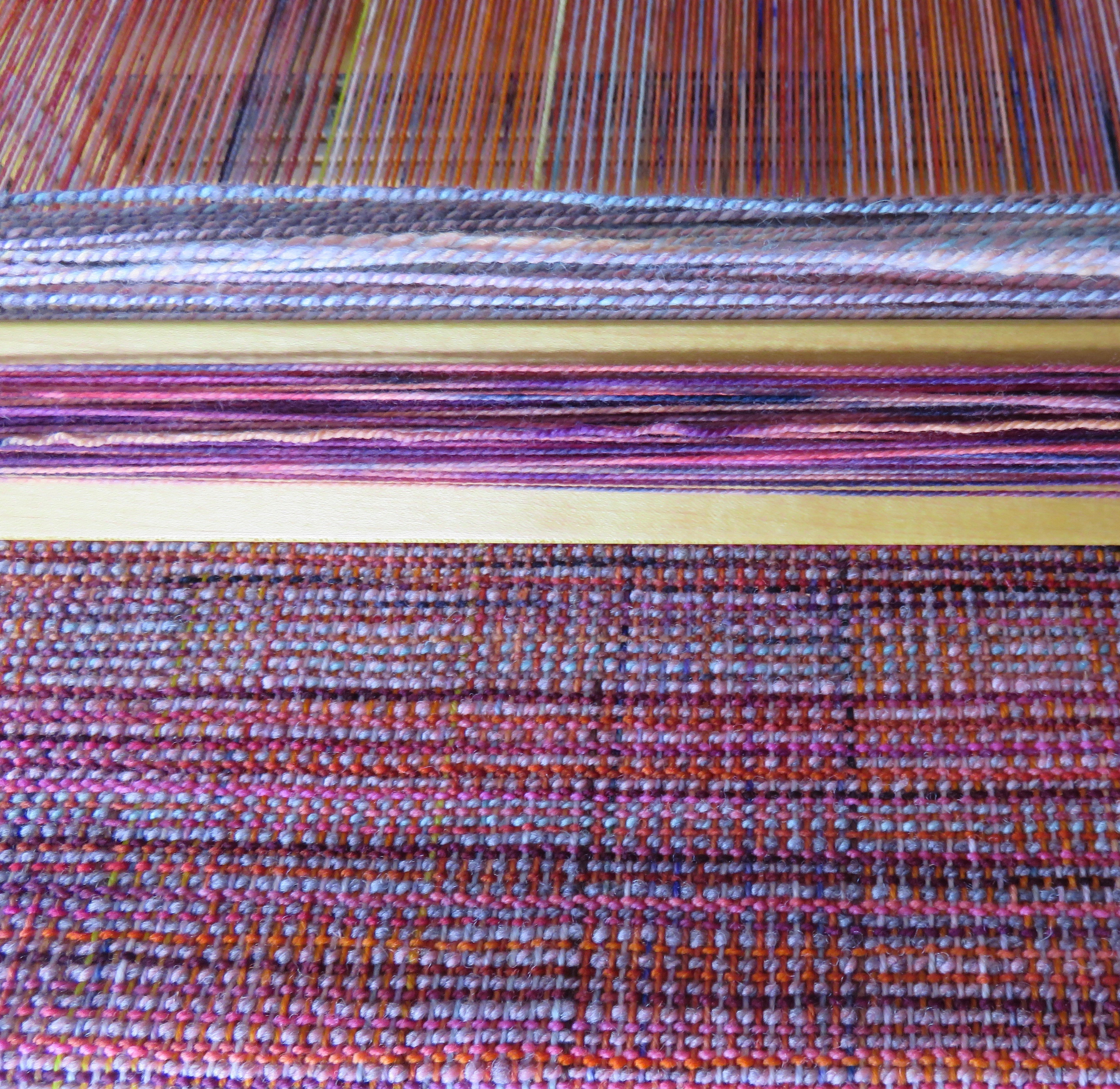
Three “Marigold” shawls

I also finished the “Marigold” warp yesterday, washed and hung the three shawls to dry. This morning I folded them and put them in the cedar chest. Each one has gorgeous hand-painted handspun yarn in the weft, which I should steam press to flatten, but I tolerate a bit of ripple. I meant to make a mostly black-and-white Indian black print quilt next, but what I really want to do is put the next warp on. I have yarn for green or brown, but I am waiting for more Koigu. I might try for another peacock warp.

fullsizeoutput_1205

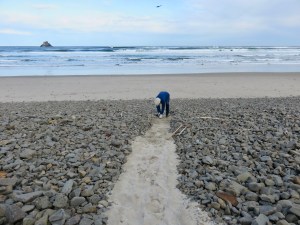
Gary rebuilding the bottom ten feet of our path, washed out last night.

The high tide wiped out the bottom ten feet of our path, but Gary has already rebuilt it. We (or really I) used to build the path the end of March each year. Sometimes it would wash out entirely and I’d have to start over. This one is wide and softened with sand Gary hauled from the beach.

THREE WORDS

Works Progress Administration “(WPA; renamed in 1939 as the Work Projects Administration) was an American New Deal agency, employing millions of job-seekers (mostly unskilled men) to carry out public works projects, including the construction of public buildings and roads. It was established on May 6, 1935, by Executive Order 7034.”—Wikipedia Continue reading →

about BUTTERFLY FONTANELLE

“Butterfly Fontanelle” was the title of a short story I began writing more than three years ago. The fontanelle is the soft spot in the top on a baby’s skull where the bone has not yet quite closed over the brain. A “butterfly fontanelle” is the shape of such a soft spot, like two paired wings. Human babies, like most all mammals, are born before they are mature. A newborn cobra can already bite and kill you. Mammals may be able to stand but most are still becoming. For example, most people know a puppy’s eyes remain closed for a couple of weeks after birth, but her ears are sealed shut too. A puppy cannot learn until she is about three weeks old. Human babies . . . must gain sight and depth perception. Infants are becoming human.

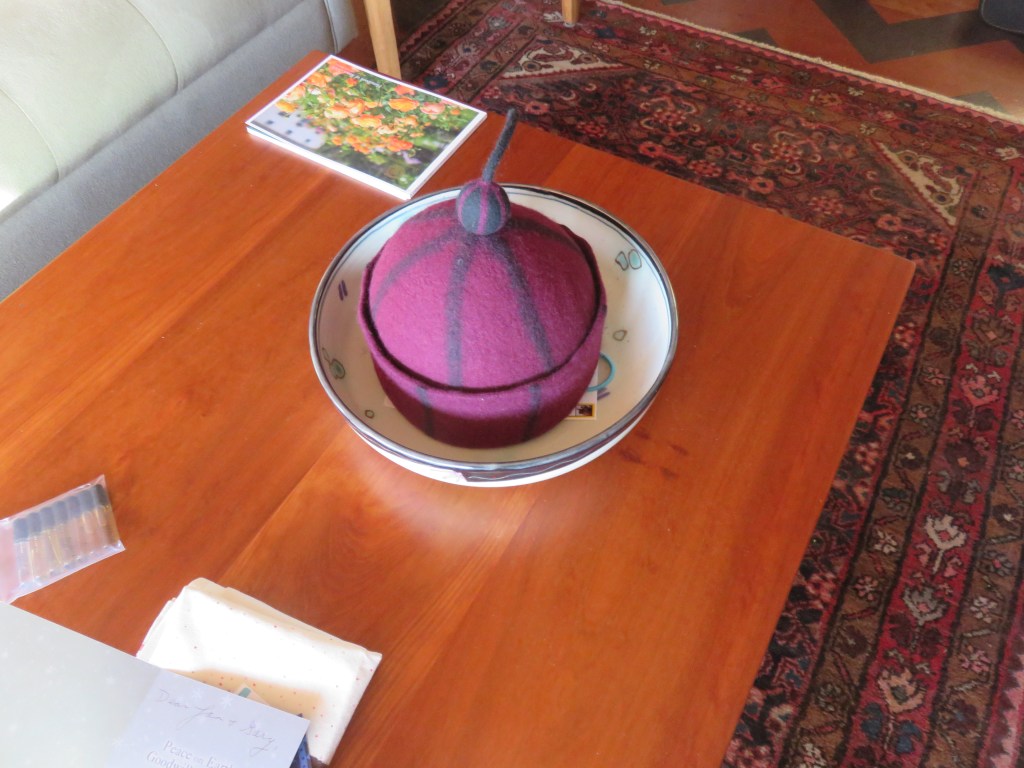
But first, because this has been a hard week, I want to share a publication on the Brevity blog: “Art Saves Lives” I am wearing my felted Acme hat, handmade on the east slope of the Olympic Mountains.

Continue reading →

TRYING FOR NORMAL

IMG_5789

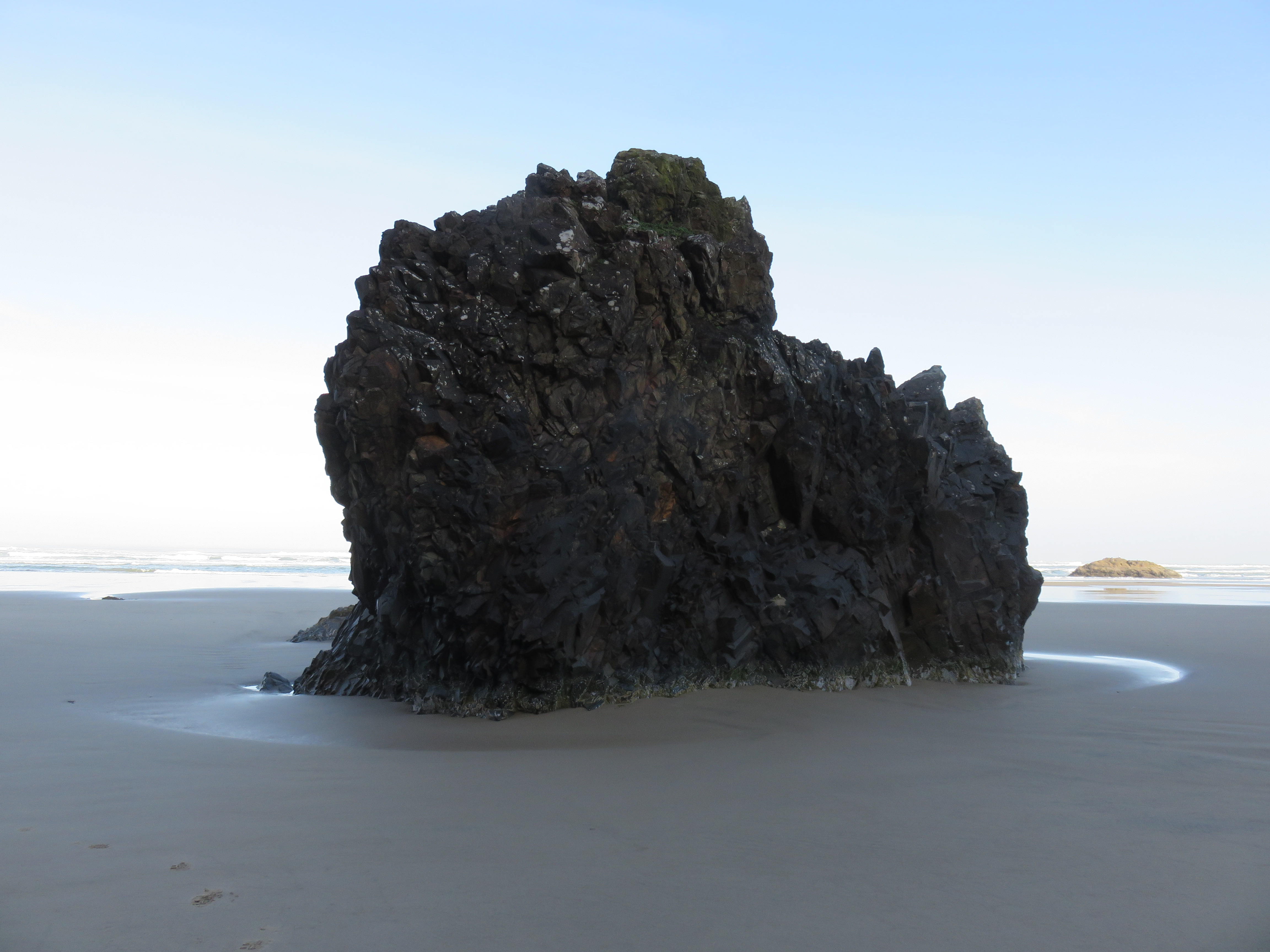
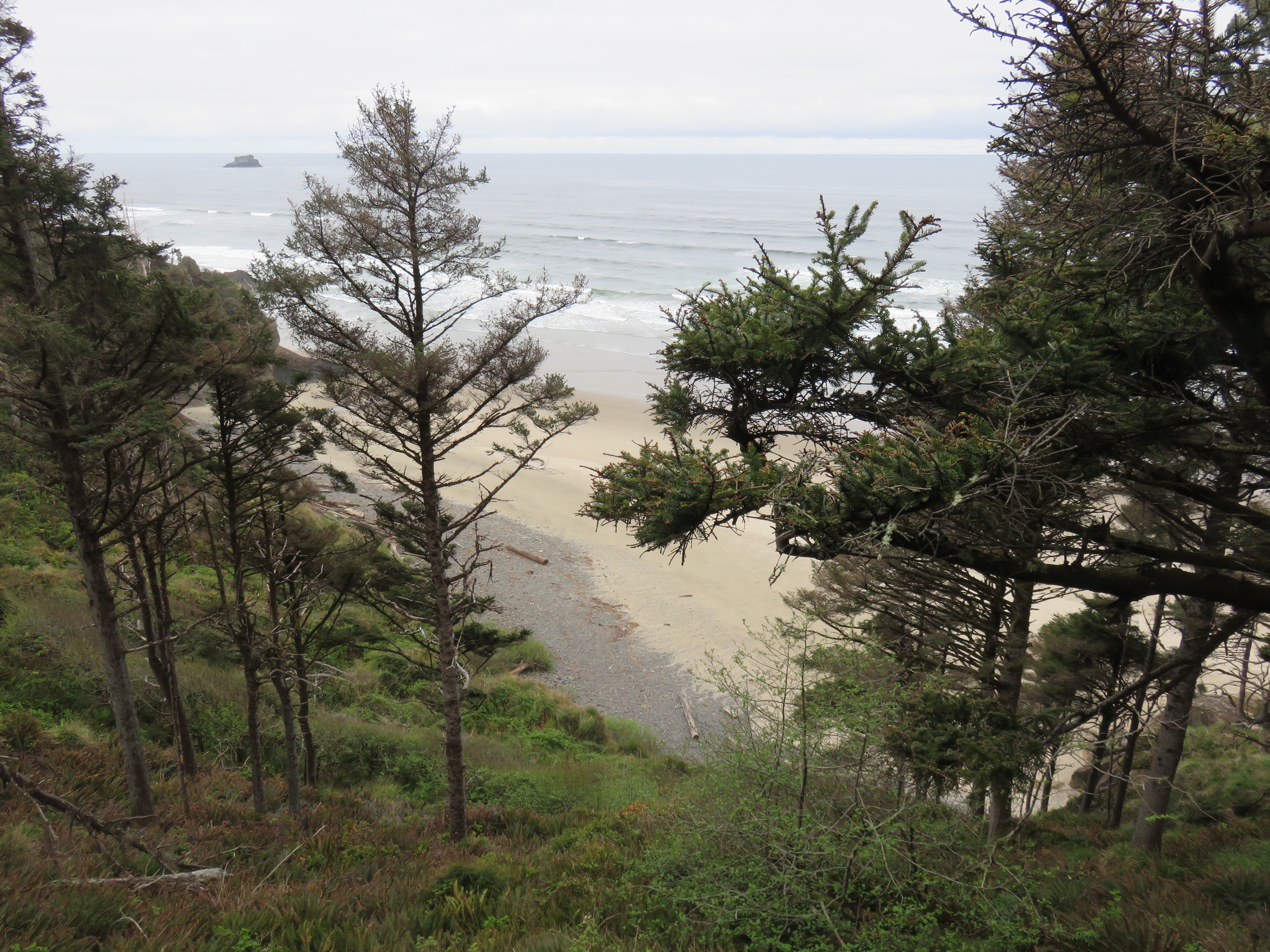
This rock is larger than it might look, about a mile and a half from my home. The sand has been coming onshore earlier than usual, but it is still about twenty feet high. I used to walk here with my boys when they were little. They climbed the rock and often wanted to be carried home. They took turns. I could not carry them both together very far, but I recall when I was young enough to try.

I wake most often in the middle of the night these days. I know before I look at my watch what time it is, usually within a few minutes. I wish it were near dawn, but it’s not. It’s not even 4:30am, when I would not mind so much being awake. I turn and look for a more comfortable position in bed. I know it’s 2:15am or 1:30. Get up and go to the bathroom? Sometimes. Sometimes I will read a few pages and that settles me. Usually I lie looking up into darkness, then close my eyes and go back to sleep. It doesn’t always happen that way. I’ve noticed after our weekly trip to pick up our mail and groceries, I might lie awake until dawn. “Going out” is stressful.

Continue reading →

TIME & TIDE

IMG_5815.jpeg

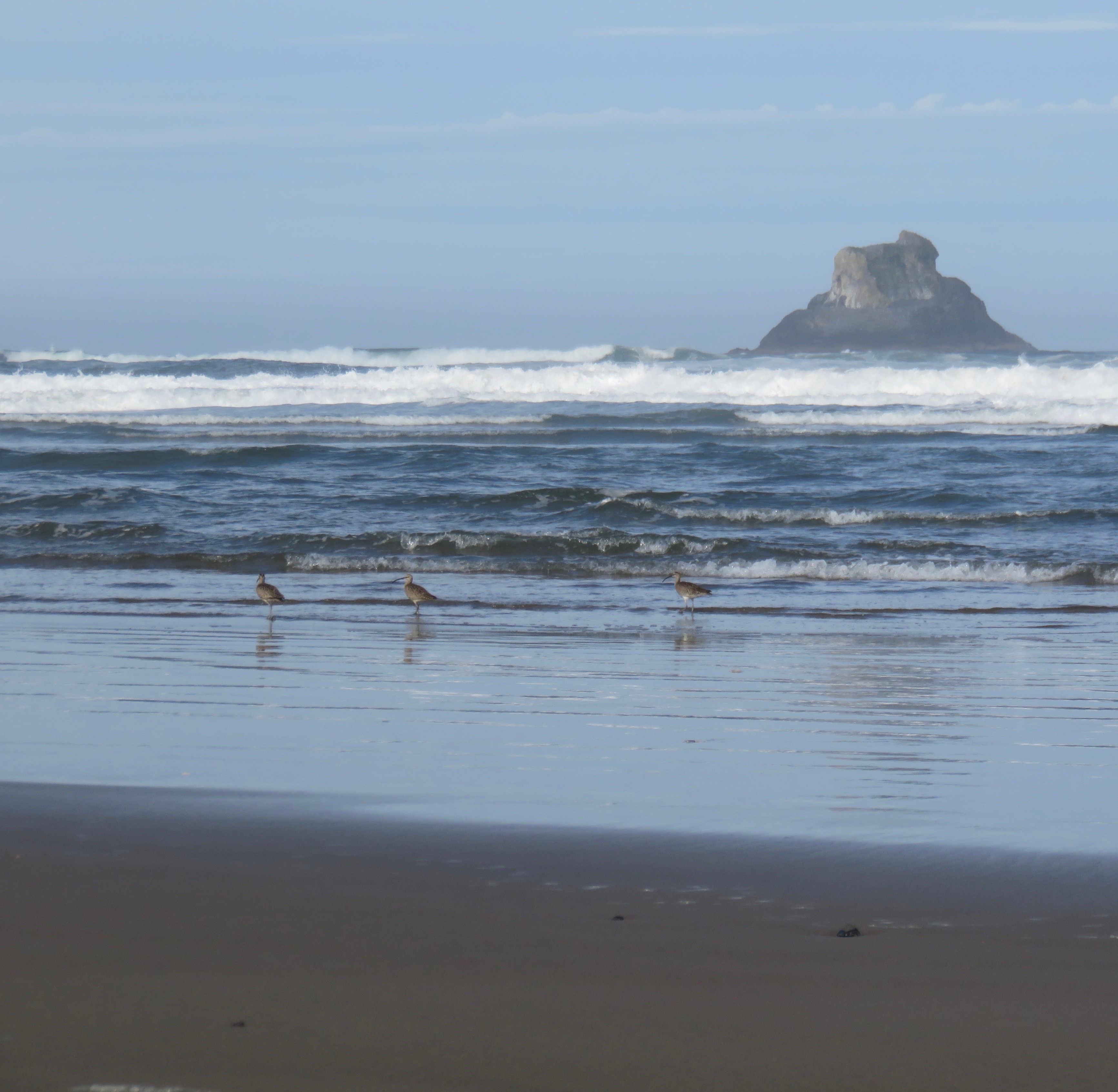
Three of the local whimbrels. Eight have been out in front of the house for the past few days. A loose dog chased them off but the returned soon enough. They are after sand crabs, I think.

“Time and Tide wait for no man” is how the saying goes. It is a recommendation against procrastination and as I am reading Patrick O’Brian’s naval novels (for the third time) I understand the reference. However . . .

We waited for the tide to turn so that we might have our walk. It was past dawn, though if the sky were clear we would not see the sun for at least two hours. Out we went a half hour past full but the stretch of rocks were were most interested in searching were awash and we often had to run up shore to avoid getting wet.

There were fourteen whimbrels further note on the shore, and when we returned home there were four plucking sand crabs from the wet sand.

We saw no one, only the tracks of one earlier walker, and perhaps that person went out last night. Their prints vanished in the waves.

We found the ocean and we gathered and we were fortunate to be together.

This evening we watched “Shelter in Poems” from the Academy of American Poets. You might find it here: https://www.crowdcast.io/e/shelterinpoems

After a false start with no sound, the poems start at about ten minutes and forty seconds in. I would like to say that if you can listen to Merwin’s “Thank You” without tears you are not quite human, but that sounds like a dare to some people. I will say that I taught many of these poems, I was grateful to hear them and to discover others that will carry me on.

TWO DEER

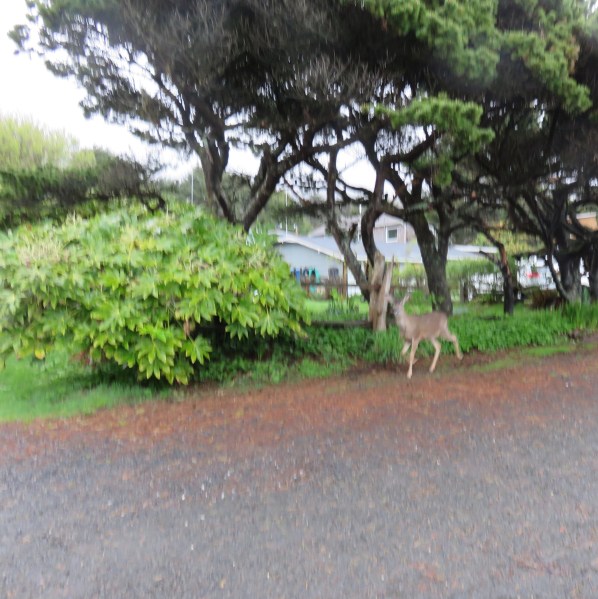
IMG_5799A few days ago Gary was out on the road when he saw the first deer. He backed up against the garage door while she passed. He felt sure there was another. He didn’t want to spot them, though they had passed him before—running straight past as if he were not there.

There have been two does in the neighborhood so he was halfway expecting to see the other one come along.


And then it did.

IMG_5805

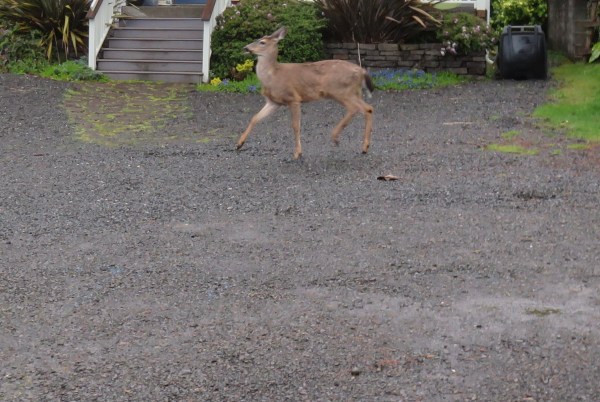
She seems to be moving along just fine. 

The second smaller one came trotting by and Gary thought it might be lame, seeing some small hitch in her movement, and wondered if it was the one we’d seen in the surf a while back. The pair is known. We often see their tracks in the sand heading north. Last Sunday we walked two miles north to Arcadia Beach and followed their tracks most of that distance.


IMG_5810

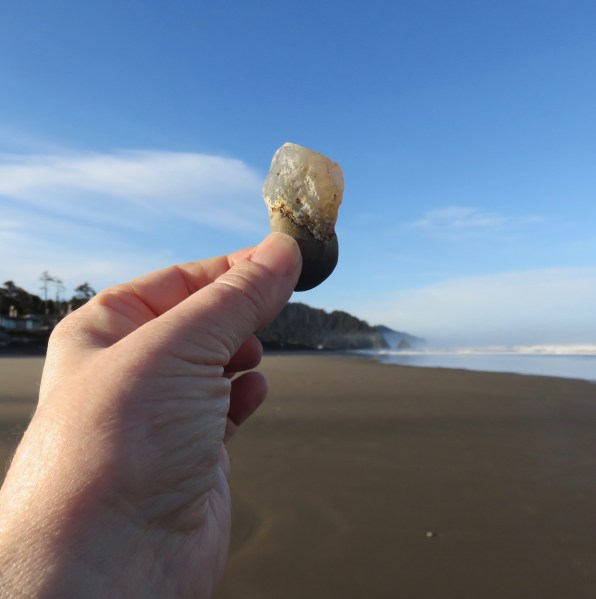
The top half is nearly clear and colorless. The bottom is basalt, I think.

In the mean time, we’ve had long walks and found sea glass and agates. This one is milky quartz still attached to matrix. Each of us has found these on occasion and labeled them “teeth.”

I think today might be a day to ignore the news. Neither of us slept well last night, and we need a break. Since we do not drive anywhere except to pick up mail and groceries and drop off recyclables (no mail delivery or recycling pick-up in our community) and we are trying not to order from Amazon, we’ve saved some money. But Gary ordered a CD box set yesterday, and that might mean I can order a couple of pieces of kimono silk on Ebay.

I have a couple in mind. I go visit the silks sometimes.

IMG_5817

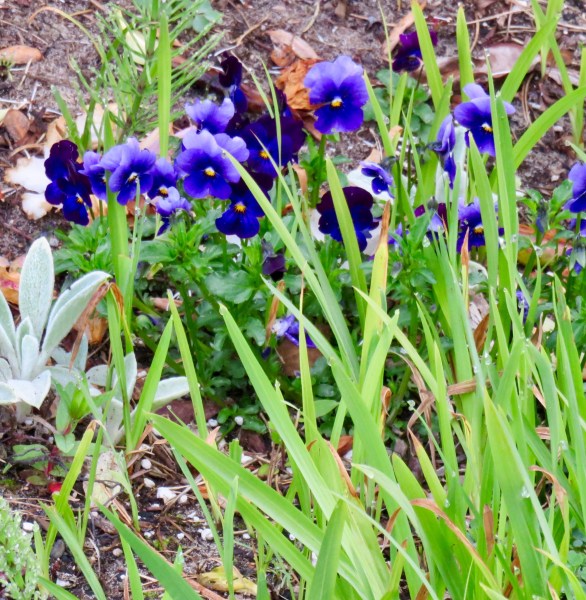
The horsetails are coming up too. I started seeds for squash, green onions, kale, and tomatoes.

The middle garden Gary has been working on is looking beautiful. The daffodils are done, but my irises are budding, the daphne is still scenting the air, and the rugosa roses look like they are happy. In the “front” yard facing the ocean, we have done nothing, but volunteers are making a show with lamb’s ears, snow-in-summer, and violas.

I am weaving a new warp called “Marigold.” The second shawl is nearly done. I might take a break before weaving the last one with more yellow. I feel like sewing.

In preparation for that next quilt project, I have pre-washed vintage batik and block printed fabric from a favorite store in Portland, which is filling online orders. Cargo has marvelous, odd and wonderful things and they are good people. Calli wrote us a note and urged me to send photos of the quilt I make from the fabric she sent out the other day. I will certainly do that!

I am also taking a break, of sorts, from creative nonfiction and fiction writing beyond this blog. All my submissions are done, I have only a Brevity blog post coming up in a couple of weeks. I want to debrief about “Butterfly Fontanelle” and then maybe I will post a couple of off-the-edge short stories that need homing. I have one particular short story that means a lot to me. I often receive personal rejections in response to this one, but always rejection (close to 70!) every time. Editors have suggested revisions, but have not reached consensus about what is not working. (Tipped my hand too late or too early?) I’ve revised it dozens of times and stopped counting drafts after thirty-eight. Maybe a reader here can tell me what’s wrong with it. I’d like to get it right.

IMG_5778.jpeg


REVISE

IMG_3707.jpg

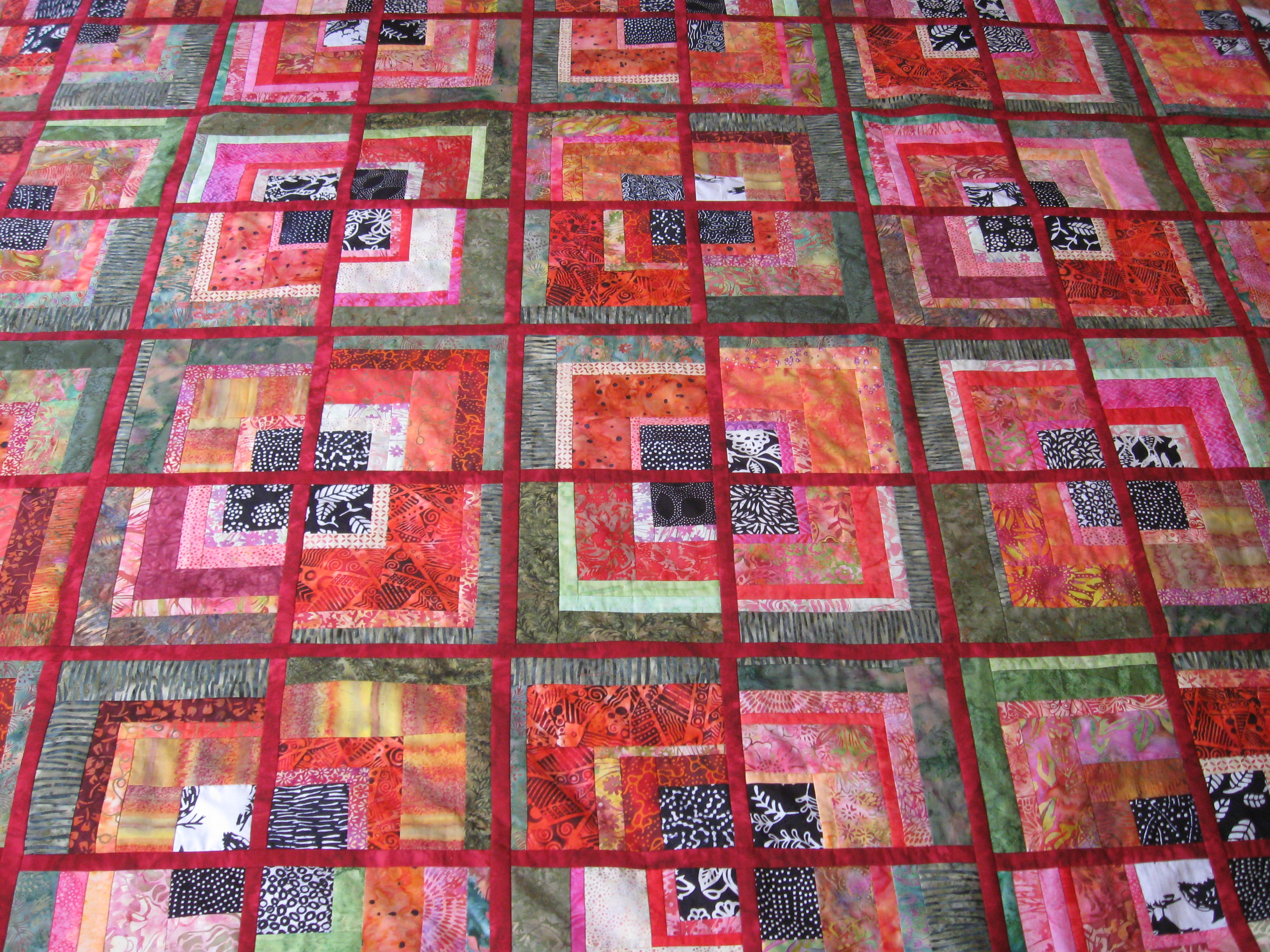
Part of an early quilt top before going out for quilting. Watermelon Sliced.

written yesterday: I should be weaving just now, and I have fabric pulled for a quilt of ordinary cotton, other block-printed fabric waiting for my attention, and an impressive stash of batik cotton. If I put my mind to it, I could have a couple of quilt tops done before summer. I could do three. A month and a half of steady work.

The catch, of course, is actually completing the work.

Continue reading →

ARCHITECTURE + CHOCOLATE

Robie_House.jpg

My dad used to tell a story about his first job at a California aircraft company. The new head offices had a problem. The roof leaked on the President’s desk and the famous architect who designed the structure refused to address the problem. “It’s a work of art,” he is supposed to have said. The CEO tore the entire building down.

I was reminded of this while reading an article in The Washington Post about how office layouts might change to ensure distancing and a healthier work environment.
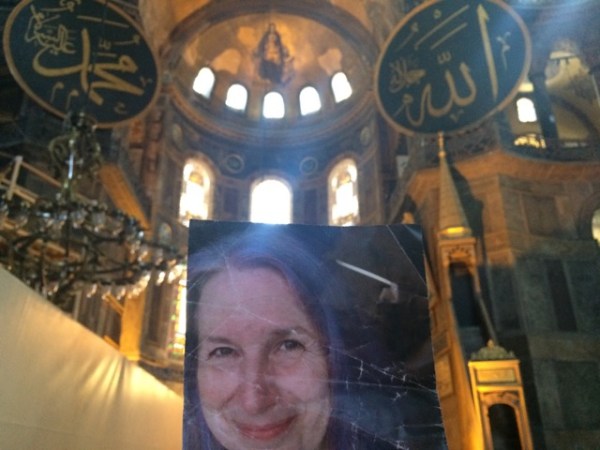
image3

A student took a photo of me into Hagia Sophia so I could say I’d been there.

Gustav Pundt was among my favorite professors at the University of Washington. Hermann Johannes Gustav Pundt (28 August 1928 – 15 September 2000) was a leading architectural historian and Professor in the University of Washington Department of Architecture. I took his architecture history series in 1971, I think, and he introduced me to such wonders as Hagia Sophia (in Istanbul, Turkey), which is among the beautiful buildings in the world. His photographs of the interior, taken at a time when it was forbidden to take such photos, completely captured my imagination. Light flooded from a circle of windows at the base of the main dome. Magic. I have wanted to visit ever since. I really did love the guy for that.

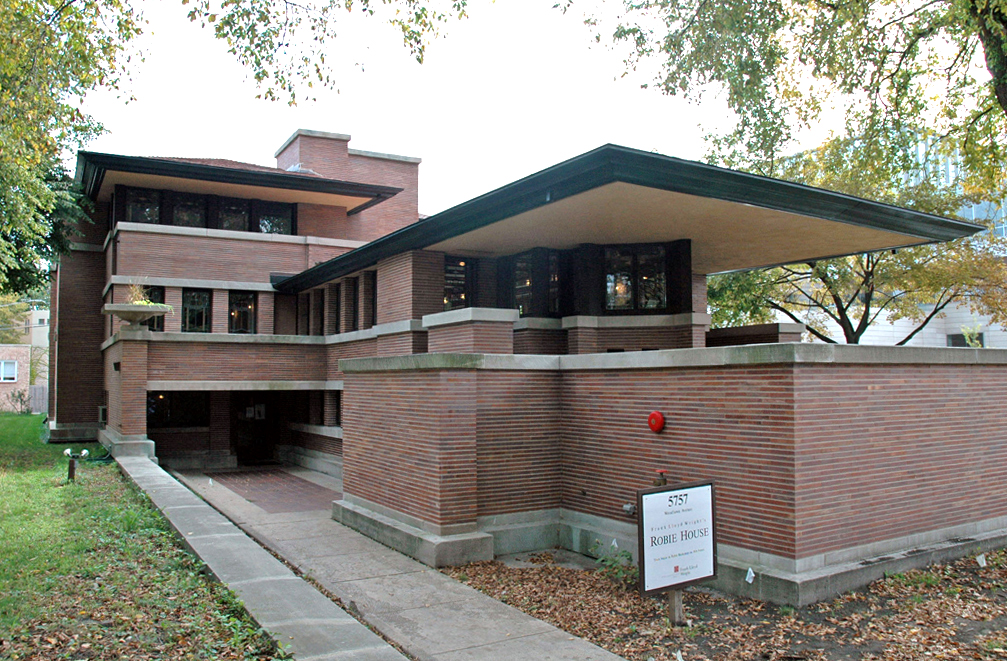
As a student himself, Pundt participated in the restoration of Frank Lloyd Wright’s Robie House (1909, above) in Chicago, a beautiful building in the Arts and Crafts style, showing the influence of his Mentor, Louis Sullivan (the “father of skyscrapers”, but also a designer who appreciated detail). True, the Robie House was designed to have no blinds or curtains on any room, the leaded patterns dividing the glass was intended to ensure privacy. How did that work for the occupants? You decide. 
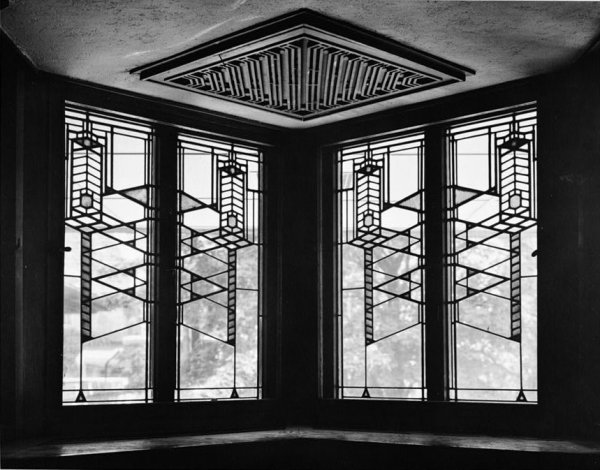
RobieHouseWindows_ChicagoIL

Windows in the Robie House. Most of the window is clear with only small bits of colored glass.

I was not a fan of the architect. The Johnson Wax Headquarters (1936) was a nightmare to my way of thinking: too many specialized brick forms (over a hundred molds which looked less innovative than inefficient to my 19-year-old eye), the glass tower continuously leaked (this was later corrected by the Johnson Wax company’s innovations, not Wright’s), Wright’s special three-legged chairs fell over, and it included the dehumanizing “open office” plan he’d used in an earlier office building.

The Larkin Administration Building (1906) is touted as the “first modern office” with entire floors left wide open for secretarial pools. If you have seen The Apartment with Shirley McLaine and Jack Lemmon, the open space where Lemmon is working at the beginning of the film is Wright’s fault. This “regimented approach, where workers sat in lines of desks with managers in offices surrounding them”—what fun. Today it’s blamed for the spread of colds and other viruses in offices. How to prevent the spread of covid19 in such wide open spaces?

The saddest part of this might be that I know all this because Pundt told his students all about Wright, warts and all. He loved the guy whose architecture placed function below innovation. So I did not agree about Wright. I want to have my cake and eat it. Give me a beautiful building that is also a pleasure to live and work in.
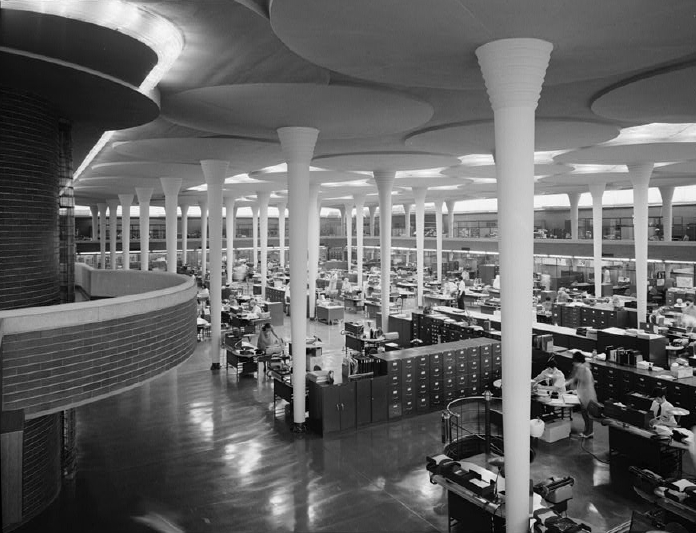
Johnsonwax02

Wright proved that his beautiful reverse “lily pad” columns could support weight. He did not prove that people enjoyed working in what he envisioned would resemble a “factory floor.”

Don’t even get me started on Falling Water, with the dysfunctional stairs to the water and unremitting damp (again, a detail thanks to his admirer—it was an unliveable house). Beautiful site and stonework, but, like so many of Wright’s designs, it fails its primary purpose. It’s a showcase, not a functional building. The Solomon R. Guggenheim Museum is showy too and notable for forcing visitors to look at art from a slanted floor. Yeah, I’m sure it looked spacey and futuristic in 1959. Now, to me, it’s just an ugly airport parking garage or an out-of-scale child’s toy.


Speaking of frustration and scale: We are waiting for two and a quarter pounds of chocolate to arrive.

I bought three bars of Theo baking chocolate back in December. Organic, gluten- and dairy-free, Fair Trade, and made in Seattle. Practically local. I meant to make vegan chocolate pots de creme when our sons and their families came for Twelfth Night. I ran out of cooking motivation before I got to the pots, however, and the chocolate remained in my baking cabinet until last week. I used two huge chocolate bars and pecans to make brownies last week. They came out so thick it was hard to get my mouth around them, and dark, very dark. I love dark chocolate. We each had a square the other evening and again yesterday because I put some in the freezer before we could gorge.

There is also a single 4-ounce bar left in the drawer, so I went to the Theo website to order more baking chocolate. It’s sold out. I checked Amazon, but they only have the same high cocoa content in 3-ounce bars. Back to Theo. Sadly, this Seattle company sells their candy cheaper on Amazon than directly from their own website. I ordered a dozen bars last weekend. Yes, I am weak.

Amazon Prime shipped FedEx. You probably see where this is going. Oakland. Seattle to Oakland, so far. Had it shipped USPS, I’d have my chocolate by now. It would have gone Seattle to the regional center in Washington, to Portland, and here. Three days. Instead, it shipped right past Oregon to California. If it were in Oregon by now (630 miles back north), that would not be so bad, but you know FedEx doesn’t work that way.

This is my current entertainment: watching FedEx ship my chocolate around western states. It left Oakland yesterday afternoon. Idaho next? Eastern Oregon? I was actually looking forward to finding it had gone to Wyoming, but this morning it is in Portland. There is still time for the order to wander through a few small towns or head back to Washington state. FedEx can prove that the meandering delivery routes are actually functional. Unlike some of Wright’s designs that were unusable, my chocolate will arrive at my house after it takes a tour, and is functional. I will make more brownies.

I am easily entertained.
ORAL HISTORY

image

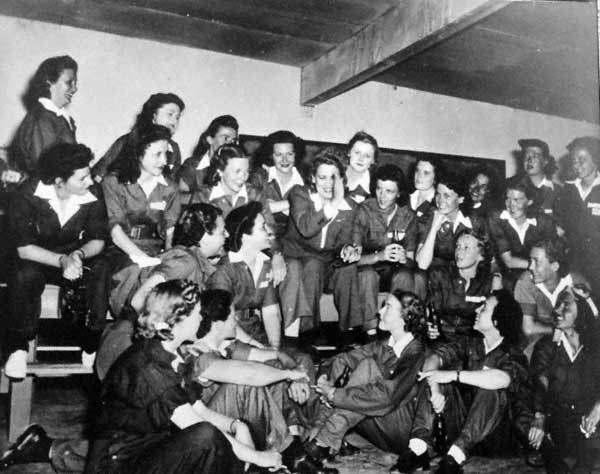
Jackie Cochran(center) with WASP trainees.” The women in the publicity shots were always young and pretty. Is there any doubt this was meticulously orchestrated? [note: these black & white images are in the public domain.]

I was reading an article in Time magazine about oral histories, how we should all be keeping coronavirus journals because such personal stories add texture to historical accounts. Katherine Sharp Landdeck is the author of The Women with Silver Wings: The Inspiring True Story of the Women Airforce Service Pilots of World War II, and found in her research that the journals of those WASP pilots was essential to making meaning.

image

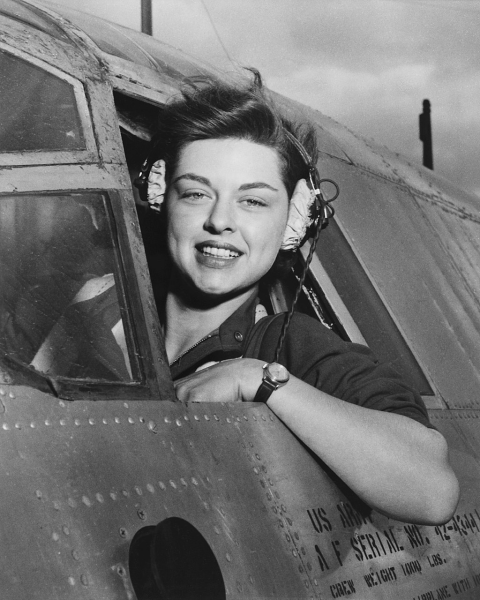
“Harlingen Army Air Field, Texas–Elizabeth L. Remba Gardner of Rockford, Illinois, WASP (Women’s Airforce Service Pilots), Class: 43-W-6, takes a look around before sending her plane streaking down the runway at the Harlingen Army Airfield, Texas, ca. 1930–1975. Note: Almost certainly this dates from 1942–1944, part of project of having women pilots move aircraft on the home front to free up more male pilots for combat duty.”


The personal journals that Landdeck researched revealed why women chose to serve and how that service altered their perspectives and life goals. How trivial events became essential and how early concerns faded away. These women risked their lives and 38 of them died, piloting planes to where they were needed.

Publicity shots like the one at left always show pretty faces.

Continue reading →