Years ago, a visitor in our home was sitting in the purple chair, petting our cat. Zora. The cat lashed her tail. I had to caution our friend that a cat lashed her tail when she was irritated, not like a dog would because she was happy.
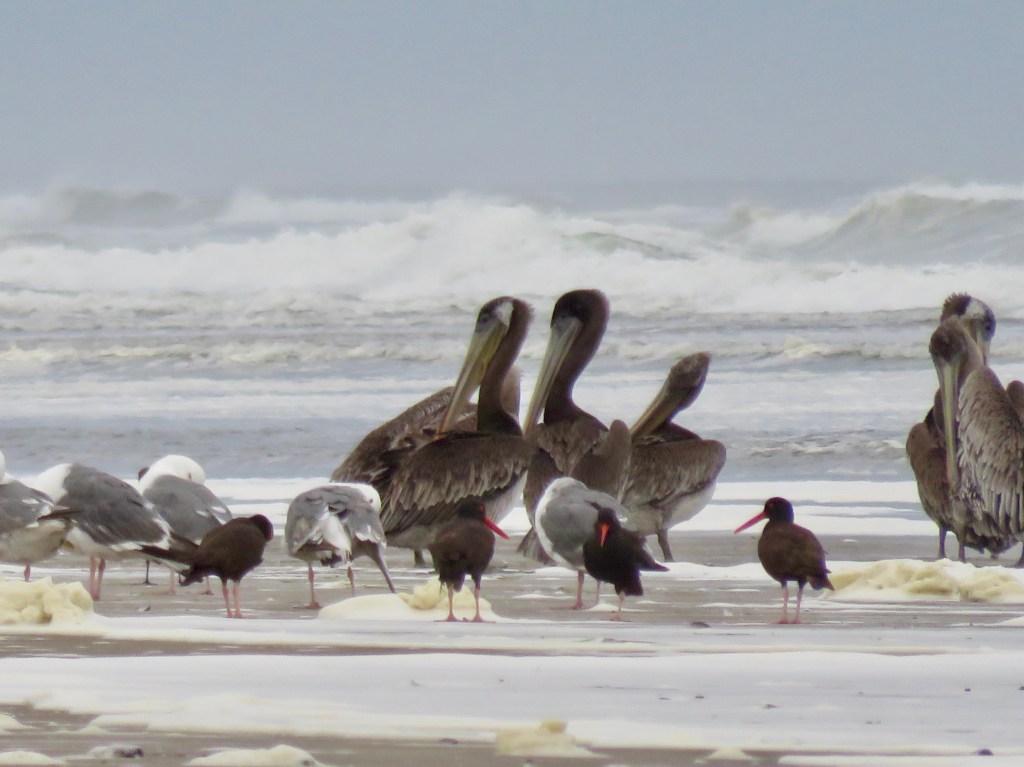
Every time I see someone on Facebook coo over a baby animal, “Oh I want one of those!” I cringe. We are a peculiar species, it’s true, fawning over the babies of other species and then eating them.
Friends who board dogs in their home lament how often pet-owners apply human reasoning to their dogs and as a result make dangerous misinterpretations. Fear, friendliness, happiness, concern, affection—yes, human, but also animal emotions. Recognizing what is going on in an animals head, responding appropriately to their emotion? Don’t assume the animal thinks the way you do, needs what you need, or wants what you want.
Karen Joy Fowler’s We Are All Completely Beside Ourselves reminds us that wild animals that are adorable as babies often become unmanageable and even dangerous by the time they reach sexual maturity. This never goes well for the animal. It’s foolish to expect that raising them in kindness—what seems like kindness to us—will alter their nature. Baby wild animals are not puppies with millennia of training behind them. Wild animals are best allowed to be wild.
Yet we continue to romanticize the theft of wildlife from the wild.
For Raven, anthropomorphism holds the key to existing differently—to seeing animals as members of an interspecies community where everyone, predator and prey alike, has an integral role and as much validity as a human being. Much like Hare, Fox is a small mascot for environmentalism; through their friendship, Raven comes to believe that her life’s work is to tell Fox’s story, and with it, to inspire others to anthropomorphize and exist more fully within wild communities.
I agree with Raven’s general point—one that Sigrid Nunez also makes in her novel The Vulnerables: “Anthropomorphism. We should have made it our religion.” Rather than thinking of animals as simple, opaque, and incapable of the same emotions we are, we can learn through paying close attention to them.—”Animal Memoirs Gone Wild” by Rebecca van Laer
I’ll agree that approaching animals as emotional beings capable of thought is vital, that we need to do more to shelter wild populations is obvious, but the danger of anthropomorphism is in assuming animals think the way you do. In the essay quoted, she later argues that her own book about domestic pets is more to the point.
But no. It isn’t.
The way a human being experiences and thinks about and responds to the world is not the same as the way other species do. If you think about it, an individual’s response is not even the way all other humans respond. In a literary device project, I used to distinguish for my students between anthropomorfication and personification. [Really they mean almost the same thing, but to personify less definitively applies human characteristics to a being or thing that is not human. The “anthro-” prefix means human or human-like.] Animals have personality; they are not human.
We know most animals care for their families, and many grieve death, celebrate and cheer and play. They enjoy good food and a bath. They feel pain and joy. Those are not human traits. They are traits familiar to most all living creatures. Attachment to family, clan, and community is common among a great many species, not merely our own. Scientists have identified altruistic behavior in many species. An individual wolf will risk death to protect cubs that are not even his own. There are examples in dozens of species itemized by evolutionary biologist Olivia Judson in “The Selfless Gene.” Being self-sacrificing or “humane” is not exclusively a human trait.
Can books written from the viewpoint of animals help us to appreciate our shared connections to the emotional lives of animals. Of course. Or perhaps. Or not quite.
Anne Sewell’s novel Black Beauty is told from the viewpoint of the title horse, and the result of his painful recounting of suffering in harness and the death of friends was an abrupt awareness on the part of the English that they allowed cruelty to working horses to exist and actually promoted that cruelty in the name of fashion. Laws were changed to protect harness horses in response to public demand.
Did Richard Adams’s Watership Down story of rabbits alter the way British people treated rabbits or hares? That one is more complicated. Many wild and domestic species are protected in the UK in very specific ways. The cropping of puppies’ ears and tails is forbidden. In recognition of some dog breeds’ unhealthy characteristics—bulldogs’ skin, breathing, and birthing issues as one example—Crufts instituted a veterinarian exam to ensure breed winners were sound and healthy. In 2009, in response to a BBC documentary revealing the unhealthy aspects of breed standards, the Kennel Club rewrote breed standards to ensure they “not include anything that could in any way be interpreted as encouraging features that might prevent a dog from breathing, walking and seeing freely.” [Some have argued that the Brits are kinder toward animals than children.]
But rabbits?
Do farmers still poison rabbits? Rabbits are exempted from the Hunting Act 2004 which banned the hunting of wild mammals with dogs. I couldn’t find a specific prohibition against the use of poison, but secondary kill suggests that farmers should find another way to rid themselves of pests. Rabbits are regarded as invasive species, having first arrived from the Iberian peninsula some two thousand years ago and are officially “pests.” They may be trapped, snared, ferreted, and shot, and otherwise hunted at any time of day and in any season. There is an obligation, a legal responsibility on the part of landowners outside London to kill them.
The Brown Hare (Lepus europaeus) in England, on the other hand, is a native species and another issue altogether. Many wild species are specifically protected. All raptors are protected. Stouts and even foxes too. Fox hunting has been outlawed. The coursing of live game, including of hares, by sighthounds is illegal. Deer and other wildlife may be hunted only in a manner “according to law.”
The novel that set my viewpoint about wild animals was Summer of the Falcon by Jean Craighead George (1964). The story was my early introduction to the dangers of pesticides and respect for the balance created by predators and prey and how disrupting that balance with poison can make everything worse. In a family devoted to raptors, June is gifted a young sparrow hawk, a falcon. Her father warns her to treat the bird like what she is, a hunting hawk. If she isn’t allowed to hunt, the bird becomes mere pet. I read everything I could find on falconry after that. I was no more than twelve.
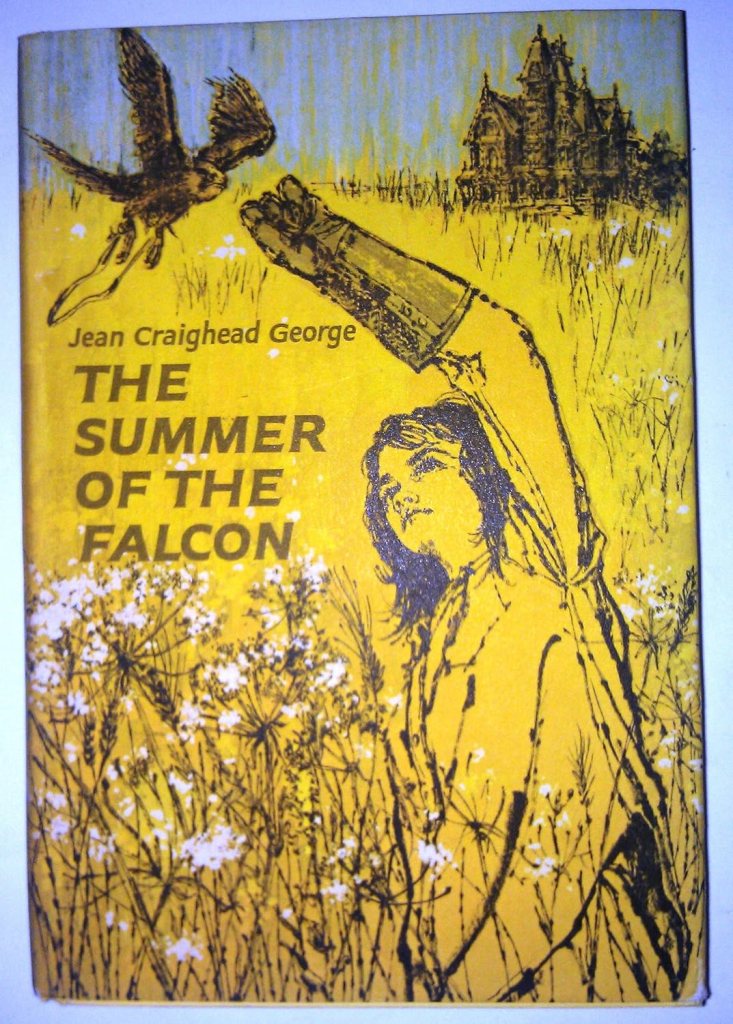
I checked out the first edition of George’s novel from my school library, with this cover. Note the laces on the bird’s legs and the heavy glove on the falconer’s hand and arm. The bird knows to return when she sees the arm raised to signal her.
I read nonfiction and more novels about falconry. In one, from an age when hunting birds’ eyes are laced shut, a falconer chooses not to risk eye injury piercing her hawk’s eyelids, to instead hood her bird in the older fashion. That’s what is done today throughout the world. The birds are used to hunt and sometimes eventually released.
It would be fifty years later before I finally read The Silent Spring and then I wondered why it was never assigned reading. A science teacher might have assigned the book that created the modern environmental movement, but that didn’t happen when I was in school. One Biology teacher in the high school where I taught had never read it.
[My English teachers rarely assigned nonfiction, and Social Studies teachers today mostly all teach what I’ve called “the battle-field” approach to history, jumping from war to war. Because many of my history teachers were WWII vets and others had specific interest in philosophy and architecture, I was more fortunate than most. We studied the Triangle Factory fire, the Robber barons, the creation of what is now an eroding FDA.]
In The Silent Spring, Rachel Carson was writing outside her expertise, which was marine biology, but she was alert to the danger and did try to find someone best qualified to document the very real danger of poisons that we apply to food crops and thus to our own diets and the food chain. The scientists she lobbied were too afraid of push-back from the chemical industry that funded their research. She presents a carefully researched scientific warning, and the chemical industry did their best to destroy her for writing it.
I have been vegetarian since early 1990, but I consume eggs and dairy products. I occasionally each fish, because I am willing to kill a fish or a crab, though I’d prefer not to. My family was famously soft-hearted toward animals, and that seemed at odds with what I learned about the care and slaughter of mammals for food. The fattening of hogs and cattle, the treatment of their young, and particularly the slaughter of farm animals are mostly horror shows. A friend working on a research project at the Colorado State University estimated that at least 10% of animals were still conscious as they were being eviscerated in slaughterhouses.
I am aware of the cruelty involved in the production of the dairy and eggs I consume. I am also aware that in a subsistence farm, the cow would be allowed to nurse her heifer part time and the bull calves would be raised for slaughter and the meat used to feed the family or sold. Laying hens in commercial operations live a couple of years and then become dogfood. I know all this. I also know that a fair percentage of most animals raised to be meat are treated cruelly. Cows are not so stupid or emotionless that they do not resist the removal of their calves to little plastic huts where they are raised on synthetic formula. Dairying and egg production is not always cruel, but too often a close look it would make the average American cringe.
We read Charlotte’s Web and loved it as children, and then we go right on eating ham.
I never liked that story when I was a child. I hated the holiday ham. But bacon… you know? That salty, greasy goodness. Swore off 35 years ago because I can’t unknow the process that gets meat to my plate.
The last meat I ate was mincemeat I’d canned from a venison roast given to Gary. It was forgotten at the back on a shelf. That was in the early 1990s. I made a pie because food shouldn’t be wasted.
I should be vegan, but cheese. Baking with eggs. Butter and cream.
 IMPERFECT PATIENCE
Re: eggs and cheese. I went full vegan in 2017–yes, the election did finally give me that added impetus. One less thing I had in common–but I hadn’t been able to digest egg or milk protein since childhood, so I actually consumed no (or in minute quantities) animal products before then, just the animals…
LikeLiked by 1 person
I’ve made Mac &”Cheese” with nuts and brewers’ yeast, etc. and it was both vegan and great. It’s can bake vegan bread. And despite all the fear mongering about protein, I know I can get plenty of usable protein from plants. We had rice&lentils and zucchini & onion for dinner last night. No cheese, but green cardamom pods, turmeric, pepper, onion, olive oil. East peasy. It is selfish of me to bake and cook with dairy and eggs. There are synthetic “butters” and “milk.” I do know this. It took me about three years prior to becoming vegetarian in spring of 1990 before I could feed my family without using meat. Eat nothing you would be unwilling to kill, was my rule, but I’d gathered eggs and milked both a cow and goats. It was then, and remains a cooking issue, not an eating issue.
LikeLike