The conversation turned to Kurt Cobain, and someone claimed Cobain’s wife killed him like a “typical woman” does. He said it at least twice. Beside me, my husband says he thought, uh-oh.
UNITED NATIONS (AP) — The deadliest place for women is at home and 140 women and girls on average were killed by an intimate partner or family member per day last year, two U.N. agencies reported Monday.
Globally, an intimate partner or family member was responsible for the deaths of approximately 51,100 women and girls during 2023, an increase from an estimated 48,800 victims in 2022, UN Women and the U.N. Office of Drugs and Crime said. …
By contrast, the vast majority of male homicides take place outside homes and families, it said.
But set aside murder for a moment and consider that the comment by my friend suggests that women’s typical behavior is murderous when angry, that unlike men, this cruelty(?) or destructive tendency(?) is uniquely or particularly female. That it’s typical. Well.
And I thought: How is this different from a man’s anger, a gay or trans person’s anger? How is anger or destructiveness gendered? Sometimes people destroy the person they love, or a person destroys the person who loves them. I know this, but to say that there is something particularly horrible and “typical” about women doing this, the “typical woman”? No, I can’t listen to that anymore. To be told that my distress is my mistake, that I “shouldn’t take it personally”?
Was I upset? Oh, yes. Nearly overwhelmed by distress and anger and barely able to explain myself. It didn’t matter because the other person invalidated my response. “This is not about you. Don’t take it personally.”
My son loved Cobain, but I was never a fan. even though he was born in Washington State. Maybe Courtney Love did ruin him, though he’d already become addicted to heroin before they married and already engaged in suicidal behavior for many years. Other women left him; he left other women. It’s perfectly possible Love made things worse. I don’t know and it’s not the point.
Born in 1952, I’ve been told what “people are like” all my life. People of color, this or that religion, gays, lesbians… I’ve had teachers and employers, friends and family members declare that this group or that group are typically like this or that. I was not supposed to argue—don’t make a scene—not even when I knew what they said was wrong. And as a well-brought-up “nice girl,” too often I let those words pass.
I’m not a child anymore.
I care that someone claims bad behavior is “typical” of women and then denies that they have given offense because they have a right to their opinion and I “shouldn’t take this personally.” How I feel: Not only is my identity wronged but I’m told my feelings are invalid.
Once again, I am told to be silent when I hear things I know are bigoted. Allow me to quote Rosa Parks: “The only tired I was was tired of giving in.” I’ve been tired of it for a very long time. I’ve too often remained silent out of politeness. Smile, I was told both literally and by the pervasive insistence of my culture. Smile, be nice, don’t argue. Oh yes, don’t argue.
I mostly self-censored as a teacher, because while easily recognizable as a “tree-hugging liberal” I do respect the rights of families to their own world view. But I infuriated a fellow teacher when he told my student (his stepson) that he was going to hell because he was gay. I brought it up in the Faculty Room and that conversation went very badly indeed, but that was a long time ago.
The weight of public opinion has shifted about many forms of bigotry, at least among a majority of people. I hope we mostly understand that imposing racist and other stereotypes is wrong?
Would that person talking about the cruelty “typical of women” understand how ugly the statement would be perceived if said about a person’s race or sexual orientation, religion or first language, age or nationality? Apparently not, because they’ve said that about nationalities and I let it slide. [My failure] Would they make an effort to understand why what they said in my presence about my gender was ugly and unjust? No, they don’t. I did offer the analogy to assigning typical behavior to race and sexual orientation.
I am taking things personally. I should get over myself. They smiled the entire time, and neither of us backed down. We have determination and stubbornness in common. Both of us on an even plain in terms of education, I imagine. Only one of us is male.
This is not a bad person I’m talking about, but someone comfortable with labeling groups, present company excepted, of course.
I have lived with bigotry concerning my gender my whole life, and I just won’t smile anymore and pretend it’s okay. I am tired of letting this go. This woman takes such bigoted assumptions personally because it is personal. People take things personally because thinking about people as “typical” denies them individuality. (If there was another meaning to what was said, it was never supported. Are women typically like that? No. Is this only the typical response when a woman is angry? No. Do women typically hurt those needing their support? Again, no. Neither do men.)
“I am the universe,” said John Lennon. [This last from my husband, who is sometimes wiser than I deserve.]
And while I’m at it…
I don’t care that the then-16- or 17-year-old says their relationship wasn’t predatory; she was a child. Cormac McCarthy was 42 and should have known it for what it was. In the mean time, he never supported or cared for the son from his first marriage—when she left him, he asked his wife, “Will you whore?” Why doesn’t this surprise me? I pay attention, and because I am a woman, I pay particular attention to what authors reveal in their female characters. McCarthy’s misogyny is right there in the novels; it’s why, much as I admired The Border Trilogy twenty years ago, I’ve never felt the need to read more.
I get that not many people, not even women, notice or care about such things.
When they made the film version of A River Runs Through It, they cut out the more egregious scenes and left in the bits I loved and the gorgeous last lines of the novella. I’ve had to read around bias since I was a child reading horse books that always centered on a male protagonist and Maureen was sent into the house to help with housework while her brother Paul continued to play with Misty of Chincoteague.
I was penned by a group of boys and molested on a playground by a peer. Want to know what I was wearing when I was seven years old? Wonder instead what those seven-year-old boys were experiencing that led them to help my molester, what that little boy had experienced himself. It is not uncommon that abused children become abusers, some might even consider it typical. Would I say this to the victim of childhood trauma? Would you?
The only thing typical about this is that most girls and women have experienced abuse, usually by men. Does that make such behavior typical of men? I wouldn’t say so.
Even though women are most likely to be murdered by ex-husbands and ex-boyfriends and other sexual partners and most mass murderers are men, I won’t say that such behavior is typical of men. It isn’t “typical.” It happens, but very few men behave that way.
Kurt Cobain had a terrible life. I’m sorry Courtney Love didn’t fix him, but it’s sorrier still that he was unable to fix himself. Before we blame others for their behavior, before we label it as a “typical” reaction or typical of some element of their identity, consider how many couples argue and scream at one another and no one dies; consider how many abuse drugs, how many couples divorce, and how often the death of a family member irrevocably alters home life for a child. And no one dies.
Consider how few of us would be alive if destruction were a typical response to frustration, entitlement, power, or anger. Reconsider spouting racist remarks to a person who has lived their entire life under that bigotry, and—big analogy here: reconsider telling women what they are like, what is typical of their character or behavior.
At a time when some governing bodies are choosing to value the life of an unborn fetus over its mother’s, it’s about time men stopped telling women about their life experience. It’s time we all took better care of one another. A little empathy please. Compassion.
______________________________________
Wonder how many men are killed by female domestic partners each year in the U.S.? I did, but I couldn’t find a figure. I did find this:
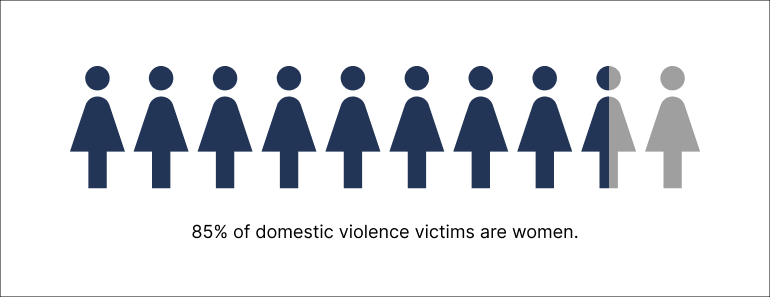
Abuse by women happens; it’s not typical.
 IMPERFECT PATIENCE
Good for you, Jan. After this election, after “your body, my choice!,” I think we are going to need to speak up and up and up. Thanks for this column.
>
LikeLiked by 1 person
All our lives… we’re caught between being the mild and sweet person our parents and the world insisted we remain and the decent and courageous person that circumstances demand.
LikeLike
ok I usually don’t like to brag but in this instance I gotta make an exception. after I have known the person for almost 55 years I kinda get a feeling or premonition or what have it when HER fused bomb is gunna blow–well even after 6 to 8 fingers of bad scotch—what an idiot Gary—I knew what was coming and there was no place to take cover—the whole thing was not funny but could have been worse but the friend kept going not realizing what he was doing—then boom-smoke -run. a day later after peace offerings from Jan and hugs from me with apologies—I think we have forgiven us—life is too short—always tell those you love that you love them cause ya don’t want to make enemies out of your friends and that can happen if you aren’t careful but that doesn’t mean you gotta stand in front of a fan blowing krappula—pull the plug and talk it out—kiitos
LikeLiked by 2 people
Thank you, Gary. Thank you for every darned day!
LikeLike
I thought of your blogpost today when I was reading the article about Augusta Britt in Vanity Fair today. I was trying to explain the article to my husband and I said “she sounds like such an incredible human being, it’s like the author is rationalizing why McCarthy felt compelled to prey upon her.” It came out of my mouth without thinking, and while the article was very well written and sensitive, I think it’s true. She tells the story of how she was hurt badly in foster care, and McCarthy’s response is to offer to take her to Mexico and she says, save her life. Wait a minute, the only way that girls can be helped is for middle aged men to kidnap them and rape them until they turn 18? He couldn’t find a female friend or relative to offer to foster her, oh no. She insists the sexual relationship was consensual and was only angry that he relentlessly murdered characters he based on her, after she left him. Today, she is not even angry about that, thinking that he was trying to kill off the abused, bad parts of her. What?! Infuriating! I, like you, read one book in my twenties and felt there wasn’t an inch of space for real women in his novels.
LikeLiked by 2 people
Hello Anonymous [feel free to comment with your name], yes, exactly. Women aren’t allowed to be indignant or angry or even resentful. Despite everything, she’s still being nice. It’s what society demands.
LikeLike
The other part of this is that we have victimized victims. The only way for her to regain power over the experience is to deny it was abuse. We’re trained to do that too. Look inward for the fault. We are trained.
LikeLike