If I stood close to the window of my classroom and looked hard west, I saw the estuary and beyond was the Pacific Ocean. The waves seemed to march endlessly to shore, but after the Alaska earthquake in 1964, a friend of mine saw water draw back below any low tide he’d ever seen, the seabed exposed before the tsunami pushed east and took out bridges and houses.
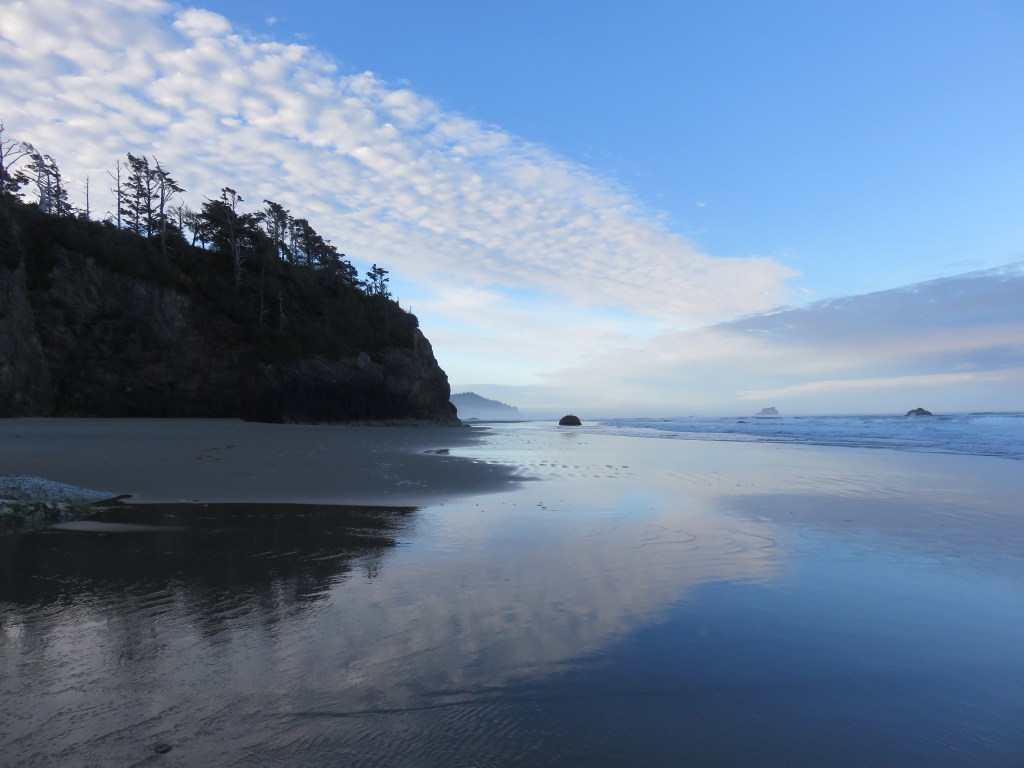
The last “great quake” in the Cascadia subduction zone, a magnitude of at least 9, took place more than three hundred years ago. It’s likely that most every human soul on what would later be called the Oregon coast drowned.
There are no contemporaneous written American records of the 1700 Cascadia earthquake. Orally transmitted legends from the Olympic Peninsula area tell of an epic battle between a thunderbird and a whale. In 2005, seismologist Ruth Ludwin set out to collect and analyze anecdotes from various First Nations groups. Reports from the Huu-ay-aht, Makah, Hoh, Quileute, Yurok, and Duwamish peoples referred to earthquakes and saltwater floods. This collection of data allowed the researchers to come up with an estimated date range for the event; the midpoint was in the year 1701.
We know the date was January 26, 1700 because the resulting tsunami crossed an ocean and struck Japan without warning a few days later. Some people there survived to record the devastating event. These quakes have occurred approximately every few hundred years. “The waves rush inland up to a hundred feet high. similar subduction zones in the world usually have such earthquakes every 100 to 200 years.”
There is no knowing when the sea will swing her skirts.
I always visualized myself at school when the Cascadia fault shook it’s shoulders free, children running and the terrible traffic as people attempt to drive across the only Seaside bridge that has been reinforced to survive a quake. I imagine myself high above Seaside, shivering and wet, surrounded by teenagers unable to use their cell phones, frantic adults, small children, and the ones who are not there, the emergency backpack we were assigned containing enough supplies for a few hours.
Imagine the quake in November—the continuous rain and cold and wind. I expected to survive. This fantasy that I will live through the quaking earth and water is the reason I still live here. Whoever survives, the event will wipe every coastal community off the western lip of Oregon, leaving a litter of trees and structures and stone crushed against the coast range. Waves will travel far inland and much farther up streams and rivers.
Little will be rebuilt at sea level once we can no longer deny what could happen, but perhaps something will survive and become familiar to my granddaughter’s children. There will be new drowned forests, a remodeled coastline, the remnants of hang happy summers drowned in the sea. Some of that is inevitable even without the great quake because of global warming. Florida will drown, the Salish Sea will create a bolder profile, most coastline around the world will remodel. The ocean will spread out and make itself comfortable.
Human beings have a tendency to believe that we can overcome every obstacle, that we have power, that we can plan ahead, and that ultimately we can exercise control. We are born; we will die. We can make choices that help us during the time in-between. We can fail. We can succeed. We will end. We are all dying, one way or another. Better to live good lives.
Perhaps my progeny will make new memories of sandcastles and beach-combing, long summer sunsets and furious winter storms. Rain will still fall. The cormorants, pelicans, black oystercatchers, and seagulls may still fly.
Grow into someone who would have protected you as a child. That’s the most powerful decision you can make.
 IMPERFECT PATIENCE
So very true.
LikeLiked by 1 person
“There is no knowing when the sea will swing her skirts.”
Great line.
LikeLiked by 1 person
It’s from a poem of mine. Thank you!
LikeLike
For better preparation I tell people to stand outside in the cold at night in the winter for 5-10 minutes to see if they have the right clothing to survive a disaster if they have to leave their house. A person can find out very quickly that their shoes or other clothing is inadequate. I read that it would take 3 years to rebuild the infrastructure on highway 26 to the coast. There may be some ships that would evacuate tourists but in Clatsop County it would be from the Gearhart/Warrenton area.
LikeLiked by 1 person
Excellent points.
LikeLike