ALWAYS SOMETIMES RARELY

When we’re at the beach we always try to go out in the morning; we’re not always at th beach but when we are we rarely miss a day. I usually run every other day, but sometimes, I skip a run or run short. Rarely, we stay indoor because the weather is punishing.
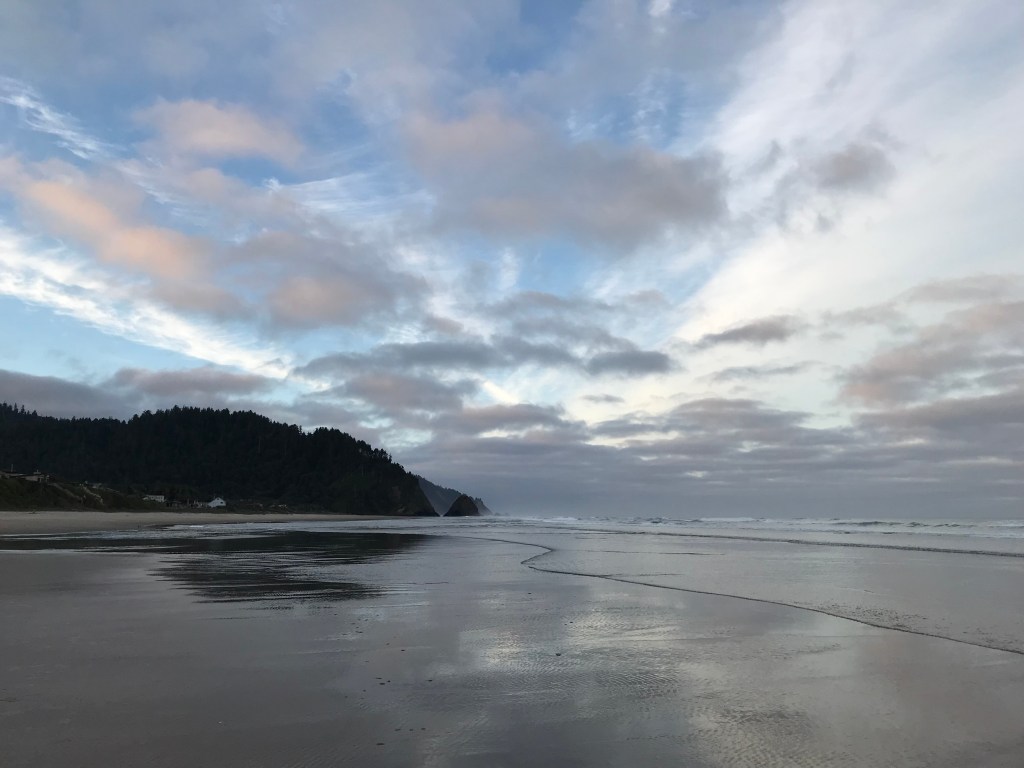
Visitors and even some locals most often praise the clear blue skies and mid-day. Gary and I prefer clouds. This many, at least, makes the sky more interesting. It’s the other reason we like to go out at dawn. The main reason is to avoid tourists. At dawn we are often the first to mark the sand with our footprints. Earlier than that, there might be elk, which are beautiful, sure, but not tame or predictable. Early morning is when I saw the black bear, the otter, the baby seal. Raccoons and deer leave tracks on the sand, but weasels and rabbits and chipmunks appear only in our front yard. Many songbirds, garter snakes, lizards, mice and shrews, and the imported red squirrels and the rats.

People who don’t live here year around rarely understand about the weather or wildlife. We might get only a handful of rainy days in summer, but we’ll get five or eight feet of rain during the rest of the year. There is always wildlife.

In addition to the deer, I’ve seen black bears and raccoons and weasels. Word is there are cougar in the hills, but I’m not in any hurry to verify that story. Recent encroachment by bull elk means I check the beach before going out for my runs. Bull elk are maybe a little insane during the rut. There are signs up all over Cannon Beach warning that the bull elk are dangerous this time of year. Tourists walk too close to get their photos. It makes us cringe.

Continue reading →
TSUNAMI

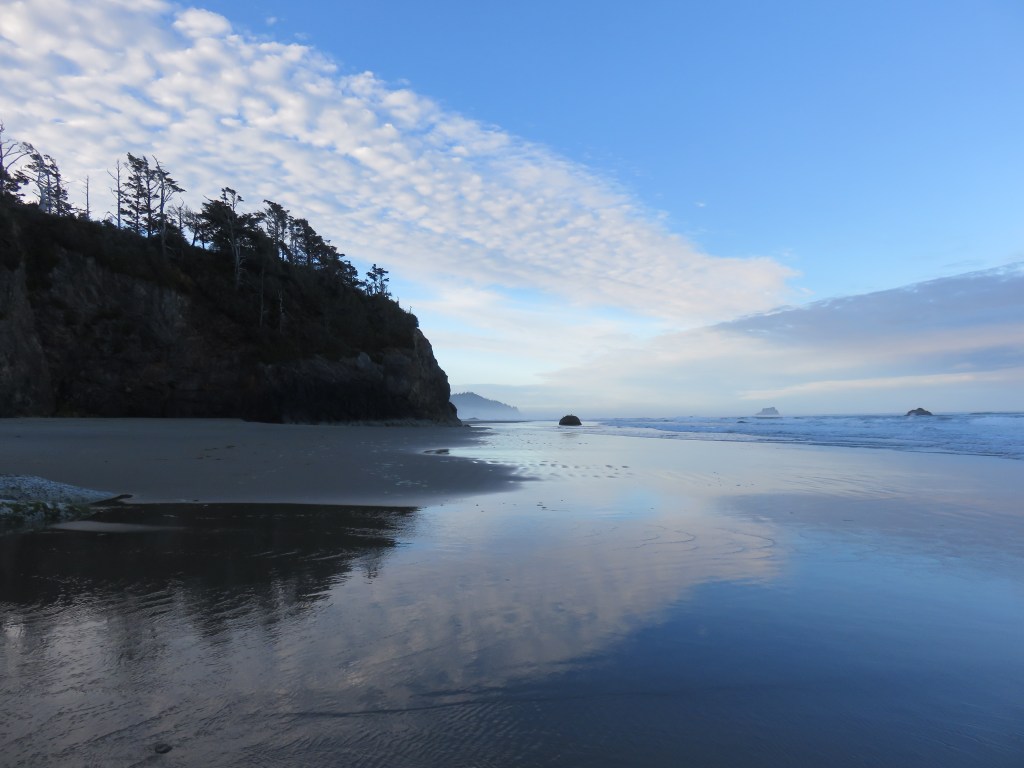
If I stood close to the window of my classroom and looked hard west, I saw the estuary and beyond was the Pacific Ocean. The waves seemed to march endlessly to shore, but after the Alaska earthquake in 1964, a friend of mine saw water draw back below any low tide he’d ever seen, the seabed exposed before the tsunami pushed east and took out bridges and houses.

The last “great quake” in the Cascadia subduction zone, a magnitude of at least 9, took place more than three hundred years ago. It’s likely that most every human soul on what would later be called the Oregon coast drowned.

Continue reading →