Years ago, a friend visiting from Colorado became impatient with our talk of high and low tides. “What does that even mean?” she cried. So I took her out at high tide and showed her the width of dry shore and the location of breakers relative to the cape. Six hours later I took her out again and showed her the difference. I have something to say about that term “king tide” and tides and sneaker waves.

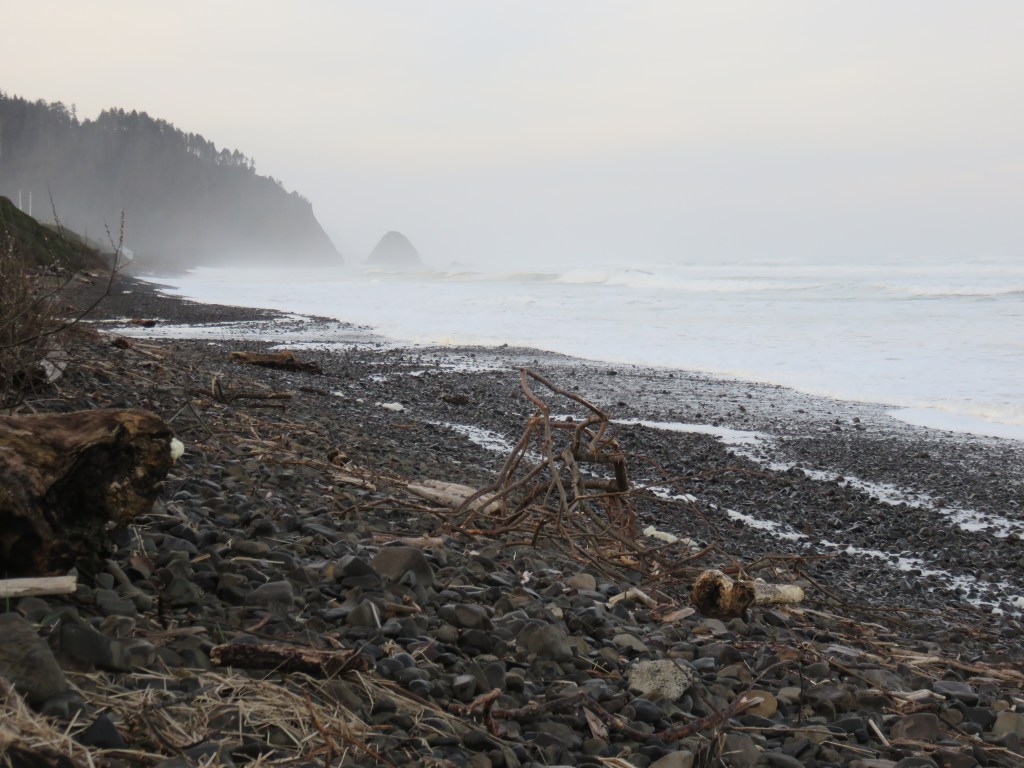
In January of 1999, a single tide swept up so hard and so fast that it rolled the basalt “cobbles” from under the sandy shore, piled them high against the green, and swept almost all our sand off the beach. It took almost 20 years for the sand to move back in, so for a couple of years there was a steep drop-off, almost a dune of rock, in some places up the shore, and for many more years we didn’t see sand sweeping the edge of our hedge. Did this event happen during what everyone seems to be alarmed about today, a “king tide”? Probably not.
“A king tide is an especially high spring tide*, especially the perigean spring tides which occur three or four times a year. King tide is not a scientific term, nor is it used in a scientific context.
“The expression originated in Australia, New Zealand and other Pacific nations to describe especially high tides that occur a few times per year. It is now used in North America as well, particularly in low-lying South Florida, where king tides can cause tidal flooding. In Vancouver, Canada, king tides are a growing problem along its seawall.
“King tides are the highest tides. They are naturally occurring, predictable events.”
—Wikipedia
*NOTE: a “spring tide” is not something that happens in a particular season. It “springs up.”
The term “king tide” is meaningful to boaters because it is a term describing the predicted or likely highest tide of the month. If you are looking to put your boat into and pull it out of the water, it’s helpful to have a well-calculated guess about when the water will be highest. It must matter to surfers too. It matters not at all to us.
We keep track of ten-foot tides which happen only in a few months of the year. This is the predicted height above mean that water rises, twice most days. These tides are not a threat, but they do offer hope of good stuff when we go out for our morning walk. Exceptionally high tides sometimes kick loose material such a Mt St. Helens pumice and old glass that’s been buried under basalt. Minus tides are a great time to be beach combing.
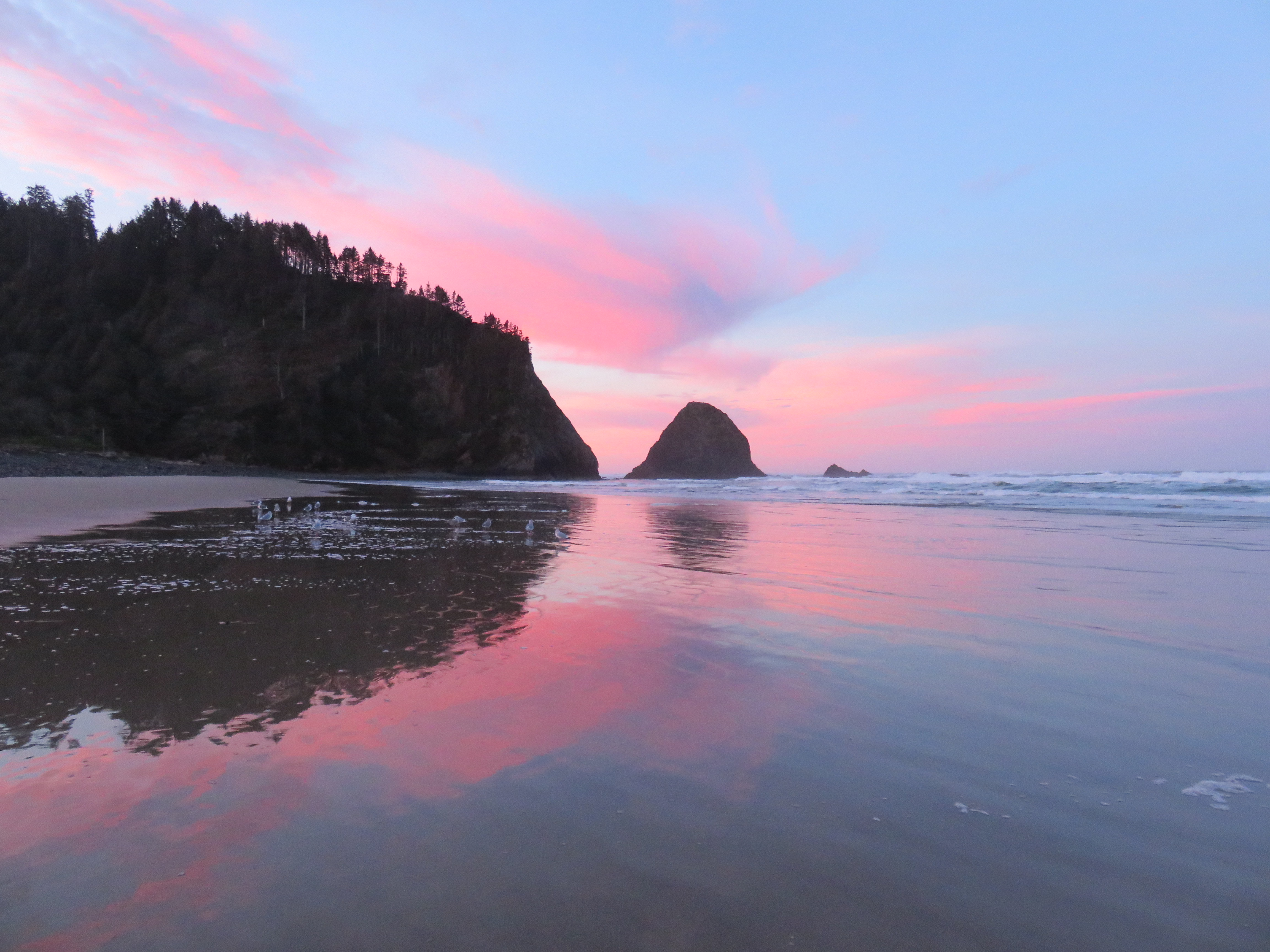
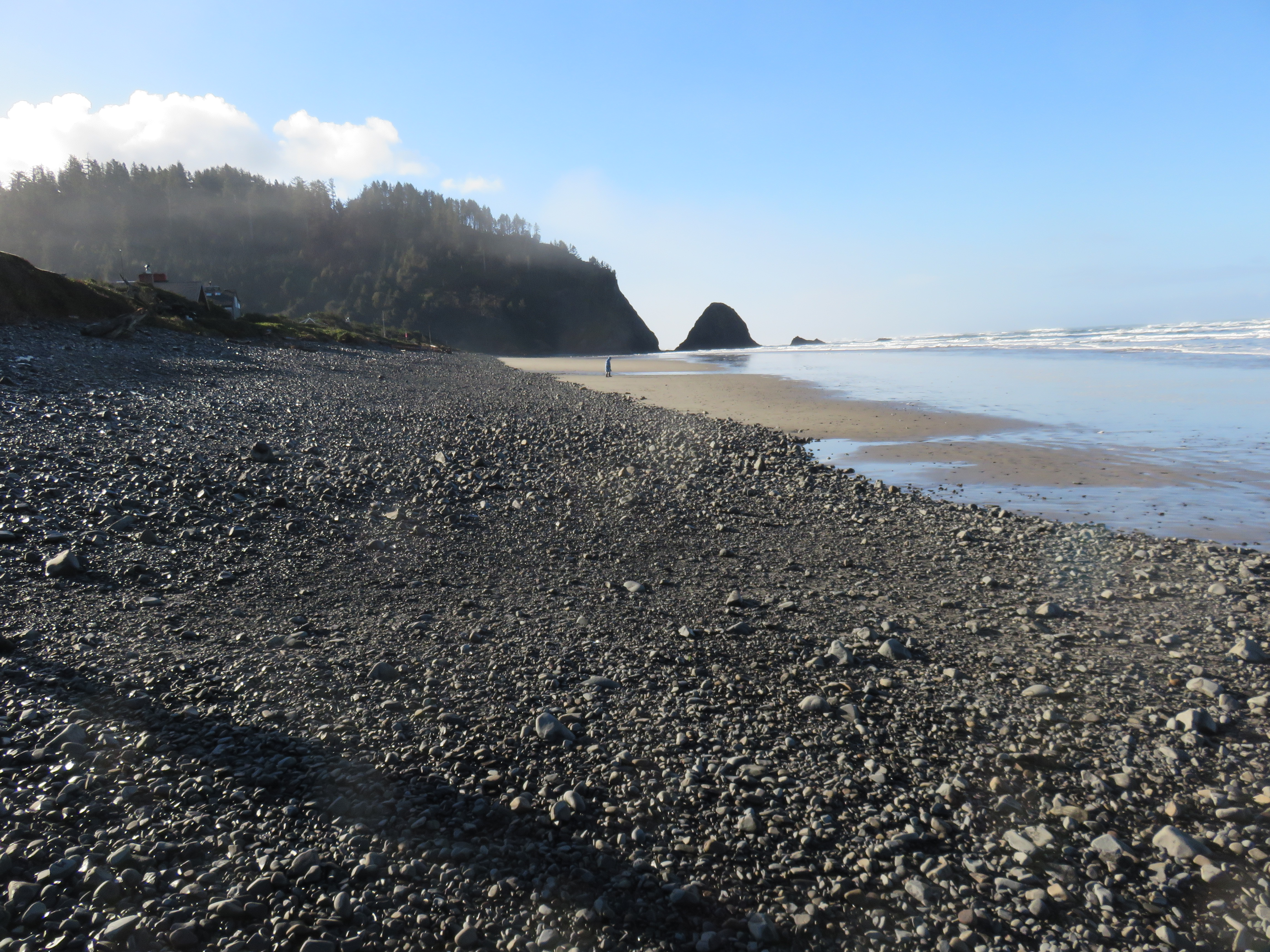
The predicted high and low tides are based on gravitational pull of sun and moon. They are a guess, not precise. An estimate, not a promise and tides may come a bit earlier or later, higher or lower than the tide table indicates. The moon has the bigger effect on the height of a tide, either low or high. Tide tables can tell you the highs and lows of water on shore for any time someone cares to calculate. We keep a tide table on the dining room table and refer to it daily. The predictability of ordinary tides distract people from the reality of waves.
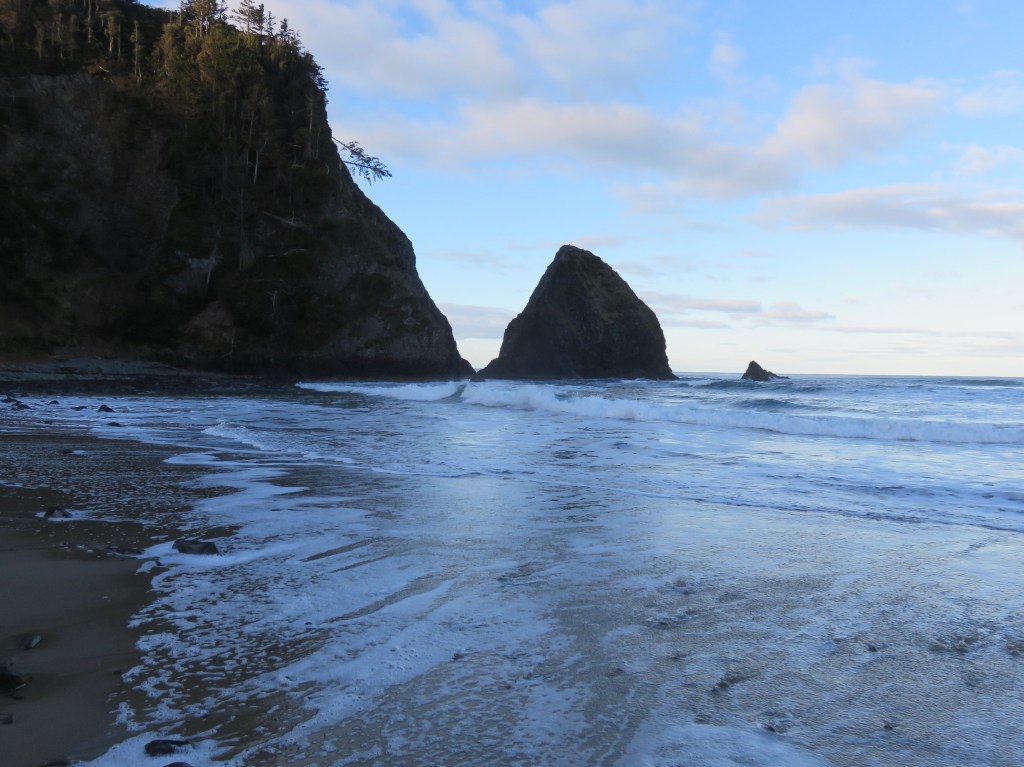
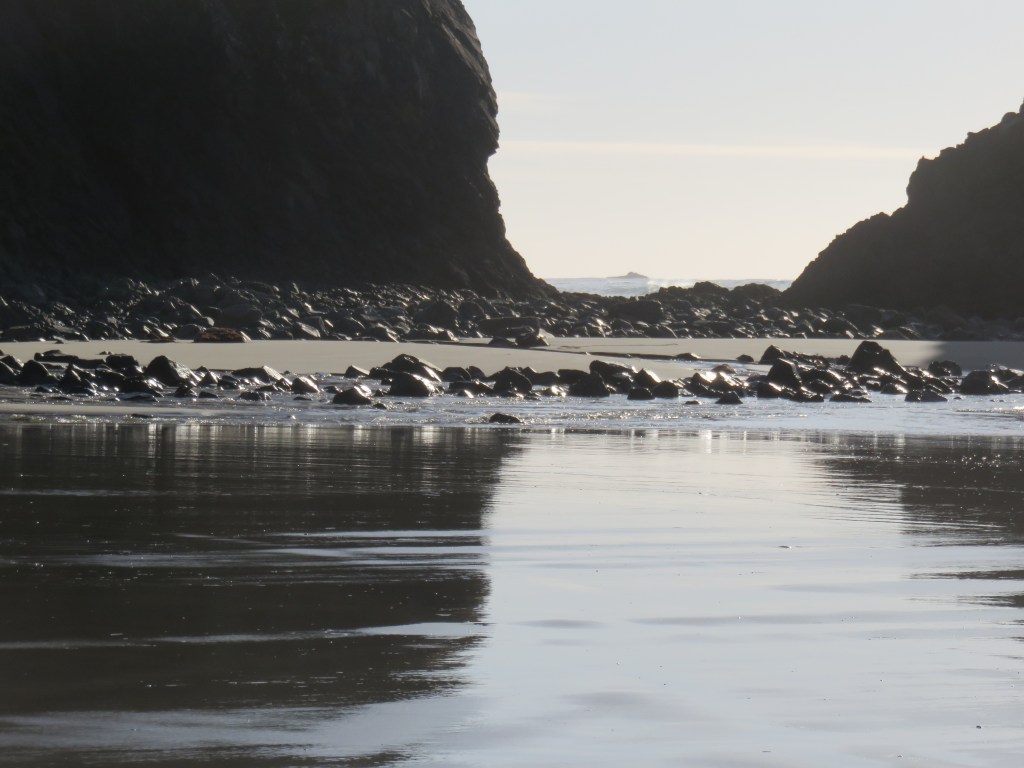
I am irritated when people try to warn me about king tides. (Honestly—people who don’t know how to read a tide table are forever asking if the king tide caused damage! Um, no.) I’ve known this beach all my life, have lived here year around for 45 years. Ordinary high tides don’t worry me. Storm-driven highs, on the other hand, can be very dangerous. NOAA puts up sneaker wave warnings, and we pay attention, but they don’t necessarily have much to do with king tides.
We have two high and two low tides most days. Next month, January of 2024, has four ten-foot tides (all after dark) and thirteen minus tides (mostly late afternoon and evening). June will have no ten-foot tides but eleven nine-foot tides (in the dark) and eighteen minus tides (mostly early mornings that suits me fine).
A couple of weeks ago, a neighbor was swept off his feet by a sneaker wave during an otherwise ordinary tide—when it caught him it was out and coming in. The wave knocked him down and then caught him and knocked him down a second time. The other day, I got wet up to my ankles because I was searching in the rocks and not paying enough attention to recognize in time that a sneaker was building. This was not a king tide either.
A sneaker wave is storm driven—a lot of energy stores in the water and is released as it comes to shore and turns into waves. Specific sneaker waves are pretty much unpredictable on the day, and not at all predictable in advance except in a general way. The day can be mostly still and sunny, the tide going out, everything ordinary, and still there can be sneakers. The storm that set that energy moving onshore could be from an event hours or days ago and far out to sea.
An explanation and warning about sneaker waves: Sneakers are caused by extraordinary energy moving toward shore. A sneaker happens when the timing is perfect and two or three breakers are close enough that the forward wave is run right over by the one(s) behind, which pick up energy and water and move faster and higher toward shore. You cannot outrun a sneaker without a head start. Yes, that fast. It will come several feet higher, maybe fifty feet closer to shore than the waves before and after, and it is quiet. You will not hear it coming.
The reason it’s called a sneaker is because it is exceptional, strong, silent, and comes without warning. They are sneaky. No joke. They are powerful, and I have two really terrible stories of people killed by sneakers. One was a child in November. The other was a trained swimmer in June.
I was knocked down by a sneaker as a child myself on a clear summer day. “Never turn your back on the ocean,” I was told. It’s safer and sensible to stay well away from the water this time of year even if you pay close attention, because you might miss when a sneaker is about to happen. Gary and I are usually out on the beach when the tide is out when we can walk and I can run on sand. I know the warning about not turning my back. Rarely do I do let my attention wander like I did the day before yesterday. I wasn’t paying attention while I searched low in the rocks at the edge of the surf. But the tide was incoming—it wasn’t going to drag me into the ocean so long as I kept moving east. I didn’t drown, you see.
I saw the wave coming in time to run up shore. I was caught just four or five feet before the wave retreated. Water foamed around my ankles, and I laughed at my own foolishness.
 IMPERFECT PATIENCE
I always remember to face the ocean when we visit Ocean Shores in the summer.
LikeLiked by 1 person
Very wise.
LikeLike
Thanks to you and Gary!
LikeLiked by 1 person
I was told that over and over as a little girl.
LikeLike
That second photo is beautiful.
LikeLiked by 1 person
It is beautiful, the most beautiful place in the world.
LikeLiked by 1 person
I had no idea that beaches migrated seasonally. Sand, sure, but not beaches as a whole. Most of my ocean/beach experience is with the Atlantic in the middle to north US.
LikeLiked by 1 person
The Pacific is a wild ocean—the name, as I was taught in school, is ironic and meant to deceive future European travelers in the same way as the names of Iceland/Greenland.
LikeLike
Excellently written! I hope you don’t mind me copying this to forward to a few others I know who would be interested. Love that slider photo!
LikeLiked by 1 person
Thank you, Mary Jo. Of course you may forward.
The winter residency of my MFA program is held in Seaside during January, next month. In previous years I have sat in several times during the “seeker-wave” warning. Each time I was alarmed to hear the new grad students laugh. They find the warning a joke. It’s no joke.
LikeLike
It would be a particular kindness if you referenced this blog.
LikeLike
New York filmmaker Sam Zalutsky growing up spent summers at Arch Cape. In 2016 he was the producer, writer and director of “Seaside”; his homage to Arch Cape as well as the dangerous beauty of the Oregon coast. Best described as a “women driven revenge thriller” Zalutsky’s stunning cinematography and classic noirish storytelling contrasts our beautiful surrounds with many plot twists to underscore the inherent evil. Arch Cape residents will recognize the home and beach adjacent to the beach path and pedestrian bridge on Pacific Road as well as other “landmarks” such as Hug Point, the Seaside Arcade and the Cannon Beach American Legion. Lead actor Ariana Debose took a hiatus from the ensemble “Hamilton” on Broadway to appear in her first film. If the name is familiar, it is due to Debose’s rising star to include a Best Supporting Actor Oscar in 2022 for her role as Anita in Stephen Spielberg’s remake of “West Side Story” most recently in Disney’s
|”Wish”. Seaside” is currently on Amazon Prime or for rental from other streamers. Lock the doors and leave the lights on…
LikeLike
Thanks for the heads up. https://www.rottentomatoes.com/m/seaside_2018/reviews?sort=rotten
LikeLike