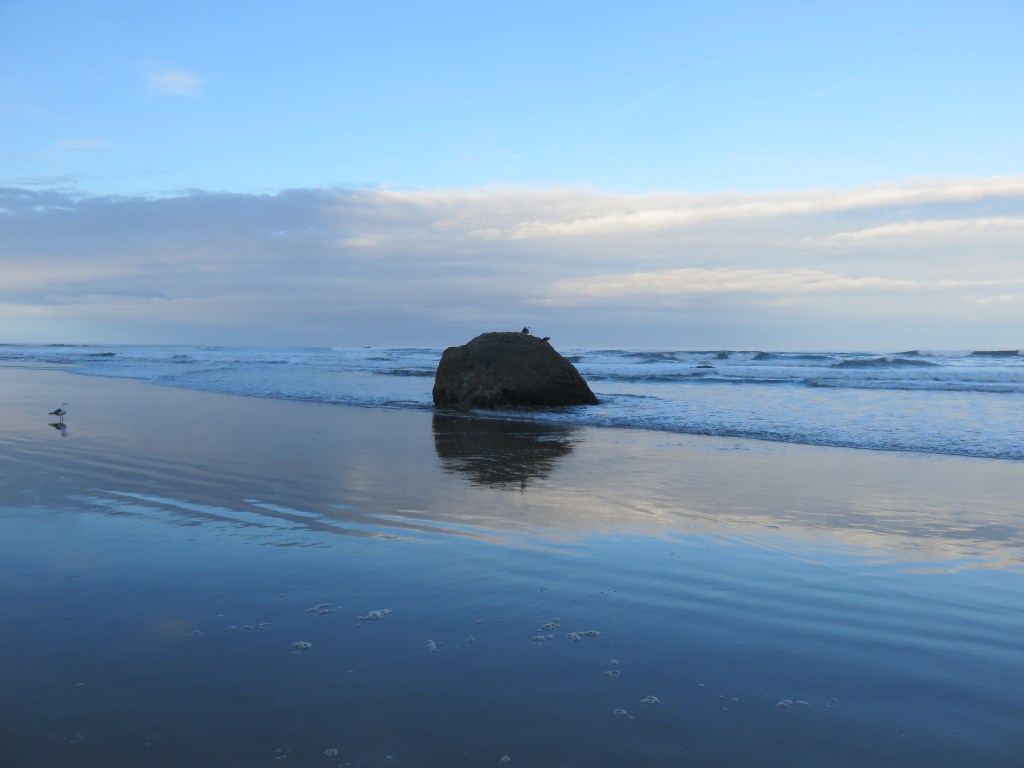
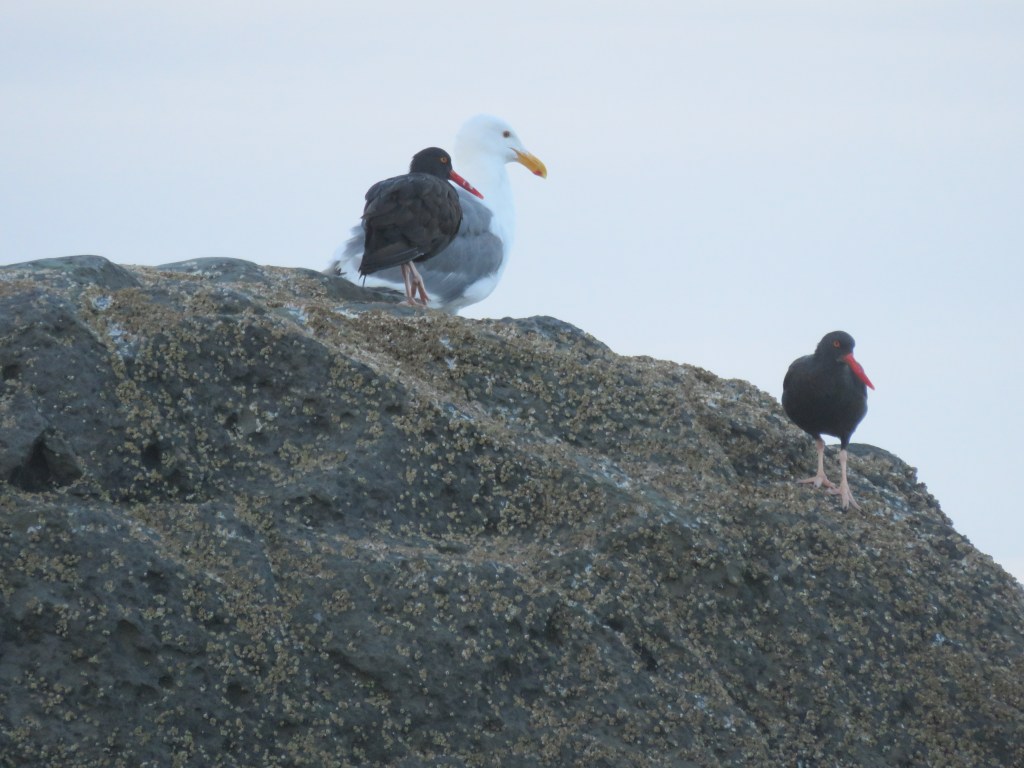
Bees, long hoped-for goals, the illusion of permanence, photographs of the shore. The shifting tides and movement of sand and stone shoved in and out by the ocean.

You probably don’t need something more to read, but if you do, Missouri Review has “Keeping” by Thomas Dodson, which was just about the best short story I’ve read in a long time. I feel an affection for the story for a number of reasons. One is that I have a new story about a young woman who thinks she would like to become a queen bumblebee. Guy’s age is another reason. And bees,
Thomas Dodson’s story “Keeping” follows seventy-three-year-old Guy, owner of a family hive and honey business, and his neighbor, Taylor, as they make the long journey from Iowa to California to save Guy’s colonies and fulfill his contract with a West Coast almond grower. This fast-paced story takes readers on a buzzing adventure, as Guy faces crime, a fading mind, and his own sexual identity. “Keeping” won the 2020 Jeffrey E. Smith Editor’s Prize for fiction.
—Missouri Review
I used to write funny, and there was a time when I thought that was lost. It’s coming back, I hope. At least hope is back, and how could anyone resist this shore…

.
.
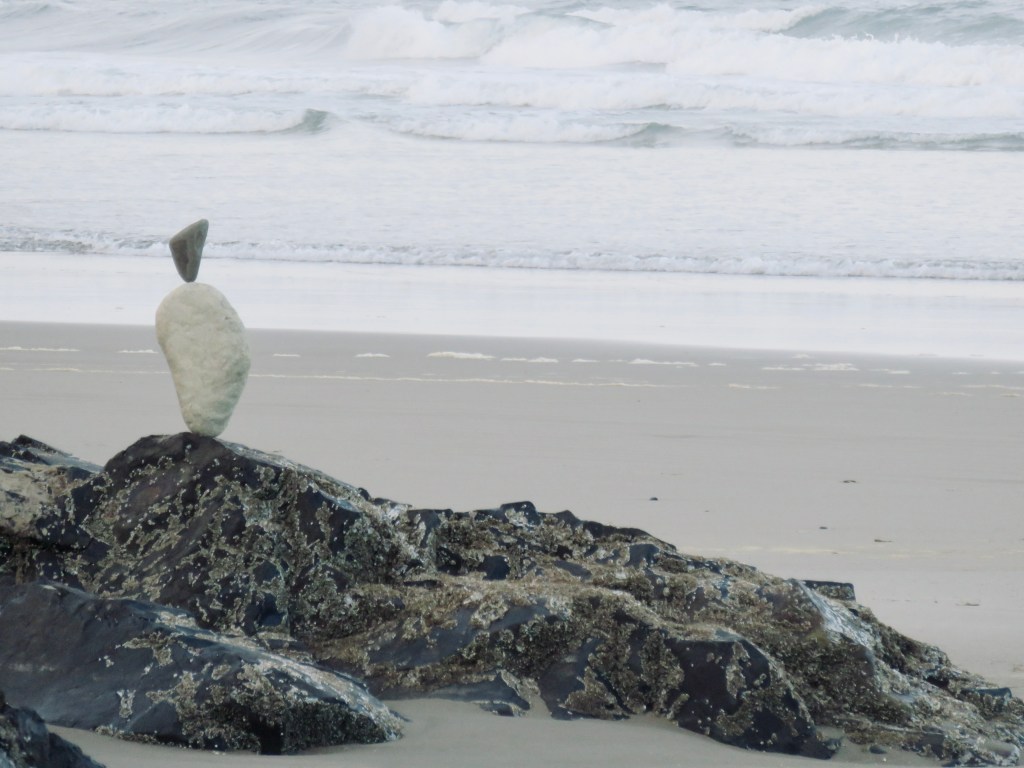
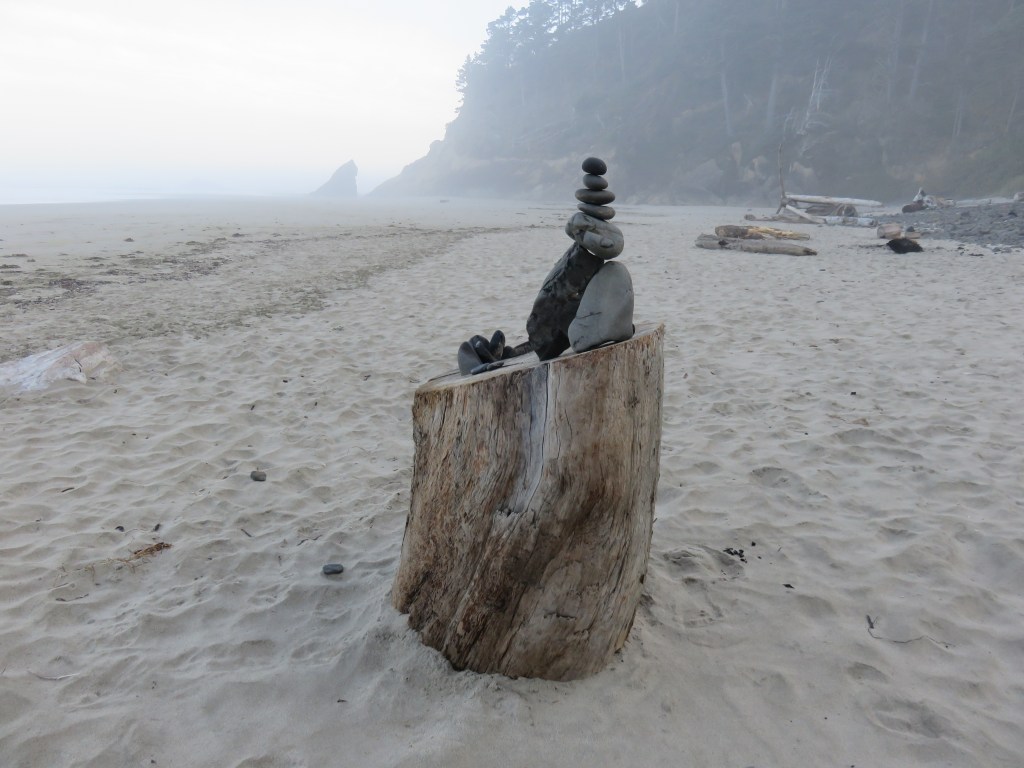
I sometimes make stacks when we are searching the rocky shore for sea glass. But mine are not clever or smart like these, just two or three of four flattish stones. Someone made art with these two stacks. We found the one on the left this yesterday morning (Gary’s photo). The one on the right is from last week. You cannot see in the photo at right, but the two base stones make an opening bridged by the smaller stones above.

.
The sand shifts around every day and from week to week and year to year. In January of 1999, a single surf tore up the basalt that lines the shore under the sand and took all the sand out onto a bar. Normally, sand moves out in winter and gradually back in in summer, the edge of dark basalt mostly covered over with sand by summer’s end and then revealed for ten or twenty yards in winter. That 1999 surf pushed the basalt up and disrupted the sand, which left the shore rocky for a few years in winter and never quite brought it back all the way in summer. It’s been 24 years and the sand is full in this summer, reaching all the way over the basalt to the hedge line in a few places the way it used to some years in my memory. Rock onshore that stood three feet above the sand a few months ago, is completely covered over. Sometimes the caves’ rocky bottoms are covered over and then the next day some of the sand is gone and the rocks again revealed.
I’ve known this shore all my life, watching that sand move in, watching it move out, the shifts from day to day, the power of the ocean outside my door.
 IMPERFECT PATIENCE
Thanks for the story tip, it’s great!
(Though I did rear back some after reading the author’s a professor in Ashville, Oregon?)
LikeLiked by 1 person
Whoa! I completely missed that! There is an Asheville, Oregon, but SOU is in Ashland where the Shakespeare festival and Thomas Dodson too. (I checked.)
LikeLiked by 1 person
these photos put a smile on my face at a much needed time–kiitos
LikeLiked by 1 person
Mine too!
LikeLike
Lovely shore photos, Jan. As an East Coaster, I’ve only seen the Oregon coast once – so, so beautiful and your telling of the movement of the sand is fascinating. (As an ocean-lover, I love our East Coast shores, too! – where they’re not overrun with hotels).
LikeLiked by 1 person
Thank you, Melanie. Our shores are often adjoining park, and the beach itself is open to all and managed by the state parks system. It is a marvelous place total home!
LikeLiked by 1 person
One of my favorite sounds in my garden is hearing the bees buzz. They are particularly happy when the ceanothus blooms in the spring. Now they are working the germander and cat mint. I put a mason bee house out last year and was pleasantly surprised to see bees going to and fro from it.
I will put the story about the bees on my list. Beautiful photos thanks
LikeLiked by 1 person
Ceanothus is a favorite here too. We also have a wildflower Gary has encouraged because the bees love it so.
LikeLiked by 1 person