Bees, long hoped-for goals, the illusion of permanence, photographs of the shore. The shifting tides and movement of sand and stone shoved in and out by the ocean.

Bees, long hoped-for goals, the illusion of permanence, photographs of the shore. The shifting tides and movement of sand and stone shoved in and out by the ocean.
The cloud-occluded sky was dove gray and Oregon chalcedony blue. A fragmented break to open sky over the ocean glimmered platinum that swept a reflection across wet sand. I did not have my camera with me, so perhaps you will take my word. It was beautiful.
November, the middle of autumn, is like this. We are just home from a walk in a dry gale wind. It was easy walking out north, hard work coming back, our heads bowed into the blow. We had missed our morning walk because of the fierce winds and drenching rain. There was no sand at all, though it was only an hour past low tide. When the weather cleared this afternoon we took our chance. It is the great advantage to retirement, I think. We can go out whenever we like.
Yesterday, we were out early to see what the ten foot tide had left us. We have walked the shore daily for so many years, we recognize rocks, the places where sand shows through, where there is a flat stone, where the rocks are rounded and fine like river gravel.
All is changed. The path Gary built in March is entirely swept away, even the heaviest stones set as steps through the hedge were tossed. They have survived a dozen winters. Water flowed right into our neighbor’s yard, a reminder that house is built over a swamp and creek. The ocean remembers and takes back.
In the spring we pull aside basalt stones lining our shore to create a meandering path to the sand, a task requiring gloves and sometimes metal garden tools. This path is a depressed passage two feet wide through the margin between sand and land. It makes our morning walk down onto the beach easier. Walking over the stones is unsteady and bumptious on the bottoms of our feet. It takes hours or a few days to dig away stones. Sometimes the sand is a few inches under the stones. Sometimes we must dig deep and have to carry sand up to fill the resulting trench. The work is satisfying, traditional. Sometimes a high wave in April will sweep the rocks back into place and we must build the path again. Sometimes it happens again and again and we threaten not to bother rebuilding.
By summer, the sand has begun moving inshore from sandbars beyond the breakers. Most oceanfront homes have built paths through the stones to save their feet. The dry sand is untouched by most high tides, and low tide reveals a hundred yards of clean, hard wet sand. For three decades I ran on that smooth sand surface every other morning if the tide was out far enough to permit me. Now we walk our miles regardless. When I was a girl, sand swept all the way into the green by midsummer. That doesn’t happen any more.
Some of the sand is simply gone.
There has been less sand onshore for so many years, local newspapers don’t even mention it. Twenty years ago they offered several explanations. Most involve happenings far away up or down the coast. Barriers intended to protect harbors shifted the seasonal flow of sand, causing it to pile up. There are condominiums built on shore that did not exist so very long ago. A powerful wave in January of 1999 picked up not only sand, but the rocks themselves. Massive sandstones rolled amid the wet-blackened basalt. Strong waves push the basalt high. Some years there has been a ridge of rock five or even ten feet in the rocks up shore from us. We’d like to trust the seasonal shifts to level things out in summer. There is no counting. The tide is not dependable.
In autumn, sand begins to slide back into the sea. Tide and wind swipe the basalt clean, drive sand into the ocean. Waves seem to rise higher. Low tide gives a narrower strip of wet sand than we saw in August.
It is different all the time. Asbury turns hard right and flows a quarter mile south one day, and a week later it spreads straight west. Gulls rest there.
Everything changes, shifts from one tide to another, one month to the next, and year to year. It is a moveable feast. The people who bought the house north of us to use as a commercial rental asked us: “Where has our sand gone?” the first time they visited in the autumn. We could not help laughing.
Yesterday on our walk, a wave swept in across a hundred yards. We had climbed into the rocks. When an outgoing wave flows back into an oncoming wave there can be a great crash—the sound is starling and water sometimes flies straight up into the air. The so-called “sneaker” waves are silent, and it is the sudden quiet that causes us to run. An incoming wave overtakes a wave also moving in, picking up energy and speed from the one below. Then a third wave over the top of that one. There is no predicting, no pattern. It is a random event.
No telling when the sea will swing her skirts.
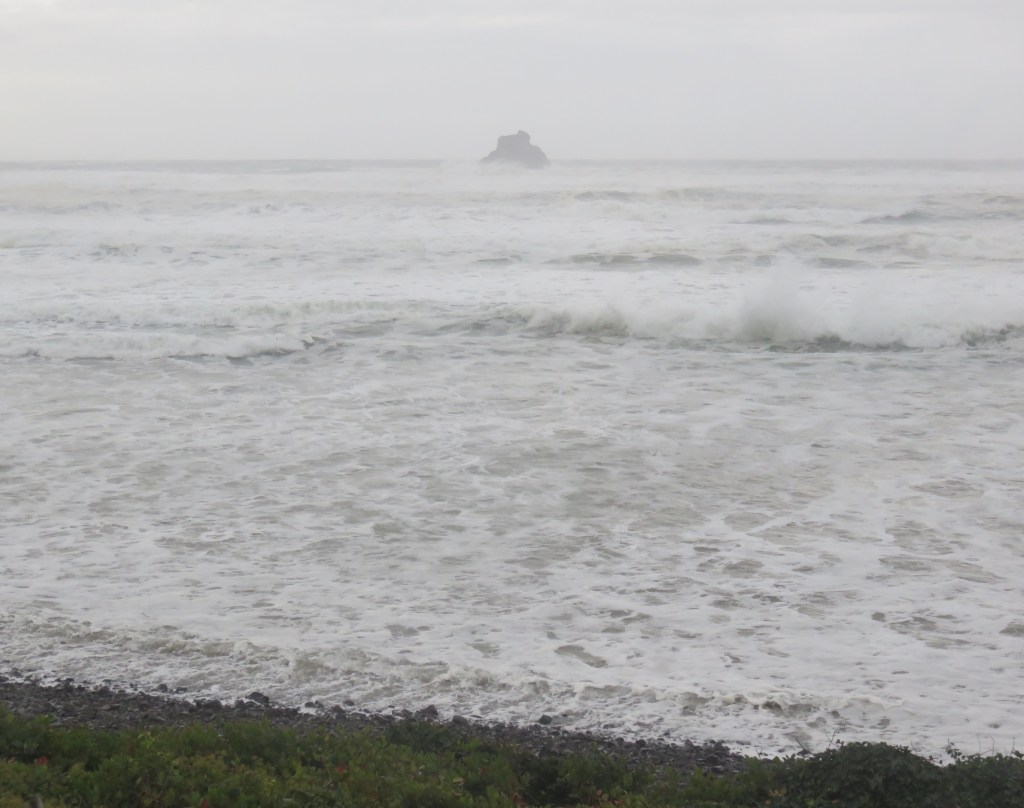
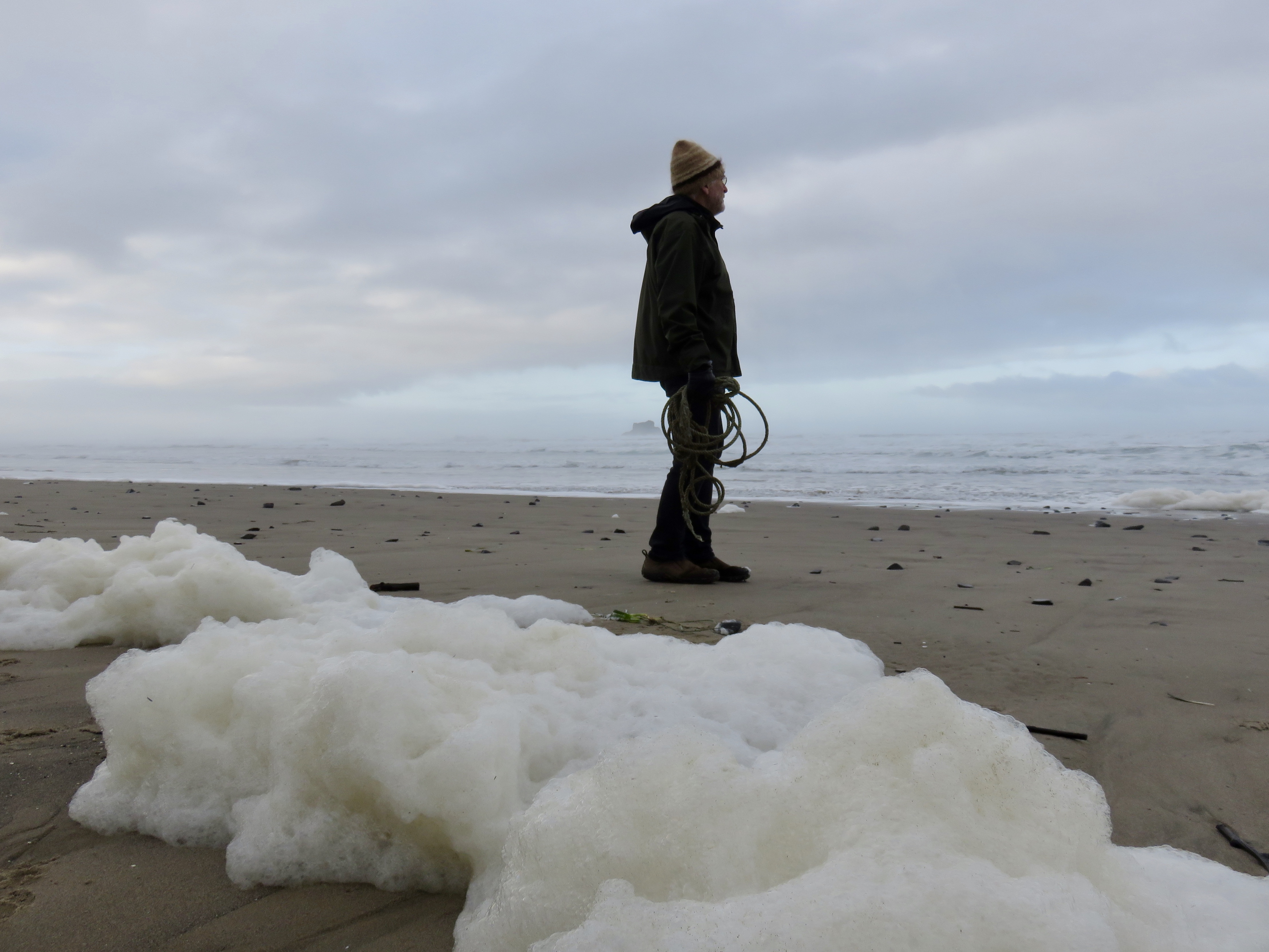
During heavy surf, the ocean pounds up sea foam. “Sea foam, ocean foam, beach foam, or spume is a type of foam created by the agitation of seawater, particularly when it contains higher concentrations of dissolved organic matter derived from sources such as the offshore breakdown of algal blooms.”
During our walk yesterday, a wave swept up a hundred yards over the sand and another ten yards into the rocks. This was nothing unusual. We pay attention, so we knew to move higher onshore and are rarely caught. We are particularly careful where there is no place to escape should a wave sweep all the way up to the green line. We work our way along searching for trash and treasures, but always with one eye on the surf line. Continue reading
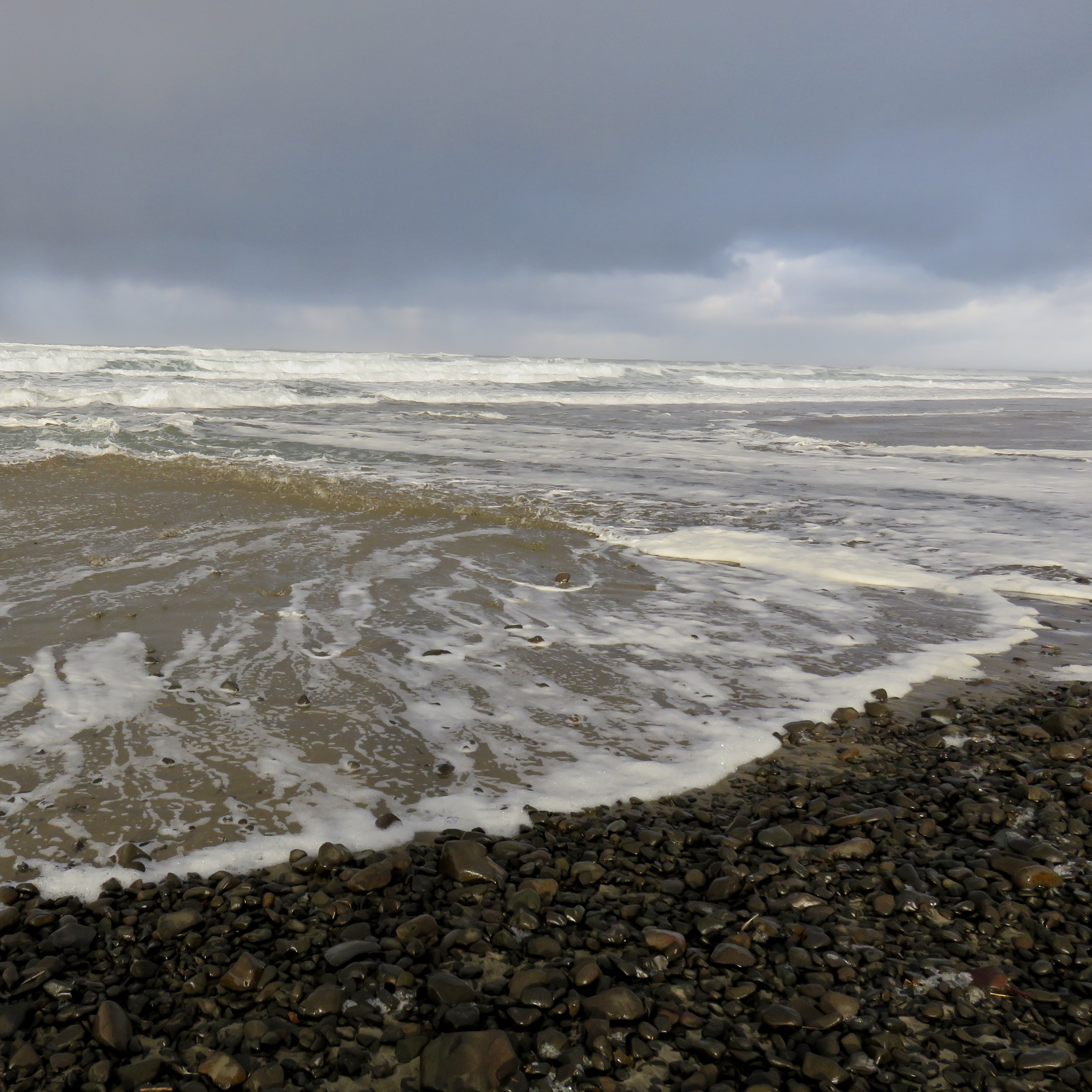
Dark clouds, rain, waves coming from odd directions, not just onshore but across. This is the point we turned for home on our walk yesterday.
Lots of new roofs going on lately. We put a new roof on our little duplex rental and it seems to be holding up under the weather. The roofers are busy. It took our contractor six months to get a roofer to do the job. Gary is still picking up trimmings and roofing nails. The contractor working on the house north of us put a wrap over half the roof because it was dripping inside the house and then had to come out and put on a larger wrap. In the end, he roofed it himself, though in my experience general contractors don’t like roofing themselves.
In the mean time, the barometer has been dropping, we are experiencing 10′ tides, and neither Gary nor I has found a piece of sea glass for a few days [found green later in the day]. That last is unusual with high tides washing into the rocks. But there is no telling. Lots of bits of pumice have been kicked loose
People staying in the rental since the roof was repaired have been out in the ocean. A reminder: it’s November. Barefoot, swimwear, and playing in the surf during outgoing tides. Sometimes it was all I could manage not to go out and tell them to get their kids out of the water. In forty years, we have known too many drownings.
We expect to see snow in the coast range today. We expect to get in a walk because high tide is late in the morning. Yesterday we went out after dawn and after the tide had been coming in for a while and had to walk home on the road because the waves were washing up into the rocks by the time we got to our turn around. We got a little bit wet too.
A huge drift log, a couple feet across and thirty feet long, rolled and floated up and down in the tide. That log lived in the hedge next door for at least a decade [Gary says at least 2 decades], but yesterday afternoon it was lying in the sand directly in front of our house. We hope that 10-foot tides today and tomorrow will move it on.
I have finished my last holiday gift and picked up larger needles to make a hat for my grandson. The #6 needles felt so fat after knitting with #1s that I unraveled the hat and started over with #5s. I have a little dress to make too, and it’s supposed to be done the day after tomorrow. I am not optimistic.
NaNo is also a struggle just now. I have over 45k words, but the last few thousand are coming slow. How hard could it be to write those last five thousand words? At this point in previous years I had 70k, well over what I need for NaNo. And here I am struggling to get to the minimum.
 The good news is that I may have figured out how to develop the generational historical v. contemporary conflict I had in mind at the start. Yeah, four days to go in NaNo and I might finally know what I’m doing? I have devised a plot twist (yes, plot! actual plot!) and have about a third of that written. I know about how it ends. I think I am writing Elizabeth Berg when I keep hoping to write something far more edgy, more like Emily Fridlund’s History of Wolves.
Well, there you are. Scratch this cynic and the optimist bleeds.
We like being the first out, while the sand is still unmarked by dogs and people. Usually we find prints and recognize by position who they belong to. That’s John out for his run because the bare feet make prints so close together. Larry drags a bit. Tammy walks close to the water. The tracks of dogs are familiar too. Roxxie and Charlie and Hank.
In summer we have been out on the sand before five in the morning. Real time is nearly 6am just now. [Have we all forgotten that time is not purely a human invention? Noon, for example, is a genuine natural event, that instant when the sun is highest in the sky, and is now marked on the DST clock an hour before it occurs. Like summer and winter, noon is not a fiction, but part of the natural way of things.]
Summer is long gone. Two days ago tides swept away our entire pathway cleared through the stony edge of our beach. Gary cleared that path in spring and it remained clear all this time. The beach is routinely washed free of sand in the winter months, but that day did not show a particularly high tide measured in feet above and below sea level. We check the tide table each day. Their numbers do not reveal the entire story. High surf from a storm at sea, a tame ocean under heavy clouds.
It is the wave action, sometimes showing only one or two low breakers, but this past Thursday breaking nearly to the horizon, breaking over the top of Castle Rock, thick and foamy at the edges. We had walked early in a gale. Our sitting log is gone and an enormous log that rested high up into the hedge fifty yards north of us. Thirty inches across and thirty feet long, that rotting monster has found a new temporary lodging further up the beach. Our sitting log (the one the visitor to a neighbor’s house used to pee in public) has vanished altogether. We walked a mile without finding where it had drifted.
I no longer take photos of waves crashing up into the air, a hundred feet above Castle Rock. I have those photos from previous autumns, dozens. Now I watch.
The surf is up, as they say. We watch with concern when tourists take their little children onto the sand during at out-going tide. A former student drowned, a strong swimmer, and on a pleasant day. No telling when the sea will swing her skirts.
A single wave in January of 1999 pushed the basalt stones up out of their bed and into a ridge along shore that we have never seen before. Until that winter, summer tides brought sand in from the offshore bar and nearly covered the rocky edge, and then for years we did not have a clear sandy beach at all.
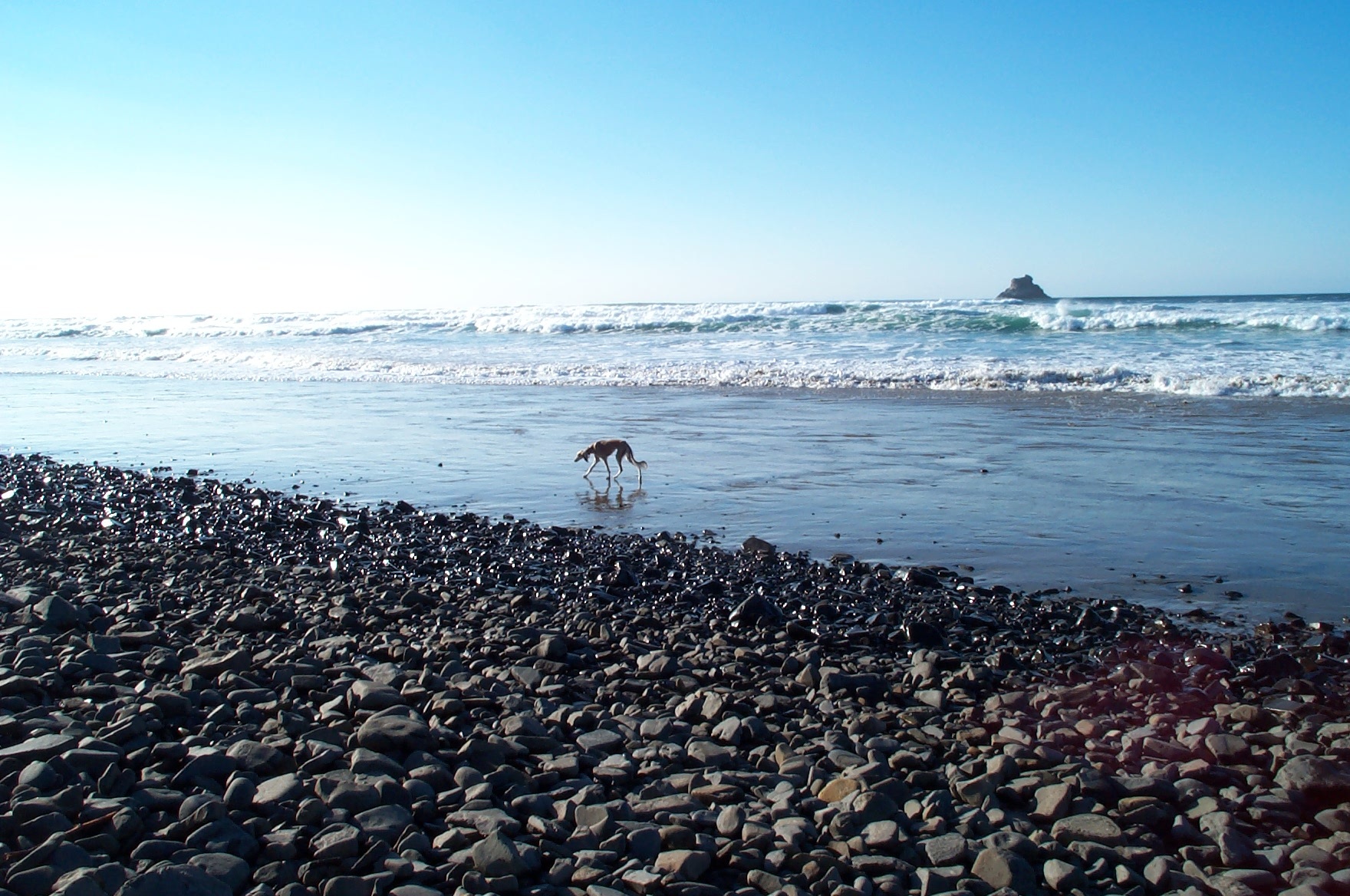
The sand has come back, though the rocks have not been completely covered for twenty years.
A friend came to lunch the other day and asked me whether I spent much time watching the ocean. Yes, both of us do. Even after all these years—forty so far—we watch the ocean and shore. When we think about moving, that is a major sticking point. We are accustomed to the view. Watching the weather come in, tracking the birds in the air and in our tiny front garden, the shift of sand and tides, wave action. Nothing new, always different.
When we walk north, the shoreline dips and rises on our right. Some neighbors need long stairs to get to the beach. Our property is set low, just a few feet above the beach. My grandfather’s old path through the hedge, built before the Great War, is completely overgrown. There were no more than a half dozen concrete steps. That stair might still be there buried under salal and sand and basalt rubble. From our western door we walk through a new path in the middle of our hedge and down a short stretch of stones Gary has placed to ease our steps down to the shore.
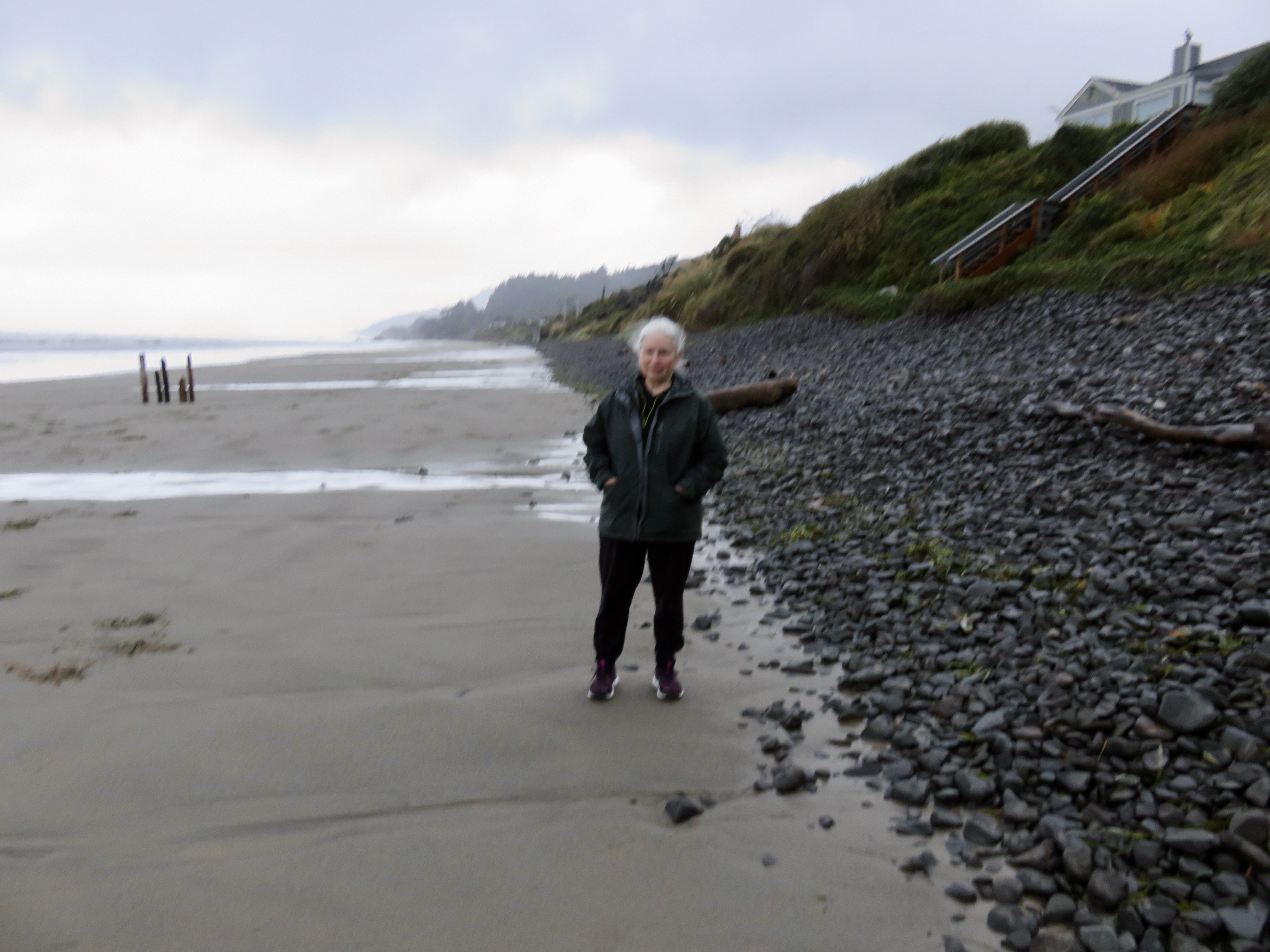
This is what counts as “a lot” of sand. At low tide there might be a couple of hundred yards of sand between the black basalt and surf. I paced off the distance other day.
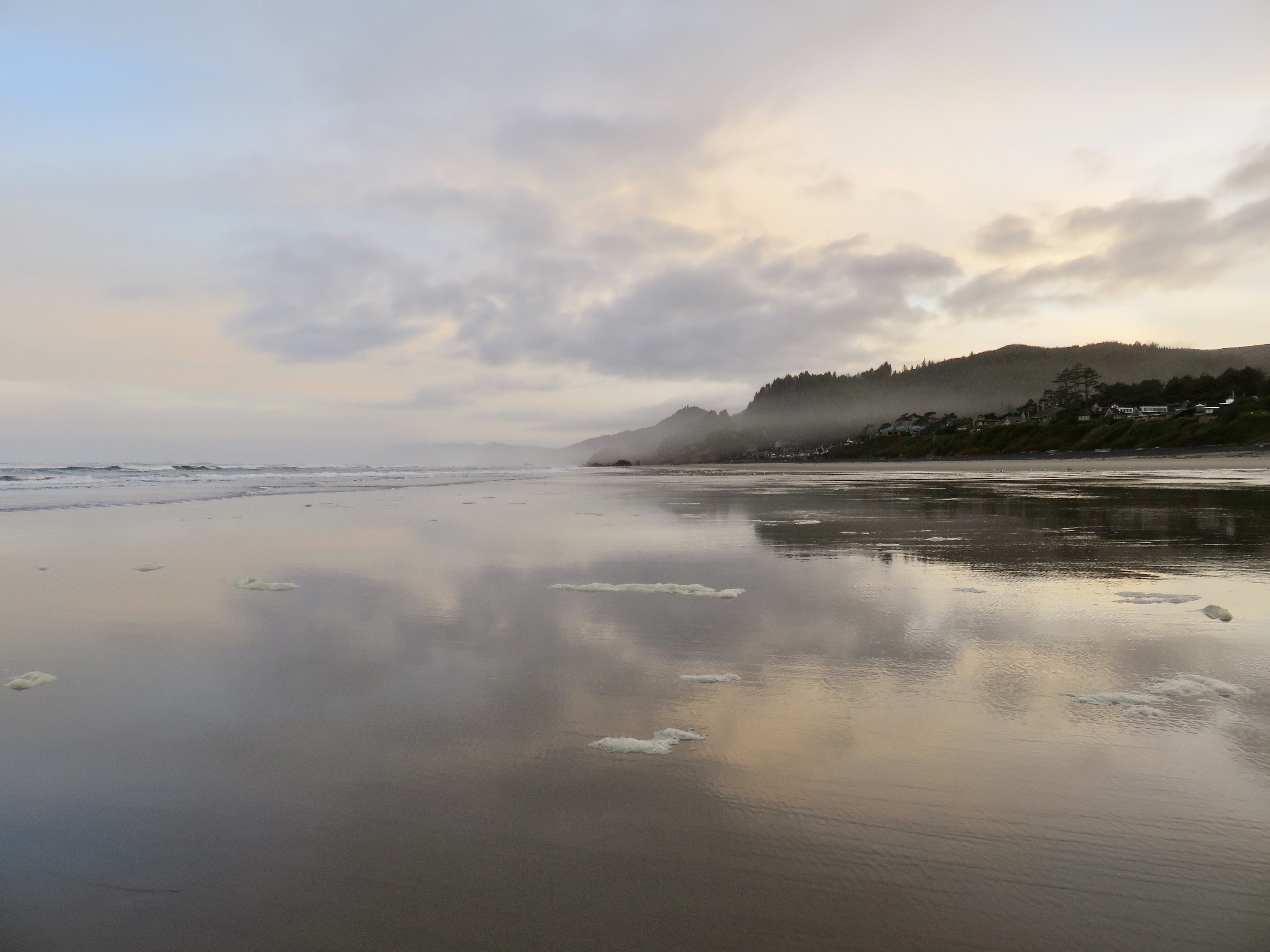
The out-of-state owners of the rental north of us, after their first autumn, asked what happened to “our sand?” Gone for the season, I told them. Visitors have asked us whether the sand is trucked in, where we get the rocks brought in to protect the shore. Tourists try to “save” resting baby seals and fully grown eagles. It is hard for us, who live here, to imagine such ignorance. We have watched the flow in and out, the fledging of birds and the drowned onshore, the shift and shuffle of sand, the rare hard freeze, the slow progress of water and wildlife.
The sand is leaving. Maybe it will return in the spring. We watch for that.
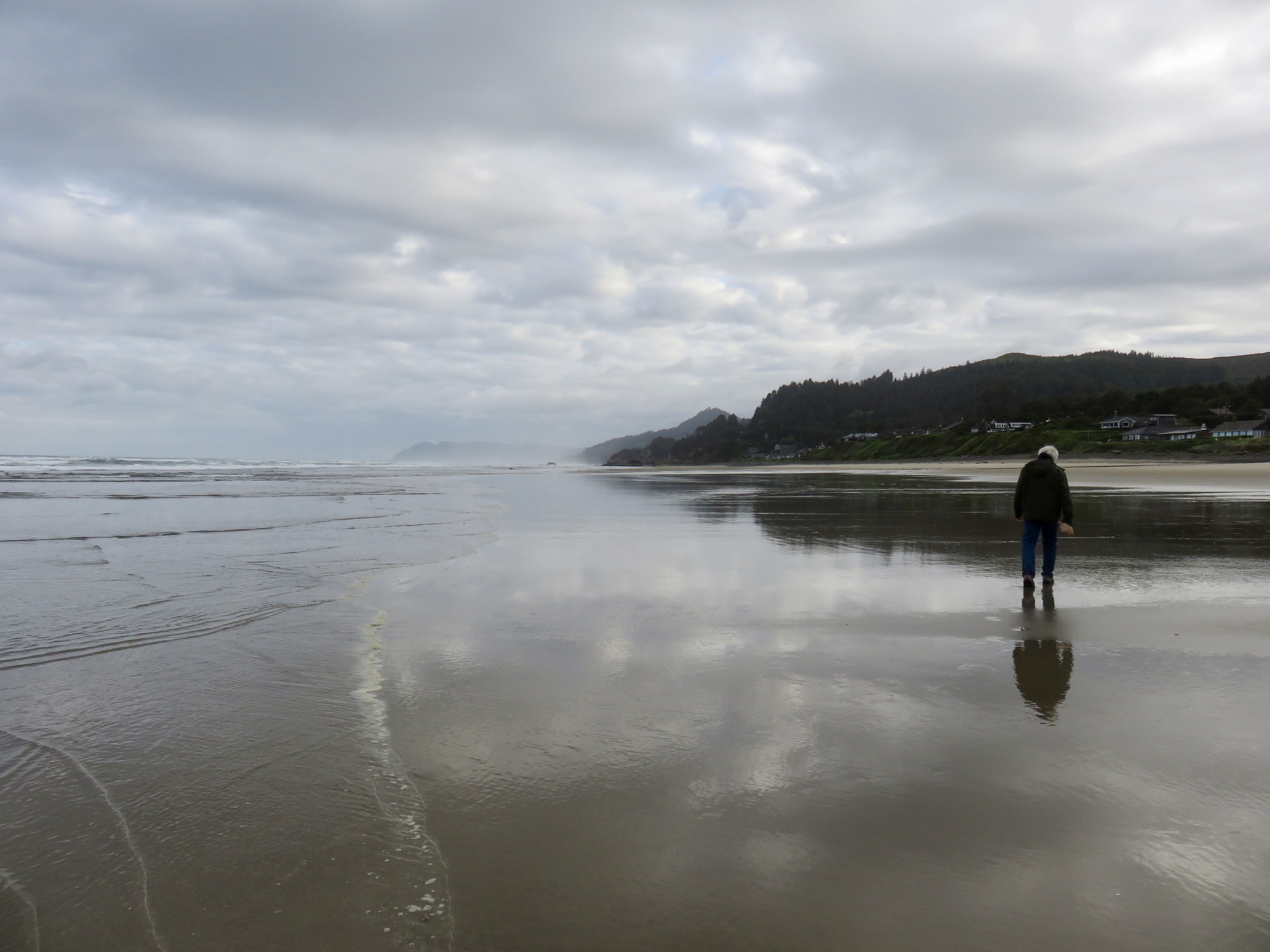
I told a friend about my favorite metaphor for a successful relationship. [Bear with me because it’s entirely backwards and if you have not spent time on a Pacific shore it will make little sense.]
You wade into the surf, just a little way in to the middle of your shins because the tide is going out. You face the ocean because it is never smart to turn your back. Waves break to your knees and dwindle down to your ankles. And you have to keep stepping away from the ocean because it draws you in without your noticing. If you fail to pay attention, you will find yourself in dangerous water before you know it.
Loving someone is like that, only in a kind of reverse. The better way to describe it might be that the other person is the shore and the world is the water that continually pushes you apart, drawing you into deeper water. In this analogy, each person must continually walk toward the other. You cannot stand in place, because that will drift you away without your noticing at all.
Two people who want a relationship of any kind must continuously make the effort to approach one another. A continuous approach just to remain close.
Many years ago, I was walking on shore with friends from California and Canada. We were all beach combing, some turning north and others south. One couple headed out into the water. It was a bright, sunny day, little wind, warm, though the ocean is never anything but cold on my stretch of beach. My friends were walking into an out-going tide. It was dangerous and I called a warning. They could not hear me over the ocean’s roar.
And then I did a stupid thing. I walked out after them. Both Ed and Ivy were taller than I was, and Ivy was a strong swimmer. Ed had backed off. I was out past him calling to Ivy. By the time I got close enough to be heard, we were both suddenly off our feet, swimming to stay up, waves washing over our heads and with no way to pull ourselves back against the current. Ivy swam to Ed, who had turned and come after her.
By then, I was a few yards—ten? fifteen?—away, and even in that moment as I scanned the shore, I knew there was no one who could hear or help me. Gary was at work. I knew, had he been there, he would have pulled me out of the water long before I got in so deep. I was already too cold to make any effort to save myself, struggling just to keep my head above water. I thought of all this and also thought this might be genuine irony to drown after wading in over my head in order to warn people that it was dangerous to be in the water in an out=going tide. I thought how stupid and funny and awful.
I called to Ed, but he was at his limit to get himself and Ivy back to shore. He could not wade back to deeper water after me. “Can you get to me?” he called. I felt certain, in that moment that I would die that day.
But instead I thrashed and flailed and found strength to drive myself to his side and Ed saved us all. No one onshore noticed a thing.
So. Love and drowning. How we save ourselves. How others save us. [Thank you, Ed.]
 IMPERFECT PATIENCE