I had an idea of where I was going when I started Part 1, but that got lost. The most magical thing I do is writing—making a reality that hadn’t existed before I created it. I think it through. I trust the process to yield.

I had an idea of where I was going when I started Part 1, but that got lost. The most magical thing I do is writing—making a reality that hadn’t existed before I created it. I think it through. I trust the process to yield.
My best time was eight minutes and some seconds per mile (maybe more than thirty, but not much) over highway hills in the rain. I was a lot younger then, had been training for a half marathon in Seattle, and that fast run on steep hills resulted in injury.
But that’s not what we meant, is it?
We want my best time on vacation or during sex, or whatever. My best time as a writer. My best time writing or weaving or knitting or playing with my children.
I have been thinking a lot about housing during the past twenty-five years. My husband and I moved to the family home in Oregon in 1979 and started a family. It was what my grandfather’s third wife and her second husband hoped we would do when they left the home to us. It was a two bedroom, one and a half bath retirement home when we got here. We removed the half bath and added a bedroom and second bath. Two sons and six hundred square feet. My husband worked long hours and I stayed home with our children while they were small, which was financially challenging but also temporary. [We lived below the poverty line for some of those years, and I will never recover the lost income from remaining out of the workforce for those years. That’s another issue—instead of “affordable daycare” how about making it possible for parents to parent their own children without taking a crippling and permanent financial hit?]
Then my mother began a downward decline, a process that went on for years. Her driving was dangerous, she couldn’t see to read, never did like cooking, and my husband stopped by every day on his way to work to make her coffee. [If she’d taken better care of herself with a healthy diet and exercise… well, she lived to be 82, and most young people would see that as a ripe old age.] She was in pain and unsteady on her feet, would not take the suggestions of various helpers, and was in and out of assisted living for those last five years. It was crushing for her to live with the assistance of cooks and nurses and others, but she could not live without it.
There should be no shame in accepting what we need. There is no honor in taking more than we need. Yet we judge others by their living situation. I admit I do it myself.

I had thought I would stop running after last year’s Bridge run—a 10k over the Columbia River. But even before I completed that run, slower than I’d hoped, I knew I wouldn’t stop. I love running and I’ve missed it terribly in the past when injury kept me walking. Then, after nearly four years of perfect health, Gary and I went to a movie in a theater last month and caught Covid. Coming back has been tough. So I began to wonder if quitting was coming up on me, like it or not.
I got my regular 2-mile Friday run last week in Portland. More than half that run is downhill, but though my route varies it generally begins and ends on an uphill slope. That was the second time a homeless Black man has paused long enough to tell me “good job!” He said he’d run marathons and missed running but had injured out and most recently been told he would be able to run again. I hope he does.
The poet William Stafford made a 3-mile run part of his morning writing routine. He’d run, come home to write, including an aphorism and a new poem every morning, and then use the rest of the day to revise and do whatever we people do all day. I used to hold out his example to myself. Stafford didn’t write a good poem every day of the year, but by the end he had 365 drafts to choose from and the odds were in his favor that he’d find good ones worth revising. It’s one reason he was as productive as he was with 20,000 words of daily writing and a truly astonishing list of publications. Wikipedia: “The morning of his death he had written a poem containing the lines, ‘ “You don’t have to / prove anything,” my mother said. “Just be ready / for what God sends.” ‘ ” Have a look at his book about writing, Writing the Australian Crawl. I have it somewhere here or there and first read it in 1990, three years before his death, which reminds we that I wasn’t yet running in those days.
Running is easier than waiting, and right now I am waiting to hear about my novel submissions. I reordered and revised that novel three weeks ago, six years on since I began writing it. I informed two presses that I had a new and better draft to share. One promptly wrote back: Yes, please! Then I withdrew all the submissions I could find a way to withdraw. A handful are still out there. I have a half dozen presses on my to-submit list when they open to submissions. One of those opens in January of 2025 and it is a favorite small press from way back. Another closed to submissions for this entire year and I don’t know when or if they will reopen next year. A friend in Seattle is a few months behind me in the same process.
It all takes time.
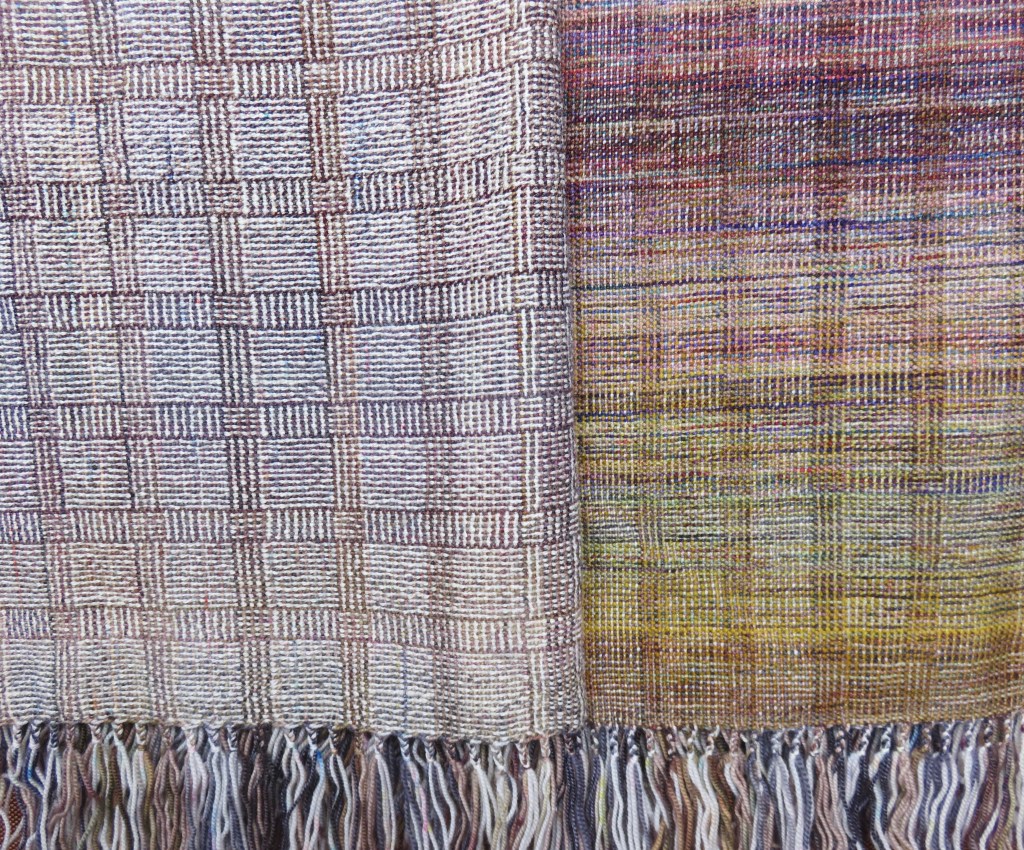
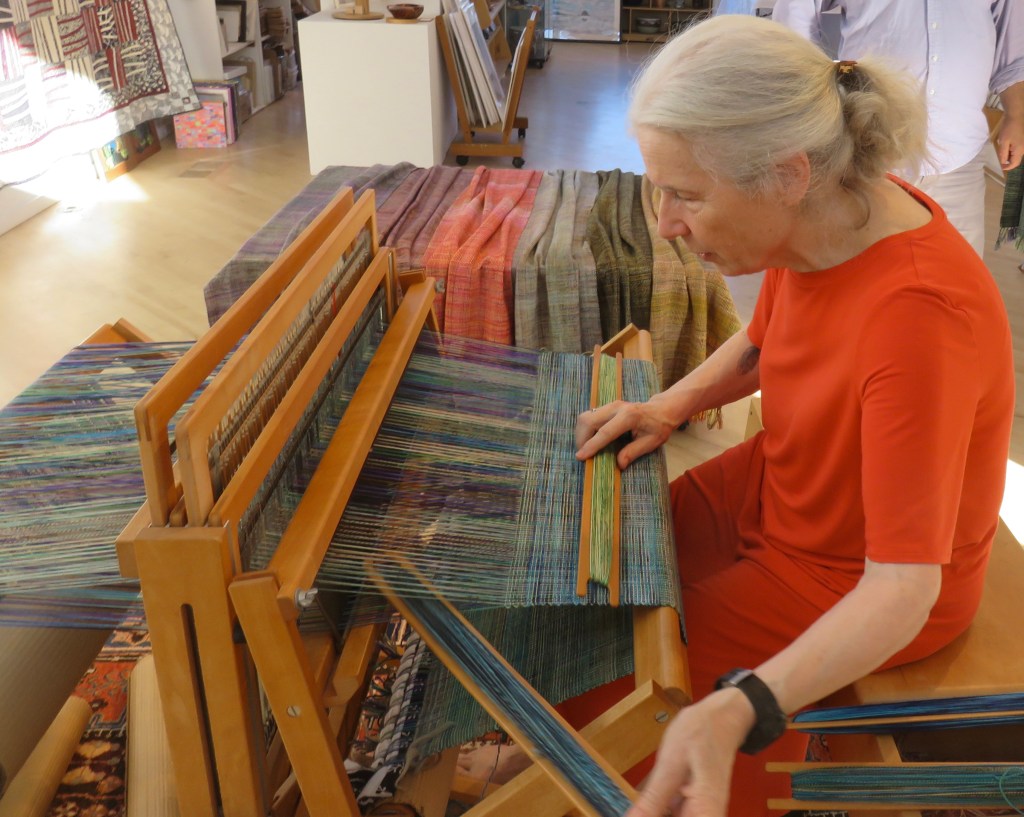
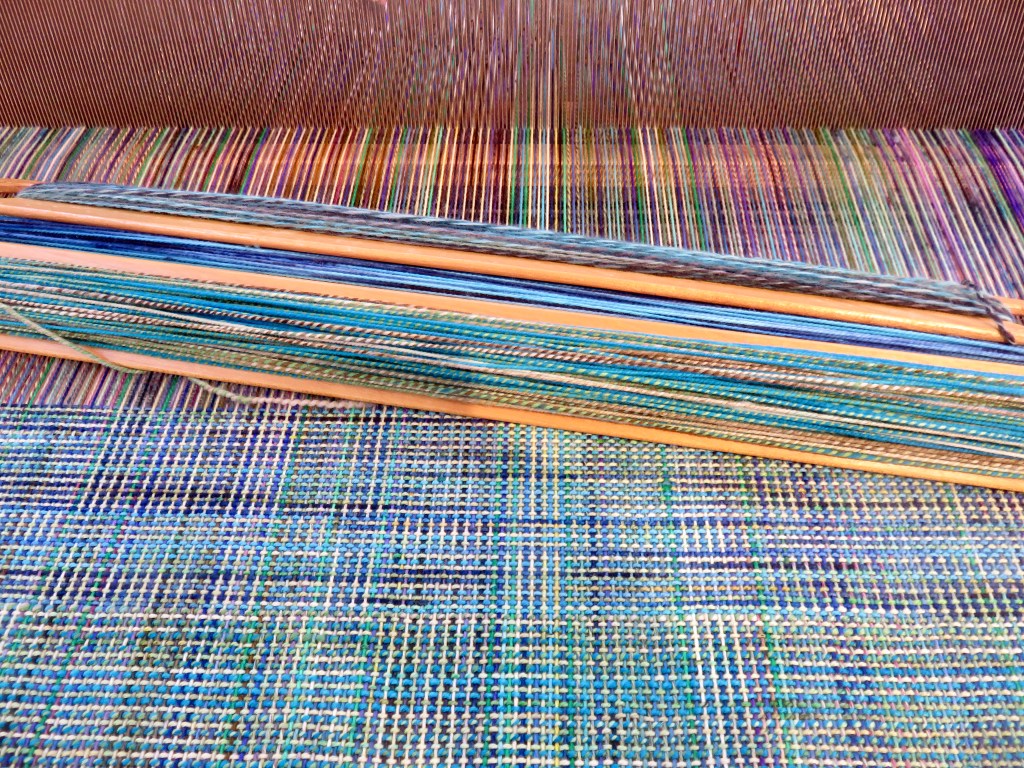
On April 1st, a crew is coming to tear out a wall of our bedroom condo as part of the process of repiping our entire building. The work won’t be completed before summer. In the mean time I should be knitting but I have recently spent hours completing the “Dusk” warp in two distinctive shawls.
I should never have mentioned that very popular pop star. It led to frustrating exchanges until I took the post down. Today began with positive covid tests. I am not in the mood.
When you live more than five miles from the nearest small and overpriced grocery store, fifteen miles from the nearest full grocery store (also overpriced), and thirty-five miles from Costco, shopping during the pandemic simply played on your habits of shopping rarely and large.
Shopping locally in our tourist economy meant the our monthly drive to a large city farmers’ market and even the city stores considered overpriced were relative bargains for us. Whole Foods prices were in line with or lower than what we found locally and better quality and more variety.
Now that we spend nights In Portland, we have three or four favorite grocery stores within easy walking distance. We love New Seasons, Fred Meyer is cheaper for some things, and there’s always Zupans when we want something special. But the habits of nearly forty-five years without easy access to such stores are still a powerful influence. The toughest to overcome is the most recent: ordering online.
Buying too much and ordering online are hard habits to break. Yesterday I made a vegetarian lasagna that turned out really well. I’m not pressed for time as I was when I was teaching and I am not cooking for two growing boys as well as ourselves. That lasagna will provide meals for Gary and I for three days…

During the recent perilous weather in the Pacific NW, we stayed home and I cooked from what I had in freezer, fridge, and pantry. I also ordered the organic whole wheat noodles I used for the lasagna. I have five more boxes of flat noodles in my drawer and six pounds of whole wheat angel hair pasta. I’m set for a while.
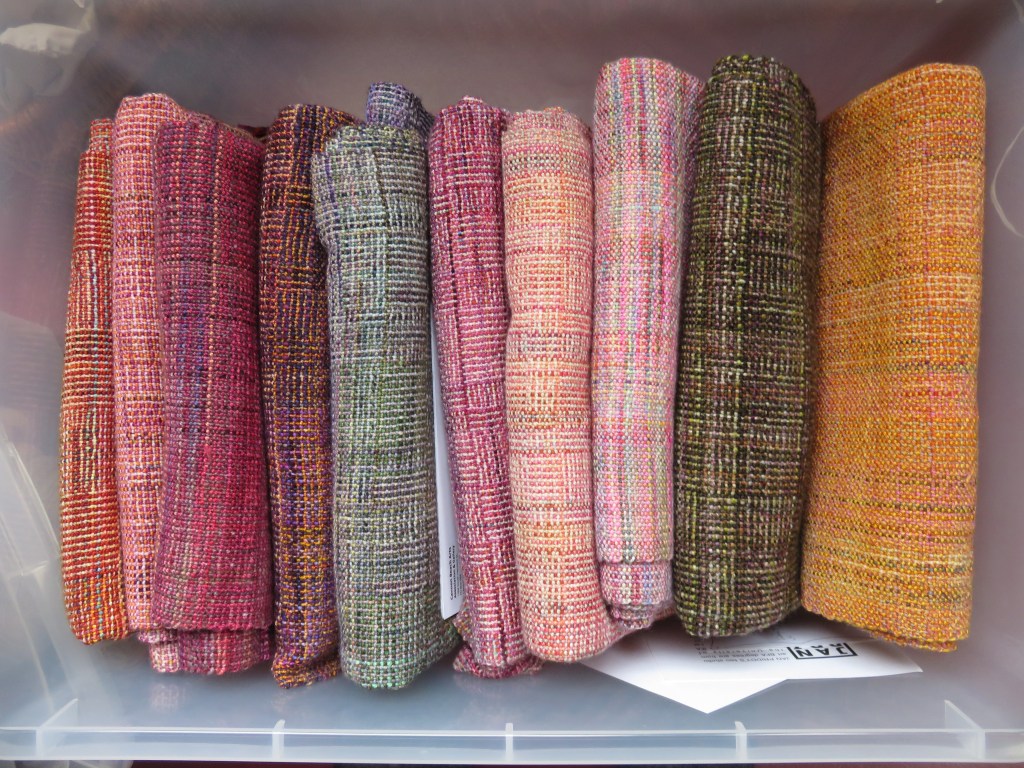
I finished a warp this month and plan to begin another this week. The overall goal is to use up much of my yarn stash, but then I ordered a skein of yarn a couple weeks ago. That gorgeous bright handspun fits in with a warp I was planning, but interferes with the important goal of cutting back my yarn stash.

I need to buy less.
It feels like I’ve done this before. Haven’t I vowed to cut back on purchases? Haven’t I actually done that from time to time?
February needs to be a no-purchase month. Food is okay. No clothing, no yarn, no fabric, no books. I have plenty of everything. I can afford to swear off all unnecessary purchases. It’s a short month. My pantry shelves look leaner and tidier from not shopping much this month. My beach closet is very lean from a recent culling. I need to continue making progress with the yarn and quilting fabrics. I can resist Liberty cottons and batik’s for a month. I can. I probably can.


Cutting back on purchases is like cutting back on food. I can recall eating as a child until my stomach hurt. And I was a thin child because I walked and ran everywhere. It’s different as an adult. It’s different as a retired adult in nasty weather where I go out but for an hour instead of three hours, and I eat because I cooked too much. I learned when I shifted over my diet to a healthier balance in 2020, that feeling a little hungry is a good thing.
There are projects waiting for my attention, and I really could learnt to cook for two if I troubled to do it. I have more books in my to-read stack(s) than I ever have had in my entire life. I can cut the shawl to make a pillow cover. I can put on the neutral warp. I can cast on the sweater I promised myself a dozen years ago—the yarn is right there. Ideas for quilts swimming about in my head do not require any fabric other than what I have stored.
April will be Camp NaNo and I will work on short stories. Between now and then I can make progress on projects: three more warps if I am quick, a knitted something, and two sewing projects. With discipline, I can avoid purchasing anything other than food for four weeks. That’s what I’ll do.
I will not buy yarn, a rosebush, black wool pants, more socks, food in bulk, magazines, books, fabric even though it love it and it’s on sale, a new chair or two, a used table for Gary’s coffee (he’s using the window-ledge in the new living room configuration), knitting notions, or anything I cannot consume within a week. I promise.
It works for me to make a promise.
In a two-year-old article, Ann Patchett explains that as a teenager she did not consider cream soup spoons essential when she bought sterling flatware as a 14-year old. I do. I will say that I already gave away all the family silver and have bought only odd pieces which I intend to use daily in the new year—using her sterling was something my grandfather’s third wife, Genevieve, did too. Patchett wonders what to do with her dozen champagne flutes that will never find a dozen people wanting champagne, but we have kept fourteen flutes purchased over the years on anniversaries. Though we have no better idea when or if they might be used, they line a high shelf and give me pleasure every time I take down a plain water glass. Throw them on a beach after I die.

This morning I passed 50,000 words on NaNo. I’ve given up on the plan to stitch ornaments to go in the holiday cards. We stayed home last weekend and I was supposed to be stuffing squashes and making applesauce this afternoon. Instead I spent four hours recreating the emergency manual for our condo because I only had the pdf and could not figure out how to revise it. So the document got another complete edit, which is a good thing, and I sent a brand new pdf off to the man who did most all the original work. And I looked up photos of my classes.
I have received three cards and a Rubic’s heart [below], which was a little scary but I figured it out. Wish I could figure out who sent it! Both sons deny knowledge. Seventy-one today.



 IMPERFECT PATIENCE