IN FOUR YEARS

A couple of weeks ago, I watched a reel from “Toby-the-Neuro-Scientist” about maybe not quite failing his A-levels. He failed to achieve a score that would get him into the University program he wanted. So he worked for a year waiting table and pissed that away on clothes and drinking, but got serious about maths and got into uni, but his first year was “rubbish,” and then tried to be better the second year and was hit by a car. His third year was Covid so he graduated “alone in [his] bedroom.” He took a year off waiting table again and entered a dementia program to graduate the top of his class, researched Parkinson’s disease for two years. Ten years after those disastrous A-levels, he has his PhD from a prestigious university. Who woulda thunk it?

In four years, who might you become? In ten?

Continue reading

ODYSSEY and LITERACY

We don’t know for certain who composed The Odyssey, which is generally and perhaps inaccurately ascribed to a single bard, Homer in the 8th century BCE. Most modern experts, including Emily Wilson in her otherwise excellent introduction to her recent translation, routinely comment that one person could not possibly have memorized the entire epic poem. Most assume one person could not have written those two book-length epic poems much less remember them. They suggest that both The Iliad and The Odyssey were composed over a period of time with adjustment and additions by several or many people.

Not necessarily so. The human capacity for memorization is astounding.

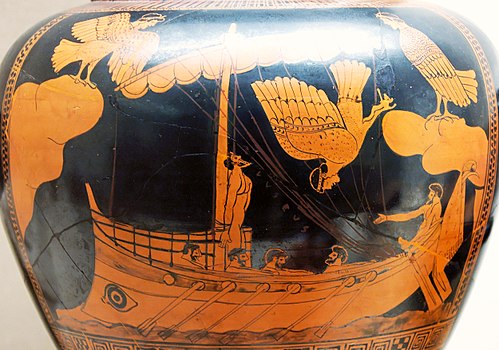
This vase from the British Museum (c. 480–470 BCE) was decorated during Athen’s classic age three centuries after the story of Odysseus was known and eight centuries after at least some of the events described may have occurred in ancient times.

.

Continue reading

READING THE ROOM

It is a newer expression, “Read the room.” It suggests that a person should have the sense of where others are emotionally and intellectually, how they view what is said and seen, and more critically, whether they agree or are inclined to wrestle with your words and actions and very presence, to be annoyed or even angered.

The sky need not be blue or cloudless, the earth need not be subdued, our hopes need not be limited nor contained. It is in us to maintain faith a kindness, generosity and compassion. We might share; we might see our duty to others.

Reading the room when I’m not in the room isn’t a skill I often possess. I misunderstand or fail to appreciate the inclination of my audience. However did I manage a classroom? Zoom didn’t exist. Determination to do right, to accept that my understanding, experience, and knowledge might be shared.

Continue reading

9 LIFE LESSONS

I saw a reel of this and am shamelessly reposting Tim Minchin’s 2013 address to UWA “Nine Life Lessons” from a site that has already done this:

Nine Life Lessons

However, I have had large groups of people listening to what I say for quite a few years now, and it’s given me an inflated sense of self-importance.

So, I will now, at the ripe old age of 37.9, bestow upon you nine life lessons to echo, of course, the nine lessons of carols of the traditional Christmas service, which is also pretty obscure. You might find some of this stuff inspiring.

You will definitely find some of it boring, and you will definitely forget all of it within a week. And be warned, there will be lots of similes and obscure aphorisms which start well but end up making no sense. So listen up, or you’ll get lost like a blind man clapping in a pharmacy trying to echo-locate the contact lens fluid.

Lesson 1: You Don’t Have to Have a Dream

Continue reading

WHO TO THANK?

I was still teaching when I reposted an old blog: WHY YOU DON’T WANT TO BE A TEACHER. That post arrived on my old Blogger site in 2011, then here in 2019.

I think black oystercatchers are my favorite bird. They make a noise like a squeaky toy, are protective of their babies, and have red beaks and legs and eyes of brilliant vermilion enamel.

Thousands of people read the original posting about why you don’t want my former job. At least two college programs assigned that post to students training to be teachers.

I’m grateful for the years I spent in education. I loved teaching but I enjoy other things, and I understand why teachers last, typically, just four years in the profession. There are people who think I’m a fool to have done it at all.

Continue reading

KIDS THESE DAYS

“Sit still,” the trainee told him several times with increasing frustration. “Sit still!” When he finally did sit in his chair, the little boy completed the test. He scored so very badly. The trainer took her student aside. “Try again but let him move around this time.” Do I need to tell how much better he did the second time—on a different version of the same test? He was doing Algebra at age seven. He should have been accelerated in math in middle school. So should his older brother. As a teacher and his mother, I should have insisted.

Light on the rock. This photo was taken thirteen years ago this month and that bright-lit color is bird guano, not stone. After the first storm of the fall season, it washes off and the revealed basalt shows darker gray.
Continue reading

KYLENE BEERS

Heroes aren’t my thing—I resist heroics, but I do have a few people I hold in my heart. Sojourner Truth is always the first. Many authors. Many people I’ve never met. And Kylene, who I met and then followed online for thirty years. She was an inspiration to me and many other teachers—the only academic I’ve ever met who gave precedence to actual teaching.

Over the years, I took too many education classes and workshops from people who failed to practice what they were teaching. Kylene Beers continued to teach kids while teaching teachers and serving as editor of an NCTE publication. It can’t have been easy.

Kylene Beers was the real deal. She practised what she preached. All honor to her life. She died yesterday. September 16, 1957 – June 20, 2025

Continue reading

ARE WE DOING ANYTHING IMPORTANT?

This is a repost from my old blog, QUIET MINDS, in May 4, 2014. Issues with attendance have blown up recently, according to friends still in the classroom.

My elementary school friend Ann could not play with me when her father was home because he was a merchant seaman and gone for months at a time. On the day he came home, the family stayed together. I don’t recall Ann skipping school to extend this togetherness. I just recall that she wouldn’t come to my house and I couldn’t come play at her house when he first got home.

While my peers learned the alphabet song in First Grade I was sick at home. Was it in Fourth Grade that I had the flu for a week and missed learning how to count in Spanish? I eventually learned my ABCs, but I’m embarrassed to admit that of all the children at Echo Lake Elementary, I might be the only one who finally learned uno dos tres…  in college. 

I remember how hard it was to catch back up when I’d been absent. In retrospect, I realize I was lucky. My mother made me go to school. I was bullied and teased and sometimes lazy and prone to tonsillitis and chest colds and procrastination, but my mother never allowed me to make a habit of being absent. Too many missed days meant I would have no idea what was going on when I got back to school. A day here or there, a week when I was really sick were allowed, but she ignored my fake illnesses. My mother would look at me as I whined about not feeling well. “Do you have a temperature?” Usually I was shoved off to school.

Continue reading

READING ALOUD

The latest research claims that “learning styles” are a myth but that reading aloud to one another is a good thing. I have to wonder sometimes if educational researchers ever consider their own biases?

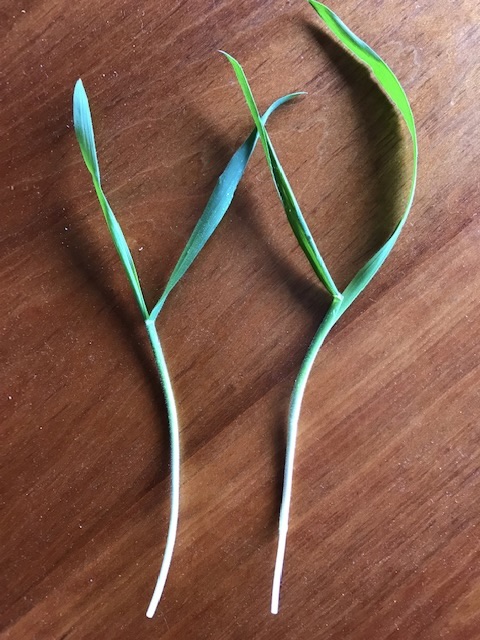
Gary worried, when he brought me these stems, that they were bamboo from our neighbors’ ugly bamboo hedge. I think: No. At least, I hope not. Anyone?

Continue reading

GLOSSARY OF EDUCATIONALESE

Depending on when they went to school, elementary teachers were taught different methods of teaching reading. The approach they choose in their classrooms and the terminology defining it keeps changing. They are given a package to teach, proscribed minutes to devote to this effort, and schools often pay a lot of money to provide direction in the manner and method of delivering reading instruction. Every new packaging of education receives a new name. Often the new name describes something that’s been common practice in the past.

I used to call the affection education academics have for recreating terminology every few years “educationalese.” I created a satirical glossary as part of my term project for an Ed Psych class decades ago. [Persuasive writing has had several names over the years: persuasion, argumentative, position paper, essay, etc. It’s all the same thing. You’ll find my glossary below.] Since I mostly have taught high school students, my focus was on writing. In elementary school there is open warfare about how to teach children to read.

—KQED
A bull elk that has recently taken up residence in our neighborhood. Gary was standing outside the garage talking to our immediate neighbor Patrick when this fellow walked out of the wetland north of us and crossed over to the yard across the street. Later in the day he is seen chewing on a hedge a few houses away. Yes, Roosevelt elk are big, the largest elk in the world.
Continue reading