An imperturbable demeanor comes from perfect patience. Quiet minds cannot be perplexed or frightened, but go on in fortune and misfortune at their own private pace like a clock during a thunderstorm.—Robert Louis Stevenson
One of the best pieces of luck in my life is Gary. He’d say the same. Yes, I’m certain.
In 1971, when I left DJ’s Sound City, the only job I’ve ever been laid off from, I applied for work at the University Book Store in Seattle. It was, at that time, the largest of its kind in the world—it offered a huge selection of trade books, half the basement given over to textbooks, and other departments serving students at the University of Washington. I wanted to work in the Art Department since I was a studio arts major, but because of my experience in a record store, I was placed in the Music Department, working for Jess Burton. It was an essential part of my education.
Well, now, this is a weak post—you may have noticed by now I’m aiming at weekly posts on Fridays. This post is short because I put up a “New Year” post yesterday. If you choose to click below, you’ll find a local story.
When we go for our morning walks and gather litter from the beach, we pass million-dollar homes along the shore. Most of those ocean-front homes we pass did not exist in my childhood. The cottages I remember have been torn down to make short term rentals and the weekend homes of millionaires. Walking the roads reveals more. Even our home is not that same, having changed three times since it was built in 1911. My grandfather remodeled the second half story of the house to put more windows facing west in the 1920s, added the garage and rental in 1936, remodeled the rental and built a new garage across the street, and finally tore down the house and rebuilt it as a one-story retirement home by 1949. When we remodeled in 1984, we returned the half second story, but ran the ridge line east-west instead of north-south. This preserved the views of neighbors living east of us for a few years until the most recent owners of the garage and shopmy grandfather built immediately to our east was torn down and replaced with a huge short-term rental.
I have been thinking a lot about housing during the past twenty-five years. My husband and I moved to the family home in Oregon in 1979 and started a family. It was what my grandfather’s third wife and her second husband hoped we would do when they left the home to us. It was a two bedroom, one and a half bath retirement home when we got here. We removed the half bath and added a bedroom and second bath. Two sons and six hundred square feet. My husband worked long hours and I stayed home with our children while they were small, which was financially challenging but also temporary. [We lived below the poverty line for some of those years, and I will never recover the lost income from remaining out of the workforce for those years. That’s another issue—instead of “affordable daycare” how about making it possible for parents to parent their own children without taking a crippling and permanent financial hit?]
Then my mother began a downward decline, a process that went on for years. Her driving was dangerous, she couldn’t see to read, never did like cooking, and my husband stopped by every day on his way to work to make her coffee. [If she’d taken better care of herself with a healthy diet and exercise… well, she lived to be 82, and most young people would see that as a ripe old age.] She was in pain and unsteady on her feet, would not take the suggestions of various helpers, and was in and out of assisted living for those last five years. It was crushing for her to live with the assistance of cooks and nurses and others, but she could not live without it.
There should be no shame in accepting what we need. There is no honor in taking more than we need. Yet we judge others by their living situation. I admit I do it myself.
Gary misses caring for our garden when we’re in the city, but this is where we walk. We have the whole of Forest Park, the Portland Japanese Garden and the Rose Garden within a mile, and we walk miles most days. When we are no longer able to do that, there is a small courtyard garden and the local front yards to enjoy.Continue reading →
On being scared and eventually… working again in a metal shop. I ran two miles this morning and my first four-miler this year the day before yesterday, building toward the 10k Bridge Crossing in October. Sometimes life is like running: you just have to keep doing it.
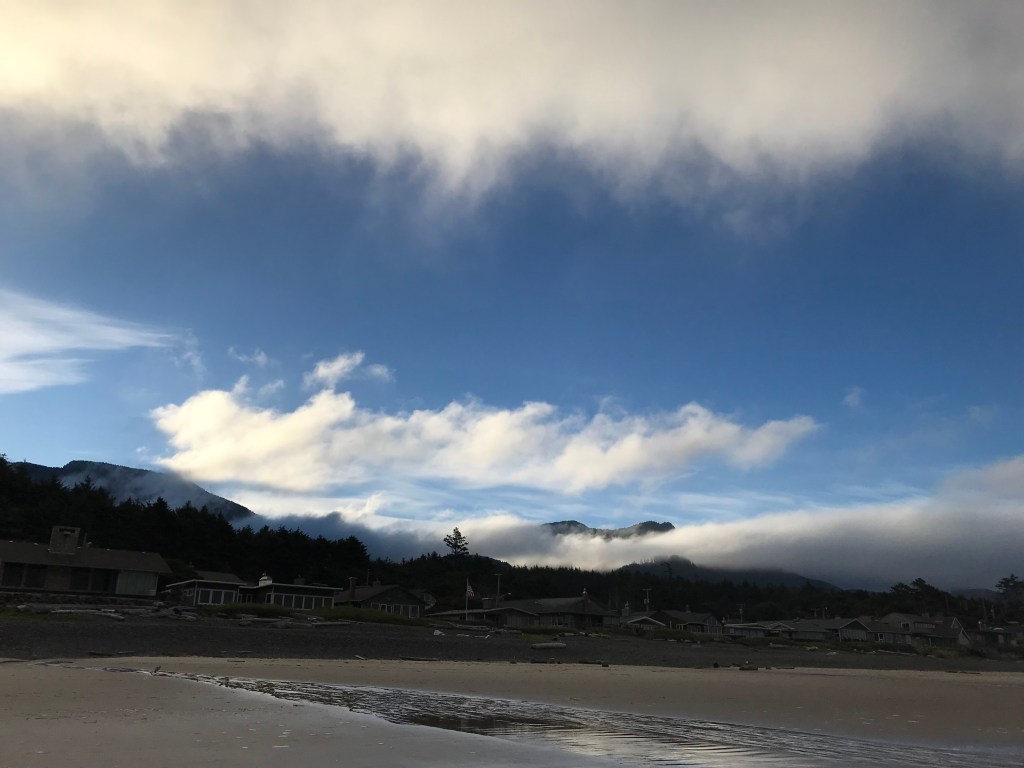
The pale amber foam is from a plankton bloom, which is neither harmful nor common. It is sticky to remove from shoes. Three mornings in a row we went out early and were unable to see Castle Rock offshore because of heavy fog. Fog is really not common on our shore, but I have always said that fog in Arch Cape means it’s a hundred degrees in Portland. That was certainly true this past week. Temperatures were in the 100s this past mid-week while we were home walking the shore. Continue reading →
I have opinions. I am sometimes overwhelming in assertion of my opinions. So I will tell you that sunsets are beautiful and so are sunrises. My opinion.
The Pacific University MFA program from which I graduated in 2007 is in Residency in Seaside this week for the first time in three years. The Winter Residency has been here almost from the beginning. The first Winter Residency was held on campus in Forest Grove, but since classes were in session, the program provided housing in the local McMinemem’s and what with bars and transport to and from, the program moved to the coast where rentals are inexpensive in the off season. January is clearly off season. Even the luxury short-term rentals in our neighborhood have been vacant for a few days each week.
Weather has been challenging since the ice storms in Portland during the week before Christmas. We did not risk the drive to Portland to see family until the morning of the 25th and we drove back west the next day. It has rained here every day since. With an average of 90″ of rainfall, this is nothing new for us.
All of this is certainty. Or most of it. What follows is about a memory. I pieced it together from what Gary and I remember, and we recall different details, so I am not at all certain I have everything correct. It’s a sad story regardless of how it’s remembered, so you might not want to read more of this post.
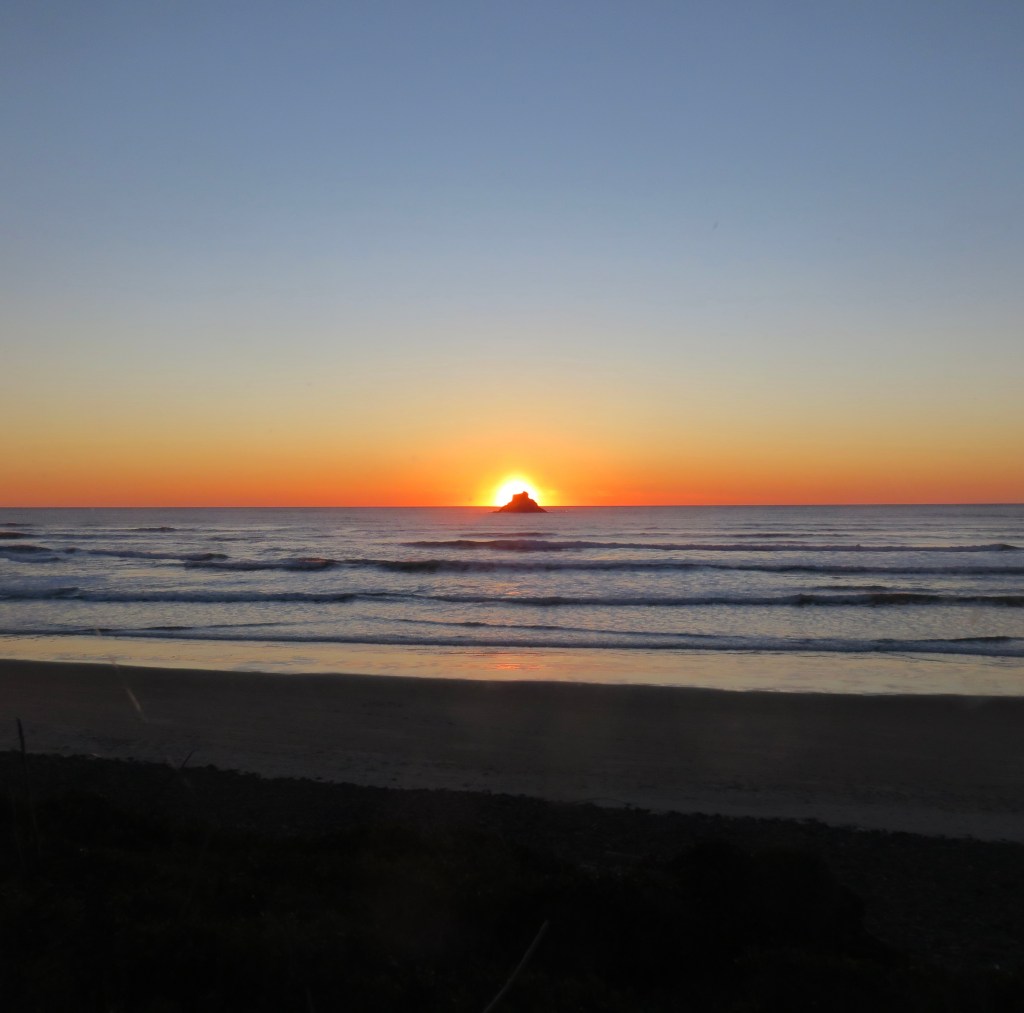
This is last night’s sunset. Molly Gloss commented at her brilliant reading that perhaps we locals took such color for granted, perhaps we were used to it. But the truth is that Gary called to me from downstairs to check the sky and I called back that I was taking photos. When the sky changed, he called up again, and again I had already taken more photos.Continue reading →
On May 25, 1911, a catastrophic event changed public opinion forever. A factory building in Manhattan caught fire but all exits, including firedoors and stairs had been locked or chained shut. Workers (mostly women) could not escape the building. In desperation, 62 people died when they fell or jumped from windows to escape the flames and smoke that killed others. In total, the infamous Triangle Shirtwaist Factory fire killed 146 people and injured another 78. The deaths were almost entirely preventable. Americans were outraged and as a result laws were enacted to protect workers and laws that had been ignored were enforced.
Some things are preventable, but we resist. Most of us use seatbelts, as required by law, and fewer people die in accidents as a result. Drunk driving went from a social convention to an affront against decency thanks to Mothers Against Drunk Driving (MADD). Today, most people call an Uber. But I just read an essay wherein the author bragged she’d driven only a few miles rather to a friend’s home rather than fifty minutes to her own home while drunk. People smoke despite knowing throughout their entire lives that tobacco products are poisonous. Some insist they need guns for protection despite statistics proving gun ownership make our lives less safe. We take unnecessary risks that are life-threatening not just for ourselves but for others. Isn’t it time for a little healthy anger?
Before the oncologist spoke to my family, the nurse had already requested that certain procedures be stopped. Daily vitals and turning to prevent bedsores. “We don’t want to keep calling him back if he is trying to leave us,” she said. I sat beside his bed pretending to myself that I was studying for a History final while my brother and mother sat in the waiting room.
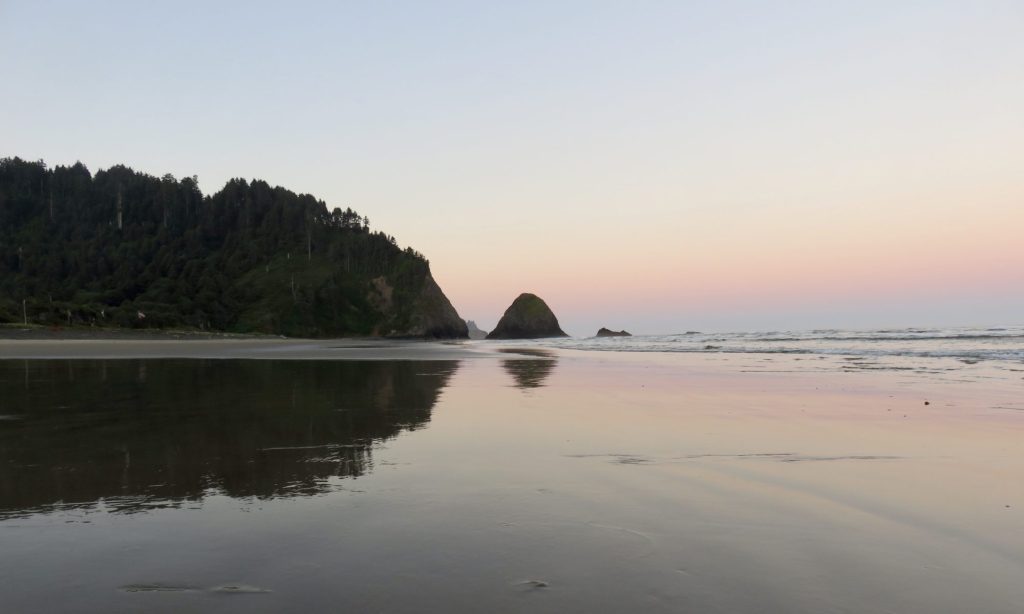
When the sun sets north of Castle Rock, we consider that a sign of the warmer months. Here is is just on that cusp of change.
I was not studying anything but my father’s breaths. They came further and further apart. I could not help looking up when the pause seemed to go on for minutes. Sometimes I would say softly after a long intake of air, “It’s okay, Daddy, you can go.” He had already been in a coma for days when they chose to let him go.
I have a photographic negative showing my grandmother, Fay Fletcher Jackson (before she married Gordon Keays Smith), standing on a Mount Hood glacier that mostly isn’t there anymore. This would be in the early years of the 20th century. She carries a small backpack because she is a very small person and wears heavy boots, thick leggings (no skirt), and a broad grin. She set no records, made no history, but she climbed.