TONI MORRISON too

Toni-Morrison.jpg

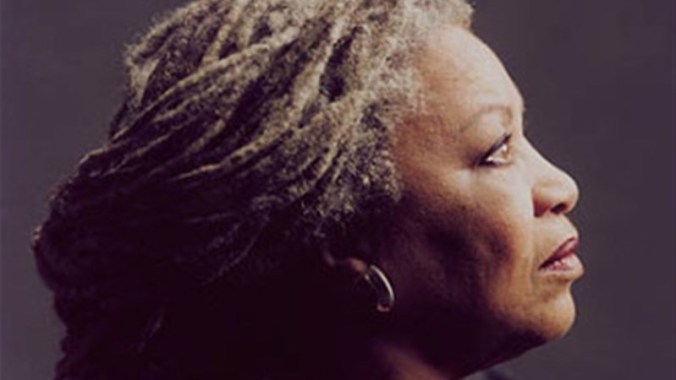
Toni Morrison died yesterday at the age of 88. “Rest in power.”

When I began teaching English, I was already a great fan of Toni Morrison. I photocopied her entire first novel, The Bluest Eye, to use for one class and later was able to order classroom sets. A student came up to me after class and asked where he could find her poems. She doesn’t write poetry, I said. I mean that poem you read in class. He was talking about this:

Nuns go by as quiet as lust, and drunken men and sober eyes sing in the lobby of the Greek hotel. Rosemary Villanucci, our next-door friend who lives above her father’s cafe, sits in a 1939 Buick eating bread and butter. She rolls down the window to tell my sister Frieda and me that we can’t come in. We stare at her, wanting her bread, but more than that wanting to poke the arrogance out of her eyes and smash the pride of ownership that curls her chewing mouth.

The story is of Pecola Breedlove who will be raped by her father and utterly ruined. This is no spoiler. Morrison tells readers this on the very first page. Her concern is not what happens but how. She writes that why is difficult, but this is a novel about love and it is the how of love that she reveals in The Bluest Eye. Pecola’s brutal father destroys her. The narrator Claudia’s loving father protects her. Parents all seem harsh: “Adults do not talk to us—they give us directions. They issue orders without providing information. When we trip and fall down they glance at us; if we cut or bruise ourselves, they ask us are we crazy. When we catch colds, they shake their heads in disgust at our lack of consideration. How, they ask us, do you expect anybody to get anything done if you all are sick? We cannot answer them.”

The scene begins in iambic pentameter and ends a couple of pages later—

But was it really like that? As painful as I remember? Only mildly. Or rather, it was a productive and fructifying pain. Love, thick and dark as Alaga syrup, eased up into that cracked window. I could smell it—taste it—sweet, musty, with an edge of wintergreen in its base—everywhere in that house. It stuck, along with my tongue, to the frosted windowpanes. It coated my chest, along with the salve, and when the flannel came undone in my sleep, the clear, sharp curves of air outlined its presence on my throat. And in the night, when my coughing was dry and tough, feet padded into the room, hands repinned the flannel, readjusted the quilt, and rested a moment on my forehead. So when I think of autumn, I think of somebody with hands who does not want me to die.

There is enormous wisdom in these pages. It is not the most popular Morrison novel but one of the shortest. It shows up in standardized test questions and college courses. Many students have written essays about the novel in order to get into college. More have emailed me from college to thank me for introducing them to her work.

I taught Toni Morrison’s first novel for most of twenty-five years and assigned that opening passage every year I taught. It was one of the few disappointments of my MFA program that not a single person recommended her novels or referenced her work in a craft talk. Seriously. Not one.

Perhaps it was judged too high for graduate students to aspire to? In my own teaching, I always aimed above what my students thought they could do. Morrison always aimed high. The only path to excellence is to aim higher than our reach, to point the way to better than what we think we are capable of. Sometimes we surprise ourselves. I think many of my students were astonished at their own accomplishments. I hope they were.

Underestimating our capacity as a nation is equally problematic. When we assume that the United States deserves no better than a bully for a president, when we assume that it is too soon for a black or gay or woman president, we doom ourselves. We deserve better. It is the ideal upon which our country was founded. We deserve to strive and push beyond our comfortable complaisance into greatness. Isn’t greatness what the Founders had in mind?

Those eighteenth century wealthy white men aimed for a nation where people are judged by the content of their character rather than by their birth. Wasn’t that an amazing goal for such entitled folk who had all been raised to accept the divine right of kings? Of course they would not be comfortable in our society today, where a man dismissed as “white trash” can become president. (I am not talking about Trump who sits on a gilded toilet.) Their ideals far outstripped their capacity for justice.

Our ideals should always frighten us a little. I did my best as a teacher to break down complex tasks into clear and manageable steps. We must continue doing that as a nation. As Toni Morrison did in her novels: push the envelope, they say. Step out into our own idealistic world.

Step out.


“Toni Morrison, 88, winner of the 1993 Nobel Prize in Literature and the 1988 Pulitzer for fiction, died on Monday night at the Montefiore Medical Center in New York. Robert Gottlieb, Morrison’s longtime editor at Knopf, said in statement, ‘She was a great woman and a great writer, and I don’t know which I will miss more.’ Sonny Mehta, chairman of Knopf, said: ‘Toni Morrison’s working life was spent in the service of literature: writing books, reading books, editing books, teaching books. I can think of few writers in American letters who wrote with more humanity or with more love for language than Toni. Her narratives and mesmerizing prose have made an indelible mark on our culture. Her novels command and demand our attention. They are canonical works, and more importantly, they are books that remain beloved by readers.’ ”

“One of her most provocative public commentaries came during what she saw as the persecution of President Bill Clinton during the Monica Lewinsky scandal. In a polarizing New Yorker magazine essay, she observed that Clinton, his ‘white skin notwithstanding,’ was ‘our first black President.’

” ‘Blacker than any actual black person who could ever be elected in our children’s lifetime,’ Ms. Morrison wrote in that article, published in 1998, a decade before Barack Obama, the son of a Kenyan father and a white American mother, occupied the White House. ‘After all, Clinton displays almost every trope of blackness: single-parent household, born poor, working-class, saxophone-playing, McDonald’s-and-junk-food-loving boy from Arkansas.’ ”

She thought we would not be ready for an actual black president in her lifetime. Thank goodness she was wrong about that.

And I was wrong about Toni Morrison writing poetry. Here are five.

“In short, this is a full novel — rich, slow enough to impress itself upon us like a love affair or a sickness — not the two-hour penny dreadful which is again in vogue nor one of the airless cat’s cradles custom-woven for the delight and job-assistance of graduate students of all ages.”—from Reynolds Price’s review of Morrison’s Song of Solomon (1977)
HABITS OF PLEASURE

IMG_4277.jpg

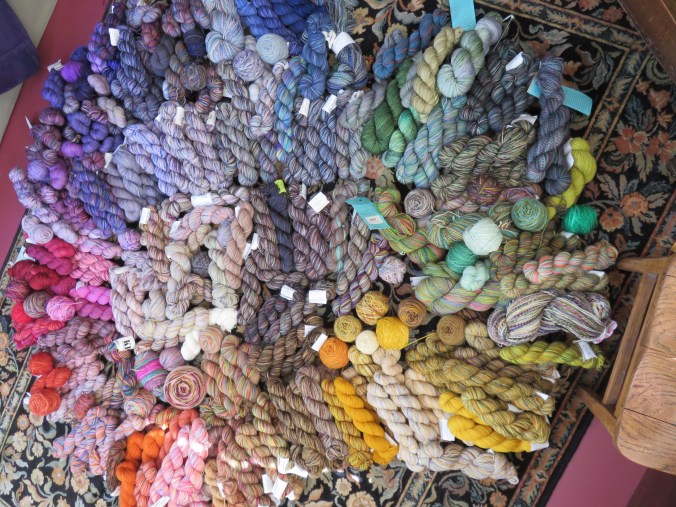
There are too many blues. I am not actually a blue person—I do not now have more than one garment in my closet with a pale blue pattern. What I have in my Made Things drawer is all from the other side of the spectrum. As a result, I have many blues, but mostly tipping toward green and especially purple. Not enough red. The red/pink bin is only a quarter full.

We all have our habits. My husband and I both love books and tend to fill shelves. Beyond that we have other things, too much of other things.

When I spread all my Koigu yarn and a handful of handspun skeins out in order to get them sorted back into bins by hue, he took a look and announced: “I am cutting you off.”

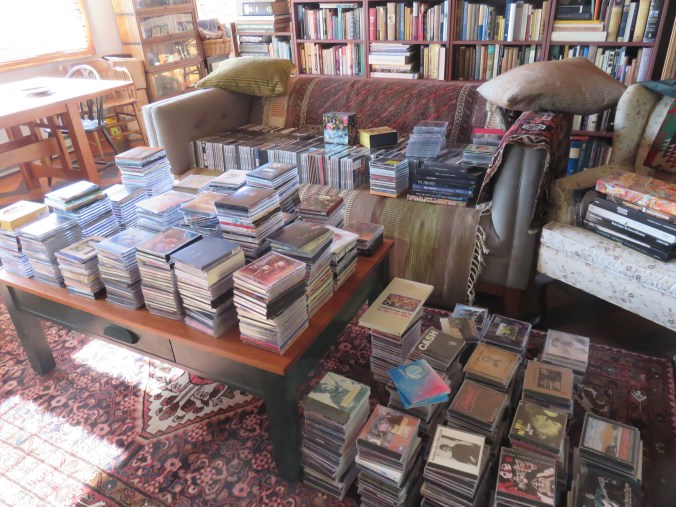
Then, the other day, he took all his CDs out of his bookcases. They filled the sofa and two chairs and made stacks a foot and more high covering the coffee table and the carpet. I tried to get a photo but could not get all the CDs in one shot. He did not count them. Suffice it to say he is cut off. He is humbled and sorry. “I am serious. You have to cut me off.”

IMG_4342.jpg

This is most of Gary’s CD collection, removed from shelves Monday. I think he meant to eliminate a few, but in the end, he spent an entire day (the day before yesterday) putting them all back. Every one. They are organized by artist and tradition or period. (Those are his books in the back too. Also organized by topic.)

Gary says, “It’s not a habit, it’s a sickness. Somebody please stop me.” He would like to blame Cervantes for some recent acquisitions because Don Quixote alerted him to even more music without diminishing his interest in Sami and middle Eastern, not to mention classic rock and roll. (No one should try to tell Gary about classic rock and roll.)  We will not go into musical instruments since he has friends with four times as many.

On the other hand, I felt free to order seven more skeins the other day. His pile is bigger than mine, more costly. And after all, I eventually wear or mostly give away my yarn when it has become something.

And when we spread them out, Gary might feel guilt, but all I can think of is how to put the colors together in order to make something, how that might be a shawl or blanket, those skeins might make a striped sweater. And then he plays a CD and his imagination soars, just like mine. Not “harmless” habits but beautiful.

Both of us know what sparks joy.

CLOSING

fullsizeoutput_f6a

I discovered yesterday that Tin House is closing after this month’s issue. I already knew about Glimmer Train, Shimmer, and the end of Apex except as a publisher of books. These were all excellent publications. The New York Times is only writing about Tin House, because the founding editors are in New York?

Sometimes I really do wish there were a newspaper on this coast I could subscribe to.

Penguin has reissued No-No Boy by John Okada. It’s an important novel that I read for a graduate class on Asian-American literature taught by a San Francisco University professor in a class at Portland State. Despite the fact that the novel was already reissued (the copy I read with an introduction by Lawson Inada), Penguin has chosen to completely ignore previous copyright and to claim the novel is in the public domain.

Sometimes I wish New York(City)ers were not such “a bunch of hustling people all squeezed up together being ‘Eastern!’ “—Lorraine Hansberry’s character Walter Lee Younger in A Raisin in the Sun.

A New York editor reportedly complained about a West Coast novel because it “has all these trees.” City people.

Reading the editor’s description of their literary journal, I found two women’s names in the list of authors they were proud to have published. Both names were misspelled. Ursula K. Le Guin. (She always included the K. and Le Guin is two words, not one.) The first woman to publish science fiction under her own name was Clare, without the I, Clare Winger Harris, not Claire.

And don’t get me started on the lay/lie issue in print publications—everybody has trouble getting that right, it seems, but some of us take the trouble to doublecheck this obvious trip.

Yes, peevish today, on a minor note, and despite the fact that my own line-editing is never perfect.

I am rereading Wild Life by Molly Gloss.


BOOK ORDERS

IMG_4120

I think of this as the Big Altar. Sometimes in summer that back wall shows lime green.

I received notice this morning that I saved $5.66 on the order of a book I have absolutely no memory of ordering six months ago. And another one, a book costing over twenty-five dollars, hard cover, by an author whose name I do not recognize, is coming in September. I think I must have read a short story by this person on-line. Maybe?

What I was actually thinking about this morning was the sound of the dawn chorus—the chattering and peeking and calling of a variety of songbirds that I particularly enjoy in late spring with my bedroom window open. Too quiet this morning. I hear the eurasian doves flirting. I hear the ocean, always the ocean. I hear my husband clearing his throat downstairs.

And I was reviewing memories of other lives I have lived. Pushing teaching off to the side, I was once a goldsmith, a sighthound field trial judge, an illustrator, a teenager. These were exhausting and interesting occupations—still fascinating to me after all this time.

My husband came upstairs and told me that I was not hearing the birds because they did not come on duty for another twenty minutes. I wanted to believe he was serious.

A crow.

I opened the novel the day before yesterday and worked for a couple of hours. I found a typo. I found a half-page repeated twice because I had rewritten it and then failed to delete the first version. I liked the first version better so I deleted the revision. I think I have still failed to scatter the ashes of the dead. If I open the manuscript today in order to scatter the dead, I think I will only find a typo.

I will begin the right front of my youngest granddaughter’s pink cardigan instead.

IMG_4122

This is the Little Altar.

DESIRE & PANIC

2260552.jpg

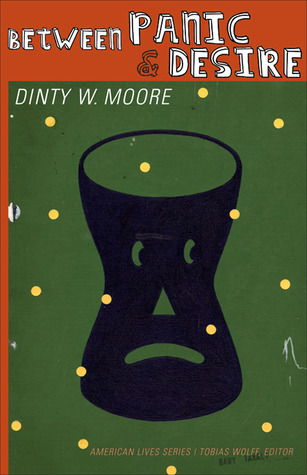
The author had my attention from the hilarious introduction to his memoir, Between Panic and Desire. I recognize the world he describes. Unlike his parents, my father never left; it was my grandparents who all divorced, some remarrying, some not. But while he was not yet 6 years old during the Bay of Pigs, I was already 8. I remember. My parents were fierce supporters of JFK, and Boeing Field was just down the road. However, living on the West coast, in the suburbs of Seattle, my life was never at risk during those tense days. The bombs could not reach so far. The eventual fallout, WW3, escalating tensions? I recognized those risks even as a child.

Fifty years ago, shortly before midnight on 16 April 1961, a group of some 1,500 Cuban exiles trained and financed by the CIA launched an ill-fated invasion of Cuba from the sea in the Bay of Pigs.—BBC

Dinty W. Moore recalls the period of our shared youth and I recall all the events he does—the international crises and threats, Squeaky Fromme, the assassinations, the same presidents, the same falling Towers. All the events that haunt his childhood memories. He yearns for his absent father, and goes looking everywhere for a replacement.

Moore was about 12 when Fromme joined the Manson “family”; I was not quite 15. I had to look that up because I never found her the least bit interesting. I remember Martin Luther King Jr.’s death as vividly as JFK’s. The balcony. The black horse, my mother explained, was “spirited because our president was spirited.” I never considered any of the presidents to be father figures, and I got over southern accents with LBJ. Happily, I met the person I would marry (whom I also mistakenly assumed on first sight was otherwise connected) at the age of 16, so I was spared Dinty Moore’s years of lonely drug abuse. My husband was not a user. However, Dinty Moore and I did not experience the 60s in the same way. My memory has a great deal more music and fewer cars. Many of my friends died. Peace marches. Feminism. Later, the AIDs epidemic. Identification as a visual artist. A long period of yearning for a country life. Moore had other concerns. I still do not consider that our failure to develop a strategic response to terrorism might have been a serious oversight. I wanted then to address the cause: ongoing imperialism. The corroding root.

When Dinty W. Moore lost his father, I was worrying about the world population explosion. By junior high school, my best friend was African American. Perhaps this is because I lived on the other side of the continent. I still do. I met the Dinty Moore in 2002, while attending a novel writing workshop with Bret Lott in Milledgeville, Georgia. He and Bret sat on a wide porch smoking cigars in the dark. (Perhaps only Brett smoked—I could be wrong about that.) Dinty will not remember me. I was the one typing on my laptop about twenty feet away, the Mac logo glowing.

While I was in Georgia that week, my mother drove the few blocks to her local Post Office and found she could not get out of the car. She drove home, crawled into her house, and called for help. My husband called me in Georgia on a landline and had to leave a message. I borrowed a phone to call him back. I wanted to fly home immediately, but this was the start of Memorial Day weekend and there were no flights available. The workshop organizers made no effort to help. Still, I got home on Monday, in time to sit in the waiting room while Mom had back surgery. Her surgeon promised immediate improvement. There was none.

This did not go well, I realize now, because she’d already been taking Fosamax for years and that bone-building medication actually interferes with the healing of bone. There was research suggesting that even then, but no one considered it for my mother. She was eventually placed on a deadly combination of opioids and benzodiazepines, failed to drink enough water, and was mostly housebound or hospitalized for the remaining five years of her life. Many, many trips to the ER. Broken bones. Slow healing. Pain. There is probably a way to make this a funny story, but I do not have the gift Moore does.

I have quit teaching, but the third essay in this collection, “Double Vision”, has a masterful structure, and I immediately and inevitably considered how I would use it as a model for student essays. There is no self-pity but considerable humor concerning his diplopia. He nails the short form. Well, what would I expect?

The award-winning memoir is elegant in structure and voice. These are very funny stories, a masterful and unique memoir of absent fathers, drug abuse, and eventual insight. Now I shall have to find a copy of The Accidental Buddhist.

TWO MOVIES

wind-river-md-web

Friends tend to express surprise that we still receive DVDs from Netflix. Perhaps “surprise” is not the word I mean. Shocked? Dismayed?

Nevertheless (a favorite word), we enjoy movies, the local theater is chilly and has sticky floors, and some films never get here. And then we find them on DVD, sometimes long after they were released. Wonderful, surprising, important films no one we know is talking about. They are not nominated for Oscars, their stars were not the thing that year, and yet, these are the ones we loved, these odd films we find entirely outside the general rush.

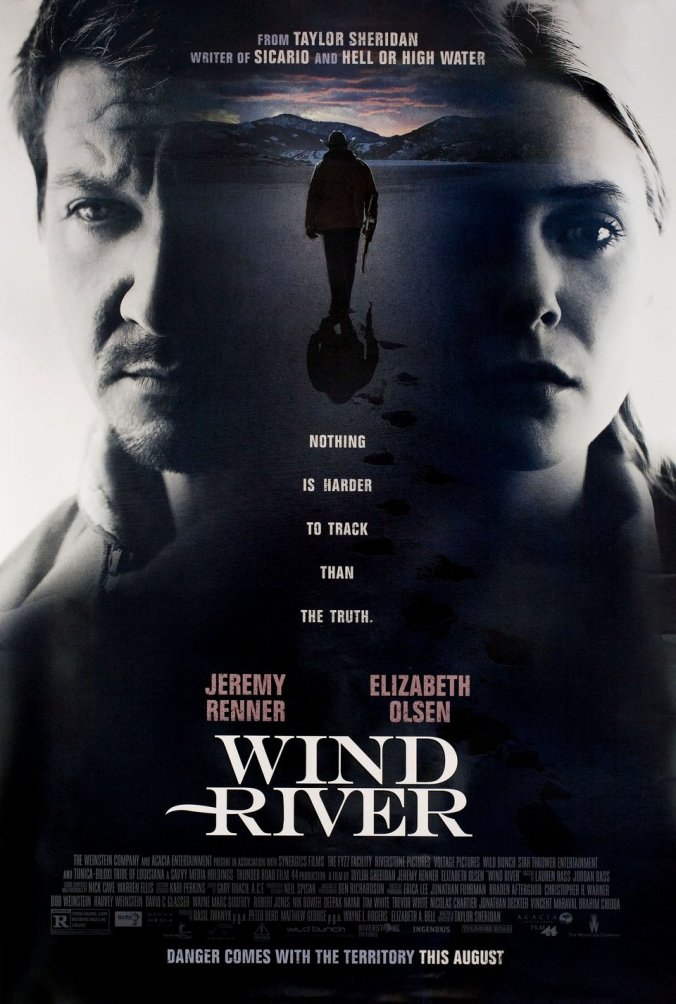
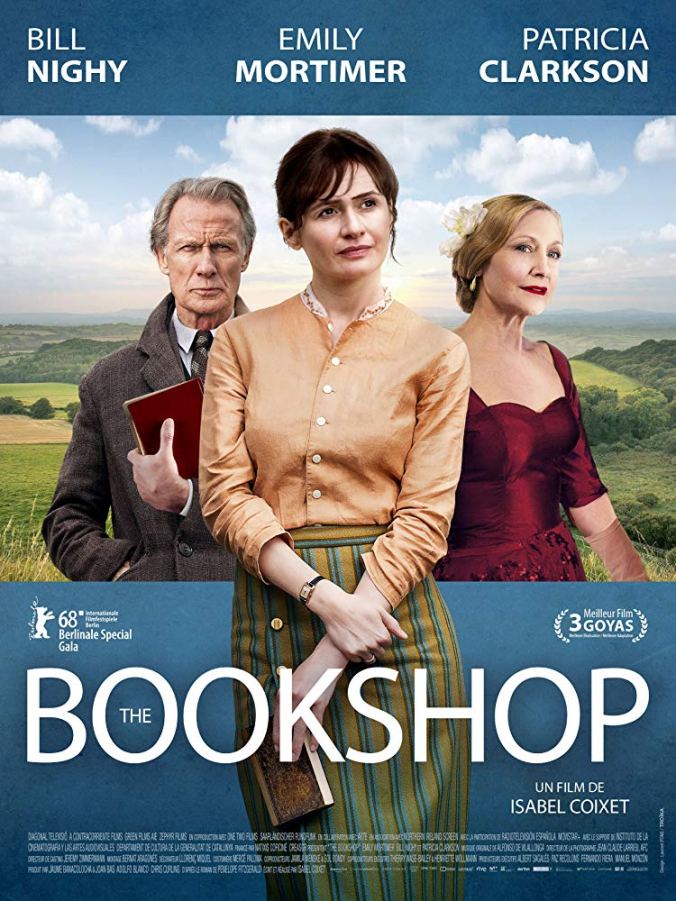
Last year we found Wind River (2017). Last night it was The Bookshop (also 2017).

Wind River is not an easy film to watch but it’s beautiful. I might wish this were not another film starring a white person but really about people of color. Even so, there is respect. There is a great story here. There is genuine honor.

During a winter season in Wind River Indian Reservation in Wyoming, expert tracker and U.S. Fish and Wildlife Service agent Cory Lambert discovers the frozen body of 18-year-old Natalie Hanson who was barefoot, without proper winter attire, miles from any building, and had a blood-stained groin. FBI special agent Jane Banner arrives to investigate a possible homicide. The next day, Jane learns from Natalie’s father, Martin, that his daughter was dating a new boyfriend, but he does not know the man’s name or whereabouts. The autopsy shows blunt trauma and sexual violence and confirms Cory’s deduction that the girl died from exposure, specifically pulmonary hemorrhage caused by rapid inhalation of sub-zero air.  …statistics are kept for every group of missing people except native American women. Nobody knows how many are missing.—IMDB, rated R

The Bookshop is a sweeter, sadder film. Have patience for this one. I got a kiss from my husband for this movie filmed in Northern Ireland (outside) and Catalonia (inside).

England, 1959. Free-spirited widow Florence Green (Emily Mortimer) risks everything to open a bookshop in a conservative East Anglian coastal town. While bringing about a surprising cultural awakening through works by Ray Bradbury and Vladimir Nabokov, she earns the polite but ruthless opposition of a local grand dame (Patricia Clarkson) and the support and affection of a reclusive book loving widower (Bill Nighy). As Florence’s obstacles amass and bear suspicious signs of a local power struggle, she is forced to ask: is there a place for a bookshop in a town that may not want one? Based on Penelope Fitzgerald’s acclaimed novel and directed by Isabel Coixet (Learning to Drive), The Bookshop is an elegant yet incisive rendering of personal resolve, tested in the battle for the soul of a community.—IMDB, rated PG

MV5BZmQwZTUwNWItZWQxOC00NWViLWI2OTktNTY5MDY3NjkyMzNiXkEyXkFqcGdeQXVyMTYzMDM0NTU@._V1_SY1000_SX750_AL_


TEACHERS AS STUDENTS

Cameron-Diaz-in-Bad-Teacher.jpg

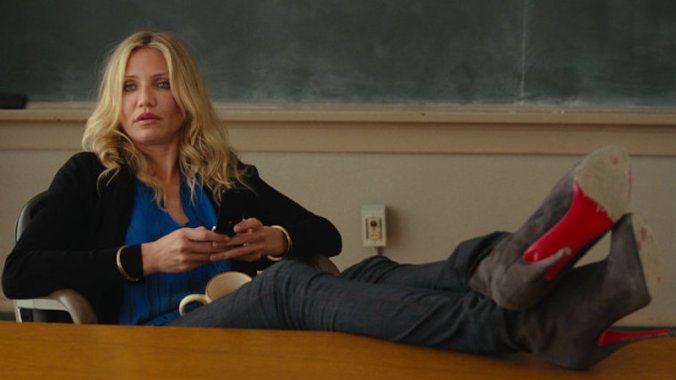
I have not seen and never will see this film. Up the Down Staircase, a novel, was written by a lifelong teacher. Most people who write books about their incredible experience and wisdom as teachers last 1-3 years in the profession before moving on to something that pays better.

A message arrived this morning via email with the image above and the headline below:

Why Teachers Make the Worst Students
As a snarky high school teacher, here’s what I came up with: Teachers don’t make great students.

The author offers a list of reasons teachers are bad students and she is pretty much spot on that they are uninterested in educational or brain theory, have too much to do already and resent being pulled from their classroom, and generally behave like the difficult and only marginally teachable students sitting in the back of their own classrooms. She doesn’t know quite why this is true and asks for help in explaining why teachers are often so unteachable.

It’s a funny post and she uses the complaints of her own students to illustrate common teacher complaints. She’s spot on.

Me? I am generally a sit-at-the-front sort of person with an exceptional academic record. Honest. I read newspapers each day. I have a lot of books in my house, fiction and nonfiction, and I have read those books. “Metacognition” is not an annoying word I dismissed once I knew it was no longer going to appear on a test I had to pass but a concept critical to my profession. I am fascinated by brain theory and willing to stir up curriculum even though it makes more work. I like the work. It’s why I teach.

My own explanations for why some high school teachers are such terrible students:

  1. Teachers are already waaay too busy trying to keep up with classwork to take time out of their day to attend a poor presentation. Liz Oppelt was right on target with this one. This is always true and is the biggest reason for their inattention. They already have a job waiting for them and truly do have more important things to do and most would prefer to be doing those things. Unless the in-service helps make that job easier, they would prefer to be doing their job.  or perhaps . . .
  2. That one teacher would rather not be there at all. There was a teacher in my building who was smart and effective in front of students but also only pretended to grade work and was easily swayed by fellow-travelers who charmed their way through their education. Being clever was enough. Another teacher in my building lay down each day during his prep period and napped or read the newspaper or anything rather than scoring papers or preparing for a class or counseling students. Some rare teachers kept a 40-hour work week schedule. This sort of behavior is not typical among teachers, probably less common than in some other professions. I have known shopkeepers who fail to ring out the registers, health care professionals who never bother to review records, bookkeepers who ignore illogical figures. It is incredibly rare to find a lazy teacher, but this 1-in-100 teacher is texting during in-service presentations. The rare Administrator too.
  3. The presentation is a genuine waste of time. We know bad when we see it because it’s our job. Yes, some presentations are bad. Sometimes really bad. Once in a long while a mandatory presentation is entertaining and held during an in-service week when teachers are in a great mood, even though the lesson doesn’t teach much other than how to play for an hour without actually learning more than four words in Spanish. But more often it is delivered by a hired person who was never a very good teacher to begun with (and maybe that’s why they went to work for the ESD or a private company or administration, jobs that all pay much better and involve shmoozing), or they are presenting material under contract and they do not themselves understand or care about it, or they have forgotten everything they once might have known about teaching and now want to tell about how much they love skiing or about their recent divorce. Or all of the above. (Seriously, this happens.)
  4. Some teachers do not want to be taught. Some teachers are bad students because, frankly, they were never very good students to begin with. (see #2) They are still not any more curious or proactive or ambitious about their subject or teaching as a profession than they were in high school. (Again, I see this in every profession—bankers, contractors, health care providers, small business owners who merely drift through their job.) Some teachers only want to get through their day. (see #1) They are not interested in how to do their job better. If they are teachers, they don’t care about educational theory or brain science now and never were interested because they do not care how people learn and never did. They want activities to keep students busy, or they want to be entertained, which is why they liked the terrible art/Spanish lesson delivered in Spanish that required an hour to teach four words and no art. (See #3)

Some people enter teaching because they thought teaching would be easy. It isn’t. But some small minority of teachers keep no books in their homes, waste time at school, never their profession whenever they walk out the door, and are incurious. They never do the best job they could because that would require too much work.

I love teaching and I love teachers. Most often we are overworked and tired. (see #1 again). We are inattentive because we have more important concerns on our minds as we do our best to educate. Give us something to help us do a better job for our students and you will have our full attention. We are always trying to do a better job.

But seriously, we know a bad presentation when we see one.


A YEAR OF READING IN REVIEW


I read, I realize now, a great many memoirs, beginning with Anne Frank’s Diaries and I Never Promised You a Rose Garden by Hannah Green [Joanne Greenberg], and right through recent best sellers. An essay on the Brevity blog defends the memoir against accusations of “misery porn.” Judging from my recent history, I am on that writer’s side.

On the other hand . . . she had warts.

On the other hand, I want more than even a well-written narrative of suffering. I want humor. I want objectivity earned through humility and suffering. I want wisdom beyond complaint. Growth. Insight. There are plenty of memoirs that offer all that. And not a few that fail.

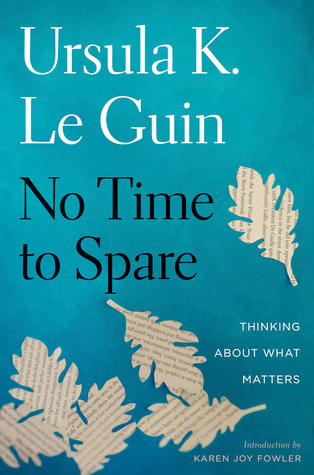
33503495Of the 66 books I read this year, several were memoirs or biographies. Of those, I managed to completely forget some. A Scientology surviver managed to bore me. A novelization of Dorothea Lange’s life was so awful I had to stop reading it. A collection of essays, introductions, and random notes by a favorite poet offered little to love, while Marilyn Chin’s new collection was quite marvelous. Ursula K. Le Guin’s No Time to Spare was a highlight, moving in ways that should not have surprised me. Ursula always had something valuable to offer an audience. Reading Lucia Perillo’s work makes me sorrow for her too-short life. Mazzeo’s book about Eliza Hamilton failed to decide whether it wanted to be bio or fiction. And though I am generally a fan of Joan Didion, her elitist attitude in Slouching Toward Bethlehem irritated me. (She goes to the grocery store barefoot and in a bikini and is incensed that someone has the nerve to be offended? Well, yes, in that time, it would indeed have been offensive, no matter who you thought you were.)
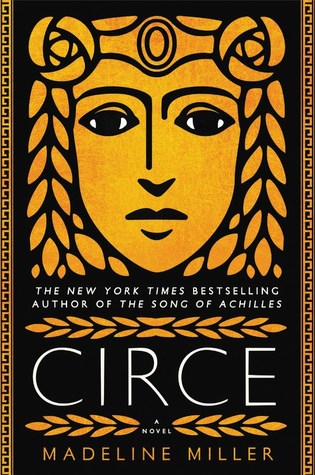
35959740Sadly, Pat Barker and Emily Wilson failed to impress me with their books of Homer. Madeline Miller, by contrast, completely astounded me with Circe.

In nonfiction, none was more impressive than Essential Essays: Culture, Politics, and the Art of Poetry by Adrienne Rich. I hardly know what to say. A 1997 speech explains the history of “identity politics” and how we must continue to find ourselves not only as individuals but as members of communities, that believing we exist as consumers in the marketplace fails us in ways that anyone alive and paying attention today will recognize. She was always ahead of her time.

But it is the novels that struck me this year, beginning with Circe. This is one of three books I hope to reread. Bette Husted’s novel knocked me down. Hild by Nicola Griffith is another. It made a huge impression on me for the way it reveals a brilliant mind in a long-ago time. Like Circe, Hild is shown doing what a woman in her position and living in her time would do, the day-to-day details, without diminishing how she wrestles with her dangerous situation.

Hild searches for pattern, for the warp and weft of her time, of the people and weather and the others living around her—birds and deer and the small shrews. From an endangered family, in a time when men in power can do anything, anything at all, Hild at 3 is already aware of how the light might fall just so and make her dead. How she stays alive, as an un-pretty child and then a sexually aware young woman, how she uses her blade, her understanding—this alone would make a powerful story. But Hild is more than that. She lives through transitions of Christianity and change, the clash of armies and of the secret powers of woman and priests.

She sees mor61+uqLOhUeL._SX331_BO1,204,203,200_.jpge in an instant than others will ever understand.
I recognize that people struggle with the names (of mostly real people, so the naming is not up to the author) and details (of ancient lives) but it is rare that a writer so fully captures the daily texture as well as the swordfights and trauma of any time, much less one so distant.

This is one of the great ones, one of those books I dwell on for a long time after because I cannot imagine having written it but desperately wish I had.

Historical fiction is challenging to both write and read. It must assume knowledge (and ignorance) on the part of readers while world-building in alignment with history. I know a great deal about the crafts detailed in this book and I am an unapologetic critic when writers get the history or details wrong. (As Pat Barker does in her new novel about ancient Greece.) I would have her metalsmith show Hild how to draw wire, but what is revealed here about crops and croft feels entirely authentic. The texture and flavor in these pages allowed me to trust the near-magic of Hild’s weaving.

Have I mentioned I love this book? There was a line I have been quoting: “Men are afraid women will laugh at them. Women are afraid men will kill them.”

Next volume please.

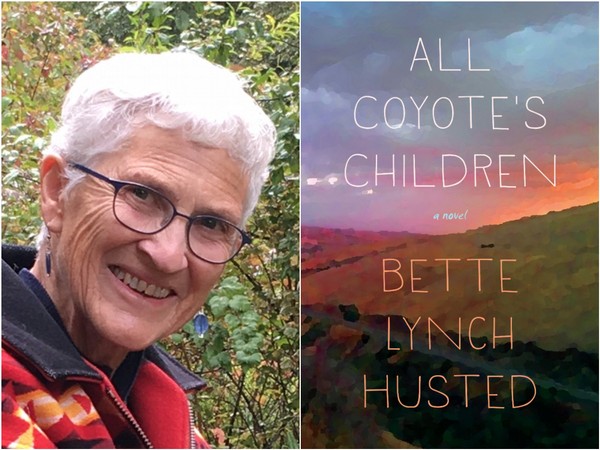
Closer to home in setting (though not in miles) is Oregon author Bette Husted’s All Coyote’s Children. Bette is a friend and I always read her work with interest, but this novel marks a turning point for me.

bette-lynch-hustedall-coyotes-childrenjpg-bc0574e4e7ab768d.jpg

One morning, my husband and I walked a long ways north before turning for home. I had been reading All Coyote’s Children before we fell asleep and again that morning. Once we were home from our walk I read after breakfast and during the day between doing other things. Some books you don’t want to end, but you also cannot bear to set down.

Gorgeous, elegant, heartfelt prose right from the beginning. There is a gradual release of information, of facts in this story of a family in recovery, which I admire a great deal. I appreciate a story that focuses on recovery after the fall rather than the fall itself. Everyone falls. Not everyone gets back up.

This is one of those books you want to hand to people, to friends and loved ones and people you barely know.

There is a reconciliation in these pages, tenderness and glory. I have a lump in my throat and tears in my eyes and I just want to sit back down and read it again because “sometimes a piece of story breaks off and rides the wind, and even if you close your eyes you know it’s going to find you. You hear it coming.”

There is confusion in the beginning, a reflection of Annie Fallon’s confusion after the death of her husband. These are loving, flawed, believable people making mistakes, doing the best they know how, and messing up sometimes. The complete story of this family is a long time coming and it is revealed in community. Lately I’ve thought a lot about community. The scientific evidence is mounting that the sort of relationships Husted develops in this novel are what most of us living in the “modern world” are missing. Missing all that connection to history and people and the very land itself might be what is killing us.

This novel provides a powerful reminder of the cure for what ails us.

I would like to see this taught in high schools. The story itself is strong, the history is solid, and the redemption it accomplishes is unique. It is an extraordinary story, a beautiful and important one about how we come to terms with history and landscape, family and obligation.

I read for love of reading, but also as a writer. So Circe, Hild, and All Coyote’s Children want another look.

Speaking of rereading, this was also the year I restarted an old habit of reading aloud to my husband. We began the Patrick O’Brian Aubrey/Maturin series a few weeks ago. It is my third reading, and I am impressed all over again. We are already on book 4, The Mauritius Command, and unlikely to finish it before New Year’s. There are twenty books in the series, and I read a few pages at a time, mostly while he drives or while we are in bed. Next year . . .

I read newspapers each morning, magazines, literary journals. I read some terrific books this year and wish I had time for more. I am not a fast, but a determined reader. I have selected a few books for their structure, but mostly I read what I love, the sorts of books I wish I had written.

There is just one essay left of Rich’s Essential Essays and I will be sorry to finish the collection, making it the last completed book for my year of reading.

WRAPPING UP

fullsizeoutput_e57

The year is not over, but with Hanukkah already past, five days to the beginning of winter, and just over two weeks till 2019, “the season” is closing in. The day before yesterday I wrapped gifts for twenty people. Yes, I am amazed too. We sent out fewer holiday cards, but we did get them out.

It was been an interesting year, and by “interesting” I mean in the sense of the Chinese curse: May you live in interesting times. I mean both marvelous and traumatic for me personally. A man who pursued me on the beach, screaming obscenities, pretty much ruined summer, and then the Kavanaugh hearings brought up old stuff I could have lived without reliving. The determination of people to deny a bad word about the dead, the continuing horror that is the current national administration . . . I did not sew a dress. I did not bellydance for an hour a day. I recklessly ordered a custom desk, but when it arrived it was nothing like what I asked for and it took a month to get the brute out of my office space.

I might not be blamed for feeling a little down.

Instead, we feel cheered to have paid off our mortgage this year. We are not yet accustomed to having disposable income. There is a large open space in the middle of my office space that I quite like. I read several dozen books and gave away books, and there will be more about that later. Reading aloud to my husband is something we have enjoyed in the past. Just now we are beginning the fourth book of Patrick O’Brian’s 20-volume series. It’s my third time through and it’s better each time.

We replaced our skylights, repaired some plumbing, and I painted the entire upstairs myself, including floors. We have been seriously divesting lovely things we do not need, have no room for, and our family doesn’t want either. The attic contains only a cardboard box and plastic tubs to catch the leaks, and no rodents. It’s never permanent, of course, but Gary got the job done. (Next year, the roof itself needs replacing, obviously, and the deck now has holes large enough for both my feet to step through.)

We went on vacation, several times, and not merely 6-hour daytrips to Portland that we have counted as “vacation” in the past 16 years. We went to Canada for two nights, Seattle, Forest Grove, Nye Beach, and Decatur Island. Nine days away. Imagine!

I sold a story and an essay—yes, actual money changed hands. I did not find an agent for my newest novel, but that is the result of my determination to indulge in an unpalatable structure. I am working on something else now. Plus, during NaNoWriMo, I wrote a lot of new material, and in the new year, I will work on that too.

On the visual arts front: I knit hats and sweaters; wove blankets, scarves, and shawls; and pieced one completed quilt. This was not all I had planned and a baby blanket is still waiting for me to complete a warp on the loom so that I can put on a blue-gray warp. Still.

Gary and I picked up half a ton of trash off the beach, and gathered an assortment of seaglass, shells, and pebbles that I have only half-sorted.

I taught Writing 121 and 122 last school year, and I have begun teaching that series again this month with a large class of willing and capable students (hooray!). This Thursday, a half dozen former students will be speaking to my college class about their college experiences. I will have made at least three batches of “the chocolate thing” from a Canadian recipe. (That making will happen after I get home late from school on Wednesday.) It is cream, good chocolate, egg yolks, and a tablespoon of orange liquor for nuance.

51mVnm2RrDL._SCLZZZZZZZ__SY500_SX500_Confirmation of my order of The Speed of Darkness by Muriel Rukeyser revealed the cover image, which I immediately recognized. I thought: I have that book already, downstairs in Ian’s old bedroom on one of the poetry bookcases. I have not yet looked to be certain it’s there. If this book was inherited from my aunt or mother, and I have possessed it all this time without reading it, well, that would be both bad news and good, wouldn’t it?

My husband is most pleased that I am regularly using my grandmother’s desk. It is tiny, a ladylike drop-front desk of satinwood, and unsuited to spreading out. I must confine my mess to a narrow surface and that might be a part of the appeal. I generally sit on the sofa with my laptop, or in bed as I am now, typing this post, but I open that drop-front desk each morning and sit at it for a time, and then in the evening, I plug my laptop in on a chest to my left and close my grandmother’s desk. Gary finds all of this precious.

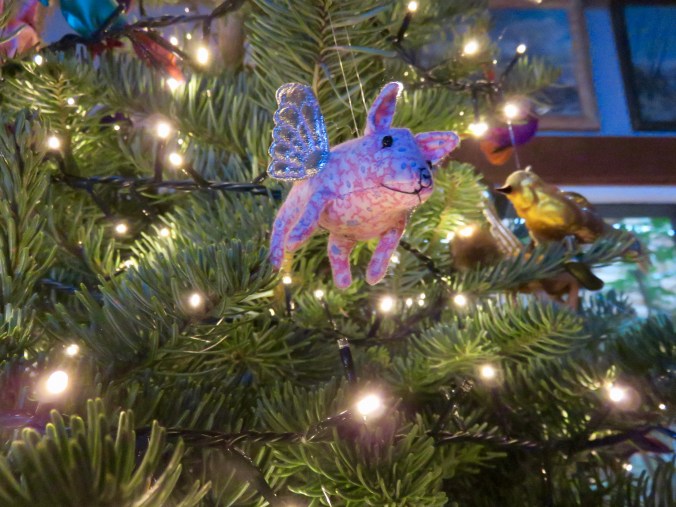
IMG_0015aThe tree downstairs has a thousand LED lights and is decorated with glass birds and tiny stuffed, winged animals made by Margaret Swanson-Vance of SewWing Studios. Some are more than 30 years old. This flying tiger has painted embellishment by her husband, who has passed (marked T  W  MS ’94 ‘Nar Bachcha’). The silver-winged pig at top is brand new. Upstairs is a little white paper tree in the front window. It has only a few lights and white ornaments, some of which are also from Margaret. A unicorn is on its way.

I have learned to bake panettone this fall. The sourdough start has not died but provided waffle batter, sweetrolls, and crumpets throughout the year. I did not make jam or jelly, but there are packets of fire-roasted peppers in the freezer, and we picked up tamale-ground organic masa from Three Sisters Nixtamal. For our Christmas there will be tamales! I plan to bake panettone, rugelach, and pecan cookies for the holidays, too, though it’s tight between the beginning of Winter Break (this Friday) and Christmas Day (next Tuesday).

We’ll manage in joy.