WISE WORDS

“When there’s no social pressure behind it, respectful behavior becomes a decision, an individual choice. Americans, even when they pay lip service to Judeo-Christian rules of moral behavior, tend to regard moral behavior as a personal decision, above rules, and often above laws.

“This is morally problematic when personal decision is confused with personal opinion. A decision worthy of the name is based on observation, factual information, intellectual and ethical judgement. Opinion—that darling of the press, the politician, and the poll—may be based on no information at all. At worst, unchecked by either judgement or moral tradition, personal opinion may reflect nothing but ignorance, jealousy, and fear.”

—Ursula K. Le Guin, May 2013 from No Time to Spare (pp. 14-15)

It is tempting to see this as prescient. It might be wise to consider what it says about our national character and how we find ourselves in the political situation under which we now suffer.

GREEN: LOST IN UNDERGROWTH

IMG_4432 (1)

[CLICK TITLES TO READ THE ENTIRE POSTS]  During my Junior year at the University of Washington, I took Elementary Botany in order to fulfill the distribution requirement for natural sciences. Most of my friends recommended Astronomy or Geology, but I chose plants for that last required class outside my major. Two months later I was ready to change majors, and though I ultimately stayed in the School of Art, I never looked at green in quite the same way again. There were weekly labs and lectures about various aspects of plant growth, use, and biology. We took field trips to look at a hydroponic tomato greenhouse. We dissected leaves and flowers under the microscope. We grew coleus plants from a single leaf and discussed alternative to clear cutting forests. One of our textbooks was notable for simplicity, many photographs, and the green leaf on the cover. I still have it on my shelf. During a lab, we dissolved chlorophyll, which makes leaves green, into alcohol. Light shining through through the liquid was transparent red like the ruby glass in a cathedral window. In pigment, green is opposite on the color wheel and thus the compliment of red. It is created through combination of the two other primary colors: yellow and blue. In optics, green is just to the left of middle.

Less than two percent of people in the world have green eyes. More than half the people in the world have brown eyes and so do most dogs, cows, horses, and many other mammals, but green eyes are typical in domestic cats. Cats’ eye color comes from more than pigment in the lens, the result of the two layers combining to give the appearance of green—the underlying layer is most often gold to brown and the clear layer refracts blue—like a pale translucent blue marble placed over a rippled and gilded surface. This is how some albino cats have violet eyes—the pink is overlaid with blue refraction making pale violet. This is also why all kittens are born with blue eyes—the color of the iris has not yet produced the gold to brown pigment found in most adult cats, and which we see overlaid with blue, creating green. Oddly, green frogs appear that color as a result of two layers in their skin, one blue and the other yellow.

The green-eyed monster is not a cat, but a jealous person, and the term probably originated with Shakespeare’s: How all the other passions fleet to air, / As doubtful thoughts, and rash-embraced despair, / And shuddering fear, and green-eyed jealousy!” from Portia of The Merchant of Venice in 1596 and from Iago: “O, beware, my lord, of jealousy; / It is the green-eyed monster which doth mock/ The meat it feeds on.” from Othello a few years later. The color represents a long history of paradox.

U.S. paper money is green on one side, but real value has always been in the land where we live and where the green grows. Scarlett O’Hara’s crazy dad was on to something when he warned her that “land is the only thing that matters, the only thing that lasts.” Now, with global warming, we understand it may not last forever, as that Irishman once thought. But on a human scale, it is green that keeps us alive.

Eat your leafy greens, we are advised, and yet people may choose a vegan diet and gain weight because they fail to follow that sage advice by eating too much of everything but their green vegetables. Green leaves are, and likely always have been, a critical staple in the human diet. I know people who defensively claim to be “carnivorous” when vegetarians show up at the table. They are not carnivorous, they simply like eating meat. Protein is an essential part of any human diet, too, but most of the nutrients we need to survive and thrive come from plant sources.

A quick survey of our biology proves that humans are omnivorous—like bears we can and will eat almost anything. Our teeth are more suited to grinding than to tearing flesh. Our gut is long enough to digest grain, though not complex enough to digest raw grass. The enzymes in our mouth a gut are suited better for fruits and vegetables than anything else.

In his book The Omnivore’s Dilemma, journalist Michael Pollan regards the irony that humans seem to thrive on most any diet except the one Americans eat. He is mostly right, but recent genetic testing reveals that populations surviving on a genuinely carnivorous diet, such as the Inuit, have a genetic adaptation that allows them to thrive on an all-meat and high fat diet. Most humans cannot eat their diet and remain healthy. That’s because the chances are slim that people whose ancestors evolved outside the Arctic Circle possess necessary genetic adaptations allowing us to digest omega-3s and other fatty acids as efficiently as the Inuit in Greenland. The Inuit’s adaptations have likely been around for thousands of years, allowing humans to live in the far north. In exchange for these particular adaptations, Danish researchers found the Inuit are uniquely healthy, living on a very high fat and animal protein diet, are leaner and shorter, and almost never suffer from heart disease. It seems those fad diets that tailor diet to body type may have been on to something.

Still, for most of humanity, Pollan’s opening advice is solid: “Eat Food. Mostly vegetables. Not too much.” Eat your leafy greens, just like Mrs. Michelle taught me in seventh grade Home Ec.

Not everything that is green is healthy for your body. Tobacco was green leaves once. Marijuana, too. Oregon has recently legalized the possession and sale of recreational marijuana. The stores are everywhere. Now we are seeing enormous increase in demands for electricity to grow this newly legal crop in a climate that does not really suit it. In warmer nations like Pakistan, the drug is truly a weed, something farmers yanked from their fields like dandelions. Green.

The Green Revolution was the first great attempt in modern history to end famine. In the 1940s, Dr. Norman Borlaug, a biologist, developed a strain of disease-resistant wheat producing high yields. His goal was to end starvation by allowing crop yields to catch up with population growth, and he did this not through current practices of genetic manipulation but through old-fashioned selection, rushing evolution—breeding the best of the best of the best, backcrossing hybrids to set traits, and developing shorter and stronger stems to hold a larger ear of wheat. Beginning his work in Mexico, it would be the 60s before his improved wheat became a staple crop around the world. He would win the Nobel Peace Prize in 1970 for his efforts and was honored many times before his death.

When I heard of Borlaug’s work in high school, I thought he had permanently resolved the problem of population outstripping food production. Dr. Borlaug was not so naïve. Wheat yields have quadrupled in developing nations since 1950, but populations have grown faster to eat them. In his Nobel speech, Borlaug warned: “The green revolution has won a temporary success in man’s war against hunger and deprivation; it has given man a breathing space. If fully implemented, the revolution can provide sufficient food for sustenance during the next three decades. But the frightening power of human reproduction must also be curbed; otherwise the success of the green revolution will be ephemeral only. Most people still fail to comprehend the magnitude and menace of the “Population Monster . . . ” He saw clearly into our future and one of his goals was to increase yields on the best agricultural land in order to avoid further deforestation. Ironically, his work has been criticized for increasing dependence on artificial fertilizers and pesticides.

Yes, what matters is the land and what we can grow on that land, but the greatest threat to green on this earth is us and our growing need for food. What matters is not just the green before us, but allowing the green to continue. Something else I learned in school is that population growth will always be always limited. It can be limited through deaths from war, disease, and starvation, or it can be limited by choice. One reason I am a vegetarian is that my food leans a little lighter on the environment. But when the kale goes bad in the crisper, as mine did and had to be tossed yesterday, then I become part of the problem. Some 40% of food in America is thrown away. We are fat in America, fat and wealthy enough that we can afford to throw food away.

What we value impacts the ways we use language. People who have lived in tropical forests all their lives see many greens and can name each one. People who expect to see a shape and color together will, when faced with a mismatch, first see the color and assume the shape, rather than the other way around. The green circle repeated makes the next green thing appear round even when it is a square. Color is prime. Leaves are green. Shown a dozen leaves that are yellow and red and purple, we are still certain that all leaves are green.

The word for green in English derives from the German, to grow. Other languages show similar associations between the words describing green and notions of growth, meadow, grass and to flourish. Yet, like other colors, the color green has different associations in different parts of the world. Japanese and ancient Egyptian cultures associate green with eternal life, and among Muslims it is a sacred color associated with the Prophet Mohammed. In the Renaissance, green was a color commoners were allowed to wear, but it was a sacred color of plumes worn by Aztec priests. Jade is a precious stone, as is the emerald, and both are valued above colorless diamonds. Green is a Sunday color among Catholics and the color of the Roman goddess of love, Venus.

The ocean I watch every day is most often green. It is green just now, that shade called celadon in Chinese porcelain from the first century. Burning heat turns some metals toward their opposite on the spectrum. The celadon glaze is translucent, pale gray-green and comes from a chemical reaction in firing the glaze with tiny amounts of iron oxide. Rust. Like iron, copper also turns green in some firings, but can also produce russet-redbrowns. Natural contamination of sand used to make Coke bottles is responsible for the green color. That is the green I see outside my window, and the colors most often in sea glass from my beach.

“Going green” requires us to tread lightly in the world, and green is also a color of mould and decay, the tint of white skin after death, a hue of disease but also of crops and food. Rare, treasured, dangerous obsession and envy, the color of money and heartache, the rich satisfaction of appetite and lush landscape. Green is a color we distrust and consume, both love and avoid. The study of plants and consumption, life and survival.

SaveSave

FORGIVE THEM

The New York Times has an article this morning that is misleading about Oregon’s public retirement system. Many readers are furious. One wrote:

“As a Republican in Oregon I weep regarding the Mary Walsh piece on Oregon´s public sector pensions. It is to a large degree a rehash of periodic attacks by the state´s largest newspaper, the Oregonian. As it reported recently 9 of the top 10 pensions were either for physician-administrators at Oregon Health Sciences University or football coaches. The convoluted retirement system described by Walsh reflects a combination of rosy assessments, a willingness of successive state governments (including Republicans) to use the pension system to solve other problems such as reframing salary raises as future pension benefits, and the state’s idiotic constitutional requirement that income tax revenues above estimates two years previously must be returned to taxpayers rather than used to cover obligations such as future PERS benefits. Oregonians face pressures on services precisely because they voted to return to their pockets funds they had already paid out rather than channeling them to backfill a foreseeable commitment. This is what passes for financial prudence in Oregon. Walsh does not mention this, presumably because it is inconsistent with the narrative she wishes to promote. There is no reason for highly-paid administrators to be part of this system, nor for athletic coaches to be pensioned in the same fashion as corrections officers or state foresters. But beware of manipulated critiques. Note: I am not now nor have I ever been a member of PERS, nor is anyone in my family.”

I retired in 2015 at age 62 because during my final year of teaching English full time I was ill, twice, for 3-4 weeks at a time because of overwork. My district could “not find the funds” to allow me to continue working 2/3 or 1/2 time so retirement became my only option. I have been healthy since retirement, but I have not quit teaching. I still spend several hours each week as a volunteer in that school and also teach one class for two of the three terms.

My PERS pension is less that a third of what I made teaching despite working for this district since 1979, the first eleven years as a substitute teacher while my children were young.

ALL teachers in Oregon were forced into the new pension system when it was implemented, though the money I paid into the old one remained there. For the last years of my teaching I paid into the new system.

Yes, I paid into my retirement. And in addition to what I receive today from my work under the old PERS system, I also receive the princely (and variable according to the market) sum of about $350/month under the new system. This pension will end after 20 years.

I have 6 years of undergraduate education with three degrees, and 7 years of graduate school with a terminal degree (MFA). Thus I am qualified to teach K-college in four subjects. My former students from a small, rural, and poor school district have gone on to become doctors and lawyers, engineers and entrepreneurs, authors and dancers and more. They attended Duke and Pepperdine, Stanford, Harvard, Brown, Chicago, Columbia, and my alma mater of The University of Washington and Pacific University.

Oregon tried to renegotiate payments to retirees, but the court would not allow them to do this. Instead they forced all employees onto the new system, not just new hires. This detail is reported in the article inaccurately. Those hired under the old system kept that pension, but could not pay into it (many teacher, for example, accepted flat salaries for years and also paid into PERS). EVERYONE was required to work under the new system when it was instituted.

Like most retirees in my state, I am tired of being blamed for fiscal irresponsibility and the outlandish benefits paid to a few high fliers. My pension was reduced several times from what I was originally promised. My expectation that it not be reduced further is reasonable and only fair.

THE CANON

[from main page, CLICK TITLE above TO READ THE ENTIRE POST] 
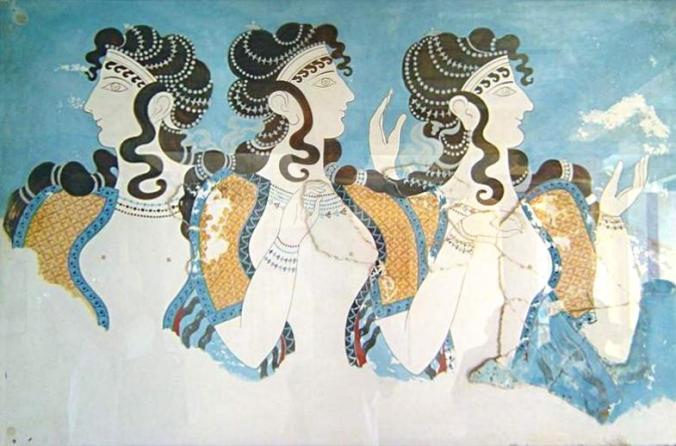
Minoan_Queens_Fresco.jpg

This is the “Minoan Queens,” one of my favorite frescoes from Knossos on the island of Crete, a mural from a civilization flourishing between the 27th and the 15th centuries B.C.E. The image appears, quite inappropriately, on the cover of the Wilson translation of The Odyssey. It is beautiful but in no way reflects the time or the culture of Homer’s Greece. Most scholars believe the epic works attributed to Homer were created late in the 8th century B.C.E., several centuries after the fall of the Minoan Empire, which was, in fact, not quite Greek. (Wilson makes a case for The Odyssey a few centuries earlier, but it’s still a clear miss.) The peaceful seafaring and trading society was long gone by Homer’s day. Some guess that this wide-reaching Mediterranean society was egalitarian in terms of gender. They worshipped a goddess. They kept no weapons of war. Very different from Homer.

The canon is the essential literature that we assume everyone ought to read. In the twentieth century the Western Canon came under attack for being too determinedly dead, white, and male. Mostly dead. It has broadened somewhat since the days I was in school and read dozens of stories and novels by white men. There was not one novel or story written by a woman or person of color. I read The Diary of Anne Frank, but even Shirley Jackson’s story, “The Lottery,” was not in the curriculum of my school.

I found A Raisin in the Sun as a teen and was blown away by this story of racial injustice and poverty. I determined to provide a broader view of the world to my own students and for twenty-five years I assigned texts by men and women of color,  from Africa and the rez, and yes, from white men.

I was also writing my own stories and was assured again and again that if I continued to do good work, it would find recognition. Maybe so, but I have not found that to be true for other writers, and I question whether the canon is or has ever been representative of the best.

A great many dreadful books remain in print, and Zora Neale Hurston was out of print for decades. She did, of course, find her way back into print, but almost accidentally. The resurgence of appreciation of her work was the result, partially at least, of a single fan who found a copy of one of her books in a library, went searching, and wrote up her discovery for a new magazine called Ms. The fan was Alice Walker, author of the Pulitzer-winning The Color Purple, which is also a block-buster film. Walker championed the out of print novel of Hurston, and now that novel is widely read. I taught it for years.

It would be optimistic to assume that every novel as fine at Their Eyes Were Watching God would gain publication and remain in print, but I suspect in this case this is not the result of some magical efficiency in our system of evaluating and choosing great works.

What we most treasure is what we are told is good, what we are forced to read, and what others helps us to appreciate. That does not diminish the book we’ve never heard of, the one aging and unread in the school library, or the book we do not have the background to immediately understand. What we love in books can never exceed our experience, and our experience is limited.

Somewhere in someone’s attic is a novel written out in longhand, typed, or word processed—just the one copy—that you and I will never know but which might have changed our lives.

I was reminded of this truth recently as I began reading through a third complete translation of The Odyssey, the prize-winner by Robert Fagles (1996). I have already read one version that makes no pretense at replicating the poetry of the original, but places line numbers in the margin so that I know where I am in the original (Rieu, 1991). The other translation did its best to manage the original line-for-line in iambic pentameter, so that it offers precisely the number of lines as found in Homer’s Greek (Wilson, 2017). Fagles offers line breaks and stanzas in the appearance of poetry, and he numbers his lines, but his line numbering is of his own lines, not Homer’s.

Unfortunately, I am not interested in Fagles’ line numbers; I want to compare his translation directly to the other two. In some of the twenty-four “Books”, his line 190 is a line or two off of the original shown in the other two translations, other times it is off by a dozen or more. I must scan for Homers 7:107 to find the weavers’ oily cloth on line 123. I am still not certain if the oil used is from olives or some less precious source. One translation offers olive oil, but Walker, gaming determined to keep 10-syllable lines (which she often fails to achieve)  and the other poetic version, do not offer a type of oil:

…their hands fluttering like the leaves of a tall poplar, while soft olive-oil drips from the close-woven fabrics they have finished. [7:106-7 translated by Rieu as prose]


with fingers quick as rustling poplar leaves,

and oil was dripping from the woven fabric. [7:106-7 translated by Wilson as “iambic pentameter”]


fingers flickering quick as aspen leaves in the wind

and densely woven woolens dropping oil droplets. [7:122-3 translated by Fagles as poetry]

[I think, ironically, the prose is the most musical. Wilson’s poetic translation is awkward and not iambic pentameter. Homer sometimes dropped a syllable in his 12-beat line for emphasis, Wilson adds a syllable, but I cannot say why. The word “fabric spoils the rhythm and might have as easily been translated as “cloth.” And Fagles, oh dear, the alliteration nearly becomes a tongue-twister. Where is the poet-translator when most needed?]

Was it olive oil that dropped from the cloth and not some common oil? This matters, because The Odyssey includes many such details of wealth to emphasize the elite position of the principle characters. Class and position are continuously emphasized in details of food and clothing, gifts and weaponry. Odysseus is expected to be treated well as a stranger, but the fictional birthright Odysseus invents is immediately used in support of this treatment. We are not dealing with ordinary people, we are dealing with favorites of the gods.

One introduction dismissed the possibility of a woman composing these epics because a woman would not have been adequately familiar with warfare to tell about it in The Iliad. I wonder how a blind man would have known any of it? How would he have known so many details about housekeeping and weaving and the dyeing and spinning of wool, all of which are covered in great detail in The Odyssey. Never mind, I will accept that it is unlikely that a woman of this period could have composed these epics. I have other quarrels.

Each introduction I have read, has focused on the challenge of understanding Penelope’s purposes and feelings. On the basis of only two translations and several introduction, no Greek, and my own experience and research, do not find Penelope’s actions the least bit opaque. She was commanded by her husband when he went to war: raise my son to manhood and remarry. She has stalled the suitors until Telemachus is grown and then, much as she would prefer not to, she will marry. How is this inscrutable? No action by Penelope contradicts these goals. When another characters swears faith but privately conceals deceit, Homer’s words reveal the lie. Penelope follows the promise to her husband. She will do whatever she must to safely raise her husband’s son and then she will remarry. She is not happy about remarriage and she misses her husband, cries over his absence. These are an absolute constants. Homer is not cagey about the secret feelings of anyone, not even Penelope.

Today, we might find such loyalty rather bizarre, but Penelope is not mistress of her own fate, she is a loyal member of her husband’s household. She does her level best to abide by his wishes.

This is a story of blind obedience, of absolute rank and privilege. We might want to believe Greece is the birthplace of democracy, but it was a brutally stratified society in the days The Odyssey was told, and a few centuries in the golden age of Athens, it was little improved. Only land-owning men had rights, and there was punishment for overstepping position or dressing beyond what was defined by law. Slaves had no rights. Servants were beaten. Failing to follow instructions lead invariably to death.

The Odyssey is not a nice story.

There are other details of form that are addressed in introductions, but rarely translated—the names of main characters, for example, are routinely prefaced with an epigram that denotes their essential character. Certain passages such as the oft-translated “rosy fingered dawn” are repeated each time in the original Greek, but most translators insist on varying the language, and lose the original oral patterns in the process.

When a translator abandons or adds detail in order to create a palatable text in another language, ignore characteristic repetition, or utilizes contemporary idiom, are we reading Homer or some other version, like a “based on” Hollywood movie?

Never mind. The Odyssey concerns a culture mostly dead—and it would be unreasonable to expect every student to learn Greek in order to read the epic in the original. People did, though, as late as a hundred years ago. The story is not completely beyond our understanding. You might recognize the bombastic egotism of Odysseus—and then you might wonder why anyone considers this braggart a hero. The motivations and values of its characters are worthy of study for how they are different from the motives and values of most of us.

This rather far-fetched and nasty story rarely taught in public schools, and then usually only in excerpt. The Cyclops story Odysseus tells in Book 9 is a favorite and most familiar. And there are other monsters and magicians and dangerous sea voyages and butchery that go on for twenty years. Odysseus’ journey is appropriately nasty, brutish, and long. Only Odysseus survives, and he survives, according to his own account, by superior wits and the aid of the gray-eyed goddess Athena.

I am not done with The Odyssey. It is a different world and it carries the reader to a different place. There is still the rest of Fagles for me to read and then Chapman’s Homer (1616), which ignores any attempt to follow or mark Homer’s lines. But it is beautiful.


But all had motion apt, as Aspen leaves.

And from the weeds they wove, so fast they laid,

And so thicke thrust together thred by thred,

That th’oile (of which the wall had drunk his fill)

Did with his moisture in light dewes distill. [7:141-45 translated by Chapman as poetry]

Translation, as I have said before, is a bitch.

But despite my devotion to understanding Homer, without learning the necessary Greek, I cannot help wondering what other great works I am missing. What has the canon left out?

Might there have been equally adventurous and more egalitarian tales of Homer’s age? Perhaps. No high school teacher I know has ever assigned The Monkey, for example. I have read only bits and pieces myself. In translation, neither is a favorite, but each is has been enormously influential. I found Sappho n my own and read her work when I was 15. I found many authors who were not in the canon.

What texts did we miss? What else was written that might more closely reflect our values?

It is widely assumed the The Odyssey is a vital and necessary and supreme piece of our literary canon. And so it is true. But how do we know what else might have held its place? As one example, in it’s day Romola by George Eliot was regarded as her greatest work. I have never met anyone who even pretended to have read it, though many are familiar with Middlemarch. Who decided that Middlemarch was Eliot’s greatest work?

I return to the question about the canon: Do we base greatness on what has been recognized throughout time, what was most treasured in its own day, or from what we have to choose from? And do we accept the texts that reflect our values or merely attempt to squeeze our current values into old stories?

Are we reading the right texts?

If I had another life, I would study Greek and produce a strange, rhythmic story meant to be spoken in all its brutish glory.

SaveSave

SaveSave

SaveSave

SaveSave

SaveSave
FIFTEEN MINUTES

IMG_1041 (1)

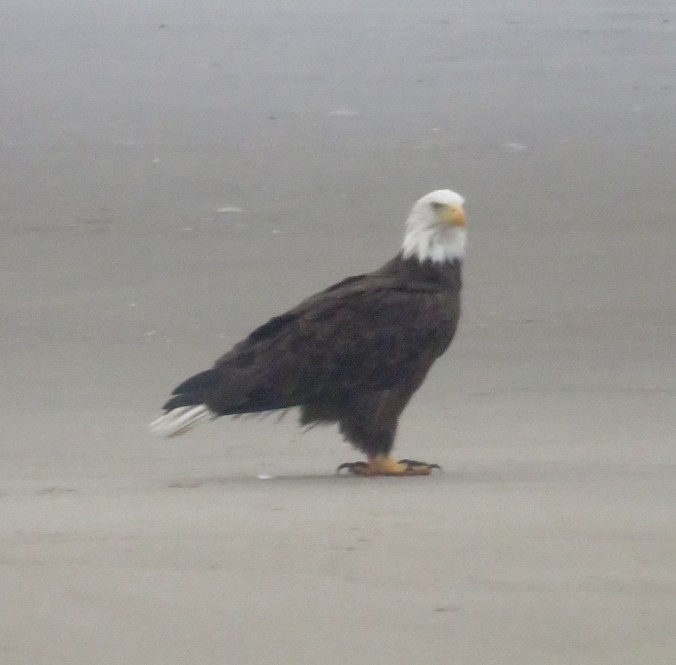
[CLICK TITLES TO READ THE ENTIRE POSTS]  An eagle flew by just offshore. Both my husband and I noted that she was flying lower than we had ever seen one of our eagles fly. Gary thought she would hit the water, but she was working hard and stayed in the air. I watched her skim around the big rock on the cape, catch an updraft, and abruptly drop out of sight. Wet, I figure. She was flying, but struggling to get home with wet wings. They don’t like being wet.

That eagle has never read a book, but you should. Books will help you live longer. Books can make you a more empathetic person. Books take you places you will never go any other way. There is a connection between happiness and books—people who read more report feeling happier—though perhaps not a causal relationship.

Just in case, you should read more books

Yes, I know, you read so much troubling news, you cannot possibly be expected to read anything heavy. You read for your work. You are an academic and read student essays. You have a demanding job. You teach middle school. You work with the public. There are only so many hours in the day. It is all too much. No one should expect you to read—um—literature in your limited spare time.

In three weeks of reading about fifteen minutes a day, you can read a novel. That’s 17 novels or works of narrative nonfiction a year. The average American reader reads maybe 4 or five books a year. Many read nothing at all.

The man who does not read good books has no advantage over the man who cannot read them.—probably not from Mark Twain, but smart


I do not read anything but history and biography. You perceive that for me to presume to indicate the hundred authors which a person ought to read, would be folly. No, leave me out: My testimony would not be valuable.—Samuel Clemens in a letter to Joseph B. Gilder, 16 May 1886

You may read a young adult book or something The New York Times recommends. I already have a stack to chose from, but choose your stack of to-read books based on what you like. Even the easy ones will leave you feeling good about yourself. The hard ones will annoy and exasperate you, but have you feeling proud and eager to tell someone else.

Fifteen minute, huh? I hear you scoff. Where am I supposed to find fifteen minutes a day?

Read for fifteen in the morning before allowing yourself time on Facebook. You have been meaning to cut back on social media anyway, right?

Read for fifteen minutes before you go to sleep. You would likely just be lying there anyway, desperate to unwind. Unwind with a novel.

Read for fifteen minutes while you wait in line at the bank, at the gas station . . .

Read for fifteen minutes while the baby naps as a reward for being a parent and before you start cleaning the kitchen.

Read for fifteen minutes after you clean the kitchen. It’s an excuse to sit down.

By all means, take the stairs at work to get a few minutes of cardio. Eat a smaller portion for lunch, have only a salad for dinner, or skip dessert. Call a friend. Plan a vacation. Take a nap, for goodness sake, if that is even a possibility. All of that is good.

Taking care of yourself is not punishment. It’s a reward.

Read for fifteen minutes a day.


SaveSave

BEING SOLD

Just now I have only two ads on the side of my Facebook feed. One is for organic cotton sheets and the other offers to sell me the “best reviewed” mattress. I am seeing these two ads because yesterday I was shopping for organic sheets and a new mattress. You see the connection, right? Facebook knows where I have been and so do the newspapers I read. Twist ads always appear in the middle of my Times stories. If I look too long at a lamp on the Crate and Barrel website, the company sends me an email warning me how few they have left in stock.

I have the general understanding that cookies are involved. It is as if I were shopping at a mall and someone continuously walked behind me, noting on a little pad of paper what I look at and for how long, and then sent me junk mail based on those notes.

Except that the internet does it with computers and they do it far more efficiently.

Mark Zuckerberg is testifying before Congress this week. Many of those asking him questions seem not to understand how social media works. Despite, an excellent article in the Post, which illustrates how little those questioning him understand social media, I wonder how much most users understand.

The platform exists to make a profit and it does this by selling our shopping habits, also our political and social concerns. It also made money by selling space to propagandists Cambridge Analytica, bent on electing Donald Trump as president.

 “It was my mistake, and I’m sorry,” [Mark Zuckerberg] said.

He sounded as if he had broken a vase, not a democracy.

But the entire purpose of Facebook is to make money by treating its users as the product that it sells to advertisers. Anything that impedes that is going to be extraordinarily unwelcome — and thoroughly resisted — despite Zuckerberg’s insistence to the contrary.

In case you were in any doubt, Facebook makes a great deal of money selling space and users. Is there a difference between selling space in order to convince you to buy “the best reviewed bed in the world” and trying to sell you lies about our political candidates.

Yes, dears, there is a difference. We were sold, and in this case we were sold to people lying to us about our country. And while Zuckerberg is in some trouble just now and has vowed to fix this “problem” (Facebook stock is back up), I assure you that he will continue to sell to whomever is willing to pay.

I knew signing up that Facebook was for sale, and that I was for sale by using it. I weighed benefits (no cost up front) against cost (someone collecting my information) and chose to participate anyway. When I see the lunatic memes, I call them out or let them pass depending on my mood and whimsey. I am not the web police. I am the daughter of parents who believed in getting facts straight. I make my living by teaching others, among other things, to distinguish between opinion, fact, fiction, and outright lies. (They do not always learn.) When the claim is important, I check it out.

Most of what I read on the internet is marvelous and accurate reporting. Some of what is posted on the internet is trash. Even news markets vary. When coal miners were trapped underground in Chili, Fox News had the only reporters who remained until they were rescued alive after their record-length 69 day entombment. But Fox & Friends, the channel’s afternoon “news show” is about as trustworthy as three of your alcoholic neighbors working on their second or third sixpack. They might say anything. A reporter on a morning news show offers a “maybe” conspiracy theory, and by afternoon the Friends are reporting it as fact.

Know your sources, and doubt the outrageous story. If whether it makes you furious or frightened: Check and verify. Avoid the “op-ed” and “opinion” pieces if you want straight news, but be aware that being aware requires trusting the right people.

The truth is out there. It is rarely as entertaining as you might wish. It is always more complicated. Distrust the easy answers. No one is out to get you . . . They just want you to buy their brand of mattress. They want your vote. “Follow the money,” the saying goes.

Your attention is for sale. Beware.

WHITE

IMG_2860

Skim milk and new snow, American’s teeth, the inside of most apples, stratus clouds, locker room towels, fleet trucks, bathtubs, coconut flesh, porcelain, chalk, sugar, bleached flour, drawing paper, Jockey shorts, daisy petals—loves me or loves me not?—, picket fences, the whites of their eyes, the fog line beside the highway, and the sign that warns “Do Not Pass.” 

I am granted the option, but I do not decline to acknowledge my race on the forms. I check the box Non-Hispanic Surname Caucasian, though All of the Above is closer to truth. My great grandmother on one side was from Mexico, and on the other was perhaps Blackfoot. I was never made to suffer for their color or languages. I am white. My relatives spoke English before I was born. My mother’s skin was pinkish, her eyes were blue, her hair was pale. All my dolls had pinkish skin and blue eyes and blond curly hair. They did not resemble me in any detail. I dismantled them, pulled apart their arms and legs and removed their heads, studied their soft plastic joints, reassembled them in different order, used nail polish remover to wipe away their red lips and their dimpled pink cheeks, filled their bodies with dirt, left them out in the backyard rain. My childhood fury is what I conjure to remind myself what it means to stand before the master narrative and find myself excluded. No President has been a woman. It is not true that the masculine implies the feminine, as I was taught in school. 

The White House, white nights, doves, frosting, feathers, pinprick stars, white chocolate, white out.

In the Western world, white is the color of innocence and brides, and what we name white diamonds in her ring is a colorless stone, clear like the raw white of a fresh egg. In the East, white is the mourning hue, not unblemished but the unadorned and empty void. In most Asian nations, brides traditionally wear saffron or red. 

In light, white is all colors, in pigment it is the absence of color. White is a matter of perspective. White opals are valued for the color sparking their interior. A white paper is the concise and authoritative guide to solving a problem. Black Friday is the biggest shopping day of the year—the day retail goes solidly into the black and makes a profit. White imperialism, black power. Black heart, white swan. How we are named and what we are called. 

Sun-bleached shells are white. In death, barnacles leave behind a white anchor and sand dollars I find on the shore are never white until they have passed dying and been thoroughly scoured by sea and light. The perched bald eagle I stood below this morning on my walk has white feathers on her head and also on her tail, but her heart and wings are clothed in brown.

Colors show on white. The pale page reveals the dark text, like the stripes make the zebra. It is the words that register, not the paper. 

The leader of a workshop on teaching about race assured her audience that race did not exist. Scientifically, we accepted she was correct, but she was speaking to public school teachers. She compared distinguishing between black and white to believing Asian people could be recognized by country of origin. She said that Japanese and Korean and Chinese people looked alike. You know she was white. I told her: You grew up in the Dakotas; I grew up in Seattle. It would be unwise to tell a Korean American she looks Japanese. Not being able to see the difference between Italian and Swedish or Indian and Chinese heritage shows you have not been paying attention. Physical anthropology aside, telling my students that race does not exist is unhelpful. Race exists in my country. It is a social and political reality. Yes, we invented it, but it will not go away because we pretend it does not exist. Race and gender are the first things we notice about a person. That is my country. This is where I live. 

Dress shirts, bleached cotton, froth on the leading edge of every wave, white supremacists, white lies, fresh bandages. 

I do not decline to answer because that seems a shameful way of pretending that, all things being equal (they never are), being white is something or anything other than an advantage in my country. I am fortunate, I am privileged, I cannot deny this. I am white. 

Most pearls are not true white, but tinged cream or pink. The most valuable pearls are those with color, the South Sea pearls in aubergine, amber, and smokey gray. My mother’s skin was not white and neither is mine. We are white but not white. The white ermine turns to a brown stoat in response to longer hours of daylight. A white elephant is the gift you have no use for. Polar bears show yellow shadows, a white Russian is only white on top, a great white shark is only white underneath, white lies are what we tell to avoid getting into trouble, and white water is the dangerous but thrilling stretch of rough river where we want to almost drown. White names are the ones discarded by slaves when they took back their freedom to identify themselves. That is not my people, they are my people. On white nights the sun never goes down. In a white out, your life is at risk from cold and confusion. 

Race stands between people, makes us suspicious of motive and genuine affection. It should not matter, but it does. Race matters. Sometimes the racial fog between people bars friendship because the advantaged (me) and the other (them) cannot see past. White means I might be asked where I am from, and I can respond with the names of countries people have learned about in school, not a continent or region they cannot identify on a map. White means I glow in the dark. If I were a white male, white people would assume I earned my job and forget that my father might have friends, HR was hiring someone who looked like him, or I work for bigots. If I were a black woman, I would not be allowed to speak at all. 

Hospital sheets are not all white anymore. White chicken meat is not white and the dark is not so very dark. Pork is the other white meat and it is not white either. White is bleached, white is dead, white is blinding bright. Some Arabian horses are born dark chestnut or black and silver with age to gray and sometimes appear pure white, but these horses all have black skin underneath. 

All skin is colored except pink albino skin that reveals the blood flowing inside us all. 

Lives matter. I do not need to say that. Black lives matter. That needs to be said aloud.

My President was not white. He is a person of color, the child of a broken home but also fortunate to have grandparents who paid for private schools. His culture is mainstream not ghetto, not poor. He did not wait on the porch on paydays for groceries to enter his kitchen. He did not walk to school in flip-flops because he had no other shoes. Advantage is a relative thing. When they were in high school my sons walked into shopping mall stores and they were not automatically followed by Security, but I would bet money both Barack and Michelle Obama had that experience as a teenagers.  

The steady hum of white noise puts us to sleep.

I do not decline to answer. I am answerable. I have no answers, I listen. Times change but not fast enough. We are a nation of many skin colors. 

We are all shades of human.

NOTE: This essay was originally published in an anthology about race. The editors of that collection failed to provide the copies they were contractually obligated to provide to authors (or any other renumeration). 

VERIFY

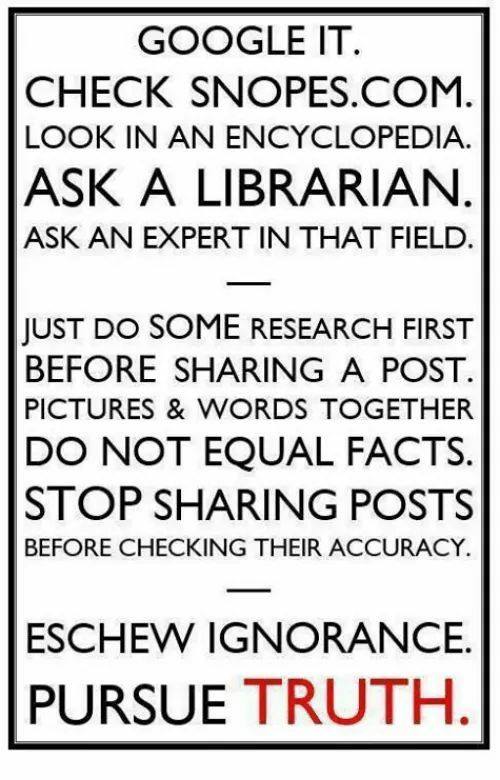
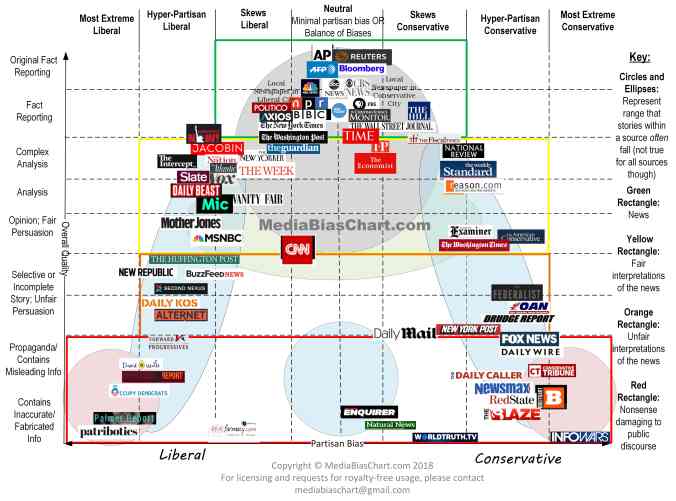
Check straight news services such as Rueters and the AP, check Pew surveys, check NPR, The New York Times, Washington Post, and The Hill. Check the left and the right. Look for government statistics. Verify. Wikipedia does a decent job.

29793664_1649135925177782_7381491503991881728_n.jpg

I might not place each news source exactly as shown below, but it’s a pretty good chart, I must admit.

Media-Bias-Chart_Version-3.1_Watermark-min.jpg

DONE/NOT DONE

Eight hours, then six hours the next afternoon, then a day off, then another seven hours revising my 2016 novel after working my paying job. I have queried it more times than I am willing to admit and under four different titles. (The husband of a friend suggested the title last week that I think has stuck.) I have written eleven drafts of this novel. It has drifted up and down between 75 and 82 thousand words. Two agencies are interested. I just queried another agent, and I have sent out 22 story submissions this year. In March, because clearly I have too much time on my hands, I committed to writing a 40-page novelette and a new poem each day in the month of April.

Ask me how that’s going.

I have a few lousy poem drafts and 21 pages of a science fiction short story that is already too long and does not want to be novelette. (We’ll call it the “pigeon” story, because it does actually have a pigeon in it for about a page.) I really do want to put the pigeon story aside because it gets more strange and complicated every time I think about it. And anyway, it’s done. Isn’t it? Sixty-five hundred words is long enough and I should stop. Shouldn’t I? Or maybe it’s only that I do not want to give it another 20 pages. It’s a lot more work for a story that is strange without being actually horrifying, and which no one will like, right? Maybe I am even afraid of what will happen if I do write more? That is entirely possible. I am not sure if there is a market for stories this long, and the story itself is creeping me out more than a little bit.

Like so much of what I write, this one, the pigeon story, starts with a story about birds. I have another creepy bird story that already wants work. It has crows. Maybe I can set this 21-page pigeon story aside and work on the crow story for a few days. The owl story is going to be published. I am afraid to look at it again. Heaven help me, I know I would begin to revise.

My husband and I went on our first actual vacation in fifteen years last month—all the way to Victoria in Canada. Both of us are familiar with Vancouver Island and Victoria from our youth. Gary had Unitarian friends there when he was a teenager and I used to show dogs and stay with friends on the Island.

We did not take a device capable of accessing the internet with us to Canada. For three nights and four days, we were out of touch. Even the flip phone did not work since we were out of the country.

I had been busy sending out work before we left and several pieces were being held—short-listed for further review. I did not think about them. We napped, walked, ate, looked in shops, talked, admired views, and napped some more. I finished reading two books, but I did not even write in my journal or take photographs. It was a lovely time, and I fell asleep in the car while my husband drove most of the way home.

As we neared home, I took over driving because the bridge over the Columbia River is four miles long and he Gary hates driving across. I confessed to him that if I did not have some sort of positive response to my writing when we got home, I was going to be sad. He replied with suitable gravity that he expected that.

While I was reviewing two hundred unread emails, I found the good news I hoped for. And while responding to acceptances of the owl story and the crow essay (not the crow story, which is something else), a request for a full manuscript of my novel arrived from an agent I have queried in the past.

Yes, a very good day. I was happy and I congratulated myself and my husband and I drank a full bottle of sparkling wine. Yes. Yes, we did.

And without in any way dismissing the glory of this good news, these three successes, I do not believe I “have turned a corner” in my writing life. Everything will not go well from now on. It may immediately go back to mostly unsuccessful. For example, no journal will choose to take the story that three journals are currently considering—even though each has held it twice as long as they usually hold work. (The longer they have it, the better—it means that a first reader liked it well enough to pass it on, and the second reader too.) It’s likely that all three of the editors thinking about liking my story will decide they do not like it enough to publish it. That happens all the time, often enough that a website online tracks not just the text of form rejections, but also the text of “higher tier” rejections. I mostly submit to journals and magazines with an acceptance rate somewhat below 1%. I am submitting to journals which show hundreds of submissions but no acceptances at all in the stats at Duotrope where I track my submissions. Yes, I could make it easier by sending work to smaller journals, but if I wanted easy, there are other things I could be doing rather than writing stories with birds in them.

Nothing is changed because I have recently had a story and an essay accepted. My mother always warned me about getting my hopes up. I have been up there before.

There was the year I won a Literary Arts grant, was accepted into an MFA program, and had a story published by Calyx. This was followed by hard work on my MFA and then . . . nothing. My mother died. I could not write at all but dwelt on one story day after day without making any progress. Three years passed.

There is no corner a writer can come around and find everything easy and neat. Writing is not like we might have hoped, like maybe the man in the White House thought everything would go his way, once he won the electoral college.

Real life, even if you get away with telling lies or you write fiction, is messy and out of control. If you told the truth or wrote nonfiction, it would still be messy. Poetry? Messy, messy, messy. Right up to the moment the poem sings.

This is what I know about success:

  • success does not last, but good writing does
  • acceptance is glorious—celebrate when it comes
  • nothing good can last, but neither will the bad
  • count rejections because they will come anyway (I already have 33 this year and my goal is to have 100 for 2018)
  • sometimes the “dream market” is the only one with readers smart enough to appreciate your best (A prize-winning story of mine was rejected by tiny journals before finding publication with a better one. This happened twice.)
  • failure was at the beginning and so it shall be at the end

Almost 400 years ago, Hobbes claimed life is “nasty, brutish, and short.” Writing should not be like that. But the struggle is long and exhausting. Reward seldom comes when we need it most. People misunderstand, but I know for certain that I am never certain about what I am doing. The writing is messy and personal and haunts me awake and asleep.

In case it’s hard to tell, I am enjoying myself quite a bit just now.