MISSING THE WINDOW

IMG_3522

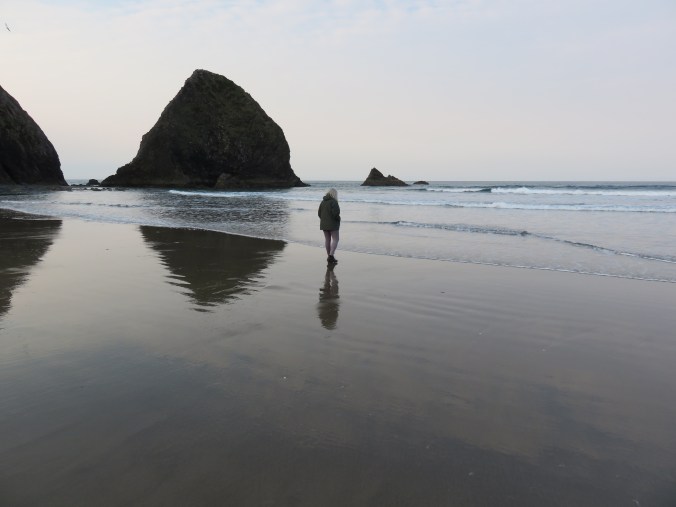
I am not the sweep of sand or the sky overhead. I am not the cape thrusting out toward the ocean. No, not even the seastack standing off the cape. I am the tiny bump, barely visible beyond.

The Director of a writing event responded the other day to my application for a Fellowship. I thought I was a good fit when I sent it off. Connection to the West was essential, a writer without major accomplishments, no book out nor a book deal in the making. I have been writing for decades now and still no book. I am not new to writing, and so the Director wonders if “perhaps your depth of experience and accomplishments may make you overqualified for the … program.” He is kind, he offered options, he urges me to make my case. The response is well-intentioned—actually generous. This begs the troubling question: So why don’t I have a book already?

I ask myself that question too often already. 

Have I missed the window for growth, improvement, a book publication? Am I under-skilled? Overqualified? Most always I am overqualified, to be fair to myself. I taught in a public high school while trailing an academic history of multiple degrees from the University of Washington, cum laude and Phi Beta Kappa, and an MFA in writing from Pacific University.

Writing is hard. I have worked many relatively “easy” jobs that were not easy at all in retail, fast food, a bakery, and direct mail. I sold tacos and quilting fabric and fancy pastries I made myself. I designed logos and promotional materials and packaging as a freelance graphic designer. My work was exhibited in galleries and juried into museum shows. I designed and drew plans for entire houses, and for a time I worked for an architect. For 3 years I taught art in a girls prep school, and for 25 years I taught English and Illustration and yearbook in a small rural high school. I was overqualified for most of those jobs, perhaps all of them. And none of this was easy; none helps just now. 

Being overqualified has mostly meant that I was determined and inventive in doing the job. Or perhaps that is just my way of approaching work, meaning always doing the best I can.

And here, again, the fear that my best will never be enough. I set that aside, that little confidence-killer. Where I am is the result of doing what so many writers must do for years and years: maintain a life and a family and work that pays the bills, and writing at four o’clock in the morning before I get up out of bed to do those other things that I must do. 

I don’t like thinking I have missed my window. Eight publications and 114 rejections this year, 56 of those rejections from agents. Lack of a book contract is not from lack of trying. 

Next year, I will not reapply for that Fellowship, no, of course I will not. I appreciate the Director’s kindness in contacting me and explaining his position, as well as his willingness to reconsider. But I completely understand his point. Moving on now . . .

Nevertheless.

My writing life does not carry an expiration date. I am certain I will face many rejections again next year, far more rejections than acceptances, but that I am qualified to claim my prize as an experienced writer who usually knows her mind, and who will not stop writing in the face of rejection. I will whine and squiggle and hide under the bed when they arrive, but then I will come back out and write some more. There is still so much I want. I want acceptance. I want readers. I want more stories and essays and words on the page.

I still want that book contract.

ASPIRATION

IMG_3588

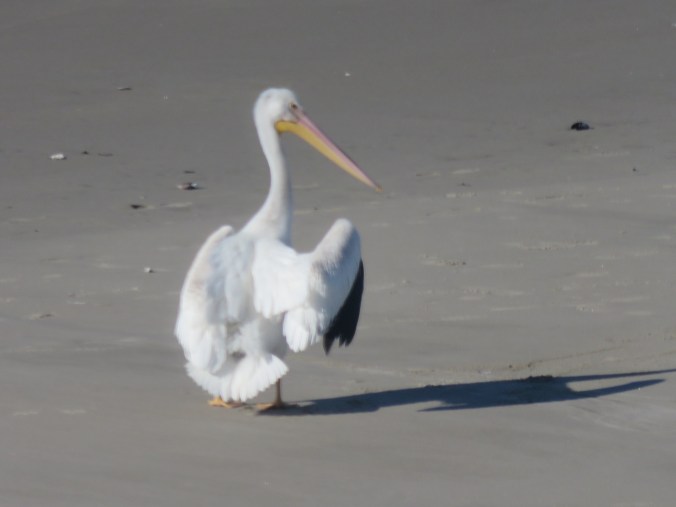
This is not one of “our” pelicans. Our pelicans are Brown Pelicans. This is an American White Pelican, snowy white with black flight feathers. Handsome, but this species does not belong on our beach except in passing. The Browns sometimes stay from spring until late fall. 

NaNoWriMo offered me a very specific goal for three years: 50k words in 30 days. I wrote over 70k. During April, National Poetry Month, I wrote the draft of a poem each day + posted poetry prompts for several years running. Here I am blogging. One of my longterm goals was to be published in Brevity Magazine and that happened three months ago. I have also set goals for reading—fifty-two books this year, and I was done by October.

Now what?

I like a challenge, and though I never take dares from others, I like making them for myself. I like challenging myself to do something hard, something within my ability, but a little beyond my comfort zone. Maybe a lot outside my comfort zone.

For next year, I am thinking about committing to a regular post of a very specific type for 2019. What got me thinking about this was the story I wrote for my grand children about an angry rabbit. And then I wrote a downright creepy story about a space traveler trying to leave Earth, titled “The Tatooed Girl.” This story is my contribution to a class effort they don’t know about yet. We are all writing stories triggered by The Mysteries of Harris Burdick, and next week I will create a little booklet of them. It is my Writing 121 warm-up assignment, and I generally write whatever my students write. My story started with the knife in the illustration with the pumpkin. My story was uncharacteristically violent.

Then this morning I wrote another weird little story about a boy reaching out to grab a little girl, and his hand disappears. Where are these coming from? Maybe this is the result of spending all of my NaNo month working on “Impossible Stories”? Maybe it’s because I am reading slowly through Ghostographs: An Album by Marian Romasco Moore. Very weird, very wonderful, and highly recommended—I want it to last!

My brief stories for class are about 500 words, which is what I assigned for my students, and therefore what I wrote myself. I went over that length and had to carve back again and again, and I still think the “The Tattooed Girl” story wants to be a lot longer. That’s something I can address later.

In the mean time: could that pelican above be a changeling? Is that too easy? No princes or princesses in my stories, so how about a genetic mutation, a Very Smart Bird? Maybe that bird is entirely self aware and a philosopher?

So now I am thinking: Could I do this on schedule? Could I post a story a week, or something, and have fifty-two weird little stories by the end of the year?

Would anyone read:

  • a weird little story every week?
  • a fairytale?
  • a fable?
  • a horror story?
  • All of the above?
  • None?

Anyone have an opinion?

CHOOSING FAMILY

fullsizeoutput_e4a

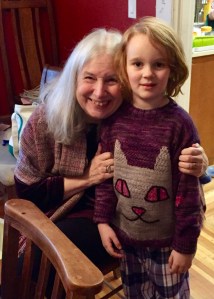
with my first-born grandchild.

“Marriage still ain’t equal, y’all. It ain’t equal. I tell women that whole ‘you can have it all’ — mmm, nope. Not at the same time. That’s a lie. It’s not always enough to lean in, because that s— doesn’t work.”
— Michelle Obama

Some would consider me a second-wave feminist. This is because I was born in 1952 and have always insisted men and women are the same species, generally need the same things in life (food, air, purpose), and that women should have the same opportunities, rights, and respect accorded to men.

Crazy me.

The day my high school announced that girls were allowed to wear pants to school, I was already wearing jeans. I expected to attend college on my own steam. I expected to work. I expected to make my own choices. I chose to be a “Ms” as soon as that option came to my attention. Neither my husband nor I changed our names when we married nearly 45 years ago. I have opinions. I speak up.

But back to that line above about having it all, all at once. I never believed that.

Raising children is an enormous job. In the past, families, extended families were available to help with child rearing, and that was how parents managed is the days when everything everything about getting by was harder. Laundry took days and reddened hands, cooking required lighting a fire first, and getting to work was either right outside, a long walk, or saddling a horse. Letters written on paper. That’s where we were a hundred years ago. We had to clean the chimney’s of lamps once a week. Everyone worked harder to do things we now complain about when we have to stuff dirty clothing into a machine, pull a frozen meal out of the fridge, drive, compute. But people pitched in and most Americans had lower expectations.

I don’t remember horse-drawn vehicles, but my childhood included party telephone lines and black-and-white television and typing. Dinner on the table ever late afternoon. Mothers at home. Things are easier now, most daily chores anyway. Raising children is still an enormous responsibility. A person needs help.

My husband and I discussed who would stay home with our children. I wanted them in my twenties because physically that seemed the best time. I was working and so was Gary, but he had insurance, and that was why we decided I would stay home with the children. It’s almost an impossible option for most parents today. Even then, it was hard and money was very tight. We scrambled to pay bills and did not expend much on entertainment, but we managed. Children in my twenties, back to work in my thirties, graduate school in my early forties. That was my plan.

I thought, in my twenties, that once my children were grown I would return to school and earn a Masters of Fine Arts in the visual arts, probably in enameling, thus continuing my undergraduate trajectory.

Things turned out differently. I earned an MFA in writing fiction in 2007.  I mostly retired in my sixties though at one time I hoped to teach into my seventies. In 2015, I could no longer manage the long hours as a full time English teacher. I was tired and had been sick for weeks the previous winter. I was unwilling to spend less time working full time, and part-time was not an option. Now I teach two classes a year. I set goals for writing and other creative work.

Beginning as a girl, I have always set goals for myself. I wanted to raise children (usually), live in a beautiful countryside, raise horses, keep a garden, love. Most of those early goals came about differently than I expected when I was a teenager. I raised Afghan Hounds until I had children, our garden is mostly wild, and the countryside is right out in front of me every day. And I love. I never expected to have everything I wanted at once, but I have always kept my eyes on the heart of my life goals.

Marriage is not equal from the outside.

(Not yet, but someday. I am not among those cynics who excuse inaction by complaining that this or that will never happen. Wonderful things happen all the time.)

Women are still paid less than men by every sort of measure (as are many other marginalized peoples). I am sorry that white men find discussion of their advantage offensive. They do not necessarily have anything easy, but all other things being equal, they have things easier. The rest of us work at a disadvantage. We are accorded less respect outside our homes, and too often inside our homes. As one example, I saw this working with occasional contractors who simply could not talk to women as people. Their work was primarily with other men, and they assumed that their advantage is “natural” and fair, that their opinions should always have precedence, unquestioned by women. They were irritated by a woman saying most anything, particularly if they were expected to take directions from a woman. I always feel sorry for their wives, assuming they are still married, and so often they are not. It is pathetic that the only way some men manage is by pretending they are superior to others, including to women they promised to love and cherish.

Yes, I know there are bad women in the world, selfish people of every stripe. But I speak from my own experience. Here I want to speak of marriage as a bonding of equals.

My own marriage is built that way. It is solid. My husband and I care for one another, take care of one another. We hear one another.

I am most fortunate about that. A friend posted a meme listing the qualities of a good and lasting marriage. Love was strangely missing from the list, but a lot of other things were there—respect, kindness, sharing, compromise. It is the determination of two people to make things work, because being alone os not the way people are supposed to live. It is not in our DNA to be solitary in life. Most of our existence today is solitary and alone, but human beings need connection with other people. Maybe these relationships are with spouses, or siblings or cousins or offspring or friends or some combination of people we treasure as family.

Michelle Obama is correct that women are not playing on a level field, that we cannot have everything all at once, but neither can men. We need to prioritize. We need to plan a life we can be proud of. We need to make the best of what comes. We need to treasure relationships.

We need family, all those people we are given by chance or by choice.


TELLING

IMG_1117

My husband said to me this morning, “You are always in teacher-mode.”

As a result I posted a warning and got my ears boxed. Actually several times, and I deserved it at least once.

I have been irritating people I like and love with posts on Facebook. Here’s the one I defend:

The death and funeral of George H.W. Bush. I did not him like as President, and I find little reason to like him better as a public figure now that he is gone. People who were not even born when he was president, or who were not old enough yet to enter school, object to articles I offered to provide “a little balance.” I was reminded of the glittering idealism of his administration I found in a The Washington Post opinion piece:

“Abraham Lincoln’s ‘better angels of our nature’ and George H.W. Bush’s ‘thousand points of light’ are companion verses in America’s national hymn, for Lincoln and Bush both called on us to choose the right over the convenient, to hope rather than to fear, and to heed not our worst impulses but our best instincts,” Meacham said.

The title of the article, not the excerpt I posted, drew fire. The man is dead. There has been extensive coverage elsewhere in the press dealing exclusively with what a wonderful person Bush was and about the details of his career and of his funeral. Television stations and national newspapers streamed the entire event without comment and also posted his son’s speech with explanation of the events he referred to (all very respectful), etc.

Years ago the local weekly newspaper carried a story about the death of a former student. The author managed to make the poor girl appear in a bad light, taking comments out of context from another teacher, editorializing on the passing of a teenager. I was heartbroken to read it. She was only a girl and allowed to make mistakes. No one chose her to be the leader of the free world. Her life should have been her own.

Though my impulse is to admit my failings, often in public—and they are legion, usually the result of losing my temper—I would hope to escape anyone noting them after I die. Though I worked for most of my life as a teacher, the job is not political. I have surely made mistake and caused harm, but I did not lead my country to war. I did not neglect public health. I have not been accused of molesting anyone.

When a neighbor died recently, my husband spoke at her memorial. We’d had our differences over the year. We both irritated one another at time. We had our complaints. But we also had a friendship of over 30 years. We kept an eye on one another’s homes. We called one another when the whales were passing. We chatted most every day. I would not more have dragged out petty disagreements than my underwear. We had a personal relationship not a public record between us.

Presidents are different, after all. They deliberately choose a public life. Their public words and actions are subject to public scrutiny and that brings a level of judgement most of the rest of us are spared. It was a public event of national importance, not a private funeral. Days of news have lauded him. I understand that some people are incapable of hearing a bad word about anything relating to a dead person. I have felt that way myself when a local paper offered unkind comments about a former student. But this is also about my country and my country’s leaders. I detested Bush in life as a president, but it’s clear he was much loved as family member and friend. His son’s speech and others were touching. I can respect the private man without pretending to admire what he did as President or after as a public figure. Here are a few of my grievances concerning the man’s public life:

Clarence Thomas (nominated) and Kavanaugh (campaigned for)

AIDS

the Middle East

the Kurds encouraged to rebel and then offered no support when they did

So much damage still filtering down on where I and others live.

He was Presidential, granted. He was, by all reports a kindly and generous man in his private life. I might even have shed a tear watching his funeral. I can see he was loved and that people sorrow at his passing. Does this mean I must appreciate him as a former president?

If the current president outlives me—it is possible since he has far better health care than I will ever be able to afford—will I be expected to say only nice things about his time in office? Are there nice things I could say? Perhaps. Perhaps his family and friends will laud him as a courageous leader making American great again.

Though I am only an ordinary private citizen, I beg to disagree.

REMEMBERING

fullsizeoutput_ba4

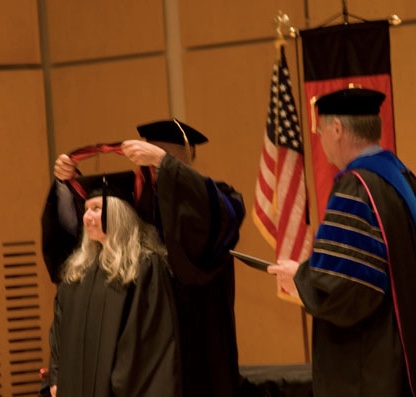
It was a Saturday in June. My husband has been talking about that day 11 years ago when I was completing my last MLA residency and my mother was dying. I did not know this about my mother, and he says now how he remembers how happy I looked when I gave my speech. I had been chosen as class speaker. Claire Davis spoke that day too. There was a bagpiper. A friend sent champagne, which I forgot in the dormroom refrigerator after he told me, he was in such a hurry to drive home.

This evening, I went looking for the speech, not sure my new computer would open that old file, and here it is. It makes me cry to read it over. Gary says he “had a little cloud” over him when he heard it that same time. He enjoyed it more just now.

Here is what I told my graduating class:

ART SAVES LIVES by Jan Priddy

Good afternoon.  On behalf of the class of 2007, including those tethered to their lives far away, I welcome students, faculty, honored guests, friends and family, the interns, Amber, and Shelley—oh, Shelley—who is a writer and sparks this magic that happens to us.  We are grateful to one another for the help along the way, for reassurance and emails, Art Barns, phone calls, and other metaphoric hand-holding.  We thank you all.

I used to have a bumper sticker on the back of my car that said:  Art Saves Lives.  I was sorrier to lose that slogan than I was, eventually, to lose the car.  Because here we are saving our lives.  Here.  All together.  And we are a part, all of us here, together we join a long line of readers and writers, of people who value language and who need to write.  We add our words to those who came before.  We claim them:  Sappho and Shakespeare, Emily Dickinson and Mark Twain, William Stafford and Ursula K. Le Guin.  All part of us now.   

Last year Peter stacked books on this podium solidifying the reason we are here.  Art on the page.  We all want to transport our readers with words, carry them across time and space to meet people and feelings and ideas.  We should be humbled, but our goals are not humble.  We want to change the world with our imaginations, one word at a time. 

We are writers.  Crafty people.  For two years we learned our craft from those before us.  Words are our tools, and I know from studying with David that each word matters.  Valerie taught me to shape my imagination.  We know dialogue is important, Pete, and that we share the world with other people, Marvin.

We’ve savored Dorianne’s smoky Juliet, followed Claire’s frog down the throat of a child, and reconsidered John’s take on Job.  A hawk ruptures Sandra’s window and Pattiann hands us sex on a cloud.  Jack plunges us under the ice and Craig mourns a child.  Judy’s natural disaster drives us to community and Ellen soaks us in honey and pins us to the wall.  Joe’s porcelain throne gleams in imagination.  So do our fellow students. 

But I am a story teller and most of my ideas come attached to stories. 

Here is a story:

In 1836, a recently widowed visionary, remarried.  With his second wife he fathered seven children, preached, taught, found academic employment, and wrote in his study while a large household revolved cautiously about him.  Quiet.  Don’t disturb Papa, he’s working. 

Most of us scramble and bargain for writing time, often finding it only in slivers and odd hours, between the detritus of day-to-day responsibilities and paying work, wedged between the insistence of people who rely on us to put their demands first behind our human need for rest.  How lovely to sit behind a door, working until we are ready to stop, parishioners anxious and waiting, our loved ones tip-toeing past the door—Quiet, don’t disturb the Writer. 

But we are not writing sermons that come crashing into the world with authority and an eager audience, we are not Calvin Stowe, that mystic composing in his study, and most of us have never even heard of him. 

It is his wife we know—the wife who bore the seven children and ran the house and did not, in her day, enjoy legal recourse to law, the right to vote, or a paying occupation.  The woman who provided Stowe with a room of his own, didn’t have one herself.  Harriet Beecher Stowe.  It is her writerly story that more closely resembles ours.  Harriet Beecher Stowe, nearing forty years of age and with a newborn seventh baby, began writing Uncle Tom’s Cabin at the kitchen table while running her household. 

The little lady who started the Civil War, Lincoln called her. 

Harriet Beecher Stowe lived to see slaves freed in America and granted citizenship.  She saw her own 85th year, but no other writing of hers had the impact that Uncle Tom’s Cabin had upon the world, but then again, neither has the novel of any American since. 

I wonder:  Was she scared?  Did she wonder if her words would run out?  Did she call herself a fraud and suffer writer’s block?  Was it possible for her to have imagined, with a household bustling, interrupting, and tugging at her, that the words she struggled to pen would change the world? 

Maybe we are writing our own transformational books at our kitchen tables and we don’t even know it. 

Few of us have sheltered space or devoted congregations.  We are not Emily Dickinson or even Calvin Stowe.  We are poets scribbling lines while we wait for laundry to spin, composing in our head on a run; we are novelists running sentences across the ceiling before sleep or rehearsing stories in the hour, the rare hour, children are preoccupied; we are memoirists and essayists getting up to make the coffee and losing ourselves in words when we have so much to do.  We hear voices.  We stare into space and forget where we are and what we’re supposed to be doing.  Hopefully this doesn’t happen while we’re driving to the grocery store. 

We cannot know the influence our words might have on that still-imaginary audience.  We only know we want to do it—this writing.

With so little outside our need, without free time or a room of our own, the leisure and space that all human beings deserve and crave whether they are writers or not—what have we? 

We have words.  We have each other.  We have imagination.  I’ve been using that word a lot.  We can’t know what we cannot first imagine.  Time, curiosity, stolen moments, and imagination.  We’ve had two years of community and permission.  We have only just begun to find voice on the page.  We look up from our table and out at the world, and, bending to our page agin we’ll write what we understand of it, or admire, or deplore, dream, fear, hope.   

We can read and think, write and reason, feel and sing, and always question, and do this honorably and diligently and during every moment we breathe.

People have been asking us all week what we’re going to do now that we’re graduating.  The only answer that matters is:  Keep writing.  We’re not done with our work at the kitchen table.  Whether we transform the whole wide world, or our own private corner, Art saves lives.  I know it’s true.  I think it’s why we’re here.  We’re saving ourselves. 

CHARITY BEGINS

Southern Poverty Law Center tracks hate crimes from racist and the political right and left. They make a difference.

More than forty years ago, our friend Bunny told me that she donated $100 each month to charity. Her food budget was less than half that. I was stunned that she was able to afford this. And then I realized I could too.

As a result, I began donating to organizations I could see working in the world while still in college and self-supporting. I gave monthly to PBS because we watched their programs, and then I gave to the American Civil Liberties Union (ACLU) because I knew what they were doing to fight for legal principles here in the United States. I continue to give clothing and other household discards to Goodwill and local charities. Gary gave them his last car a few years ago. I gave my beloved VW to OPB.

One year my brother gave a farm animal in our names to Heifer International. The next year, I gave goats in the names of family members as Christmas presents. Then I discovered that another organization did the same thing with lower overhead, so I gave bees and farm equipment through OxFam.

Charity Navigator is one watchdog of charities that helps people find where to direct their donations in order that the money will do the good work they hope to see done here or abroad. I read about charitable organizations, Google for news about them. Talk to people and search for pros and cons and other organizations that do similar work. I check their ratings for how they spend the money they receive. There are many worthwhile local charities.

For many years after I began teaching art, I gave to the University of Washington School of Art, in gratitude for scholarships that allowed me to work my way through college without debt. (It helped that I was willing to live in poverty during those years.) I refuse to give to my grad school alma mater because they surveyed me for what I thought about them starting a football team. I responded that it was an enormous waste of money. Like nearly every college and university in America, they will lose money on their football team. They will have to find other donors who are football fans. That is what I tell them when they call. [For a small college that turned away from sports to emphasize academics, read about Paul Quinn College. To understand why football creates issues for others, consider what people will do in order to win. Consider Baylor.]

For nearly all of my adult life, I have given to organizations I learned about through specific worthy projects. Toni used to write letters for Amnesty, and I have supported Amnesty International since 1974 because they oppose torture and other political abuses of power. I give Wikipedia Foundation a donation periodically because I use their site often and because I applaud their work in making information readily available for free. I give to Partners In Health because of Kidder’s book Mountains Beyond Mountains. I give to Southern Poverty Law Center because they track hate crimes, take abusers to court, and offer support to communities through many programs including Teaching Tolerance, a free magazine I used as a teacher.

Sometimes I give to other organizations such as the free nonfiction website Brevity or to projects devised by my students. We gave to the campaign of Hillary Rodham Clinton. Twice.

For most of his working life, my husband worked in grocery stores. I was mostly a public high school teacher. We can afford to live in a beautiful home on the coast because it’s been in my family since 1911. We have never, as my mother would say, “had money” in my family but my mother began donating to animal charities late in life. We still get those mailings, but we choose to give elsewhere.

Throughout our childhoods, our families worried about paying bills. We struggled to pay for food and tuition while self-supporting in college. During the years our children were young, we barely kept our heads above water. And then there was tuition again—our sons’ undergraduate and my graduate studies. I used my inheritance from my mother to pay off our sons’ college debts. (My friends have pretty consistently judged that a mistake, but so far, we are not sorry.) We managed. Our frugal habits and careful planning seem now to have paid off.

We are both retired, but we are not poor, and other than books, his music, and my yarn our tastes tend to be modest. We can afford to pay our bills. We can afford to drink wine on occasion and to stay overnight at mid-priced hotels. We still send money, usually $100 to several of the charities I have mentioned but sometimes more, and in leaner times I have given $20 or less. Just now, we are planning our giving. The Visa bill is paid and despite unexpected home repairs, we will share what we have.

It is a good habit and I am a fortunate person. I can afford to support charities.

Maybe you can too.

NaNo & GIVING IN


IMG_3650

Not our beach.

All this month, I have been writing for National Novel Writing Month (NaNo). My early goal, before November began, was to complete a science fiction novel. I had written 15 k in April, and hoped about 7k of it was worthwhile. But as November approached I lost confidence. I have written several novels—seriously. The first, in 1996, was Love Interest. That one was particularly bad. Then Clean Away, A Single Fact, Living in Snake Land, and recently Everybody’s Mother Dies. I queried the most recent novel all this year. Sixty-six agents, and some liked it, some did not bother to respond. I was trying to do something unconventional. I wanted the terrible thing to happen early in the book, and the majority of the novel would reveal how she recovered from catastrophic loss.

That didn’t play. A very kind reader, who read to the end, said this:

“I’m disappointed but we won’t be able to go further with this. Myself and other readers here talked about this through the week, but still the hesitancy is that ‘Everybody’s Mother Dies’ loses impetus through the middle and the great story potential in the familicide (if that’s the correct term) comes too soon and the tension in the book is weighted too much to the front end. Then we have a quiet novel, which is engaging, but would benefit from some of this tension to pick up and drive through to its end.”

This is somewhat ironic since my original structure for this story held the climax back from the read until near the end. I was thoroughly thrashed for that “withholding.” Yet I have read two novels recently that mange to pull off what that original impulse. The terrible event is hinted at and the reader is teased. My conclusion is that there might not be anything wrong with my story, only I wrote it badly.

I might even go back to it some day, but my confidence wobbled. Maybe am just not capable of structuring a novel. Maybe later?

I thought, instead, I would develop short story ideas for NaNo, even including stories I had started or even “finished” a long time ago. This made me a “rebel” according to NaNo, but I was okay with that. I have over 70k today, and technically, I won a couple of weeks ago when I hit 50k. My concern was ensuring that at least 50k of my finished words are brand new. In the last two days I have written 5k new, and—here’s the cool thing—when I tried to transfer over two more full pages from that April science fiction draft, I cut all but two and a half lines! It’s what I have been doing all month. Paste in a 3k story, cut, rewrite, and expand to a 6k story. A story published years almost doubled in length, even after I cut out stuff.

The long and short of it is that I felt like a cheater at the start and now I am feeling like I earned my “win.”

It’s important to me to play fair, even when no one else cares.

In a blog post at Brevity, Zoë Bossier writes about perspective in “The Art Versus the Artist: On Authenticity in Creative Writing.”

“To preface, historically, writers—and especially white writers—of fiction and poetry have appropriated other cultures, classes, and perspectives in their own writing without much thought to the ethics of this practice. And for a long time, they were highly successful in doing so. Many of these works were (and still are) hailed as masterpieces, taught in high school curricula around the world. The place of these works in western literary canon has never been called into question before.”

There are several issues here for all writers. Accuracy and honesty in detail and perspective are essential to verisimilitude.

ver·i·si·mil·i·tude

/ˌvərəsəˈmiləˌt(y)o͞od/
noun
  1. the appearance of being true or real.
    “the detail gives the novel some verisimilitude”
    synonyms: realism, believability, plausibilityauthenticitycredibility, lifelikeness

    “the verisimilitude of her performance is gripping”

How to get it right? How to be believed?

Am I limited to writing only my own identity? Few would argue that I am.

Writing fiction limited only to writing one’s own personal identity means, for affluent white male authors, that the story is limited to affluent white male characters. There was a time during my lifetime when most stories were written by and about affluent white men. Other than Anne Frank, I was never assigned a book in school not written by a man and focussing on men. More recently, most of the stories I was urged to read during my MFA program were written by affluent white men about their own experiences. Needless to say, it was annoying.

On my own, I searched for stories from other perspectives. I reread Toni Morrison, Alice Munro, and Tillie Olsen who each wrote and write well beyond personal experience. Sandra Cisneros, for example, in her first book of prose writes about a poverty she did not experience with admirable authenticity. Others have not done so well, and some miss the mark entirely.

The classic Chinese poet Li Bai wrote as she. What to say about translations by Amy Lowell?

Even writing memoir, authenticity is at the mercy of perspective. I distrust the male view of Sherman Alexie when he complains about his mother and the affluent white perspective of an adult Vance writing about his “hillbilly” childhood. A few years ago I read a mother’s memoir that was completely lacking in objectivity. I didn’t feel the author lied about her experiences and pain, but that she left her life unexamined. She utterly failed to take any responsibility for her part in the events she describes so beautifully. These are “true” stories, but biased and self-righteous. I recognize this as a mother, as a teacher, as a writer, and as a human reader because I examine the truth of narrative based on broad experience. As a writer myself, I recognize how painful it would be for her, but I want her to do that work anyway.

Like my novel’s weaknesses. I know I need to print it off and find a way to rearrange scenes to make it work. And maybe like that memoirist, it is just more slogging self-recrimination and pain than I can manage. It might be easier to give in and move on. Well, it always is easier to give up, isn’t it?

Fiction or factual, we must tread carefully, finding out way toward truth, accepting that how we present our stories must reflect a greater wisdom earned through close examination, hard-won and painful though that sometimes is.

In the mean time, we must honor authentic experiences in all writing—memoir, fiction, and poetry—from those who expand their view (and ours) beyond the mere self. We can also strive to write from a broader perspective than our immediate self. We do our best to be honest with ourselves and our readers. We can examine our stories, whether memoir or fiction or poetry, from outside our selfish selves.

It is not easy, but it never is.

IMG_3614

THE ODYSSEY

51INarXj18L._SX327_BO1,204,203,200_.jpgTranslations are a bitch.

If readers—especially those with no great interest in other cultures or mythology—want a fast-moving, understandable fantasy tale, this might be just the ticket.

I want history and truth and anthropology. I want art. This translation is modestly literate and probably relatively accurate. Despite imposition of semi-iambic pentameter and use of modern expressions, it does nothing fancy or self-promoting. It is easy to read. Is it an accurate translation of this ancient poem?

I used to explain the challenge of translating poetry to my students this way: You have the form (the structure of a poem in rhythm and rhyme), the meaning, and the music. In translation, there may not be a simple word meaning exactly in English what it means in the original. Wilson is concerned that prose versions become longer. She’s right about that, prose does tend to become wordier. However, making the lines shorter than the original defies my understanding. When is it ever possible to consistently and accurately translate in fewer words than the original language? Thus, reading back and forth between translations, I found information missing from Wilson. To maintain her line-by-line translation she was forced to leave things out.

Plus all words gather baggage through cultural connection and acquired connotation. (The young woman in the beautiful long white dress—is she a bride, an unmarried young woman, or in mourning for her father? Is the story American, Vietnamese, or Chinese?) If something must be sacrificed, do you choose form, meaning, or music?

I would give 2 stars for music (maybe only 1), 3 stars for meaning (maybe 4, maybe only 2), and 2 stars for form. Also mostly 4 stars for her introduction, though even there . . .

I wanted to love this translation—I expected to love it. It is the first translation by a woman. I prepared and took notes. I read the introductions to several translations in preparation, beginning last year. Once I had Wilson’s translation in hand, and began reading I felt I was missing details and worked back and forth between her translation and Penguin’s Rieu translation, which is wordier prose but includes line numbers on the side. Each has its flaws.

What I liked about the new one: Wilson provides a lengthy introduction that includes how the poem has been viewed in the past, when and how it might have been composed and first written down, and how other translators have approached the work. In this introduction she points out specific misunderstandings and provides critical cultural context. References to dogs, for example, especially in relation to the actions and appearance of women, do not have the same connotation they would in modern English. A dog-like face is not ugly, but suggests something else (perhaps devotion, or a need for attention). Wilson has her doubts that anyone named Homer existed. She provides some evidence that the epic is much older than usually assumed. She works hard to provide a poem-like translation. Wilson points out that prose translations inevitably become longer than the original. This attempt to provide a straight-forward translation in iambic pentameter cuts length and makes for fast reading.

What I did not like: The attempted iambic pentameter. Most of this translation is in 10-beat lines but some is not, and much of it is not in iams at all. The challenge of fully conveying meaning in fewer syllables than the original was beyond this translator. (Homer’s dactylic hexameter, which I do not claim to understand, has a longer beat line.) With the aid of an actual poet, she might have managed it, but I am convinced meaning would have been distorted in the effort. Wilson also claims, and so do other introductions (I read four) that no one person could have composed and memorized twelve thousand lines. That is a foolish assumption since many oral societies, even within historical times, have managed just that. And her effort to use terms familiar to modern audiences includes “scot-free” among other colloquialisms that seemed out of place in such a setting, not to mention I would guess many young readers would not understand them all, thus undermining the attempt to make the text more “relatable”. In her introduction, she also dismisses the possibility of the composer having been a woman.

While she is likely correct that the composer was a man, I found part of her argument against a female bard short-sighted. A woman, she asserts, would not have adequate knowledge of the battlefield to support the detail found in the poem. But I find nothing in her translation (or any other) of battle scenes that could not have been pieced together from post-battle remains, guesswork, and survivors’ accounts or tradition, by a woman or a blind man. She also fails to note the ordinary household details, meticulously described, which would have been equally inaccessible to a male poet and far less likely to have been preserved by men. In the end, I argued with her assumptions about gender. She inadvertently, reopened the question for me. Would any man go on and on about household textiles spun, dyed, woven, and cared for exclusively by women? [NOTE: Robert Graves assumed the epics were written by two people, The Odyssey by a woman. His novel Homer’s Daughter, based on this assumption, was not particularly successful, imo, but there you are. A woman should have written it. He missed most of the more convoking details that would have convinced me.]

No introduction I read focussed adequately on how several “inconsistencies” support the elite quality of the actors in this story. The men eat only meat and drink mostly wine except under severe hardship. Though there is frequent mention of gardens and orchards, the characters do not eat fruits and vegetables. The faces of significant characters, men and women and even including some suiters, are described as “god-like.” Men are bathed and their skin oiled, their clothing is wool, fine-spun, and frequently purple. In fact, though many dyes would have been available, purple is the only color mentioned. Men may wear mantels of purple, sleep under blankets of purple, and women spin purple-dyed fleece. If that last is accurate, that the fleece was dyed before spinning, then it was first washed before dying. It would have been oiled before it could be spun and there is a passage that references oil dripping from a weaving, a detail translated differently in each version I checked. Some translations specify olive oil, others do not. Use of precious olive oil to spin the wool is unlikely, but intended, perhaps, to convey the elite status of the characters. Failure to appreciate how people lived and spent their time results in shallow understanding and translation. The purple dye comes from a Mediterranean shellfish, tyrex, the “royal purple” first discovered during the Bronze Age when this story is set. The displays of wealth in use of meat and oil and purple dye and descriptors using the term god-like all promote the stature of the cast. These are not ordinary people, but people of rank.

A swineherd is addressed directly by the narrator, “You, Eumaeus” and he becomes one of Odysseus’ three supporters in the slaying of the suitors, a rare character who is named, but not an aristocrat or of immortal family. More important, I suspect, he first greets Odysseus on his return, treating him with the proper care and respect, though he does not recognize his master. He does what is right and proper and due to a stranger. The Penguin translation claims the composer so loved his creation, he honored him in this way. I would argue that here is a commoner, a slave and swineherd, who is important to the story. The rare use of direct address acknowledges this.

Every introduction I have read has emphasized the oral roots of the poem. Wilson writes that The Odyssey may have been composed from an oral tradition, how and when it came to be written, and how the text version might have altered any previous spoken version. Yet, not enough is said about the nature of the oral tradition. Every high school English teacher will tell you that iambic pentameter aids the actor in memorization. I have heard actors in Ashland, Oregon, describe how memorization was much more challenging when they worked on a modern play after Shakespeare.

But poetic rhythm is also an aid to the listener. Just as the form aids the performer, so form and repetition aid the listener who can predict and appreciate sound when it is held in a poetic form. While the reader might reread, turn back a page, as I frequently did while studying these translations, the listener must grasp the story in the moment it is told. Homer (whoever that person or persons might be) tells and then reviews the telling, caps each character with a descriptor of his or her heroic trait. Penelope is prudent, Odysseus is cunning, for example. These words preface their names over and over again regardless of how the characters behave in the scene. Most translators vary these words but also frequently leave them out entirely. On the page, they seem redundant. To the ear, they are a formal reminder of the characters we are hearing about: ultimately, even if he is foolish in leaving his starving men with the cattle, Odysseus is a cunning hero.

The Penguin edition also speaks of how the story was composed, assuming it is fiction. Even Wilson likes to comment on characters as creations. From a modern perspective, this is sensible, but tradition is always based in fact. Everyone assumes these are very ancient stories, likely already old before The Odyssey was first spoken or written. Yet many details remain in question, despite what seems to me to be obvious. Penelope, for example, is the subject of a great deal of speculation. When does she recognize her husband returned after 20 years? Does she recognize him early on and keep this to herself? Even Wilson describes her actions as confusing. Telemachus is frequently described as immature.

Here is my teasing out of the story from a broader (Penelope’s) perspective: Odysseus was about to go to war. Before he leaves, he tells his wife he hopes to see her again, but if he dies, she must raise their infant son to manhood and then remarry. This backstory is a part of what we find in The Odyssey. After 17 years, suitors for perhaps-widowed Penelope begin to arrive, her son is not yet a man, and she concocts the deception involving weaving a shroud for her husband’s aging father. She weaves by day, unweaves by torchlight in the night. After three years, she is caught out, betrayed by a slave. Over a hundred suitors arrive and would like to have her and the kingdom she has managed through this long absence. Telemachus as an unprotected minor is at risk. The disguised goddess Athene sends the boy off to visit other survivors of Troy, and this accomplishes two things: it introduces the young man to his peers who are then in a position to support his claims, and it keeps him out of the clutches of men who would kill him and take his inheritance. Their avaricious intentions are clear because, we are told repeatedly, taking his wealth is what they are already doing by eating and drinking the wealth of the household. They plan to murder Telemachus. Though she is described as beautiful, marrying Penelope is primarily a political tactic.

Penelope hides herself from the men when she can, but also keeps each one dangling with messages when she cannot hide. Her position is precarious. Eventually she must either choose a new husband or abandon her son to the ambitions of these men. Either way, stalling remains her best option. When Telemachus returns from his travels, she announces she will marry the man who can do what her husband once did, string his massive bow and thread an arrow through the handles of a dozen axes. None is able to string Odysseus’ bow, much less use it, though his own son comes closest to accomplishing the feat. Does she hope all will fail and thus she will buy more time for the son who is stronger than her suiters, nearly as strong as he will ever be? Or does she recognize Odysseus? It is worth noting that when men lie in this story, this deception is immediately called out in the poem. If Penelope were lying, the poet would have told us. Instead, Penelope has been stalling from the beginning as she protects her son in his childhood, but now she must fulfill the second part of her obligation to her presumed-dead husband. There is no mystery here. Penelope is a dutiful wife. As a widow, she must remarry. Does she love her absent husband and mourn for him? Absolutely. Everyone, everyone cries in this story. Men cry from fear and loneliness and loss. Penelope cries for her absent husband. Her sincerity in grief is never in question. She has done her best to fulfill her husband’s directions.

I have not found any gloss or introduction that deals with these issues.

A recent The New York Times review of Robert Alter’s 3-volume translation of the Hebrew Bible by Avi Steinberg, describes how Alter manages to both respect the poetry of the original and honor the meaning of the original as none has done before. In part, he does this by breaking convention:

Alter told me about his decision to reject one of the oldest traditions in English translation and remove the word “soul” from the text. That word, which translates the Hebrew word nefesh, has been a favorite in English-language Bibles since the 1611 King James Version. But consider the Book of Jonah 2:6 in which Jonah, caught in the depths of a giant fish’s gut, sings about the terror of near-death by water. According to the King James Version, Jonah says that the Mediterranean waters “compassed me about, even to the soul” — or nefesh. The problem with this “soul,” for Alter, is its Christian connotations of an incorporeal and immortal being, the dualism of the soul apart from the body. Nefesh, to the contrary, suggests the material, mortal parts, the things that make us alive on this earth. The body.

“Well,” Alter said, speaking in the unrushed, amused tone of a veteran footnoter. “That Hebrew word, nefesh, can mean many things. It can be ‘breath’ or ‘life-breath.’ It can mean ‘throat’ or ‘neck’ or ‘gullet.’ Sometimes it can suggest ‘blood.’ It can mean ‘person’ or even a ‘dead person,’ ‘corpse.’ Or it can be ‘appetite’ or something more general: ‘life’ or even ‘the essential self.’ But it’s not quite ‘soul.’ ”

But, I asked Alter, doesn’t “soul” help dramatize the scene’s intense emotion? I mentioned another instance of the word nefesh, the terrifyingly evocative line from the King James’ translation of Psalm 69: “For the waters are come in unto my soul.”

“Oh, yes,” Alter said, with a smile. “That one does have a certain emotional resonance to it. But it’s not what the poet had in mind. And, I would add that the line ‘for the waters have come up to my neck’ … is also rather dramatic.”

. . .

Alter regularly composes phrases that sound strange in English, in part because they carry hints of ancient Hebrew within them. The translation theorist Lawrence Venuti, whom Alter has cited, describes translations that “foreignize,” or openly signal that a translated text was originally written in another language, and those that “domesticate,” or render invisible the original language. According to Venuti, a “foreignized” translation “seeks to register linguistic and cultural differences.” Alter maintains that his translation of the Bible borrows from the idea of “foreignizing,” and this approach generates unexpected and even radical urgency, particularly in passages that might seem familiar.

It is this sense of an ancient text that I miss in Wilson’s translation. She has so thoroughly domesticated Homer that he is entirely lost.

What did I want? What do I want? Perhaps a three-part text: the original Greek, a translation, and footnotes on the side, on the same double-page spread. This modern nonsense of endnotes where I must flip to the back to find comments and then not find an explanation of a term of history when I do look is exasperating. I want literal translation as well as poetic translation. I want consistency. If names have literal meaning, either choose to translate or footnote (Wilson endnotes one time, translates another—give me both but in parallel). If “his face drained of color” makes more sense to readers because it is the conventional phrase used today, I still want a side note explaining that the literal translation of the Greek means his skin turns “yellowish green” because I have seen that. I have seen death.

Or perhaps I want something more straight forward and difficult: I want art. I want poetry.

Someone, please, do for Homer what has been done for Shakespeare or, more precisely, what Robert Alter has done for his Bible. It is a lot to ask. I know.

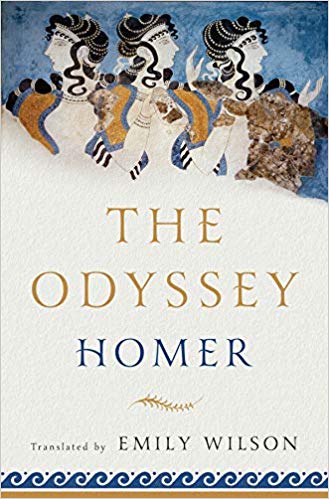
The cover art is gorgeous—one of my favorite Minoan mural paintings, but from a period and culture completely unrelated to the story. Like this translation itself, it is an attractive choice and it is wrong.

HERE! ROVER! THANKSGIVING!

IMG_3685

This morning Gary and I walked the length of the beach to the north. We were out for two hours. A little more. We started early, but it is a holiday weekend, and there were many people on the beach we didn’t know. Most of them had loose dogs with them. Several of the dogs were Golden Retrievers. Some of the retrievers were well-mannered. One barked and growled and ran at everyone. Like the rest of them, this dog failed to respond when called and, like most, was not on leash. The owners apologized for their dog’s aggression (genuine dog people would recognize his behavior as that spoken of as a “spook” and fear-biter) but the young couple did not have a leash with them, so they continued down the beach apologizing to the people their dog harassed and the dog continued to not come when called. It is why there is a leash law, for dogs like this Golden Retriever, whose behavior was not at all characteristic of that breed. Most of the dogs we met were perfectly behaved. The little King Charles Spaniel greeted me like a friend. I have pet her before.

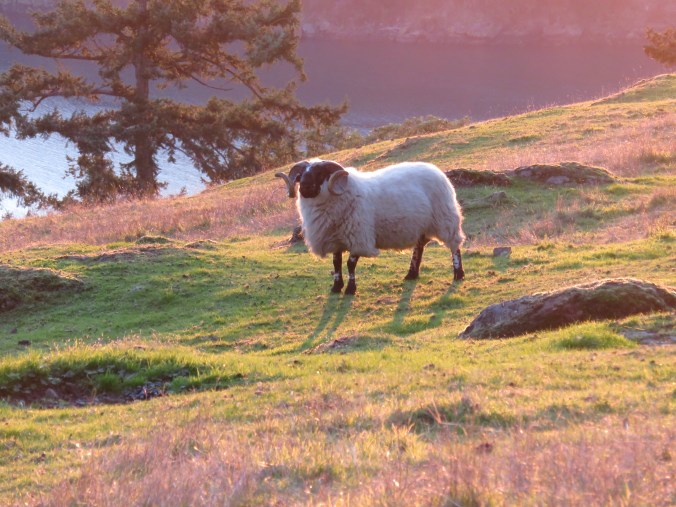
I found some peculiar rocks and each of us found a small piece of glass. Last week, on an island, I found a half dozen pieces of glass, all thin and nicely frosted, none of which would have survived long on our coast. I found lovely pebbles there, a nearly spherical rock, and we will be talking about that trip forever. It felt like a secret place, that island, a magical, liminal space. I feel not quite comfortable about naming it. The grass is very green, thin over stoney ground. The sheep are entirely wild, and the world is silent and still. The view was so quiet that I stared for many minutes at a time to convince myself I was not looking at a brilliant photograph.

Here, our view is forever moving, the waves close enough to hear, sometimes, each tipping breaker. Mostly, however, it is a roar. Ruby once asked us to turn it off, that sound.

We spent Thanksgiving in an entertaining hotel. It was a good night, but there were quibbles. The homeless man in the sitting room where I was grafting Ruby’s birthday sweater together. He had recently been in one of the rooms, delighted with his shower. He rubbed his head with a white towel and rubbed his elbows with lotion from a tiny bottle just like the lotion bottle in our room’s bathroom. Harmless and cheerful, but he may have caused some guests to leave the room. Several hotel blunders made us laugh. Nothing terrible—two little spiders in the bathroom, litter under the bed—but enough that we thought I must write about it when we got home. Gary should be beside me, helping me to remember all the funny things I am forgetting here.

Instead, Gary is downstairs sorting through the folders, pamphlets, papers, and other items I have already sorted. A week or so ago, Gary moved 16 “bankers’ boxes” into the living room for me to sort. Yesterday I finished going through them. Student work and lesson plans, papers from 20 and 30 and 40 years ago. I reduced the pile of boxes by 75%, which Gary declares a success. He is going through my discards to be sure I don’t throw something away that I might regret. He insists I keep my horse scrapbook from 1962—racing results from Longacres and articles with horses clipped from The Seattle Times. I remember each clipping.

When Gary began resorting, I organized Christmas gifts, labeling them with post-its, identifying the intended recipients. That did not take long. I need to attach the sleeves to Ruby’s sweater and address holiday cards. My NaNo count is at 63,256 words, including a just-begun new story. I should be working on that.

We took a break and checked our Visa bill. Yikes! And they said our account “may have been compromised” and they are sending a new card. I thought we might buy some organic cotton washcloths and sheets online, but I’d best wait. I made a frittata for breakfast using leftover curry and put butter to chill in the freezer to make pie crust. Then I came upstairs to my grandmother’s desk to write an overdue blog post.

A moment ago, as I typed, two youngsters were playing in the ocean, barefoot, in November and in an outgoing tide. People worry me sometimes. Our ocean is not a tame beast. Those little girls were just outside my window, but thankfully they have returned to the rental house next door and a youngish man is playing frisbee with a slightly older boy on the sand.

Just now Gary laughed while sorting downstairs. “What?” I said. “Oh nothing. I love you!” he called up the stairs. He has found something ridiculous, something I did.

That butter has been in the freezer too long now, and I will have to take it back out to warm slightly before I can make pie crust. Gary asks for only one thing at Thanksgiving: pumpkin pie. The filling is begun. It will be dinner tomorrow, only a few days late.

IMG_3697
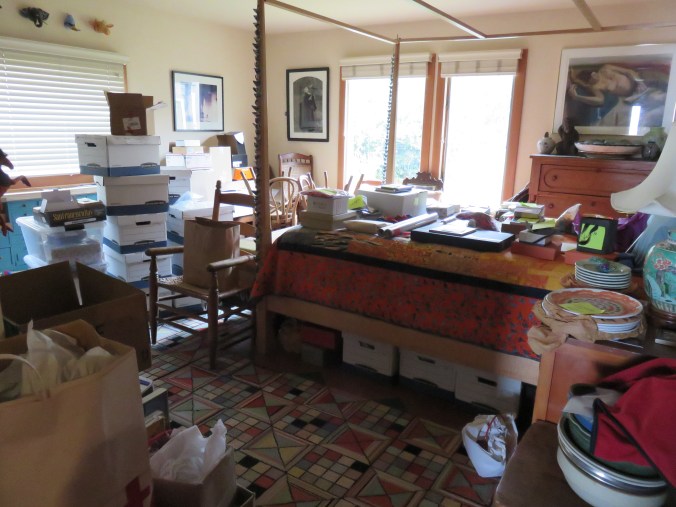
Above is a photo of “Alan’s room” which we are using to stage the holidays. Gary insisted I take a photograph because the entire room is thrashed at the moment. Nearly all the boxes in the photo are now empty including those way at the back and the one visible on the left. The paper shopping bag at the left, the one on the chair, and others on the floor are empty too. (The 4 original Thonet bentwood chairs—middle, back—are over a hundred years old, still sturdy, and free to a new home. Anyone?) Everything on the bed is a gift and labeled. I could be wrapping them just now, but no, not just yet.


TIME OFF

IMG_3640We went away for the weekend.

Such a simple thing to do though rare for us because for all of our marriage until recently, we had the animals to consider. There were dogs, usually five or six of them. There were the cats, only one at a time. Zora bit. Leakey pined. This recent trip was easy too because the friends we stayed with took us to an island without internet, a quiet place. And they spoiled us completely. Fed us and entertained us and managed our travel. The silence was dream-like and I dreamt so clearly and with such authenticity that that I was certain it was real.

Perhaps that was because the silence and beauty overwhelmed imagination.

Backing up, late afternoon on Thursday my new computer arrived. I can never get Apple to accept a password or change it or manage it at all, but my Time Machine transferred all data. The next challenge was passwords because my old computer knew them all and this new one does not, but must be taught. [Eventually Apple allowed me to change my password, after at least nine years of receiving the message “This action cannot be completed at this time”, but then I had to reteach the new computer website passwords again.] I opened the newer version of Pages and searched for features hidden in different places. But already this new Pages is old, and I have been prompted to download the newest version, free, but another adjustment.

I was perfectly content with how things worked with my old version. On the plus side, this new laptop weighs two and a half pounds less that my last. The trade-off is that it is smaller and no quicker, but the battery is spry. As I type this, I have been on the internet, Pages, and email for over two hours and used 13% of the battery. I did not even remember to turn down the backlighting of keys.

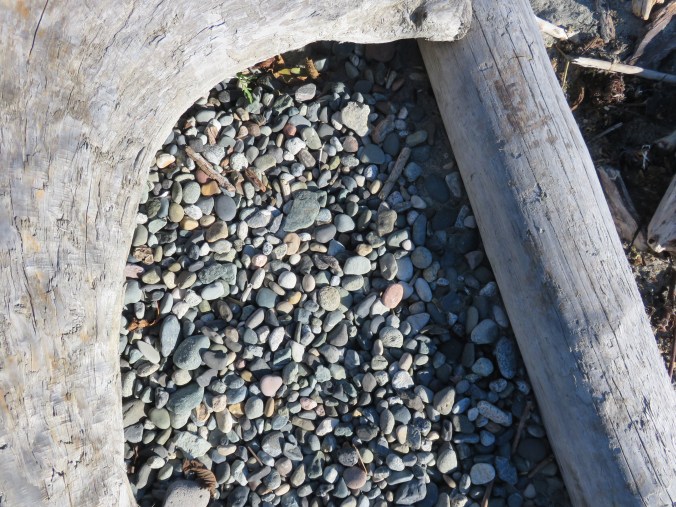
In any event, I left my new laptop at home and we have only a flip-phone, nothing smart at all, so for three days we avoided news and I was spared word-processing. I walked beaches with such a foreign assortment of pebbles and gravel and stones that I hardly knew what to look for. On our beach, the rocks lining the beach are basalt with occasional sandstone or agates, shells, feathers, and trash. We gather trash. I confess I gathered trash on the beaches in the San Juans too. Impossible to ignore the habit. Plastic and styrofoam, but no beach toys.

I am overwhelmed by the hospitality we received over the weekend.

I brought back a fistful of what I term “pinkies”—tiny pinkish pebbles. I found as many as I already had found, though what I already had was collected over months and years in a narrow stretch of beach. On the island, I found agates the size of a five-year-old’s fist and one in the shape of a heart. I found a beautiful granite egg.

Monday morning I completed my NaNo officially, but I was not done at 52k words. I wanted at least 8k more, preferably 70k, which has been my minimal goal with novels in the past two years.

Today and for the foreseeable future I will be struggling with Apple. Everything was fine on this new laptop, at first. There were the normal struggles to locate information and actions that I was used to finding in another place, but I could access my files, the internet, and email. Now I cannot access my email—the old messages show, but I cannot send or receive new messages. This has something to do with the iCloud and two-part authentication, a level of security I do not even want.

I am near throwing this little laptop through a window. Of course we have double panes . . .