READING

IMG_4281

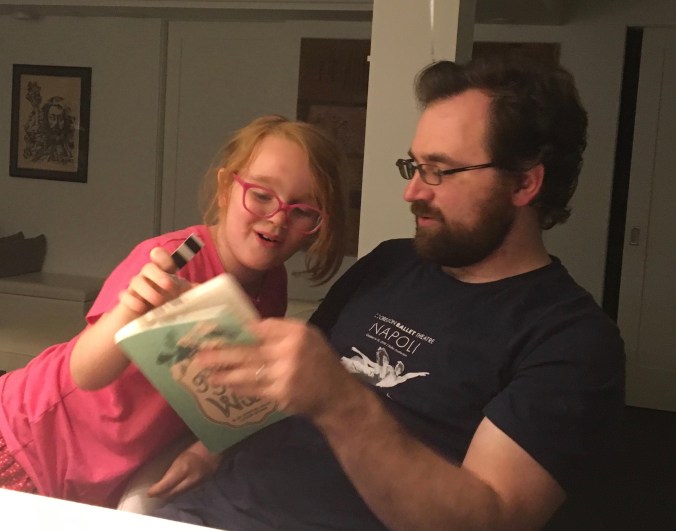
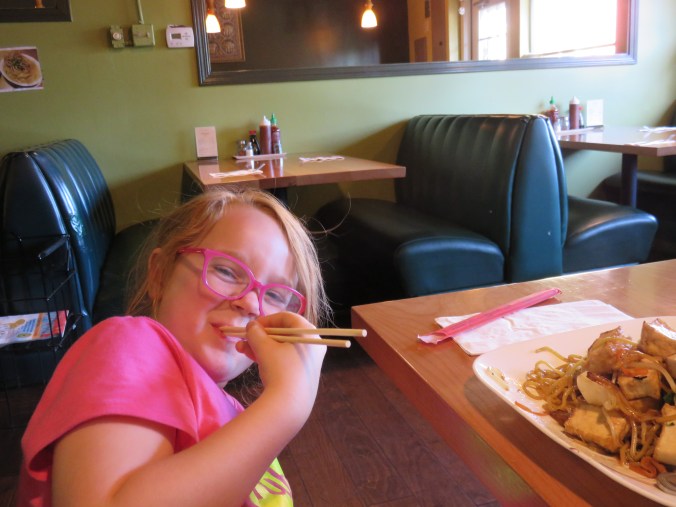
These days, Ruby objects strongly to having her photo taken.

We took our granddaughter to her first literary reading on Monday. However, our adventure began with dinner. It had been a long time since we took her for Thai. She barely remembered—maybe she did not remember at all. She chose yakisoba from the menu because she knew the word from a report she did on Japan. She was efficient with chopsticks, eating all the tofu, the broccoli, and most of the noodles.

From there, we headed for the Powell’s Book Store on Hawthorne.

A Girl’s Guide to the Wild: Be an Adventure-Seeking Outdoor Explorer! A Girl's Guide to the Wild

Ruby McConnell’s A Girl’s Guide to the Wild: Be an Adventure-Seeking Outdoor Explorer! (Little Bigfoot) is the definitive guide to getting outside – for girls ages 9-12! In addition to basic outdoor skills, McConnell’s entertaining guidebook includes easy camping recipes, outdoor projects including science experiments and crafts, fun activity suggestions, and inspiring stories of diverse historical and contemporary outdoorswomen. The goal is to improve the quality of girls’ outdoor time by increasing participation and independence, making them feel comfortable and safe, and giving them essential skills and knowledge. Charming and approachable, A Girl’s Guide to the Wild will encourage both reluctant campers and budding naturalists to go wild and embrace the outdoors.

I admit that one of the reasons this reading had caught my eye was the author’s first name. This Ruby was a wonderful presenter with obvious experience as a presenter to middle school and other audiences. She had herself been a camp counselor with a summer camp name and I recognized the songs she sang from my sons’ time at camp. I recognized her energy and enthusiasm for family camping trips, the sincerity of her promotion of the outdoors. I have lived with that.

Ruby McConnell wants girls to overcome fear, find their courage and their community. She said it again and again, that bravery. She was also very funny and our Ruby giggled and laughed and people smiled to hear it. The Rubys got on well, and our Ruby was assured that people with her name were special, but she would not stand for a photo with the author, much as she enjoyed the evening. When she got home she read several pages to her dad. Her other grandmother sent the photo, taken while Ruby was having too much fun to notice. In her right hand might be the little bookmark made by our neighbor Tammy.

fullsizeoutput_f50


LUCKY ESCAPE

fullsizeoutput_f45

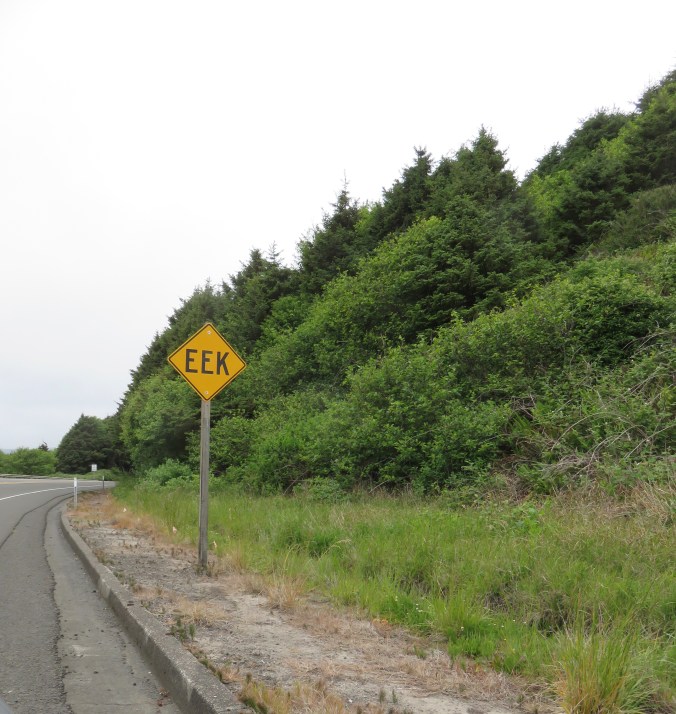
Last week, a sign on the highway at Silver Point said “EEK” instead of warning of “Elk” crossing.

If the weather had been better 75 years ago, yesterday would have been the anniversary of D-Day. [The D stands for “day.”] Instead, it was the Golden Anniversary of my husband flunking his draft physical. He did nothing to deserve this, but each year he celebrates his fortune in being spared Vietnam.

This is not about to become a blasting of veterans. Many of my favorite people—my father, Aunt Marcie, Jim Fukano—are veterans. Jim even served in that war that Gary escaped and remains in touch with the men he served with. Most of his older relatives spent WW2 in concentration camps right here in the U.S. Like my father he died not talk much about his wartime experiences. Despite humorous tales of K-rations and long marches, I know my father saw horrible things. My mother said the war, as it inevitably does for any soldier seeing combat, damaged him. My father, if he was within hearing when she said such things, would say he would never have found his wife, married, had the life he enjoyed if not for the war. There would be a moment of standoff. “Art—” my mother would begin.

Gary says “there is a certain amount of [both] happiness and guilt associated with my celebration.” Neither of us heard glamorous stories about the war, but our parents met as result of service to their country. That generation was irrevocably changed by the experiences growing up in the Great Depression and living through the war.

We have Ernie Pyle’s books recording the war in the house. My father, like many servicemen, admired Pyle who reported from Europe and then from Japan. The New York Times has a feature today about the war reporter who, according the Truman, “told the story of the American fighting man as American fighting men wanted it told.”

Until D-Day, war had largely been an exhilarating experience for Pyle, terrible but often uplifting. Ten days after the landings, the awfulness of all the death he was witnessing in the ‘thousands of little skirmishes’ in the hedgerow country of Normandy was carving away at his mental state. He reported having knots in his stomach from ‘constant tenseness and lack of sleep.’ In a letter back home, he confided that he had to ‘continually fight an inner depression over the ghastliness of it all.’ ‘Sometimes,’ he wrote to Miller on June 29, ‘I get so obsessed with the tragedy and horror of seeing dead men that I can hardly stand it. But I guess there’s nothing to do but keep going.’ “

We found glass on the shore yesterday morning, then hung house-letters to distinguish each of our tenants’ front door as well as our own doorbell. Someday I will address the awkwardness of entering our house through the garage to the atrium and then to the front door. Some day.

We had friends, Becky and Mark, over for dinner, a late dinner for us because they are both working and could not get here till going on seven. Clams and huckleberry cake were the highlights in food, but the talk nourished, our shared hopes and dreams. Food for the heart.

Then this morning, an email overview of top stories in TNYT, “Their Fathers Never Spoke of the War, Their Children Want to Know Why”:

“Less than 3 percent of the 16 million American veterans of the [Second World War] are still alive, and all are in their 90s or beyond. Now their relatives are often turning to experts to help them decipher billions of pages of military records to piece those stories together.

” ‘Sometimes they start to cry on the phone about how much they loved their dad, and how he had horrible nightmares, but would never talk about it,’ one researcher said.”

Ernie Pyle cph.3b08817.jpg

Ernie Pyle. My father looked a little like this. So did my father-in-law. Most of those who served in his war had that serious, lean look. America came out of the Depression during the war. Pyle did not survive but was struck in the head and killed by enemy fire in Japan.

My father would be 94 this November. That seems remarkably old, but members of his family mostly did live into their nineties. If lung cancer had not taken him in his sixties, he might well be alive today.

I meant this post to be cheerful, but the truth is that contemplating war always brings tears. I write with the morning chorus of birds outside my window, a celebration of another key. I cry for the waste, the suffering and misguided determination that does not end, for the 20,000 attacks on Yemen by Saudi Arabia in the last few years  (mostly using planes and bombs from the U.S. and Britain), for anger that pushes us from principle to spite, for determined vengeance and retribution, and for pursuit of power that so often perverts and perpetuates this monstrous suffering.

I wonder when we might learn to settle differences some other way that does not give nightmares.

TEAM SPORTS

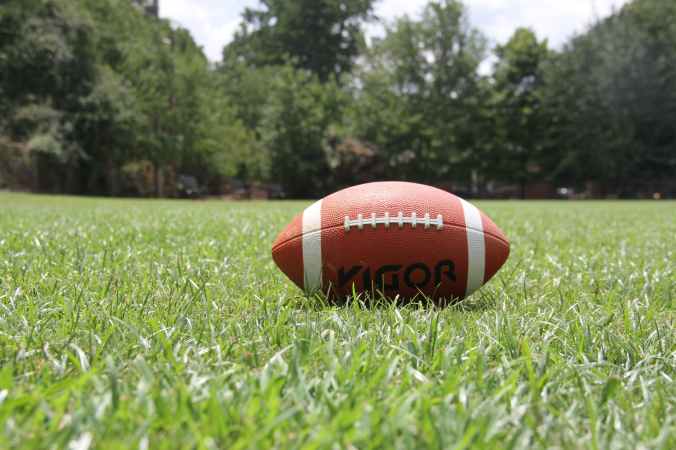
kigoa football on green grass during daytime

Photo by Pixabay on Pexels.com

The young man was doing summer landscape maintenance at a local public playing field. That is, he was mowing a huge patch of grass. He shut off his machine before coming over and say hello. I was taking a summer course in a nearby building. I was charmed that he remembered his English teacher from a few years before.

He talked about how a fall sports injury kept him out of play most of his senior year, how hard that was to be sidelined, and how he had tried to talk to his coach about helping him with post-high school plans. And then abruptly, he looked down, was silent, and seemed almost to shiver. “Coach didn’t have time for me. He didn’t care about me except as a player.” He looked at me. “I just realized that . . . and it . . . it makes me so angry.”

A review of literature has led a physician to declare that playing team sports may protect players from future depression. She found: “Among those with ACEs [physical and sexual abuse, emotional neglect, parental alcohol misuse, parental incarceration, and living with a single parent], team sports participation during adolescence was significantly associated with lower odds of receiving a diagnosis of depression (unadjusted rate, 16.8% vs 22.0%).” Dr. Eaasterlin describes one barrier to participation as the monetary cost of playing, another not considered might be inconvenience. Easterlin assumes that playing team sports teaches teamwork and that this is the reason adults who have played sports are less depressed in their 20s. There are a few leaps in her reasoning, but perhaps she is right. She further argues that pay-to-play (the costs associated with school team sports) interferes with the potential positive outcomes of team sports. It is well to recall that team sports require more than money. They also require traveling and a great deal of time.

Is teamwork really the key and is that key derived only from sport? Her study didn’t find a benefit from other activities. Can we assume that money keeps kids out of sport or that money is not itself an key issue? Despite measures taken to ensure a balance, can we assume that these self-reported measures are representative or even accurate? What else is at play here: privilege, money, family support, time free from family obligations and work, social status in the school, coach and teacher bias? Time?

When I was teaching, I saw my students for no more than five or six hours a week. Coaches of some sports, such as football, worked with players for up to twenty. Students were always excused from academic subjects to attend sporting events, even as spectators. While students were required to be teaching at least most of their classes to play, teachers were routinely called upon to rearrange academic obligations to permit extracurricular involvement. Administrators will always say that academics come first, but in practice this is almost never the case. Involvement is emphasized even over studying from the time students enter high school. Teachers and classroom aides are hired because they can coach, and coaches were ferociously protective of their access to players.

As an example: Football players in my yearbook class were forbidden to miss practice in order to attend a mid-week day-long yearbook conference and workshop. One boy said, “Don’t worry, I’ll go.” But hadn’t his coach refused to play him on Friday if he missed a mid-week practice? The senior smiled. “Coach will play me, he has to play me.” That strong varsity player was right. What lesson did he learn?

Many studies on the impact of childhood participation in team sports suggest the impact of youth sports programs is not entirely positive. Participation in team sports do not lead to healthier adult behavior, according to a broad study by UC Berkeley. Only individual sports such as running, tennis, and swimming predict physically active adult behavior. For some players, team sports lead to disastrous experiences of bullying and and even physical injury—I well recall, in the small rural high school, the summer when four boys had broken bones from three weeks of pre-season play. Every year I had students who required surgery to repair sports injuries. There is also a well-documented pattern of abusive domestic behavior on the part of varsity high school and college athletes (especially football and basketball), and an unfortunate assumption of privilege on the part of some players.

As to team work. Maybe. But that notion of team sports building teamwork was used to marginalize women’s participation in many professions and careers in the days before Title IX. Imagine our surprise when objective studies found that woman overall tend to be better at teamwork regardless of sport experiences. Creating a mixed-gender engineering team, for example, led to stronger overall performance because women on the team advocated for collaboration and cooperation and, you might say, team work. This had nothing to do with sport.

Choir, drama, orchestra, gaming, and yearbook and newspaper classes—all these can teach teamwork, too. Over the years, many enthusiastic teen athletes have tried to prove that their sport was necessary to success in life in their research papers. It’s not true. Choir, drama, orchestra, gaming, and yearbook and newspaper classes are not necessary either, but like athletics, sometimes they help. Participants want very much to believe that their great experience is necessary and necessarily good.

Sports teach competition. They teach about winning and losing. For many young people, they provide much-needed incentive to be physically active and cooperative. They often provide access to coaches providing a stable and supportive adult influence. But they are not an unmixed blessing. For all the good they do, they also provide opportunities for distraction from education, injury, and both bullying and elitism.

This doctor found what she wanted to find. She may not be wrong about the impact of sports, but my own forty-year experience in education and a great many studies suggest she may not be entirely right.

TAKE A WALK

IMG_4176

Walking is healthy exercise. Taking time out from your busy life is mentally healthy too.

A website recommends planning a 30-minute walk this weekend because “here in the age of binge watching and sedentary smartphones, that we all could stand to move around a bit more.” They aren’t wrong about that.

They have three pieces of advice: wear walking shoes, plug into your device—”Podcast, audiobook, or music, walking is the perfect time to get lost in something out of the ordinary. If walking isn’t particularly appealing to you, listening can also make the time go by faster”—and “bring a buddy.”

Plugging in and conversing with a “buddy” at the same time? Maybe choose? There might be conflict between the second and third bits of advice. There might be conflict between the second bit of advice and that desire to escape our ordinary plugged in existence.

Aside from the advantage for women of being obviously plugged in as a way of “tactfully” ignoring street harassment, being plugged in means we are less available to our surroundings, less attentive to both beauty and potential hazards.

Walking someplace, anyplace, that is green or wild or beautiful, or perhaps has traffic, might suggest that listening to surroundings would be better advice. Listening to a device just means a walker continues to carry ordinary life around like baggage. The point of going for a walk isn’t merely to escape the home, it’s to escape to someplace. Be here now. Listen to the wildlife. Listen to the air moving. Listen to our own thoughts. Seriously, if listening to our own thoughts is unbearable and we need electronics “to make the time go faster” maybe the most important reason to go for a walk is to slow time back to a human pace.

My husband and I walk at least each morning for 45 minutes or longer. Sometimes we walk side-by-side, sometimes we separate while Gary searches one stretch of beach and I search another. We go out early to avoid most other walkers—the visitors are generally plugged in with necks bent and their eyes focused on their phones. They walk the Pacific shoreline and are oblivious to their surroundings.

Local walkers all walk early. We see Tammy and Larry and John, who go out alone. We see other locals who come out to walk together, mostly with their dogs. We stop and chat sometimes. Other days we merely lift an arm in greeting and carry on.

Our walks are the most important time of our day. We hear the surf and the birds.

My advice for taking a walk this weekend:

  • Wear good walking shoes
  • and pay attention.

DROWNING

fullsizeoutput_f43

I told a friend about my favorite metaphor for a successful relationship. [Bear with me because it’s entirely backwards and if you have not spent time on a Pacific shore it will make little sense.]

You wade into the surf, just a little way in to the middle of your shins because the tide is going out. You face the ocean because it is never smart to turn your back. Waves break to your knees and dwindle down to your ankles. And you have to keep stepping away from the ocean because it draws you in without your noticing. If you fail to pay attention, you will find yourself in dangerous water before you know it.

Loving someone is like that, only in a kind of reverse. The better way to describe it might be that the other person is the shore and the world is the water that continually pushes you apart, drawing you into deeper water. In this analogy, each person must continually walk toward the other. You cannot stand in place, because that will drift you away without your noticing at all.

Two people who want a relationship of any kind must continuously make the effort to approach one another. A continuous approach just to remain close.


Many years ago, I was walking on shore with friends from California and Canada. We were all beach combing, some turning north and others south. One couple headed out into the water. It was a bright, sunny day, little wind, warm, though the ocean is never anything but cold on my stretch of beach. My friends were walking into an out-going tide. It was dangerous and I called a warning. They could not hear me over the ocean’s roar.

And then I did a stupid thing. I walked out after them. Both Ed and Ivy were taller than I was, and Ivy was a strong swimmer. Ed had backed off. I was out past him calling to Ivy. By the time I got close enough to be heard, we were both suddenly off our feet, swimming to stay up, waves washing over our heads and with no way to pull ourselves back against the current. Ivy swam to Ed, who had turned and come after her.

By then, I was a few yards—ten? fifteen?—away, and even in that moment as I scanned the shore, I knew there was no one who could hear or help me. Gary was at work. I knew, had he been there, he would have pulled me out of the water long before I got in so deep. I was already too cold to make any effort to save myself, struggling just to keep my head above water. I thought of all this and also thought this might be genuine irony to drown after wading in over my head in order to warn people that it was dangerous to be in the water in an out=going tide. I thought how stupid and funny and awful.

I called to Ed, but he was at his limit to get himself and Ivy back to shore. He could not wade back to deeper water after me. “Can you get to me?” he called. I felt certain, in that moment that I would die that day.

But instead I thrashed and flailed and found strength to drive myself to his side and Ed saved us all. No one onshore noticed a thing.

So. Love and drowning. How we save ourselves. How others save us. [Thank you, Ed.]


MEMORIAL

fullsizeoutput_f42

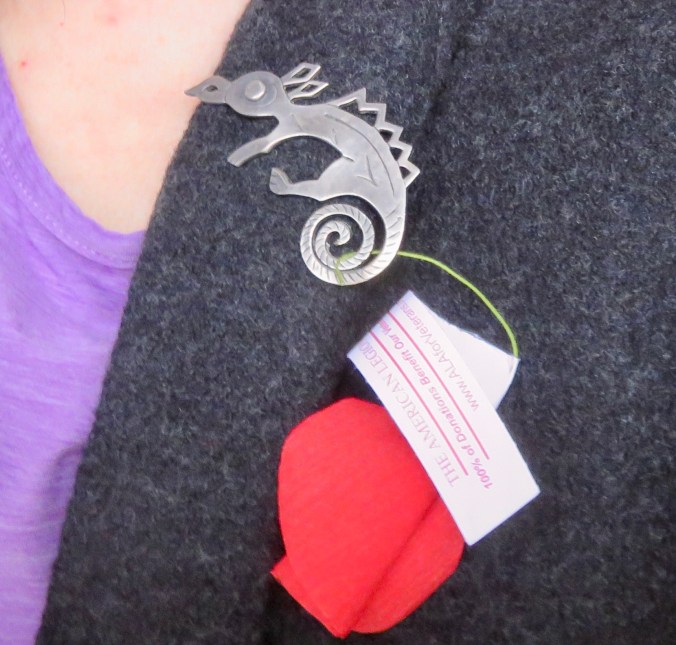
When Gary was a little boy, he sat at the dining table with his mother and made red poppies for Memorial Day. Like her husband, Alta (“Anne”) served stateside during the Second World War. She gathered little red cloth petals, wound them onto a wire to be worn in honor of our veterans.

My husband buys a poppy each year. Today they are made of paper. For a time we had chain of them hanging from the rearview mirror of the car. The tradition dates back to a famous poem from the First World War:

In Flanders Fields

In Flanders fields the poppies blow
Between the crosses, row on row,
    That mark our place; and in the sky
    The larks, still bravely singing, fly
Scarce heard amid the guns below.
We are the Dead. Short days ago
We lived, felt dawn, saw sunset glow,
    Loved and were loved, and now we lie,
        In Flanders fields.
Take up our quarrel with the foe:
To you from failing hands we throw
    The torch; be yours to hold it high.
    If ye break faith with us who die
We shall not sleep, though poppies grow
        In Flanders fields.


The poem above is often formatted incorrectly. It is a form—that is, prescribed lines and rhyme scheme are followed by the poet. McCrae was Canadian and he died in the war, as many of the so-called War Poets of the Great War did die—Wilfred Owen, Rupert Brooke. Siegfried Sassoon (a British officer) survived despite wounds and decorations, despite his letter to The Times in which he called out the powers-that-be for needlessly sending troops into combat when a negotiated peace was possible. “I believe that this War is being deliberately prolonged by those who have the power to end it,” he wrote. He would have been tried for treason, but another poet declared him a victim of “shell-shock,” and he was sent to an infamous, tortuous asylum, Craiglockhart War Hospital. He survived. He returned to the front—why should his men die without him. Throughout, he wrote poetry. “The dynamic quality of his war poems,” according to a critic for the Times Literary Supplement, “was due to the intensity of feeling which underlay their cynicism.” “In the history of British poetry,” McDowell wrote, “[Sassoon] will be remembered primarily for some one hundred poems . . . in which he protested the continuation of World War I.” He survived that too. I honor him.

Today is the day Americans celebrate Memorial Day, in honor of our fallen. Our great war was the Civil War, the only war on home ground, the only one with fatalities on a scale approaching the losses suffered by Europeans during the wars in the twentieth century. This violence that we accept as the inevitable price for our freedom.

I turned on the television after our walk, just as we finished breakfast. Bird was on, Forrest Whittaker coming home drunk. “Is he going to hit her,” my husband says. “It’s in the room.” Charlie Parker is talking to his wife, everything is all about him. The violence simmers. I turned off the show when the inevitable hit occurs. I wonder what this assumption—mine, my husband’s, society’s—says about men and violence.

What does this tell us about what is inevitable, about what we should accept and even approve in pursuit of a contrary goal of peace. The advice to bullied children to hit back. The determination to “fight” cancer as if it were a war, striving to kill the enemy, instead of striving for life. Always an enemy in sight.

My father and aunt also served in WW2. My aunt served in San Francisco and my father was present in the “liberation” of a concentration camp in Germany. He would not tell me details. The date was writ small on a scrap of paper in his wallet. However much he honored women, he sheltered his daughter from that horror. I am (mostly) sorry for that protection.

That belief in protecting women seems to me at the heart of the brutality we too often suffer. This belief that somehow because I need protection I am also less capable, or less deserving of honor and respect. A student this past spring told me that most of the #MeToo movement was lies and exaggeration. He was always polite in speaking to me except in this. It did not occur to him that his belief was trumped by my personal experience, not even after I revealed it to him.

Emma Thompson wrote: “If a man has been touching women inappropriately for decades, why would a woman want to work for him if the only reason he’s not touching them inappropriately now is that it says in his contract that he must behave ‘professionally’?”

In a recent interview she was asked how men who have behaved badly and been caught might “come back” after the #MeToo scandal. She said that was less her concern “at the moment” than concern for the women who had suffered over all that time.

It is not only women who are concerned about the abuses of powerful people. It is not only women who have suffered. It is not always women who demand change. Men demand it too, some women are untroubled. Our views are not entirely determined by gender. Does this surprise anyone? As one obvious example, I have often wondered how any righteous woman could possibly support Trump, but they do. We share the capacity to be blind, indifferent, biased, and unfair.

Women and men are not actually very different biologically either—seriously. In our genes, we are very nearly identical. Yes, sexual characteristics, penis and vagina. Men are generally bigger, but some women are taller than most men; some men are smaller than most women. The same applies to body strength and tone of voice, muscle mass, inclination to violence and other behaviors. Societal classifications of masculine and feminine are both slippery and confining. I have often wondered, going back to my teenage years when several of my friends were out, how much easier we would be in our skins if the expectations for our behaviors and goals were less inevitably tied to our more obvious gender.

I know so many women of my generation and even of the current generation whose expectations are driven by gender stereotypes. I was born in 1952 and my own mother was a stay-at-home parent. Though she defined herself as a feminist and warned me never to trust a husband, she also assumed I would marry a man who would “take care of me.” She thought I should “have a skill to fall back on” and she meant typing. Refusing to learn to type was my act of teenage rebellion. Despite this, I know what society expects of me as a person: to be a woman. I know myself as a woman. I know feminine. I am those things. I have played that anticipated role all my life and I cannot set it down as a burden. It is wound into my identity.

There are other ways of defining the self. There are opportunities for both men and women to be greater than their assigned roles, to be stronger and kinder and better, more forward-thinking and courageous.

“In Flanders Fields” the poppies grow. What does it mean to “break faith” with fallen soldiers? Does it only mean fighting on? Or might the fight extend beyond the battlefield. Might keeping faith demand more of us that mere brutality. Might it demand another sort of courage and honor, some act more tied to life. I would like to think so. We do not live in a film with the script already written, the violence simmering.

None of this is inevitable. We might keep a better faith. I hope my granddaughters and my grandson will not remain as harnessed, fallen into socially defined roles as my own generation. Trapped by the foolish notion that the best will win; that best is defined by hitting hardest. That is a fall.

I might wish our children had greater freedom, not to fall on their swords, but to rise to their own best selves.

5 EAGLES

IMG_4226

A tourist approached the feeding eagles and drove all but the least confident flier off. She told me she was afraid the non-flier was hurt. What did she think she could do to help? It remained on the sand for twenty minutes or more and then flew away south.

We had never before seen five bald eagles at once on our beach. Clutch size of eagles has been rising ever since Rachel Carson’s Silent Spring alerted the general public about the dangers of DDT. (Before we began poisoning crops, bald eagles in Chesapeake Bay had clutches of four or, rarely, five eggs. The average size clutch was 2-3. In the 60s this dropped mostly to 1 egg. Average clutch size has been slowly rising ever since the banning of that poison.*) Gary assumed bald eagle laid 2 at most “Like normal birds” (he means pigeons). I had not known eagles ever hatched 3 eggs. But here they are.

These parents, the successful breeding pair, have brought out their youngsters each late spring. Inevitably the youngster lands on the beach, finds her or his feet on flat and wet sand and stands in the shore, often for many minutes. Eagles always look a little bit pissed off. It is their expression formed by keen eyes and a downturn in their sharp beaks. I like to imagine they are unhappy with the wet and flat ground, an unfamiliar surface.

Whenever an eagle shows up, crows arrive to harass it. (Crows routinely harass the red-tails too.) We once watched an eagle harrying an injured gull, that itself was then bullied by a half dozen crows. Eventually, even gulls arrived to drive the eagle away. The adolescent eagle moved off north, stood for a time on the sand, but that injured gull would be eagle food before the day was out.

We never interfere. These are wild things and their lives should now be messed about by human being. (It is a different situation when the animal is endangered as a result of human action to begin with.)

The five eagles from the other morning were eating a large fish, the remains of a huge sturgeon—head and spine were thrown up on the rocks by that night’s high tide.

fullsizeoutput_f3d

That is the head of a sturgeon, the prize that attracted ten raptors to our shore.

The breeding pair always appear smaller than their youngsters. They are relatively new to our area. When we moved to my grandfather’s house forty years ago, there were no eagles (no ravens then either). This pair, the ones we like to think of as “our eagles,” appeared more than a decade ago and began bringing out their adolescent children soon after. This is the first year they have successfully raised three.

fullsizeoutput_f3f

This photo shows the two white-headed parents and their three plain brown children, plus a couple of crows. This is only part of the show.

It was a spectacular day for raptors. In the sky and on the beach we counted the five eagles, three turkey vultures (also a first) and two other raptors that Gary thought might be the osprey, which we have identified recently fishing just offshore. (A neighbor claimed they were red-tail hawks and there are red-tails a dozen miles north on the other side of Tillamook Head, but we did not see the telling red tail and we know to look. We have recently identified Cooper’s hawks in our own yard, but they are smaller than the birds we saw. The pair were probably ospreys, but I do not have a photo to prove it.) The entire local murder of crows arrived, the raven pair too.

In any event, ten raptors at once. Ten.

They are one sign of a healthy ecosystem.

*I do not know any high school science teacher who routinely assigns the work of Rachel Carson, the Great Parent of the modern environmental movement. Rachel Carson was a marine biologist and already a published author when a friend wrote to her about how spraying had caused songbirds to drop dead from the trees in her yard. Because it was not her field, Carson tried for some time to find someone within that discipline to write about the dangers of pesticides, but there were no takers. The chemical industry was and remains a powerful lobby. Finally, Carson did the research and wrote the book herself, knowing full well the chemical industry would do whatever it took to destroy her. They did.

How have we come to “trade the fiddle for the drum”?

xclouds.jpg

Fiddle and the Drum

And so once again,
My dear Johnny, my dear friend,
And so once again you are fighting us all,
And when I ask you why,

You raise your sticks and cry, and I fall,
Oh, my friend,
How did you come,
To trade the fiddle for the drum.

You say I have turned,
Like the enemies you’ve earned,
But I can remember,
All the good things you are,

And so I ask you please,
Can I help you find the peace and the star?
Oh, my friend,
What time is this,
To trade the handshake for the fist.

And so once again,
Oh, America my friend,
And so once again,
You are fighting us all,

And when we ask you why,
You raise your sticks and cry and we fall,
Oh, my friend,
How did you come,
To trade the fiddle for the drum.

You say we have turned,
Like the enemies you’ve earned,
But we can remember,
All the good things you are.

And so I ask you please,
Can I help you find the peace and the star?
Oh, my friend,
We have all come,
To fear the beating of your drum.

by Joni Mitchell

.

Years ago, I transcribed the lyric from this song (from her 1969 album Clouds) for use in my Honors Junior English class during the six weeks we spent on poetry in the spring. I had to play it several times because I am such a slow typist. My husband confessed he had never listened to the words before. He is a guitarist and had skipped this song since it is sung a cappella. New respect.

As poetry, it is one of her simpler pieces but timely.

I don’t quite HATE FedEx

Just saying. The company has, on occasion, delivered a package to us. Sometimes there has been a guy who knew his way around. More often whoever is delivering it tries a neighbor, leaves it unprotected in the rain, or otherwise screws up. I have cancelled orders online if the only delivery option was FedEx. Some days I really cannot handle the frustration.

Like today.

This afternoon, they knocked at our tenant’s door while we were home, left a “delivery attempt” sticker (no address, no addressee, no tracking number, no certainty that the missed delivery was of my laptop) and—did I mention?—we were home!

Speaking of not having a tracking number . . . it would have been nice had someone alerted us that the package was coming today. Alas. No email from FedEx, nothing from Apple. Nothing.

Our neighbor brought us the FedEx tag.

I looked up their number online. And then the computerized answering system. Well, you know how that goes. I had no tracking number. None of the key elements the computer wanted me to read slowly were on the slip. Eventually, after some loss of temper and dialing zero, “You would like to speak to a customer service representative. Is that right?” And I talked to an actual real person told me there was absolutely nothing he could do.

I said he could look up my address and confirm that the delivery was intended for me. Oh, yes, he could do that. Sure enough. It was my computer on the truck. It’s in Astoria now, or will be soon. No, I can’t go get it. It will be delivered tomorrow by 4:30. Or around 4:30. Or not. So we will be home watching all day tomorrow.

The inconvenience of modern technology. Especially communication. Trust me, as a 40-year high school teacher, I can assure you.

Okay, then a very polite, well-spoken young woman called me—how did she get my home number? All is not forgiven, but if I have my computer back tomorrow (between 10 a.m. and 4:30 p.m.), I will be in a much better mood.

Then there was the incident with the out-of-state neighbor putting up an eight foot fence a few feet from all the windows on one side of our house. These people are running a commercial rental and have already aggravated the homeowner north of them and east of them. Today was our turn.

So for this I borrowed a computer to blog?


CRASH

grayscale photo of explosion on the beach

Photo by Pixabay on Pexels.com

My computer screen went all magenta last Friday and is being (hopefully) repaired. Maybe by the weekend—they said maybe earlier, but I think it may have died at a mere six months and two days, an infant laptop still under warranty. It has been flakey since I first opened it, and one son shrugs and laughs, they other tells me that the last good Macs were from a few years ago when an owner could change the battery without driving all the way to Portland because everything is now glued in place. Fortunately, I had backed-up my computer just hours before. (I am working here on a borrowed computer.)

By good fortune, I was reading Dreyer’s English, which is the most entertaining writing style guide I have every read. (There are plenty of funny ones—none so funny as this.) I needed a laugh.

This morning I read a Goodreads review of a book about Chernobyl:

“Chernobyl was not a single event but was instead a point on a continuum; the radioactive contamination of Polesia lasted more than three decades. Chernobyl territory was already saturated with radioactive isotopes from atomic bomb tests before architects drew up plans for the nuclear power plant. And, after Chernobyl as before Chernobyl, the drumbeat of nuclear accidents continued at two dozen other Ukrainian nuclear power installations and missile sites. Sixty-six nuclear accidents occurred in Ukraine alone in the year after Chernobyl blew. More nuclear mishaps transpired after the Soviet Union collapsed, including the fires in the Red Forest in 2017.

“Calling Chernobyl an “accident” is a broom that sweeps away the larger story. Conceiving of the events that contaminated the Pripyat Marshes as discrete occurrences blur the fact that they are connected. Instead of an accident, Chernobyl might be better conceived of as an acceleration on a time line of destruction or as an exclamation point in a chain of toxic exposures that restructured the landscape, bodies, and politics.”

Students have frequently horrified me with their eagerness to embrace nuclear power as perfectly “clean” and the best solution to our energy needs. They did not have duck–and–cover drills (yes, now I not only know how to use an en dash but how to make them), and they never watched the based–on–reality Silkwood (1983) or spookily–prescient The China Syndrome (1979). Those real life accidents at Five Mile Island (1979) Chernobyl (1986) and even Fukushima (2011) are just too long ago in the minds of teenagers.

When I was a teenager myself, my father was confident that we would solve the problems of storing nuclear waste with fusion plants—that was fifty years ago. I have never felt so confident that technology and science would solve the problems at the pace they created them. So tell me: How are those fusion plants coming along? And do you have any idea how long nuclear waste remains toxic? Go look it up.

Some days it seems everything is eager to explode.

On an entirely different note, I walked through a department store while waiting for my computer appointment. In the children’s department there were two adorable items, and only two, with huge monograms: a sleeping bag and coverlet. I wish I’d had my camera. It was astonishing to find LOGAN on my right, to make a half-turn, and find RUBY. The first names of our two oldest grandchildren.