WORKAROUND

IMG_6828.jpg

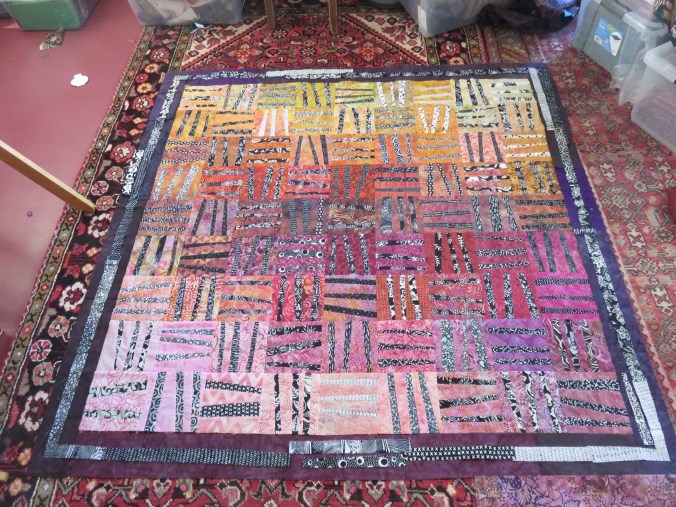
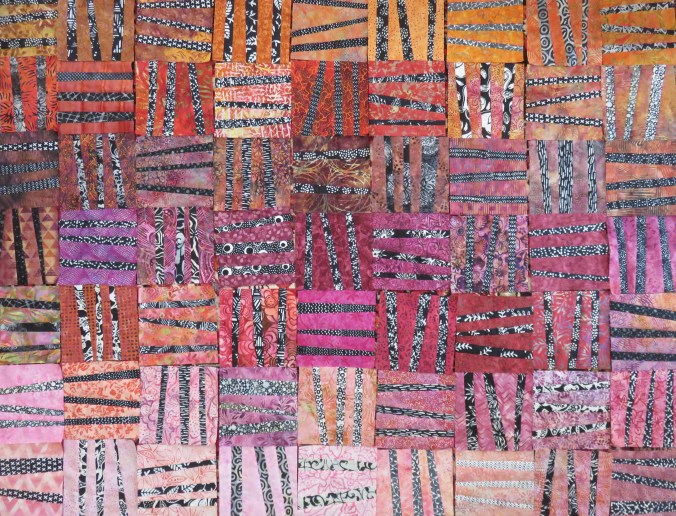
The center panel is composed of eighty-one different patterned squares, crossed by twenty or thirty different black and white cotton. The split frame is of several purples, and these each change from step to step. There is also a pieced border.

There is more to this post—I figured out a workaround.

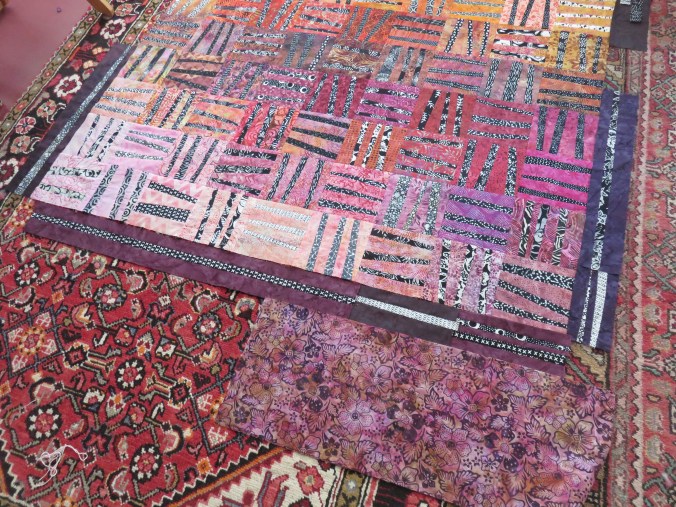
Above is the center panel with the border pieces, unsown and just separate pieces of fabric laid in place. Below is the border pieced without corners and not yet joined to the center—trust me, it evolved. It’s entirely sewn as of now, and today or tomorrow I hope to complete the border, trim the backing, and fold it all up so it’s ready for Linda Pinkstaff at Astoria Quilting to work her magic. We will carry them north in the next week or two. Perhaps by then I will know what I am doing next.

Yesterday I got stuck. We walked north to Arcadia Beach, two miles away. I made granola and peanut butter cookies that were mostly peanut butter, a riff on Maida Heater’s recipe. Gary liked them, and he’s always insisted he did not care for peanut butter cookies. I finished the dreadful novel I began earlier in the week, skimming the less savory parts.

What I did not do is work on this quilt, which now has a name: “Aurora Which Means Dawn.” That is a line from a Golden Book about Sleeping Beauty. So perhaps I should call this “Sleeping Beauty”? Except it’s not a sleepy piece but bright day. It is my fifth quilt during the past year. Can that be? I have not made that many quilts in a year before. Let me think. Why would that be?

Some people bath less often, some are drinking too much, some quarrel with or avoid their family, some have shifted their political priorities—perhaps a national healthcare system and stable income seem more reasonable necessities when the alternative is bumping into sick people who cannot afford to take better care of themselves?

Anyway, I’ve tried most of the above, and settled on rewatching favorite television series such as The Mentalist, Psych, and Monk while working with color. I must have a couple hundred skeins of Koigu wool, a fine, two-ply Canadian merino that is hand painted. I have hundreds (plural) of different batik fabrics gathered over the past twenty or thirty years. Some are were once lengths of a yard or two, but most were never more than a quarter yard, now reduced to scraps.

My work is not mere craft but neither is it great art. There is art in the design and craft in the making. There is pleasure in looking at the many patterns and rich colors.

IMG_6829

FLAMBOYANCE

gettyimages-1227919714_1.jpg

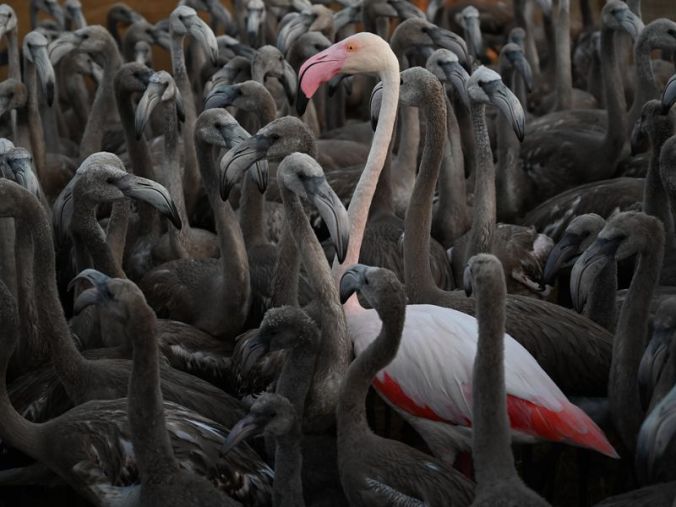
One adult shown among a flamboyance of gray flamingo youngsters who haven’t yet eaten enough pink shellfish to turn pink—wait a year and they will become more flamboyant.

Twenty-five thousand adult flamingo couples are summering in the salt marshes of southern France, the largest number since naturalists began counting them forty-five years ago. Over 60,000 flamingoes total—12,000 babies so far. They are harmless to man and beast, eating only krill, tiny saltwater organisms they filter through their beaks in a system not so different from what baleen whales use the filter small fish, krill, copepods, and zooplankton from the sea. The whale babies look just like their parents.

We appear like or unlike our parents, can be trusted or not trusted even by them to do what is expected. Most living things gather.

IMG_6688

The youngster on the left is still begging for food. The gull babies do that too.

A group of ravens can be called many things. Here, the term “conspiracy” of ravens works for me. (I have never appreciated the term “unkindness of ravens”). The two raven youngsters look just like their parents—one has a fluffy head and is slightly bigger, but that might be one of the youngsters.


They are still hanging around together, though one of the adults sometimes wanders off on scouting missions.

Gary broke up a leftover waffle and some crumbs and put them out on the sand at the beginning of our walk the other day. The ravens stuck around long enough to say thank you.

fullsizeoutput_144f

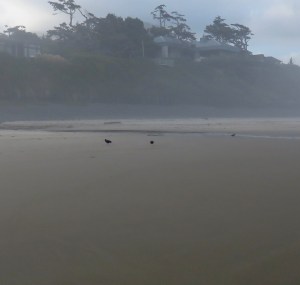
You’ll have to take my word for it that this photo shows three black oystercatchers.

We spotted the black oystercatcher youngster with its parents the other day at the north end of our beach. I did not zoom to catch which of the three was the child, but it didn’t really matter. I snapped the photo in the fog as we passed at a distance. We’re just grateful the baby is doing so well.

We are careful not to approach birds resting on the sand. If they are not flying, they likely want their rest, but it’s tricky for them with so many loose dogs. A photographer deliberately frightened dozen of birds off the sand just to get a photo of them flying.

That’s not as bad as the people trying to “rescue” baby seals (highly illegal and often fatal for the seal pup left onshore by its mother) or young eagles (disturbing any member of an “aerie of eagles” is also illegal and dangerous for the fool trying to “rescue” one). Or the man throwing a ball for his dogs into the surf in an outgoing tide. [This is why Gary does not like me to go with him when he gets the mail. He says I bark at people—I did bark at that man with the throwing stick. “They’re hunting dogs,” he said. “They trust you,” I responded. I saw a dog rolled right under waves, come out of the surf and absolutely refuse to go back in again. The dog was smarter than the owner.]

The wild things are right not to trust us, to focus a wary eye on our movements. We are not of their group, not trustworthy or predictable and kind. The wild rabbits (a nest) nibbling rose hips in our the front yard, the jays (a party) cruising through, the garter snakes (a bed), and gulls (a colony) and know to avoid us.

We try not to disturb the wildlife. When we must pass birds onshore, we walk steadily, avert our eyes, and direct ourselves away, away!

IMG_6801

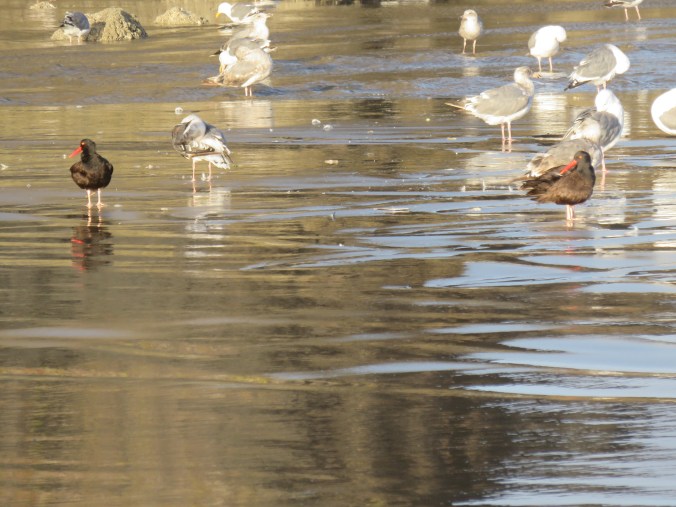
These two black oystercatchers are not the same pair. There is a  
“parcel” or “stew” of oystercatchers nesting south of us.

The featured image at top is from Wikipedia: “James’s Flamingos at Laguna Colorada in Bolivia”  “Young flamingos hatch with grayish-red plumage, but adults range from light pink to bright red due to aqueous bacteria and beta-carotene obtained from their food supply.”
The adolescent flamingos with one adult is a Getty image taken off the Smithsonian page

PICTURING HAPPINESS

The Reading Under the Gun (or RUG” was a timed writing assignment. I gave students a limited period of time, a short text, some provoking questions, and required them to write until I said stop. The assignment was worth five points. Even if you answered the questions wrong or went off topic, so long as you wrote, you got the points. Sound simple? It was harder for some than you would think. Some didn’t want to do more than the minimum, they filled a page and then wanted to stare into space. I could be sticky about it.

It was a grade-builder, rewarded for effort. If I did my part well enough, they learned how to read quickly and think deeply about texts. They observed and recorded the obvious. They took risks and made personal connections. They didn’t always appreciate it. Regardless, they almost always liked the particular reading below. It was often their favorite of the year.

Some of my students were lucky people and had been protected and blessed all of their lives. But that good fortune doesn’t last for anyone. We do not get to live pretty lives all of the time. All of us suffer and change happens and we grieve for what is lost or never arrived. But every one of us has moments worth treasuring. The snapshots we hope are true.

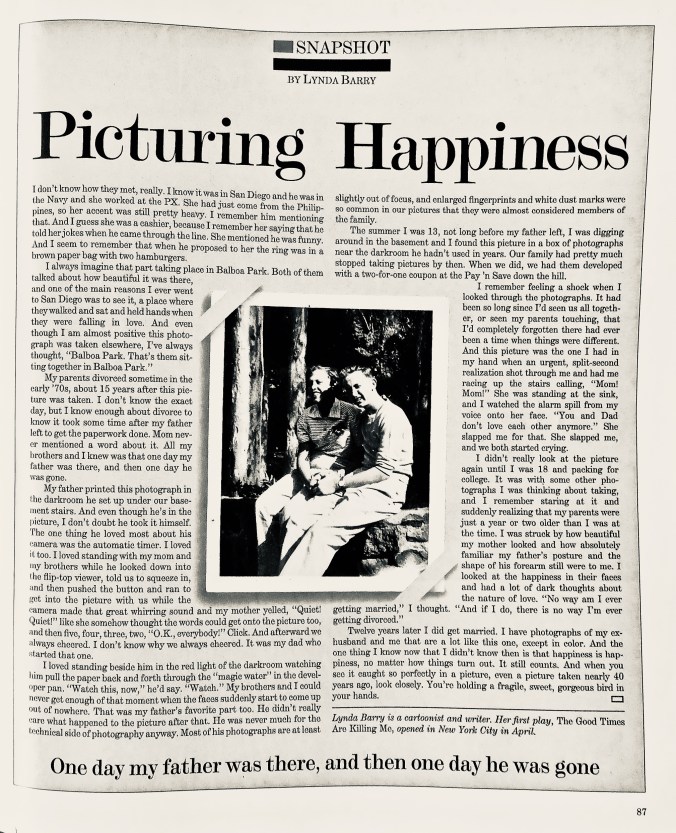
From Life magazine, September 1991, “Picturing Happiness” by Lynda Barry:

IMG_3782 2.jpeg

“Happiness is happiness, no matter how things turn out. It still counts. And when you see it caught perfectly in a picture taken nearly 40 years ago, look closely. You’re holding a fragile, sweet, gorgeous bird in your hands.”

We saw the black oystercatcher baby yesterday morning and it’s doing fine, my center panel is joined together and the 3″ frame is cut and pieced, the next quilt is already in planning, and I made blueberry crisp.

HIGH SCHOOL SWEETHEART

IMG_6782.jpeg

This quilt is a version of the one I made for our oldest granddaughter’s bed here at the beach. I am still rearranging as I work through piecing these center squares. (They have shifted from what is here—see top photo.) I hope to have all 81 squares joined by next week. Then I will add a pieced frame and a pieced border, washing the backing that came today in the mail, and folded quilt top and backing into a bag for Linda. Seven rows of nine pieced squares, just lying in place the way they were made. The last row was pieced yesterday, and after a last review in predawn to check the arrangement of values, today I will begin joining the squares to make the center panel.

My husband and I have a lot in common, things you can’t see, and a couple you can. We once lived a half mile apart, and we graduated from the same large suburban public high school, though we did not meet until before my senior year. Our DNA is largely Northern European. Gary has more African; I have more Native American. We both look White. At one time our hair was the same color. It’s the same color now.

We met through mutual friends, the Edmonds Unitarian Church, and rock music. Gary was born in Seattle but spent seven years of his childhood in Arizona. I was born in Corvallis, but lived briefly in Portland then Seattle. We would graduate, first Gary and then me, from the University of Washington with Honors and Phi Beta Kappa. We were overqualified for most of our jobs. We worked hard. We shared a commitment to doing the best we could. We shared values. We shared a commitment to our marriage.

But our backgrounds are different.

Gary’s parents met during the war in Arizona, both of them in the military, and they married in Roswell, New Mexico. Gary doesn’t know if it was in a registry office, a roadside chapel, or a church. My parents met in college at the UC Berkeley after the war and were married in a Unitarian Church in Berkeley, California.

My family had me and my brother, and debating was dinner table entertainment. Money was often tight, but Mom took art classes, and my dad worked for the Bureau of Commercial Fisheries as a research librarian.

Gary’s family had six children, they argued out loud. His mother never learned to drive, and his father scrambled to provide for his large family as a carpenter.

My dad had been married before he met my mother, but he and his parents as well as my mother’s parents were divorced. Most of that generation remarried in my family. My paternal grandmother, who raised my dad, never did remarry. My dad was raised in a household of women: grandmother, mother, and aunt. His aunt taught business courses in the LA school system.

Gary’s maternal grandfather had many children (fourteen? seventeen? I always forget), two wives or maybe three in Oklahoma, and worked his whole life as a sharecropper and day laborer. When his first wife died, he gave his children away on a street corner. His paternal grandfather was a contractor who immigrated from Finland, married a widow, and died coming home from a tavern.

My dad was Army in France and Germany, Gary’s dad was Air Force stateside. They both began smoking Camels in the military. Both died of lung cancer. My dad the week before Christmas, Gary’s dad on Mother’s Day. Our mothers did not remarry.

One of our struggles as a young couple was about “discussion” because his family yelled, mine debated. Each of us found the other’s yelling/debating distressing and argumentative. We shared concern with ethics, liberal politics, appreciation of art and music and theater and cultures around the world. We shared a determination to stay together. Both of us worried, but about different things. We “took turns” being sad. [“You can’t be depressed, it’s my turn to be depressed.”] Like any couple, we had our disagreements and misunderstandings. I think, together, we made a good couple. We balance and support and love one another.

My mother actively disliked her in-laws. And that was too bad. We spent all our holidays with Mom’s family in Portland, which was wonderful. Gary’s father’s family never thought his mother was good enough—truly unfair. Once he died, most of the family cut off all contact. Still, his is an enormous family and Gary feels close to siblings, nephews, nieces, and a cousin.

Gary’s family was kind to me. I was a little out there, but they were good to me and I love them.

We thought for a time that we would not have children at all. It was not part of our plan when we married. But then, like a decision to marry, one day it felt right. We talked and made a series of decision about moving back to Oregon and having children. Two children. We love them both and their families. We are proud of our sons.

My parents didn’t like Gary much early on. Fifty or so years ago, my father said he didn’t think Gary was “tough enough.”  [I can picture him saying that, a cigarette in his bruised arthritic fingers, and how I thought wtf? at the time.] But it was Gary who stuck it out with me, who was the stable member of his family, who took care of the home front when my dad was dying. It was Gary who made my mother coffee and cleaned her kitchen and stopped by the house three times a day for years, caring for her like a son while her own son was away. In the end, Mom appreciated him. After she died I went through her papers and found written notes to change her will, favoring Gary in the months before she died.

I favor him myself. He is a good man, a good father, and has made me a better person. We will have been married for 46 years a couple of weeks from now. We were together as a couple for five years before that. I just heard from a former student who seems to married her high school sweetheart this spring. It’s rare that such relationships last. Sometimes they do. Our first date was in August too, in 1969. Lucky. Lucky. Lucky.
fullsizeoutput_1443

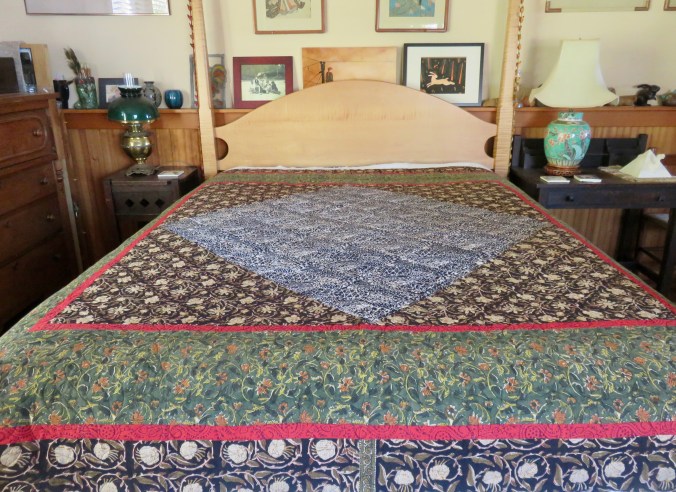
Once I had the eighty-one squares pieced, I opened the package with the quilt I picked up from Linda Pinkstaff last week. It is hand block-printed vintage Indian cottons from Cargo. This is the top, with the center diamond a true batik. I still have to bind it.
IMG_6792

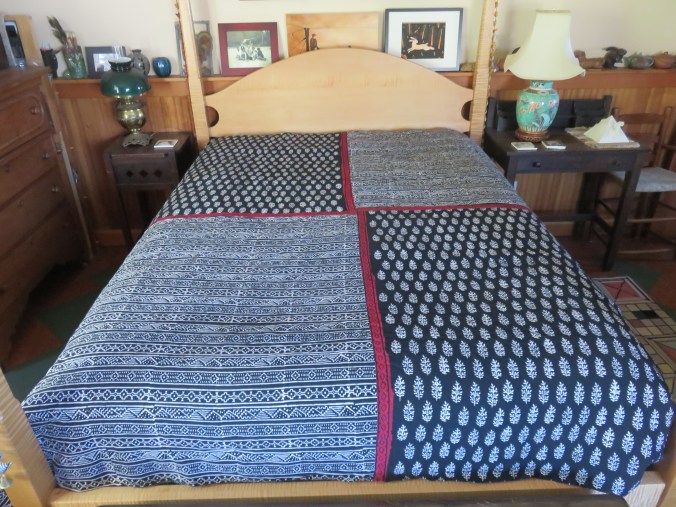
The back is black and white a red, a completely different set of block-printed cottons. There was only red on one selvage, so I cut and pieced the back to take advantage of that. It is a special piece and Linda was right about the quilting pattern. [84″ square]


BECOME A TEACHER

fullsizeoutput_13a1
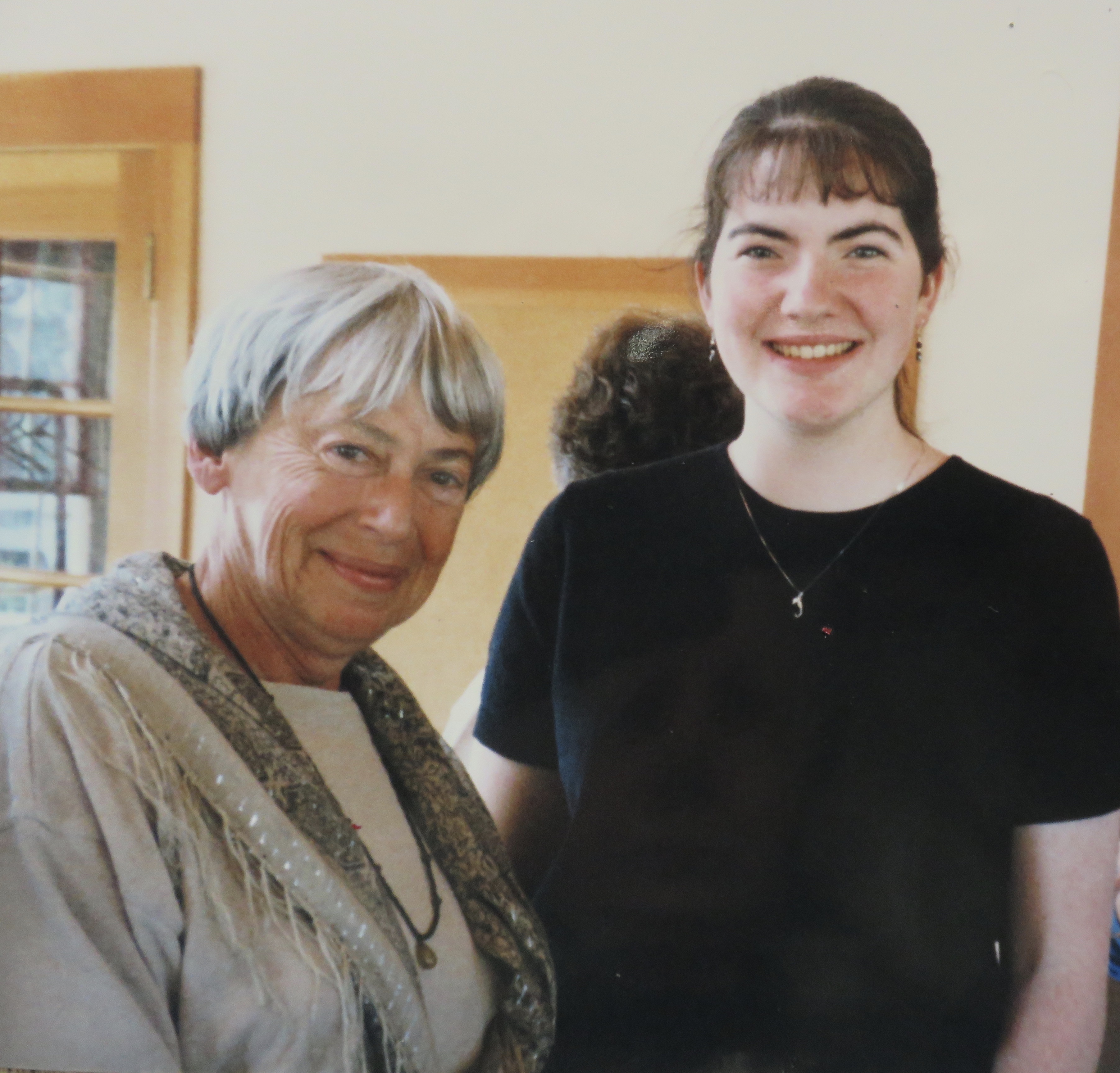
One of my former teachers and one of my former students. This was taken a long time ago. One has “left the planet” and the other is now a tenured professor of English. We are taught and we teach and sometimes those we teach become teachers.

We need teachers. We need teachers who are not merely well-educated and kind and hard-working. We need teachers who are smarter than most of their students. My original post “WHY YOU DON’T WANT TO BECOME A TEACHER” went up on my previous blog while I was actively teaching in a public high school. I reposted it here in February of last year, a month before I retired completely. Nearly two thousand people have looked at it just since, a thousand just this year. Google leads people to it from all over the world. People in Thailand, South Africa, Nepal, Greece, the UK, and France read it while I am asleep. It is my most-read post. Again.

Continue reading

BAKING

IMG_6740

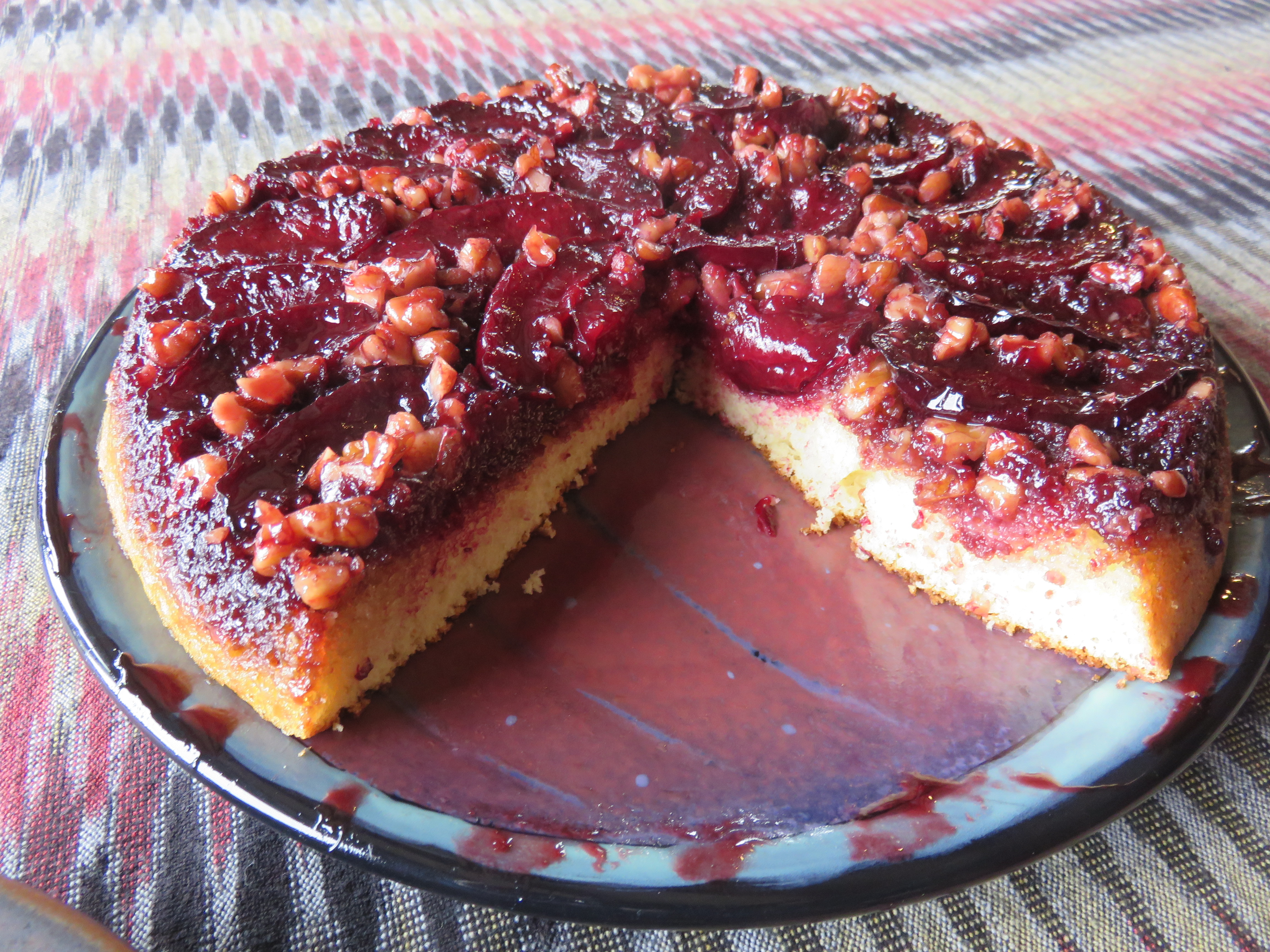
My black plum upside-down cake. I made this yesterday morning and we ate the last of it this morning for our breakfast. The plate is from Rainbow Gate, a Santa Fe studio.

Bread is on the first rise downstairs and I meant to come upstairs and work on the new quilt. That was what I meant to do. I bake most days, and I do that because I enjoy baking.

I took up cooking and baking while I was a teenager partially in contrast to my mother. I saw it as an opportunity for creativity. My mother saw it as drudgery. My mother was skilled but unimaginative in the kitchen. Resistant. She was of the generation that produced syndicated columnist Erma Bombeck (1927-1996) who wrote a series of satirical books about Midcentury Modern Life with titles such as The Grass Is Always Greener Over the Septic Tank and If Life Is a Bowl of Cherries, What Am I Doing in the Pits? Continue reading

DISTRACTION PERFORMANCE

fullsizeoutput_1407

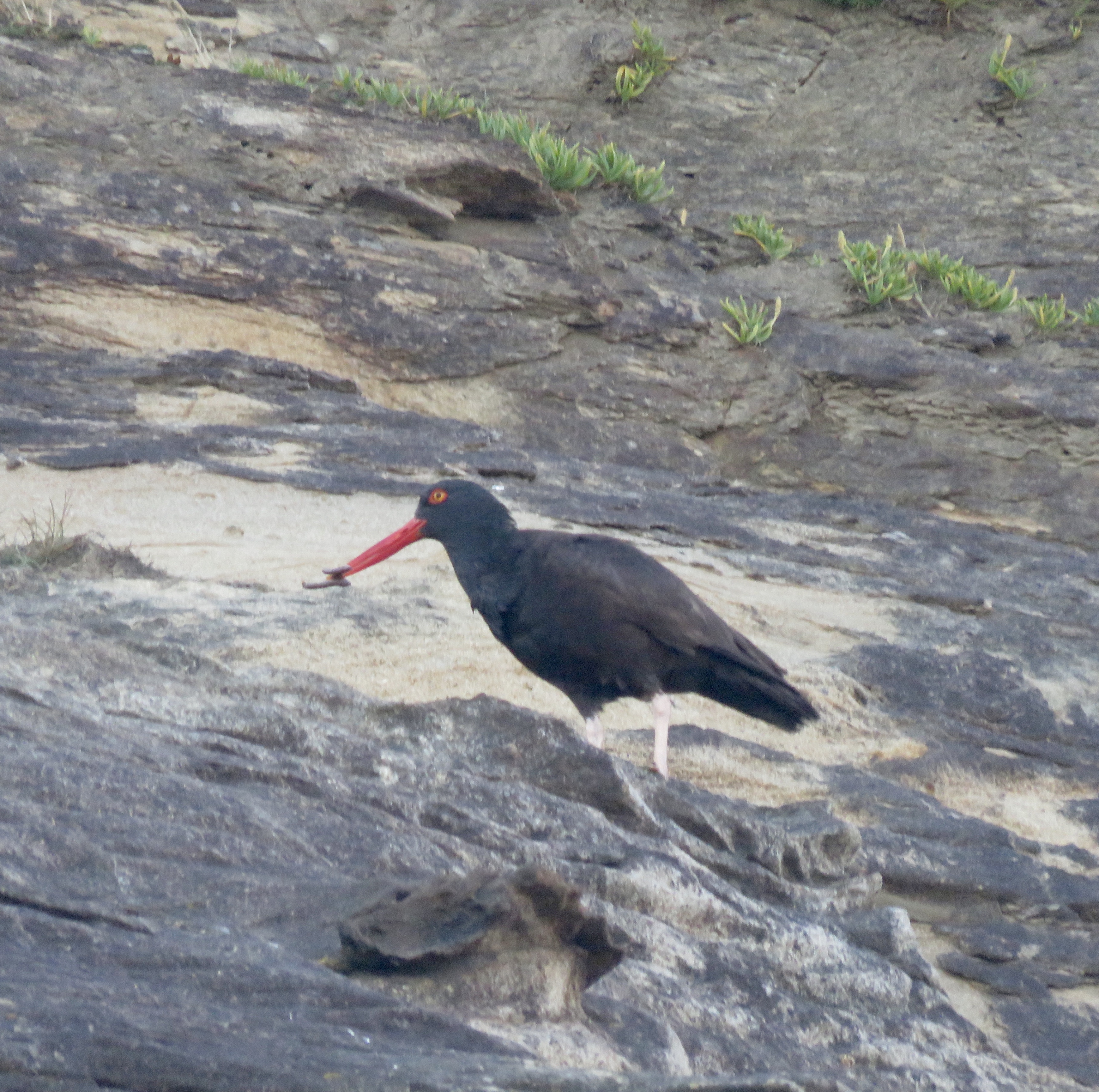
Forty years ago, I was climbing a seastack (don’t do this) and when I pulled myself level with the top I was eye to eye with a black bird with that brilliant enamel colored eye, staring right back at me.

That was my first close view of a black oystercatcher. I have seen a few since. We cannot miss their cry, a quick flutey scrawl. We particularly look forward to that sound during nesting season.

According to Oregon Fish and Wildlife, “The black oystercatcher is a large, long-lived shorebird about 38 centimeters (15 inches) in length with a long, thick, reddish-orange bill, a yellow eye encircled by an orange ring, and pink legs, all of which are strikingly set off by entirely black plumage.  Juveniles have somewhat browner plumage and a dark tip on the bill.  Oystercatchers are monogamous, returning to the same nesting territories to pair with the same mate each year.” Continue reading

PERSON2PERSON

image

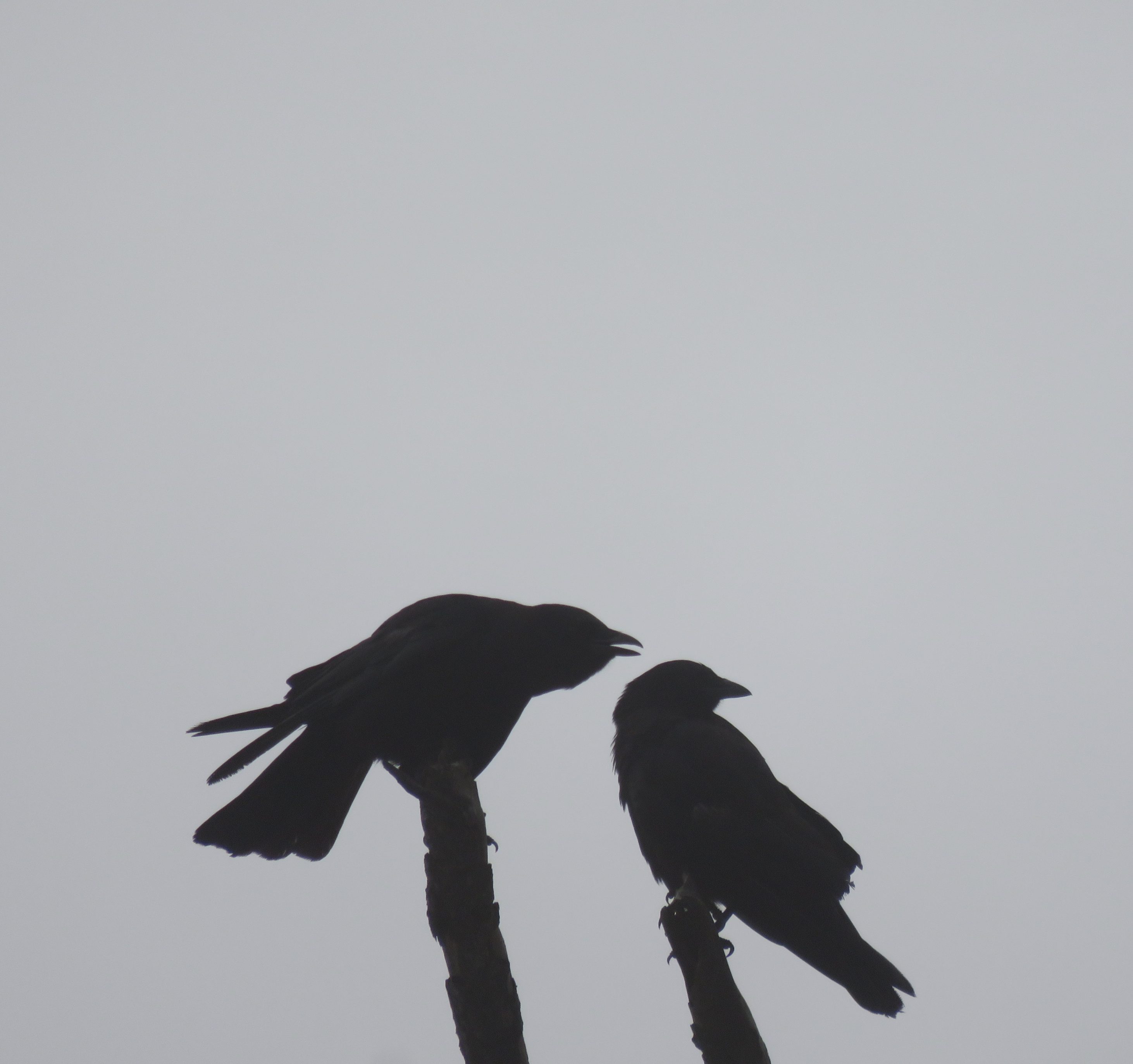
Crows perched high up on a massive drift log south of our home. I can rarely zoom in this close and still have the photo be in focus. And in the fog. (In case you wonder—we love fog.)

A friend asked me what local schools in my area are doing this fall. So this will be a rant. Don’t read more if you don’t care to know what I think. Continue reading

NORTH

IMG_6593

In the morning on tide-swept sand, we recognize footprints of local humans we can name and coyote, raccoons, deer, and various birds we cannot name.

Yesterday morning we walked north nearly to Arcadia Beach. This morning we walked from the north to Cape Falcon. Continue reading