THE BOSS OF ME

Who was the boss of me? Most often that would have been my mother. Corporal punishment was extremely rare in my childhood. I ran wild in the woods and rode for miles on my bicycle. I came home with frogs and splinters and muddy clothing with the knees worn through. I do not recall being punished for any of that. On the rare occasion I was in deep trouble, I was sent to my room. (“Time Out” had not yet been invented, but “Go to your room until I tell you that you may come out” was pretty much the same thing.) Sending me to my room, I would eventually overhear in adult conversation, was not entirely successful. It seems I liked being in my room and would draw or read books without noticing my punishment.

Mostly I was well behaved. I said please and thank you as I’d been taught. I asked permission. I do not recall ever being deliberately rude to anyone except maybe my brother. Even sibling harassment (which flowed both ways) rarely occurred within earshot of my parents. That definitely led to banishment to my room. I was given rules about how to treat other people. Talking back, disrespect, refusal to do my chores—none of that was tolerated. “Think how the other person must feel,” my mother would say. Think how the other person must feel. I heard it a hundred thousand times. I believed her when she said it was important. She was almost always right, and I wanted to be good.

One painful example of my failure to be good involved thank-you notes. The very idea of writing a thank-you note made my stomach twist. I remember the feeling clearly all these years later, and also that I did not know what to write or how to do it. I suggested that Mom write the note and I would sign it. She actually did that once before she gave up entirely. My resistance was a mystery to me even as a child. Why couldn’t I write the thing? Sixty years later, I think I know. I really really did not know how to do it. There were no lines on the inside of the card, the card was very small, and I was used to lines and big pages and a fat pencil. I needed a model, or for my mother to help me create a model of a thank you note. All I had as an example of writing to my grandparents was watching my mother write letters. A hundred lines of neat writing on thin stationary was not something I could imagine doing.

It sounds ridiculous now to say that I did not know how and needed a model with the words “Thank you Gaga and Papa for the toy rabbit. I played with it all day. Love, Janice,” but I think it’s true. I needed my mother to write out the words for me on a sample piece of paper so that I could understand where to start and where to end. I dearly loved my grandparents. I just did not know how to fit my words on the card.

When I was teaching English to 16 and 17 year olds, I often found myself taking students step-by-step through tasks and ideas that seem obvious to most adults. We memorized The Preamble, wrote essays, took notes in several styles, and we studied the difference between fiction and nonfiction, considered how a person may be wrong without lying, and that it is important to thank the person when completing a personal interview.

When I insisted my Honors students address and mail me a one-page letter proposing their research topic, writing the letter was only half their battle. For a few years, when college applications were still on paper, I insisted they mail the letter to me. They were horrified. (Seriously.) I gave them a printed template for the letter—an outline for four brief paragraphs in full block business letter form with directions—and handed out #10 envelopes. (It was not safe to assume they had access to envelopes at home.) I drew an envelope large on the whiteboard, and demonstrated where to write their return address and the address they must send it to. Yes, they would have to buy a stamp. I told them what it would cost.

No one complained that they already knew this stuff. Almost none of them had ever mailed a letter before. Several told me after the fact that they had never before entered the Post Office, even though many of them did not even have home delivery of mail. They knew how to do many difficult things, but there were massive gaps in their experience even on simple tasks. This was not anyone’s fault. They were smart students, capable and generally willing, but like the definition of “pejorative” and typing an m-dash, they had no experience of how to do it. I needed to explain step by step.

That was me writing a thank you card when I was six. It is like taking a bus, filing taxes, changing a tire. Basic, maybe even essential skills, but someone has to show us the first time. [Full disclosure: I cannot use a smart phone. Yes, I can text—though I don’t—and search the internet, and I am confident I could manage more if it were necessary, but no one has offered to show me how to do anything, and so long as I can avoid figuring it out on my own, I will.]

When I finally sent a colored pencil drawing of a dragon as my thank-you, my grandmother unfolded and pressed it flat, framed it, and Papa put it up on the wall. I was astonished. I had not thought how they would feel. But my mother would continue to remind me.

Simple courtesy is not automatic. If there is crude language or anger or name-calling in the home, a child does not learn that these are unacceptable in the world at large. [I was sent home from school with a note when I was six or seven because I had used a swear word I’d heard at home. That was a mistake I struggled not to repeat with my own children.]

Students deserve respect. And that sometimes meant a detailed explanation of the difference between vulgar language and actual swearing and why the latter is particularly offensive to some people. I assured my students that I was not personally offended by most language, but that it was likely hurtful to some of their peers. In addition, I absolutely did not tolerate racist, sexist, ablest, homophobic, or other bigoted language. I told them such bigoted remarks were personally painful, that I hoped they would show respect toward me as I did toward them. Am I ranting? I do not think so, not quite.

But wait, there’s more. I insisted on some courtesies as necessary to life, just like changing a tire or using a phone. Know how to ask a favor, how to express gratitude, how to respond to someone who has lost their temper. Think about how the other person must feel.

The danger, as I saw it, was that without considering how others felt, my students were likely to be far from home some day and unknowingly offend a person they had absolutely no intention of hurting. That would be sad, I told them, wouldn’t it?

[For years, I also suggested in conversation the very real danger that when they were far from home they would use bigoted language that would get them “stabbed through the heart.” And then that happened to a student I knew. The boy lived, but being rude to some smaller, harmless-looking individual, he discovered they had a bigger cousin.]

Think how the other person must feel. Teasing, loudness, cruel words—think how the other person must feel.

It’s easier, lazier I would argue, not to hold standards, to give in or fail to follow through and strive to be consistent, fair, and clear. Isn’t that the perennial complaint: Kids these days! I hear that even from people younger than myself. But I think they are wrong that kids these days are different. Kids have not changed. Parenting is not harder or easier. I don’t think it was any different for me or my mother or her mother before that. Maybe we can do better.

My mother did not always exercise perfect judgement. She was not perfect. She made her mistakes. But she was the boss of me—as was my dad, grandparents, teachers, and other trusted adults. Mom set standards for my speech and other behavior that continue to guide me in the right direction. She did not necessarily reason with me as a child; she told me that certain words, attitudes, and behaviors were unkind or dangerous. You are not to do that again. It was not a negotiation. It was a rule.

One of the most helpful parenting tips I ever received had to do with the presentation of important rules. Some rules you can work on (guidelines, aspirations?), some are absolute and should not be followed by “okay?” I hear it all the time, that near-automatic request as if for agreement from the child. Do not hit the cat, okay? is not the message you want to deliver. Try: Do you understand? Do you promise? Don’t ask them to agree or disagree unless you are prepared to have them respond to your okay? with no!

I hear that “okay?” at the end of all sorts of parental directions, as if the child has a choice. But sometimes they do not. No toys at the table because banging metal cars dents the wood. You will brush your teeth in the bathroom because it’s easier to clean spit off the mirror than this couch. You will not say mean things to your grandfather because he is trying to help you and you will hurt his feelings.

It’s fair for a child to ask for reasons, and it is fair that a parent does not budge if the reasons seem unreasonable to the child. It is not okay to hit the cat. Not ever. You will not hit the cat, full stop. I want you home for dinner. Call me when you get there. Do not use that word when you are at school. There is no discussion or negotiation about such rules. The child does not have to like these rules or agree to them. They are about proper behavior.

“You will write a letter proposing your research topic, put it in an envelope, and ensure it will arrive in my P.O. Box by next Tuesday.” A discussion follows of how that may be accomplished, of how the mail is delivered, what happens if the letter is late or incomplete. I can explain and defend the need to do it. They have a choice of topic and thesis, Helvetica or Times New Roman font. Not writing the letter is failure of the assignment. Write the letter and mail it. , okay?

The other parenting tip I learned was about threats. Never threaten to do anything you will not actually do. If you threaten to send a child to her room for the entire morning if she hits the cat again, you better be willing to follow through. Mean what you say, make rules only about what is necessary, and if you give directions, do not ask for permission that they be followed but whenever possible offer choices or options you can live with.

As parents, our job is to provide guidance and rules. Maybe we can reason with the child, but if they do not care to listen about the danger of turning the oven on without permission, we insist anyway. Maybe we bargain about playtime and chores and bedtime. We negotiate: do this and you can have that. We do not always give them options. Sometimes we must be the parent: we insist this is what must happen. Behaviors with the potential for injury, pain, offense, unkindness are not subject to negotiation. We do not ask them if it’s okay. We can and certainly should explain the how’s and wherefores of accomplishing what is necessary, but certain behaviors are not acceptable. You will not hit your brother. You will eat your dinner if you want dessert. I am proud of you for holding your temper. I am glad to see you being so careful not to hurt the cat. I know you are disappointed, but I love you anyway.

My mother was the boss of me. During a shopping trip she told me that the four-poster bed I admired was a stupid choice. I was forty years old that day. Mom was still trying to tell me what to do and I was a mother of two teenagers. It made me shrug and change the subject. Well, Mom was not perfect, but she was a good mother and taught me a lot. She irritated me, but I didn’t argue. We moved on to look at chairs because she needed a chair. I bought that bed twenty years later after she died. I laugh when I tell the story because I love her and she loved me. Right or wrong, she was still trying to do her job.

And I was thinking about how the other person must feel.

OUR ACTIONS/OUR CHOICES

Liberty lies in the hearts of men and women; when it dies there, no constitution, no law, no court can save it . . . while it lies there, it needs no constitution, no law, no court to save it.” 

“What then is the spirit of liberty? I cannot define it; I can only tell you my own faith. The spirit of liberty is the spirit which is not too sure that it is right; the spirit of liberty is the spirit which seeks to understand the minds of other men and women; the spirit of liberty is the spirit which weighs their interests alongside its own without bias; the spirit of liberty remembers that not even a sparrow falls to earth unheeded; the spirit of liberty is the spirit of Him who, near two thousand years ago, taught mankind that lesson it has never learned, but has never quite forgotten; that there may be a kingdom where the least shall be heard and considered side by side with the greatest.”

jurist Learned Hand (1944)

While we enlist our reason and heart to understand our fellow Americans, we prevail.

Billings Learned Hand January 27, 1872 – August 18, 1961) was an American judge and judicial philosopher. He served on the United States District Courth for the Southern District of New York and later the United States Courth of Appeals for the Second Circuit. Hand has been quoted more often by legal scholars and by the Supreme Court of the United States than any other lower-court judge.—Wikipedia

He married Bryn Mawr graduate Frances Amelia Fincke and they had three daughters who posed for painter Maxfield Parrish. Hand demands respect for his defense of free speech and support of equity under the law, his public discretion and private struggles to protect this nation and our Constitution against all comers. A lifelong republican, he cautiously supported FDR’s election as President and fought for justice and fairness throughout his life.

The “Ocean Shrine” built by my granddaughter who says it’s where you put offerings to the ocean.

GRAMMAR again

Some mornings there is really no excuse for fussing about grammar and I resist. On other days, it just might keep slapping me in the face. I am not a grammarian and often have to look up rules. My understanding of these rules of grammar is the result of determined study after the age of forty.

In my youth, my understanding of grammar rested entirely on what sounded right.

If the verb tense or sentence structure sounds right, I generally assume it is correct. However, sound is a reliable model of proper speech only if it’s what has been heard growing up or has otherwise become habitual. I used to tell my students that if they grew up in an English-speaking household that consistently used formal register English they had an unearned advantage over students who had not. They should be grateful for their “ear” but not smug.

My childhood was financially modest but linguistically advantaged—that is, thanks to the G.I. bill, my only aunt (on my mother’s side) and my father both went to UofC, Berkeley, and both eventually completed masters degrees though no one else in their families had previously attended college. My parents often quoted Shakespeare and sang Gilbert and Sullivan lyrics. I heard proper English spoken as a child in my immediate family. That’s my luck.

What sounded right to me generally was correct. As a result, I never learned the rules of grammar, never bothered with any of that. A mistake. [I have always been a poor speller. Maybe the bad spelling is somehow connected to this? Arrogance? I used to warn my students about my poor spelling, which was nonetheless better than most of theirs. “If you see me misspell a word on the whiteboard,” I told my classes early in the school year, “go ahead and correct me. I will not be offended.” I modeled looking things up. As an adult, I worked hard to improve my spelling, and I still make mistakes, sometimes because of my poor hunt-and-peck typing and other times because I am just careless. I struggle with overuse of commas, I think, as a result of reading too much Victorian literature, which revels in them.] I read a great deal. I took two years of Latin in a public school and should have taken a third year, but it seemed at the time that even Cicero could not repay me for an entire year of Caesar’s Gallic Wars.

These days I still look up words and grammatical rules. I also occasionally add to a modest file of published errors. Here are a few:

“A man was seen with a gunshot wound laying motionless on the ground in the area near where the opposing groups had fought and where mace had been deployed.—yesterday’s The Washington Post [“laying” should be “lying” Laying refers only to an action done to something. e.g. I was laying down the book, while I was lying down to read.]

“Thompson performed a driving maneuver that led Lewis’ vehicle to crash and came to a stop.“—NPR, 17 Aug 2020 [“crash and came” should be “crash and come”]

“They can make a child too listless to pay proper attention in school or so sick she misses many school days.”NPR [If the author wants to avoid the growing gender-neutral use of “they” as a singular pronoun, there is still an easy fix: “They can make children too listless to pay proper attention in school or so sick they miss many school days.”]

Good morning. Joe Biden and Kamala Harris made their debut as running mates. The British economy sunk into its deepest recession on record. And the QAnon conspiracy theory has found its way to the mainstream.”The New York Times [I am fairly certain it should be “sank” unless they mean “has sunk,” which would also work in this context. I looked it up to be sure.]

“Her three decades of high-stress nursing was behind her.”—Goodreads novel blurb [“was” refers back to “three decades” and therefore should be “were”—though I might be wrong about that: “High-stress nursing was behind her.” “Her three decades were behind her.” To my ear the “of” makes the “high stress nursing” a modifier, not the subject. Dreyer might disagree.]

“Gaudí’s ambitious design originally featured 18 towers, including 12 for each of the biblical disciples, but as the Associated Press notes, it’s possible that some of these spires will never be erected.”Smithsonian [I am certain the author does not mean there are twelve towers for each of the disciples. Aren’t I? “…including a tower for each of the twelve disciples.”]

“Martin Gugino, a 75-year-old protester, lays on the ground after he was shoved by two police officers in Buffalo, New York. Jamie Quinn, via Reuters”TNYT photo caption [again, should be “lies”]

I note these things because I paid for access to most of these typos, because news published in mainstream media should be able to afford a proofreader/line editor, and because I cannot help myself. No, that’s not right: I choose not to stop myself from pointing them out. I believe I have an excuse for my errors, but refuse to grant The New York Times the same tolerance.

[An applicant for a position as Head Secretary at my school twenty or more years ago failed to get an interview because the current Head Secretary did not like having her three grammatical and spelling errors pointed out to her. She tossed the application. She was most indignant when she told me this.]

Again, I will reiterate that I am not a grammarian and I make mistakes all the time myself both here and in conversation. I have worked to achieve a technical understanding of grammatical rules because I was an English teacher for most of my professional life. I believe people should care enough about their jobs to continually work to be better at them. [I know what a “comma splice” is, how to explain the concept to my students, and why it should not make college professors and high school English teachers scream in fury, but that it does. That’s why they should avoid them.] No one likes errors pointed out to them. Well, most people don’t.

Someone did yesterday.

In my daily life I cling stubbornly to what sounds right and what sounds wrong to my ear, but I have studied the rules of grammar and I am willing to improve. Even now that I am retired. [And, no, that is not a complete sentence—incomplete sentences have been one of the feature of modern writing that I have learned to adjust to. And ending on a preposition too.]

For example, the word “boughten” sounds wrong to me. I have looked it up after finding it in a novel. Webster insists there is such a word, but I cringe to hear or read it. Boughten? ouch

I rarely pick up feathers on the beach—there are so many in summer. But this little beauty caught my eye.

I will also note the I could not find a way to change the color of my text (which is why I used bold above) or to indent a block of text (the other reason I used bold above), but just now I discovered how to do those things and how to wrap an image with text using this new editor—though I may have to figure it out all over again next time I want the effect.

Machinery does not come any more naturally to me than grammar. I have to work at it until I can internalize the process and it becomes habitual.

This morning I learned that I won a free book, PR for Poets by Jeannine Hall Gailey over at her blog. Her blog is a pleasure. She is a kind person who speaks forthrightly about her health struggles and generously about her fellow poets. I rarely think of myself as a poet, but I do read poetry and routinely compose in my head, and I have published poetry.

Poetry, in my life, has offered a strategy for organizing and crystalizing my life experience. A revelation of truth and connection. Poetry allows the world to rest here, just between my fingertips, just at the edge of my understanding. A fluttering demand to be recognized. A rare flighting bird.

Gailey’s book might be just what I need to rediscover my off-and-on-again daily poem habit.

the BLUE HOUR

The “blue hour” is a name for that period where there is light enough to see, but the sun has not yet risen. This time bridges time between darkness and the golden hour, those periods just before sunset and after sunrise when the light differs from ordinary daylight.

As might be assumed from the name, the light at end of day is gilded, even, and without shadow. Entire films have been photographed during the golden hour in smaller latitudes and during the right season when that period lingers longest. Near the equator, the magic might last minutes, but moving toward the poles the Hour might be a full hour because of light bending around the world.

I find some details of Wikipedia‘s “golden hour” entry confusing. We see a noticeable warm light extending long after sunset, but the morning light is clearly blue before the sunrise, become bright and yellow only by contrast once the light hits the sand. That is, perhaps because of the ocean, we see a “golden” light after sunset until dark in the evening and only blue light in the morning. Having learned the term first from cinematographers and second from experience, my understanding may be insufficiently scientific.

In photography, the golden hour is the period of daytime … during which daylight is redder and softer than when the Sun is higher in the sky. 

The period of time shortly before sunrise and shortly after sunset is called the “magic hour,” especially by cinematographers. 

The period of time shortly before the magic hour at sunrise (or after at sunset) is called the blue hour, when the Sun is at a significant depth below the horizon and residual, indirect sunlight takes on a predominantly blue shade.

Wikipedia

Blue Hour is the title of a book of poetry by Carolyn Forché.

    come, love, through burning 
    composed of light 
    converging on my own life
                   from  "On Earth"

The blue hour is the time of day my husband and I walk out on the sand, unmasked, and alone. Before sunrise. Before the day begins its busy work.

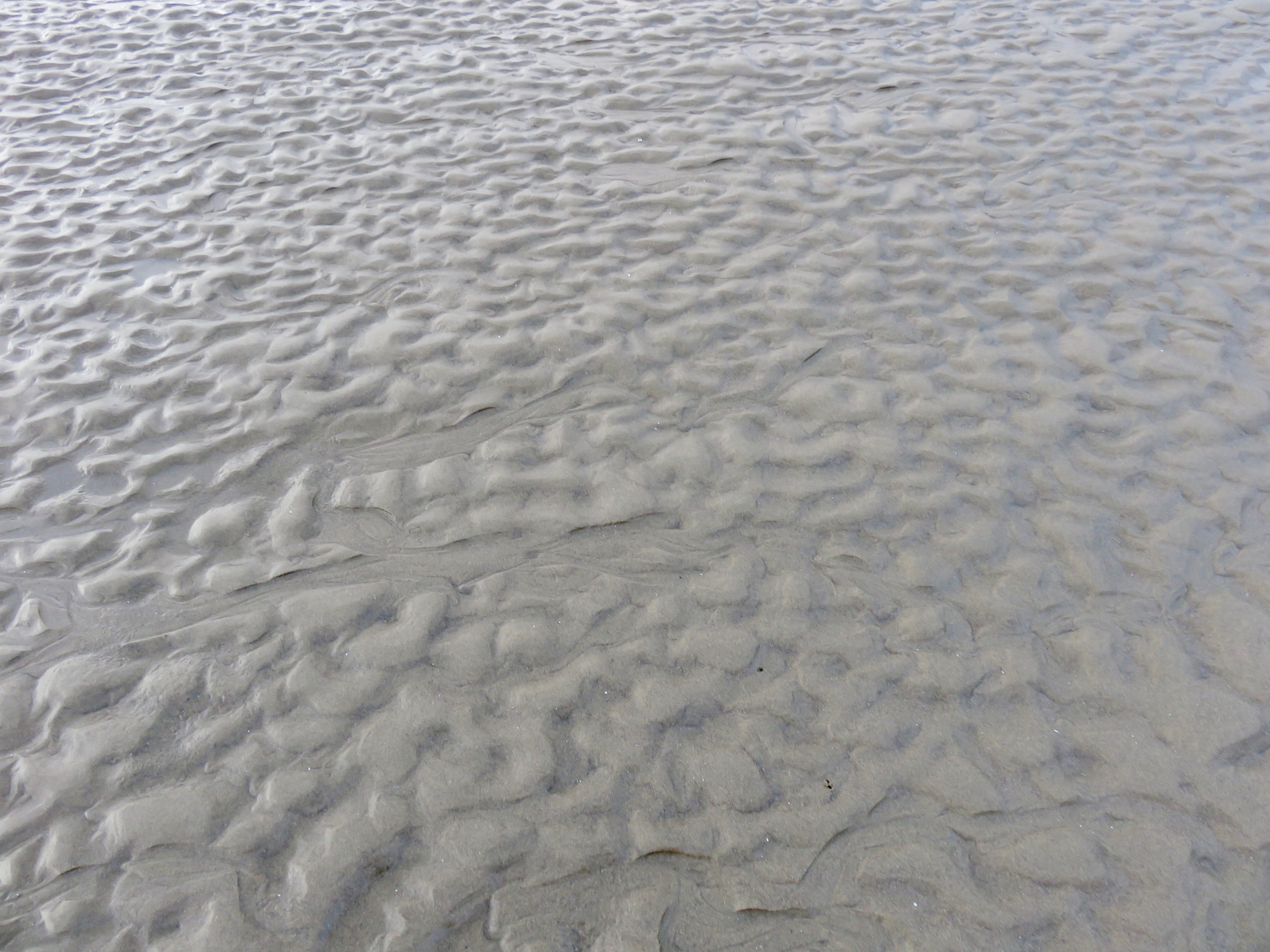
The blue hour reveals sand newly swept by the sea.

The blue hour is the time of tiny shore birds rising and settling, rising and settling, search and searching.

The blue hour witnesses gulls eating crabs cast onshore.

The blue hour is given over to breaking waves and mere silence underneath.

The blue hour precedes the blind light climbing the coast range and casting brilliance out to sea and finally onto the sand.

The blue hour is cool and clear, damp and dim.

The blue hour.

The pure clean daylight makes an end.

Ah! I have learned how to change text color, single space multiple lines, and indent text—hoorah!

MORNING WALK

This is why we walk early.

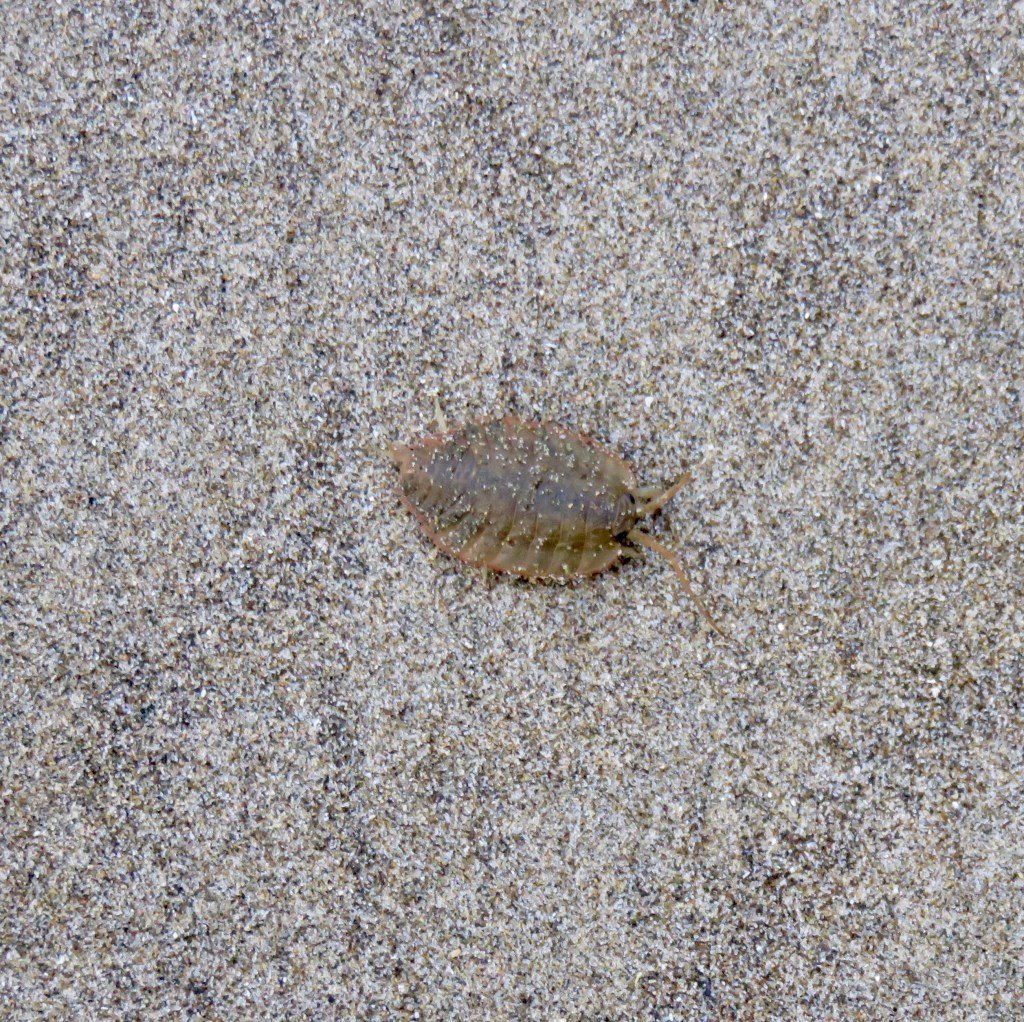
Our walk is what begins our day, what gets me out of bed and moving so that we can walk tide-washed sand and get home before the crowds. What we see on our walks—crabs, isopods, a moth caught on the wet sand, seabirds and eagles, the sand crabs and hoppers of various sorts—decorate our path. There were no chitons, none at all this morning, on the headlands or seastacks, but juvenile gulls still cried for their mothers to feed them.

When my nearby footsteps alarmed this isopod, it flipped onto its back, rolled up just like a pill bug, and then flipped back onto it myriad legs and scurried on. It was more than an inch long

The odd little fellow rushing past us was an isopod, a sort of catch-all term covering the ten thousand other species of Isopoda, an order of crustaceans that include woodlice, what we called “pill bugs” when I was little. The Isopoda include 4500 species that live in or near the ocean, 500 on dry land, and the other 5000 in fresh water. They are found worldwide and the land-based species are entirely herbivorous and harmless to humans. Some marine species bore into wood (such as boats) or are parasitic to fish, shrimp, or crabs. The one I saw this morning was likely a rock lice or sea slater, considered a terrestrial isopod, though its habitat includes tide pools—the entire splash zone. Taken together, this order lives everywhere in the world, from the tropics to the edges of the Arctic and the continent of Antarctica.

We walked long this morning and after touching stone at Hug Point, hundreds (Gary says thousands!) of pelicans flew past us heading north. The first group of seventeen was followed by a small group of five, which appeased us since we suspect they are almost always in even numbers. (They are monogamous for the breeding season.) Then a group flew just outside the surf line, too many to get an accurate count, and another group and another and another all the way while we walked the two miles home. 

This is part of a group that flew between us and the surf. Some groups flew out near the horizon, usually in a looping line.

The brown pelican (Pelecanus occidentalis) was identified and named by Linneaus in 1766. It is found from the mouth of the Amazon River and Galapagos Islands north into Canada on both the Atlantic and Pacific shores. It was listed among the endangered species by the U.S. from 1970 until 2009, but thanks to the ban on DDT in 1972 the species has recovered and today is listed of “least concern.” The local subspecies is californicus, which breeds on the California coast. A large seabird, our brown pelicans are the smallest of their kind. Their flight feathers are dark brown when I find them onshore, and sometimes a foot and a half long. They have a wingspan of about seven feet (6’8″ to 7’6″) but weigh seven to eight pounds. They spend their lives almost entirely at sea. They glide steadily near the surface and we enjoy watching them dive into water for fish. Pressed to catch up with their pod, a pelican can move very fast indeed. They can perhaps fly at speeds past 50mph, and live for decades.

When we moved here forty-one years ago, neither of us recall seeing these birds at all. Then one summer, there were a few who passed, then fourteen arrived one early summer and stayed into the fall. That might have been fifteen years ago, perhaps more recently, perhaps in 2007. We see them each year now and long lines of hundreds sometimes pass, but usually a dozen or more hang about, fourteen or eighteen, throughout the warmer weather. They have flown right in front of our windows—their strange pterodactyl faces, always seeming to be pointed north. Most often they glide a few feet above the ocean, between breakers or just outside the surf. But other days we see them far out on the horizon, moving in smooth, graceful arcs.

We are always heartened to see the pelicans. Thank you, Rachel Carson. Thank you thank you thank you!

STRANGE DAYS

Yesterday was our 46th anniversary, and today the people who own the house north of us called me a “b—-” and a “f—ing b—-.” Several times, actually. I was told to go in the house, that I did not understand what was happening. That I did not understand psychology and using that language was entirely within their rights.

You have to wonder about people like that. How do they manage communication within their own families when someone disagrees with them? Does anyone dare?

HOUSE KEEPING

I have bread rising just now. After I’d put the dough into an oiled bowl—the perfect size with a silicon lid that exactly fits—I washed the measuring cups and the scrapers, the measuring spoon and the mixer bowl and paddle, and finally, since I was at it, the coffee cups from breakfast. Then I dried and put everything away, wiped down the counters, and remembered my mother.

It was my job to do the dishes by the time I was eight—never my brother’s job as he was given the lawn and paid more to do it in his adolescence and teens, facts I resented even then. But for at least the past twenty years or so, washing the dishes has been my husband’s job. We both had full-time jobs outside the home by then. I had more homework. (“You are never off the clock,” he observed more than once. He came home and left the work at work.) I cook. He cleans. I paint walls. He gardens. (I do feel I got the better end of the deal.) We are meticulous about sharing how money is spent. (Except for gifts to one another—we are even allowed to lie about that.)

Anyway. Dishes. The hot tap water scalded my hands and I hated rubber gloves. The entire task was nasty and I resented it.

A couple of years ago we were staying at friends’ beautiful cabin. After a lovely dinner, our host was washing the dishes and I did not help. I knew I should lend a hand but I felt rather helpless. Perhaps it had been too long since I did dishes or I was lazy? Perhaps I had lost some measure of self-sufficiency?

So my friend washed the dishes, dried and put them away, perhaps. I was not paying full attention. Then, in a final step, she wiped out the sink, and it all came back to me. My mother always wiped out the sink and wiped down the counters after doing the dishes. She used a mop to scrub the kitchen floor.

I had done that myself, once upon a time. It struck me, oddly, as a powerful wave of memory, of habits discarded, or skills set aside by necessity because of the long hours I worked while teaching and advising yearbook, caring for children, writing, and completing a fourth degree.

I used to wipe out the sink.

I used to get down on my knees and scrub the floors each week, tip furniture back and vacuum every other day, brush my teeth twice a day, floss, and carry out the trash. I took my young sons out for a walk and often carried at least one of them home again. I canned tomatoes and peaches too.

The mystery novels I am reading just now obsess over protecting private schools and colleges where all “the best people” and “the best women” attend school. Since I am reading this author’s books in chronological order, I note the author becomes increasingly willing to acknowledge politics, her own feminism, and her fear of aging, but she never lets up on class snobbery, which she fervently denies, of course. Those best people. Or as Woolf’s character Mrs Ramsey in To the Lighthouse declares to herself: “the fact that there is no reason, order, justice: but suffering, death, the poor.”

I paused for a long time over “the poor.”

There is a grammatical structure called parallelism in a list, something I used to teach. “I went to the store to get apples, milk, pepper, and toilet paper.” A list of nouns separated by commas. (That last comma before the “and” is referred to as a “serial” or “Oxford comma,” and some of us have strong feelings about whether it should be used. Yes, it should.) Parallel structures exist in any list, such as verbs—”He ran, jumped, and fell down”—and can be more than single words—Over the river and through the woods, to Grandmother’s house…” To be parallel, a list of nouns must be all nouns, all verbs of the same tense, all prepositional phrases, or whatever.

Life, Liberty, and the pursuit of Happiness. [I double-checked the caps—Jefferson capped his essential human rights.]

Pause and look again at Woolf’s three words, “suffering, death, the poor.” Suffering and death are situations, but “the poor” are people. Suffering and death afflict everyone, may be avoided or delayed but not escaped. According to the structure of this sentence, so are the poor. An inevitable affliction? She could have said “suffering, death, and poverty” to herself. Poverty is another affliction, though not one this particular character ever experienced. Neither did Woolf herself experience poverty. (She and her husband owned properties when she complained of poverty.) It is poor people who are the affliction in this grammar.

Before we begin talking, as some people like to do, about class warriors, consider the inequality of the battle. Consider who is winning in a battle against poverty and who loses. Consider who fights from gilded mansions while whining about class warfare.

Self-sufficiency is a major reason I do not have my hair cut, have not visited a “beauty salon” since I was a child. I cut my own hair and when I colored it with henna or purple dye, I did it myself. I have never had a manicure, though I have considered one. I have changed tires and headlights myself, painted walls and laid tile, and built fencing and wainscoting. I have never sheered a sheep, but I have carded, spun, and dyed yarn. Over the years I have experimented with most every traditional woman’s craft and a good number of those given to men. Gary and I have never hired anyone to clean for us or to run errands or to do the gardening. Sometimes cleanliness suffered, the errands were not done, and the garden was a wreck. We were okay with that for a variety of reasons. It didn’t matter compared to the rest. Usually, we could not afford to have things done for us. We always believed we should do for ourselves as much as possible.

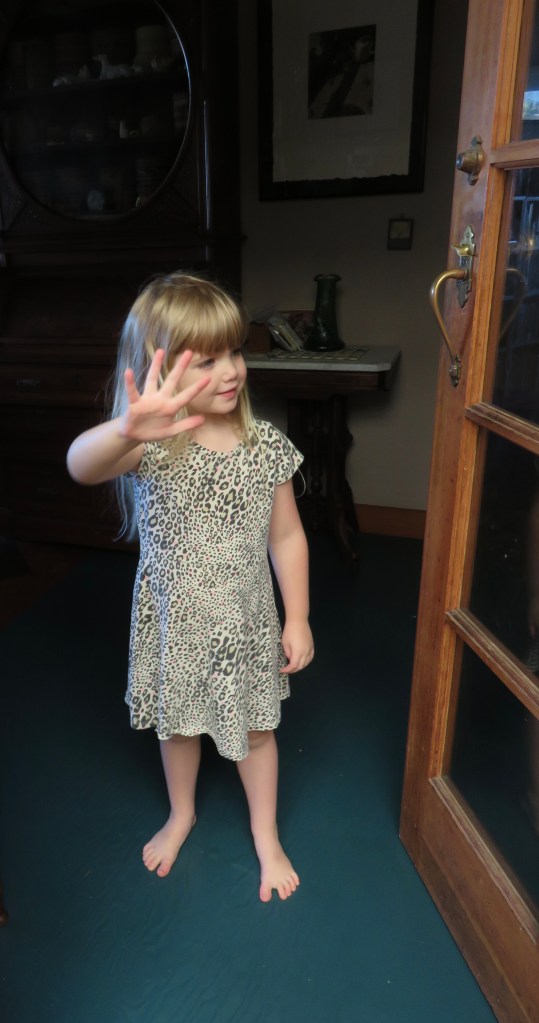
My younger granddaughter stands in the doorway, waves to me, and looks at her own reflection in the glass.

As we age, this will change. Two lamps are waiting to be installed in the ceiling outside the laundry. We will not be the ones to install them. Gary is forbidden to go on the roof. I refuse to crawl under the house ever again. There will be tasks we ignore or hire others to complete.

Poverty is not something I can personally cure. “The poor” are sometimes “the best people.” I know this from my lived experience.

And while I would be a fool to think anyone is ever entirely self-sufficient, I can still bake bread. I can wipe out the sink when I am done.

WHAT WE DO

Former Arizona Representative Gabby Giffords, shot in the head in 2011 as she held a constituent event, set the message for the DNC last evening: “Today, I struggle with speech, but I have not lost my voice. America needs all of us to speak out, even when you have to fight to find the words. We are at a crossroads. We can choose to let this continue or we can act.” She implored listeners to vote. 

In a somber speech, former President Barack Obama warned that, in this election, American democracy is at stake. He outlined the strengths he sees in Joe Biden and Kamala Harris, then warned people not to let “this president and those in power… those who benefit from keeping things the way they are… [to] take away your power. Don’t let them take away your democracy…. What we do echoes through the generations.” 

It was a powerful speech—one for the ages, really—and it set up the night’s final speaker, California Senator Kamala Harris, now the Democratic candidate for vice president. 

Harris tied Obama’s theme to her own story as the American-born child of immigrants, reminding us that America is a “a beloved community where all are welcome.”

But not everyone sees America that way. “I think we need to ask ourselves, why don’t they want us to vote?” she said. “Why is there so much effort to silence our voices? And the answer is because when we vote, things change. When we vote, things get better…. Years from now, this moment will have passed. And our children and our grandchildren will look in our eyes and ask us: Where were you when the stakes were so high? … And we will tell them. We will tell them, not just how we felt. We will tell them what we did.”

—Heather Cox Richardson

“Don’t forget: Joe and Kamala can win 3 million more votes and still lose,” Hillary Clinton said. “Take it from me.”

OPPORTUNITY

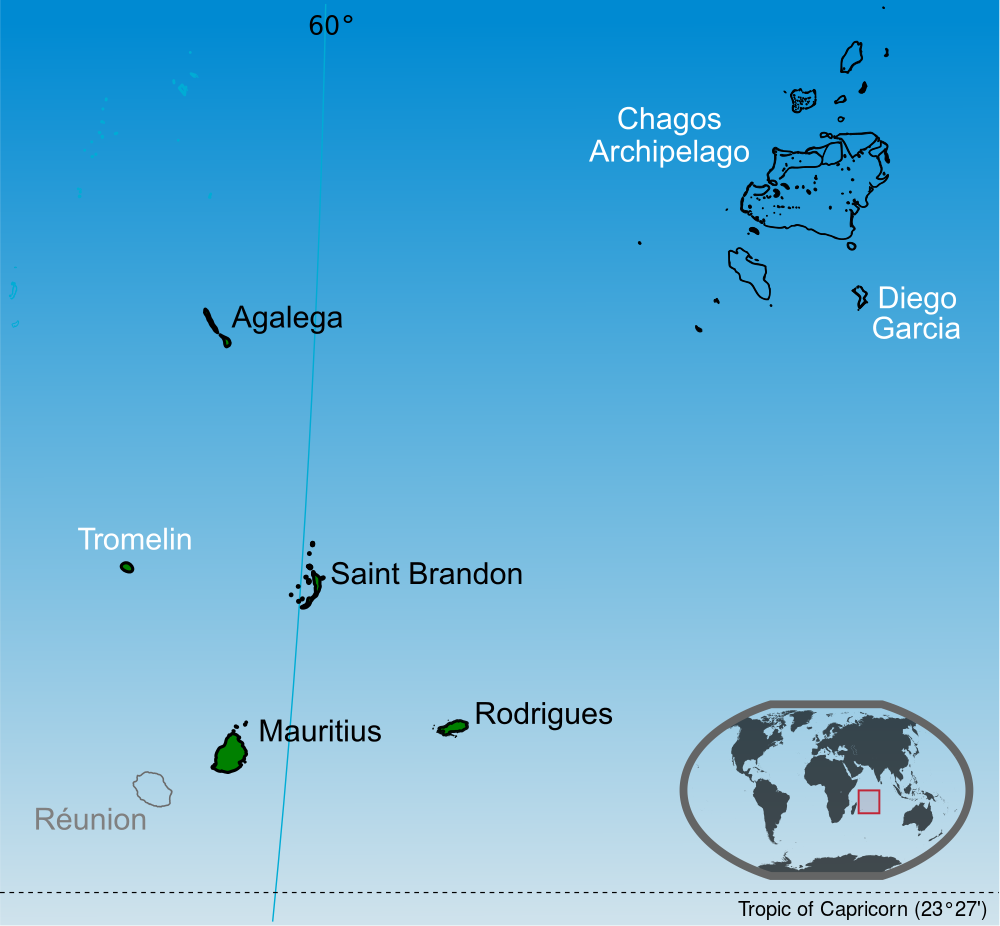
Someone using Mauritius as their home address visits my blog most days. I have access to view-counts and country-counts. I know where in the world my viewers are logging on and how many pages have been viewed from each country. I can’t help being curious about who is reading my posts from Mauritius. I know where that is, but not who.

The pandemic has cost me travel and entertainment and face to face meetings, Scrabble games and Farmers Market shopping. But some things might might change permanently, and some of those changes might be . . . at least interesting.

As one example, some events I would never have traveled to are now scheduled as online meetings. I can attend an Adroit issue launch, for example. I’m not certain I could do that before. I’ve been invited via email to several readings I am certain I could never have seen before. Living in a tiny community of mostly vacation homes in Oregon, New York City public readings might as well have been on the moon.

I understand people missing the “water cooler” moments and the schmoozing and drinking after-event events. Since I never enjoyed those sorts of gatherings, this is no loss to me. I see opportunity here.

Another opportunity is a sensible reorganization of clocks. Since much of the world ignores real time anyway—noon no longer means when the sun is at its zenith—maybe rethink this whole clock thing. Clocks made sense once upon a time as a way of dividing time. Now they are simply a matter of numbers telling us what to do when. And this is complicated by the way time zones divide up the world.

If I want to speak to a person in a London shop, for example, I must first look up their hours of operation online. Then I call up a conversion table to find out what 8am is local time. Then I can schedule a call.

Imagine that the entire world went on Greenwich Mean Time, the time I increasingly find on charts and websites these day. That is, today would begin just after the clock showed midnight at Greenwich, but it would be today all over the world at the same time instead of already tomorrow in some places—or is that yesterday? It would still be inconvenient to wake in the morning and find that the London shop had already closed at 5pm, but it would be open at 8am, which would be early afternoon for me tomorrow, and 8am would be 8am all over the world. London doesn’t currently observe GMT, which adds another wrinkle. In a worldwide system of GMT, they would, and if they wanted to open for business an hour later in the summer, they could do that.

Sure, confusion at first. We are fond of our numbers. Locally, I would be waking with the sun about 1pm, but the time would be 1pm everywhere. No confusion about whether it’s today or tomorrow in Hong Kong. (Seriously, you are never confused about that international date line?) Hours posted would hold true all over the world. Could I get used to rising when the clock says 1pm instead of 6am and heading for bed when my clock says 4am? They’re just numbers. I think I could accustomed myself to the numbers. My internal clock wakes me at sunrise and sends me to bed at dark.

In the mean time, I would still wonder who looks at my blog in Mauritius late in my night?

Mauritius_(+claim_islands).svg.png

I know about these islands because one of Patrick O’Brian’s Aubrey/Maturin novels is set in the islands. This image is from Wikicommons.