BECOMING

IMG_3182

Our tenant, Greg, brings his cactus outdoors when it blooms, a rare semi-yearly event.

One day my favorite design teacher, Hazel Koenig, saw me walking to a metals class in the Art Building. She stopped me to ask if I would be willing to help out at a state art education conference. That would have been about 1974. Later, she got me my first teaching job. I thought of myself as an artist, and I still do. My work space where I write and make things is not a “craft area” as someone recently called it. It is studio space, work space. Calling myself a writer was harder somehow that calling myself an artist. I was exhibiting while I was still in high school. It took years to become a published writer of fiction. I had many articles published in dog magazines, I didn’t count them.

Calling myself a teacher also took time. I came to teaching relatively late in my arts education. I had avoided thinking too much about how I would make my living. I was in a five-year BFA program, most of the way through a BFA in Ceramic Art, when I “moved up the hill” from the Fire Arts building to the great facility in the Metal Arts wing of the Art Building on the Quad at the University of Washington.

From 1970 to 1976, I was a student at the UW. By 1974 or 1975, I was thinking about my future in a more realistic way. I toyed with transferring to a Botany major. I considered the law. I had wanted to be a an architect since I was no more than 11, but somehow failed to pursue it, though I took the non-major architecture history series from Gustav Pundt and then finagled my way into the majors-only series. Later I would make a decent supplementary income drawing plans for clients and for an architect.

Anyway, somewhere along the way, I realized that I was always teaching. Maybe I liked telling people what to do. Maybe I was good at explaining things. Maybe teaching was the creative and professional outlet that I needed. Maybe I was still under that favorite delusion that I would have “three months off every summer” and time to do my own art. That last one for sure, and even working half time as an art teacher, I never got “my own work done.” Teaching is more than full time work.

Even as a student, I knew classroom management would be my greatest challenge. Part of my educational preparation was brief field assignments in classrooms from Kindergarten through high school. When it was time to begin a longer term field placement, I asked for middle school. It was the hardest assignment and the right choice. I earned a k-12 certificate and later taught Art at a girls’ prep school for three years.

Then I moved back to Oregon and my husband and we began our family. For a few years I drew plans for clients and Jay Raskin. When I looked at teaching opportunities on the Oregon coast, I chose Social Studies as a second subject endorsement. I learned to write essays in my SS classes, how to reason and think. I began coursework, but then took an NTE exam and was awarded Social Studies certification.

I subbed for teachers all over the school district, our children were born and graduated and went off to make their lives. After substitute teaching for 11 years, I taught English for 25 years, earned an MFA in writing, and now I teach only two college classes, Writing 121 and Writing 122. I have my 10 weeks of summer and then another 12 weeks in the fall without teaching. In November, I write a novel. I am not inclined to do nothing. I will be busy Winter and Spring with my two college classes.

All this summer, Gary and I have been sorting possessions. We are each of us the end of the line. I have personally cleared the possessions to my parents, aunt, step-grandmother, and even my step-grandmother’s second husband’s brother. People gather unto themselves. Going through tiny professional pins with my son, Ian, I found I had no explanation for the pin from the carpet business in Portland, the mysterious Mason’s pendant from a hundred years ago. I know how they came to me, but there is no one to ask why they exist or what they mean.

Today, we went through the “treasure chest” and the linen closet together, and eliminated a great deal of “stuff” we didn’t need. Blankets and sheets and linens, bits of wrapping paper and ribbons from past holidays. The habit of my mother and her mother before her: keep what might be useful in the future. But I do not think I will ever want that rest of the red eyelash yarn I used to wrap packages a dozen years ago. There is also the joy of finding things I’d forgotten I possessed, the occasional gift I do not remember ever having.

Then I sorted my jewelry. The small jewelry box is completely empty, while the other is neatly sorted. The ladies in my family are going to do well this Christmas.

A necklace I used to wear every time I flew needs to be restrung. I have been putting that off. It is a luck piece, plain elephant ivory beads. I like to think the ivory did not come from a slaughtered elephant, but that is not a story I possess. I only know the beads are nearly 200 years old and when I was in a plane, I folded my hands over their smoothness and stroked them for comfort.

I finished the last of the blackberry crisp this afternoon. I sipped a half glass of wine as a reward for my industry. I feel enlightened.

When I go looking for something, I will know where it is, but I also know the greater value I possess. I know myself to be teacher, writer, artist.
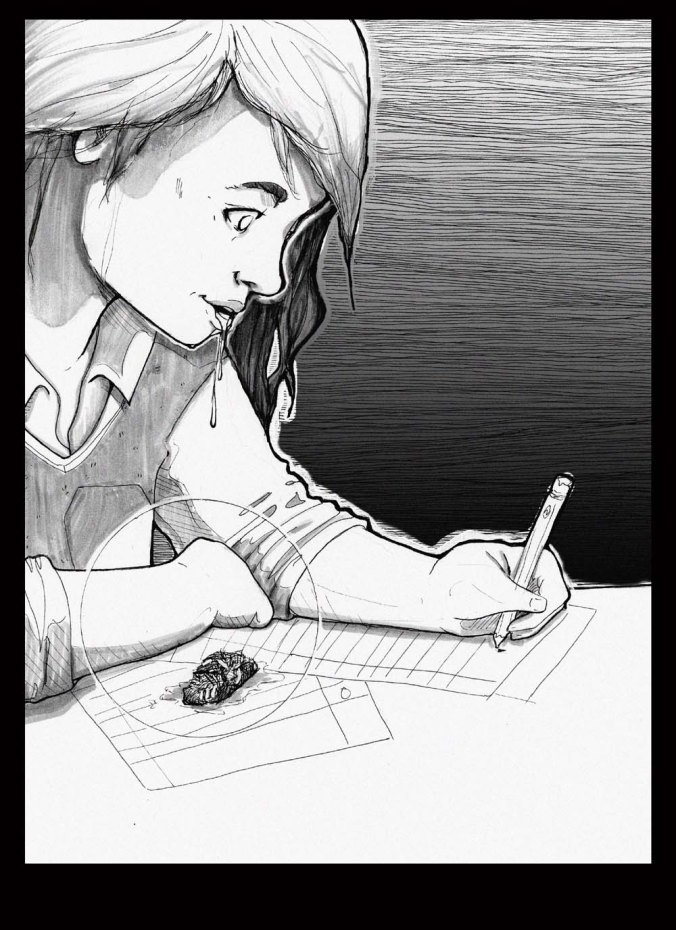
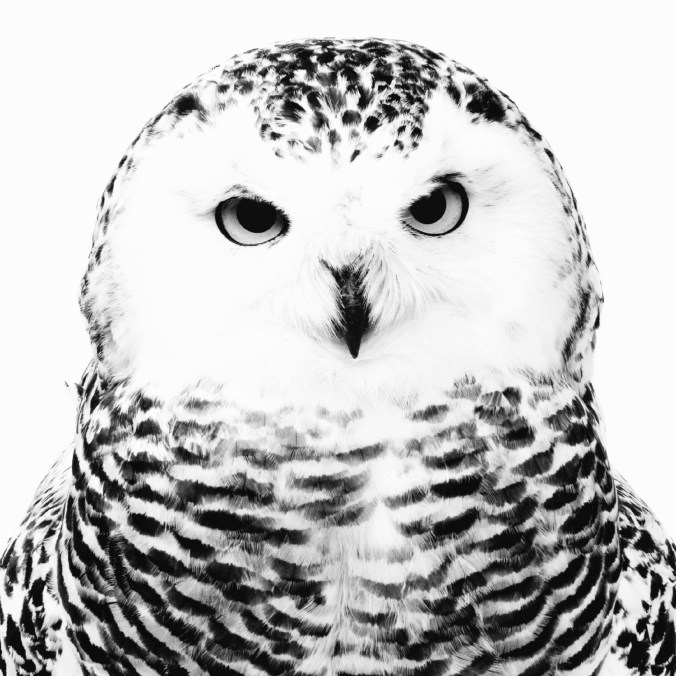
OWLS DREAM

 Art by  Laurie Noel

And a check came for my story, “If It Were True Owls Dream.” It appears in issue 5 of Liminal Stories. The illustration they chose disturbs me because in my head I see Beatrice from the other side, facing left. (Plus, this character is right-handed.)

The early drafts of this story used my grandchildren’s names, but those have been altered to protect their innocence.

NGS Picture Id:1166458


READING SCIENCE FICTION, pt. 1

IMG_3093

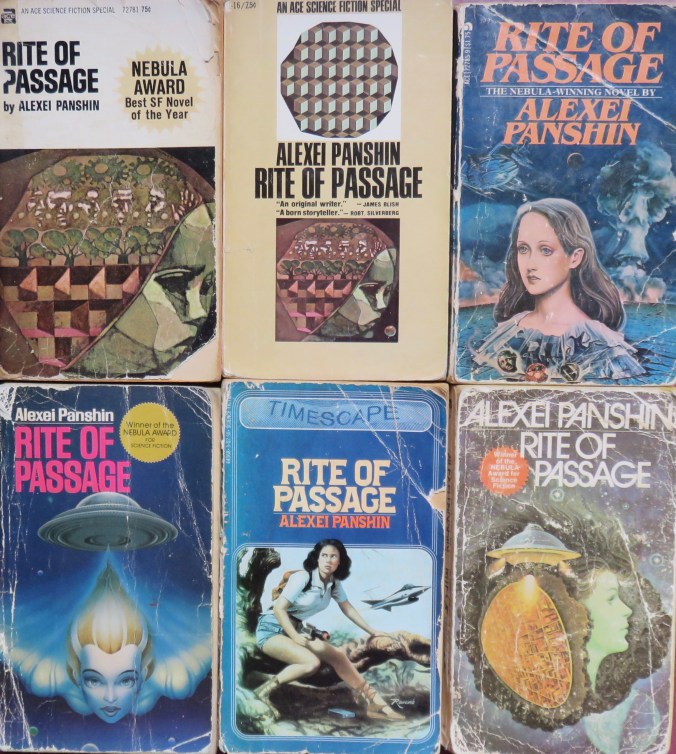
I could pretend to love The Left Hand of Darkness, but I never did. I could acknowledge that I do love many other novels such as Ursula K. Le Guin’s The Dispossessed, Vonda McIntyre’s Dream Snake, and Molly Gloss’s The Dazzle of Day. But my favorite science fiction novel is Rite of Passage by Alexei Panshin. Above are a few of the covers of this science fiction novel title.

The first time I read it, I was in college and about the age of the main character as she tells her story.

Rite of Passage is a science fiction novel by American writer Alexei Panshin. Published in 1968 as an Ace Science Fiction Special, this novel about a shipboard teenager’s coming of age won that year’s Nebula Award, and was nominated for the Hugo Award for Best Novel in 1969.—Wikipedia

This is the dystopian coming-of-age novel people should be reading, what is known as “hard” science fiction because there is no magic, no fantasy, only scientific possibility. There are also no clear villains, just people doing the best they know how to take care of the themselves and their own. The “heroes” are flawed, the ethical choices are not clear cut and tidy, and no one is shot with an arrow.

Mia Havero is a “little black-haired, black-eyed girl” of about 12 at the start of the story she tells of her rite of passage. Few of the covers I have seen indicate that the designers had actually opened the book, much less read it. Upper left and middle are solid. Sometimes what you see is not what you get.

I was reminded of this a day or two ago when I found a meme in my feed with a misquote of the Constitution of the United States. The meme contended that if the President were impeached, he and all his people (VP on down) would be forced from office. A lot of people liked the meme. People who have college degrees and should know better. And I will admit that I would be happy to see the back of Pence and the rest of Trump’s minions, but that is not what would happen.

That so many people accepted this meme as true was disappointing. I was left wondering if no one else remembers anything from our Constitution?

Does no one verify their sources anymore?

The left has been eager to throw up their hands at the ignorance of those supporting Trump. I have witnessed this again and again. Sadly, there is plenty of evidence that those on the right believe exactly what they want to believe. It is so much easier than actually finding out what is true. Those on the left do that too sometimes.

There is this simple black-and-white view of the world that is not the least helpful to accomplishing anything. It’s comfortable to discard another’s viewpoint just because it differs from our own, to ignore the demands of people we do not identify with. Working to hammer out solutions is messy compared to simply “laying down the law.” The Russian interference in our national conversation has done further damage to thinking that already viewed “compromise” as a dirty word.

We seem unwilling to understand that the world is not a YA dystopia with an evil force (them) fighting to take down those fighting purely for good (us). Reality is a whole lot of people with different ideas about how to achieve justice and liberty. When we acknowledge that complexity, we will get farther as a nation. There are times when the only solution is an imperfect one, when you get a little of what you want and I get a little of what I want, but no one gets buried in the process.

I read science fiction to find a laboratory for possibility. I already know how things can go wrong. I am interested in how things go right without the intervention of comic book heroes. Plenty of science fiction and fantasy is just another world struggling for power, but some science fiction and fantasy looks hard at difficult ideas. Not the dark lord or evil empire, but really people struggling to do their best.

Mia Havero is a Latina name. The author is American, and his book is back in print.

“The Nebula Award-winning novel, back in print at long last!

“In 2198, one hundred and fifty years after the desperate wars that destroyed an overpopulated Earth, Man lives precariously on a hundred hastily-established colony worlds and in the seven giant Ships that once ferried men to the stars.

“Mia Havero’s Ship is a small closed society. It tests its children by casting them out to live or die in a month of Trial in the hostile wilds of a colony world. Mia Havero’s Trial is fast approaching and in the meantime she must learn not only the skills that will keep her alive but the deeper courage to face herself and her world.

“Published originally in 1968, Alexei Panshin’s Nebula Award-winning classic has lost none of its relevance, with its keen exploration of societal stagnation and the resilience of youth.”—Fairwood Press

HEDGEBROOK

Today I applied for a Hedgebrook residency. I have applied ten times before for this residency, which is limited to women. My first experience at a women’s writing residency was The Flight of the Mind in the 1990s. The first time I attended, I completely failed to anticipate the impact of spending a week with eighty women who were concerned only about the written word. That initial week was life altering, and I was fortunate to attend several times. Each time I was terrified at the start and came away brimming with hope.

It frightens me to ask. The last year I attended The Flight of the Mind, I carried the acceptance letter home from the post office and stood sobbing in my garage. I had not admitted to myself how much it meant to me. That was also the last year Flight was held.

Hedgebrook is on my bucket list, and occasionally I threaten not to apply again. But then I do. This year because I have a challenging concept for an SF novel that requires slow work and contemplation, I want the residency very much. But many others need this opportunity. At the least, my application fee will serve a good cause.

CAN YOU HAVE TOO MANY BOOKS?

tlmcgb68mogpbd6ewbnh.jpg

I saw a meme on Facebook the other day. The wording was something like: “I decided I needed to lose 10 pounds last year, and after six months I am doing great—12 pounds to go!”

That is the irony when our best intentions go backwards. I have some personal experience with that. I have been watching my eating, drinking, and walking for the past 7 weeks and have lost the 8 pounds I gained since last December after deciding I needed to lose 14 pounds. I sleep better and my feet feel better when I weigh less.

During that same time, I taught two college writing classes, read 38 books, completed weaving three 82″ lengths and seamed them into a 75″ x 82″ blanket + fringe, planned a quilt, submitted stories and poems and essays, several published pieces and a story due out next month plus an essay out in September. (I will inflict links to these publications upon you once they are live.)

We walk the beach most days for at least two hours. I have picked up a few hundred pounds of trash since January, and 98 bits of sea glass so far just in July. People ask Gary and I all the time what we are finding. “Do you find agates?” they invariably want to know. We always find agates. We don’t even gather most of the agates we find, not even a quarter of the agates we find. What we carry away is mostly plastic trash. You knew that.

I watched the second season of the Netflix series, Anne with an E, which I loved from the first episode and this second season more than ever with challenging issues of sexual orientation and race. The novels are pretty “safe”, but the series takes chances and flashes back to the early years not only in Anne’s life but in Marilla’s and Matthew’s lives. The characters are thus more well rounded and meaningful, more real and less white-washed cardboard characters. The Irish actor playing Anne really is not “pretty” by the standards of those days, but bursting with energy and imagination as she should be. Green Gables is depicted here in the same way that Wicked seems to portray a genuine Oz. All the magic, but a grown-up and serious version—charm without flinching.

My own flinching is mostly about too much stuff.

My goals for the year, my husband’s and my goals for the year, include gutting the house. Going leaner, you might say. We are emptying out closets and shelves, the dozens of pretty pictures that have no walls to hang upon. Gary took everything out of the attic which still had things from my mother’s house, unexamined items from her sister’s home, boxes of ceramics I made in college decades ago now.  Nothing goes back in the attic. I am about to empty four bookcases of nonfiction and poetry. A lot of the books and at least one bookcase will go out the door. We are preparing for a garage sale and major gifts to Good Will in the near future. I keep going through books and moving stacks out of the house.

Despite all that, I ordered a book the other day. I ordered three towels on sale and I ordered two skeins of yarn, even though I have SO MUCH YARN! Too much. Too many books. Too many Christmas ornaments. Too many family pictures in frames. Too much stuff. The greatest appeal about moving into a smaller house—something we fantasize about from time to time—is the need to divest.

More important than divesting is the imperative to stop accumulating. It is possible to stop. I believe it is possible, but I have to skill in that direction.

The Green Gables house in the new series is sparse and clear. The table is set for dinner in a dining room that has no other purpose but dining. The meal is eaten, the table cleared, the ceiling is the primary decoration. Beautiful unpainted boards.

No cell phones, no music but what people made for themselves. I am not so foolish and as wish myself back in that era. Dentistry. Vaccinations. Voting rights. I know what I would lose.

But Anne’s daily walk through the woods. Writing with pen and paper. A fox in the forest. People who make immediate use of nearly everything, or they do not keep it at all. Anne has little, but holds so very much. She is creative and imaginative and loving and kind. Her ambition is generous and heartfelt. She asks for little, but the best of everything. Her best is not about gilded rooms or extravagant praise. She might enjoy those things, but there is something precious and few about her longings. More does not mean better, as I was warned in childhood.

May I at least have more of Anne? And maybe a few pounds less of me.

MY WRITING LIFE

IMG_2766

I began writing fiction in 1990 when I was hired to teach English at Seaside High School. I believed myself wholly unqualified to teach English (and others have agreed), but I had taught art in an elite prep school for three years, picked up a Social Studies endorsement through exam, and substituted in the Seaside District for eleven years. I had 20 undergraduate English credits. I had never considered teaching English. Nevertheless, the Chair of the English Department at that time knew me well as a substitute teacher and argued that I was better read than she was and urged me to apply.

My hiring was contingent upon gaining a certification in English. I took another test and began taking graduate classes that summer. In the fall, I was teaching English. Among my advantages were an excellent public school education and substantial experience as an essayist.

My first novel was written over the summer of 1995, working with a student who also wrote a (better) novel. Both were read my the editor of a major publishing house. My student’s manuscript received the better response.

My second novel, Clean Away, was written from multiple points of view, nine women representing several generations of a family over many decades. Certain experiences seem to repeat themselves through the generations. I began that in 1999 and it was funny.

My third novel, A Single Fact written in 2002, was the very rough draft I later rewrote in 2017. The main character of this novel is a teenager who is having a rotten senior year and afraid the only thing worse than high school might be that nothing better will come next. The title story was published by CALYX in 2006 as “A Single Fact Can Spoil a Good Argument.”

All this time I was working 60-80 hours a week teaching English and advising the yearbook. When I crawled out from under the yearbook in 2002, I found I could not slow down. I wrote more.

In 2007, while completing my MFA, I compiled Blonde Indian, later retitled Living in Snake Land. These linked stories about a poor white boy are set in 1961 in Phoenix, Arizona. That novel-in-stories is number four.

In 2007 I completed an MFA in fiction from Pacific University. Three of my dearest friends came to my graduation—two of them from Seattle. It was a great day, and Gary preserved that for me by not telling my that my mom had been back in the hospital until all my obligations in defending my thesis, a public reading and craft talk, were complete. She died a week later.

I dropped 40 pounds in the next few months. I stopped writing. I struggled to regain optimism, to regain my stride, whatever that might be.

Revision happens in people’s lives, too. I retired from teaching full time in 2015 after nearly 40 years of teaching art and English in private and public high schools. I think I am, I was good at my job. My greatest joy is hearing from former students who discover I taught them something useful. I think most of us hope to be useful.

In November of 2016, I  took the 4k short story, “The Promised Hour,” that I wrote to apply for my MFA and wrote from there. I had rewritten that story dozens of times (literally) and submitted it dozens of times but it couldn’t find a home. I hoped that maybe what it needed was to become a novel. National Novel Writing Month (NaNoWriMo) offered me an opportunity to race through a much longer version of that story.

Since then, I revised the novel going-on eight times. I originally hoped for 60k but did better than that, ending the month with over 75,000 words. By it’s 8th draft, it was retitled Escape My Heart of Sorrows. By the eleventh draft it had seen several new names, the best of which was suggested by a former student who got it from her husband, Painting Over. I am working on draft 14 now and still dithering about the title. Maybe Everybody’s Mother Dies. This is novel number five and it is not finished.

My work has earned many awards including an Oregon Literary Arts Fellowship, Arts & Letters fellowship, Soapstone residency, Pushcart nomination, and publication in the Brevity blog (several times), The MacGuffin, CALYX, Work Magazine, Raven Chronicles, Ink Filled Page, The Humanist, North American Review, and anthologies about running and race. There is a list of all my publications, or most of them, under “Publications” on this site. There are links to all the works available online.

I thought my second NaNo year in 2017 was time for something completely different, stories or fantasy, but I changed my mind at the last minute. Instead of a new piece, I returned to an earlier effort, the novel from 2002. I altered verb tense, added and changed characters, and introduced the crime I originally intended to provide more tension. So those were the differences. A familiar first person voice but an entirely new book. I hoped to complete 80k and I got 75k. I was okay with that, but since then I have completely lost track of that novel and begun working in a new direction.

Last year I surprised myself by writing a fantasy story, “If It Were True Owls Dream,” which will be published in August in Liminal Stories. (When that goes live, I will provide a link.)

In April 2018, I wrote 15k of a science fiction novelette. Writing science fiction is new for me though I have been a fan for many years. In the fall I intend to add 50k to an existing short manuscript. But I might be still busy rewriting novel number five, the one that began as “The Promised Hour”:

The way back from loss may seem unimaginable, but people do it all the time. Thena Justice was building a new life near Seattle after the death of her mother and breakup of a terrible marriage when her former husband murders the babysitter and their daughter before committing suicide. Lost in grief and guilt, Thena first hides in a friend’s converted garage, then in a tiny cottage on the Pacific coast, thrashing her way through anguish, apathy, anger, and routine. Instead of returning to Puget Sound, she moves to Portland, Oregon, the city where she was born, takes the bus to a retail job each day, and keeps her head down until a child crying in the night wakens her sense of agency and hope.

It sounds a sad book, I know, but it is all about survival, about hope. My interest is in how we regain an active role after a calamity and that is the focus of this story. Would you read it?

For several years I blogged at Quiet Minds, which is now renamed and active here on WordPress as Imperfect Patience. I send work out. I am still teaching college writing in Winter and Spring Term, at least I hope I am.

I walk the beach. I weave. I write. I am mostly retired, but I am not done.


SaveSave

EAGLE & ALBATROSS

IMG_2994The other day we saw five eagles all at once. Three were on the beach near the dead seal just up the beach, which has since then begun stinking. The seal. The other two eagles were in a snag about fifty yards back from the beach. I didn’t have my camera with me, so Gary and I just stood and stared for a long time from a respectful distance.

Not all surprises are so delightful.

A story I’ve sent out too many times has just been rejected again. Some of the best literary journals in the country have rejected it. Sometimes they send me a note about how they almost took it or they liked it and were sorry. Today a journal that I submitted to last year (344 days ago) rejected it with only a form rejection. It is a great journal I have subscribed to and they receive thousands of submissions. But after keeping a story for a few days shy of a year, I really think they could have coughed up something better than “Thank you for your patience.”

I am not patient. Another story was rejected recently with the note: “Our staff especially admired the sisters’ personalities. We suggest slowing the pace of the story and really taking time to develop the many themes in the story.” I had recently spent a lot of time carving that story back in order to speed the pace up.

Maybe a form rejection is better?

Nope.

There were no bald eagles in Arch Cape when we moved into my great grand aunts’ home. At least there were none that we noticed.

IMG_2982This morning, an eagle stood near a dead albatross. It’s the second dead albatross we have seen on our shore since 1979. Our biologist neighbor didn’t believe we’d found that first bird until Gary took him out and showed him the body on the sand. “That’s a black-footed albatross,” he said then. If John was right, we found a rare bird. Dead, though.
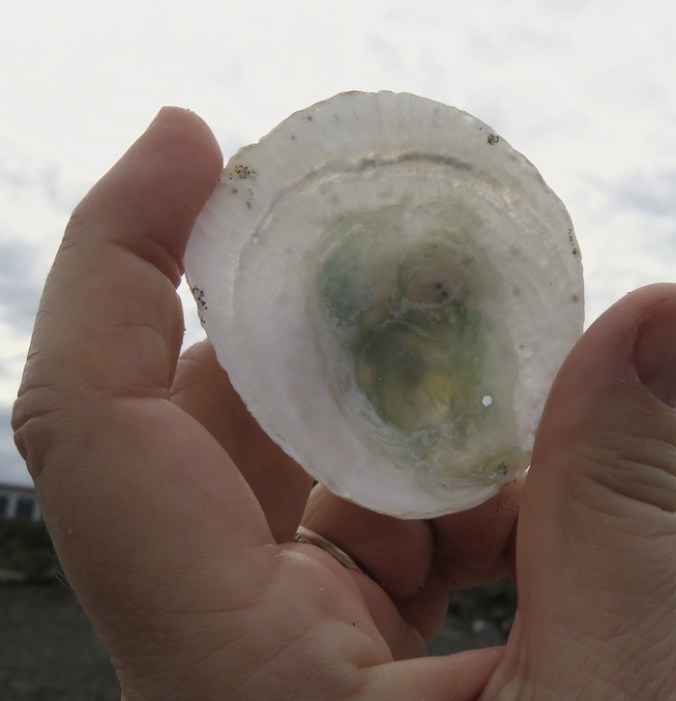
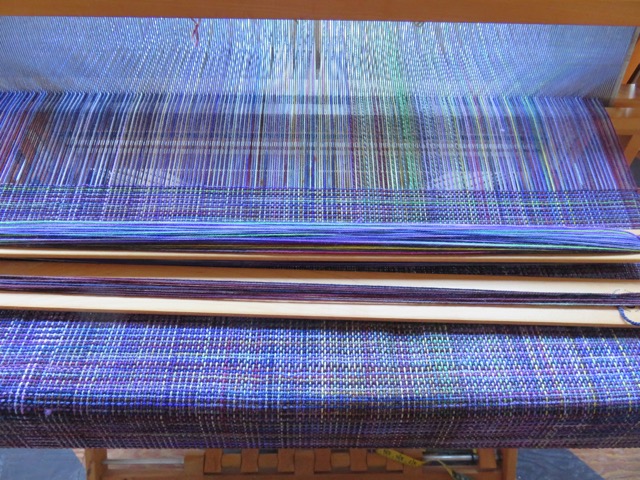
Alive, a black-footed albatross has a wingspan of 6-7 feet. The eagle we saw this morning was full grown, but the other day when we saw five, at least one was a “baby”—full size, but still in juvenile plumage.

A friend suggested that I consider writing nonfiction.

I thought I was already doing that.

I don’t know why that drift log has red paint.

SaveSave

SaveSave

COMMIT TO ENDINGS

IMG_1704 (1)

I struggle with endings, with hitting the balance between hope and regret. Despite wanting my students to listen carefully, review assignments, and take extra time to perfect their work, I am impatient myself. I always wish I’d done something different, pushed harder, and accomplished more.

Monday, I had my students over for a party at the end of the year. I haven’t done that in years. I think they had a good time and we ate and laughed some. I sent them out on the beach while Gary and I cleaned up, and they came back after a long time, grinning and sandy.

They asked me if I wasn’t glad the school year was over.

I almost never am.

These are graduating seniors, with summer plans of work and travel and college classes in the fall.

I always wish I had more time, that I could have their full attention for another month in order to, as my mother would say, “whip them into shape.”

The truth is, I am slow to get to know my students, and then I value them as people. I wanted them to work harder and mostly they did. They made no more mistakes than I did in high school, but expectations have not been set nearly high enough. They have coasted too much.

An administrator complained to me the other day that these current high school students are afraid of things being too hard, that their parents do not want their children to struggle, and that even some teachers find it impossible to set high standards because doing so makes more work for them too. Everyone wants to make education easier, as if that were possible or even a good idea.

Throughout my teaching career, I have been asked to articulate my teaching philosophy. After 40+ years, I would say it comes down to this: Set a high standard, support incremental growth, and demand excellence. When we show them they can accomplish beyond their expectations, they are capable of pushing on. When we make the work easy, we are telling students that “easy” is all they are capable of accomplishing. We reinforce their belief that struggle is equal to failure.

Many years ago, I heard Kylene Beers speak at an NCTE Conference. I’d been heading into the conference room next door, but the presenter in that room stood outside her door: “Go see Kylene. You’ll be glad, and I am presenting again in the next session.” I took her advice. One of Kylene Beers’ key points was to reveal struggle as a good and natural process. “I struggle when I read the tax forms. I struggle when I read Toni Morrison.”

The choir teachers from my son’s high school days were exceptionally demanding. Do it better, be stronger, try something even harder! Sometimes those teenaged singers would listen to their songs and be simply amazed at how excellent they sounded. They produced professional performances. They gained confidence and ambition as a result of that demand to do the harder thing, that insistence that they do it and do it and do it again, until they have mastered themselves.

Learning is struggle, struggle makes us strong, strength makes us better.

My teaching is done for the time being and I must return to my own work. I still have a warp to wind, a quilt to complete, and a story that wants editing.

This week: Slow down, do better, amaze myself.

IN BETWEEN

IMG_0278

When I am not teaching and when I want a break from writing, or I am feeling wounded and drained (it happens), I weave. Sometimes I quilt.

I have a friend who sells a lot of work urging me to join a group, open an Easy account, or in some way make some money from my work.

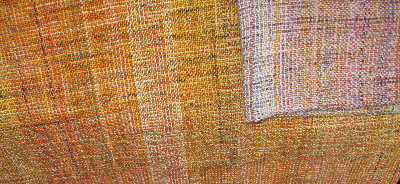
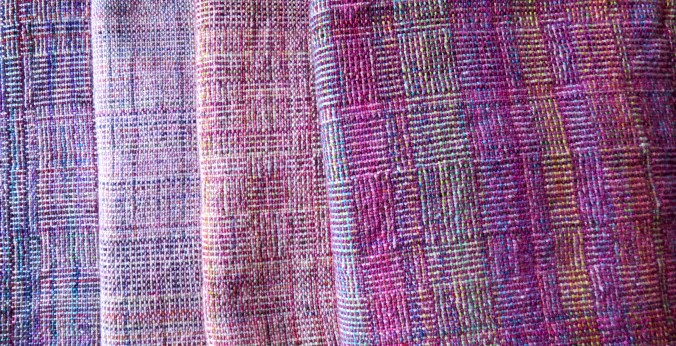
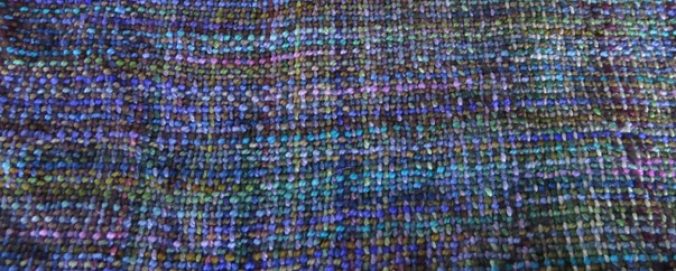
It’s not going to happen. I give weaving to friends and charities. I make baby blankets for expectant parents. I give them to friends. New Mexico children’s illustrator and YA author Betsy James, Russian sculptor Marina Globova, and Oregon novelist Molly Gloss have my shawls/scarves. (See below.) I don’t have a photo, but professor of animal scientist Temple Grandin has one draped on the back of her couch in Colorado. My shawls live on shoulders in Alberta and Washington and California. Each one gifted.

I put on warps and choose weft colors specifically to suit what I understand about their preferences.

I make a quilt and knit a blanket for each grandchild at birth. I make another when they turn two. When they go to college, I will make them each another. I try to use their favorite colors, though children change their minds. A sweater begun in July may no longer appear by the time it’s finished in October.

In the mean time, I weave.

Tomorrow, I will begin my first warp of the year. I am thinking red and browns this time. There was a saffron warp a few years ago and I still haven’t found a home for two very special pieces. There was the “Peacock” warp and one for Ruby and seasonal warps where the weft varied to take me through Spring, Summer, Autumn, and Winter. Each warp yield two or three or even four pieces. I like color, but sometimes the more subtle combinations appeal. Each piece is meant to be distinct.

saffron_warp IMG_0778

cropped-img_0404.jpg

I will begin pulling skeins and winding tomorrow.

BIRD STORIES

CSC_0322

In the last week: band-tailed pigeons and Eurasian doves, Steller’s jays and a single scrub jay, robins and goldfinches, red-wing blackbirds, song sparrows, hummingbirds, crows and ravens, bald eagles, red-tailed hawk, black oystercatchers, gulls, whimbrels, Canada geese and brown pelicans, and a mixed flock of semi-palmated plovers and dunlins (this latter with distinct dark bellies—I wish I’d had my camera). Gary calls the black birds with bright eyes “cowbirds”, but I wonder if they are the same as a bird called a Brewer’s blackbird? They are new in our neighborhood.

The other day I watched three pairs of Canada geese herding 15 goslings across tidal flats fifteen miles south of my home. One pair had 8 babies, one pair had 4, and one pair had 3, and the tender care of both parents was genuinely touching. I was at the dentist having my teeth cleaned, but everyone stopped what they were doing to admire the three families.

There is a story there.

At least twenty years ago, my writing partner Rebecca Olson noted that my stories always had birds in them. I had not noticed. It is my husband who loves birds. As a result, I think about birds more than I would otherwise.

That impulse to focus on birds has resulted in stories. I imagined children falling asleep and becoming owls; then the owls fall asleep and slip back into being children. My story “If It Were True Owls Dream” was accepted for publication by Liminal Stories and will be available online in July. The first day I sent it out was to Shimmer and the editor E. Catherine Tobler rejected it but urged me to send it to Liminal. I owe her for that excellent advice.

Most recently, I began a science fiction story wherein I imagined all the birds in the world dying. I originally meant it to be a short story, but the early draft grew longer and longer and more and more complex. I have drafts that are nearly 20,000 words long. This fell into three parts, one in the near future, one hundreds of years later, and a third part even further into the future. Then I worked just on the first section, which was also the longest at nearly 10k. A friend urged me to cut most of it, which I did.

I had the idea of the vanished birds, but also other ideas about veganism and overpopulation. Then it became a story of about 6,000 words that began working as a story. It was not done, of course. Not in four drafts or ten, since I have only been working on it for a few months, but still. It is science fiction and it is about birds . . . and mostly about life on Earth.

I carved back that shorter story and carved back some more. It is less than five thousand words now and maybe it works. Probably it lags in the middle because my stories often lag in the middle, and there is not enough action—there is never enough plot in my stories.

There are usually birds.

I want another story, and I have one, but it is not quite figured out. “On Cherry Street” is about a young woman returning to the house where her mother died. She is very much aware that crows are watching. Birds again. I still don’t know what it is trying to be. Is it a horror story? I’ve not explored horror. Is it magic realism? This story is about four thousand words and I am not even sure what it is about.

Back to thinking. Back to visualizing.

When I create a story, as when I create anything, I need a solid visual. This is true when I am piecing a quilt or, just recently, designing a program cover for an event. Most often what I am creating must be complete in my mind before I actually make it. Even the weaving where I deliberately provoke randomness and choose yarns that vary in color, I have a vision. When I was painting, I would spend far more time imagining what I wanted to create than actually painting it. The stories are harder as I build them up and tear them back down on the page.

Creative work is like that. How and what we create must be first born in the imagination. Only when that vision has grown can the work be realized for others to see. Sometimes the ideas come home to roost.

There is always the danger they will simply fly away.