CAT & SHREW

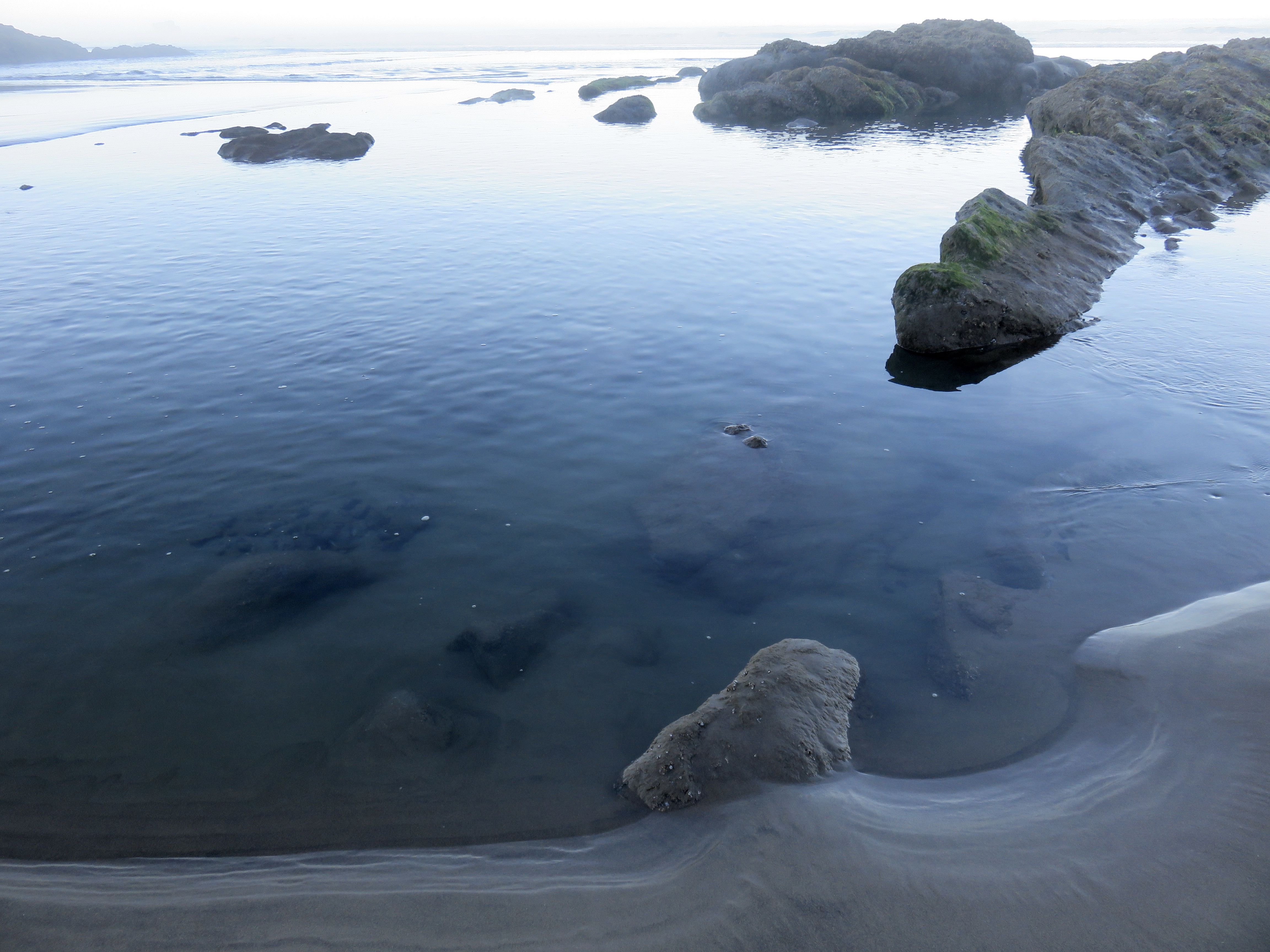
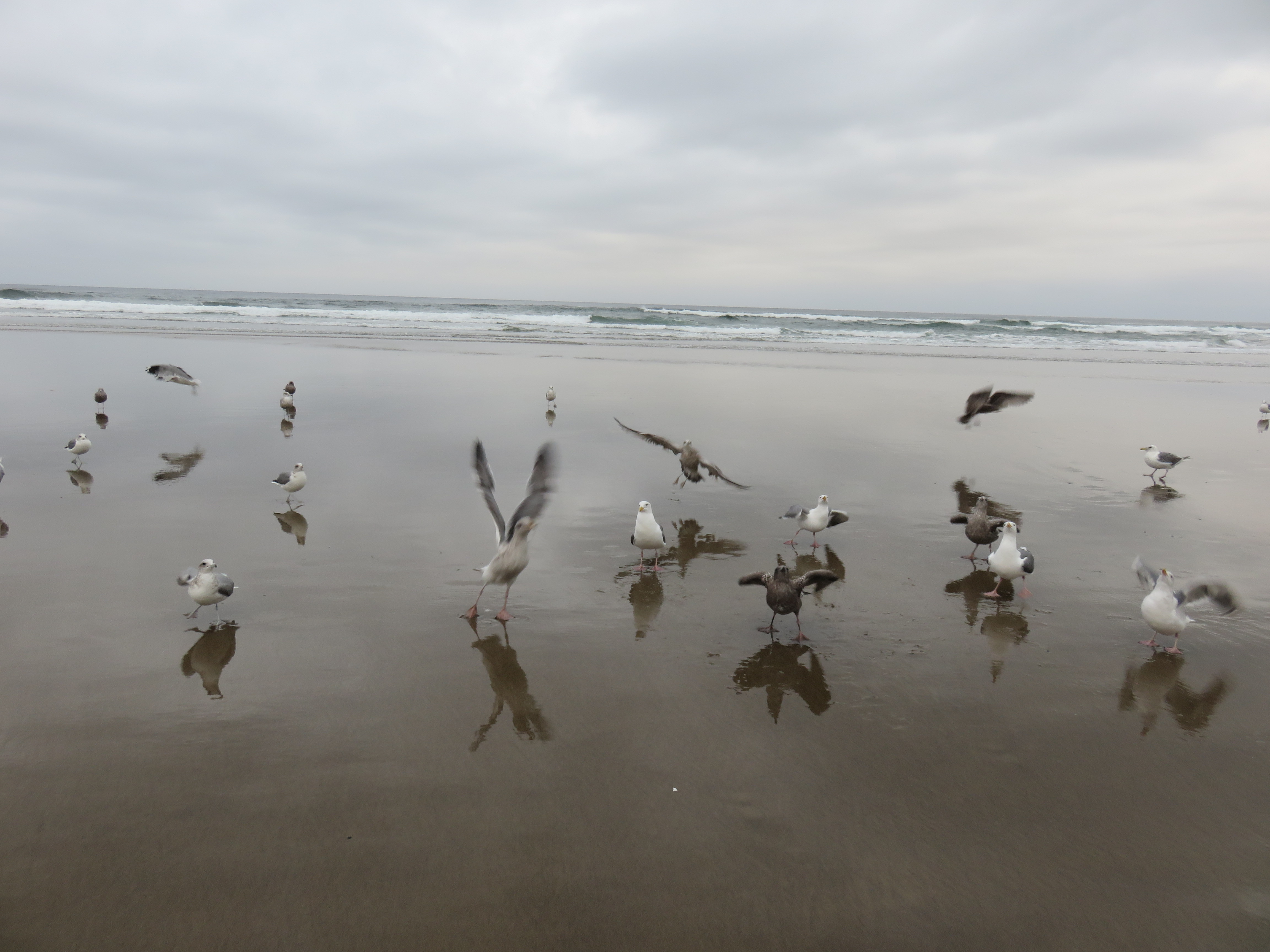
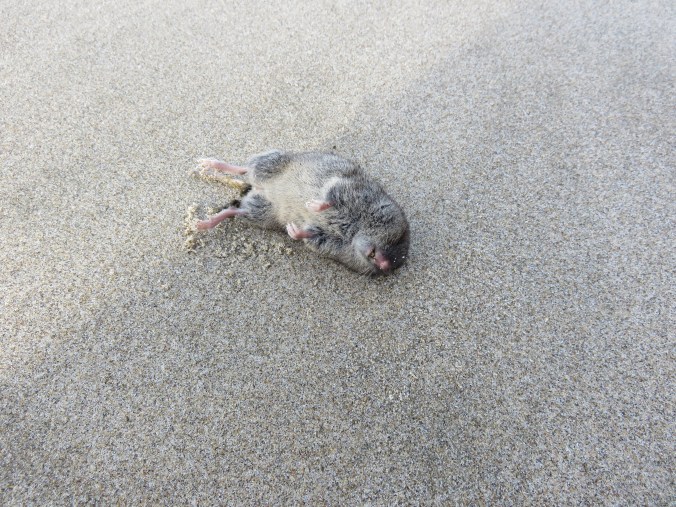
IMG_3595We found this shrew on the beach the other day. A sad little creature. We find fish sometimes, but also this tiny rodent which had no business a hundred feet out on the sand.

Every morning as we head out on our walk, I write essays in my head. They are usually the same essay about what treasures we find, about petting Roxxie, and about the trash we pick up. Sometimes write in my head about our nicer neighbors and sometimes I plan bitter exposés concerning the selfish, mean so-and-so who likes to lie to tourists.

Mostly, I do something else when I get home. This month, I go back to work on my computer. I was awake buy 5am and writing for National Novel Writing Month, thirty days of November to write 50,000 words of fiction.

I thought this month that I would write a science fiction novel. I had done the research, I had the characters and some of the action. In April I whizzed right through 15k words during NaNo Camp. I planned to restart this story from scratch. I thought it would be my novel for the year. I had questions I would answer as I wrote. I even had a list of chapters, an outline of plot. I would work on a five-thousand word section at a time. I had it figured out.

Theoretically, I was in good shape at the start, but my confidence almost immediately went to ground. My story about all animals—birds, reptiles, amphibians, and mammals—dying and only a handful of human survivors scattered across the planet did not need the 70k words I’d planned to write in November. I read a news story about loss of insects on isolated tropical islands and my story about seven women alone on a planet with only insects collapsed. Could I kill off the insects too? I abandoned hope oh me who entered here! This was not going to fly. I was unprepared to make the necessary changes. This was obvious by the third or fourth day of NaNo. What I felt prepared to write did not need even the 50k words that NaNo demanded. The story today is 37 pages and 11k words and has ended. True, I have a couple of places still marked “place scene here”, but these will add a couple of thousand words, no more and possibly only a page. There is no novel here. No possibility for a novel. There is not even a novella. My eventual 12 or 14 thousand words will make a novelette, and that’s before I go back to butchering. It’s an 8k story pretending to be something longer. Maybe it’s only a 6k story. Maybe, in the end, it will not be anything at all.

In the mean time, I have dug into my files and found fragments and even stories I thought were complete (they aren’t) to work on. I have a file with 49k already, but the last seven thousand words are a very old story that will have to be torn apart and rewritten from scratch. I pasted it into my NaNo packet because I hope that a single line will get me going. A woman thinks she sees a dead kangaroo in the grass beside the freeway, and her daughter thinks she imagining things. There are 141 words of dialogue and a good title. That’s what I hope will lead to a story of about five thousand words.

It’s like that poor little shrew on the sand. I don’t know how he got there. Or she. She probably thought she was on her way somewhere else. Sure this was not where she planned to end.

I called this post “cat and shrew” because when I was a little girl, my cat Mica was an enthusiastic hunter of shrews. I thought I might tell that story, but instead, as with NaNo, I went somewhere else/

IMG_3596

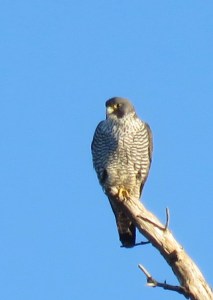
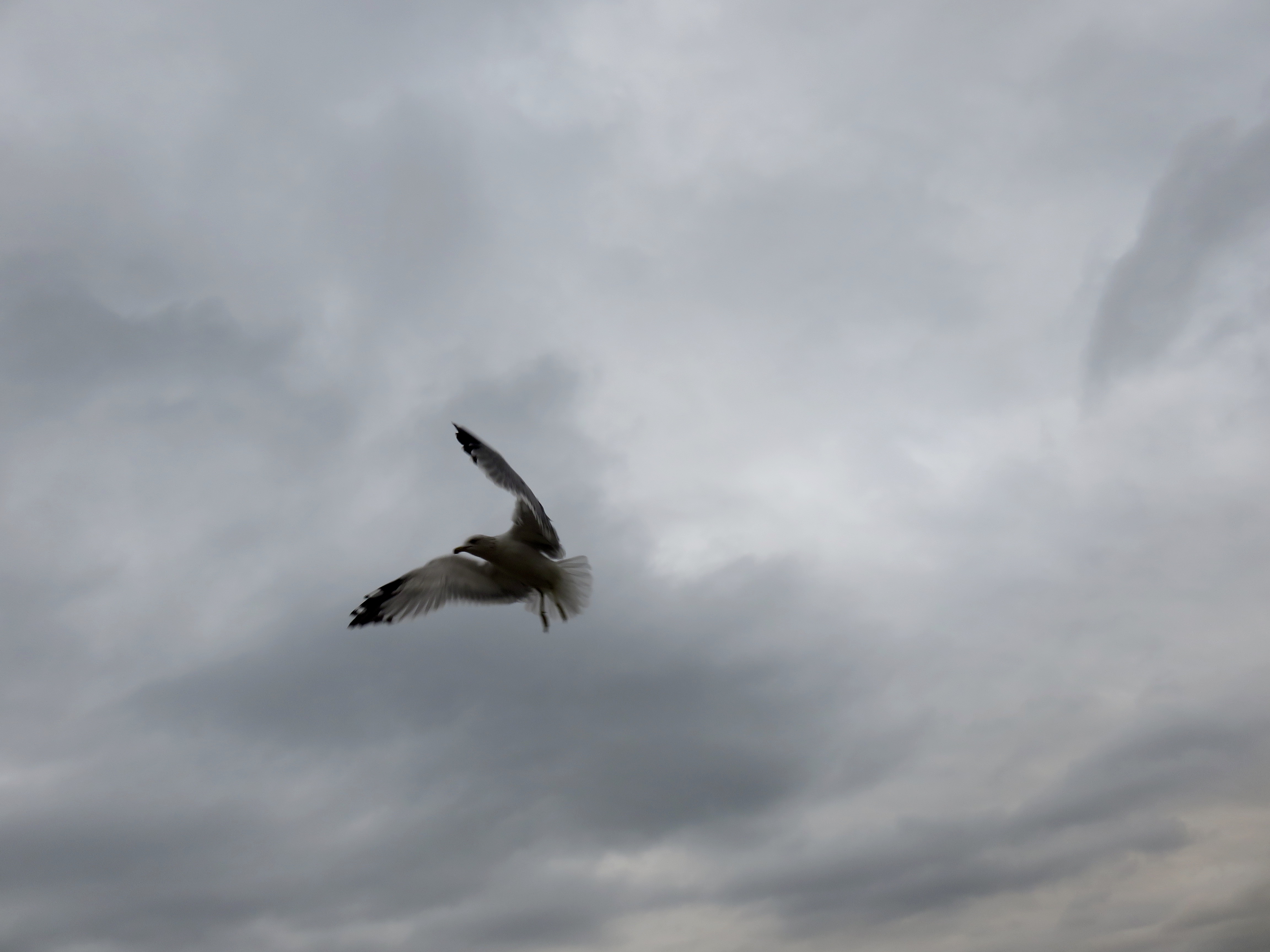
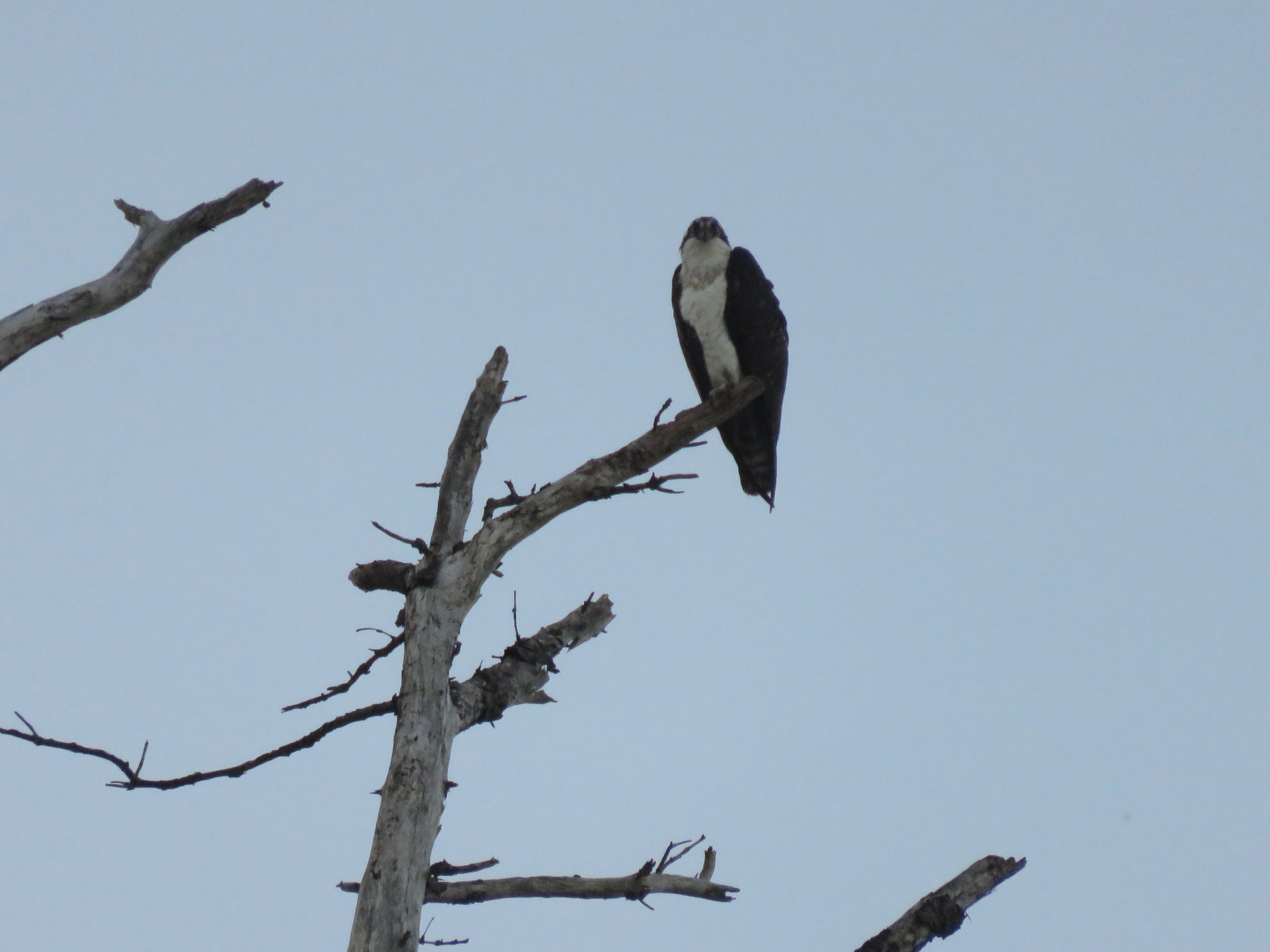
Anyone recognize this bird?

There was this hawk the other day perched in a snag on top of the cliff north of our home. Sometimes there are crows there or one of the ravens. Most often we see an eagle. We have seen a Cooper’s hawk because our tenant means to feed birds, but also feeds chipmunks and rats, which then feed the hawk. The doves too.

All of us are just muddling along I suppose.


WEATHER GAGE*

s-l1600-1.jpg

I have begun rereading Patrick O’Brian’s Jack Aubrey/Stephen Maturin novel series for the third time, this time aloud. I found the jargon and exposition early in Master and Commander hard going aloud, but we have moved on from there to familiarity with some details and absolute acceptance of the rest. My husband laughs at every bit of wit so we are having a fine time and sailing right through. (I began reading three days ago and we are already past three quarters through.) I try to stifle my impulse to explain what will eventually become clear in a next few pages or a few books. O’Brian builds tension and action wonderfully.

(I have spent too many hours in despair and crying of late. Lucky to be alive. Yes. But these are not proud times for my country.)

Perhaps O’Brian is one reason I thought about the wind so specifically during our walk this morning. Yesterday, we walked for two and a half hours, and then about another half hour later on. This morning we meant to have a short walk, but stayed out the better part of an hour, despite the stiff wind. It rained on us yesterday, but we really did not mind. Today over the ocean were blue skies, the moon still showing more than a half even as the time neared nine o’clock. Wind out of the south, gusting and sometimes holding at a light gale.

Dry sand blows over the top of wet sand, sometimes gathering they way snow will, though snow is very rare on our coast. I recall our Sequoyah, an Afghan Hound of considerable strength and sweetness, who did not like the sand piling on his toes when I walked him on a windy beach. He would pick up each forefoot in turn and shake the sand out of it, then dancing on the shore like a dressage horse. (I do miss the dogs painfully.)

We have over the years been possessed of two wind gauges—one belonged to my step-grandmother who left me the house. It was carried away during a great storm while we were in Arizona (with Sequoyah at dog shows, as it happens). The next gauge was also carried away during a storm. We were accustomed to steady winds of 45mph or more, gusts of 65 or even 70mph during an ordinary storm. A really bad wind coming from the west would bow the glass in our ocean-facing windows. It was a disconcerting sight, and the reason I was always grateful to have some sort of curtain or blind to lower against such blows.

We have had no wind gauge at all for years now, and though we can check with Cannon Beach for windspeed, because they are a larger community, we almost never do. We can feel it.

The last really impressive storm was 2 December 2007, the day a window facing the ocean blew out and I fixed in back in and wired it in place as best I could because Gary was still drugged from hernia surgery two days before. We were without power Sunday to Friday. It was dark and wet and boring that time of year with so few hours of daylight and inadequate lanterns.

The local public radio station reminded us every hour on the hour about a tree falling on their roof and never provided a speck of news about our end of the county. (I have never quite forgiven the necessity of driving to Cannon Beach in order to buy a Portland paper in order to find out what was going on.) We were warm enough with our wood stove which I cooked on. I’d made a large casserole of eggplant parmesan and we put thawing strawberries in oatmeal for lovely breakfasts, and experimented with various methods of grinding coffee beans—smashing with hammers and rolling with rolling pins—to fill the french press. It was a challenging week, but not a bad one. Rather fun, to tell the truth, though I was grateful to have hot water again by Friday night.

It was also the year my mother died, the year I graduated from my MFA program,the year our younger son married, and the beginning of the first of my still non-writing periods. I was mourning. I lost all humor from my writing, and my stories often were humorous until then.

And here, the day has worn on while I return to this posting, adding to my story and watching the weather change outside my window. The sky was clear aqua during most of our windy walk, then rain again (it rained last night off and on), and now the pale blue sky is flying overhead again.

O’Brian reminds me how one disappointment or embarrassment can dredge up a range of others long thought put to bed. There was a tide earlier this spring that cast up hundreds of crabs on shore—huge Dungeness crabs, and all male. A knowledgeable friend explained that they were likely scraped up from very deep water where they had lain for some time.

There is work to be done.

I have knitting to attend to and a partial knitting project to unravel and begin again, cards to send my grandchildren, and I am rethinking my plans for National Novel Writing Month. Last year I had intended to work on a series of short stories. I think that might be a good choice for this year. A baker’s dozen, aiming for 60k words, perhaps. So long as I write 50k of new words meant for a single book, I think that will answer.

I have already met my “writing goal” for the year of 100 rejections. Mostly because of 65 agent queries, it easily met that target a couple of weeks ago. I will not order new lamps, but move around the ones I have. I have been trying to send back the darned desk and hope to have it gone within a fortnight (finally!). I rearranged the living room sofa downstairs, shifted the one upstairs, and I will continue desk using a set-up that is imperfect but has done duty.

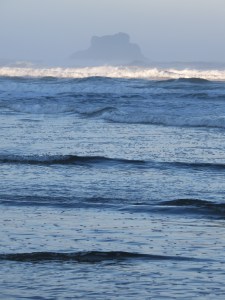
That is, I am rearranging the deck chairs on the Titanic (if you know the saying?) and will muddle along. That is often the way when terrible forces are at work destroying the world. The ocean is white with foam from heavy surf, though not so loud at the other morning when it seemed to be deliberately cracking on.

In a day or two, at most, we will begin the next book in this series. When we have read the twenty volumes on my shelves, I will go hunting for number 21.

*Yes, that is the preferred spelling.

ON NOT WRITING

IMG_3497

The process is frightening, this writing process. Unlike the performance, the meal, the quilt (I am knitting just now) there is no clear completion. We can only rarely say with any lasting conviction that we are finished writing.

We merely choose to stop at some point.

We live with our writing for such a long time (even if that time is only a pair of years) and there is no precise point where we can stand back and say with confidence: It is done. The work itself makes these demands upon us. It makes us doubt in return for only slivers of certainty. Those slivers, however, those instants when we feel with certainty, however rare, are slender payment for time and purpose. Our book is worth that. At the least, I would like to believe the work is worth this. In any event, I am driven to it and even when I am not writing, I dwell upon that writing process.

I have been down these past few months, not making much headway though determinedly planning to write a novel next month. This next week will be “next month” and I am unsure.

Of course I can write a novel in a month. I can rack up 75k words in four weeks. I have done it more than once. But there is that terrible doubting voice shrieking at me: What is the point? It hammers and whispers and questions and whines, yes but? until I think of setting everything aside.

I have been told often enough that I seem certain, that I appear absolutely confident and sure of my course. Yet, as I was told during a wonderful class on world religions, years ago, faith is a willingness to live with doubt. Why should anyone be surprised to learn than the future does not feel so certain from my side?

When my husband and I decided to have children (we wanted two), it took me a year to become pregnant. There was no reason I should not have conceived immediately. I had taken the pill but that was years before. I was healthy, in good weight. We certainly tried. After a year, and because I had been reading right along, and because friends had struggled to become pregnant, I knew there might never be the planned baby. We might not have children. I accepted that possibility.

During that infertile year, I considered that my husband and I had been happy together for a long time (ten years by then) and should certainly continue to be happy without children, if it came to that. I knew individuals and couple with good lives and no child. I reasoned with myself that we would be fine.

This was not a matter of planning, but of acceptance of the inevitable. It was a matter of dealing with what I could not control.

And then I was pregnant with Alan. I like to say that Ian took three days.

Writing is not childbearing. But in some ways, I feel the connection between birthing a child and a novel. It is true that childbirth could kill me, but I never feared for that. I was in labor three days with our first child, and that pain is no more vivid that the agony I have experienced writing. Both child and book must eventually be allowed to leave.

That is the struggle I feel just now. Our sons are grown and off on their own. We are grateful for phone calls and visits. They will never be so close as they once were, and that is painful at times, but also as it should be. We raised people capable of managing their own lives, not permanent infants but adults now who come to us as equals.

The novel, however, that I am setting aside . . . that remains an infant, remains dependent and with no external life.

We had dinner the other day with the owner/editor of a small press. She urged me to pursue digital publication and build a platform with followers. She also confided that her own digital sales were down from over a hundred to fewer than a dozen a month. I cannot help but feel her advice might have worked a few years ago.

I do not even own a Kindle. A friend self-published without great success. So I have my doubts.

This morning I read a comment to Allison K. Williams at the Brevity blog post:

This is spot on and infinitely encouraging. But “Two years of generating material, two years of dicking around, four years of fallow time where the manuscript reproaches me from my desktop every time I open the laptop, and two years of getting down to business” had me laughing out loud in appreciation and recognition of my own process.

I had a mentor (painting, not writing, but it applies) who told me, when I was complaining about not painting as much as I thought I should: “you’re still doing the work, even when you’re not working.” After a long dry spell, a friend came back to his work beyond where he’d left it.

There might be something coming next, but I do not yet feel it. I am not writing anything just now, except these lines. Perhaps I am only in a period of rest, The quandary has stopped me cold. As if I had managed birth only to find the baby perfect and perfectly dead.

It is time to allow this novel-child to slip away, and move on.


EMBRACING THE CRONE

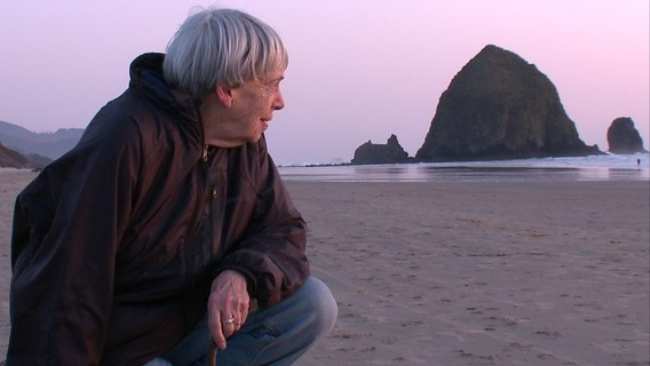
Ursula K. Le Guin once talked about embracing that word, “crone” as an honorific. For most, it is pejorative, inherently agist and sexist, but Ursula argued for a different take. The crone has experience and perspective, intelligence and awareness. The crone is old because she has lived long and prospered. She has earned respect, even though she rarely gets it.

“In her essay, ‘The Space Crone,’ Ursula Le Guin wrote that old women would make the best space explorers. Free from the daily tasks of rearing helpless children, free to see and comprehend without vanity, loving life because we know we may have to leave it soon, we would embark on our journey to the stars not for ego or planting flags but only for information to transmit back to our grandchildren for their future explorations. We know by then that we are part of the flow of life.”

I heard her talk about crones in the 1990s when she was about what my age is now. She wrote this essay twenty years earlier in 1976, when she was in her late 40s and I was in my 20s. It’s the first essay in Dancing at the Edge of the World, which includes her speech “Hunger” that I teach each year. Half that volume is made up of collected book reviews about writers such as C.S. Lewis, Doris Lessing, and Molly Gloss.

Kate Atkinson objects to book reviews written by authors, and particularly to a reviewer declaring her a “matron” in The New Yorker. I understand she considers the term disrespectful. I get it. She’s right. It wants to connect to “society” as in society matron, some woman with grown children who works on charitable committees without ever dirtying her hands. Matron, according to common use and the dictionary is a married woman, especially a dignified and sober middle-aged one. Like “bitch” maybe it’s time we took back the label of matron, the way Dick Gregory took back “Nigger” when he used it to title his memoir, so his mama would know that when she heard that loaded word, it was someone talking about her son’s book. Except that never quite worked and the n-word is still a bad’un.

Like racism and sexism, agism is something we’d like to pretend does not exist. In our youth-obsessed, age- and death-denying society, everyone past high school feels pressure to be young. How many times have people declared: It’s only natural to want to be young? Maybe. But in most past cultures, even the feeble old were regarded as having earned respect. They are the holders of what we now call institutional knowledge.

A woman I worked with on the local arts council assured me decades ago that “the great thing about being 70 years old is that no one expects you to look young anymore.” She made me laugh. We both laughed. I admired her home, her view, the wooden blackbird hovering over her dining table. I admired her ability to be who she was. I was 30-something at the time, no longer “young” but still uncomfortable with “middle aged.” I clung to Gloria Steinem’s incredible birthday riff about turning forty. “This is what forty looks like. We’ve been lying for so long, who would know?” Except, she was always beautiful, still is, and she’s 84 now. Gloria Steinem is old. She is even that worse thing, elderly.

I will be 66 next week, and I am old. (In medical terms, I am also elderly, but I resist that term. It belongs to my next decade and the one or ones after, should I be so lucky.) I am old, not middle-aged, not young. And I am not “66 years young” which is a pathetic claim to my mind. I am not living backwards. I am not trying to look 35 or 45. I am what I am. I am tired of guilt about youth. I am weary of being told I should yearn for youth, that I should strive for it, that I must always be forever young. I am not young.

from On Golden Pond:

Ethel: “Hey, I just met the nicest couple…. In the woods.”

Norman: “Couple of people?”

Ethel: “No, a couple of antelope. Of course a couple of people. Their name is Migliori, I believe…. They’re a nice middle-aged couple, just like us.”

Norman: “If they’re just like us, they’re not middle-aged. Middle-aged means middle, Ethel. Middle of life. People don’t live to be 150!”

Ethel: “Well, we’re at the far edge of middle age,” she says: “That’s all.”

Norman: “We’re not, you know. We’re not middle-aged. You’re old, and I’m ancient.”

Ethel: “Oh, pooh! You’re in your seventies, and I’m in my sixties.”

Norman: “Just barely on both counts”

[In fact, Hepburn was 74 when she said those lines. Henry Fonda was 76. Both were genuinely old, but not ancient. Hepburn was 94 when she died in 2003, but this was Fonda’s last theatrical film—he also made a TV movie that year. He passed early the next year, in 1982.]

There is nothing I want back from youth but the ability to run distance. I could still do that when I was 58. I would like that back. Yes, I truly would. But it won’t happen. I can walk for 2 hours and run short distances, but I will never run 6 or 16 miles again.* I mourn for the loss of that running freedom, but I honor what living, reading, and thinking have given me at my age.

I have experienced much, read many books, and thought deeply. I have never stopped reading and thinking and observing the world. There is still learning in my life. I am subject to change. That last should be another posting.

In the mean time, I have lived long and prospered. I have earned my age. Give me the credit I am due.

______________________________

*UPDATE: In October of 2022, the week before my 70th birthday, I ran a 10k in 71 minutes, 9 seconds. That’s 6.2 miles and I was 8th of two-hundred-something in the 65-69 age group. Whoo-hoo for me!

further UPDATE: I completed the same run the next year, a little slower but came in 2nd in my age group of over 200 runners because at a week before my 71st birthday, I was 70-74. Yeah, elderly now.


RANDOM FACTS

IMG_3392

Years ago, long before non-GMO became a common label on foods, before Safeway even had an “Organics” section, and before “gluten-free” became a thing, a junior came to class with an idea for her research paper. “It sounds interesting. They are altering the genes of food,” she said about the NPR broadcast she’d listened to on her way to school. ”

“What do you think about it?” I asked.

“I don’t know,” she said. “I want to find out.”

Her eventual essay included the word “Frankenfoods” in the title, so we can see where that led.

Over the years, students rarely choose to write about topics they begin by knowing little about, but those papers are most often the best. Writing a research paper should be as much about finding out truth as proving it.

Changing our mind is probably one of the greatest struggles any of us have. We get an idea in our head and simply cannot move. For a teenager to research a topic with an idea already clear in their head about what they want to say is pretty typical. For a reversal to occur is rare indeed.

Recently, a junior was writing about forcing sports teams to change what some perceived were racist logos. She argued this would be unnecessarily costly and inconvenient, would destroy honored traditions and history, and anyway, “racism” was not the intent and probably not even effect of these logos. She got through two drafts, and then the day before the next draft was due, the one that was supposed to be done other than minor word-smithing, she came to see me after class.

“I have a problem,” she said. “My thesis is wrong, or anyway I disagree with my thesis. I made a mistake and now I don’t know what to do.” She had, the night before, read an opinion piece about the damage racist stereotypes, including the images used as sports logos, do to young people living on reservations. Such images preserve and inflate prejudices and contribute to a sense of exclusion and hopelessness for children already living in poverty and on the margins of society. “I’ve seen that,” she said. “It’s true.” She had worked as a volunteer on a reservation.

“Change your thesis,” I said.

“But I don’t have time to start over.” She sounded surprisingly reasonable, given her sense of her dilemma. This had to feel like a disaster in her world and she was struggling to maintain her calm. She began to rattle off all the arguments that supported her original thesis.

“But one article convinced you that you were wrong.”

She nodded.

“So use everything you already have, and then show me how you were convinced. Concede everything—inconvenience, costs, fan outrage—and show me how there is something more important at stake. It convinced you; convince me as a reader.”

She did it too. Changed her hook, reversed her thesis, fiddled her body paragraphs, and concluded with a bang. Her argument was logical and emotional, reasonable and persuasive.

It can be done. We can change our minds.

Long ago, another junior showed up before class, the day before a draft of the same assignment was due. She was in tears. “They have to shoot them,” she wailed. “They have to do it as a symbol, and the sea lions aren’t even the real problem.” She had been writing a paper to argue against killing the sea lions that were eating salmon at the base of a dam spillway. She could prove that the sea lions were not the cause of dwindling wild salmon populations, but she also came to understand that the issue was not as simple as she’d hoped.

Another student, in his senior research paper (SRP) was struggling to prove his thesis, that welfare recipients should be drug tested as a condition of receiving public assistance. Why should people on public assistance be allowed to abused those funds? The trouble was that drug-testing had been tried and had proven that few people do abuse drugs and it cost a great deal more to test for drug abuse than was gained by cutting such people off from public services. Ten or twenty times more. There were also issues related to privacy and other forms of public assistance and contracts that he did not even want to address. He had not changed his world view, but he did change his point of view on this particular policy.

Students have proposed legislation that was eventually adopted (hat off to you, Russell for advocating pleasure boat pilot licenses), as well as the use of artificial turf, graphite bats, and golf carts during tournaments. I read about forty essays on allowing or banning abortion, most of them on both sides rather hysterical and unconvincing, before I banned the topic altogether. One senior cried so hard every time she tried to work on her pit bull essay that I chose to put that topic, too, on the banned list.

Religious arguments? Mostly banned. When a student used Thomas Jefferson’s faith as part of his proof that we are a Christian nation, I suggested he had better read the work of our third President. When his mother argued that no Christian ever owned slaves, I gave up trying to reason with her. In order to use a faith-based argument, you would first have to convert your audience. I was teaching in a public school.

I readily confessed the obvious. I have opinions. I am opinionated, but I am more interested in the writing. I have been convinced by students, and even when I am not convinced, my purpose is to evaluate their skill, not to make them agree with me. One of my all-time favorite essays, one I still recall vividly and with respect, was written to support preserving “under God” in the Pledge of Allegiance. It was a hot topic one year because of a California lawsuit. Three students wrote supporting restoration of the original form of the Pledge. Two wrote supporting the current form. One of those last was brilliant. I still don’t say “under God” because my mother taught me not to, but I respect and honor that student’s essay. Her exploration of the history and implications of the Pledge were more complete than anyone else. She won me over.

It is one of the side gifts of teaching researched persuasive essays: I learn a lot. Sometimes I find I know random facts I cannot even explain. I have no reason for knowing about water rights and road-building, statistics about rape and fishing, the costs of medical insurance and how many student athletes are injured by sport. Part of scoring their papers involves reviewing their research, verifying their claims, checking for additional overlooked aspects of a problem. I read a great deal.

And as determined as students are to avoid interviews, talking to the right person will yield solid facts and details available no other way. Even so, the right questions of the right person are critical. A student asked an engineer working with nuclear power via email what health risks were associated with nuclear power? The man emailed back that he was “unaware of any health risks.” The student quoted this as proof that nuclear power was non-polluting and harmless. I had to break it to the student that “he may be joking.” An engineer would not be the right person to ask about health issues, and he needed to research nuclear accidents. Plus, you know, the long term effects of The Manhattan Project . . . “Look it up.”

I am a good researcher, and with the internet and experience evaluating sources, it is surprising even to me what I can find out if I look hard enough. The key is a willingness to look beyond what supports my prejudice.

Skepticism is a good thing, I have found. Finding multiple sources to confirm the same information is important. Avoiding the crazies. Doing the math. Recognizing that a minority opinion is not necessarily wrong. But it isn’t necessarily right either. What’s worth arguing is never simple.

In the face of personal experience, we might alter our perspective. In the face of evidence and logic, we must be willing to consider other perspectives.
 

READING OUT OF THE SHELL

IMG_3388

The student working on the research paper was well and truly stuck. He walked from the back table to where I sat at the front and asked me for help. “I am really far behind,” he said as if this were a permanent condition. He had the research. He had an idea of what he would say. He told me about what he knew and showed me the research. When I asked him questions about supporting information and about complications, about the opposition to him claims, he was able to answer.He had nothing written down. I helped him create a simple graphic of pros and cons. Then I gave him chocolate and 20 minutes and when I came back his page was completely blank. Time had passed and his fear stared him down.

Last year, when I suggested to a friend that reading for 10-15 minutes a day would result in reading a complete book every 3-4 weeks, she commented wryly, “You could say that about a lot of things.”

Well, yes, I could.

Let me put this another way. If you stayed off Facebook and your cell phone for 10-15 minutes a day, you would have time to exercise, write an actual letter, do some yoga, meditate, cook oatmeal for breakfast, make a salad . . . or read.

Making time is not so hard. It is impossible. Time is not created, it merely passes. How we pass with that time is choice. Recently I binged an Australian television series, walked the beach, played Scrabble with a friend, and laid awake worrying about family in the middle of the night. I wrote blog posts and helped a student with Geometry while volunteering in the local high school library and yesterday I helped a student with his Senior Research Paper. I made bread of bananas just in time, and each morning I read the news. I read novels and nonfiction. Just now there are two books on the shelf behind me.

I never begin a book I do not hope to love. Sometimes I am disappointed. More often I am amazed. Reading transports, instructs, teaches—if I am willing to allow that to happen, if I am willing to stretch and learn, to participate in a process. I am willing to invest the time to read.

A new post on the Brevity blog discusses time for change. The author and her husband have sold their house and are moving to a much smaller house in another state. It is a thoughtful essay about movement, both exterior movement and interior movement, about simplification and change, about making those choices to be somewhere and perhaps even someone new.

My sense is that significant change is almost entirely interior, that large or small house, New Mexico or Florida, and perhaps even near family or far away, we carry ourselves along as the primary baggage. Our capacity for becoming, for changing our lives, breaks down to our willingness to use time in new ways. That is less about external than internal geography.

No matter where we go, there we are.

In the mean time, I have avoided knitting and weaving and a story because I fear I will do projects badly. I have a plan but things are not looking promising. Last night while giving good advice and deadlines to a student, time passed. I experimented with point of view (tried third person thanks to Ursula) in fiction. He eventually had a list of paragraphs to be written and a start. That student had an introductory paragraph, I had 500 new words of a story. Like the student in the library, I had stared too long at my blank page, certain I was doomed.

I was not doomed, I was trying to wait out time. Time merely passes.

As he was leaving, the student said, “I have a month to finish it.” But he doesn’t have a month. He had that evening for an hour, and he needs to use an hour each day until he’s done. If he thinks of the month, he will wait to begin. He will slide along without progressing because there is a month, then three weeks, then less and less time left as he allows it to pass. Thinking like that will land him in the same spot he started yesterday evening, a blank page before him—the way we all end up staring at the same spot because we have an hour to start the work or a lifetime to begin a new life.

It is always there for the start.


FLYING ON

IMG_3370

When I prepared my application to the MFA (Masters of Fine Arts in fiction) at Pacific University, I needed a short story, a very brief literary analysis essay, and a personal statement. This was 2004. My mother had been dying for over two years, and my brother had declared me “the most disfunctional person” he knew.

I had recently unshouldered the yearbook and left the high school cross country team, but I was teaching high school English full time, and visiting my mother at least three times a day since her collapse in 2002. My husband, too, carried this burden, stopping on his way to work to get Mom up and make her coffee, at lunch, and again on his way home. I have my annotated calendars from those years. They do not list these and other daily tasks or fun events as they would have during my working-my-way-through-college years. They note my mother’s hospital visits.

There was a four day period that included my high school Open House and three visits to the ER. I never missed school. I trudged on.

It’s true that I felt disfunctional. I was overworked, but I did not have the leisure to alter my obligations. I loved my mother and she was too stubborn to change. I was only halfway through the most stressful and painful and emotionally destructive period of my life, but I was doing the job. All the jobs of teacher, wife, mother, and daughter.

In the midst of this chaos, halfway through what would be the five years of Mom’s dying, I began to carve out a new life for myself. Our older son had completed his first college degree and our younger son, despite taking time out for commercial and regional theater and a leading role in a film, was completing his degree. I was, I see now, adjusting to my life chaos, struggling to regain space for myself as an individual.

My application to an MFA program, then, was essentially a survival strategy. I have absolutely no memory of what I wrote in my personal statement. I wrote my literary analysis about how Edward P. Jones details events without reflection in The Known World. And then, because I had never written a story longer than ten pages, I set out to write a story of close to twenty.

“The Promised Hour” was based on a pair of a true events, one of personal experience in college when I believed a child was being molested and I confronted the man after the Seattle Police said they could do nothing. The other, more recent event, concerned a local doctor, a man I knew whose daughters had gone to my sons’ grade school before moving out of the area. After his wife left him, the doctor deliberately bankrupted his practice and then seized and murdered his children and killed himself.

These deaths were reported in the newspaper and had a devastating impact on my community, on the people who knew the girls, teachers who had cared for them in the classroom, neighbors and school friends. I kept trying to understand how that mother could ever recover.

That was the story I told, the story of a woman carving out existence after devastating loss. I told it badly, I was later told, but well enough that someone thought I might have potential as a writer of fiction.

The story itself went through endless revisions. I mostly stopped keeping track after the first forty or so rewrites. I moved events into and out of chronological order, added and deleted scenes and details. Removed characters and created them. The story has since been submitted to literary journals a few dozen times. Sometimes it is summarily dismissed. A few journals kept it for months past their normal review time. Some wrote back with admiration and perhaps even sincere regret, but always rejection.

Then, in 2016, I turned it into a novel, which allowed me room to explore this woman’s life after death, the years of clawing her way back to life. Only fourteen drafts of the novel, and I am done rewriting. That novel has done no better than the story in submission. Mostly, it does not get past the query letter.

Everybody’s Mother Dies, a literary novel of about 78k words, follows a woman’s odyssey through grief. 

Thena Justice was building a new life near Seattle after the death of her mother and breakup of a terrible marriage when her former husband murders the neighbor-babysitter and their daughter before committing suicide. Lost in grief, Thena first hides in a friend’s converted garage, then in a tiny cottage on the Pacific coast, thrashing her way through apathy, anger, and routine. Instead of returning to Puget Sound, she moves to the city where she was born, takes the bus to a retail job each day, and keeps her head down until a child crying in the night wakens whatever it is that gives existence meaning. 

One agent wrote:

But no, I’m sorry.  . . . I read this query letter, it’s thoughtful and well-written. I don’t, however, have the mental energy to read a novel of this description, the world has become such a violent and angry place, I find myself unwilling to read fiction which deepens that impression. I’m sure there are others who will disagree with me and toward that end, best of luck.”

Though I rewrote the query, too, others do not disagree with her. Even the reader who read the entire work and liked it ultimately said no,

“I would love to take your manuscript on and work with you in placing it, but I’m afraid my current workload simply wouldn’t do it justice. This project requires care and attention – because it is no doubt a beautifully quiet yet impactful story – that I don’t feel I can give. I say this with a heavy heart.” 

Whatever care and attention it requires is beyond me. Though the bulk of my story is about recovery, not the devastating loss that demands it, I cannot help but respect these views. The world has become too angry and violent. And I have written my story badly.

Two agents and seven* small presses have sample pages, and then I will regretfully put this work aside permanently.

Sometimes the only way to survive is just to fly on.

IMG_3390

*I had to go look this up. Not four, seven.


THE WORDS I WANT

IMG_1157

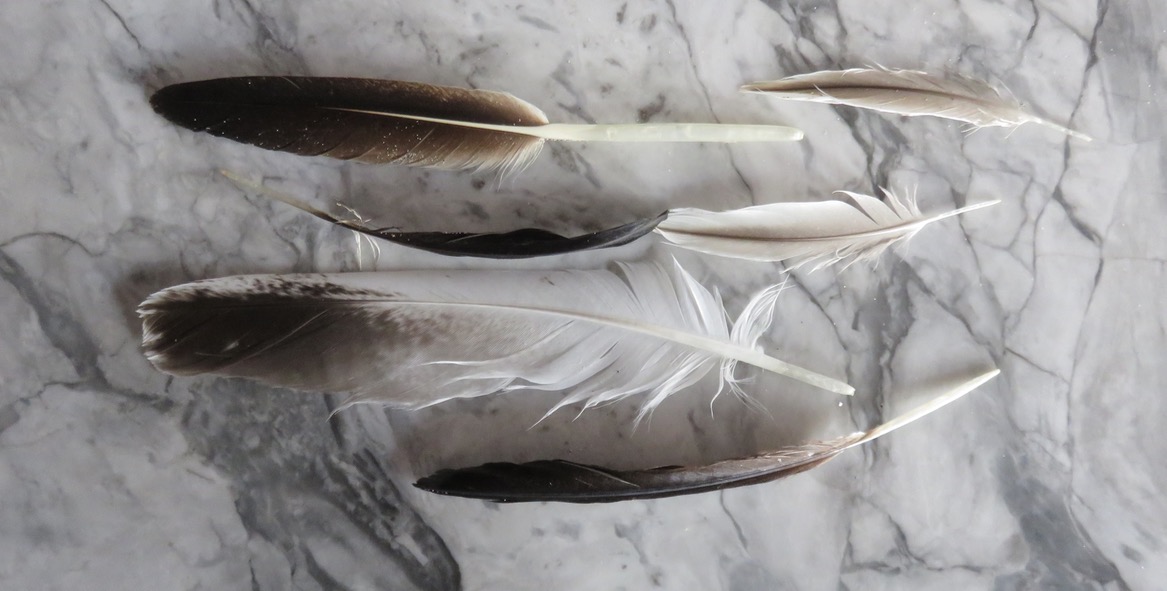
Most days I find glass during my walk on the beach, but I always find agates. Rarely I will pick up a feather. I lean down slowly, sliding my hand down my thigh, and even so my head throbs when I pluck a treasure from the sand.

Ten days ago I suffered a concussion in a fall that threw me hard on my back. Two days ago I sat on the edge of a too-soft chair, leaning forward while I played Scrabble with a friend for an hour. That has my back acting up.My head hurts when I wake. I drink plenty of water. Today I will try to stay off my feet and off the computer, but here I am typing.

Sometimes you just do what you want, what you might even pretend you must do. I could be knitting now or winding a warp. I could be watching television or reading. There are other satisfying, creative outlets. None of them reward me as writing does.

I have completed many stories, I could not even guess how many. Novels, and collections of writings, children’s stories and a novel probably suitable as YA, craft essays and creative nonfiction. Poems.

On the other hand. (She had warts.)

On the other hand, writing troubles me. Writing takes longer than anything else I do, longer than baking, knitting, piecing a quilt top, planning, teaching, a long walk on the beach. Reading a book. It is less certain. There is no absolute I-am-done point with writing. There is no clear reward, in most cases there is no reward at all. Few people ever see my knitting, weaving, and few eat my baking. Fewer read my words.

The novel that I have been sending out since last winter has been rejected 68 times. So far. Is that enough? Am I done? May I set this writing aside and move on? Should I?

But still, it is the words I want.

CROWS STORY

IMG_3239

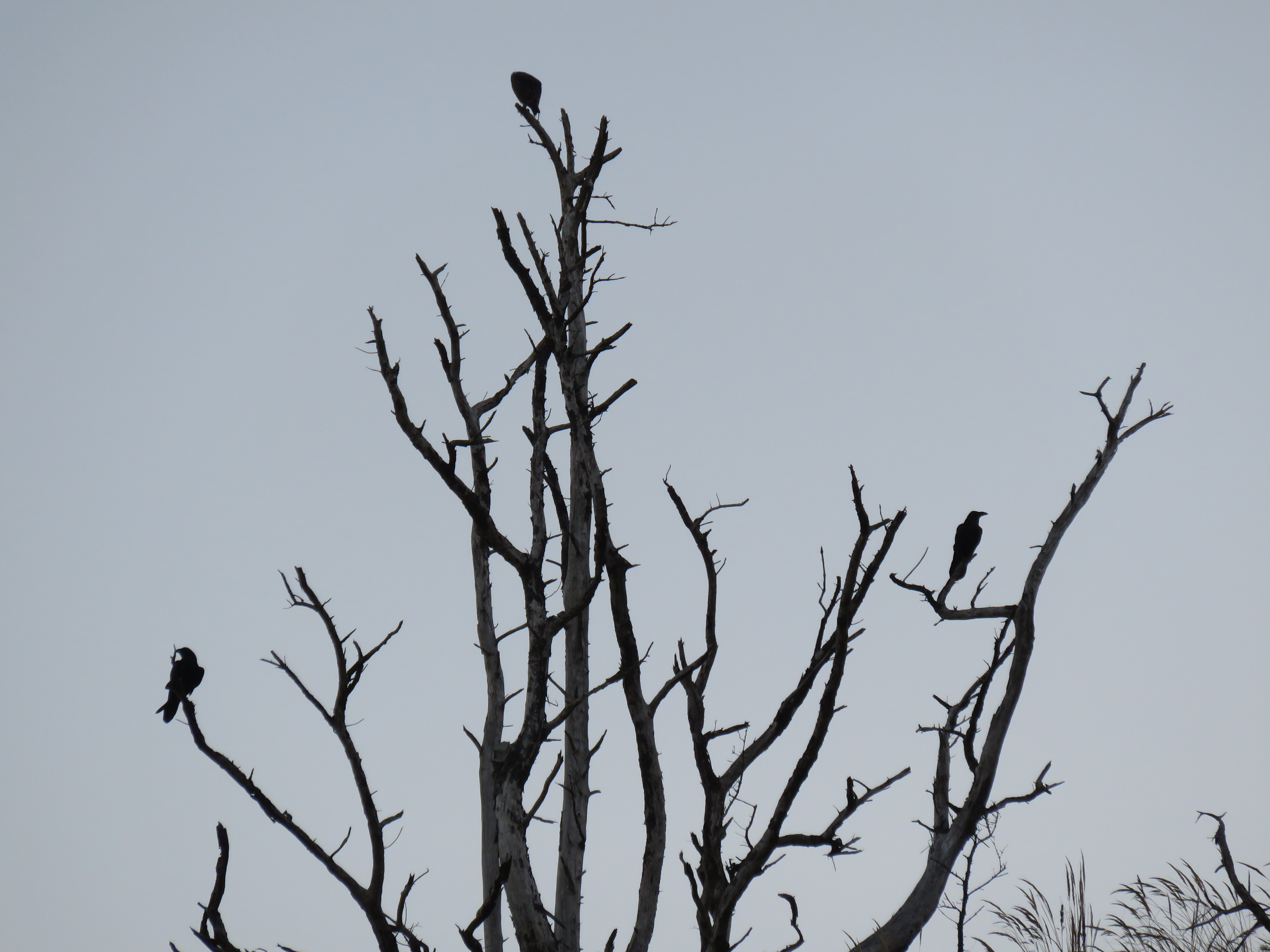
Two ravens and one of the local ospreys, top.

I have a brief creative nonfiction essay in issue 59 of Dinty Moore’s Brevity. All the work there is nonfiction and very short (under 750 words). My true story, “A Murder of Crows,” recounts an event from some years ago at a local summer camp.

This journal’s website has been a valuable resource for my college students over the past ten years. Students read essays and write précis on craft essays found at the same site. Then they go on to write their own creative nonfiction.

My work has been featured several (8? 9?) times on the Brevity blog.*

IMG_3243

The osprey from another angle. (I know this should be a photo of crows.)

  • I went to the Brevity blog and did a count. Thirteen times. Who knew?

FOUNTAIN PEN

IMG_3205

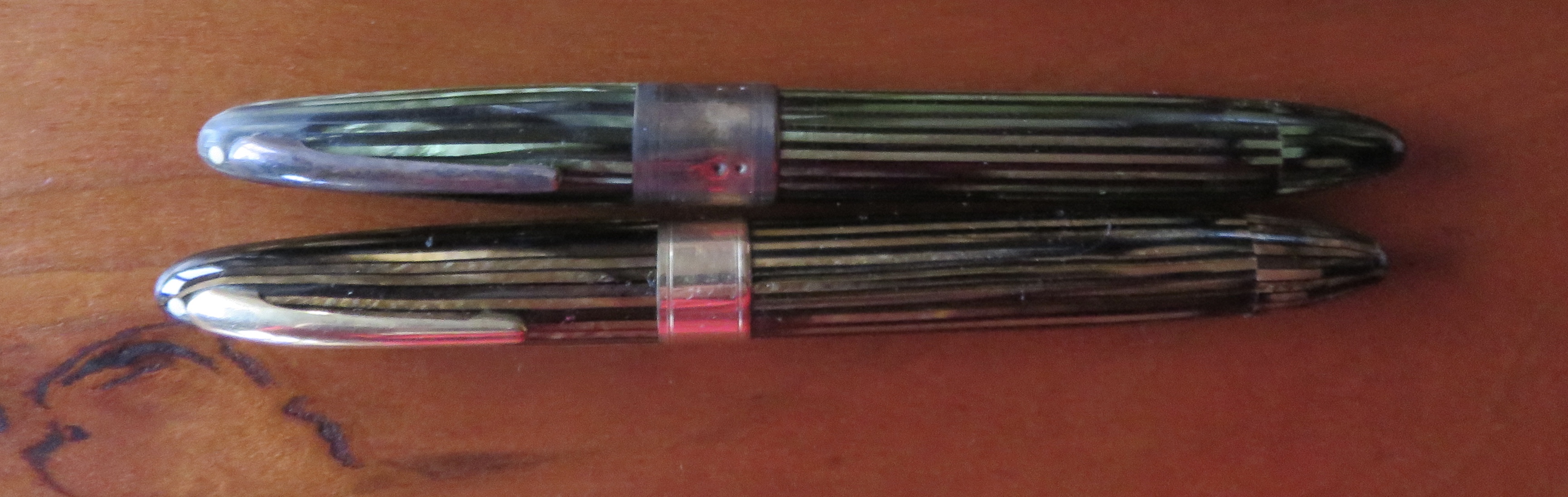
top: My dad’s fountain pen, probably from the 40s, maybe older or younger. The lower one was a surprise. I have no memory of seeing it before a couple of days ago. I have searched for exactly such a pen on Ebay.

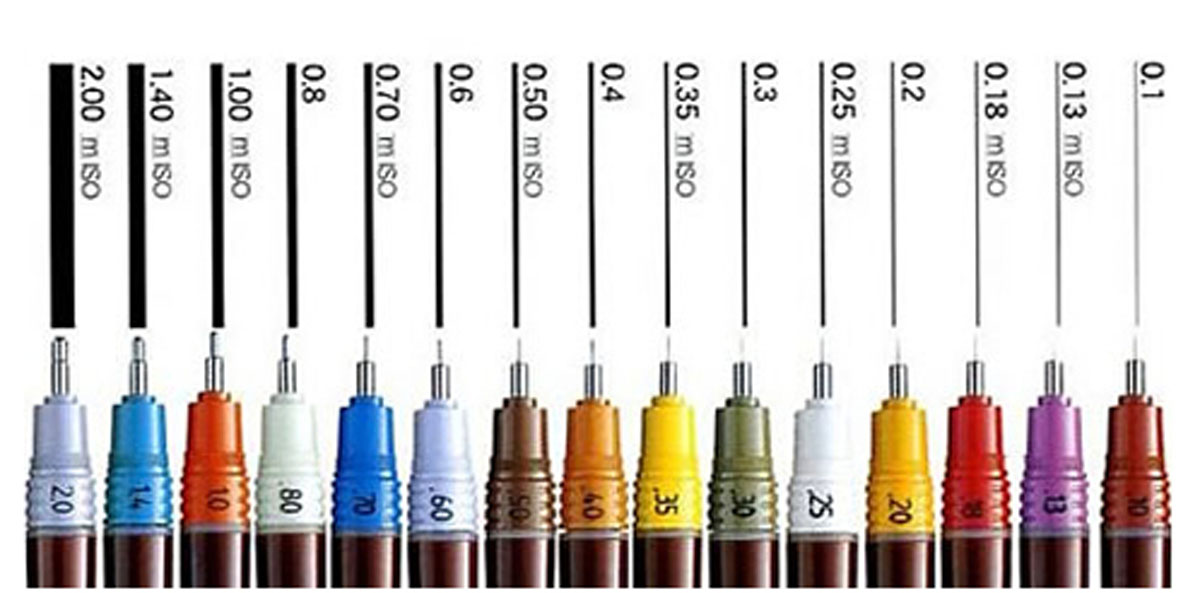
I began using fancy pens when I was in college as an Art major. Mostly I wrote with a 0000 stylus fountain pen—a Kon-i-noor Rapidograph. The tip of such pens is a tiny tube, thinner than a crow quill, and notorious for clogging. The 4×0 tip makes a line 0.18mm wide. I used a 3×0 later, but eventually, the pens would always clog, freeze, and I would need a new one every 2-3 years. I learned to write carefully because the pen must be pretty much perpendicular to the paper to flow at all. While I have never been successful at calligraphy, my handwriting, which had been even worse than my typing is now, improved. I worked at it.

I also illustrated catalogues and magazines, designed logos and other advertising, and drew portraits of famous dogs. A German kennel came across an illustration of mine and was using it for his logo. By the time I found the image on his website, I was no longer making a living as a designer. He offered to pay me, but I told him he was welcome to it.

0105214-1.jpg

Eventually, I shifted over to Rotring Rapidographs, which were easier to find and cheaper. Around the time my children began walking, I gave up on Rapidographs entirely.

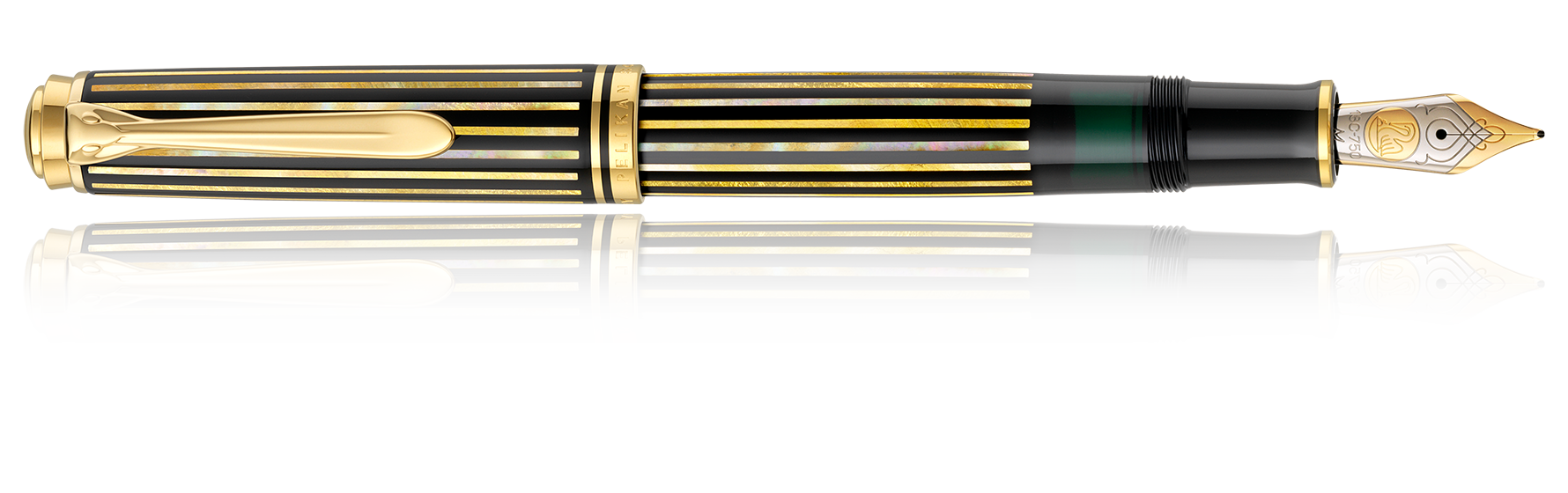
In the ’90s, my husband gave me an expensive fountain pen, a Pelikan 600, with green striations, and I have been using it daily every since. My dad’s fountain pen, the green striated one above at top is from another maker and was always loaded with blue-black ink. My pen generally has green or purple ink. Just now it is loaded with a Japanese green ink that is not quite olive enough. I am tempted to fool with the color by adding some orange to the bottle. I’ve mixed ink colors before.

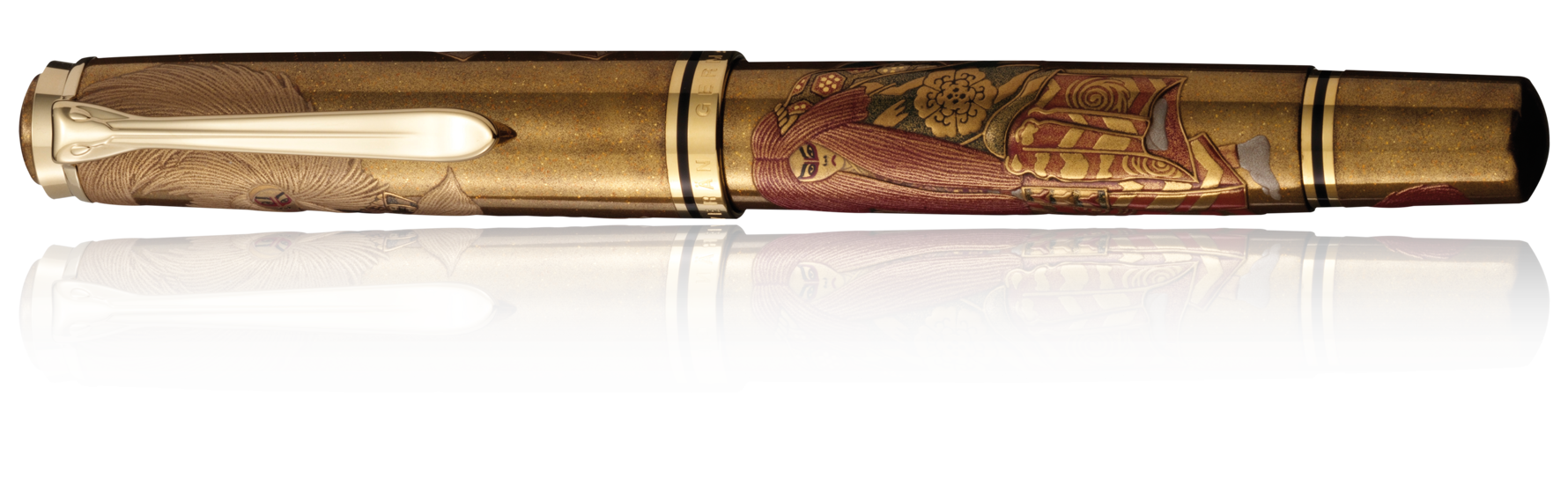
My Pelikan fountain pen has served me well for over 20 years, During that time an occasional student was inspired to try a fountain pen after admiring mine. They wanted to try it, but my dad always insisted that no one should ever, ever use an other person’s fountain pen. I have tried the Pilot Metropolitan, which is a very cheap pen (about $20) and allowed me not to cry when it was ruined at school. My Pelikan remains the one I carry everywhere. If I ever win the lottery, I would be tempted to buy one of the crazy-expensive Maki-e or Souveraen pens from Pelikan. They don’t even list prices online. So, yes, the lottery. 

maki-e-renjishi-large.png

souveraen-m800-raden-royal-gold-large.png

This is just to say that I love fountain pens both as artful in themselves and in use whether to make art or a shopping list. 

When they have been used, as my dad’s pen was used, they become almost like family.

In unpacking my grandmother’s desk, I found a stash of fountain pens in a drawer. Two tiny ones with ink reservoirs held in place by the nib, two Esterbrooks (black and gray marble from the 40s or 50s), and two Shaeffer’s pens. I put most of them in that desk drawer myself perhaps 30 years ago before my dad died. Since it came to me, my dad’s Shaeffer’s pen has floated about the house, in places where I could pick it up and hold it. The original owners of the other pens include a fancy gold-bound one with the initials of my grandmother’s second husband’s brother, and small serviceable pen my step-grandmother Genevieve used as a nurse. There is no certainty about the others. I have been able to clean two Esterbrook pens, and I am using the marbled one with purple ink.

The mechanical pencils in that drawer? . . . well, that’s for another day. I use a Y&C Grip500 0.5mm mechanical pencil. After losing several, I found they were discontinued. I bought a box of six old stock 10-15 years ago, and I have managed to hold on to four of them. (Whoops! found another one, which means only one has been lost.)

Tools are precious things.

The two pens in the photo up top are going to a repair person in Arizona tomorrow. I am not optimistic about what he can do for my dad’s pen. My dad used his pen for nearly 50 years. It took him all through the war to France and Germany, and the nib is quite bent to suit him. Late in life Daddy “customized” the pressure closure because it was no longer holding, and I doubt that can be corrected. But there is a chance both pens will return to me in a few weeks, and at least one will be serviceable.

I have felt loyalty to my Pelikan for over 20 years, but I respect the two small Esterbrooks for still working, after a lot of flushing, despite benign neglect for decades. The gray marble one has seen hard use. Both its “jewels”, the black plastic button on each end, are damaged, but the gold nib still flows nicely. I might load vermillion ink in the black one.

Perhaps, if I am particularly brave, I will try cleaning my old stylus pens. It would be good to use one again. Doing that would also convey an obligation in my mind to return to drawing. I have the idea of illustrating the owl story.

I do not know what happened to the original illustration. Here is the fuzzy version I found on a German website. Ch. Mecca’s Falstaff and Wita Rosie van de Oranje Manege