A BETTER WORLD

41l+4UobkRL._SX325_BO1,204,203,200_.jpgDystopias extrapolate the fears of the day while utopias project our dearest hopes and ideals.

Science fiction writers from the Golden Age of post-WW2, for example, often address the disastrous impact of the potential for nuclear powers to obliterate the planet. They were concerned about global and intergalactic peace and the trade-off in freedom resulting in a governing body with so much power. They recognized how population pressure and a shift toward manufacturing with machine rather than human power might dehumanize our future.

Huxley missed all that.

Brave New World was written at a time when the world economy was in the midst of a Great Depression and there was concern about finding the minimal 1000 calories necessary to maintain human life. Huxley addressed the need to stimulate the economy, reinforce social class and bigotry concerning gender, sexual orientation, race, and language. In a world rapidly opening to new ideas, Huxley maintains the status quo.   

Most languages are defunct, which is nice for the UK when English remains the lingua franca, but most languages from Polish to Spanish and French are so far extinct as to be gone from general consciousness. Women (always referred to as “girls”) exist as nothing more than inferior beings necessary for procreation. Sex. It is a white and male future. Casual lines about “negroes” within the first pages had my hackles up. There is ample evidence that he actually failed to notice that some of what he presents in his nightmare future, was already a nightmare. What Huxley knew was the rigid class system (which he then codifies here into biological law) and the need to regulate markets via absolute control of both production and consumption.

It is satire, with a lively and smug tone that reports in dizzying detail about a society that is irrational and repressive. Perhaps most societies are, but this is not a warning but arrogant. Not to mention how much he gets wrong.

What does he get wrong? Basics of biology, psychology, technology, communication, education, gender, race, nationalism, and the future importance of the British Empire. As one example, exhaustive detail about artificially breeding and rearing children is ridiculous. From specifics of harvesting eggs to programing children to be fearful of flowers, none of it is plausible. His story advances hundreds of years into the future, without considering how unimportant physical human labor is to society—a shifting paradigm evident in his day. He should have seen that coming.

What else does he miss? Dangers of post-WW2 pesticides and poisons, nuclear energy, wars, global warming, population pressure. These are the threats on which most science fiction of the 20th and 21st centuries focus. It is fair to note that Huxley could not have foreseen that the “War to End All Wars” was only the beginning, that military might would overtake social controls as a threat to world peace, that toxins such as DDT would create havoc on the natural environment, that global warming would alter climate and coastlines and food sources, that all these changes and the threat of nuclear war and a world population four times larger than the one he knew would threaten human existence.

Even Huxley recognized within a decade or so that his options of “Utopia or Savagery”/insanity or idiocy are inadequate, and he belatedly offers a third option, also inadequate.

Abuse of power is central to any dystopia, but Huxley’s book is hopelessly inaccurate in terms of science and fails to predict specific concerns nearly everyone in the world worries about today. His cheeky voice and sex-driven plot (in a future where the very word “father” is vulgar) may appeal to some. He can’t be faulted for most of his mistaken assumptions about the future, but the rampant nationalism, sexism, and racism in the novel do beg the question: Why is anyone still assigning this novel to high school students?

And I know the answer, surely I must. But still.

Utopias are harder. We do not accept them as a possibility. With a unique human determination to find fault, we grasp at the dystopia as representative of everything that might go wrong. But perfection? Oh, no, we cannot imagine that.

9636460.jpgAnd then most utopian novels I have read are no better at creating perfection than Huxley was at predicting disaster. Walden is utopia, but somewhat false as nonfiction since Thoreau did not actually live the life he writes about. The novel Walden Two, by behaviorist B.F. Skinner, on the other hand, does a a more honesty job by not pretending to be true.

“We are only just beginning to understand the power of love because we are just beginning to understand the weakness of force and aggression.”—Walden Two

B.F. Skinner asks if you knew how to manipulate people into living in an ideal society, wouldn’t you do it? We are all products of our experiences and responses to societal conditioning. Wouldn’t it be best if we deliberately created a society that conditioned us to live harmoniously and happily?

If readers are looking for a conventional novel, there is a plot here, a beginning and middle and end. But that story is mostly beside the point.

The story is a thought experiment first conceived immediately after WW2. Here an academic psychologist Burris visits another psychologist, Frazier, taking with him a pair of veterans, their “girls,” and a philosopher Castle, also an academic. The structure of visitors observing and interacting with members of a utopian community has been used many times. Herland by Charlotte Perkins Gilman (1907) is an earlier example. The visitors argue against the workability of a society that clearly is working just fine.

herland-14.jpgIn 1970, my first term at the University of Washington, I took a psychology class taught by a recent retiree from the US Navy. The man was a behaviorist, of course, and had spent 20 years training porpoise to commit acts of war. I worked hard in that class, harder than was typical for an intro class. I read the novel and wrote a paper about Walden Two. Mostly what I remembered was the clever way work was set up in this imagined utopia. Everyone had to do at least a little manual labor, but all work was chosen. Payment was in credits and each member of the community had to earn 4 credits per day. Some jobs such as cleaning out sewers earned more than a credit/hour. Some, such as working in a flower garden, earned less than one credit/hour. “Payment” was adjusted if more or fewer workers were needed than takers. I loved that system.

I also recall that the founder, Frazier, was not liked much but was tolerated in his utopia, and was actually not very good at following his own utopian guidelines.

There was a great deal I did not recall after all this time, and mostly that is because Skinner got so much wrong. Like Huxley, he even got the science wrong. He is wrong to remove children from one-on-one care by parents. He is wrong in the way he describes “teaching” young children to withstand frustration, and ironically he is wrong to underestimate the impact of “delayed gratification” as a necessary skill for adolescents and teenagers. I would have recognized some of this at the time since I was aware that group-raising infants in the USSR had proven unsuccessful. Promoting childbearing by age 15 or 16 is not “much better” than waiting to have children when the body is mature. Child-bearing is not something to be got out of the way while still a child. And since Skinner is squeamish about religion and extra-marital sex, he fails to address the issues that come with promoting marriage among very young teenagers.

“In a cooperative society there’s no jealousy because there’s no need for jealousy.”

He insists there are no laws in Walden Two, yet there is a Code and violating the Code has consequences. That is law. His Managers and other officials are not government because government is irrelevant unless it is local. Citizens of Walden Two are told how to vote in local elections.

“The majority of people don’t want to plan,” the novel’s protagonist insists. “They want to be free of the responsibility of planning. What they ask for is merely some assurance that they will be decently provided for. The rest is a day-to-day enjoyment of life. That’s the explanation for your Father Divines; people naturally flock to anyone they can trust for the necessities of life… They are the backbone of a community—solid, trust-worthy, essential.”

Skinner argues hard for his scientific approach and claims that his invented society is egalitarian about race and gender. What he refers to as “Girls” and women are supposed to be on an even footing, yet we have mostly all men everywhere in charge in this novel. There is a cheerful woman dentist. All the childcare givers are women, though he insists men help too. All the characters seem to be white, and all the girls are pretty—this is actually remarked upon early. Men are “caught” by women—an out-of-date notion about marriage. (“The man chases the woman until she catches him.”) The character Castle is said to be a strong debater, but he is a peevish straw man opponent here, often failing to make his point in arguing with Frazier. Frazier himself is set up as a failure to his own cause, which is probably the most compelling and realistic detail.

There is a great deal to argue with in the specifics of this imagined utopia. I might wish he knew more about biology and anthropology, especially the latter. I am sorry he demeans history repeatedly as mere “entertainment”, while freely referencing [Western European white] history to make his case. He is actively hostile to every other scientific field. That last is particularly unfortunate.

Yet I am still intrigued by his underlying question about a perfectible society, by his approach to labor, and his emphasis on cooperation rather than competition. He might have made a stronger case had he focused less on specifics such as his tea carrier and more on how humans have cooperated for millennia, for all time. He failed to see the population bomb coming and his setting this confrontation in an agrarian society during summer is a sort of naïve cheat that repeats in many discussions and debates between characters. Remove the favoritism of parents and their poor knowledge of scientific method, remove competition, use behavioral principles and there will be no envy or jealousy? Snap! Problem solved. (I can hear the whining from here.) I found myself repeatedly thinking that Skinner’s daughter was fortunate that it was her mother who was the primary caregiver.

I still contend that Skinner’s task was more difficult than Huxley’s, and neither accomplished it very well.

“In the summer of 1945, B. F. Skinner wrote The Sun Is But a Morning Star, a utopian novel he published in 1948 as Walden Two (Skinner, 1948). An impetus for the book arose over the course of a dinner conversation in the spring of 1945 with a friend whose son-in-law was stationed in the South Pacific as World War II was coming to an end. Skinner mused about what young people would do when the war was over. “What a shame,” he said, “that they would abandon their crusading spirit and come back only to fall into the old lockstep American life—getting a job, marrying, renting an apartment, making a down payment on a car, having a child or two” (Skinner, 1979, p. 292).
. . .
“Skinner’s utopian vision, then, was not about any of Walden Two’s practices, except one: experimentation. His vision was to search for and discover practices that maximized social justice and human well-being. This was Skinner’s unique contribution to the utopian genre; it distinguishes Walden Two from all the others. As he later exhorted, “Regard no practice as immutable. Change and be ready to change again. Accept no eternal verity. Experiment” (Skinner, 1979, p. 346).—B. F. “Skinner’s Utopian Vision: Behind and Beyond Walden Two” by Deborah E Altus and Edward K Morris

And then there is Ursula K. Le Guin’s classic short story, “The Ones Who Walk Away from Omelas.” She knows we find it hard to believe in perfection—how certain we are that someone else must pay for our pleasure.
QUOTE

Screenwriter, television producer, television director, comedian, and comic book writer, John Rogers:

“There are two novels that can change a bookish fourteen-year old’s life: The Lord of the Rings and Atlas Shrugged. One is a childish fantasy that often engenders a lifelong obsession with its unbelievable heroes, leading to an emotionally stunted, socially crippled adulthood, unable to deal with the real world. The other, of course, involves orcs. “

“REVERSE RACISM”

fullsizeoutput_ed1

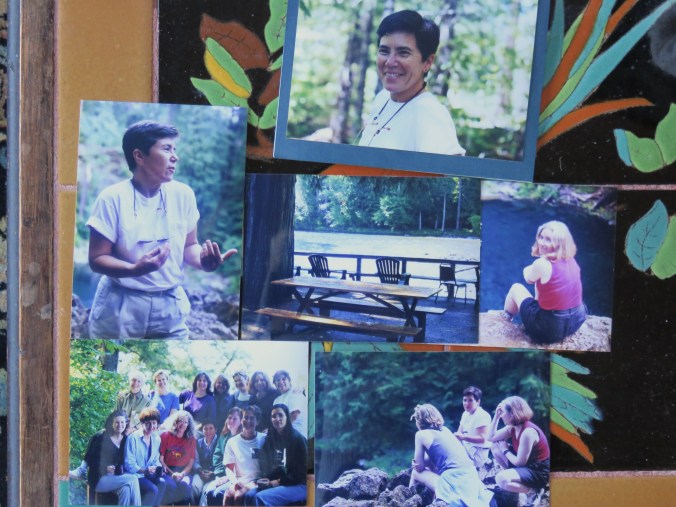
Photos from 1997 at The Flight of the Mind—a poetry class taught by Janice Gould (top and upper left). I put it here because The Flight of the Mind was a writing retreat for women, and it made me a writer, and because I did not understand until I attended the first time how important it was to be a woman and a writer, to hear only women’s voices for a week.

When white people complain about “reverse racism”, it’s generally because they have been badly treated by a person of color.

“I’m not arguing that racism doesn’t exist, it’s more obvious than ever now. My statement is regarding reverse racism, which some people argue doesn’t exist.”—on Facebook

I would agree with those “some people.” Set aside bigotry and bad manners. This theory of “racism” is that it exists only where it benefits one group over another. In America, even if someone is rude to me because I am white (because of my race) I might feel rotten, and the mean person might feel triumphant, but that mean behavior gains them absolutely no material advantage. On the other hand, the only time I have been followed by security at Nordstrom was when I took in a tote big enough to hold a car with merchandise to return. It doesn’t work that way for people of color in the US. Send a black child into Nordstrom on any errand and they are likely to be tailed.

White people make more money, white men make more than that, attractive white men fare best of all. But just because a guy is white, male, and good looking doesn’t mean everyone is nice to him.

There are enough mean people in the world, people who are not normally mean but are having a bad day and people who are easily triggered that we experience unpleasant interactions now and again. The white woman I know had such an experience and claimed she was the victim of reverse racism.

I understand. And I was hoping to explain another perspective, another point of view, and the reason some say “reverse racism” does not exist, can not exist. Racism might merely be prejudice. I say mere, not because prejudice or rude behavior is a small thing, but because racism is a powerful thing—beyond bias or preference and unreasonable dislike, racism is the power to cause damage.

Racism, then, is the advantaging of one group at the expense of another.

The term “racist” applies specifically to those who do benefit under the system that promotes and supports it. That’s true for white people in the U.S. today. Doing absolutely nothing to earn or maintain their privilege, white people have advantage in our society. This is not to say that a white person has no problems. Any American may suffer from poverty or other disadvantage, but on top of that, a person of color (most colors in the U.S.) also suffers from their race, a disadvantage that, unlike education or language or even sexual orientation, cannot be escaped or denied.

Is it possible for a person of color to arbitrarily and unfairly dislike a white person? Sure. It’s unkind and wrong and bigoted. However, by definition, this still isn’t “racism” because that person of color does not benefit from their bigotry. He or she already suffers in a racist system and has no personal power to overcome it. The term “reverse racism” is thus itself considered racist, representing only a white perspective. It perpetuates an us vs. them mindset, which I don’t think most of us want.

The very word is loaded. Using the term “racist” is so loaded with anger and resentment on all sides it is difficult to talk about. But here I am trying.

Winter Term, 1971, I was singing “Amazing Grace” just after 7am while waiting for the beginning of my second Drawing course. I was just eighteen and the vast studio space made my voice sound better than it was. Two black women walked through the room, complaining loud enough for me to hear about white people taking their songs. It was unjust since the author, a white Scot, belonged as much to me as them, but I stopped singing. I knew that. But I also heard them. I heard.

They did not say that to hurt me, and it was not reverse racism. They were protecting their own narrow space in the world.

When white people complain about reverse racism, it’s generally because they have been badly treated by a person of color who calls out their race as the reason, or who merely notes their race in passing.

When a person of color talks about racism it’s generally because our entire social structure is biased against them.

Peggy McIntosh first explained to me what “white privilege” means in her 1990 essay. (If you don’t know the essay, click the link to the pdf. It’s pretty mind-blowing.)

I don’t do anything to earn or maintain my privilege as a white person. It is just there, and too often I take it for granted. As an old woman now I recognize how much else I have taken for granted because English is my first language, because when I was young I was pretty, because I was intelligent and well educated, and because my parents taught me to value information and a solid argument.

Racism only counts when the general culture is there to back it up.

There really is a difference here. Years ago, my son’s orthodontist told me, “Well, you know it’s our sons who suffer from all this talk.” A well-respected professional in those days, he went on to complain about his son not getting into dental school, how that was all the fault of “reverse discrimination” and completely unfair. I politely disagreed until, as I was walking out of his office I sent my teenaged son ahead and went back to less politely disagree.

[Our fair-haired sons had plenty of advantages and were perfectly capable of finding their way without whining about a tiny boost given to other kids. I already knew that one likely reason his son did not get into dental school was a drug conviction. What I did not know until much later was that this “orthodontist” was unqualified for his position, and would eventually be forced out of his practice for incompetence.]

We all hit bumps in our road through life. In high school I heartily resented the after-school jobs of friends who pushed papers and swept floors of their fathers’ offices for double the pay I received working at Taco Bell. I worked minimum in college too while my brother gained a workstudy job at the University that also paid double what I earned in the music department of the University Book Store. He was the second child in college, and even though our parents didn’t contribute a dime toward either of our educations, he was judged the more needy. And then again, maybe it was because he was a boy.

So I say this now, all these years later, though I never did at the time, and the upshot is that I would not have wanted my brother’s job. I learned a lot about music selling records. A graduate student played “Syrinx” by Debussy just for me before going off to study with Rampal. That happened because I asked what was in his case, because I begged to see his flute, because I begged him to play. Because he chose one of my favorite pieces, standing there on the other side of the counter in the music department of the University Book Store.

Over the years, I overcame bad teeth, poverty, social awkwardness, and gender. On top of all that, I did not experience racism. It was purely my luck. I did nothing to earn it. I was a member of the dominant race in my country. When people described me, they did not bother to say I was a white girl. That was taken for granted.

Only those two painters commented on my race. It had never happened to me before. All these years later I have wondered if one of those women remembers me from that day. Many years later she became a friend when we both attended a writing workshop together. I have sometimes thought of asking if she remembers. But no. It is enough to know her for herself.

A little humility. Gratitude. Acceptance. It is enough.


DESIRE & PANIC

2260552.jpg

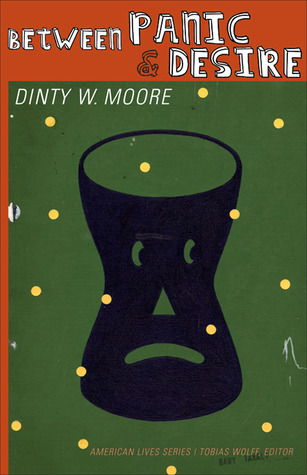
The author had my attention from the hilarious introduction to his memoir, Between Panic and Desire. I recognize the world he describes. Unlike his parents, my father never left; it was my grandparents who all divorced, some remarrying, some not. But while he was not yet 6 years old during the Bay of Pigs, I was already 8. I remember. My parents were fierce supporters of JFK, and Boeing Field was just down the road. However, living on the West coast, in the suburbs of Seattle, my life was never at risk during those tense days. The bombs could not reach so far. The eventual fallout, WW3, escalating tensions? I recognized those risks even as a child.

Fifty years ago, shortly before midnight on 16 April 1961, a group of some 1,500 Cuban exiles trained and financed by the CIA launched an ill-fated invasion of Cuba from the sea in the Bay of Pigs.—BBC

Dinty W. Moore recalls the period of our shared youth and I recall all the events he does—the international crises and threats, Squeaky Fromme, the assassinations, the same presidents, the same falling Towers. All the events that haunt his childhood memories. He yearns for his absent father, and goes looking everywhere for a replacement.

Moore was about 12 when Fromme joined the Manson “family”; I was not quite 15. I had to look that up because I never found her the least bit interesting. I remember Martin Luther King Jr.’s death as vividly as JFK’s. The balcony. The black horse, my mother explained, was “spirited because our president was spirited.” I never considered any of the presidents to be father figures, and I got over southern accents with LBJ. Happily, I met the person I would marry (whom I also mistakenly assumed on first sight was otherwise connected) at the age of 16, so I was spared Dinty Moore’s years of lonely drug abuse. My husband was not a user. However, Dinty Moore and I did not experience the 60s in the same way. My memory has a great deal more music and fewer cars. Many of my friends died. Peace marches. Feminism. Later, the AIDs epidemic. Identification as a visual artist. A long period of yearning for a country life. Moore had other concerns. I still do not consider that our failure to develop a strategic response to terrorism might have been a serious oversight. I wanted then to address the cause: ongoing imperialism. The corroding root.

When Dinty W. Moore lost his father, I was worrying about the world population explosion. By junior high school, my best friend was African American. Perhaps this is because I lived on the other side of the continent. I still do. I met the Dinty Moore in 2002, while attending a novel writing workshop with Bret Lott in Milledgeville, Georgia. He and Bret sat on a wide porch smoking cigars in the dark. (Perhaps only Brett smoked—I could be wrong about that.) Dinty will not remember me. I was the one typing on my laptop about twenty feet away, the Mac logo glowing.

While I was in Georgia that week, my mother drove the few blocks to her local Post Office and found she could not get out of the car. She drove home, crawled into her house, and called for help. My husband called me in Georgia on a landline and had to leave a message. I borrowed a phone to call him back. I wanted to fly home immediately, but this was the start of Memorial Day weekend and there were no flights available. The workshop organizers made no effort to help. Still, I got home on Monday, in time to sit in the waiting room while Mom had back surgery. Her surgeon promised immediate improvement. There was none.

This did not go well, I realize now, because she’d already been taking Fosamax for years and that bone-building medication actually interferes with the healing of bone. There was research suggesting that even then, but no one considered it for my mother. She was eventually placed on a deadly combination of opioids and benzodiazepines, failed to drink enough water, and was mostly housebound or hospitalized for the remaining five years of her life. Many, many trips to the ER. Broken bones. Slow healing. Pain. There is probably a way to make this a funny story, but I do not have the gift Moore does.

I have quit teaching, but the third essay in this collection, “Double Vision”, has a masterful structure, and I immediately and inevitably considered how I would use it as a model for student essays. There is no self-pity but considerable humor concerning his diplopia. He nails the short form. Well, what would I expect?

The award-winning memoir is elegant in structure and voice. These are very funny stories, a masterful and unique memoir of absent fathers, drug abuse, and eventual insight. Now I shall have to find a copy of The Accidental Buddhist.

LETTING GO

IMG_3931

In preparation for the move to a brand new campus in the next couple of years, the Library has been downsizing. Books that had not been actually checked out recently were disposed of, some were pulped. (Yes, I find this distressing.)

The other day a relative posted a meme with hideous and clearly inaccurate images and information. Further investigation revealed the creator of the meme was a Danish neo-Nazi spouting appalling anti-Semitic and anti-immigrant and other hate messages. I can’t help wondering if his profile is a fake Russian bot spreading discord and disinformation. As a good researcher, I am distressed to witness such careless disregard for truth.

On Tuesday morning, while I was administering a final exam, two women burst through the door to set up for their own presentation. When most of my students had left, believing I was overstaying on their room reservation, I invited them in. They bustled about the room, chatting while they set out snacks and handouts. I had allowed students to work long in order to finish, but eventually I asked the women what time they expected their people to arrive. It came out that they were two hours ahead of their time, that their presentation was scheduled for the afternoon. I asked them to note that students were testing and they stopped calling to one another across the large room. A very polite student confided he had made the decision to drop my class the next term. Teenagers often decide to coast their last term. I understand this.

I should let all this go, I know I should. There have been a great many disconcerting things. This day was it. The tiny proverbial straws that broke the camel.

As a result, though these are not legitimate reasons, not reasons at all, not the real ones, I made two key decisions despite how much I love reading what people are up to on Facebook, and even despite my genuine affection for my current students.

Last week, I went off Facebook, at least for a while.

Yesterday, I quit my job teaching.

The English Department Chair immediately accepted my decision. I told the Pacifica Project Director I would not be creating the program this year, participating in rehearsals, or scoring the presentations themselves—that nearly brought tears. (Mike and I have a long shared history of commitment to public service.) I told the person in charge of the bulletin to take Open Library off the schedule “for now” as I was asked to do, and informed the Library Aide the same thing. I touched base with a couple of people to let them know I was leaving. I returned my key to the college.

Breaking my contract means no more than a dozen students might need to rearrange their Spring Term school schedules (only 8 showed for the scheduled WR122 meeting that afternoon). I have made a problem and I am sorry for letting them down. After speaking directly to students who expected me to teach next term, I also sent an email to everyone in the class just ending, CCing a copy to admin. As I always do, I offered to provide editing and references later and to share with them the materials I would have taught them in that class. I am honored when they take me up on it.

Perhaps the school will find someone else to teach these classes. It is time for me to step away.

It is done.

Once my late student hands in a final essay, I may enter grades for Winter term. I will be able to do that after next week.

I love teaching. Everyone must know I do.

Way back to the beginning of the Pacifica Projects, a service-learning project required of all seniors, we hoped to challenge students in a grand manner. Among our prime goals was to allow students to put the full range of their skills learned throughout their education to use. Other aspects of the program include a public presentation and a persuasive essay. The goal of the paper was to allow them to achieve excellence, to demand excellence, and to support them in getting to that level. Students are almost never required to produce excellence. Some do, of course, but that is on them. We almost never demand it of them and support them through a lengthy process to that achievement. The Senior Research Paper was intended to be like that—a completed work so strong that students were impressed with themselves for having made something excellent. Not genuine perfection, perhaps, but something close enough to that ideal from a teenager, a work standing in witness to their persistence and power.

That was always my goal, to drive and challenge students, to reveal to them their own strength.

Well, now I am pretty much ranting. I am not angry or even particularly upset. Tired. Fighting the tail-end of a cold. More than a little sad. Glad to have decided. Wishing they had tried earnestly, if fruitlessly, to talk me out of my decision to leave (they didn’t and never have) or shook my hand or something. I am resigned that, at least, they may let me go without much fuss. A concern seemed to be that I might tell students something unpleasant about my decision. Even if I had something unkind to say (I don’t), how would that serve anyone?

I know I have served my students well in the past, and believe I might have gone on teaching for years, as I planned. I am sorry to stop. Sorry to miss future students. Most often I am appreciated, eventually, and I continue to treasure the relationships I have built with students over the years.

So why leave? I might come up with a list, but these would all be trivial complaints. I recognize this. No one really wants that list, least of all me. None of what really matters is lost, but lately I have sometimes felt more concerned about the trivial than teaching, and that is not right.

I will move on and do something different, something productive and not because I am broken.

This camel might write a book.


TWO MOVIES

wind-river-md-web

Friends tend to express surprise that we still receive DVDs from Netflix. Perhaps “surprise” is not the word I mean. Shocked? Dismayed?

Nevertheless (a favorite word), we enjoy movies, the local theater is chilly and has sticky floors, and some films never get here. And then we find them on DVD, sometimes long after they were released. Wonderful, surprising, important films no one we know is talking about. They are not nominated for Oscars, their stars were not the thing that year, and yet, these are the ones we loved, these odd films we find entirely outside the general rush.

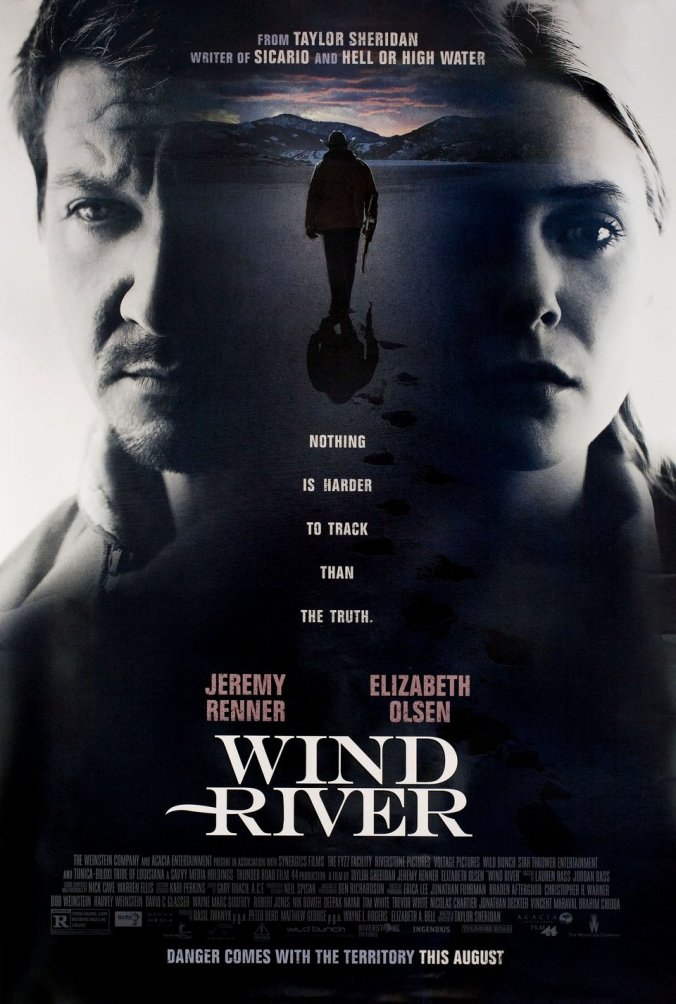
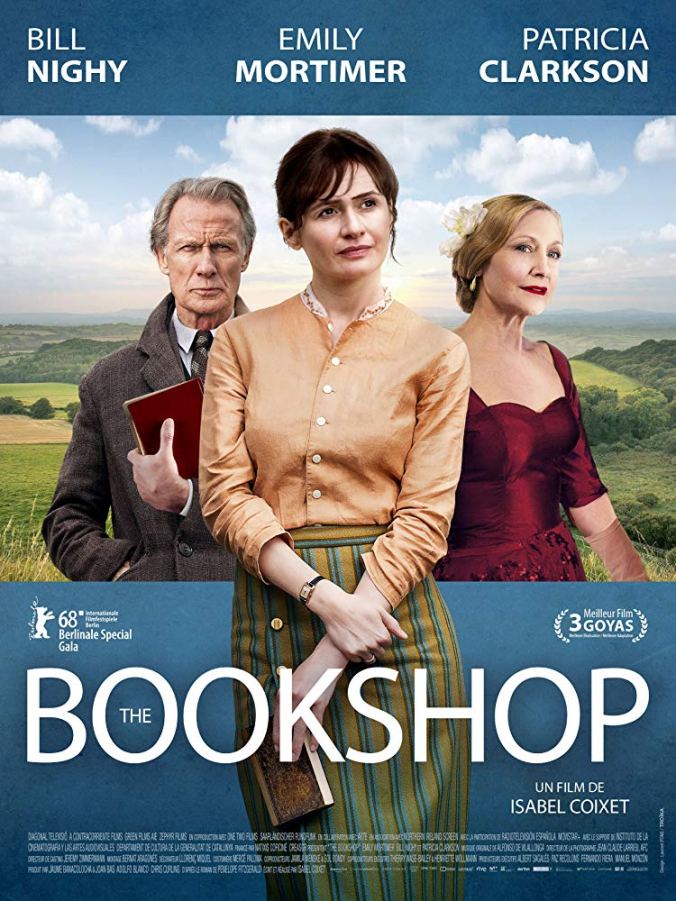
Last year we found Wind River (2017). Last night it was The Bookshop (also 2017).

Wind River is not an easy film to watch but it’s beautiful. I might wish this were not another film starring a white person but really about people of color. Even so, there is respect. There is a great story here. There is genuine honor.

During a winter season in Wind River Indian Reservation in Wyoming, expert tracker and U.S. Fish and Wildlife Service agent Cory Lambert discovers the frozen body of 18-year-old Natalie Hanson who was barefoot, without proper winter attire, miles from any building, and had a blood-stained groin. FBI special agent Jane Banner arrives to investigate a possible homicide. The next day, Jane learns from Natalie’s father, Martin, that his daughter was dating a new boyfriend, but he does not know the man’s name or whereabouts. The autopsy shows blunt trauma and sexual violence and confirms Cory’s deduction that the girl died from exposure, specifically pulmonary hemorrhage caused by rapid inhalation of sub-zero air.  …statistics are kept for every group of missing people except native American women. Nobody knows how many are missing.—IMDB, rated R

The Bookshop is a sweeter, sadder film. Have patience for this one. I got a kiss from my husband for this movie filmed in Northern Ireland (outside) and Catalonia (inside).

England, 1959. Free-spirited widow Florence Green (Emily Mortimer) risks everything to open a bookshop in a conservative East Anglian coastal town. While bringing about a surprising cultural awakening through works by Ray Bradbury and Vladimir Nabokov, she earns the polite but ruthless opposition of a local grand dame (Patricia Clarkson) and the support and affection of a reclusive book loving widower (Bill Nighy). As Florence’s obstacles amass and bear suspicious signs of a local power struggle, she is forced to ask: is there a place for a bookshop in a town that may not want one? Based on Penelope Fitzgerald’s acclaimed novel and directed by Isabel Coixet (Learning to Drive), The Bookshop is an elegant yet incisive rendering of personal resolve, tested in the battle for the soul of a community.—IMDB, rated PG

MV5BZmQwZTUwNWItZWQxOC00NWViLWI2OTktNTY5MDY3NjkyMzNiXkEyXkFqcGdeQXVyMTYzMDM0NTU@._V1_SY1000_SX750_AL_


“Weak as women’s magic”

IMG_3903

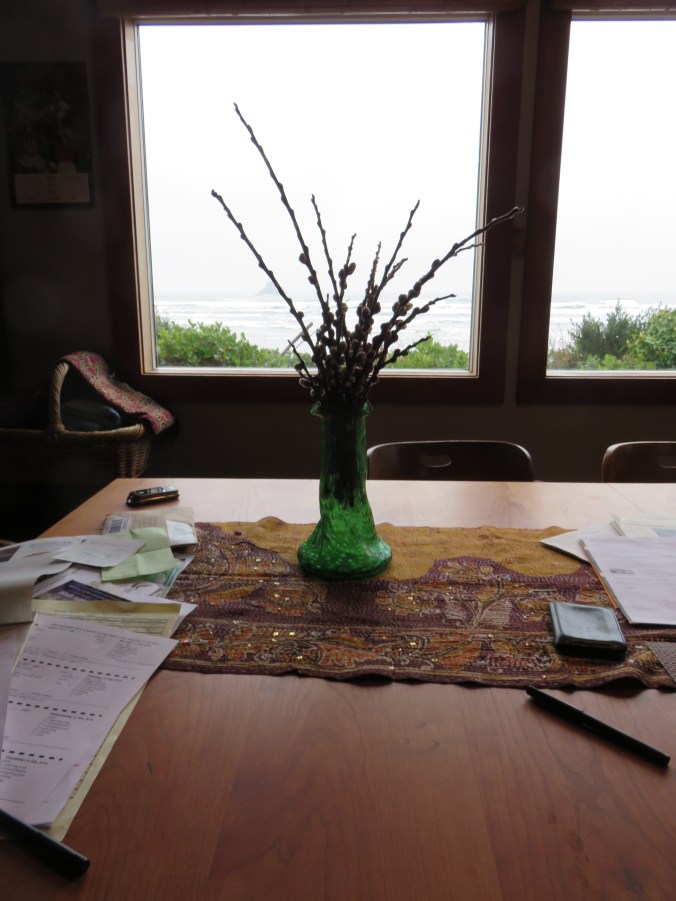
The spring after my mother’s death, I remained deep in grief and P.C. asked me if I had anything I did with or for my mother that I might do to continue that sense of connection. Her suggestion was wise. I began picking pussywillows for my mother when I was no more than 6. I still do.

I am a feminist deep down into my gut. I inherited my respect for women from both of my parents and from self-respect, and from my own experience that men and woman are more alike than different and equally deserving of respect as human beings.

When I began seriously reading fantasy and science fiction as a teenager and in college, I specifically looked for novels where gender was no longer the most critical fact about characters. This was the late 60s and early 70s, Ms magazine was new of the shelves and I read The Feminine Mystique. My father, a research librarian, complained about women who changed their professional name, scattering their scientific work all over the shelves.

Science fiction and fantasy offered the possibility of riveting stories involving characters interacting in a post-sexist universe. I was there for space travel or fairy princesses. I wanted a future I could live with.  I found novels with powerful men and women, with weak men and women. I found novels with characters.

When I read the line above in Ursula K. Le Guin’s A Wizard of Earthsea, I put the book down on my lap and thought for a long time about whether I wanted to keep reading. I did. Le Guin got so many things right, I figured she was allowed to have a character speaking from his culture. And she more than repaid my patience in her later work. Further, I admired her ability to change her mind—such a rare thing—and to discuss a change of her view publicly rather than trying to cover it up.

I cannot say the same for other books. I have read or reread a great many children’s and young adult classics as well as the new hits. I worked with teenagers for a long time and wanted to know what my students were reading. I had never read A Tree Grows in Brooklyn as a girl, and I was shocked at what I found there.

From A Tree Grows in Brooklyn:

“Remember Joanna. Remember Joanna. Francie could never forget her. From that time on, remembering the stoning women, she hated women. She feared them for their devious ways, she mistrusted their instincts. She began to hate them for this disloyalty and their cruelty to each other. Of all the stone-throwers, not one had dared to speak a word for the girl for fear that she would be tarred with Joanna’s brush. The passing man had been the only one who spoke with kindness in his voice.”

“Most women had the one thing in common: they had great pain when they gave birth to their children. This should make a bond that held them all together; it should make them love and protect each other against the man-world. But it was not so. It seemed like their great birth pains shrank their hearts and their souls. They stuck together for only one thing: to trample on some other woman … whether it was by throwing stones or by mean gossip. It was the only kind of loyalty they seemed to have.”

“Men were different. They might hate each other but they stuck together against the world and against any woman who would ensnare one of them.”

At one point Francie and her mother discover that they can bond only over their mutual distrust of women.  I found a drunken father beloved by her daughter, and a mother who scrubbed floors on her knees and was blamed. I never felt that was fully redeemed, though she later says she will make an exception for her mother. I still find the lines quoted above misogynistic. There is the child molester, there is undeniable antisemitism. I could not understand how an Irish woman could write a book so hostile toward Catholics (she prefers the protestant Bible?) and the Irish until I researched the author. A Tree Grows in Brooklyn was written by a German-American Protestant about Irish American Catholics and is heavily invested in the prejudices and bigotry of the period.

Yes, other authors are racist. The Jungle Book comes immediately to mind, but most stories in that book are not about race or even people. I had to ignore the racism in Normal McLean’s A River Runs Through It. I grieved for McLean’s remorse. I often find I must overlook bigotry of various kinds, even in books I love. Even when I was young, I noticed that while most of the human heroes in the Oz books were girls, nearly all the non-human ones were male. (The glass cat and Patchwork girl were notable exceptions.)

Lately many children’s books and YA books of the past have come under scrutiny. The Little House series, and Anne of Green Gables. I didn’t read them as a child, but sexism and racism and other forms of bigotry were common in the novels I read as a child. Today, handing books to my grandchildren, I must be more cautious. I have made mistakes and regret them deeply.

I wonder now how I would have handled the bigotry that is so clear to me had I read A Tree Grows in Brooklyn as a child? Would I have noticed and objected or would I have accepted her judgement? I like to think I would have objected. Even though, I was as susceptible as any child to such effectively written messages about the evils and necessary inferiority of myself as a girl. I like to think I would have judged Francie was a fool to side continually with her drunken father against her mother. I like to think I would have objected t that word “ensnare”, that I would been offended at the depiction of racial and religious minorities had I read the book when I was nine yers old.

I would like to think that.

CHOOSING BOOKS

IMG_2574

Yes, you can have too many books. People who believe this is impossible? Well, that’s fine for them. I have thousands of books in my house. My husband has a thousand more of his own. I only read about seventy books a year, plus newspapers online, stories and poetry in journals and, again, online.

Sometimes I read a book I do not like. If it does not “spark joy” I do not have to keep it. I don’t have to keep it if it is one of seven copies of the same title or if I liked it somewhat but will never read it again or if I read the first chapters and felt no desire to continue reading or if have have not and never will read it for the first time.

Even so, I have thousands of books. I have more books than my 17 bookcases can hold.

How do I choose what to read?

COVER. I picked up Gregory Maquire’s Wicked and David Mitchell’s Black Swan Green, both while still in hardcover, for their covers. They remain among my all-time favorite reads. I taught Black Swan Green for years. My students loved it too. There are plenty of books I have ordered online for their covers and found myself irritated because the insides did not match the promise of the outsides.

FIRST PAGE. In my hands, I read a bit. Black Swan Green had me laughing halfway down the first page. This is the safest way to choose, in my experience. I have rarely been disappointed after enjoying a five minute introductory read.

AUTHUR. Some you know you are safe. You know you will love the book because you loved the last one and the one before.

DISTRACTION. I began reading science fiction just to appease my father. Foundation is sexist and homophobic, but still . . . all through college I read SF. I chose books written by women or with a woman on the cover, so long as she was not being carried a la Conan. The Women of Wonder story collections edited by Pamela Sargent introduced me to more authors. I read SF to find a world in which my gender was not all that mattered about me.

ASSIGNMENT. I detested Mrs. Stevens Hears the Mermaid Singing required for a class by a wonderful instructor, but after considerable struggle, I was able to respectfully and usefully identify what bothered me in May Sarton’s novel. Sometimes people hand me exactly the right book at exactly the right moment. Things Fall Apart was probably the best book I was assigned as an undergrad. Though I never warmed to the recommended stories of Flannery O’Connor in my masters program, I assign “A Good Man Is Hard to Find” and both versions of Carver’s “Beginners” and “What We Talk About When We Talk About Love” and allow my students to judge for themselves.

RECOMMENDATION. I loved Middlemarch recommended by a former student and I’ve read it twice. Toni Morrison came to me as a friend’s recommendation. I have read and reread Patrick O’Brian’s 20-volume series. Currently I am in the middle of the seventh book. It is as good or better this time around. Aubrey and Maturan deserve a full shelf all to themselves and they have one.

CHANCE. I don’t remember how I found some of the books on my shelves, the ones that stay. I saw Dorianne Laux’s chapbook What We Carry at Powell’s turned out on the shelf and bought it after reading the title poem. I picked up Black Swan Green and Wicked for their covers.

RE-VISION. I change my mind. The first time I read Maxine Hong Kingston’s Woman Warrior I gave up less than halfway through. Four years later, I picked up a different edition and loved it. It was not until I arrived at the exact page where I had previously abandoned the book that I remembered how disappointing I’d found it the first time and somehow it became brilliant in th years since. I read but failed to be particularly impressed the first time I read Alice Munro’s “Meneseteung” in Best American Short Stories. A few years later, in a class exercise involving reading short stories, a student picked it out as her favorite. It won over the entire class and more than a decade later I wrote my critical essay for my MFA on that story.

The ones that fail to stay?

  • Did I enjoy reading this book?
  • Did it teach me something?
  • Do I remember the story?
  • Will I reread it?
  • Do I know someone else who will enjoy it?

It’s always about choosing.

EDITING & BREAD

IMG_3900

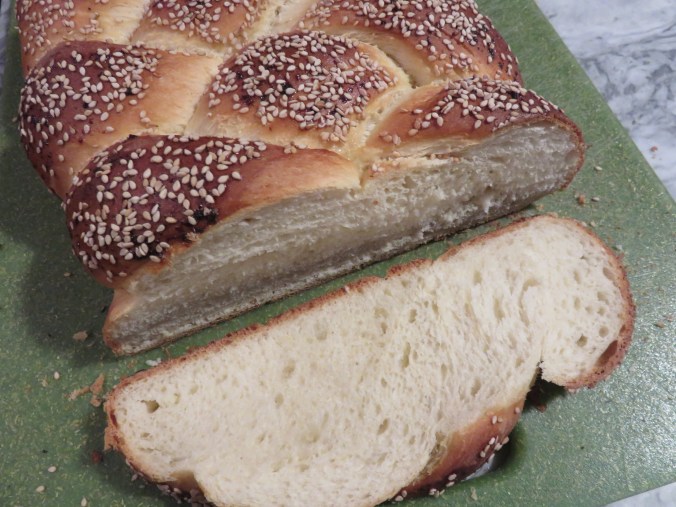
This first challah is light and tender, soft, finer grained than this photo shows. I used some bread flour (“strong flour”) and no whole wheat, but I think I miss the wheat flavor.

I suppose this means I should complete my editing before posting.

On 8 February 2019, I found I had 100 followers. That makes my day. Seriously. This is true especially because I wrote about common-sense self care as part of countering depression. Every time I have tried to post anywhere about depression, I’ve been attacked. People who were friends and generally seemed to like me, went off on my comments have apologized for using language in response to my post. “You don’t know anything about depression . . .”

The thing is, I do know about depression. I am not as self-assured as some people seem to assume. I know depression. I won’t describe details here, but I have been depressed and I have a strong thread of serious depression and anxiety disorders in my family. Maybe I cover it better than most? Maybe I was told I should smile about a thousand times when I was six and I acted on that suggestion.

In any event, I am not writing a memoir, but a blog. I am not telling the story of my childhood here today. I write about myself too often as it is.

Most often I write as often in direct response to something in the news as to anything happening in my life. Friday I played Scrabble with a friend and in the afternoon I had challah rising. I used to make a huge braided loaf each week, but it’s been decades since I did that. Most of my life has passed with only occasional loaves cooling on the counter.

Baking bread each week was one of the things I swore to do now that I am mostly retired. And challah—in a dead tie with brioche for best bread in the world. (For now we can set aside cinnamon buns and panettoni, which are sweet breads rather than bread loaves.)

So the bread was in its first rise. I’d have taken a nap if it hadn’t needed to be punched down and shaped in about 10 minutes. I recall three rises (or proofing a sponge and then proofing twice, which is the same thing) before shaping, but fingers crossed. That first attempt on Friday would have only two rises, one in the bowl and the second as a braided loaf. Most of the kneading was done with a dough hook by my electric mixer.

I first learned to make bread from my mother who had a recipe for four loaves, lost now. [There was a typo here. I noticed it and fixed it five minutes after I posted. sigh] Though she never enjoyed cooking or baking, her loaves were marvelous. In college, I made whole wheat bread in a very large crockery bowl, stirring by hand with a wooden spoon (I broke a spoon one time) until I turned it out onto a board to knead. I quite liked kneading; it reminded me of wedging clay and as a Ceramic Arts major I had a lot of experience wedging clay.

My first job in Oregon was in the old Cannon Beach Bakery, which baked the “Haystack Loaf” in a brick oven, one of the last remaining fired brick ovens in the state and gone now. Harrison’s Bakery in Seaside, with its marvelous “Beach Bread” is gone too.

My old recipe for challah is also long gone. There were 7 cups of flour and 6-8 eggs and butter and honey and cardamom, as best I can recall. It made an enormous loaf, almost too big for my tiny apartment oven. I wish I had my old recipe, the one I used in college 45 years ago. I thought it came from the Tassajara Bread Book, the source of my ordinary whole wheat recipe, but I’ve looked and there is no recipe for challah. Challah is not supposed to have lemon peel, but I recall I put it in anyway and I will today too. None of the recipes I found online were quite right in other ways—not enough eggs, sugar instead of or in addition to honey, and oil rather than butter—so I used my best guess, and when I make bread again today, I will make any necessary adjustments. I used oil the first time.

“Like thousands of cooks of my generation, I have in my kitchen an ancient volume of The Tassajara Bread Book, its cover gritty with flour, its spine cracked from use, its pages stained with molasses, and dog-eared with decades of perusal. It is the book that taught me how to make bread and its simple wisdom has been present in every loaf I have baked. I will recommend it with enthusiasm to a new generation of cooks.” —Steve Raichlen, author of The Barbeque Bible

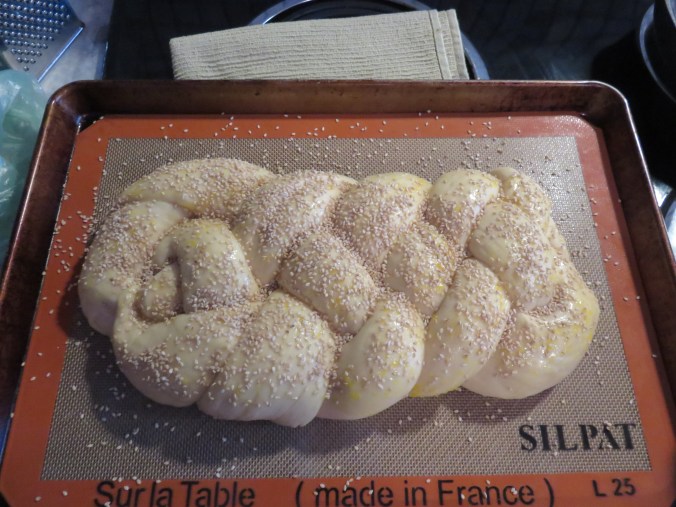
That’s the book. Sometimes, back in college, I made a loaf in two layers, a three-strand on top of a six, but I generally made a 4-strand braid, and that is what I did on Friday. It had a rest and second rise while I was writing this. When I took a break from writing, I preheated the oven, mixed an egg yolk and honey wash, brushed it, scattered sesame seeds, and baked for however long it took. Recipes I found recommended temperatures from 325° to 425° and times from 20 minutes to the better part of an hour. I aimed for someplace in the middle, and 25 minutes in a 350° oven seems to have done the trick. Maybe I was writing in between baking bread and not the other way around?

IMG_3895

The first rise was in a bowl, the loaf shaped and allowed to rise again. Here is my 4-strand braided loaf ready for baking.

I have a couple of dozen blog posts drafts saved that I will never finish. I begin posts and never go back to them. But after I’ve posted, I do always go back. I correct typos, add a link or another photo. Sometimes I correct information or even add an entirely new paragraph. With so many people reading (I hope), it’s about time I corrected typos before posting, don’t you think?

There is a second baking scheduled today after our walk, and I want to celebrate. Over a hundred people have chosen to receive my posts. That is worth celebrating. It also reminds me of that bad habit I need to change. I write fast and post, and almost immediately people receive my blog post as an email. I am grateful when they “like” my post because that gives me a sense of the success of what I have written.

Finding those “likes” on my posts is something like my husband asking for a third and fourth slice of bread, fresh out of the oven. Except I get to see him smile.

SANDRA CISNEROS

la-1549308487-nxhqz5iowg-snap-image.jpg

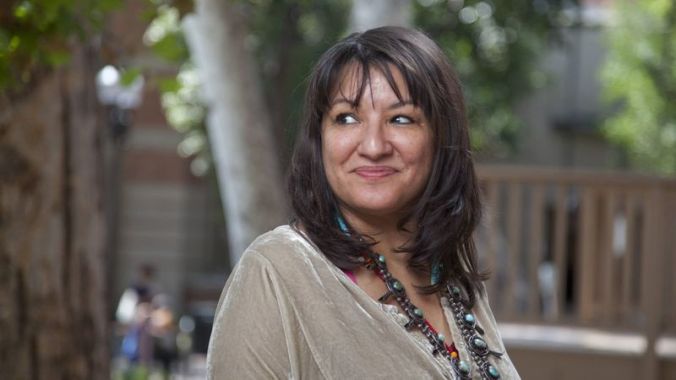
“Sandra Cisneros, the Mexican American novelist whose books “The House on Mango Street” and “Woman Hollering Creek” are widely considered contemporary classics of American literature, has won the PEN/Nabokov Award for Achievement in International Literature.

“Cisneros is the third author to win the annual award, after Syrian poet Adonis in 2017 and Irish novelist Edna O’Brien in 2018.”—LA Times

Literary critic Claudia Sadowski-Smith has called Cisneros “perhaps the most famous Chicana writer.” She has long supported other Chicana and Chicano writers, notably using much of her MacArthur Fellowship and other awards to fund programs and has been instrumental in building a strong community in San Antonio among other artists and writers through her work with the Macondo Foundation and the Alfredo Cisneros del Moral Foundation

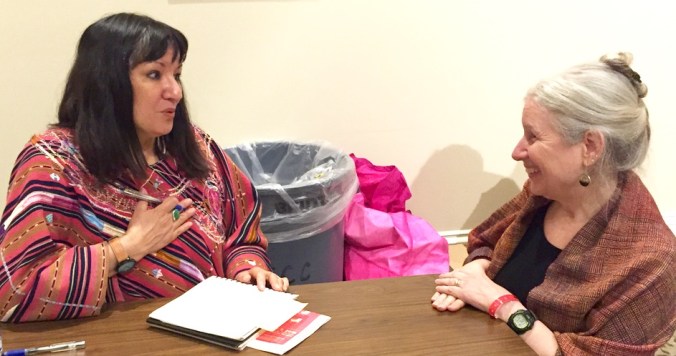
She has long been one of my favorite people. I talked to her when she visited WordStock in Portland. I told her how I taught Mango Street and she urged me to share that approach, which I did. She held my hands. She was marvelous. She is a marvel.

image1.jpg