PERSONAL

IMG_4373

It was probably 1973 and Gary and I were managing the apartment building while we were students at the University of Washington. I was just twenty years old when we had dinner with the owners of a cat we liked, Slump. Slump’s people were educated and had traveled and in the course of the meal I began talking about an horrifying situation, a news story about abuse of women in an Eastern European country. Gary recalls this and also Tom’s response: “What do you care? You don’t know those women.”

Mitch McConnell does not understand why Jon Stewart is so upset about the failure of Congress to make adequate provisions for First Responders who were exposed to toxic substances while protecting and rescuing people, and later bodies, from the Two Towers after 911. He didn’t get why Stewart was “all bent out of shape” about caring for these sick and dying men and women. (You might recall that First Responders were assured they were in no danger from toxins, which was later revealed to be a lie from the Bush administration.)

“I want to make it clear that this has never been dealt with compassionately by Senator McConnell,” the former Daily Show host said. “He has always held out until the very last minute and only then, under intense lobbying and public shaming has he even deigned to move on it.”

Why, McConnell wonders, does Stewart care so much?

Why should anyone care about anything that does not directly impact them?

I would like to think most Americans would be as confused (if not downright horrified) as Stewart feels. Compassion is not dealt out evenly, but a complete lack of it is puzzling to me. We are seeing it a lot lately, these men and women who have so recently entered politics, this current regime devoted only to power and position.

But still. As you do unto the least of these . . . why is that so mystifying?

Abortion is not a dirty word and Planned Parenthood isn’t a McDonald’s and the GOP can go F**K itself

From my favorite opinionated “Margaret and Helen”: via Abortion is not a dirty word and Planned Parenthood isn’t a McDonald’s and the GOP can go F**K itself

SANDRA CISNEROS

la-1549308487-nxhqz5iowg-snap-image.jpg

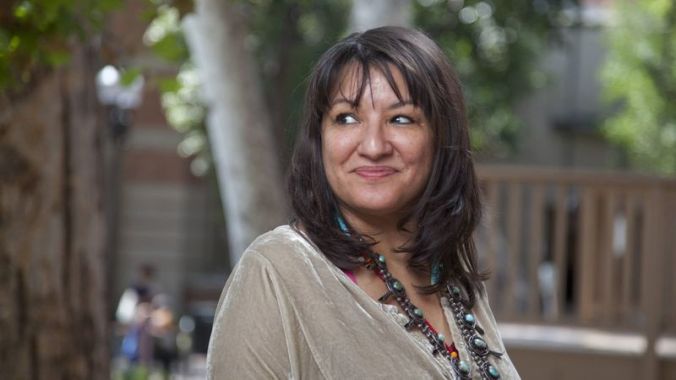
“Sandra Cisneros, the Mexican American novelist whose books “The House on Mango Street” and “Woman Hollering Creek” are widely considered contemporary classics of American literature, has won the PEN/Nabokov Award for Achievement in International Literature.

“Cisneros is the third author to win the annual award, after Syrian poet Adonis in 2017 and Irish novelist Edna O’Brien in 2018.”—LA Times

Literary critic Claudia Sadowski-Smith has called Cisneros “perhaps the most famous Chicana writer.” She has long supported other Chicana and Chicano writers, notably using much of her MacArthur Fellowship and other awards to fund programs and has been instrumental in building a strong community in San Antonio among other artists and writers through her work with the Macondo Foundation and the Alfredo Cisneros del Moral Foundation

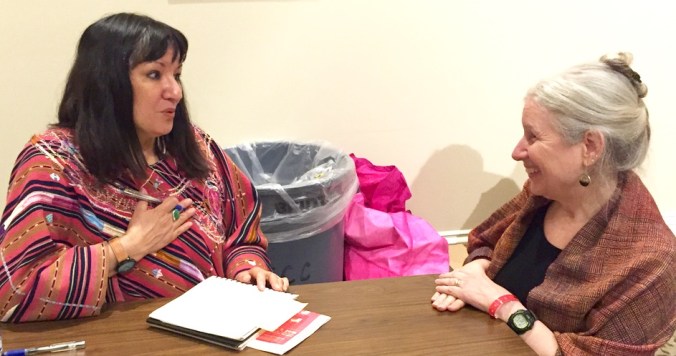
She has long been one of my favorite people. I talked to her when she visited WordStock in Portland. I told her how I taught Mango Street and she urged me to share that approach, which I did. She held my hands. She was marvelous. She is a marvel.

image1.jpg

WILLINGLY FOOLED

img_3787

My son had a cat living in his house who knew that he possessed the Secret of the Red Light.

Alan had an infrared pen which he shined on the floor and that cat chased from room to room, in circles and mad dashes across the house. Once she he ran the light under the door of of one his housemates’ rooms and she waited faithfully for hours for the light to come back out.

He laughed and insisted she knew he was the one who has the light. She would come to him and meow and meow until he played with her. The ultimate suspension of disbelief.

I told him this is why some of our dogs, the smarter ones, were not good lure coursers.* They had speed and agility and endurance. Certainly they were enthusiastic. Speed, Agility, Endurance, and Enthusiasm were four of the five scoring categories. But the fifth scoring category was Follow. They watched, they responded to each twist and turn of the lure on the ground. They chased the lure enthusiastically, but eventually—often too soon—some part of them simply refused to play along.

“Wait a minute, enough already! That thing is only a shredded plastic garbage bag dragged by a line. Go over there where the line is—it’s bound to get there eventually.”

They began cutting, shaving off corners, in order to get to where the lure was going rather than following behind. They understood the game they were playing, that the lure was not moving freely, but along a predetermined path. They knew it was not alive. They did not pretend it had a choice of where to run, but they did. They couldn’t, or chose not to, suspend disbelief to play this game for us. They wanted to win, I suppose. The hunt was more vital than simply the chase. They wanted success at the end.

Where is the sweet spot between being right, being first, being a winner, and being entertained?

It seems such a human thing in some ways, or perhaps it is very animal and at least some of the hounds who were fooled and continue to be fooled know they are playing and are as willing to play as are we throughout so much, perhaps too much, of our lives.


*The American Sighthound Field Association developed from a Borzoi and Saluki fancier, Lyle Gillette’s determination to find a year-round activity that allowed sighthounds to practice their skills. Lyle was a sweet man, very active and successful in showing his dogs. He had hunted wild hares in Open Field Coursing but that is a seasonal activity, and the dogs love it. Lure coursing was mostly his invention while he was still living in California.

In the late 70s, my husband and I were active in establishing ASFA (later AKC) field trials for sighthounds in the Pacific NW. For years we traveled all over running our dogs. I was a licensed ASFA judge, but began judging because of my involvement with Heather and Jeff Loube in BC. I traveled with the Loube in 1975, I think, to Denver to the inaugural Grand National. There were over a hundred sighthounds from all over the nation competing. The Loubes came home determined to establish the sport in Canada, which they did with the support of other sighthound owners, some with Open Field experience.

IMG_2870

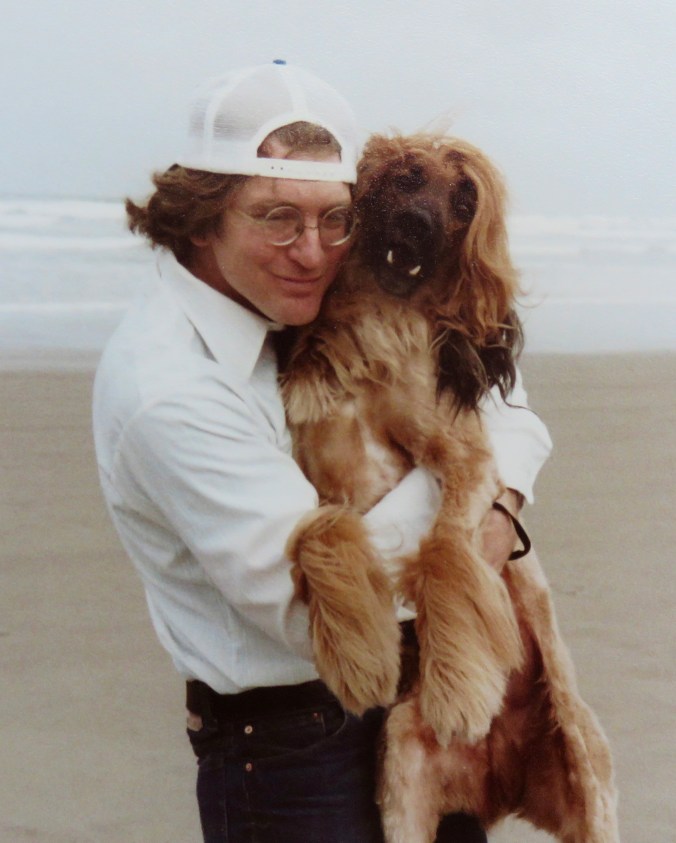
Gary with his dog, Volant O Solitary Man, American and Canadian Field Champion, in the 80s. “Manny” was not fooled, but he loved to run. (He’s in “pony clip” for ease of grooming.)


CHARITY BEGINS

Southern Poverty Law Center tracks hate crimes from racist and the political right and left. They make a difference.

More than forty years ago, our friend Bunny told me that she donated $100 each month to charity. Her food budget was less than half that. I was stunned that she was able to afford this. And then I realized I could too.

As a result, I began donating to organizations I could see working in the world while still in college and self-supporting. I gave monthly to PBS because we watched their programs, and then I gave to the American Civil Liberties Union (ACLU) because I knew what they were doing to fight for legal principles here in the United States. I continue to give clothing and other household discards to Goodwill and local charities. Gary gave them his last car a few years ago. I gave my beloved VW to OPB.

One year my brother gave a farm animal in our names to Heifer International. The next year, I gave goats in the names of family members as Christmas presents. Then I discovered that another organization did the same thing with lower overhead, so I gave bees and farm equipment through OxFam.

Charity Navigator is one watchdog of charities that helps people find where to direct their donations in order that the money will do the good work they hope to see done here or abroad. I read about charitable organizations, Google for news about them. Talk to people and search for pros and cons and other organizations that do similar work. I check their ratings for how they spend the money they receive. There are many worthwhile local charities.

For many years after I began teaching art, I gave to the University of Washington School of Art, in gratitude for scholarships that allowed me to work my way through college without debt. (It helped that I was willing to live in poverty during those years.) I refuse to give to my grad school alma mater because they surveyed me for what I thought about them starting a football team. I responded that it was an enormous waste of money. Like nearly every college and university in America, they will lose money on their football team. They will have to find other donors who are football fans. That is what I tell them when they call. [For a small college that turned away from sports to emphasize academics, read about Paul Quinn College. To understand why football creates issues for others, consider what people will do in order to win. Consider Baylor.]

For nearly all of my adult life, I have given to organizations I learned about through specific worthy projects. Toni used to write letters for Amnesty, and I have supported Amnesty International since 1974 because they oppose torture and other political abuses of power. I give Wikipedia Foundation a donation periodically because I use their site often and because I applaud their work in making information readily available for free. I give to Partners In Health because of Kidder’s book Mountains Beyond Mountains. I give to Southern Poverty Law Center because they track hate crimes, take abusers to court, and offer support to communities through many programs including Teaching Tolerance, a free magazine I used as a teacher.

Sometimes I give to other organizations such as the free nonfiction website Brevity or to projects devised by my students. We gave to the campaign of Hillary Rodham Clinton. Twice.

For most of his working life, my husband worked in grocery stores. I was mostly a public high school teacher. We can afford to live in a beautiful home on the coast because it’s been in my family since 1911. We have never, as my mother would say, “had money” in my family but my mother began donating to animal charities late in life. We still get those mailings, but we choose to give elsewhere.

Throughout our childhoods, our families worried about paying bills. We struggled to pay for food and tuition while self-supporting in college. During the years our children were young, we barely kept our heads above water. And then there was tuition again—our sons’ undergraduate and my graduate studies. I used my inheritance from my mother to pay off our sons’ college debts. (My friends have pretty consistently judged that a mistake, but so far, we are not sorry.) We managed. Our frugal habits and careful planning seem now to have paid off.

We are both retired, but we are not poor, and other than books, his music, and my yarn our tastes tend to be modest. We can afford to pay our bills. We can afford to drink wine on occasion and to stay overnight at mid-priced hotels. We still send money, usually $100 to several of the charities I have mentioned but sometimes more, and in leaner times I have given $20 or less. Just now, we are planning our giving. The Visa bill is paid and despite unexpected home repairs, we will share what we have.

It is a good habit and I am a fortunate person. I can afford to support charities.

Maybe you can too.

NOW AND THEN

IMG_3363

I apologize to people who will see no point in reading this post. There is no point in reading this post.

I have been trying to think of other things, to focus on the good I know is everywhere around, and to remember that I am a fortunate person. I am the oldest in my family and a woman, and the men in my life are almost entirely good people, kind and decent and loving people. I am trying to remember that times have changed.

When I was a freshman in college, a man in the house behind me was molesting his daughter (“Please Daddy, no.”). The police advised me to call the public health nurse in downtown. It was late at night. The police would not come. They said there was nothing they could do. Maybe they did come but could do nothing to the man. It’s hard to remember. They did not accuse me of making up my story for political reasons.

It was 1970. It was probably October, forty-eight years ago. I can only pin down the date that far because I have thought it through so many times over the years. It was while I lived in the View Ridge house before I was laid off from work in the record store at Northgate and caught the flu and moved back home with my parents even before my first college term ended. So I might still have been 17 years old. Or maybe it was right after my October birthday.

In a fit of desperation and fear, one night, listening to that child cry, I ran around the block on the wet sidewalks and confronted the man. I was barefoot. I could describe the house, the front door, how naked my knuckles felt knocking on his door, what the man was wearing when he answered it, the expression on his face when he said, “Who are you?” He looked around behind me to see who else was there. Just me. I was terrified. I felt like a fool. I feared he would follow me home and hurt me. Cowardice. Impotence.

For many years, this terrible mix of self-blame and fear did not connect to carrying keys splayed between my fingers when I walked across campus or to hiding from people who crossed my path in the dark. Or to my own experience on the playground when I was a little girl (I never told) or to an explosive overreaction when a boy trapped me against a counter in my junior year of high school (was that overreaction?), the men who exposed themselves to me, the physical therapist who made lewd suggestions (that was recent), or my embarrassment trying to report a man who chose to masturbate beside me in an otherwise empty college lecture hall when I was 18 (“Well, if you’re scared,” he’d jeered as I ran away).

I was young then. And now I am old. I did not even have words to describe what I experienced then. I still prefer not to think about it now.

Nobel Peace Prize for anti-rape activists Nadia Murad and Denis Mukwege

SO ‘VERY DARK’

The burn ban. The pain did not begin with the cake or fire or police, but it ended with the pain in my feet. I do not believe this was all my fault, but I will worry that it was.

IMG_3197

Maybe the bad day began with the cake. I did everything right. With multiple dietary issues in my family, I was determined to create a chocolate cake that everyone could eat. That meant: no gluten, no dairy, no nuts, no refined sugar. Organic and luscious. Pretty. I found a recipe that was close and made my own modifications to eliminate sugar. I test-drove the recipe and it was perfect that first time! So, the day before my son’s birthday, I baked two layers.

Epic fail.

My Facebook friends suggested trifle, jam, licquer, whipped cream. I contacted family who okayed dairy, but trifle is new to me. Easy, but new.

So I chilled the cake to tackle tomorrow morning.

Before that, I’d woken in the night coughing. Our father’s both smoked. Camels. And they both died of lung cancer, so we are both susceptible to colds and flu. I more than Gary have bronchitis and pneumonia if I am not careful.

I woke in the night coughing from smoke drifting from illegal beach fires. This is not surprising since air quality is poor in many places, much worse elsewhere than here. The West is burning. Friends in Spokane and Seattle and Portland and all across California have posted photographs on Facebook of the terrible smokey air that makes ordinary activity outdoors unwise. Oregon firefighters are overworked fighting regional fires.

We had to close all our windows to keep smoke out of the house. On our walk this morning Roxxy’s mother pulled apart an illegal beach fire that had burned all night, carried sea water up from shore to put out the four smoldering logs. We have had to do that many times. Sandy told me the mayor of Portland had a beach fire which he promptly extinguished when alerted to the ban. There are signs at public access to the beach warning of the burn ban. Locals are supposed to know.

After our walk I baked and my chocolate cakes did not turn out, but I wrapped and chilled them. Tomorrow I will make chocolate frosting or open a jar of homemade jam and do my best to make a pretty cake for my son’s birthday.

The renters next door went out to build a fire on the beach.

Gary walked out to talk to them. He did not want me upset about their fire. He explained about the burn ban, and they said they would check and not burn if there was a ban. It was a polite conversation with Gary. They went ahead and lit their fire. I went out and talked to them and they did not believe me either. I was less polite. They claimed they talked to Cannon Beach police (which Cannon Beach Police deny) and they said they went online and found no burn ban, but people believe what they want to believe, and not what would otherwise be reasonable.

It is inconvenient. Inconvenient laws often require a lot of convincing.

I did not have the email address of my neighbor who owns the property because I have updated my computer and lost my address book. It did not occur to me to phone since my landline does not work long distance, and so I wrote a note on the home owners’ property Facebook page. Then I began calling around, trying to find someone to explain to the tourists that there is, in fact, a burn ban. There has been a burn ban for weeks.

When the tourists added more logs to their fire, I finally got through to the State Police and talked to someone who said they would send someone out.

There is a burn ban. Local police will not respond. County police will not respond. Parks and so forth will not respond. The State Police will. They sent an officer.

So, the coughing, the cakes, the fire in the wind, and finally an officer calls me and wants to know where is the fire? I tell him but he explains that it is “very dark” here and he could not leave his vehicle in the road where someone might not see it and thus cause an accident. I tried to explain, but he complained that our connection was poor. Then he complains that I am being very rude. “I don’t know what I have said to make you treat me so rudely.” I stopped talking. Women offering information are inevitably “rude.” Unless we are apologetic and soft-spoken, we are yelling. We are yelling and disrespectful and rude. I took a breath and waited.

So I listened until I was told I could speak. I had already offered to come out and show him the path to the beach. I waited until he asked if I was still willing to do that. I said I was. I was careful only to say “Yes. It will take me 5 minutes to get there.” I pulled on socks and my shoes and ran south, then east, then north, all the blocks to the officer’s car, lit up and blinking in the dark. I saw a flashlight and turned toward the ocean down Markham Lane. I called out to the officer and he identified himself and I went to him and walked ahead of him in the dark to the shore.

He had been concerned about trespassing on private property, and it was so “very dark.” I explained “I am a 65 year old grandmother and have lived here most of my life.” I asked if he would please tell the people there was a burn ban and he said he would. “They don’t believe me,” I said. And then I turned and walked home alone in the dark in my nightgown and socks and shoes.

And then the owner of the rental property called. By then it was past 10pm and well past our normal bedtime. He let me know how “disappointed” he was because he “didn’t think we had that kind of relationship.” I should have called him. I should not have called anyone else. I thought I was only reporting someone breaking the law. But I should not have done that. I am the villain of this story.

I should have called him at home, he said. It was my personal responsibility to inform him of how to properly manage his income property. How was he to know about the burn ban?

I can see his point. He says his phone number is listed on the Facebook page. Only I do not have long distance on my land line. I suppose after posting my concerns on his Facebook page and talking twice to his tenants, I am to blame for the embarrassment of police coming. I did call the police, after all.

So I do see his point of view, that out-of-state property owner. I feel like a jerk and I am pretty certain that I will feel bad about this long after he has forgotten the events of this night completely. I also know that it is my home that would have gone up in flames had that fire sent out sparks (which it did—I watched the sparks) and the wind had carried fire to my house.

So the coughing, the cake, the sparks from the fire, not being believed, being acused of being unreasonable, and my feet now hurt like needles stabbing them because I am not supposed to run. I really am not supposed to be running in the dark. It was so very dark.


CLASS WARRIOR

“When even the unpopular girls are rich, if not always pretty, how will they attempt rebellion and nonconformity?”

I haven’t read this new satirical novel about an elite private school in Australia. I probably never will. When I got to the line above in The New York Times review, I thought, “Why would I care?” and decided I should stop reading.

I know, I know, rich white kids have problems too. Their lives are not perfect just because their parents have money. Sure. Sure. I get that. I still don’t want to read about them struggling to find a way to rebel when . . . what? They aren’t overcoming racism, finding their next meal, moving every six months? So sad for them.

I say I don’t care, but the truth is I am merely annoyed.

“Ziggy makes friends with the social outcasts Lex, who was adopted from Bangladesh by aging white Australians, and Tessa, who lost an arm to cancer and wears a prosthetic.”

So I get it, her friends have a tidy assortment of struggles.

There was no getting around it, I had to read the entire review. Being a teenager is miserable for most. Even those who are popular often have something terrible going on behind the scenes. Not to mention the shallow work involved in maintaining their popularity. It doesn’t help that people are still lying to high school students about “the best years of your life.” Trust me, it gets better.

““Inappropriation” is certainly intelligent and has its finger on the zeitgeist of the Instagram and Tumblr generation, but it also paints the worst possible picture of teenagers trying to understand themselves. Who is the book’s intended audience, really? Those of us who understand our own complexities and nuances, and can laugh at the book’s exaggerations of them? Or those who think that all identity politics is nonsense? Surely both groups will enjoy it, but for very different, and in the latter case perhaps troubling, reasons. In satire as in life, there’s a difference between laughing with people and laughing at them.”

The teenagers I taught came from a wide variety of backgrounds. All of them had struggles. Even the most together, confident, and consistently cheerful person in the world genuinely suffers in his or her life. None of us get by in perfection, at least no one I ever taught. I never found their pain and confusion entertaining, much less funny. There have been any number of novels making best-seller lists while focusing on a narrow demographic. This seems to be another one.

I just finished reading the post-war utopian novel Walden Two by behavioral psychologist B.F. Skinner. Skinner honestly believed he was creating a (fictional) cultural paradise, a utopia where everyone could achieve a pleasant life regardless of gender or race. Big, big fail, not to mention many of the details about child rearing and eliminating envy, competition, and jealousy are naive at best, downright abusive at worst.

Childhood is tough. Shows like Jimmy Kimmel find entertainment in causing kids to cry. It’s okay, because it’s only a joke? Because the kids’ parents lied? Because no one should cry over candy? Why not tell them their dog died?

Kimmel is just crass exploitation. The novel review suggests Frieman’s novel has very little more to offer. Skinner’s novel is a trainreck in many ways, but at least he had an objective. If you believed you could make everybody happy (not cry), wouldn’t you try to do it?

I still don’t think I will read the book, but I am glad to have read the review.