LUCKY ESCAPE

fullsizeoutput_f45

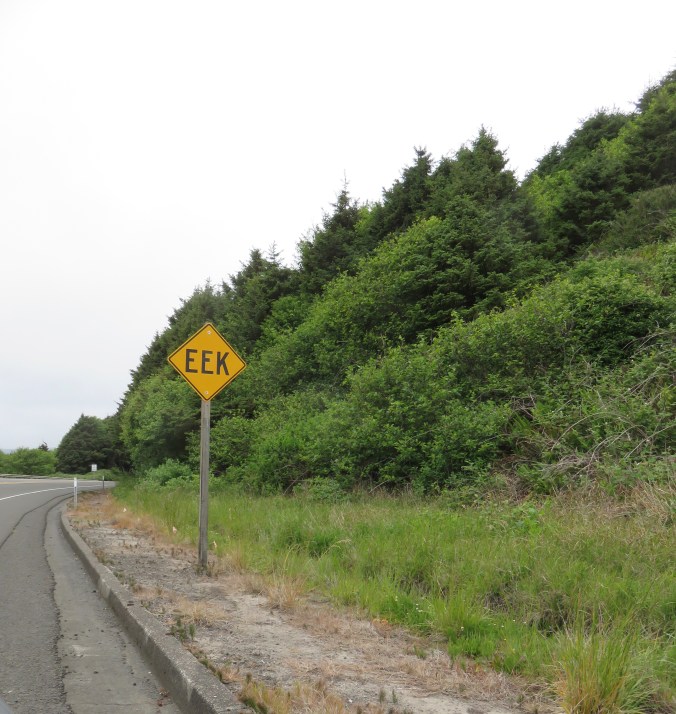
Last week, a sign on the highway at Silver Point said “EEK” instead of warning of “Elk” crossing.

If the weather had been better 75 years ago, yesterday would have been the anniversary of D-Day. [The D stands for “day.”] Instead, it was the Golden Anniversary of my husband flunking his draft physical. He did nothing to deserve this, but each year he celebrates his fortune in being spared Vietnam.

This is not about to become a blasting of veterans. Many of my favorite people—my father, Aunt Marcie, Jim Fukano—are veterans. Jim even served in that war that Gary escaped and remains in touch with the men he served with. Most of his older relatives spent WW2 in concentration camps right here in the U.S. Like my father he died not talk much about his wartime experiences. Despite humorous tales of K-rations and long marches, I know my father saw horrible things. My mother said the war, as it inevitably does for any soldier seeing combat, damaged him. My father, if he was within hearing when she said such things, would say he would never have found his wife, married, had the life he enjoyed if not for the war. There would be a moment of standoff. “Art—” my mother would begin.

Gary says “there is a certain amount of [both] happiness and guilt associated with my celebration.” Neither of us heard glamorous stories about the war, but our parents met as result of service to their country. That generation was irrevocably changed by the experiences growing up in the Great Depression and living through the war.

We have Ernie Pyle’s books recording the war in the house. My father, like many servicemen, admired Pyle who reported from Europe and then from Japan. The New York Times has a feature today about the war reporter who, according the Truman, “told the story of the American fighting man as American fighting men wanted it told.”

Until D-Day, war had largely been an exhilarating experience for Pyle, terrible but often uplifting. Ten days after the landings, the awfulness of all the death he was witnessing in the ‘thousands of little skirmishes’ in the hedgerow country of Normandy was carving away at his mental state. He reported having knots in his stomach from ‘constant tenseness and lack of sleep.’ In a letter back home, he confided that he had to ‘continually fight an inner depression over the ghastliness of it all.’ ‘Sometimes,’ he wrote to Miller on June 29, ‘I get so obsessed with the tragedy and horror of seeing dead men that I can hardly stand it. But I guess there’s nothing to do but keep going.’ “

We found glass on the shore yesterday morning, then hung house-letters to distinguish each of our tenants’ front door as well as our own doorbell. Someday I will address the awkwardness of entering our house through the garage to the atrium and then to the front door. Some day.

We had friends, Becky and Mark, over for dinner, a late dinner for us because they are both working and could not get here till going on seven. Clams and huckleberry cake were the highlights in food, but the talk nourished, our shared hopes and dreams. Food for the heart.

Then this morning, an email overview of top stories in TNYT, “Their Fathers Never Spoke of the War, Their Children Want to Know Why”:

“Less than 3 percent of the 16 million American veterans of the [Second World War] are still alive, and all are in their 90s or beyond. Now their relatives are often turning to experts to help them decipher billions of pages of military records to piece those stories together.

” ‘Sometimes they start to cry on the phone about how much they loved their dad, and how he had horrible nightmares, but would never talk about it,’ one researcher said.”

Ernie Pyle cph.3b08817.jpg

Ernie Pyle. My father looked a little like this. So did my father-in-law. Most of those who served in his war had that serious, lean look. America came out of the Depression during the war. Pyle did not survive but was struck in the head and killed by enemy fire in Japan.

My father would be 94 this November. That seems remarkably old, but members of his family mostly did live into their nineties. If lung cancer had not taken him in his sixties, he might well be alive today.

I meant this post to be cheerful, but the truth is that contemplating war always brings tears. I write with the morning chorus of birds outside my window, a celebration of another key. I cry for the waste, the suffering and misguided determination that does not end, for the 20,000 attacks on Yemen by Saudi Arabia in the last few years  (mostly using planes and bombs from the U.S. and Britain), for anger that pushes us from principle to spite, for determined vengeance and retribution, and for pursuit of power that so often perverts and perpetuates this monstrous suffering.

I wonder when we might learn to settle differences some other way that does not give nightmares.

DROWNING

fullsizeoutput_f43

I told a friend about my favorite metaphor for a successful relationship. [Bear with me because it’s entirely backwards and if you have not spent time on a Pacific shore it will make little sense.]

You wade into the surf, just a little way in to the middle of your shins because the tide is going out. You face the ocean because it is never smart to turn your back. Waves break to your knees and dwindle down to your ankles. And you have to keep stepping away from the ocean because it draws you in without your noticing. If you fail to pay attention, you will find yourself in dangerous water before you know it.

Loving someone is like that, only in a kind of reverse. The better way to describe it might be that the other person is the shore and the world is the water that continually pushes you apart, drawing you into deeper water. In this analogy, each person must continually walk toward the other. You cannot stand in place, because that will drift you away without your noticing at all.

Two people who want a relationship of any kind must continuously make the effort to approach one another. A continuous approach just to remain close.


Many years ago, I was walking on shore with friends from California and Canada. We were all beach combing, some turning north and others south. One couple headed out into the water. It was a bright, sunny day, little wind, warm, though the ocean is never anything but cold on my stretch of beach. My friends were walking into an out-going tide. It was dangerous and I called a warning. They could not hear me over the ocean’s roar.

And then I did a stupid thing. I walked out after them. Both Ed and Ivy were taller than I was, and Ivy was a strong swimmer. Ed had backed off. I was out past him calling to Ivy. By the time I got close enough to be heard, we were both suddenly off our feet, swimming to stay up, waves washing over our heads and with no way to pull ourselves back against the current. Ivy swam to Ed, who had turned and come after her.

By then, I was a few yards—ten? fifteen?—away, and even in that moment as I scanned the shore, I knew there was no one who could hear or help me. Gary was at work. I knew, had he been there, he would have pulled me out of the water long before I got in so deep. I was already too cold to make any effort to save myself, struggling just to keep my head above water. I thought of all this and also thought this might be genuine irony to drown after wading in over my head in order to warn people that it was dangerous to be in the water in an out=going tide. I thought how stupid and funny and awful.

I called to Ed, but he was at his limit to get himself and Ivy back to shore. He could not wade back to deeper water after me. “Can you get to me?” he called. I felt certain, in that moment that I would die that day.

But instead I thrashed and flailed and found strength to drive myself to his side and Ed saved us all. No one onshore noticed a thing.

So. Love and drowning. How we save ourselves. How others save us. [Thank you, Ed.]


MEMORIAL

fullsizeoutput_f42

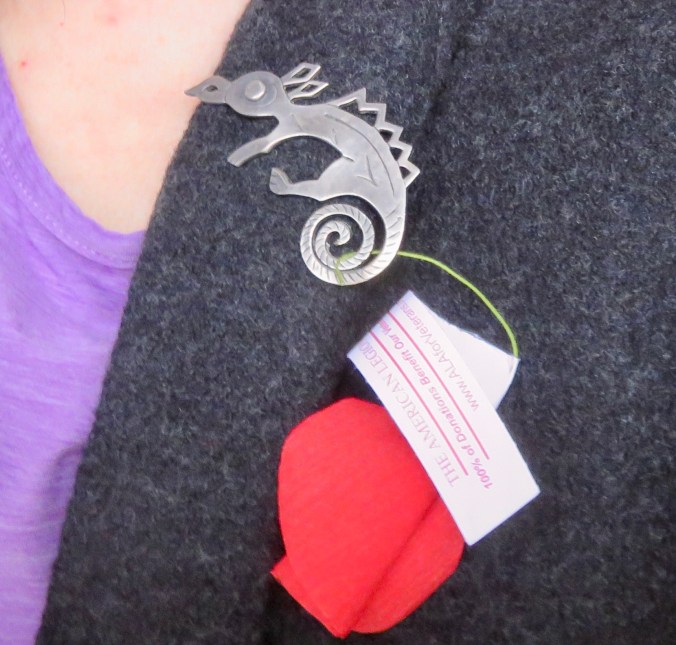
When Gary was a little boy, he sat at the dining table with his mother and made red poppies for Memorial Day. Like her husband, Alta (“Anne”) served stateside during the Second World War. She gathered little red cloth petals, wound them onto a wire to be worn in honor of our veterans.

My husband buys a poppy each year. Today they are made of paper. For a time we had chain of them hanging from the rearview mirror of the car. The tradition dates back to a famous poem from the First World War:

In Flanders Fields

In Flanders fields the poppies blow
Between the crosses, row on row,
    That mark our place; and in the sky
    The larks, still bravely singing, fly
Scarce heard amid the guns below.
We are the Dead. Short days ago
We lived, felt dawn, saw sunset glow,
    Loved and were loved, and now we lie,
        In Flanders fields.
Take up our quarrel with the foe:
To you from failing hands we throw
    The torch; be yours to hold it high.
    If ye break faith with us who die
We shall not sleep, though poppies grow
        In Flanders fields.


The poem above is often formatted incorrectly. It is a form—that is, prescribed lines and rhyme scheme are followed by the poet. McCrae was Canadian and he died in the war, as many of the so-called War Poets of the Great War did die—Wilfred Owen, Rupert Brooke. Siegfried Sassoon (a British officer) survived despite wounds and decorations, despite his letter to The Times in which he called out the powers-that-be for needlessly sending troops into combat when a negotiated peace was possible. “I believe that this War is being deliberately prolonged by those who have the power to end it,” he wrote. He would have been tried for treason, but another poet declared him a victim of “shell-shock,” and he was sent to an infamous, tortuous asylum, Craiglockhart War Hospital. He survived. He returned to the front—why should his men die without him. Throughout, he wrote poetry. “The dynamic quality of his war poems,” according to a critic for the Times Literary Supplement, “was due to the intensity of feeling which underlay their cynicism.” “In the history of British poetry,” McDowell wrote, “[Sassoon] will be remembered primarily for some one hundred poems . . . in which he protested the continuation of World War I.” He survived that too. I honor him.

Today is the day Americans celebrate Memorial Day, in honor of our fallen. Our great war was the Civil War, the only war on home ground, the only one with fatalities on a scale approaching the losses suffered by Europeans during the wars in the twentieth century. This violence that we accept as the inevitable price for our freedom.

I turned on the television after our walk, just as we finished breakfast. Bird was on, Forrest Whittaker coming home drunk. “Is he going to hit her,” my husband says. “It’s in the room.” Charlie Parker is talking to his wife, everything is all about him. The violence simmers. I turned off the show when the inevitable hit occurs. I wonder what this assumption—mine, my husband’s, society’s—says about men and violence.

What does this tell us about what is inevitable, about what we should accept and even approve in pursuit of a contrary goal of peace. The advice to bullied children to hit back. The determination to “fight” cancer as if it were a war, striving to kill the enemy, instead of striving for life. Always an enemy in sight.

My father and aunt also served in WW2. My aunt served in San Francisco and my father was present in the “liberation” of a concentration camp in Germany. He would not tell me details. The date was writ small on a scrap of paper in his wallet. However much he honored women, he sheltered his daughter from that horror. I am (mostly) sorry for that protection.

That belief in protecting women seems to me at the heart of the brutality we too often suffer. This belief that somehow because I need protection I am also less capable, or less deserving of honor and respect. A student this past spring told me that most of the #MeToo movement was lies and exaggeration. He was always polite in speaking to me except in this. It did not occur to him that his belief was trumped by my personal experience, not even after I revealed it to him.

Emma Thompson wrote: “If a man has been touching women inappropriately for decades, why would a woman want to work for him if the only reason he’s not touching them inappropriately now is that it says in his contract that he must behave ‘professionally’?”

In a recent interview she was asked how men who have behaved badly and been caught might “come back” after the #MeToo scandal. She said that was less her concern “at the moment” than concern for the women who had suffered over all that time.

It is not only women who are concerned about the abuses of powerful people. It is not only women who have suffered. It is not always women who demand change. Men demand it too, some women are untroubled. Our views are not entirely determined by gender. Does this surprise anyone? As one obvious example, I have often wondered how any righteous woman could possibly support Trump, but they do. We share the capacity to be blind, indifferent, biased, and unfair.

Women and men are not actually very different biologically either—seriously. In our genes, we are very nearly identical. Yes, sexual characteristics, penis and vagina. Men are generally bigger, but some women are taller than most men; some men are smaller than most women. The same applies to body strength and tone of voice, muscle mass, inclination to violence and other behaviors. Societal classifications of masculine and feminine are both slippery and confining. I have often wondered, going back to my teenage years when several of my friends were out, how much easier we would be in our skins if the expectations for our behaviors and goals were less inevitably tied to our more obvious gender.

I know so many women of my generation and even of the current generation whose expectations are driven by gender stereotypes. I was born in 1952 and my own mother was a stay-at-home parent. Though she defined herself as a feminist and warned me never to trust a husband, she also assumed I would marry a man who would “take care of me.” She thought I should “have a skill to fall back on” and she meant typing. Refusing to learn to type was my act of teenage rebellion. Despite this, I know what society expects of me as a person: to be a woman. I know myself as a woman. I know feminine. I am those things. I have played that anticipated role all my life and I cannot set it down as a burden. It is wound into my identity.

There are other ways of defining the self. There are opportunities for both men and women to be greater than their assigned roles, to be stronger and kinder and better, more forward-thinking and courageous.

“In Flanders Fields” the poppies grow. What does it mean to “break faith” with fallen soldiers? Does it only mean fighting on? Or might the fight extend beyond the battlefield. Might keeping faith demand more of us that mere brutality. Might it demand another sort of courage and honor, some act more tied to life. I would like to think so. We do not live in a film with the script already written, the violence simmering.

None of this is inevitable. We might keep a better faith. I hope my granddaughters and my grandson will not remain as harnessed, fallen into socially defined roles as my own generation. Trapped by the foolish notion that the best will win; that best is defined by hitting hardest. That is a fall.

I might wish our children had greater freedom, not to fall on their swords, but to rise to their own best selves.

CRASH

grayscale photo of explosion on the beach

Photo by Pixabay on Pexels.com

My computer screen went all magenta last Friday and is being (hopefully) repaired. Maybe by the weekend—they said maybe earlier, but I think it may have died at a mere six months and two days, an infant laptop still under warranty. It has been flakey since I first opened it, and one son shrugs and laughs, they other tells me that the last good Macs were from a few years ago when an owner could change the battery without driving all the way to Portland because everything is now glued in place. Fortunately, I had backed-up my computer just hours before. (I am working here on a borrowed computer.)

By good fortune, I was reading Dreyer’s English, which is the most entertaining writing style guide I have every read. (There are plenty of funny ones—none so funny as this.) I needed a laugh.

This morning I read a Goodreads review of a book about Chernobyl:

“Chernobyl was not a single event but was instead a point on a continuum; the radioactive contamination of Polesia lasted more than three decades. Chernobyl territory was already saturated with radioactive isotopes from atomic bomb tests before architects drew up plans for the nuclear power plant. And, after Chernobyl as before Chernobyl, the drumbeat of nuclear accidents continued at two dozen other Ukrainian nuclear power installations and missile sites. Sixty-six nuclear accidents occurred in Ukraine alone in the year after Chernobyl blew. More nuclear mishaps transpired after the Soviet Union collapsed, including the fires in the Red Forest in 2017.

“Calling Chernobyl an “accident” is a broom that sweeps away the larger story. Conceiving of the events that contaminated the Pripyat Marshes as discrete occurrences blur the fact that they are connected. Instead of an accident, Chernobyl might be better conceived of as an acceleration on a time line of destruction or as an exclamation point in a chain of toxic exposures that restructured the landscape, bodies, and politics.”

Students have frequently horrified me with their eagerness to embrace nuclear power as perfectly “clean” and the best solution to our energy needs. They did not have duck–and–cover drills (yes, now I not only know how to use an en dash but how to make them), and they never watched the based–on–reality Silkwood (1983) or spookily–prescient The China Syndrome (1979). Those real life accidents at Five Mile Island (1979) Chernobyl (1986) and even Fukushima (2011) are just too long ago in the minds of teenagers.

When I was a teenager myself, my father was confident that we would solve the problems of storing nuclear waste with fusion plants—that was fifty years ago. I have never felt so confident that technology and science would solve the problems at the pace they created them. So tell me: How are those fusion plants coming along? And do you have any idea how long nuclear waste remains toxic? Go look it up.

Some days it seems everything is eager to explode.

On an entirely different note, I walked through a department store while waiting for my computer appointment. In the children’s department there were two adorable items, and only two, with huge monograms: a sleeping bag and coverlet. I wish I’d had my camera. It was astonishing to find LOGAN on my right, to make a half-turn, and find RUBY. The first names of our two oldest grandchildren.

Mother’s Day

fullsizeoutput_f35

IMG_0718

me with Alan

The courage that my mother had

Edna St. Vincent Millay, 18921950

The courage that my mother had
Went with her, and is with her still:
Rock from New England quarried;
Now granite in a granite hill.

The golden brooch my mother wore
She left behind for me to wear;
I have no thing I treasure more:
Yet, it is something I could spare.

Oh, if instead she’d left to me
The thing she took into the grave!—
That courage like a rock, which she
Has no more need of, and I have.


fullsizeoutput_f3a

Spelled out in sand dollars by my husband.

fullsizeoutput_f37

Me with Ian, Logan, and Ruby last year.

BOOK ORDERS

IMG_4120

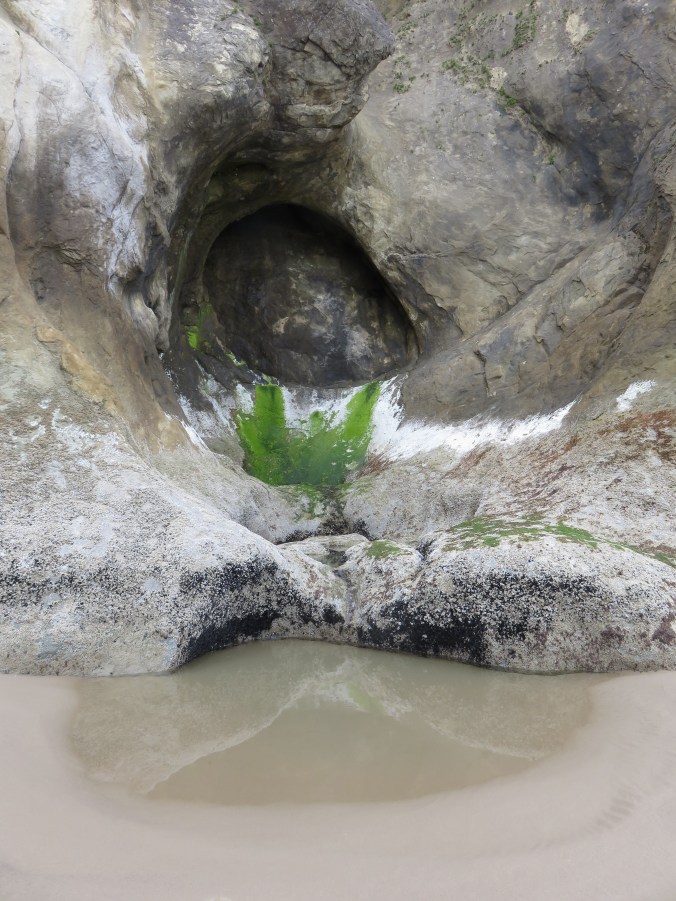
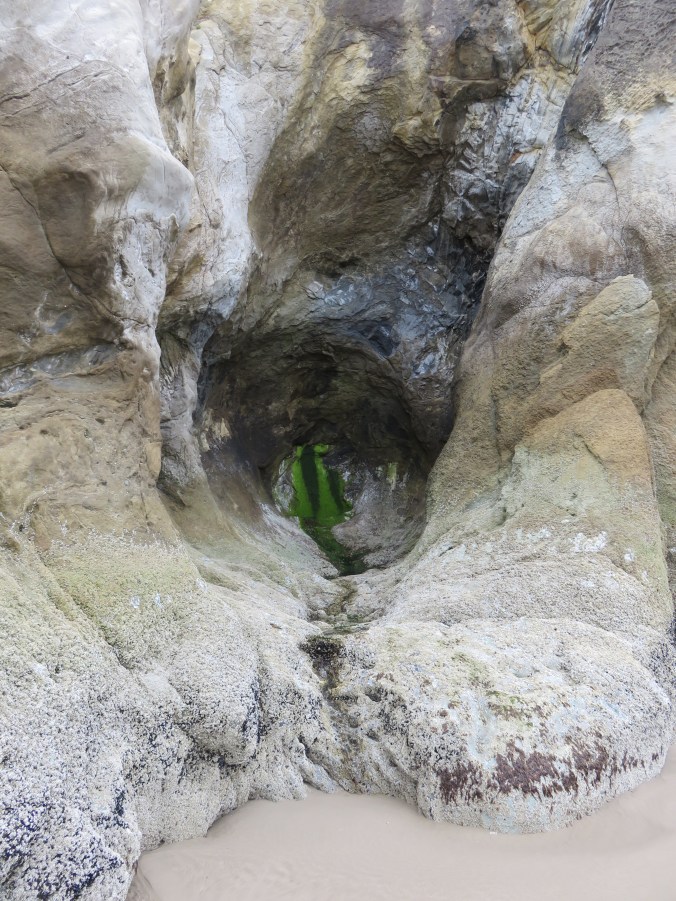
I think of this as the Big Altar. Sometimes in summer that back wall shows lime green.

I received notice this morning that I saved $5.66 on the order of a book I have absolutely no memory of ordering six months ago. And another one, a book costing over twenty-five dollars, hard cover, by an author whose name I do not recognize, is coming in September. I think I must have read a short story by this person on-line. Maybe?

What I was actually thinking about this morning was the sound of the dawn chorus—the chattering and peeking and calling of a variety of songbirds that I particularly enjoy in late spring with my bedroom window open. Too quiet this morning. I hear the eurasian doves flirting. I hear the ocean, always the ocean. I hear my husband clearing his throat downstairs.

And I was reviewing memories of other lives I have lived. Pushing teaching off to the side, I was once a goldsmith, a sighthound field trial judge, an illustrator, a teenager. These were exhausting and interesting occupations—still fascinating to me after all this time.

My husband came upstairs and told me that I was not hearing the birds because they did not come on duty for another twenty minutes. I wanted to believe he was serious.

A crow.

I opened the novel the day before yesterday and worked for a couple of hours. I found a typo. I found a half-page repeated twice because I had rewritten it and then failed to delete the first version. I liked the first version better so I deleted the revision. I think I have still failed to scatter the ashes of the dead. If I open the manuscript today in order to scatter the dead, I think I will only find a typo.

I will begin the right front of my youngest granddaughter’s pink cardigan instead.

IMG_4122

This is the Little Altar.

Camp NaNo day 15: PARTY

Version 2

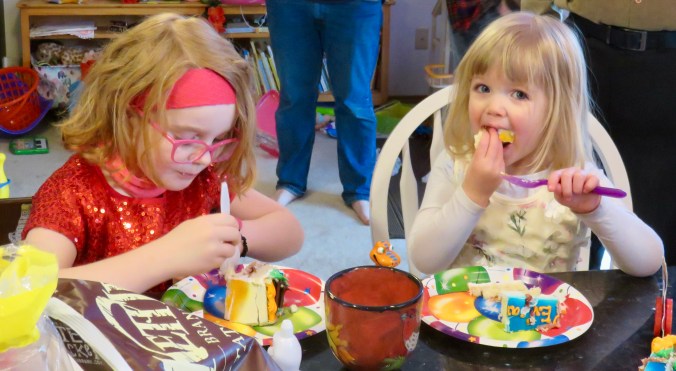
Our granddaughters eating birthday cake. There were a lot of adults at this party, but no one had more fun that the six cousins

Camp NaNoWriMo word count: 23,804 as of 6:20am on Monday, 15 April 2019

EMD word count at 74,883—revision begins later today! 

Bibi Andersson died. I had to go look up all my favorites of her films. The Seventh Seal. Babette’s Feast.

I am reading Ada Limón’s poems. My goal yesterday was to submit something, and I managed two story submissions. I made a single document of three poems. I looked up submission requirements for a favorite journal, and they will go out in the mail today. Then, we went to a birthday party, came home, and I made dinner, and began work on outlining what I need to do to the novel. Oh! And I worked a bit on the new Louise DeFleur story! 

In the mean time, I am reading other news. 

“Buying College Essays Is Now Easier Than Ever. But Buyer Beware” by Tovia Smith reveals the flood of ghost-written essays showing up on college campuses:

“As the recent college admissions scandal is shedding light on how parents are cheating and bribing their children’s way into college, schools are also focusing on how some students may be cheating their way through college. Concern is growing about a burgeoning online market that makes it easier than ever for students to buy essays written by others to turn in as their own work. And schools are trying new tools to catch it.”—Mind/Shift <https://www.kqed.org/mindshift/53446/buying-college-essays-is-now-easier-than-ever-but-buyer-beware?>

The author is right that this has long been a problem, as has the rationale for cheating. “ ‘Technically, I don’t think it’s cheating,’ the student says. ‘Because you’re paying someone to write an essay, which they don’t plagiarize, and they write everything on their own.’ ”

Excuse me? 

Catching cheaters is an enormous challenge. I have caught students cheating because the writing was too polished for that student, because they submitted an essay in the wrong font or format (APA instead of MLA), because the student left traces of their source, or because the subject matter of a story was entirely unlikely (first person from an elderly woman in east London? please). Once I caught them, I had to prove that they were guilty. 

I routinely verified sources in research papers, demanded that hard copies of their sources be turned in with the paper, and since I also required student to write on demand at least once a week in class, I had a general sense of how they thought and how they constructed sentences and argument.

There have been examples of cheating I am certain I missed. (I was unable to prove one case of suspected cheating because the source was well disguised. I could not prove it, however certain I was.) I am not at all confident that I could prove what I suspected was a ghost-written essay, though new software can catch inconsistencies of style and sources. 

Smith is right about the solution. Ethical behavior is an essential value. Another is recognizing that education is not gained through grades and credits but through learning and experience. Bluffing and cheating through school means that someone else learned and someone else had the experience. It is the waste of educational opportunity. 

And there was the party!

fullsizeoutput_f24

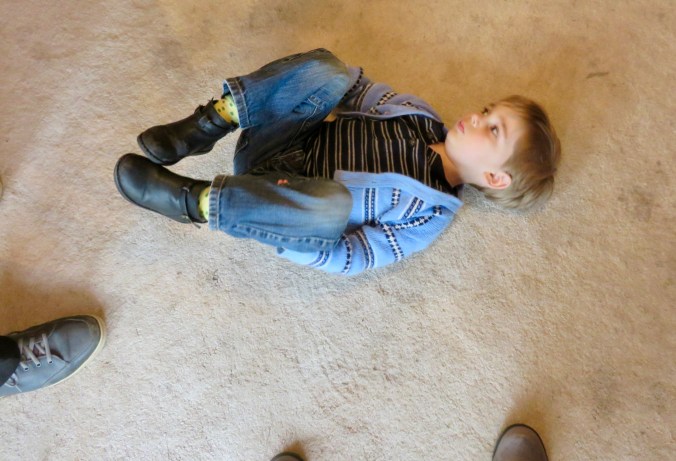
Meanwhile, our grandson on the carpet was not all that excited about pausing for cake.

STICKER PRICE

I did not have my camera with me so I cannot post a photo of the orange-juice orange Mustang we saw this morning at Costco. The sticker price is a tad over $44k, but I could save $4k buying it from Costco. I laugh about this because the color is one of my husband’s favorite (bright) car colors, and because somehow we managed to raise a son who likes muscle cars. Yes, it’s true. He bikes or busses or walks to work and doesn’t own a car, but if he had one it would be a Mustang GT. Or something like it.

April I have committed this year to CampNaNo again, a daily writing tracker. National Novel Writing Month (NaNoWriMo) in November involves a commitment to 50k words in 30 days. I’ve done it three times. The “Camp” in April works differently and allows writers to determine how many pages or words or hours or minutes of time they want to commit to.

I dithered and pledged something easy. I pledged to write 10,000 words. I expect to exceed that, and so far have 2900 words. But here’s the thing: What do I really want to work on? So far I have taken fragments of story ideas and worked on those. Do I work on one of the novels? fantasy and SF? flash nonfiction? poetry for National Poetry Month?

Good questions.

So far, as I said, flash fiction:

“And Another Thing” realist fiction about a drunk in his bar confronting another drunk, and it’s funny. It’s been a long time since I wrote funny.

“Final Words from the Master” is a first contact fantasy about the end of a seriously unfortunate landing on what might be Earth by kinder and more intuitive people than ourselves.

“The Way They Disappeared” about a young girl who causes an attacking hand to, well, disappear.

“Rapunzel” is realist fiction about a girl scooping ice cream in a tourist-town, and it makes her ears cold—actually no idea where this will go. Also funny.

What I think I most want to work on is a novel that no one wants. My goal was to show the hard work of recovery from overwhelming grief, but that grief-inducing scene remains the highlight and I kept pushing it earlier and earlier into the novel in order to focus more on what happens afterward. Every time I tried to reveal that event late in the narrative, I got chewed, even when I left foreshadowing hints big as pink elephants. And with that scene near the beginning, the rest of the story apparently feels like a letdown. There must be a way to fix this, but I do not seem to be a good enough writer to figure out how. Still. I might try again.

Maybe create a short story to try out a different structure? What if the grieving mother imagines other ways her life might have gone? What if grief is her best option? That’s cheery.

Or I could work on another manuscript entirely. I have a novel that won publication and prizes for the first chapter. Maybe that one?

Or flash.

Stay tuned for daily updates and maybe a shared story along the way.

HORSES and FOSAMAX

fullsizeoutput_ede

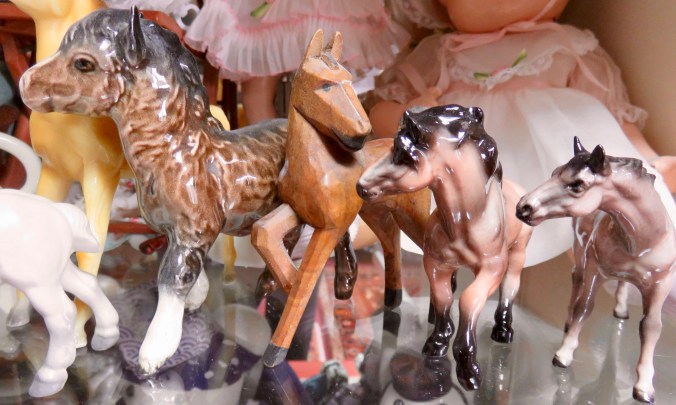
A few of my horses in the foreground. My mother’s and aunt’s dolls in the background.

There’s a connection. Wait for it.

I was crazy for horses as a child. I begged for horse figurines for my birthday, read every horse book in the juvenile section of our local library before I hit adolescence and loved the smell of horse manure. “Can’t I have a pony?” Not in suburbia. I read a British book on stable management intended for adults. I correctly predicted the winner of the Kentucky Derby five years in a row.

In high school, my mother finally granted my dearest childhood wish and gave me weekly riding lessons for a few months. I was terrible. I’ve been bit, kicked, and thrown twice. The worst was the bite’s deep bruise. My last time on a horse my dismount was an embarrassment.

Even all that is not enough to ruin my passion. I still love horses, but I could never afford to keep them.

Instead, for a few decades I showed sighthounds (Afghan Hounds) and ran them in field trials through the American Sighthound Field Association (ASFA) and as one of the original people involved in founding the Canadian Sighthound Field Association (CSFA). I served on Boards. I chaired events, I designed logos, I edited newsletters.

At shows, I sometimes saw medication in tack boxes and overheard conversations about the use of various what-now-would-be-called “performance enhancing” drugs. One Afghan breeder willingly told me she had to medicate her foundation stud because otherwise he was too fearful to show. I witnessed a dog from California bite the judge who went on to give him Best of Breed—that dog is now described in almost worshipful tones by people who never actually saw him in person. In addition to problems with temperament, I knew the dirty laundry about rare eye and hip and thyroid diseases. I ran eye clinics. I read the research. I was careful breeding, and mostly didn’t.

The American Kennel Club has never been quick to address breed problems, trusting the breeders who register puppies to police themselves. (No surprise that judges were always Mrs. or Miss, no Ms. allowed when I was active.) Using drugs on show dogs was absolutely forbidden, but no one was checking. So I began to wonder about how drug abuse in show dogs might be better managed?

I cold-called the Secretary of the Oregon Racing Commission, which at that time regulated dog racing in my state as well as horse racing. This would have been in the 1980s. I had rehearsed my line: “Hello, my name is Jan Priddy, and I am writing an article about drug use in show dogs and would like to know how the state Racing Commission handles drug use in track Greyhounds.” It was a good thing I knew that line because I would repeat it several times.

The Secretary’s secretary was the first to ask, “Who are you? And who are you writing for?”

I repeated my lines, “My name is Jan Priddy, and I am writing an article about drug use in show dogs and would like to know how the state Racing Commission handles drug use in track Greyhounds” and added: “I am free-lancing.”

Almost instantly I was put on to the Secretary, who naturally asked me who I was and who I was writing for?

“My name is Jan Priddy, and I am writing an article about drug use in show dogs and would like to know how the state Racing Commission handles drug use in track Greyhounds.”

“I don’t have time to talk to you,” he said in an irritated tone. He asked me to tell him again who I was. So I did. Again.

And then curiosity got the better of him. “What are they using on show dogs?”

I named what drugs I had seen, including the one I still remember: “bute” (a steroid).

“I don’t have time to talk to you,” he said again, and then: “Why would they do that? Is there any money in showing dogs?”

“Not really. Not at all. It’s an expensive hobby, but there’s ego at stake.”

“I don’t have time to talk to you.” He said it four times, and I said my line four times, and then we talked for almost an hour while he told me how the Racing Commission monitored drug use on racing Greyhounds. He told me the drugs they could test for and the ones they hoped to be able to test for by the following racing season. He told me the drug they tolerated, even though they could test for it, because if they outlawed that drug, trainers would use another drug they could not test for. “And that one is really bad, harder on the dogs. But we once we can test for that, we’ll outlaw both.” He was optimistic about getting ahead of the curve and outlawing medication entirely in racing Greyhounds.

Win and place were tested in every single race. About once a day and without warning, every single dog in a race was tested. Once a month, on an unannounced day, all of the dogs on site—retired dogs, non-Greyhound pets, and Greyhound puppies as well as dogs currently racing, every single dog at the track—were tested. If there was any drug detected, the owner and trainer and all their dogs were banned. The wrath of god came down upon them, and I was talking to god.

By the end of our conversation, god was quite pleasant, I had learned more than I knew there was to know, including the name of the lab that did State blood testing. He offered, at any time, the use of that lab at his cost to test show dogs. I knew that was never going to happen, but I shared his optimism about a drug-free future for racing Greyhounds.


Step forward 35 or so years. I never completed writing my article, I no longer show Afghan Hounds, there is no Greyhound racing in Oregon, and 22 Thoroughbred racehorses died in the last few months in California at the track. No one wants to admit that drugging racehorses is a major contributing factor. (My friendly god was wrong to be optimistic.)

A French racehorse trainer has been arguing for a reasonable approach to drugging racehorses for a long time. Here’s a statement from over a decade ago:

“Anyone who has read any of my comments to posts or my articles will know that I believe eliminating all race-day medication and the use of steroids would be the biggest, most effective first step. Steroids bulk up a young horse’s muscles to a level that the skeleton cannot support. In France, the trainer of a horse that tests positive for steroids will lose his or her license — permanently. A ban on race-day medication of any type seems painfully obvious. If a horse needs medication, it is not fit to run. That principle governs the rules of racing in all of Europe, most of Asia and Dubai. The United States, Canada, Saudi Arabia and some South American countries allow a panoply of race-day medications from anti-inflammatory drugs, which mask pain, to lasix, the diuretic drug that some believe controls bleeding in the lungs of a racehorse.”—Gina Rarick, 2008

More recently she blames the recent racehorse deaths on a number of factors including track surface but there is still the way Americans drug our horses. Yesterday she mentioned steroids, including bute, but also this:

“Breeders need to get the highest price possible for a yearling, so in addition to corrective surgery to fix defective legs, they use steroids to add bulk and sheen, and bisphosphonates to stabilize the bone structure. But these bisphosphonates also limit new bone growth, impairing the young horse’s ability to adapt to the stresses of training and racing.”

“Once the horse has fetched that high price, there is huge pressure on American trainers to get it racing as soon as possible to cover the costs of the purchase and training fees. That means the young racehorse is treated with endless rounds of so-called therapeutic medications: phenylbutazone, known as bute, to help with the aches and pain; clenbuterol to keep the lungs clear (plus there’s that added steroidlike side effect, which keeps them eating and keeps the weight on); and the diuretic Lasix every time before fast workouts and races, ostensibly to prevent bleeding in the lungs. There is little science that says Lasix actually does that job, but quite a lot of science identifying Lasix as a performance-enhancing drug.”—2019

The danger of bisphosphonates is what caught my eye. I wondered how long horse people have been aware that the drug may suppress healing. The result is that micro-fractures or cracks in a bone don’t heal, and if too much minor damage piles up, even a minor bump can result in a disastrous fracture for an animal weighing well over a thousand pounds traveling over 55 mph. The horse breaks a leg and is put down on the spot.

[I remember when the great filly Ruffian bumped into the starting gate and after she took a misstep on the backstretch, broke a leg and was put down the same day. According to Wikipedia: “Medications such as corticosteroids for inflammation and pain management came into common use. However, while helping the horses in the short term, the increased use of medications at the track had a downside, as many more horses were raced while injured. The average number of starts per year steadily declined, though this may also be attributable to economic factors.” I was watching that race when it happened, and mostly stopped watching horseraces after Ruffian was killed.]

Here’s the leap: bisphosphonates are used to treat osteoporosis in human beings, hundreds of millions of human beings have taken this drug. It does increase bone density and studies show that reduces hip fractures. But maybe bisphosphonates are not without drawbacks. A Harvard study in 2006-2008 found that the use of bisphosphonates such as Fosamax used to build bone, might result in fracture from even a slight bump. “The researchers concluded that long-term Fosamax use is a significant risk factor for low-energy fractures of the femur.” Studies conclude, as the French horse-trainer mentions, that bisphosphonates build bone quickly but are not without their down side.

My mother was on Fosamax for a very long time, far longer than the 7 years in the Harvard study. During the years she was on that medication she broke several bones including her arm and both hips, each hip requiring replacement. She did not recover from the second hip fracture. The surgeon shattered her pelvis while trying to repair it. (I shamelessly eavesdropped on the surgeon’s conversation with Mom’s GP. He said he could not understand why her bones were so brittle.)

I have always been a milk-drinker, but I stopped cold after my second bone scan showed terrible score, and then my scores actually improved a year later after I lowered calcium in my diet? They improved again after a year on Fosamax with calcium and D, but none of this means much of anything because each scan showing deterioration or improvement was done on a different machine and bone scan machines are not normalized one against another. Each one does its own readings and has its own standards. Any decent medical advice website will warn you to be sure you are always scanned on the same machine. Even my “second opinion” emphasized that. My local hospital keeps replacing its machines and scores from one machine cannot be compared to scores from another.

And, yeah, how dumb is that? If the scans were reliable, wouldn’t they each find the same reading? But, no, they do not.

So after my most recent scan, I checked back to see what machine had been used each time. When the letter came from my GP expressing optimism that the therapy was improving my bone since my scan numbers had shown improvement, I posted her right back that the new numbers were pretty much meaningless since they came from yet another new machine.

I went off Fosamax in January after a little more than 2 years on the medication. I feel better, maybe. But maybe that’s because I am more careful about water and calcium and vitamin D? Maybe in a year or so, I will go back on the drug? I can’t be sure it’s helped me. Maybe it has, but my bone scans have each time been conducted by a different technician on a different machine, and then, each time reviewed by a different radiologist, I have little confidence and no trust. I tried at the beginning to get a second opinion about my bones before starting treatment, but all I got was a second opinion telling me Fosamax is great, not a second opinion willing to even glance at my medical records or family history. Seriously, he joked about inter-hospital rivalry, refused to look at my records, and mostly got his notes wrong.

If the doctor is making medical decisions about my health based purely on averages and not considering me as a person? I would rather have that new computerized diagnostician. And the physical literal hand-holding (which I experienced only once at another hospital)? Some local doctors all went to a seminar to learn how to pretend to care. It doesn’t mean that are better at their job. It doesn’t mean much at all, though it feels sincere.

Some doctors really do care. There is still at least one local who has not retired, but he is not in family practice anymore. None of the good ones are, it seems.

Once they find a treatment and procedure that insurance will pay for, it’s hard to let go. Statistics suggest Fosamax helps, so it must be okay. And “talk to your doctor” isn’t always an option. (My doctor prefers to lecture rather than listen to anything I might say.) Fosamax is cheap but there are far more expensive substitutes doctors keep urging me to try, just as there were for the drug my husband was on after his one blood clot. I have even less faith in options that have not been in use for decades.

I walk 45 minutes each day. I watch my diet and drink my water and rest and get my sleep and do what I can to stay healthy. I am not as prone to falling as my mother, but I have fallen without breaking a bone, and I am not having another bone scan or taking Fosamax the rest of this year. If the French trainer is correct, there will be another rash of deaths of racehorses on an American racecourse all too soon. I hope to learn from their bad experience.
THIS IS HOW OLD I AM

BpOq7_MIQAA57sC

The original logo.

I remember when there was only one Starbucks across the street from the Public Market and it also sold chocolate from Belgium and spices in little baggies as if cumin were something that could get you high and maybe it did.

I remember when Nordstrom only sold shoes.

I remember when the Smith Tower was enormous, instead of a dwarfish little icon fading from Seattle’s skyline.

I remember when it was free to visit the Woodland Park Zoo and the Seattle Art Museum was on Capital Hill and a walk along the waterfront smelled cold and thick with creosote and import stores sold seamen’s chests and incense cedar screens carved with a thousand gods.

I remember before we went to war with Vietnam and it was still Viet Nam before the American War.

I remember Jack Kennedy’s funeral and the balcony where the Reverend Martin Luther King, Junior was shot.

I remember long, slow evenings in suburbia.

I remember my father’s gold wedding band, thick around his finger, and holding his index finger as we walked, stretching my stride to match his. 

I remember the small chest in the living room with two shallow drawers at the top holding broken tools and orange index cards, a fountain pen needing ink, dental floss and model airplane glue, keys to doors and boxes the family no longer owned, ticket stubs, a pocket knife, and a miniature chess set in a folding wooden case. 

I remember my mother’s hands crimping piecrust and mashing potaoes in a white glass bowl, meatloaf and tomato soup with toasted cheese sandwiches and tuna noodle casseroles and green peas barely warmed from the freezer. 

I remember the gingham dog and calico cat salt and pepper shakers on the kitchen window sill, the clock that creaked as it marked the passing seconds, bread kept in a drawer, the junk drawer with mucilage and four brown pennies and a bent spoon, a red capped shaker with cinnamon, and the toaster that always burned the toast. 

I remember rain on the roof and the softball through the front window in an exploding star. 

I remember my brother’s cap pistols and the bright smell of burnt powder, roadway scars in the back garden for Matchbox trucks and sedans, and the juniper bush six feet across, a spiral of prickly green. 

I remember our dog Roo circling and circling to carve her space on the carpet and my mother’s slip-covered chair in the living room revealing a warm depression when we came home from the store. 

I remember the reading lamp over my bed with butterfly wings embedded in the fiberglass shade, and a bright line of light under my door and hushed voices in the living room, the blush of dawn sunlight above the neighbor’s house, condensation on the glass, and the clutter of school papers and lists of horse names marking a landscape on my desk. 

I remember scum in the corner of the bathtub, mold on the wall of my closet, the sound of the furnace coming on at night in winter because it was especially cold, the plastic cups we used for KoolAide in the summer, and the crisp pale fungus that grew between the boards of the picnic table. 

I remember cracks in the driveway. 

I remember the hollow creak of the mailbox door, splitting open an orange with my thumb, sunflower seeds in their shells, card games, bare oak floors, the World War Two surplus search lights scraping across the sky in the summer, and moths beating against porch lights all up and down the block.

I remember.

I remember how it was. The Bad Word scratched into the stop sign post. Women fired for failing to wear stockings even in the back room. The man on the block who stripped his kids’ shirts and beat them with a strap. The bullies up the street who made it dangerous to walk that way. The open gutters and frost throwing the soil up into sparkling shards. Empty lots gone to tall grass. Cows grazing in a field. Climbing trees. The shack in the woods mouldering back into the past. Tree stumps broad as foreign cars. Foreign cars so rare their drivers stop to compare notes.

I remember laughing with my brother and my children as infants. I remember what youth was like. I remember songs from their first notes and cranberry sauce from cans and the color of my mother’s eyes.

It was everything and it’s every bit gone, and if someone told me I could start over and have all that back again, I would not stop crying.

How old does that make me? If I think I could not bear to have it all again? If I can barely contain all that has happened since?

If that is how old I am, I do not want to start again.