An imperturbable demeanor comes from perfect patience. Quiet minds cannot be perplexed or frightened, but go on in fortune and misfortune at their own private pace like a clock during a thunderstorm.—Robert Louis Stevenson
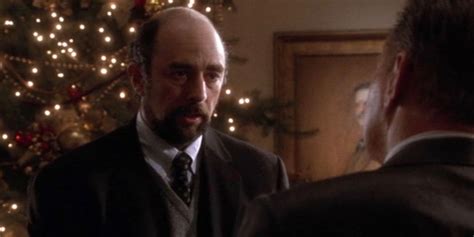
I nearly didn’t post this week at all. But let me share a personal tradition that I miss while I’m sitting here on the sofa, the television paused. I had a writing assignment I shared but the most important thing I used to do this time of year, when I was teaching, was show episode 10 of season 1 of The West Wing. The entire series is playing on Netflix just now. A homeless vet dies wearing a coat that Toby Ziegler donated to charity. It had his business card in the pocket and for that reason Toby is called by the DC police to the Korean War Veterans Memorial in West Potomac Park in Washington, D.C.. They hope he can identify the body.
I was still teaching when I reposted an old blog: WHY YOU DON’T WANT TO BE A TEACHER. That post arrived on my old Blogger site in 2011, then here in 2019.
I think black oystercatchers are my favorite bird. They make a noise like a squeaky toy, are protective of their babies, and have red beaks and legs and eyes of brilliant vermilion enamel.
Thousands of people read the original posting about why you don’t want my former job. At least two college programs assigned that post to students training to be teachers.
I’m grateful for the years I spent in education. I loved teaching but I enjoy other things, and I understand why teachers last, typically, just four years in the profession. There are people who think I’m a fool to have done it at all.
As I began writing this on Wednesday, I was reading Helen Whybrow’s memoir, The Salt Stones, which focuses on her family, her ninety-some Icelandic sheep, and how as a pastoralist she lives within the rhythm of her animals, the trees and grasses, blueberries and shrubs, the soil microbes and those in our gut, and all that lives in and on, over and above that soil and makes of her two hundred acres a thriving ecosystem. Her husband is kind, her step-daughter has gone off to live her life, and soon her daughter will follow. Her mother has Alzheimer’s and doesn’t always know her daughter, but is the same kindly person for all that. I read the final chapter yesterday. I felt grateful for the beauty she shares.
On our beach walk, we found bits of litter on the sand and tangled in the rocks, enough to half fill our trash bag. Mostly this was bits of plastic and plastic foam smaller than my thumbnail, but also a comb, a sturdy mesh bait bag, several lengths of reusable plastic twine. We admired the local bald eagles scavenging onshore. This photo taken at a distance—the bird flew as a wave washed in.Continue reading →
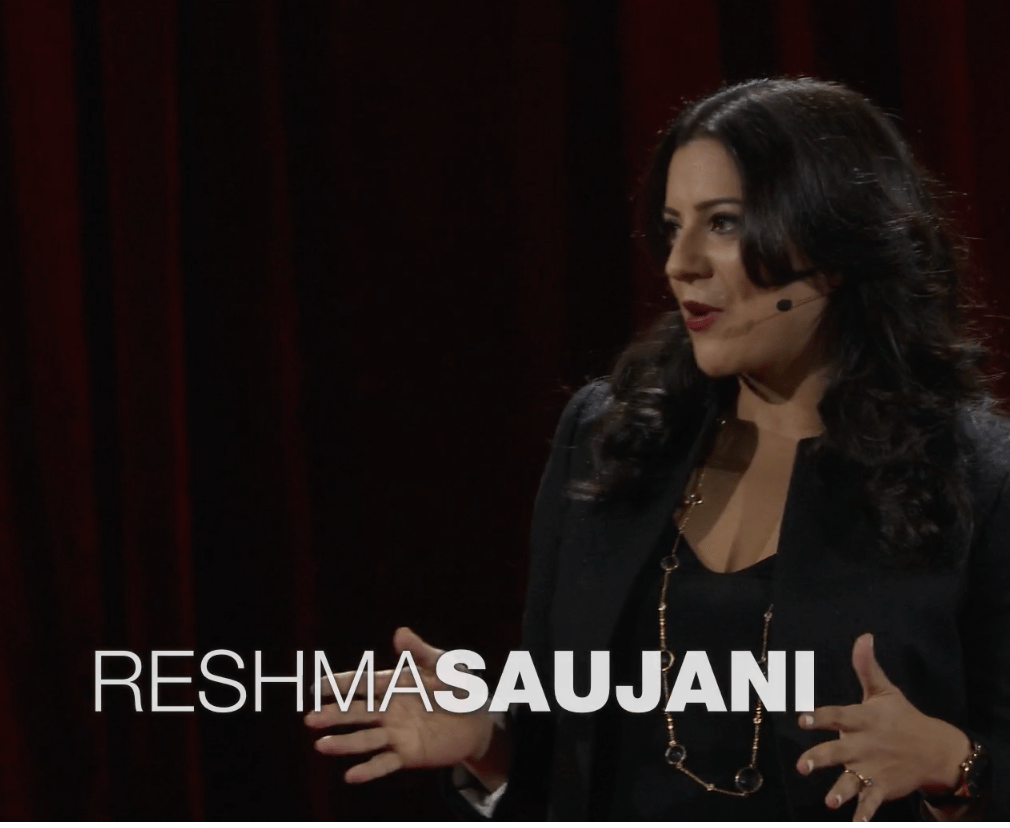
I watched a TED talk that insists women could be better. They should be more like men. We’re raising our girls to be perfect, and we’re raising our boys to be brave, says Reshma Saujani, the founder of Girls Who Code. Girls need to be more like boys, she suggests. They need to take more risks and demand jobs they are unqualified for. It works for the boys.
I appreciate Ms. Saujani for urging girls to be brave, for encouraging women to enter STEM fields. Too right. That should happen.
It’s a worthy goal to identify what holds girls and women back and to offer encouragement. Surely we underestimate the potential of girls and women in our culture. We actively stifle their potential. We should identify changes in their behavior and in our system that hold them back.
But. I am also tired of people urging women to behave more like men at their worst. Saujani describes how, in an experiment, 5th grade girls, especially the smarter ones, give up on “an assignment that was too hard for them.” I’d argue it’s a waste of time struggling against something they can’t do, an assignment specifically designed to be impossible for them. Recognizing that might even be termed smart because that’s not “giving up,” that’s sensible. Just as it’s possible to be persistent without being foolish, it’s possible to be sensible without being a coward.
We’ve seen many orange jellyfish [west coast sea nettle, Chrysaora fuscenscens] stranded onshore in the past week. This is one of the half dozen largest from yesterday, about two feet across that center section, another 20 inches wider if measuring the splayed “arms'”, and yes, these sting. The colorless to blueish ones, moon jellies [water jelly, Aequorea sp.], don’t sting—just don’t touch any jelly and then put your hand in your eye or mouth. I’ve never been stung, but I’ve known to be careful since I was little.
I walked more than three miles yesterday and I wasn’t even sore when I got home. Miraculous! Gary and I went north to our “Turnaround Rock” a mile and half, up and down the beach, backtracking and noting how high the sand is. It was the furthest we’d walked since April. We met two local people we hadn’t seen in months. Earlier this week, we met a friend we hadn’t seen since last year! They all said they’d wondered what happened to us. It was my foot.
Jakey Lebwohl, Emma Park, and Zach Rausch on the Substack* After Babel published a meticulous documentation of an education system that is failing too many students. All students had been improving in pretty much every area, and then about 2010, that improvement mostly stopped. The drop in skills such as reading and math is particularly noteworthy among the lowest-performing students—the kids already disadvantaged in school. This is pretty much equally true for all races, genders, and socioeconomic groups.
Clouds on the horizon are a favorite, especially the big rolls of cloud that ofttimes obscure the sunset, but color is a beautiful and to any day.
I was a student in excellent public schools (ranked second in the state of Washington at that time) from 1957 until my high school graduation in 1970, and then an excellent public university (University of Washington) for six years when I graduated with 3 degrees, cum laude, and Phi Beta Kappa. One distinct advantage I had throughout my education was teachers who were highly qualified, even over-qualified for the work. Memorable teachers were women with limited opportunities (secretarial, teaching, and nursing) and men from working class backgrounds (industry, farming, service) who were the first in their families to have the opportunity to earn [safer] white-collar jobs as a result of the GI Bill. Teaching never paid well but had the advantage of offering most people a reliable income and summer weeks to take a second job. Many teachers had the advantage of being treated as professionals. The unpaid or partially-pay sabbatical year every six years of teaching encouraged teachers to behave as true academics who pursued further degrees and research projects. Travel was understood to be educational for teachers and was tax deductible. [I owe everything I know about flying buttresses to that tax deduction!] Those genuinely educational perks are gone, and in my state tenure for public school teachers was eliminated in 1997.
In every way, and especially now under an administration that wants to cut all federal funding, public school teachers are treated as factory workers. No offense to factory workers, but I could have done that job straight out of high school.
In fact, my brother earned a 2-year community college degree that prepared him for a factory job. There, he earned more in his first year than he would ever earn later as a teacher in the mathematics and science departments of the public school where we both taught.
The counselors where I taught would never have urged the future I was steered toward by my school counselors. My math and spacial reasoning scores were right near and at the top [I test well], but I was a girl so it was fine whatever I chose so long as it suited my future as wife and mother. Mom wanted me to prepare for the future as a secretary, the counselor told me my goals of architecture or interior design were ridiculous, my counselor flirted with me, and I chose the School of Art.
Beginning in 1976, I taught Art in a girls’ prep school for 3 years, subbed, and then taught English and Art and English-related electives in a rural public school on the Oregon coast, and college Lit and Writing for the next forty. All this to say, I’ve been watching the evolution of public education for my entire life.
I taught with few teachers as capable as myself, several who treated teaching as an easy job (it’s not easy if you are doing it well), and many who did not last as teachers but left for better-paying work in a cocktail lounge or industry.
Another issue was the over-emphasis on college as a necessary step in every single child’s future. That view took hold by the 2000s. Where does that leave the teen without interest or capacity for college?
But the other major factor affecting student learning that I witnessed was Common Core. Standards were based purely on multiple choice test data. “Teaching to the test” replaced innovation and adaptation to student interests with dull routine test-prep. I was discouraged from teaching anything but nonfiction. I was required to explain how each lesson prepared students for testing.
Further, though I taught the use of computers in all my classes, I never allowed cell phones in my classroom, and the shift to on-screen learning has proved to be a disaster for human beings. I was in an early cadre of teachers approached and asked to participate in training for on-line education. It was horrendous in the way it valued rote response and failed to address either student needs or creative thinking. I used to tell my yearbook students: “There is nothing that can be done on computer that cannot be done by hand with a lot more time.” That’s true of page design, but people are not yearbook pages. Yearbook pages must first be imagined by people. [Even using AI would require someone to initiate the project.]
People invent themselves and require human responses to guide them forward in a way useful and meaningful to them. That requires attention, skill, and compassion. It requires money.
CHEAPER is CHEAP. But “cheap” is not what human beings aspire to be.
The current powers that be only want education to be cheap and simple. People’s lives should not become cheap, and they are never simple.
The people who have pushed and are pushing education in this disastrous direction over the past fifteen or twenty years have a couple of things in common: They are not teachers and they don’t care much about what happens to other people’s children.
Rich people will spend a lot of money to convince the public that we [they] shouldn’t be taxed so much for public education. They will “prove” that we are wasting money and spending too much. At the same time, they send their own children to private schools with tuition costing four or six times as much [or more] as is spent on public school children. “Separate but equal” was always a myth of the caste system, and now they want vouchers and tax rebates for their exclusive and elite schools. They want to pretend they are handing over control to states. they want to pretend that Alabama will ensure its children receive an education comparable to Massachusetts’. They want to pretend that if Alabaman children are poorly educated, it’s their own fault.
People without experience in public schools insist they know how to make them better.
Pardon me while I detail improvements in cardiovascular surgery.
Pay them less, require more yearly online multiple choice tests (I was taking seventeen), and more surgeries with less time off.
There we go! It’s so simple! A child could do it.
I rarely draw, and this pencil sketch might be 30 minutes of work. (In person, the penciled eyes glint.) I work primarily as a three-dimensional artist, a preference I identified when I was 12, after I designed the school spring program cover for silkscreen printing, and printed it.
I have been clear that I hate Substack, but at the same time, I do read a few with some regularity. If I were still teaching, especially since I integrated math and science and history with literature, I would require students to read Heather Cox Richardson for the way she threads ideas through America’s past.
Several years ago, if I were still teaching, I would also have taken The Heritage Foundation off my recommended right-wing reading list. That resource was once balanced by The Nation thirty and even less than twenty years ago. [I doubt my student fully appreciated how hard it was to keep an ideological balance of persuasive sources. I was never able to include FOX as a credible text source because the only credible texts were straight news I could find anywhere—the semi-credible and genuinely wacko right-wing “opinions” were only spoken.] There was a time when I read Heritage regularly. I didn’t often agree, but I could assure students their site didn’t lie. That’s no longer true.
“Sit still,” the trainee told him several times with increasing frustration. “Sit still!” When he finally did sit in his chair, the little boy completed the test. He scored so very badly. The trainer took her student aside. “Try again but let him move around this time.” Do I need to tell how much better he did the second time—on a different version of the same test? He was doing Algebra at age seven. He should have been accelerated in math in middle school. So should his older brother. As a teacher and his mother, I should have insisted.
Light on the rock. This photo was taken thirteen years ago this month and that bright-lit color is bird guano, not stone. After the first storm of the fall season, it washes off and the revealed basalt shows darker gray. Continue reading →
Examples of “evidence” I discount: • Your boyfriend’s uncle’s friend survived a house invasion only because he kept a loaded gun under his pillow. * You saw a YouTube video/Snapchat/Tweet/X post/Facebook story that proves there is a cabal of dems holding torturous events at the local pizza palace. • You found the photo that proves how people in favor of abortion celebrated a legal victory by eating a cake shaped like an unborn child.*
I loved this sign from a Portland, Oregon, demonstration. It wasn’t my sign and it wasn’t my grandfather. I am old. It was my dad who fought. My father served in Europe, fighting the Nazis. The stories about concentration camps that reached the average American before our entry into the war failed to describe the horrors that awaited my dad when he was present at the liberation of a camp.
Heroes aren’t my thing—I resist heroics, but I do have a few people I hold in my heart. Sojourner Truth is always the first. Many authors. Many people I’ve never met. And Kylene, who I met and then followed online for thirty years. She was an inspiration to me and many other teachers—the only academic I’ve ever met who gave precedence to actual teaching.
Over the years, I took too many education classes and workshops from people who failed to practice what they were teaching. Kylene Beers continued to teach kids while teaching teachers and serving as editor of an NCTE publication. It can’t have been easy.
Kylene Beers was the real deal. She practised what she preached. All honor to her life. She died yesterday. September 16, 1957 – June 20, 2025
My best time was eight minutes and some seconds per mile (maybe more than thirty, but not much) over highway hills in the rain. I was a lot younger then, had been training for a half marathon in Seattle, and that fast run on steep hills resulted in injury.
But that’s not what we meant, is it?
We want my best time on vacation or during sex, or whatever. My best time as a writer. My best time writing or weaving or knitting or playing with my children.
Sunsets are always pretty. We like the magenta and orange ones but also the palest gilt edges under horizon clouds.Continue reading →







 IMPERFECT PATIENCE