GOOD WORK

Teaching is not like working at Taco Bell. Teaching is different. Teaching is the profession I love. But before I entered teaching, I had other jobs.

When I was a college student, back when it was much easier to do so, I worked to support myself and pay my public university tuition and expenses. My parents did not contribute, I took out no loans, and I lived dirt cheap while working poorly paid and inconvenient retail jobs. I did not hate my job at the University Book Store in Seattle, though it was not in the art supplies department as I’d hoped. No, though there was an opening in the art department, they put me to work in the music department. I had worked a few months for DJ’s Sound City at the Northgate Mall and was thus assumed to have “experience.” I tried to tell them I knew nothing about music, but Fran in HR did not listen. I would sell records and sheet music for the next five years.

I learned a good deal about music while I worked there. For example, I heard mbira music and Vaughn Williams’ “Lark Ascending” and Pachelbel’s “Canon in D” and Paul Horn Inside the Taj Mahal playing “Syrinx” by Debussy. One day a man came to my counter with a case and I begged him to open it and play his gold flute for me. He chose “Syrinx” and I nearly swooned.

The record store was not particularly well-run, and the book store was never generous with employees, but I liked working there. I spent my breaks mostly trolling the science fiction and fantasy book sections, or next door at Andy Shiga’s import store.

My first job had been at Taco Bell, a terrible job, but I learned to mop and wipe down and clean and make fake tacos and burritos. It had its uses.

At other times I delivered junk mail to houses, worked in a bakery, and sold quilting fabric. I designed logos and house plans freelance and I drew for an architect, who paid me less than I was worth. I taught in a community art center, a museum, and in private and public schools. I learned how to make florentines in the bakery, and I spent more on materials than I earned working most days in the fabric shop. My jobs have taught me that I do not usually enjoy working on commission or selling my own work. I would rather give that away. My jobs also made me curious about what I was doing and that led to lifelong learning.

Aside from Taco Bell, I never disliked work. (And the only thing I disliked about Taco Bell was my boss.) I did the best I could with every new experience, and perhaps because I never stayed in any job for long, I enjoyed myself.

Some people seem never to have researched or learned from their jobs. They “dread” going to work and “hate” their jobs. They are not curious, but just put in their time. I run into people in the service industry who do not seem to like the people they are serving, and people working in professions where they seem to have no understanding of that work. It makes me sad.

Aren’t they curious? Don’t they want to do a good job on the job?

No job or profession is consistently rewarding, of course. There were periods when I was teaching and felt underappreciated, overworked, and exhausted. My peers were not friendly. I felt unsupported and disrespected. Over the years a few parents, nearly always people who also worked hard, attacked me for not giving their child an A in class. (Now that I think about it, it’s always about the A.) I cried on my way home from work sometimes in the early 2000s, though much of that was dealing with my mother’s illness on top of everything else.

However. It was not actually my job that made me miserable. I was nearly always excited about my actual job, teaching teenagers. I never wavered in my love of teaching. It was the rest of it. Mean people. Like Taco Bell, making and wrapping a taco in 17 seconds was fine, capping little individual containers of hot sauce was fine, and even mopping was fine. My boss watched us with binoculars from his car across the street and shorting our paychecks? Kind of a brutish.

The anniversary of Kent State passed recently. I marched with many thousands in Seattle after Kent State in 1970. Some of the victims were not even near the anti-war demonstration on the Kent State campus that day. They were just walking to class. Sometimes I tell the story of my boss at Taco Bell telling me that those four students who died and others who were injured that day deserved it. I walked out to my mother’s car and drove away from the job.

I enjoy working. I have enjoyed every job I have ever had. Even now, I catch myself seeing employment ads and imagining the work. Even when someone comes along who makes me want to go hide under a rock, is yet another lesson. A bump in the road that does not ultimately interfere with the scenery.

The skills I got to keep for free.


‘Can We Talk About Race?’

002_1477347.jpg

I remember when I first understood that “Negro” had gone the way of “colored.” In the late 60s, I walked home from school and explained this to my mother: “Don’t say that word, ‘Negro’. Say ‘black’,” and because we were that kind of family, Mom and I discussed respect for a long time. Years later the language changed again, and I screwed up my courage to ask one of my best friends if she preferred to be called “black” or “African American”? We discussed respect too. Even then, I understood that she was making a personal choice, not a definitive one.

My mother disliked the word “drapes.” So I called the fabric hanging across her windows “curtains.” It’s no skin off my nose.

When talking about ourselves, this is more critical. People have the right to label themselves, to choose their own identity. I am not a “broad” or a “chick” or a girl. I am not “65 years young” or a “young lady” or “as old as I feel.” I have lived sixty-five years, and I have been paying attention. Some language offends one person and is shrugged off by another, even when that other seems to share many similar qualities, even when the words themselves seem too similar to make any difference.  I detest certain words used to demean or define me. Not everyone minds. I am also old, and I feel it would be silly to deny that. I didn’t like a doctor calling me “elderly” at 63, but “old” or “older” don’t bother me a whit. I was a young woman in the 70s, and I was white. I am a white woman.

I can claim a great grandmother Rosa who crossed the Mexican border to marry in Texas, and I suspect my great grandmother on the other side was unrelated to the six tall red-headed brothers in her family—she was under five feet, dark-skinned, and black-eyed—but it makes no difference what investigating my genes proves. It means nothing. I was raised white and that is who I am.

Writing workshops frequently get around to the question of who is entitled to tell what story. One short answer is “anything you want.” There are longer, tougher answers.

As a woman, can I speculate about my grandfather immigrating to this country over a hundred years ago? Am I allowed to write across boundaries of time and space, gender and race? A better answer would be that writers may tell any story they have the skill and courage to tell, but that is pretty shallow. The reality is different. We need to talk about what belongs on the page. We need to talk about tact but also truth.

Language draws us in, but it also drives us apart. We do not have equal access to words we are born with, choose, and claim through observation and suffering. I was given “white” by birth, and I did nothing to earn or to claim it. It is a word I cannot put aside. I am also the oldest living member of my family, and I have no word for that. I am retired, but not retiring. I am warned against quiet writing, but also shouted at for raising my voice.

In a bio prepared for a recent public reading, I called myself a “native Oregonian” because I was born, spent my early childhood, and have lived nearly all my life in Oregon. A concerned reader invited “the organizers to interrogate the use of ‘native’ in one of the bios provided, and reflect on how it may contribute to the ongoing erasure of Indigenous people that underlies mainstream US American society.” My Alaska Native friend and I interrogated that usage. It would be useful to have a broader discussion about language and the words I use and should use, and to consider who is in the best position to help me make those choices.

I can choose words for myself, and I must respect that right for others. How about “Oregon-born”?

Indian Country asked prominent people their preferences for self-identification, and they chose a variety of terms to self-identify: indigenous, Native, Indian, American Indian, original people, First American, Native American. First Nations is a term of preference in Canada, but all those interviewed were clear that their first preference is to be known by their tribes and their personal names. When in doubt, when it is necessary to know, ask people how they prefer to be identified.

Getting the words right is only the beginning of the challenges when discussing race in America. Science assures us that race and ethnicity are social constructions invented by a dominating whiteness. We are so closely related that if we were plants, we might merely be different colors of snapdragons. Pink flowers off this stem, yellow off another. Nevertheless, “race” is not going away because we recognize that it is a false division or even because it makes white people uncomfortable. Race is muddled up in our Constitution and laws. It shows up on identification records just as caste does in India. It does damage. America has an insidious history of racial injustice and systemic persecution. We need to talk about race, and perhaps more important we need to listen more carefully and report faithfully what we hear. We need to judge less and observe more.

Forget our past? When people are still reenacting the Civil War? When 23&Me is dragging up genetic structures and telling people they’ve been celebrating the wrong holidays? When Faulkner claimed: “The past is never dead. It’s not even past.” It’s right here with us. Pretending it’s over denies the lingering impact of our personal, family, and communal histories.

Maybe what we can hope for is to overcome the past. We can talk about it. We can plan for a better future.

Guilt, embarrassment, and resentment cloud our talk. It might seem easier, safer even, not to refer to race at all. Some argue there are enough human struggles and conflicts without entering a potential mine field, and not all people of color welcome white authors telling stories based on guesswork rather than firsthand experience. White authors may respectfully shy from writing characters of color or about situations involving racial, ethnic, religious, and other differences. That creates another layer of fabrication, because an all-white fictional world defies reality, and impoverishes our writing.

We cannot write about ethnicity or race without risk of getting something wrong. This is a legitimate concern, but the same challenge exists when I write about my grandfather, dead these fifty years or about the experiences of my mother who is also not here to tel her own story. Pretending different realities do not exist is one way we hide our trespasses and become complicit in disrespect of others’ feelings and lives. When we limit our writing to “our own” we limit our story in a way that can be fatal to truth. Can we speak from personal preference and experience without demanding absolute authority? Can we tell our truth without infringing upon the truth of others? And can we enrich our stories by including other’s stories?

Would I prefer my story be told incorrectly or would I prefer it not told at all?

Am I only allowed two choices?

An Oregon author writing a novel that included tribal members went to a tribal member and asked for help in getting things right. Bette Lynch Husted found a third choice for All Coyote’s Children: Write as carefully as you can, do the research, and then ask for help.

The people I see every day are dark and pale, red-haired and dreadlocked; they visit relatives in China and Germany, Mexico and Florida; they are older and younger than I am; and some speak languages I do not know at all. When I describe the people in my life, I must include all their colors, because all colors are part of my reality. These people are my people. I want to know their stories. I want to share them.

Talking about race might lead to writing reasonably and accurately and to language that expresses those same values. I can listen to those who possess different identities and different lives. Writers, just like readers, want to know other stories alongside our own.

If we trust one another, if we approach with respect and genuine interest, then maybe, yes, maybe we can talk, even about race.

NOTE: An earlier version of this essay appeared in RAIN.

READING MEN

d5wxnck0quim9bosyfdo.jpg

Book Scales by Quint Buchholz (1991)

So now it’s Junot Díaz accused of abusive behaviors toward women.* I wish I could say I was surprised.

Karina Maria Cabrera wrestled with how to respond to the news, with how to reconcile her own ugly experience with Diaz and her indoctrinated impulse to make excuses for him, and to resent the accuser who called him out. In “The Reckoning: What Junot Díaz Teaches Us About Internalized Misogyny” she writes:

“I had to reevaluate my anger towards Clemmons and examine why I wanted—for even a brief second—to justify Díaz’s actions. I told my mom about wanting to write about my reaction; she metaphorically clutched her pearls and said ‘No. Don’t do that! If you do, you better say he was very respectful towards you. Don’t add flames to the fire.’

“That’s when it clicked: The root of the issue is in the way women are wired to think. It is a systematic modus operandi that has been passed down to us from generation to generation. . . .

“As a child, I did not always feel protected, because we were taught to ‘save face.’ But I want my daughter to feel protected, and I want her daughter to feel empowered, and I want her daughter to feel invincible. If that means going against the grain and saving ourselves instead of saving face, then that’s exactly what we should do.”

Today, we can tell our stories and the stories can be believed. We are willing to hear voices and read beyond the chosen perspectives I was offered as a child.

As a student, the only novels ever assigned to me were written by men. Anne Frank was still part of the public school canon, but all the fiction was by white men such as Hemingway, Goldman, Twain. This barely changed in graduate school. A college class on African Arts (literature, music, visual art) gave me Things Fall Apart, but my MFA program gave me the excellent short stories of Ron Carlson and Stuart Dybek. I had to find women such as Jane Austen, the Brontës, Dorothy Sayers, Alice Munro, Maxine Hong Kingston, and Toni Morrison on my own. A student gave me Middlemarch. There is an enormous list of authors, men and women of many races, ethnicities, nationalities, and sexual orientations I can recommend. My shelves (and I have thousands of books) represent a huge range of perspectives, but I hope there is nothing bigoted or deliberately cruel pressing up against my favorites.

At the top of this post there should be an image of great authors representing a range of voices instead of merely the ones I was taught. I tried to find such a collage of authors. I searched a thousand images and mostly found composites of author images are white and male. (For composers too.) I nearly chose Virginia Wolf in the midst of 29 white men. Where is George Elliot? Where is Jane Austen? Linda Hogan? Le Guin? Erdrich? Shields? Silko? Or in alphabetical order—Atwood, Byatt, Chopin, Cisneros, Drabble . . .

We need more. More voices. Unheard voices.

Some much-praised authors wear thin. As a woman I find that my existence barely registers in the brilliant novels of Cormac McCarthy. I read the Border Trilogy and that was enough. Some authors are so hostile toward women, I have avoided their work altogether. Juno Díaz was one of those. I did try. My impression was not so unreasonable. I felt my existence demeaned. I set it down. Don’t I already get that every day of my life, everywhere I look?

Sometimes it is possible to see it coming.

Recent news of Alexie’s abuse of women, confirmation by no less than Joy Harjo that complaints have been ongoing for years, and especially his semi-apology should not surprise anyone either sheers. It is clear in his memoir that his perception of suffering is entirely selfish. At no point in this memoir does he reveal any depth of appreciation for the suffering or pain of anyone but himself. Despite his skill as a writer, I do not understood the apparent widespread “love” of this memoir. His short stories are often brilliant and that is why I have slogged through his earlier unfortunate novels.

“Believe me, believe me, believe me.” Ever since I read Sherman Alexie’s memoir, You Don’t Have to Say You Love Me, the song has been running through my head. You could find it on YouTube, but if Dusty Springfield’s voice doesn’t come right up out of your memory, best to leave it alone. You may find yourself walking in time to the tune for the next few days. Maybe that isn’t so bad. It’s a great old song.

Alexie’s memoir is likely to stick around in my head for a while too. I don’t have much in common with Alexie since he is an “urban Indian” and a man and fifteen years younger than I am. He was raised poor and on a reservation and, while I was raised on a dirt road with open ditches and poverty all around me. My parents chose that house because the schools were good. My father was also an alcoholic. Maybe. But he worked and brought home his paycheck. We always had milk in the house, even if it was powdered. He died. I loved him very much. We have that in common. But I am a woman and a mother and faithful to my marriage. I often blame myself for my parenting mistakes. We might have that in common. Sherman blames his mother.

The memoir offers short vignettes, longer scenes, words cut into lines and stanzas that sometimes are poems and sometimes have other business. It began strong, but ultimately this book does not reveal the wisdom of hindsight or the generosity of objectivity or compassion. This is thrashing. This is struggle. This is aggressive self defense.

I loved Sherman’s first collection of short stories. My friend Kathie Werner lent me her ARC and we invited him to talk to my high school students and to read in Cannon Beach based on that book. We are a largely rural and poor community. Alexie and his bride stopped off for these events on the Oregon coast before completing their journey home after their honeymoon in Hawaii.

Disclosure: I should mention that I have read his books, that my friend teaches The Absolutely True Diary of a Part-Time Indian, which has considerable connection to Alexie’s real life, that when I was teaching literature I taught his short stories, and this author made my husband cry. I bear a grudge concerning that last. It is unfair, probably, but I have not forgiven Sherman Alexie any more than he has forgiven his mother. But then, Alexie is not in my family. I was not raised in poverty, but my husband was. I am not always a kind person, but my husband nearly always is. So I am a skeptic when it comes to Sherman Alexie. I am a fan, but I do not trust him.

The strength in this memoir is the writing itself, which is sometimes brilliant and occasionally even humble and honest. Too often he is defensive. Mostly he is churning with guilt and anger and not managing any forward movement. He is eager to label himself bipolar. He expresses tremendous guilt and resentment for his estrangement from his mother, for not speaking to her for days and weeks and even years at a time. But he blames her for it. Like many children of bad fathers, he blames his mother for his sad childhood. As a woman and a mother myself and not his, I find that bizarre. I take it too personally, you might think. I am a feminist and a class warrior. I am also weary of people who hold their mothers responsible for all the sorrow in their childhood.

Big message here: Everybody’s mother dies. None of us is perfect.

Alexie’s mother stopped drinking when he was a little child and struggled to support her children and her husband. She also moved onto the living room couch, a move she explains as a step up from memories of being crowded in bed with siblings. At least sleeping on the couch, on a succession of couches, she did not have to share. Alexie accepts and even defends this explanation. I wonder that he never considers the likelihood that she no longer wanted to sleep with her drunken husband, that she did not want to take a chance on another pregnancy? That while she may have still cared for Sherman Senior, she was not willing to sleep with him stinking of “alcohol and vomit and piss and shit”?

Sherman Alexie is an aggressive and angry man. He cannot stand outside himself in order to see his experiences fairly. He has suffered in his life, he has suffered terribly, and perhaps that is why he is quick to anger and quick to exact revenge for any real or imagined slight. My impulse is to call his attacks in this book “counting coup” but counting coup is honorable, a show of courage and skill. These attacks are self-justifying, snarky, and often unfair. Sometimes they are not even skillfully written.

I was still young when I first met him, and Alexie was much younger with several books of poetry and only that first collection of fiction when he told my students he wrote prose for the money. If he didn’t need to sell his work he would stick to poetry. That might be the major difference between us.

Like his mother, I am a quilter. My father died in 1986 and my mother died in 2007, a week after graduation from my MFA program. After my mother died I grieved. Everything went dull and even my writing withered for a time. My husband and I had cared for her in her last five years. When she apologized to me: “I was mean to you” I responded with absolute sincerity that she never was. But she was. She did hurt me. She bullied me and criticized and was an imperfect mother. She was also kind and helpful and supportive in most ways. It took some time after her death for me to appreciate that this is the best anyone might hope for.

According to this memoir, Lilian Alexie could be kind and supportive but also verbally combative and abusive. When Alexie’s good friend died his father played hoops with him for hours. When, days later, he was still crying in his room, his mother opened his door and told him to snap out of it. He took his father’s action as proof of love and his mother’s as proof of cruelty. But which one got him out of bed?

Once or twice a year, Lilian would take it into her head to vacuum in the middle of the night. According to Alexie, this was completely inconsiderate and unbearable since woke everyone in the house. One night, because he was the strong kid willing to stand up to his mother, Alexie got out of bed, grabbed the vacuum and threw it out the door. Alexis here, as in nearly every scene, is the hero of his story. When I read this vignette, I sided with his mother. Who else ever bothered to vacuum? Who else was working, supporting the family, cooking and cleaning? She is the one who stayed. Alexis ran away and has never really returned. He might at least credit her for her willingness to remain with her family, even if chooses to question her motives.

Immediately after her husband died, Joan Didion wrote her memoir: The Year of Magical Thinking. After a lifetime of journalism and research, Didion did what she had always done. She reported with objectivity and poetry about her experience. The result is truthful and beautiful and a powerful exploration of loss and death.

Alexie has not done so well. He is too angry and guilty, eager to assign blame and to score points on every person who ever hurt his feelings. He is angry at the man who abused him as a child (me too). He wants everyone in the audience to admire and cheer him, not just most. He is also angry at the SW Native American woman who called him out for his claim to be the voice of all Indians. It was a claim he made in my classroom when he was still in his twenties and later speaking on a panel of people about shared issues of people of color. If Sherman Alexie is to be believed, his suffering is the worst, his people have suffered the most, no one else knows the sorrow he has seem. No one but he has the courage to say it. Only he can tell truth. These feelings are not entirely unjustified, but they get in the way. He has been angry for all this time.

I was put off that he quoted liberally from another Native American author without once naming his source, or even revealing that his rant was not in his own words but the borrowed words of another. The man has an amazing memory, but even I recognized long passages from Vine Deloria.

He claims his mother was the last Spokane fluent in the language, but that he never learned a single word of that language. I mentioned that to my husband, who found both claims unlikely. For a while in the 1970s, my husband was one of a handful of fluent speakers of Puget Coast Salish. During a reading he said a name to Sherman Alexie, the name of a Spokane Indian, and my husband pronounced it perfectly. Sherman walked close and demanded, “What did you say?” but my husband would not repeat it. “I have some naked pictures of your mother,” Alexie said. “I would like to see them,” my husband said. His mother had recently died. Two men wounding each other.

I have been paying attention since. Sherman Alexie and I have several mutual friends and acquaintances. Perhaps he is a wonderful father and devoted (if unfaithful) husband, but he was a neglectful son and he is not a man to tangle with unless you are prepared to bleed. None of us is perfect and most of us have a list of actions we are not proud of, but Alexie might do better to comes to terms with his own failures and his particular cruelty while criticizing his mother for similar behavior.

Like most memoirists, Alexie concedes that his version of events may not parallel versions told by others. Mary Karr warns at the beginning of Liar’s Club that her memories are not the same as her sister’s and mother’s. Mary McCarthy offers a similar disclaimer in Memories of a Catholic Girlhood. In his case, Alexie seems to allow for considerable stretchers. His is a memoir of personal convenience, occasionally confessional, but more often on the attack.

Alexie wrote this book and saw it published in the two years following his mother’s death at 78. He also had brain surgery. All of this is too quick. Unlike Didion, he does not have a lifetime habit allowing him to stand apart from his experience in order to tell his story objectively. He does not even try. These are powerful words, considerable rambling, some poetry, and some prose broken into lines and stanzas in a pretense of poetry. There is self-justification and enough fury and blame to waste what little insight this brilliant author might otherwise have shared.

Alexie declares himself an “urban Indian” in a way that is defensive and tough. He had a hard life and survived to move away. He has kept himself strong by keeping apart. There is a lot more guilt here. He needs to forgive his mother. More than that, he needs to forgive himself before he can recognize that he owes her more than forgiveness. She let him out.

He claims he is deliberately repetitive. He claims a lot of things here.

If readers take Alexie at his word, they might find a touching if erratic story of a heartbroken son struggling to come to terms with the death of his “complicated” mother. This book was promoted as a memoir about Alexie’s mother, about grief and family and loss and forgiveness. I found it mostly about getting even.

On the last page: “I don’t know how or when / My grieving will end, but I’m always / Relearning how to be human again.” I speak from experience: The grieving does not end, and the year or so after that loss there is almost no sense to it at all.

My advice to readers: Do not read this or his awful novels. Read The Absolutely True Diary of a Part-Time Indian which is a circuit of stories. Read the short stories and the poetry. Let Alexie come back in twenty years and write about his mother. At the least he may find some kindness. Maybe the truth isn’t funny, and Alexie wants that sharp wit like a stick to poke us. Maybe tenderness makes us vulnerable. It requires a difference sort of courage than a streetlight.

Believe him?

Like too many powerful men, he used his position and power to abuse women. This is how it goes. Men are abused, most often by other men, and then they take out their pain on women, and too often, we women accept it. It’s what we have been socialized to do.

I saw an on-air interview of Alexie with with Tavis Smiley where they talked about his memoir. They were soft-spoken and charming, but I found it impossible to believe either of them. Then Smiley himself was yanked from the air in response to accusations of abuse.

Who do I believe? Sometimes I trust my impressions. I trust my gut. I refuse to blame myself. And I prefer, when I get right down to it, reading authors who seem not to hate me.

*Junot Diaz Accused of Misconduct, and Responds, “I Take Responsibility for My Past”. “On Saturday, the Sydney Writers’ Festival said that Diaz had withdrawn from his remaining scheduled appearances at the event. The organizers emphasized their committment to providing a ‘supportive and safe environment for our authors and audiences alike.’ They noted the line in Diaz’s recent New Yorker essay—’Eventually the past finds you’—and stated, ‘As for so many in positions of power, the moment to reckon with the consequences of past behavior has arrived.’ “—Publishers Lunch

SaveSave

SaveSave

SaveSave

SaveSave

PASSPORTS + FIELD TRIALS


IMG_2870

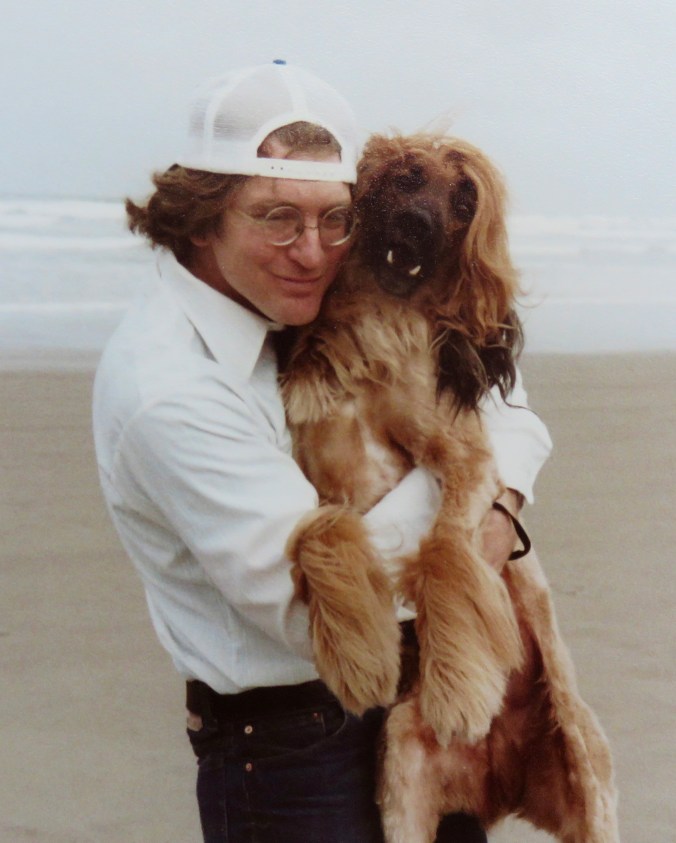
Gary with his dog, “Manny.” He’s clipped down after we moved to the beach in 1979. Manny was an American and Canadian Field Champion.

We went to Canada last month for two nights. It was a lovely time, made lovelier, I suspect, because we took no photos and accomplished nothing but rest of the best sort: we ate well, walked, napped, and read.

The point was to use our passports, that were a week or two shy of expiration and had never been used.

Gary and I used to travel to Canada often, back in the days when all we needed was a rabies certificate to bring the dogs we were showing back into the US. I showed our Afghan Hounds in dog shows and judged field trials and the dogs ran in them. For a time in the 1970s and 80s, our dogs were well known by the running crowd.

Gary was known.

Some terminology: Sighthounds are dogs that hunt primarily by sight—they chase what they see moving. Greyhounds are the sighthound most people know, but recent genetic testing finds that Afghan Hounds and Salukis are among the oldest dog breeds, existing for thousands of years in the Middle East. Lure coursing allows a formalized “hunt” of a shredded white plastic garbage bag. The dogs are smart enough to know it’s a lure, but most enter fully into the game.

The sport of lure coursing began with the American Sighthound Field Association which probably owed its existence to Lyle Gillette, a dog fancier best known for his Rancho Gabrielle Borzoi, the hounds also know as Russian wolfhounds, which were actually used in packs to hunt wolves in the Steppes. Lyle was a sweet man and I stayed with him while I was participating in a field trial in northern California. I was traveling with my friend Heather Loube, a citizen of Canada. This was the early 70s.

The previous year, I had traveled with Heather and her husband Jeffrey and assorted dogs to Colorado for the inaugural Colorado Grand National. One hundred and four dogs of various breeds ran that day. I slipped Wielki Sezlem of Nightwatch who was a show and field champion. I yanked the slip collar toward me when I released him (a mistake), the heavy brass ring hit me in the face, and a hour or so later I had eight stitches in my upper lip. I could show you the scar.

The upshot was that when Gary picked me up from the airport, he was tall enough to look right down under my bandage and see my stitches, and he about freaked out right there in the airport. I had not warned him.

This was not the first time I’d had an injury to the face. One of Heather Loube’s dogs had jumped up to kiss my face, while I was backing up and Heather was trying to pull him away. His tooth met my tooth and my tooth lost. Heather’s dentist came into the office on his day off, treated me gently and at no cost.

[Don’t ever tell me that the Canadian health care system is inferior to ours. Years later our youngest son, then not four years old, had an abscessed tooth and our dentist would not come into the office to treat him. He had no emergency care referral in place, and I called every dentist in the county before I found one willing to see my sobbing child. I got better care from a Canadian who owed me nothing.]

Heather and Jeff Loube founded the Canadian Sighthound Field Association with help from a few other early enthusiasts, including Gary and me. Gary and I were ourselves instrumental in starting field trials in the Pacific NW.

All of this to get to Gary mowing an eight acre field with a push mower.

We liked running hounds on rough ground, but grass approaching two feet made visibility of the lure near impossible. The field in a local park had to be mowed. No one in our breed club would help or even offer equipment. After the first day, word got around, and Denny showed up. Whippet and Borzoi and Deerhound fanciers showed up. Five or six people with gas-powered mowers. Eventually someone got ahold of the parks people and the park manager came out to see what was happening, shook his head, and lent us the sitting mower, and the mowing was completed in no time. Four days of hard labor and then no time at all.

That first meet used a drag machine. The lure was attached to the end of 100-pound braided dacron fishing line, which was connected to a spool that wound up the line. The course made a huge S shape with a long straightaway in the middle, cornering on pulleys set flat on the ground, over a total distance of about 900 yards. That course was strung by hand. Someone took the lure in hand and ran around the huge S, catching the line on the cornering pulleys. That someone was also Gary.

Most clubs used a motorbike to string the lure. Later, continuous loop machines ran the line with one end of the S joining up to the other in one continuous loop. (I was present at the first use of a continuous loop machine, also in California. My girl, Onika, skinned the inside of leg running right along the line—a rubbed patch the size of my palm inside her stifle. We learned to keep a continuous loop tacked down close to the ground to avoid these injuries.) Some courses were different shapes of course. I designed many.

Gary ran the lure around for each course at our first meet. Three dogs running in each and wearing identifiable jackets in yellow, pink, or blue. (We used red, black, and white, in early courses, but this caused confusion—was it the red dog in the black jacket? or the black dog in the red jacket?)

Gary ran many miles. The Canadians brought beer for after.

Over the years, we met semi-pet raccoons, rare sighthound breeds, people from all over the world, because of our dogs. I went into labor the first time while on Vancouver Island BC, judging a field trial. I drove all the way home and was in the hospital a few hours later. You might not believe it, but that is one of my favorite memories.

I miss the dogs terribly sometimes. We had sighthounds and were active showing and running for decades. Gary still misses Manny.

We traveled across the U.S. and to Canada for dog shows and the far more entertaining field trials. You can guess which events the dogs preferred.


PUBLIC COMMENT

IMG_2717


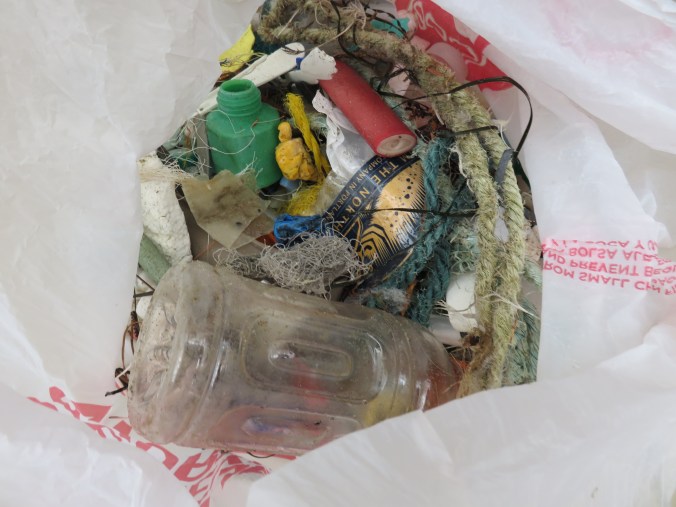
We found a 10-day-old parking ticket from Portland the other day. Often the plastic trash we find has baby barnacles. It’s been out in the water a long time before we collect it.

It’s not the only thing and west is not the only direction.

We get our water from the Coast Range. “Here’s another map showing the area at the Arch Cape Creek headwaters that will be arial sprayed. There is a comment period that will end May 6 or 9th.

“If you want to comment email: jasen.r.mccoy@oregon.gov” 

31487881_10211864031983998_8701270628327489536_o.jpg

They are, essentially, spraying my backyard.

The goal of spraying is to prevent plant growth. They do not want weeds or natural forest succession to begin—from shrubs, then hardwood (alder), to conifers (spruce and hemlock). They want a marketable crop as soon as possible. To achieve that goal they spray chemicals closely related to Agent Orange. On land where I have walked, land rinsed by our future drinking water.

This is my public comment: My family has summered in Arch Cape since 1911. We have lived here year around since the 1940s. I moved to Arch Cape in 1979 with my husband Gary C. Anderson just after the last clearcut, and I recall saying to him that there would not be another for at least 30 years. I knew what they had been spraying up in those hills. And I knew that rain would flush some it it down into local drinking water.

My husband and I have lived here for 39 years and raised our children here. My husband worked in local businesses and I taught in the Seaside School District. Each morning since our retirement we walk the beach and pick up trash from the shore. I can see the plastic bottles and broken toothbrushes, the bottle caps and nylon rope, the plastic foam and cigarette lighters. We see the trash and we can walk by or carry it home to put in the trash.

We cannot see the toxins deliberately introduced into our ecosystem.

It is criminal that this still happens at a time when so many people have become ill and even died from the impact of deliberate human action.

Please do not poison our watershed. Again.

THE GRIEF EXCEPTION

First, a confession. I am moody. I sometimes suffer from sadness and depression and anxiety. I have, as an example, seriously worried about overpopulation as if it were my personal problem to solve. I can recall lying awake at night, stewing about starvation and disease and the loss of wild places. I can recall standing in the shower arguing aloud with myself about what should be done to save our planet from overpopulation. I might have been ten years old. I was also unpopular at school, had few friends, my mother was seriously ill, and my father smoked too much. I had been molested on the playground. I worried about overpopulation because I was precocious and smart and all around me my favorite places to play were being turned into housing developments. My worry was a response to my environment and real life experiences.

When I was a child, I was terrified about what the world would be like if the growth of world population continued to grow and double. It did more than double, of course, growing from 3.1 billion to an estimated 7.6 billion today. I was not worried for nothing, and all the woodlands and swamps and cow fields I recall in my old neighborhood north of Seattle are long drowned under pavement and 3-bedroom homes. So, sometimes I was worried or anxious. Sad. I dealt with it as best I could, sometimes better than others. As an adult I am generally determined to find that illusive silver lining in any dark cloud.

It might be raining over my head, but focussing on how wet I felt, decades ago, brought me close to death. I looked for brightness then and still do now, not because everything is perfect in my life, but because I am determined to live.

While my mother was dying and I was also working 60-70 hours a week and driving home from work in tears, feeling overwhelmed, useless, and unfocused, I gained pounds. After my mother died, I lost 40 pounds in a few weeks. One day a colleague asked me how I’d managed to lose so much. I looked at her and said, “Grief.” Pills would not have made any of that situation better, would not have helped me cope better, would not have made my mother come back to life. I needed time. I needed to find my own way back. And I did.

Sometimes I read a good book—proven to improve mood—and I avoided the genuine downers (three novels by Cormac McCarthy were enough for me.) I sleep too little and eat too much when I am depressed. Improving both habits helps. Running used to be essential, but even walking now is good. I do things for other people. I commit random acts of kindness. I contact a friend. I listen to music that stirs my heart. It would be easier to take a pill—don’t think I haven’t thought of it—but my reading and research has convinced me that pills are mostly a false promise of an easy fix. For most people, and certainly for long term, drugs profit Big Pharma, not people. My research revealed we have been sold a bill of goods.

I recently read Lost Connections: Uncovering the Real Causes of Depression – and the Unexpected Solutions by Johann Hari. Hari reviews the story he was taught about his brain as a teenager, and which remained his truth for more than a decade afterward: depression is caused by a chemical imbalance in your brain and this can be corrected with medication.

The trouble was that while medication provided him with some relief for a while, that relief did not last. It did not make him feel good, only “better” for a short time before he was back in his doctor’s office looking for something better. That might be because no one has proven there is any chemical imbalance in the brains of depressed people, medication fails to “cure” depression in the vast majority of people, and could not cure his own depression. (He was prescribed Paxil, a medication that the company had already proven did not work for teens.) As ineffective as antidepressants are in curing depression they have very real and potentially catastrophic side effects. Big Pharma sold a story that we wanted to hear: The problem is personal, out of the control of the individual, and can only be addressed with pills.

This is mostly a lie.

Instead, most scientists agree, depression and anxiety are related, on a continuum with ordinary sadness—they are actually the same thing—and they are normal, reasonable, and sometimes even healthy emotional responses to our lives. Our emotions slide along a scale that runs from dancing with joy to standing on the edge of a cliff. Fortunately, most of the time, most of us are closer to dancing than jumping off the edge, but there is no medical truth to the story we have been told.

It’s not our brains that are broken, it’s our lives.

When Margaret Thatcher declared: “There’s no such thing as society, only individuals and their families” she denied the truth of our species. We are social animals. We want connections with others, we want our lives to contribute and to have meaning to others. We need this as surely as we need food and water. People are not isolated individuals, we are social beings starved for community.

One “symptom” of clinical depression is isolation. “Have you stopped meeting with family or friends?” Hari documents how isolation is not a symptom of depression. Depression is a symptom of isolation. The entire checklist for depression reads like an indictment of modern life.

When we do meaningless work and feel no connection to others, when we feel powerless over our life choices, when we embrace possessions rather than people, we become sad, anxious, and ultimately “clinically depressed.” Pills will not fix this feeling. We must repair the damage to our communal self-worth. Our depression is not the disease, it is a symptom of a more complex issue that has resulted in millions of people being diagnosed and treated for a disease that interferes with daily function.

The popular definition of depression as a disease over which individuals have no control actually feeds the beast. Taking control and making choices is within our power. While we are not to blame for all our circumstances, it is sometimes within our power to change them. We can choose to be active participants in our mental health instead of powerless victims.

Consider just this one fact: One in six Americans (the French are worse off, and so are the English) is on psychotropic medication, some sort of drug to treat the brain. If we are inherently this sick, how did we ever manage to survive as a species? If it is our brains that need fixing and the drugs fix the problem in our brains, shouldn’t we be healthier now than we were before these drugs existed? Shouldn’t suicide rates gone down instead of up in the last few decades? Look it up.

I was familiar with much of the research Hari cites. I knew that depression was not caused by a chemical imbalance and that pharmaceutical companies had rigged trials in order to pretend drugs could address depression far more effectively than they do, and made $200 billions in profit as a result.

I already knew from the studies he cites and earlier ones, that it is ordinary working people who feel anxiety and stress and depression most profoundly. Those at the top have choices that those in the middle and bottom seldom have. A sense of agency, of the ability to make decisions, and options that make living worthwhile.

I already knew about the “grief exception.” Grieving the death of a loved one causes all the “symptoms” associated with depression—why would this surprise anyone?—but the grieving are not sick and do not require medication. They need time.

The medical community accepted that grieving is natural and human . . . so long as those grieving do not feel “depressed” for too long. If your daughter is abducted and burned alive, how long are you allowed to feel bad? If your baby is stillborn, how long? What about the death of a parent? The medical community allowed a year, but then you are supposed to push that pain out of your life and be . . . fine! Or at least functional. Because if that grief lasts longer than medically necessary, you must be depressed. So you have a year to get on with your life. Except that the medical community shortened that understandable year of grief to a few months, then weeks, and then eliminated it entirely. You are grieving a death? Get over it, and right now!

I have advocated for years that people socialize, sleep and eat better, be creative, and exercise. These DO have a bigger impact on depression than meds for almost everyone. Whenever I suggest this, I have been thoroughly thrashed. If you are too depressed to get out of bed, how can you be expected to take a walk? I am told I am unwittingly and unkindly telling people to “pull themselves up by their own bootstraps.” (I do not dare point out that they managed to get to a doctor, to the pharmacist, and to take their little pills.) The story is that this is not our fault and not within our power to control.

Hari explains how our attachment to this story we have about depression makes it difficult or impossible for us to hear another. It is frightening to challenge the narrative we have taken into our most vulnerable psyche. Yet, we need a more truthful story. While he confirms my faith in healthy habits, he advocates something beyond that.

His new story goes like this: We must collectively and for the good of all reconnect to other people, find work that allows us purpose and potential for growth and meaning, and stop blaming our brains for a society gone awry. We must hold hands and do this together. Yes, we will feel sad from time to time. We may sob and lie awake and cry when something terrible happens to us or the people we do care about. We are allowed. It is normal and a symptom not of brain disfunction but of emotional pain in our lives. Our father died. We did not get the job. Go ahead and feel bad about that. Take a friend out for a healthy meal, go for a walk, read a funny novel. Take all the time you need. We get better.

We must not look always inside, but sometimes do our individual best to look out, and look to others and connect to them to find the way out of our personal pain.

His book has its corny moments—even Hari admits this—and I was familiar with most of the research he cites and his narrative began to fall into a pattern I could predict. I wanted some things that I did not find here. I don’t think the author has written a perfect book or the one I would have written, but I do think he’s right.

We are not broken.

We need to find a better story to explain our distress.

The book includes copious endnotes and online links to additional source material. He’s done his research, and the book itself is well documented. He offers true stories to illustrate his points. There is a great deal of science, but very little that is too complicated for the average reader.

If I had read this book when I was ten (and it is the sort of thing I was reading at that age) I would have felt a lot better about myself and my mental state. I would have recognized the impact events had on my ability to feel good. Instead, I needed most of my life to figure it out.

WISE WORDS

“When there’s no social pressure behind it, respectful behavior becomes a decision, an individual choice. Americans, even when they pay lip service to Judeo-Christian rules of moral behavior, tend to regard moral behavior as a personal decision, above rules, and often above laws.

“This is morally problematic when personal decision is confused with personal opinion. A decision worthy of the name is based on observation, factual information, intellectual and ethical judgement. Opinion—that darling of the press, the politician, and the poll—may be based on no information at all. At worst, unchecked by either judgement or moral tradition, personal opinion may reflect nothing but ignorance, jealousy, and fear.”

—Ursula K. Le Guin, May 2013 from No Time to Spare (pp. 14-15)

It is tempting to see this as prescient. It might be wise to consider what it says about our national character and how we find ourselves in the political situation under which we now suffer.

FORGIVE THEM

The New York Times has an article this morning that is misleading about Oregon’s public retirement system. Many readers are furious. One wrote:

“As a Republican in Oregon I weep regarding the Mary Walsh piece on Oregon´s public sector pensions. It is to a large degree a rehash of periodic attacks by the state´s largest newspaper, the Oregonian. As it reported recently 9 of the top 10 pensions were either for physician-administrators at Oregon Health Sciences University or football coaches. The convoluted retirement system described by Walsh reflects a combination of rosy assessments, a willingness of successive state governments (including Republicans) to use the pension system to solve other problems such as reframing salary raises as future pension benefits, and the state’s idiotic constitutional requirement that income tax revenues above estimates two years previously must be returned to taxpayers rather than used to cover obligations such as future PERS benefits. Oregonians face pressures on services precisely because they voted to return to their pockets funds they had already paid out rather than channeling them to backfill a foreseeable commitment. This is what passes for financial prudence in Oregon. Walsh does not mention this, presumably because it is inconsistent with the narrative she wishes to promote. There is no reason for highly-paid administrators to be part of this system, nor for athletic coaches to be pensioned in the same fashion as corrections officers or state foresters. But beware of manipulated critiques. Note: I am not now nor have I ever been a member of PERS, nor is anyone in my family.”

I retired in 2015 at age 62 because during my final year of teaching English full time I was ill, twice, for 3-4 weeks at a time because of overwork. My district could “not find the funds” to allow me to continue working 2/3 or 1/2 time so retirement became my only option. I have been healthy since retirement, but I have not quit teaching. I still spend several hours each week as a volunteer in that school and also teach one class for two of the three terms.

My PERS pension is less that a third of what I made teaching despite working for this district since 1979, the first eleven years as a substitute teacher while my children were young.

ALL teachers in Oregon were forced into the new pension system when it was implemented, though the money I paid into the old one remained there. For the last years of my teaching I paid into the new system.

Yes, I paid into my retirement. And in addition to what I receive today from my work under the old PERS system, I also receive the princely (and variable according to the market) sum of about $350/month under the new system. This pension will end after 20 years.

I have 6 years of undergraduate education with three degrees, and 7 years of graduate school with a terminal degree (MFA). Thus I am qualified to teach K-college in four subjects. My former students from a small, rural, and poor school district have gone on to become doctors and lawyers, engineers and entrepreneurs, authors and dancers and more. They attended Duke and Pepperdine, Stanford, Harvard, Brown, Chicago, Columbia, and my alma mater of The University of Washington and Pacific University.

Oregon tried to renegotiate payments to retirees, but the court would not allow them to do this. Instead they forced all employees onto the new system, not just new hires. This detail is reported in the article inaccurately. Those hired under the old system kept that pension, but could not pay into it (many teacher, for example, accepted flat salaries for years and also paid into PERS). EVERYONE was required to work under the new system when it was instituted.

Like most retirees in my state, I am tired of being blamed for fiscal irresponsibility and the outlandish benefits paid to a few high fliers. My pension was reduced several times from what I was originally promised. My expectation that it not be reduced further is reasonable and only fair.

How I spent Spring Break

IMG_0729

I napped, walked, read, cooked, revised older words, wrote new words, traveled, drank coffee, took a ferry twice, queried, submitted, and received good news. We went to the march in Astoria last Sunday. We both support sane “well regulated” gun safety. I set up blog posts to go live in the middle of the night. Life has been trundling along peacefully, but our passports were about to expire in April without our having ever used them, so we decided we had to leave town.

Usually Spring Break is an especially busy time for my students who work in the tourist industry—many of my students do. In fact, local teenagers and immigrants are the only way most of my local restaurants and hotels can stay open.

Though I offer a syllabus with information on where we are headed in class, I never give homework over vacations. Nothing is due the day we get back. They can come to class as unprepared as they like and we will pick up from there.

A friend who is retiring is struggling to figure out what he wants to do with his time. How do I manage? I suppose the best answer is that most often I hardly know the difference between work and non-work. Sometimes I am eager to bake bread and other days it is just something that must happen because the sourdough start on the counter needs to be put to use. Teaching my college class is like that. Most often I am eager to get to class, but some days I have to put in time preparing merely because the task has to be done. The walk on the beach in the rain? Not so different this morning than yesterday when the weather was lovely. Mostly, I do not dread any part of my life.

Most often, I devote Spring Break to working on curriculum and grading papers. I did not do that this year. Instead, I did the bare minimum and my husband and I went away for three nights—the longest we have been gone in 15 years. We stayed in B&Bs in Port Townsend and then took the Black Ball ferry across the Strait of Juan de Fuca from Port Angeles to Victoria in Canada. During this passage north, we talked to a couple visiting Victoria for the first time. We had visited many, many times, but not for thirty years.

Gary and I used to travel to Vancouver Island to stay with friends and show our Afghan Hounds. We attended the first Canadian lure course on Vancouver Island and our Onika was Best of Breed. I was nearly always there around Easter because the the Vic City shows. The old Dutch Bakery sold fancy molded rabbits in three kinds of chocolate. I intended to buy three, one for each grandchild.

I finished reading two books, one already started, but the novel was from a Port Townsend author and I interrupted The Odyssey to read it. I bought a bit of yarn and batik fabric—3 quarter-yard pieces—and three chocolate rabbits-in-roadsters from the Dutch Bakery in Victoria. Gary bought The Nation and 3 pounds of wildflower honey. We did not have access to the internet during the entire trip. We relaxed.

It wasn’t until we were nearly home again that I commented to Gary that I wanted editors and an agent who genuinely loved my work, not just liking it but enthusiastic about it. I found over 200 emails waiting. I responded first to Dinty Moore, editor at Brevity, who had emailed two days before to ask if my essay “Murder of Crows” was still available. Yes! I found a request for the full manuscript of my novel (the second such request). And after I had responded to everyone and written a blog post, Liminal Stories emailed acceptance of my peculiar owl story. I emailed the readers who had helped me with that story to share my good news and to thank them. I returned phone calls from people who had left me messages. I went back to work on the eleventh draft of my novel and worked through three more chapters. I began a work of nonfiction about restoration of a stream and wetland on the Olympic Peninsula, land we passed on our travels. A few days ago, I committed to the Camp NaNoWriMo challenge to complete a project this month. After our walk yesterday, I began work on an SF story, and I will work on it today too. But I always do the National Poetry Month Challenge to write a poem a day. The afternoon was crowded with words.

Saturday, we delivered a chocolate rabbit-in-roadster to each of our grandchildren. I played with each one, and I walked two of them home from their Easter Egg Hunt, loaded with tiny treats. The rabbits were not long for this world.

What I did not do: scored 4 of the essays in APA form that wait on the dining room table; order Malabgrio yarn; complete more squares for the quilt I began, last month now; knit anything beyond a swatch that is unsuccessful; finish painting walls and the rest of the ceiling upstairs violet-gray, or the four matching dining room chairs black or green.

Yesterday I poached sockeye salmon in lemon, garlic, and wine, roasted potatoes, and churned ice cream. I watched some television and recognized that during this vacation I both accomplished and relaxed. I opened the draft of the activity I plan for my writing students today, completed, and printed it off. I went to bed and rose early, heading back to work. Change is good, relaxation is healthy, but so are the ordinary tasks that give meaning to each day.

#FACEBOOK

Pendiri-WhatsApp-Dukung-Gerakan-DeleteFacebook.jpg

My husband and I don’t do Twitter. I have a Pinterest account, but no one in our family does the other social media. But for nine or ten years, maybe longer, I was on Facebook. I had over 1600 “friends.” They are actual friends, family, former students, former classmates, artists and writers.

I began phasing out use of my Facebook account early last summer. I nearly deleted my account this winter, but changed my mind at the last moment. I figure most people do that—change their minds. It’s hard to let go. I deactivated my account months ago and I did not exist on FB just now, at least as far as I knew. I had been afraid to check. FB will turn your account back on if you access it, even accidentally. That happened several times a few months ago.

So this is it, folks, I am back to thinking about deleting my account permanently. Or not.

I was fully aware of what I was getting into when I joined. The ads at the side made clear to me that Facebook was selling information. I found promoted stories in my feed every day. During the 2016 election campaign, I found horrible stuff in my feed and told it to go away. It did go away. I am not a good customer for conspiracy theories and wackjob political stories. I verify facts.

So now that everyone is a little hysterical, I can’t help feeling terribly disappointed in those 50 million accounts that were hacked. But my disappointment is not with Facebook—which is only trying to make a buck (or a few billions)—but with users who read the ridiculous trash on Facebook and apparently shared it. Facebook isn’t a site created in order to allow us to communicate with people we like. It was created to make a profit. Those ads on the sides were not a clue? The crazy “promoted” stories didn’t tip people off?

Yes, my schizophrenic relative believes Michelle Obama is a transvestite. Another believes in Obama’s death camps. The “Lock her up!” line was the favorite of many people who seem not to have noticed that their darling Trump has now, genuinely, done all the things we were supposed to lock her up for.

(Remember those crimes that were supposed to make us angry at Hillary?—Wall Street connections, private email servers, questionable charity?—those are Trump stories, my friends. The White House cabinet is stacked with Wall Street people; Trump’s family—I had to define “nepotism” for my seniors last month—members use private email servers in the White House; and only a lout like Trump would use his charity to purchase an enormous portrait for his golf course club house, a portrait of himself.)

I read the news every morning. I know more about what is going on than the latest shooting. I read science stories, political stories, art stories. I double check stories.

I trust (and so can you) any story that is covered by The New York Times, The Washington Post, The Guardian, and NPR. If I want a more conservative slant, I check The Wall Street Journal, The Hill, and The Christian Science Monitor. If I want a more liberal slant, I check Mother Jones or even The Nation. If I don’t want to read opinions, I don’t have to. I can stick to straight news. I can even check the news wire services who supply facts to everyone: the AP and Reuters.

Many of the stories I found on Facebook over the years, including on the pages of people I like, were nonsense—total trash and nonsense, some outright propaganda and a lot of irrational scare tactics. I mostly ignored those stories. Sometimes they made me angry. Sometimes the juxtaposition of someone I liked spouting nonsense disturbed me so much I could barely stand to be on Facebook.

It’s why I left.

However, even if I don’t miss Facebook, I do miss my people.

So there is my problem, or problems: I miss my peeps, I miss the family posts and news of former students, the art and writing news of friends. I miss sharing what I am doing each day. I miss posting news of my posts here on my Facebook page. I’d like to think I might have a book to promote on Facebook some day, and I would like to be able to do it.

Like everyone, I would like to boast about what makes me proud—recent publications, beach finds, grandchildren . . . on Facebook.

It would be ironic, wouldn’t it, if I returned to Facebook just as everyone else leaves?