A MEMORY OF CONVENIENCE

2-wb1iccm

We did not see the film The Darkest Hour until recently. I had concerns about the lead, about the film, and particularly about its subject, the much lionized Winston Churchill.

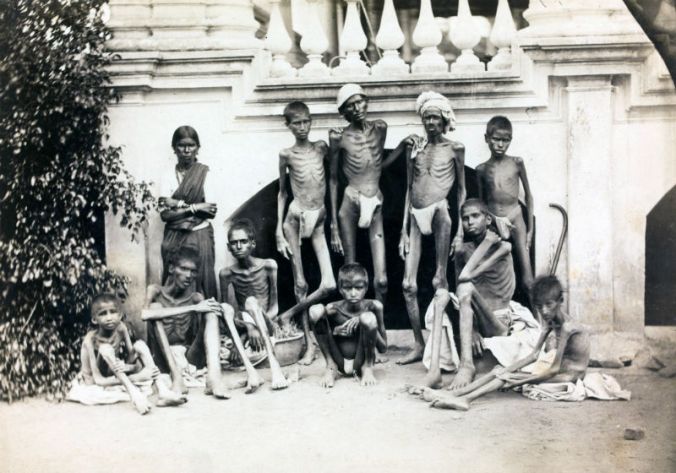
It is one of my nightmares to find myself teaching a subject I know little to nothing about, such as the Boer War. Even so, I thought I knew British history. I knew for example that Indians (of India) died of starvation while the British sat on overfull grain houses during WWII. When I feel particularly distressed about the interference of my own country in the lives of people around the world, I have only to call up the atrocities of the British. They have been at it so much longer than we have.

I thought I knew this story.

A new essay in The Washington Post by Shasti Tharoor about Winston Churchill reveals how little I knew. He reviews Churchill’s unwarranted and brutal attacks on people of color all over the world. He advocated genocide,

“ ‘History,’ Winston Churchill said, ‘will be kind to me, for I intend to write it myself.’ He needn’t have bothered. He was one of the great mass murderers of the 20th century, yet is the only one, unlike Hitler and Stalin, to have escaped historical odium in the West. He has been crowned with a Nobel Prize (for literature, no less), and now, an actor portraying him (Gary Oldman) has been awarded an Oscar.”

“Churchill’s beatification as an apostle of freedom seems all the more preposterous given his 1941 declaration that the Atlantic Charter’s principles would not apply to India and the colored colonies. He refused to see people of color as entitled to the same rights as himself. ‘Gandhi-ism and all it stands for,’ he declared, ‘will, sooner or later, have to be grappled with and finally crushed.’

“Many of us will remember Churchill as a war criminal and an enemy of decency and humanity, a blinkered imperialist untroubled by the oppression of non-white peoples. Ultimately, his great failure — his long darkest hour — was his constant effort to deny us freedom.”

Not counting soldiers, millions died as a direct result of Churchill’s policies in Kenya, Ireland, South Africa, Afghanistan, Greece, Iran, Iraq, Palestine, and other countries. Up to three million died of starvation in India alone. In response to Gandhi’s campaign of peaceful resistance, Churchill said the Mahatma “ought to be lain bound hand and foot at the gates of Delhi, and then trampled on by an enormous elephant with the new Viceroy seated on its back. . . . I hate Indians. They are a beastly people with a beastly religion.”

He bombed and starved and destroyed and exploited. His words beyond his famous rousing speeches about British persistence, reveal a man so certain of British (English) superiority, so bigoted and self-righteous, that he never was held to account for his racism, terrorism, and butchery.

He helped win a war. Didn’t he?

Would ordinary Brits have done and said such things? Would I? No one likes to think so, but then I have to wonder why it keeps happening if so many, many people “would never . . . ”
 

BULLET PROOF BACKPACKS

This morning on the news was a story about bullet proof backpacks. What children will be wearing this next fall?

Publisher’s Lunch is an industry publication that sends out a daily condensed report for free. Right at the top is an overview of recent sales of manuscripts, categorized by genre and target audience.

This morning, under “Children’s: Fantasy”

“NYT bestselling author Kristin Cast’s THE KEY, a story about a ‘massive pandemic spread by touch that becomes the catalyst for a drastic societal change’ led by a dynamic force of young adult heroes and heroines . . . “

Young adult novels are written for a market aged 12- or 14-18, though increasingly this is what actual adults are reading. Middle grade readers are aimed at children aged 8-12. This fantasy about a pandemic is aimed at younger children no more than 10 and as young as 7. Years younger than the boy who just shot himself in school in Ohio. I wonder what twisted, cruel imagination thought that a story about a world pandemic would be appropriate reading for a second grader?  Even one with heroic young adults?

What we teach young children about the workings of the world impacts them for life. The narrative we live as children sticks. Neglectful and abusive parents do damage, but so do authoritarian parents. Children raised in households with strict power hierarchies—the sort of family where the father’s every whim is absolute law, for example—most often learn that government is tyrannical and dangerous. They may grow to be adults who are anxious and afraid of tyrannical rule. 

Experience becomes a narrative, which the child comes to see as “real life.” But reading itself is experience, as recent research makes clear. Reading makes us smarter, more empathetic; it literally rewires our brain in ways that allow us to absorb experiences beyond those lived as if we had lived them. All of this is good, researchers hasten to explain. The narratives in novels particularly become as instructive as lived experiences. 

And that is where I stop and recall the only novel my parents ever considered censoring. I wanted to read I Never Promised You a Rose Garden when I was eleven. My father was worried—I don’t know his specific concerns—but my mother, who had handed me a book on sex (an awful book in my memory) when I was ten, argued I should be allowed to buy it. What I now know was a semi-autobiographical novel by Joanne Greenwood, was published under the pen name Hannah Green. I had an early fascination about insanity, and Joanne Greenwood was schizophrenic. She also claimed a cure, which no one believed in at that time.

I read Greenwood’s controversial novel and found comfort in Ward Four. When I was confronted with a young woman in full psychosis, I recognized her symptoms immediately. I called the police and she was committed to the hospital. Her father drove from California and he seemed a kindly man, horribly distressed. Was that woman’s drug use the trigger of her illness or a reaction to it? I don’t know. I do know her parents were not the cause.

I know that somewhere between authoritarian and neglect, there is a sweet spot where children are allowed to grow and become their own person. Somewhere between unreasonable expectations and locking them in closets is giving children opportunity to find their way meaningfully in the world.

There is room for superheroes and fantasy and dystopia on our shelves, but perhaps a secret garden, all creatures great and small, the story of real people from George Washington Carver to Sue Barton, Sojourner Truth and Maxine Hong Kingston, Sandra Cisneros and Josephine Hull. Maybe even Shackleton or Frederick Douglas. A little balance, please. A heavy dose of common sense along the way.

What does it tell children when we provide them with a bulletproof backpack and hand them only books about the end of the world as they know it, where only superheroes can solve our problems?


A little sweet:

IMG_1663

Oystercatchers are about.

SaveSave