WHAT WE DO

Former Arizona Representative Gabby Giffords, shot in the head in 2011 as she held a constituent event, set the message for the DNC last evening: “Today, I struggle with speech, but I have not lost my voice. America needs all of us to speak out, even when you have to fight to find the words. We are at a crossroads. We can choose to let this continue or we can act.” She implored listeners to vote. 

In a somber speech, former President Barack Obama warned that, in this election, American democracy is at stake. He outlined the strengths he sees in Joe Biden and Kamala Harris, then warned people not to let “this president and those in power… those who benefit from keeping things the way they are… [to] take away your power. Don’t let them take away your democracy…. What we do echoes through the generations.” 

It was a powerful speech—one for the ages, really—and it set up the night’s final speaker, California Senator Kamala Harris, now the Democratic candidate for vice president. 

Harris tied Obama’s theme to her own story as the American-born child of immigrants, reminding us that America is a “a beloved community where all are welcome.”

But not everyone sees America that way. “I think we need to ask ourselves, why don’t they want us to vote?” she said. “Why is there so much effort to silence our voices? And the answer is because when we vote, things change. When we vote, things get better…. Years from now, this moment will have passed. And our children and our grandchildren will look in our eyes and ask us: Where were you when the stakes were so high? … And we will tell them. We will tell them, not just how we felt. We will tell them what we did.”

—Heather Cox Richardson

“Don’t forget: Joe and Kamala can win 3 million more votes and still lose,” Hillary Clinton said. “Take it from me.”

•

•

OPPORTUNITY

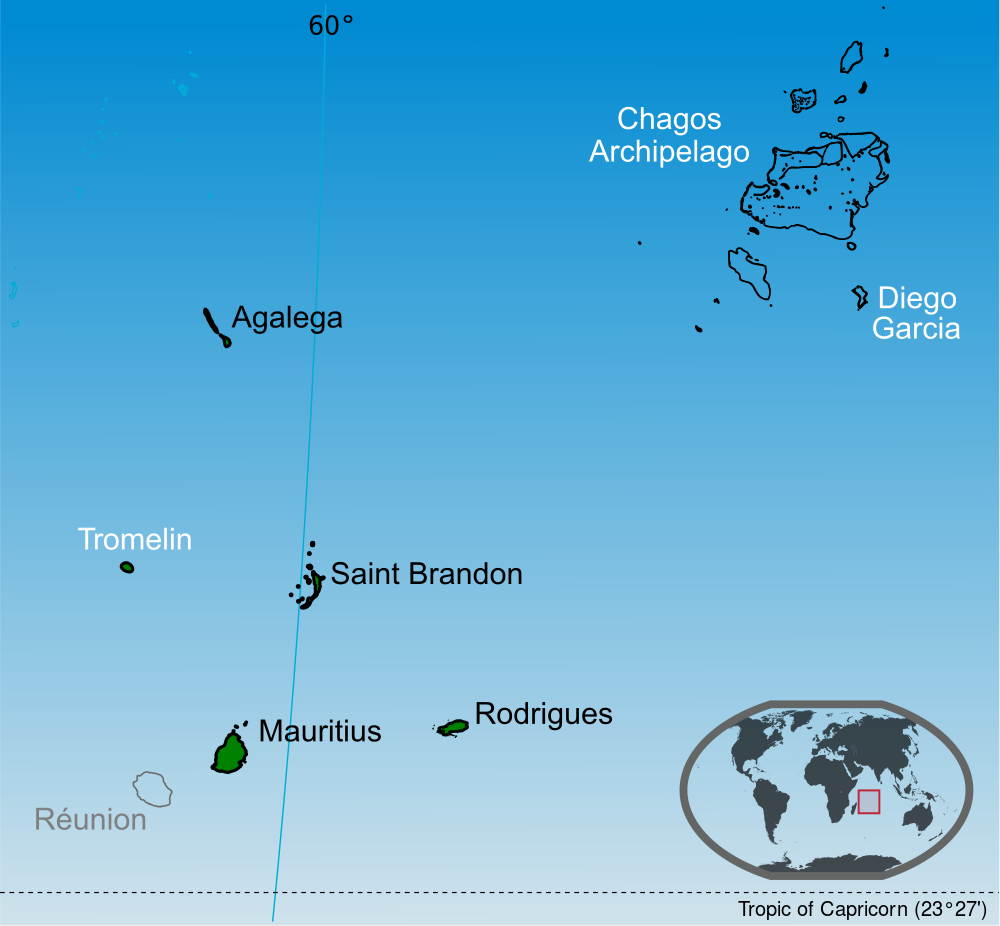
Someone using Mauritius as their home address visits my blog most days. I have access to view-counts and country-counts. I know where in the world my viewers are logging on and how many pages have been viewed from each country. I can’t help being curious about who is reading my posts from Mauritius. I know where that is, but not who.

The pandemic has cost me travel and entertainment and face to face meetings, Scrabble games and Farmers Market shopping. But some things might might change permanently, and some of those changes might be . . . at least interesting.

As one example, some events I would never have traveled to are now scheduled as online meetings. I can attend an Adroit issue launch, for example. I’m not certain I could do that before. I’ve been invited via email to several readings I am certain I could never have seen before. Living in a tiny community of mostly vacation homes in Oregon, New York City public readings might as well have been on the moon.

I understand people missing the “water cooler” moments and the schmoozing and drinking after-event events. Since I never enjoyed those sorts of gatherings, this is no loss to me. I see opportunity here.

Another opportunity is a sensible reorganization of clocks. Since much of the world ignores real time anyway—noon no longer means when the sun is at its zenith—maybe rethink this whole clock thing. Clocks made sense once upon a time as a way of dividing time. Now they are simply a matter of numbers telling us what to do when. And this is complicated by the way time zones divide up the world.

If I want to speak to a person in a London shop, for example, I must first look up their hours of operation online. Then I call up a conversion table to find out what 8am is local time. Then I can schedule a call.

Imagine that the entire world went on Greenwich Mean Time, the time I increasingly find on charts and websites these day. That is, today would begin just after the clock showed midnight at Greenwich, but it would be today all over the world at the same time instead of already tomorrow in some places—or is that yesterday? It would still be inconvenient to wake in the morning and find that the London shop had already closed at 5pm, but it would be open at 8am, which would be early afternoon for me tomorrow, and 8am would be 8am all over the world. London doesn’t currently observe GMT, which adds another wrinkle. In a worldwide system of GMT, they would, and if they wanted to open for business an hour later in the summer, they could do that.

Sure, confusion at first. We are fond of our numbers. Locally, I would be waking with the sun about 1pm, but the time would be 1pm everywhere. No confusion about whether it’s today or tomorrow in Hong Kong. (Seriously, you are never confused about that international date line?) Hours posted would hold true all over the world. Could I get used to rising when the clock says 1pm instead of 6am and heading for bed when my clock says 4am? They’re just numbers. I think I could accustomed myself to the numbers. My internal clock wakes me at sunrise and sends me to bed at dark.

In the mean time, I would still wonder who looks at my blog in Mauritius late in my night?

Mauritius_(+claim_islands).svg.png

I know about these islands because one of Patrick O’Brian’s Aubrey/Maturin novels is set in the islands. This image is from Wikicommons.

FLAMBOYANCE

gettyimages-1227919714_1.jpg

One adult shown among a flamboyance of gray flamingo youngsters who haven’t yet eaten enough pink shellfish to turn pink—wait a year and they will become more flamboyant.

Twenty-five thousand adult flamingo couples are summering in the salt marshes of southern France, the largest number since naturalists began counting them forty-five years ago. Over 60,000 flamingoes total—12,000 babies so far. They are harmless to man and beast, eating only krill, tiny saltwater organisms they filter through their beaks in a system not so different from what baleen whales use the filter small fish, krill, copepods, and zooplankton from the sea. The whale babies look just like their parents.

We appear like or unlike our parents, can be trusted or not trusted even by them to do what is expected. Most living things gather.
IMG_6688

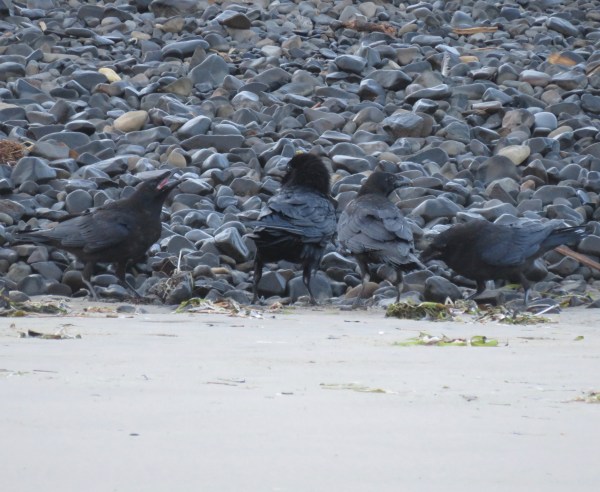
The youngster on the left is still begging for food. The gull babies do that too.

A group of ravens can be called many things. Here, the term “conspiracy” of ravens works for me. (I have never appreciated the term “unkindness of ravens”). The two raven youngsters look just like their parents—one has a fluffy head and is slightly bigger, but that might be one of the youngsters.


They are still hanging around together, though one of the adults sometimes wanders off on scouting missions.

Gary broke up a leftover waffle and some crumbs and put them out on the sand at the beginning of our walk the other day. The ravens stuck around long enough to say thank you.
fullsizeoutput_144f

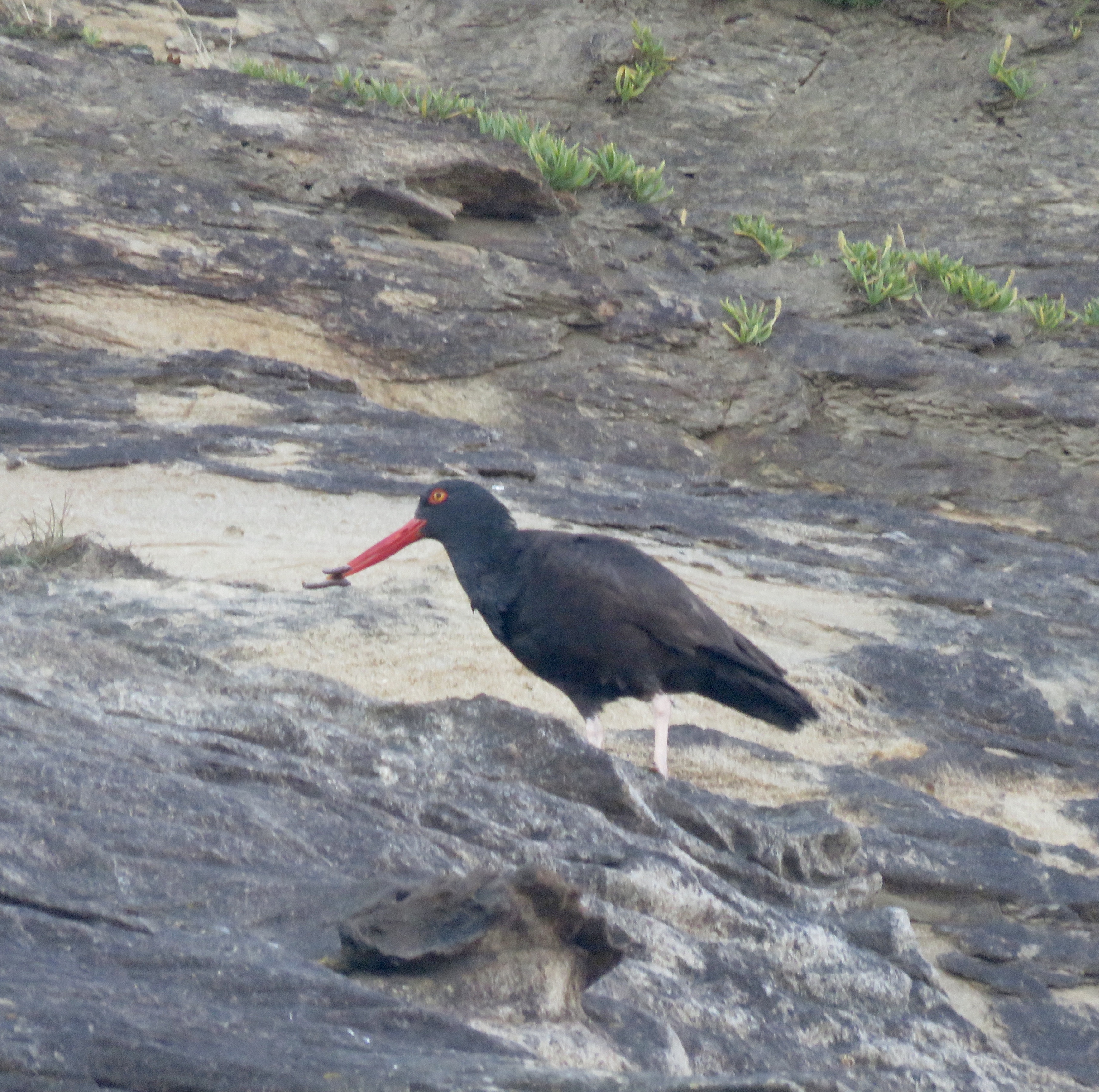
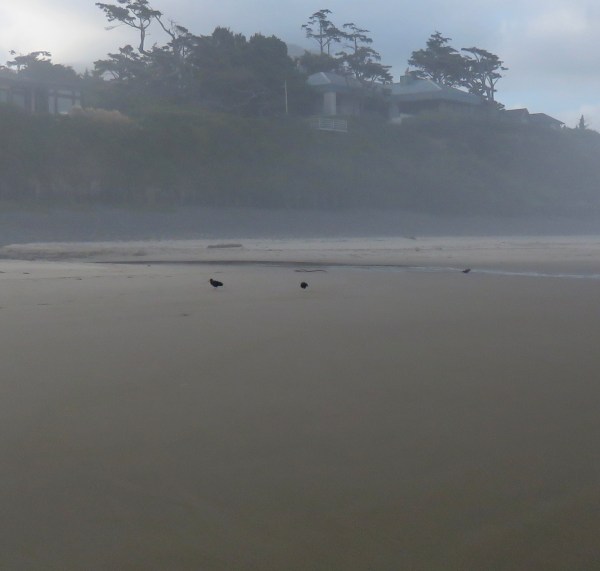
You’ll have to take my word for it that this photo shows three black oystercatchers.

We spotted the black oystercatcher youngster with its parents the other day at the north end of our beach. I did not zoom to catch which of the three was the child, but it didn’t really matter. I snapped the photo in the fog as we passed at a distance. We’re just grateful the baby is doing so well.

We are careful not to approach birds resting on the sand. If they are not flying, they likely want their rest, but it’s tricky for them with so many loose dogs. A photographer deliberately frightened dozen of birds off the sand just to get a photo of them flying.

That’s not as bad as the people trying to “rescue” baby seals (highly illegal and often fatal for the seal pup left onshore by its mother) or young eagles (disturbing any member of an “aerie of eagles” is also illegal and dangerous for the fool trying to “rescue” one). Or the man throwing a ball for his dogs into the surf in an outgoing tide. [This is why Gary does not like me to go with him when he gets the mail. He says I bark at people—I did bark at that man with the throwing stick. “They’re hunting dogs,” he said. “They trust you,” I responded. I saw a dog rolled right under waves, come out of the surf and absolutely refuse to go back in again. The dog was smarter than the owner.]

The wild things are right not to trust us, to focus a wary eye on our movements. We are not of their group, not trustworthy or predictable and kind. The wild rabbits (a nest) nibbling rose hips in our the front yard, the jays (a party) cruising through, the garter snakes (a bed), and gulls (a colony) and know to avoid us.

We try not to disturb the wildlife. When we must pass birds onshore, we walk steadily, avert our eyes, and direct ourselves away, away!
IMG_6801

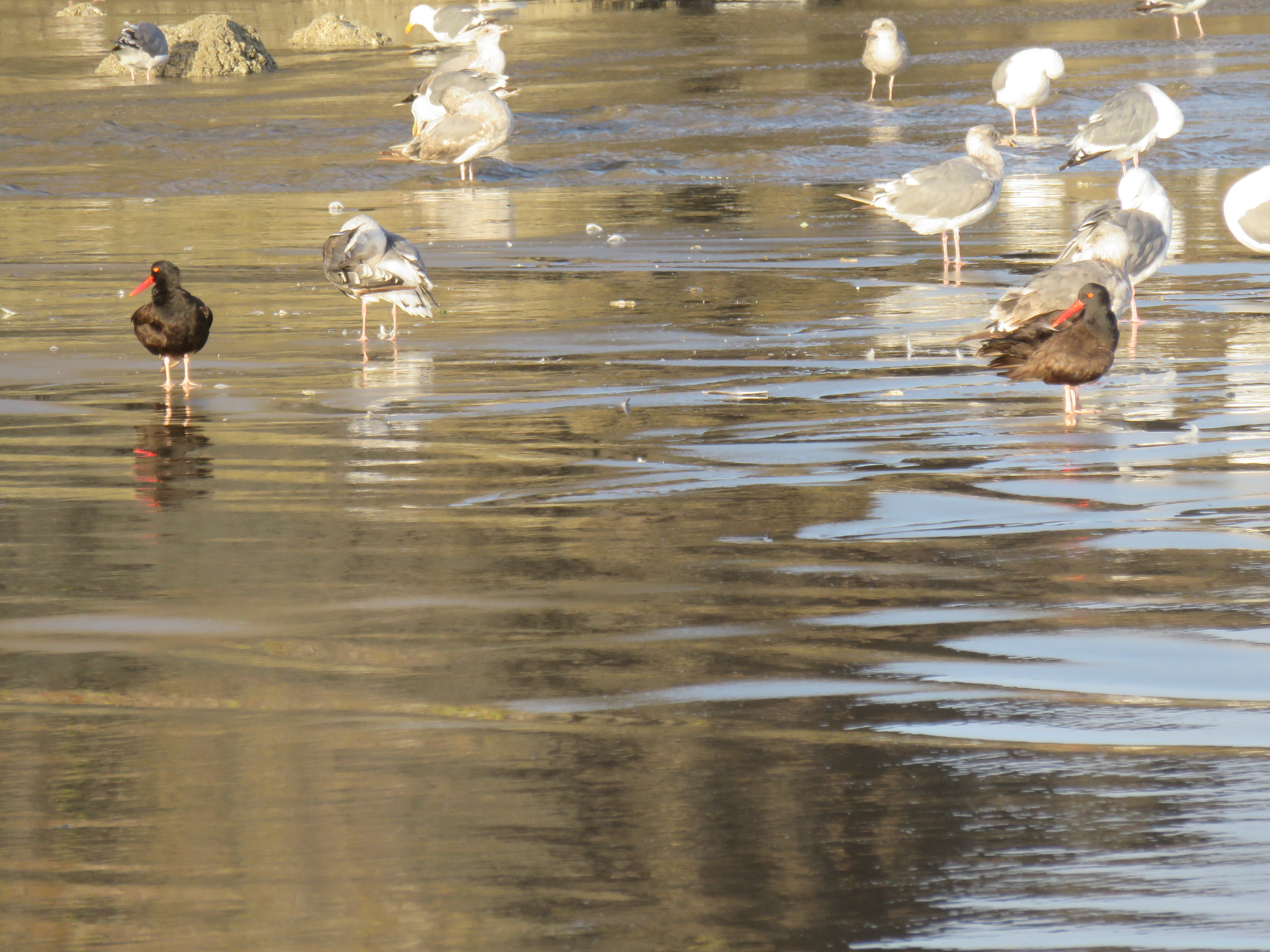
These two black oystercatchers are not the same pair. There is a  
“parcel” or “stew” of oystercatchers nesting south of us.

The featured image at top is from Wikipedia: “James’s Flamingos at Laguna Colorada in Bolivia”  “Young flamingos hatch with grayish-red plumage, but adults range from light pink to bright red due to aqueous bacteria and beta-carotene obtained from their food supply.”
The adolescent flamingos with one adult is a Getty image taken off the Smithsonian page
BECOME A TEACHER

fullsizeoutput_13a1
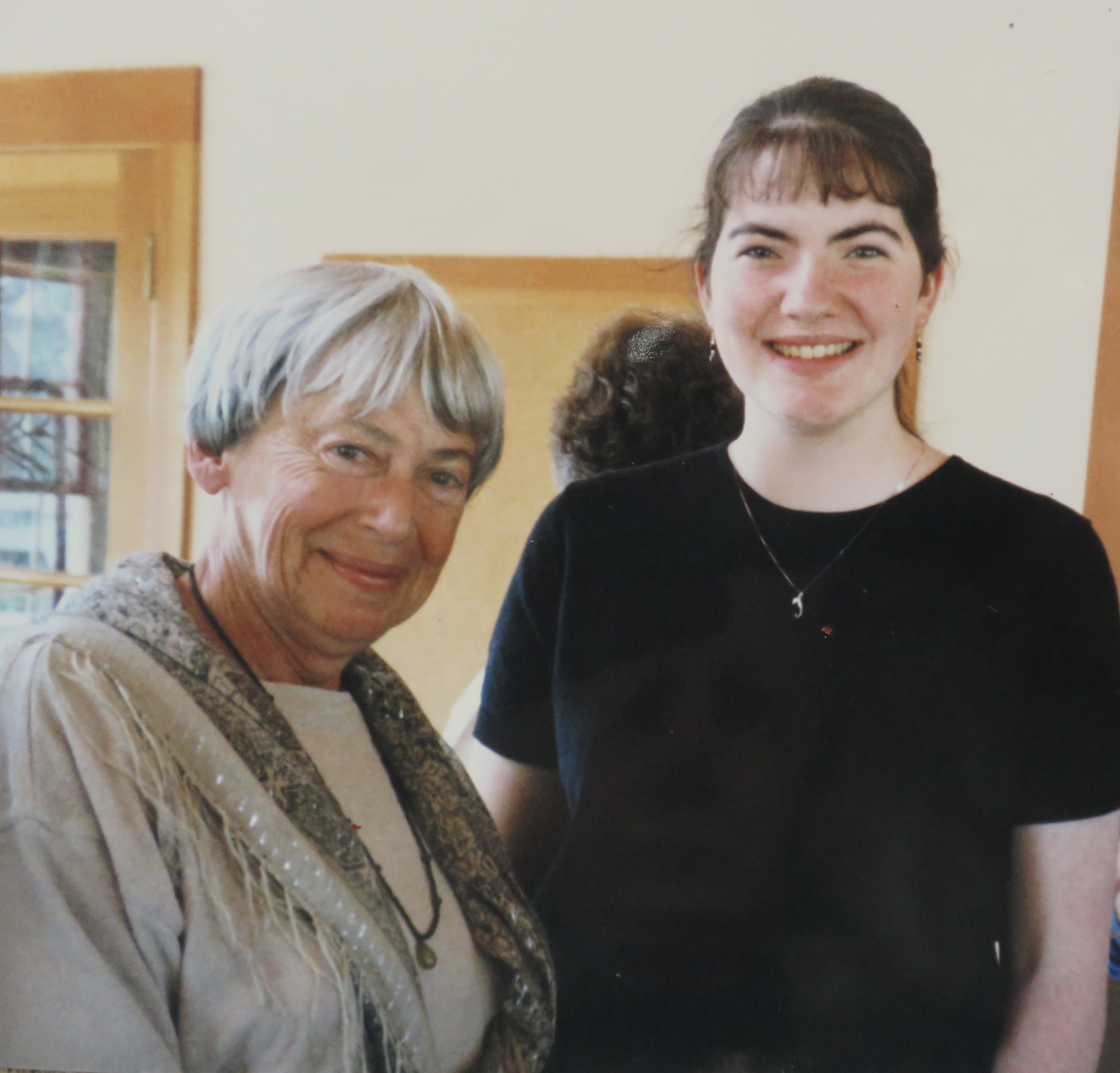
One of my former teachers and one of my former students. This was taken a long time ago. One has “left the planet” and the other is now a tenured professor of English. We are taught and we teach and sometimes those we teach become teachers.

We need teachers. We need teachers who are not merely well-educated and kind and hard-working. We need teachers who are smarter than most of their students. My original post “WHY YOU DON’T WANT TO BECOME A TEACHER” went up on my previous blog while I was actively teaching in a public high school. I reposted it here in February of last year, a month before I retired completely. Nearly two thousand people have looked at it just since, a thousand just this year. Google leads people to it from all over the world. People in Thailand, South Africa, Nepal, Greece, the UK, and France read it while I am asleep. It is my most-read post. Again.

Continue reading →

DISTRACTION PERFORMANCE

fullsizeoutput_1407

Forty years ago, I was climbing a seastack (don’t do this) and when I pulled myself level with the top I was eye to eye with a black bird with that brilliant enamel colored eye, staring right back at me.

That was my first close view of a black oystercatcher. I have seen a few since. We cannot miss their cry, a quick flutey scrawl. We particularly look forward to that sound during nesting season.

According to Oregon Fish and Wildlife, “The black oystercatcher is a large, long-lived shorebird about 38 centimeters (15 inches) in length with a long, thick, reddish-orange bill, a yellow eye encircled by an orange ring, and pink legs, all of which are strikingly set off by entirely black plumage.  Juveniles have somewhat browner plumage and a dark tip on the bill.  Oystercatchers are monogamous, returning to the same nesting territories to pair with the same mate each year.” Continue reading →

NORTH

IMG_6593

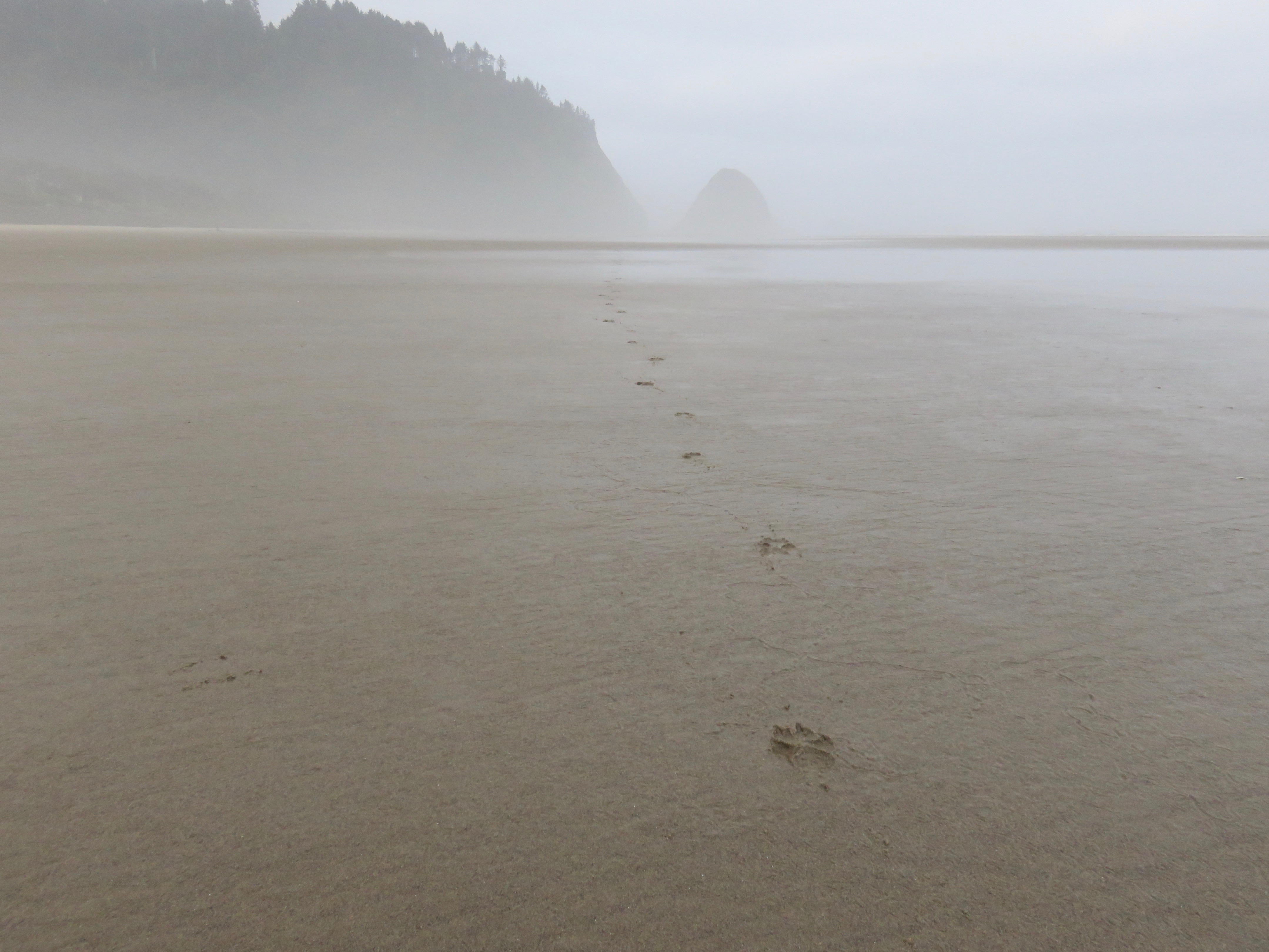
In the morning on tide-swept sand, we recognize footprints of local humans we can name and coyote, raccoons, deer, and various birds we cannot name.

Yesterday morning we walked north nearly to Arcadia Beach. This morning we walked from the north to Cape Falcon. Continue reading →

John Lewis

Two days before his death, John Lewis submitted an Opinion piece to The New York Times that he hoped would be published on the day of his funeral. “Though I am gone, I urge you to answer the highest calling of your heart and stand up for what you truly believe.” 

While my time here has now come to an end, I want you to know that in the last days and hours of my life you inspired me. You filled me with hope about the next chapter of the great American story when you used your power to make a difference in our society. Millions of people motivated simply by human compassion laid down the burdens of division. Around the country and the world you set aside race, class, age, language and nationality to demand respect for human dignity.

That is why I had to visit Black Lives Matter Plaza in Washington, though I was admitted to the hospital the following day. I just had to see and feel it for myself that, after many years of silent witness, the truth is still marching on.

Emmett Till was my George Floyd. He was my Rayshard Brooks, Sandra Bland and Breonna Taylor. He was 14 when he was killed, and I was only 15 years old at the time. I will never ever forget the moment when it became so clear that he could easily have been me. In those days, fear constrained us like an imaginary prison, and troubling thoughts of potential brutality committed for no understandable reason were the bars.

Though I was surrounded by two loving parents, plenty of brothers, sisters and cousins, their love could not protect me from the unholy oppression waiting just outside that family circle. Unchecked, unrestrained violence and government-sanctioned terror had the power to turn a simple stroll to the store for some Skittles or an innocent morning jog down a lonesome country road into a nightmare. If we are to survive as one unified nation, we must discover what so readily takes root in our hearts that could rob Mother Emanuel Church in South Carolina of her brightest and best, shoot unwitting concertgoers in Las Vegas and choke to death the hopes and dreams of a gifted violinist like Elijah McClain.

Like so many young people today, I was searching for a way out, or some might say a way in, and then I heard the voice of Dr. Martin Luther King Jr. on an old radio. He was talking about the philosophy and discipline of nonviolence. He said we are all complicit when we tolerate injustice. He said it is not enough to say it will get better by and by. He said each of us has a moral obligation to stand up, speak up and speak out. When you see something that is not right, you must say something. You must do something. Democracy is not a state. It is an act, and each generation must do its part to help build what we called the Beloved Community, a nation and world society at peace with itself.

Ordinary people with extraordinary vision can redeem the soul of America by getting in what I call good trouble, necessary trouble. Voting and participating in the democratic process are key. The vote is the most powerful nonviolent change agent you have in a democratic society. You must use it because it is not guaranteed. You can lose it.

You must also study and learn the lessons of history because humanity has been involved in this soul-wrenching, existential struggle for a very long time. People on every continent have stood in your shoes, though decades and centuries before you. The truth does not change, and that is why the answers worked out long ago can help you find solutions to the challenges of our time. Continue to build union between movements stretching across the globe because we must put away our willingness to profit from the exploitation of others.

Though I may not be here with you, I urge you to answer the highest calling of your heart and stand up for what you truly believe. In my life I have done all I can to demonstrate that the way of peace, the way of love and nonviolence is the more excellent way. Now it is your turn to let freedom ring.

When historians pick up their pens to write the story of the 21st century, let them say that it was your generation who laid down the heavy burdens of hate at last and that peace finally triumphed over violence, aggression and war. So I say to you, walk with the wind, brothers and sisters, and let the spirit of peace and the power of everlasting love be your guide.


John Lewis, the civil rights leader and congressman who died on July 17, wrote this essay shortly before his death.

Photograph of John Lewis by David Deal/Redux

WATCHING OUT

fullsizeoutput_13b7

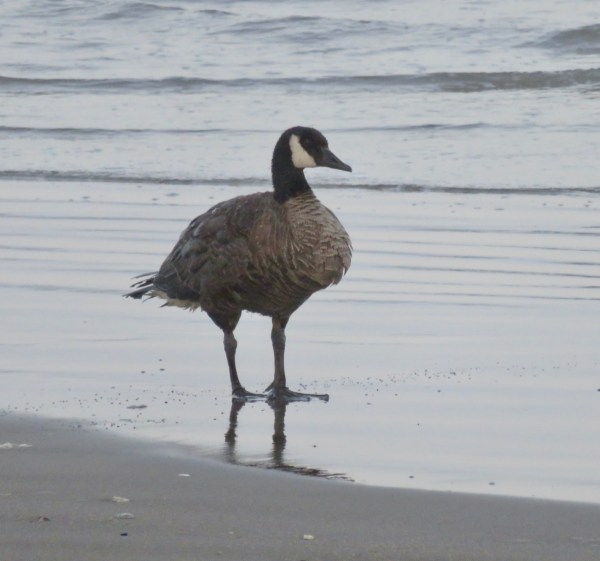
Canada goose all alone just north of the creek this morning.

We see the gulls and lately pelicans fishing low over the surf each day. This morning we saw a solitary Canada goose. It is not the first time. There was a goose that hung about Asbury Creek a few years ago. It was there for weeks in the late summer and we hope it eventually flew off. The bird we saw this morning did not seem distressed. We told him he might find companions in Ecola Creek but he was not impressed. Gary insisted it was a young bird, though full size and avoiding the gulls. Continue reading →

FOG

fullsizeoutput_1397

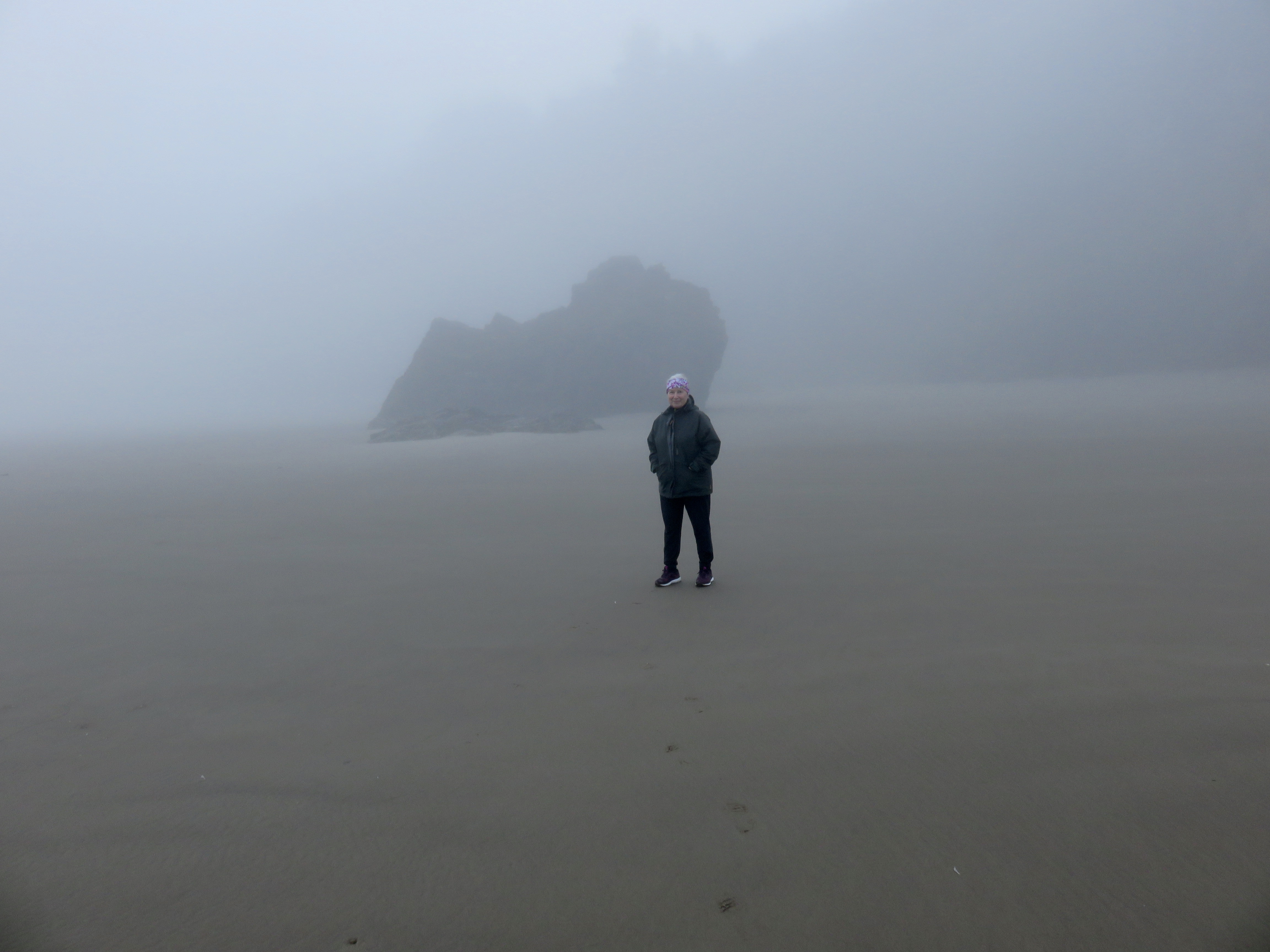
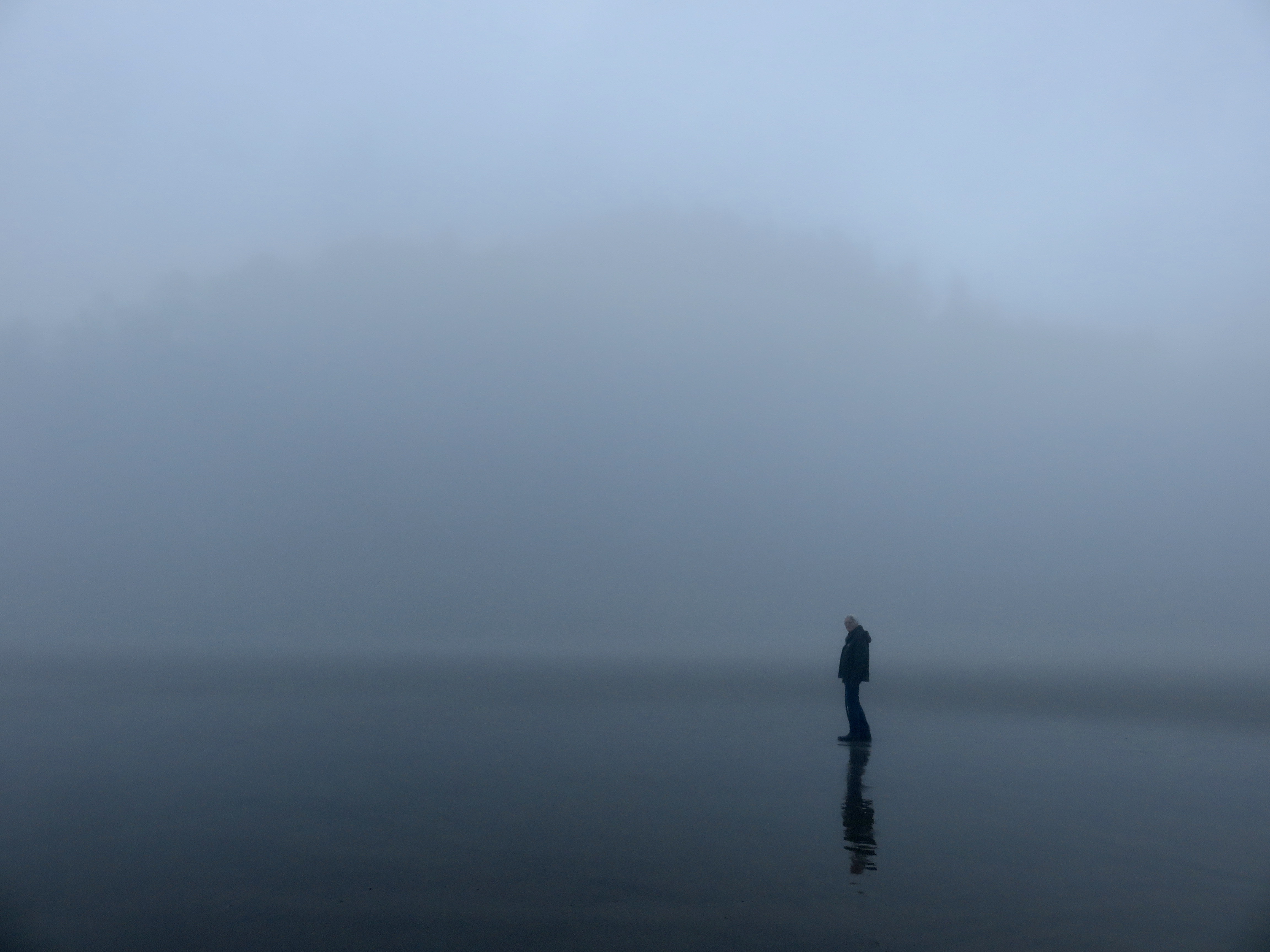
This is me standing well out on the sand before the “turnaround rock”—our one and a half mile marker. (It’s 12-15 feet tall.) Just around Hug Point is our two mile marker. On the highway I still note such mile and half mile markers leftover from my years as a runner. We were out for almost two hours this morning—a good walk.

fullsizeoutput_1391

Arch Cape before 6am.

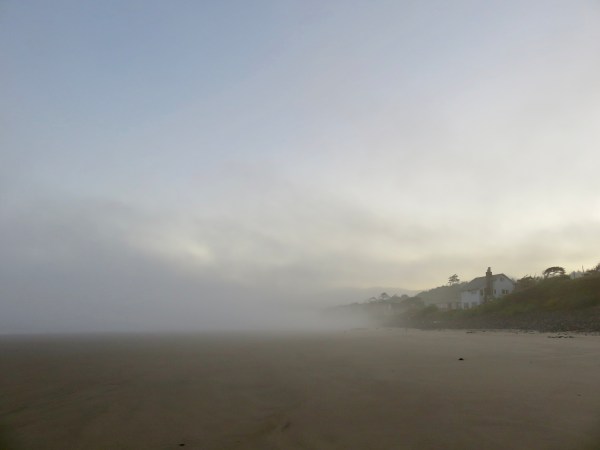
We are early risers, getting up with the sun and preferring to be out on our walk while the sand is empty of people. This morning we could look south toward the Cape and see fog as if it were moving onshore. There was little light in the sky and only the faintest hint of blue because while it was nearly six, the coast range cut off direct sunshine.


We sometimes go an entire summer without fog. This is not one of those summers. Especially when very hot weather is predicted for Portland, we see morning fog. Hot is not our preferred temperature. One thing we both enjoy about living at the coast is cool weather.

fullsizeoutput_1390

Looking north a moment later.

We turned north, which is our usual direction and for the next two miles, the fog thickened and we crossed and recrossed the tracks of a canid, likely a coyote. When Gary walked over to check out a “campsite” of logs and abandoned beach fire, the animal had already circled the same ground.


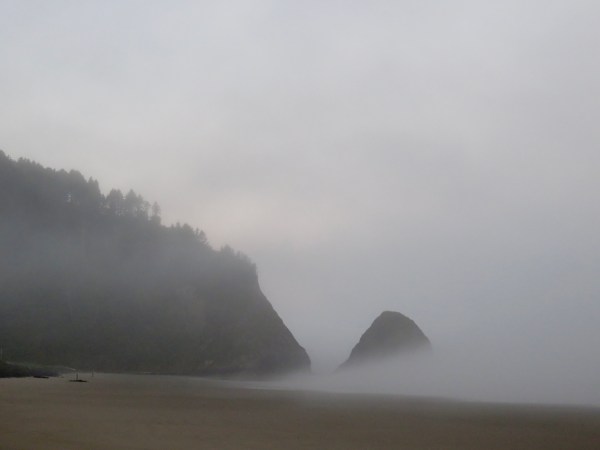
If I can look straight up into the sky and see faint azure, I know the whiteness will burn off and it might even become what we consider too warm by early afternoon. When the fog is very heavy, even on a day where sunshine will win out, it is possible to walk on the sand midway between surf and land and see neither wave nor house. The world becomes a mysterious and beautiful magic land of white.

fullsizeoutput_1393

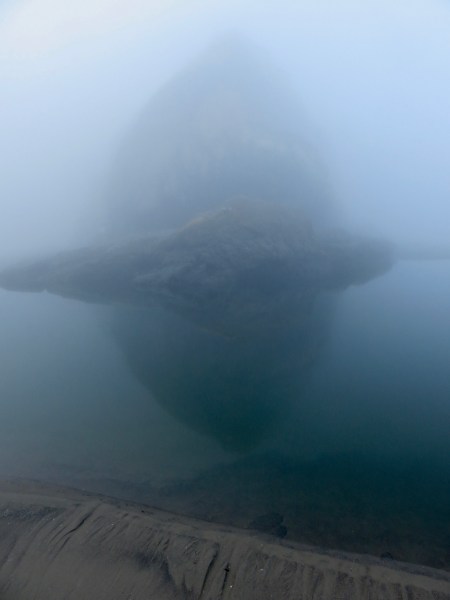
Hug Point beach seastack reflected in a tide pool.

Sometimes we could not see what was just before or beside us until a seastack would loom out of the mist. We might have no clear idea where we were at all until we came to a familiar creek or bluff.


We found a couple of shells, and we spotted a live crab, a rabbit, tiny shrimp. The oystercatcher did not even bother to feign injury in order to lure us away from her nest. The babies were safe in the fog.

We were able to walk on sand all the way around Hug Point, which is unusual, but by then it was going on toward seven and other people had the same idea about enjoying the still, foggy day. On our way home, as we turned inland around Asbury Creek, we met a family of four, they stood aside for us, keeping distance. Then we stood aside so that they could pass us. Good morning! Good morning! We never got closer than ten or fifteen feet, but it was a cheerful and respectful passing.

We wished one another a good day.

And it was.

IMG_6503

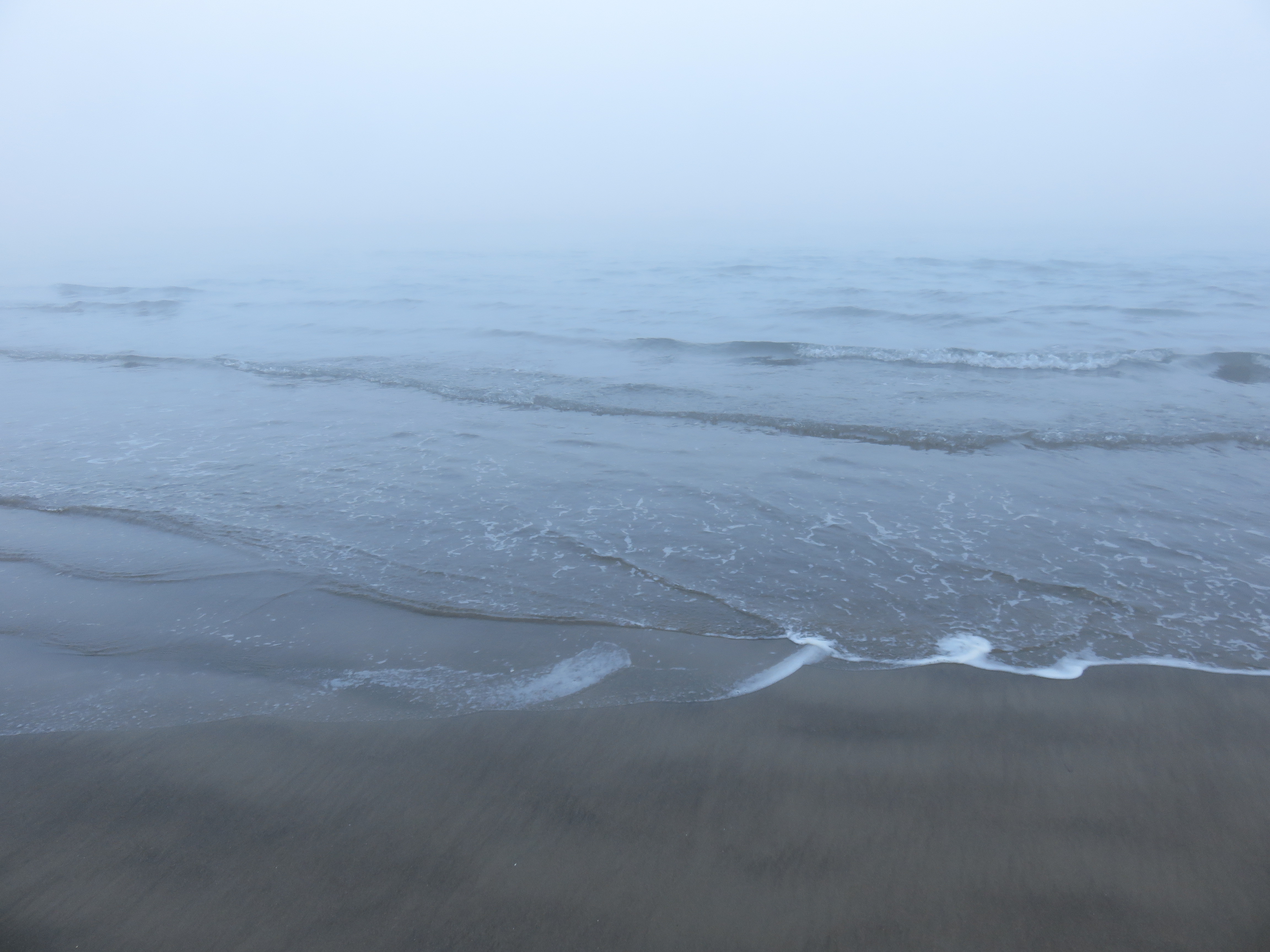
The border between sea and sky is often blurred on the horizon. This morning that boundary disappeared entirely just a few feet offshore. And walking a few feet further inshore, this line of waves vanished.

fullsizeoutput_138c

Looking east it is possible to see the silhouette of the headland high up where the fog thins.


PROTECT and SERVE

xUBQP-o4.jpeg

PORTLAND, Ore. (KOIN + Oregon Live) — Four Oregon State Police troopers went into a Corvallis coffee shop without wearing a mask, which prompted the OSP superintendent to put at least one of them on administrative leave during the investigation. [The state has mandated masks for everyone inside public places as a way to stem the growth of coronavirus in Oregon.] Continue reading →