When I was showing dogs back in the 1970s, we had an unpopular bloodline, an unpopular “type” of Afghan Hound. Our dogs were descended from early imports out of Afghanistan and specifically from a Dutch kennel, van de Orange Menage of Eta Pauptit who was a horsewoman to start with. She cared about soundness. She insisted that her dogs be functional. Their feet and frame, the musculature and minds of dogs from the vdOM kennel were consistently tough. They were smart during a period when Afghans were being bred to be flashy. Sturdy when during a period where breeders were choosing fine bones and narrow heads, what a local breeder bragged was “swan”-like.
Our dogs were strong.
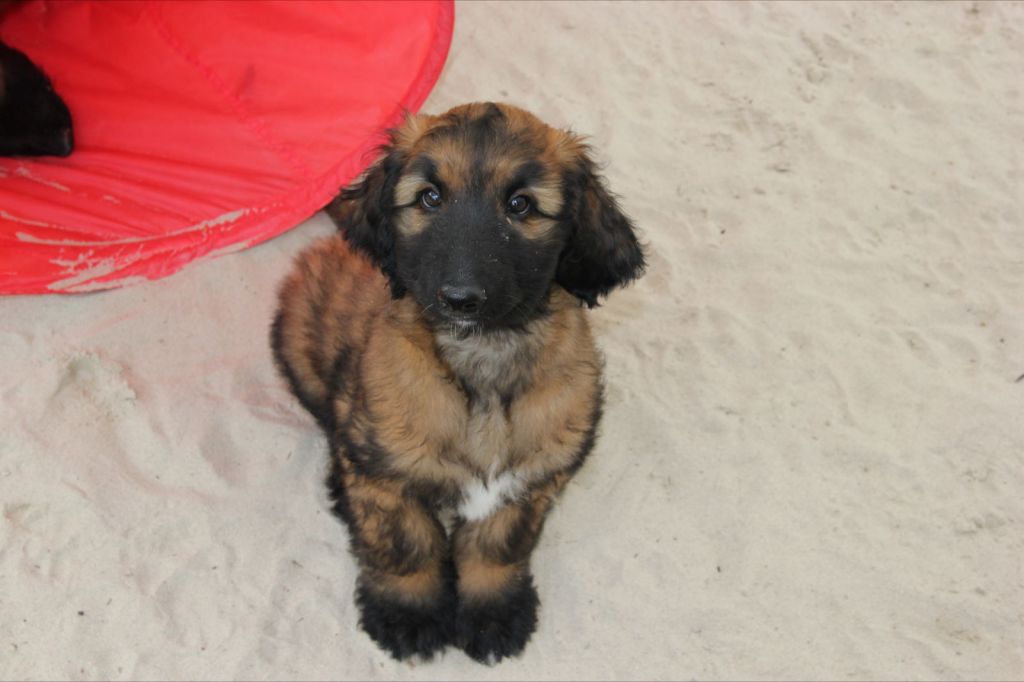
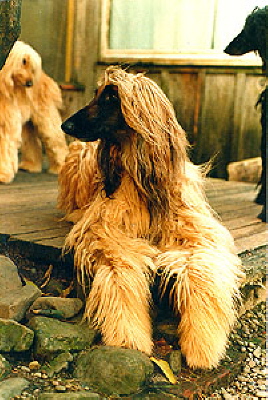
“Bowzer” [Canadian Champion Volant Sequoyah, American and Canadian Field Champion] had more “majors” than he needed to become a champion but died before earning his last point. His sister Snowbird won Best in Field at the first Specialty Field Trial held by the Afghan Hound Club of America in 1980 or 1982—one of the years I was pregnant.
This to say, I had chosen a bloodline that was not going to find success in the show ring. Except we did. They consistently won in the field and were never injured. At dog shows, my dogs won only in large classes, gathering “majors” (the bigger wins) while struggling to earn single points. I would be showing in a class of thirty and find my dog moved up in line, and then up again and again the longer we were there. We were not flashy and I was handling my dogs myself. We almost never won at small shows, only with a lot of competition. I came to understand that it was only after seeing my dogs for a long time that even experienced judges could look past the flash to see what I valued.
My choices have leaned to that direction, to what seemed important to me instead of what I knew could win. Sometimes I have been ahead of trends, but being trendy was never the point of what I was doing.
In April, the National Novel Writing Month (NaNoWriMo) people host Camp NaNo and I have been working my way through a revision of DAUGHTERS. Using their website, I have set a goal and can track my progress. Most days I get partway through a chapter. I have found typos and inconsistencies and I had two chapters that needed to be shorter, details missing from the middle short chapter, and I reached that middle of my manuscript yesterday.
Along the way I have made discoveries about the people who inhabit my novel and the story itself. When my short story version of one chapter was accepted for publication, the editor asked what exactly triggered the biological collapse at the beginning. I didn’t have an answer then, but I do now. That specific reason is still not important to my novel. I’m not telling. But I always think an author should know at least 10x more than she tells about her own book. So I could make another novel of what’s been cut. I have cut at least 40 or 50 thousand words in the last year, whole chapters rewritten. I would cut a few thousand words and then find I’d added a few thousand back in. Most recently I integrated two characters’ stories into one chapter, moved information from one character to another more likely to have paid attention to biology. I cut 8k and then another thousand words, and find my word count has gone back up. Along the way I discovered a lot about my characters and the story I need to tell.
Eight narrative voices is a hard sell. Readers expect one character to grow and change over the course of a novel. The challenge, the conflict, and the resolution for multiple people is complicated by that expectation. I tried to do it once before without success in a novel begun in the late 1990s and revised into the 2000s. I even hired a developmental editor to help me with that manuscript. She advised cutting characters—why not stick with one narrator? Why two daughters instead of just one?* Her overall advice was to streamline and simplify. She would have me remake my generational novel as YA, which was what she was writing herself. I was so discouraged by her failure to see what I was trying to do that I failed to act on other, better advice she offered: write a synopsis. Well, that’s not quite what she recommended, but it’s what I should have done.
I concluded at the times that I did not have the skill to write that novel.
Here I am, twenty years and an MFA later, still trying to tell a character-driven story based on multiple characters. It’s still a hard sell.
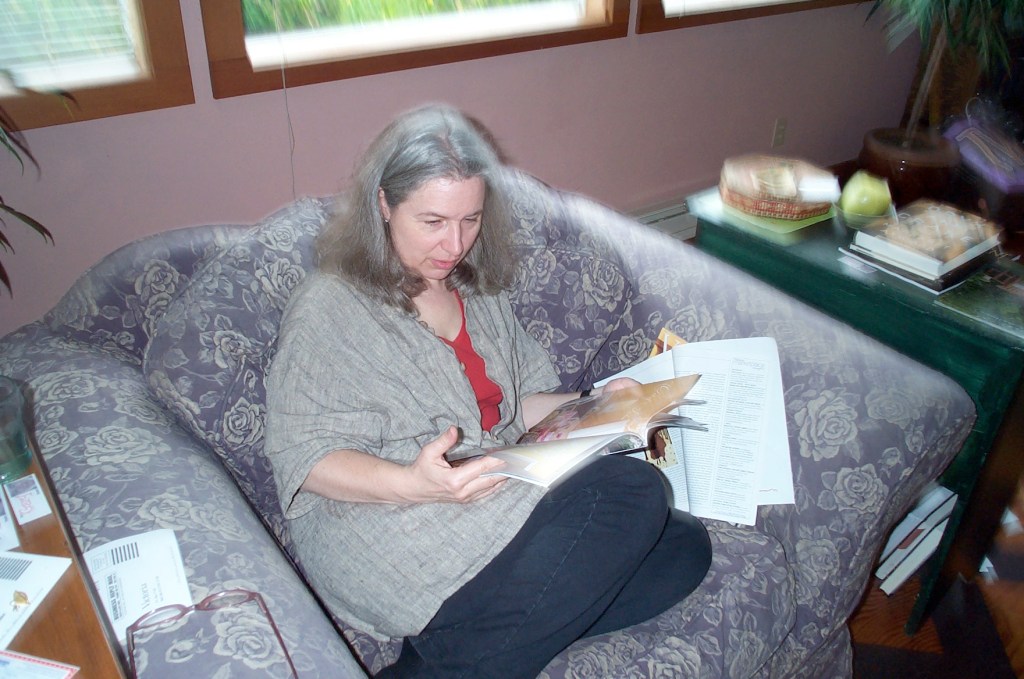
[BELOW: That’s me then, not now, with that other novel hovering not the current one.]
- Why not one daughter instead of two? Because the family dynamics are entirely different with two children compared to one (not better or worse, different), because of sibling rivalry, and because one daughter sides with the mother and the other with the father in a divorce. Because two.
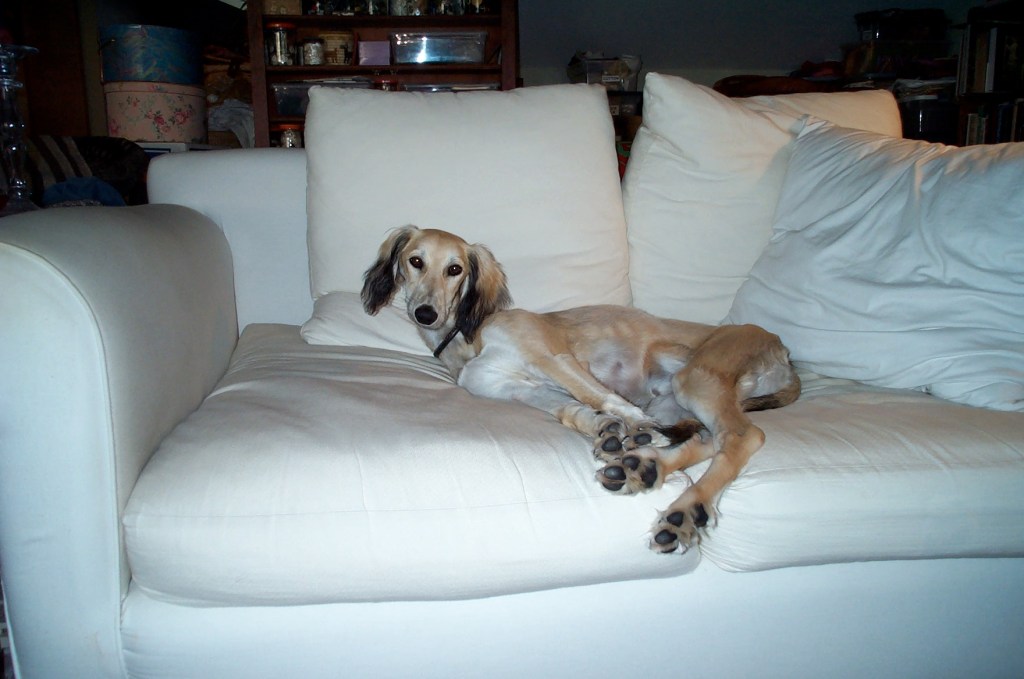
Our last dog, Yeti, a feathered Saluki. Our first Saluki was her great aunt and a smooth.
 IMPERFECT PATIENCE
the first dog Noah allowed on the ark was a saluki then an afghan hound then a cat–the rest had to hope and wait and sea if they were gunna sink or stink–fornuately there was plenty of room at the inn that night so as luck would have it we gotta whole box of animal crackers not to eat but to feed and be dominated by and bye–even though they might pretend to be gone –they are always here looking for an opening in your heart–kiitos
LikeLiked by 1 person