FORM & FUNCTION

When I was showing dogs back in the 1970s, we had an unpopular bloodline, an unpopular “type” of Afghan Hound. Our dogs were descended from early imports out of Afghanistan and specifically from a Dutch kennel, van de Orange Menage of Eta Pauptit who was a horsewoman to start with. She cared about soundness. She insisted that her dogs be functional. Their feet and frame, the musculature and minds of dogs from the vdOM kennel were consistently tough. They were smart during a period when Afghans were being bred to be flashy. Sturdy when during a period where breeders were choosing fine bones and narrow heads, what a local breeder bragged was “swan”-like.

Our dogs were strong.

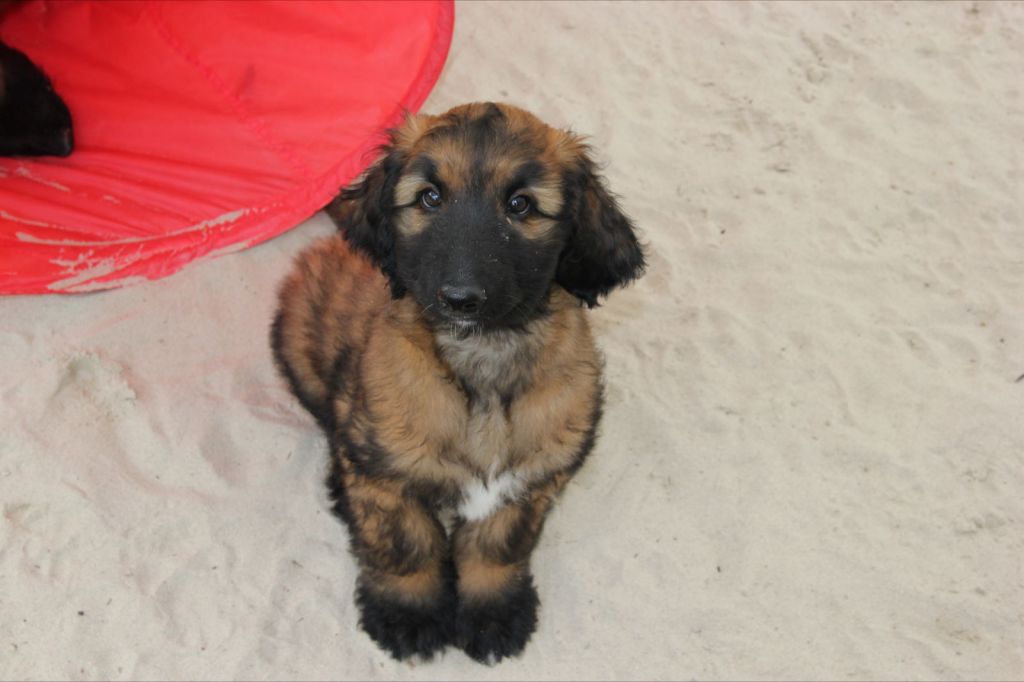
I’m not certain who this is, he’s not one of our pups but what most of ours looked like at five or six weeks. The black edging mostly grows out, leaving a black-masked red dog. Gary’s dog Manny looked like this. Grown, he had ears red as an Irish Setter. In the afghan I crocheted out of different colors of Afghan hair, it’s easy to pick out Manny’s ears. While a black mask on an otherwise red or gold or cream dog was the typical color of early Afghan Hounds, it wasn’t trendy when I was showing dogs of that color.
Continue reading

RUNNING INSIDE

A friend recently celebrated on Facebook that her young son had accomplished work on the family car. I cut my husband’s hair last night. I will bake bread tomorrow. I am weaving cloth. All these skills and many more—like cleaning my own home and washing my own clothing—can be hired out. Mostly, what I do is what I choose to do, not because I cannot afford to have it done for me but because I value knowing how to do it myself.

The last warp I finished was half handspun, an expensive indulgence.

Because the tide was high this morning, I “ran inside” which doesn’t mean to me what you are probably thinking.

Continue reading

GOOD DOG

Our first dog was Oranje Anisette, Ann Ann, who was a year and a half old when she came to us in 1973. She had been owned by a Saluki breeder who found her character too gentle to be a fit for him. I had flown to Arizona to look at a bloodline I first met through magazine photos. I wanted to show Afghan Hounds. I was flexible aboust age and color, though I had been to enough dog shows by then to know that black dogs disappear in the ring. Ann Ann was black.

Ann Ann had hunted jack rabbits in the desert. She chased a squirrel twenty feet straight up a tree on the University of Washington campus. “Squirrels can climb trees?” Another time she actually caught one but spit it right out unharmed when I shrieked. Rain completely mystified her. “What is that stuff?” I walked her all over a wealthy Seattle district during breaks from my long studio hours, and she napped on my workbench in the Fire Arts Building on campus. The first time she saw a lure she was thrilled. It took her a couple of minutes to figure out she was chasing a shredded white plastic garbage bag. She stopped mid-course and trotted back to me. “That was kind of silly.” She finished her Canadian Championship. A sweet girl.

Our second Afghan Hound was Onika and I had driven with Canadian friends from Seattle to Colorado to see her as a puppy. There were five puppies in the pen when we arrived outside Fort Collins and the breeder was not yet home from work. The one girl who caught my eye over and over turned out to be Onika. Her mother was BOB at the first Colorado Grand National Field Trial—seeing that trial was the reason my Canadian friends made the trip. Onika later won both her majors owner-handled, but she died when she was chased onto the highway by a well-meaning neighbor in 1980. I sat in the garden and cried and cried.

Continue reading