Gary doesn’t want to walk up hill to the rose garden this morning, especially with bears. (Probably just one black bear, but three sightings so far in Forest Park… not anywhere near the area we walk.) Climate change seems to be foremost in the news everywhere in the world but in our country. Recent heat here suggests this may have to change. Reading, writing, walking, and admiring trees.
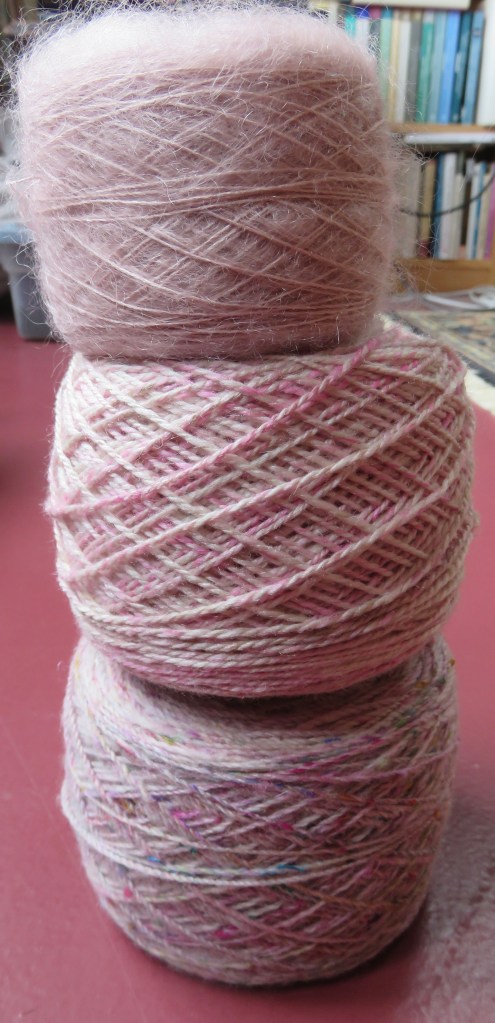
The silk shawl is 2/3 done, quicker than the first, and I am accumulating pinks for a sweater. Realistically, I might begin this knitting project late next year. (Or even the year after?) I have swatched. The silk/mohair blend on top (one of 4 skeins) will be a carry-along. I need another silk/wool handspun skein. The one in the middle is newest. The one on the bottom has been in a my stash for a few years. I used to mix yarns like Kaffe Fassett, but it’s been a while.
It’s been hot, actually hot here in the Pacific NW over the past ten days or so. Weird weather for May, though May is often warm, 90° on the coast in May is just weird. We are personally happier in temperatures under 70°. May is usually lovely and then June never fails to surprise us by being less summery—and the July eventually turns warm and dry. So that’s weather conspiring with climate change to make me sweat.
I am still chipping away at the novel, awaiting feedback on two dangerous chapters but also unable to just leave them alone for a week. I am reading three books: Gish Jen’s short story collection, Thank You, Mr. Nixon, which I hope contains the true story about her father’s forced stay in the U.S.; Marilyn Chin’s brilliant new collection, Sage, which has me hearing her powerful voice read in my head; and The Lost Journals of Sacajewea by Debra Magpie Earling, which I struggle to read but trust will reward me.
My youngest (nine years old when the world changed) narrator in the novel is one of the voices I am struggling to portray respectfully, but Amira is not a child as she tells her story. She has lived decades by the time she records her story. Her understanding of her situation and her contributions is confined by her relative youth—she wants to respect her long-dead family and faith. So do I.
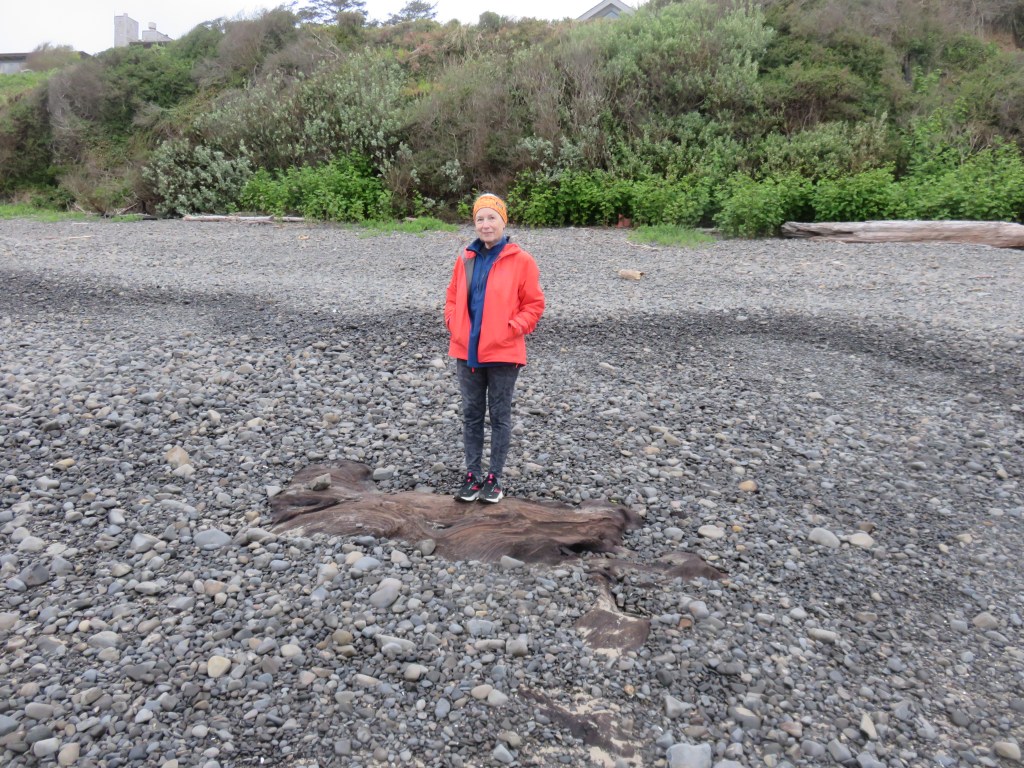
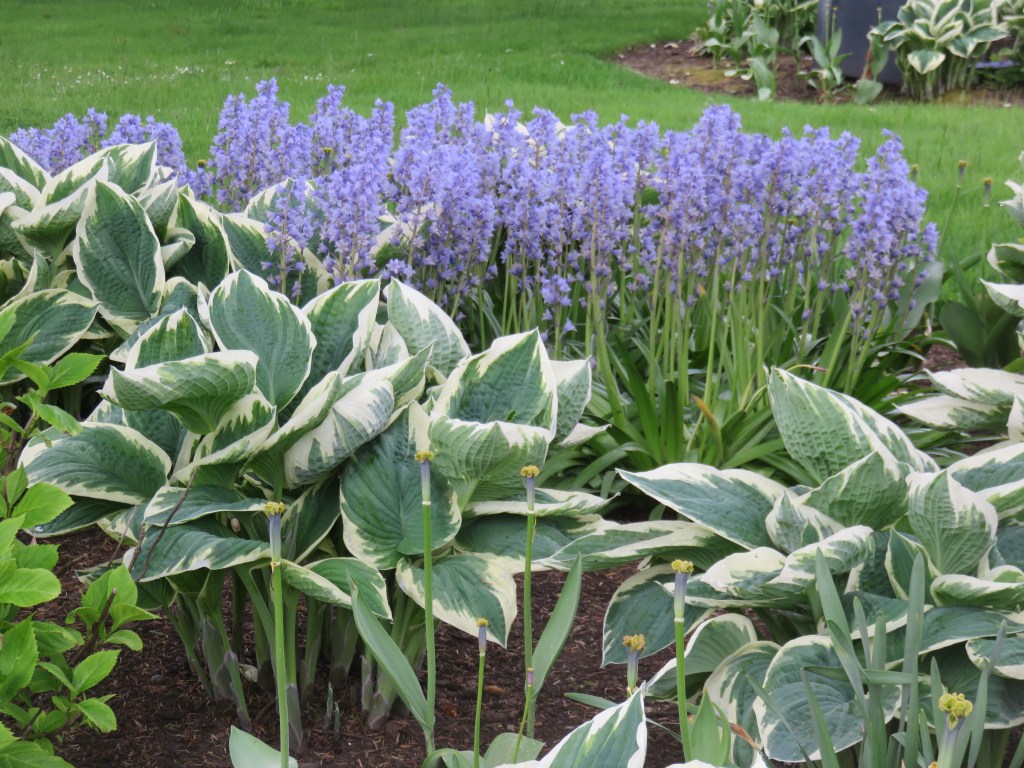
Gary, who is careful not to express unrequested opinions about my writing, commented that I had not posted in a while. Yesterday was our grandson’s birthday and we attended a garden celebration with good snacks and a lovely cake. He liked the toy we gave him that was suggested by his father. The visit was delightful, a welcome hug of family.
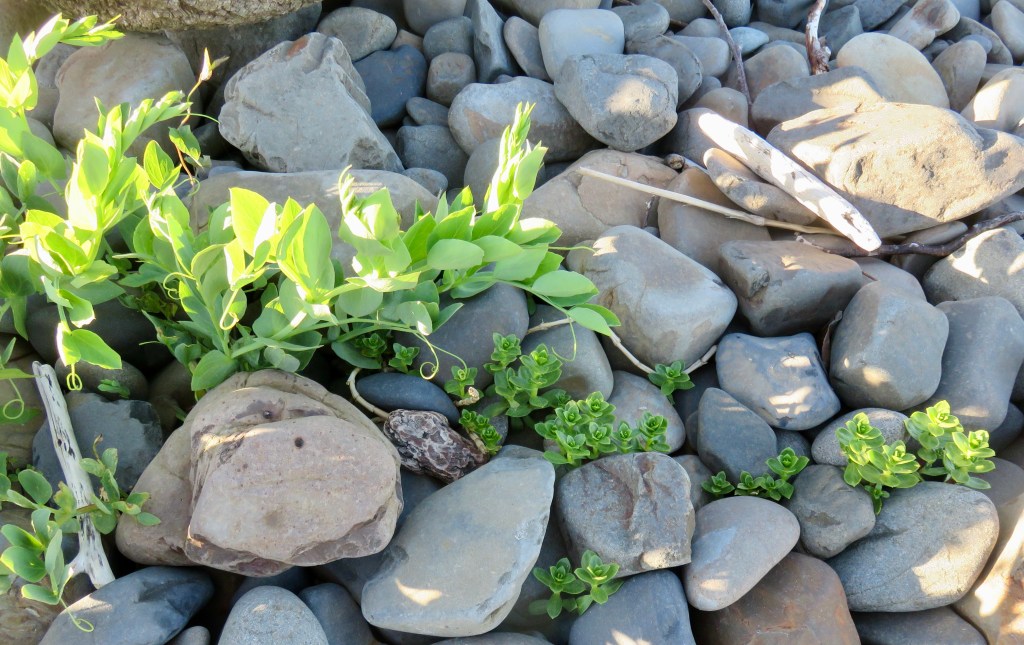
We are in Portland just now and will head back to the coast this morning, where we will be happy for cooler temperatures. I am supposed to run this morning, and it is cool enough before 7am for me to run, but I feel lazy.
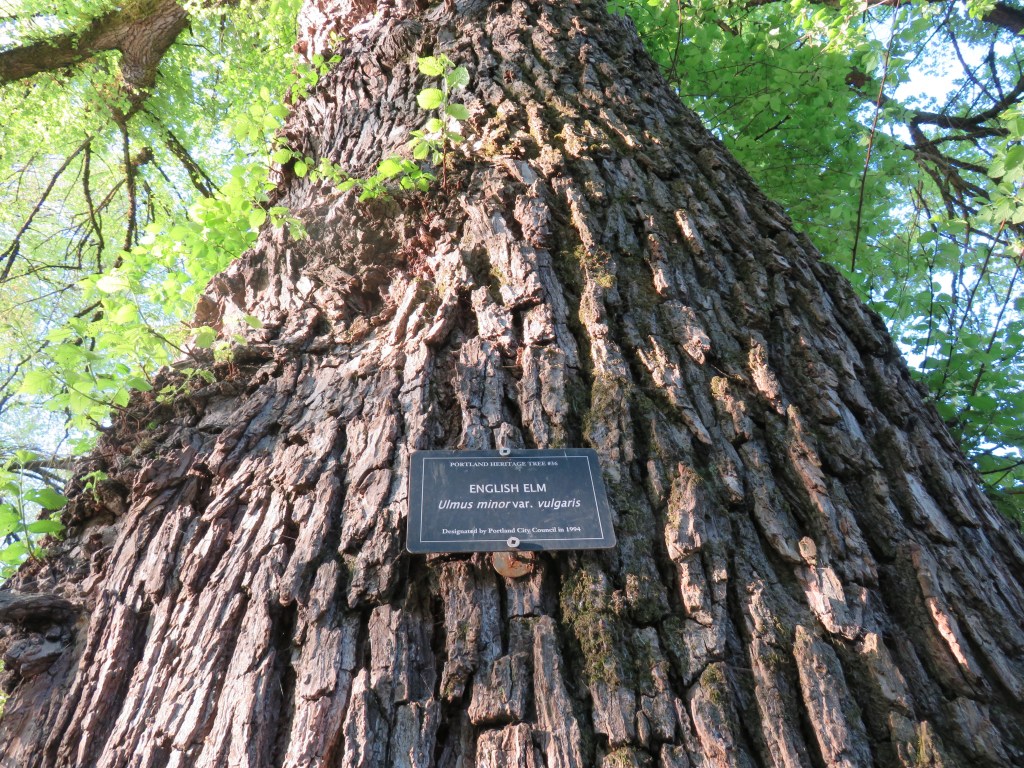
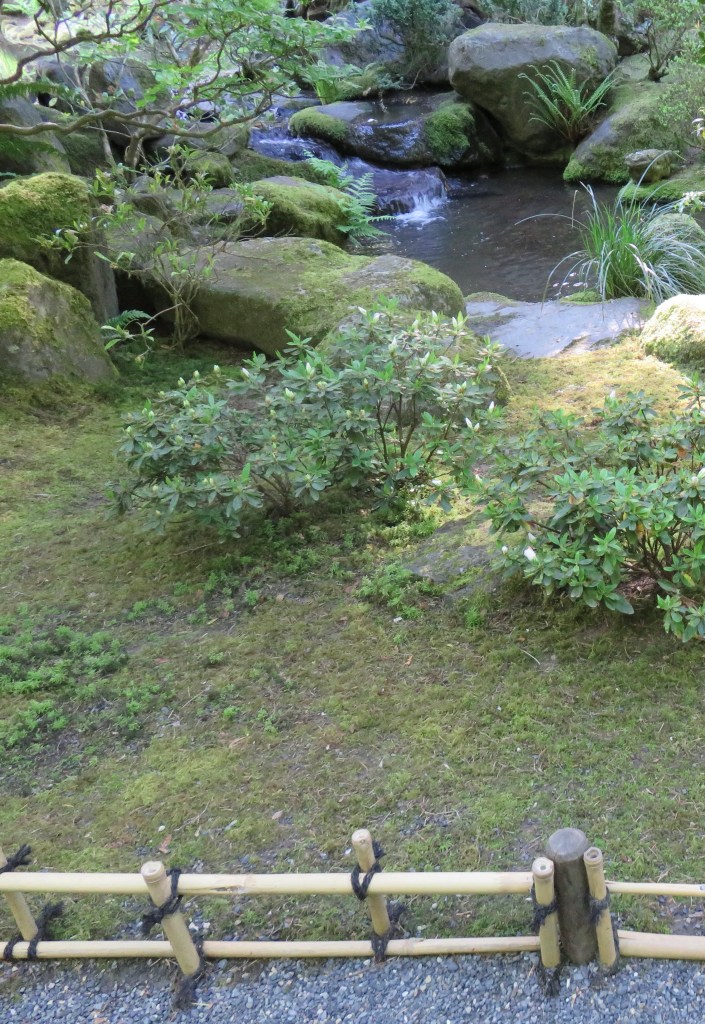
Our youngest grandchild has a date to visit the Portland Japanese Gardens and we hope the other two will go, one at a time in the next couple of weeks. We had been members of the garden when our oldest grandchild was tiny, but only renewed lately. It is said to be the most authentic garden outside Japan.
 IMPERFECT PATIENCE
Intrigued by the “dangerous chapters” 🙂
LikeLiked by 1 person
Me too!
The danger is getting it wrong, and in fiction getting it wrong is always a danger. I am quick to spot errors in others’ writing and fearful of making mistakes of my own.
I recently read an NPR story about a sheep-to-shawl competition. Small teams are given a limited time, usually a few hours, to create a woven wool shawl, starting with shearing the sheep. If you know what you’re doing, shearing is the fastest step, then carding, spinning (slowest), warping the loom, weaving and finishing (hemming or knotting the ends). The novel Trask (about a real historical character) equates the time required to spin yarn with an equal amount of time to use it as weft—so inaccurate! I could weave in an hour what it took me the entire previous day to spin.
A recent article in NPR proclaimed that the lanolin in unwashed fleece made it harder to spin—also wrong, though I don’t know for certain this was an error on the part of the writer or if the spinner had no experience spinning anything but prepared roving. I learned to spin on a sheep ranch with 43 breeds of sheep. We spun everything (from Australian roving to raw Navajo, Rambouillet, mohair goat, etc.) using everything from drop spindles to an ancient walking wheel. Yes, commercially prepared and washed roving is easy—so easy it felt like cheating—but when we washed a fleece before spinning, we added lanolin back in to make it easier to spin. I suspect the team commented that wool from a very greasy sheep would require washing before the finished shawl would be pleasant to handle, and they did not have that time. Or perhaps the competition did the more sensible thing: shear, spin, weave, finish, and wash + judge the next day. In a warm dry place wool dries overnight, or anyway, my shawls do.
Novels are far less predictable and there are many opportunities for error when writing science fiction.
LikeLike
I am looking forward to read your writings. In the late 60’s and early 70’s, I wore a Kowichan sweater (with a zipper) from BC my mother gave me. When I would go cross county skiing the snow would sit on top of the hairs of the sweater. It smelled of lanolin and occasionally I would find little tiny twigs in it. When I camped with a group of people in the coastal range, I setup my tube tent improperly and “slept” in a pool of water during the storm but still kept warm. I don’t think they make them that way anymore. Now they are too washed and too clean with the same few popular patterns.
LikeLiked by 1 person
I love your story! I also love the smell of lanolin, the natural oil in sheep’s wool. Wool is widely credited with keeping you warm even when it’s wet, though I do not know the physics of why this is so. Cotton absorbs moisture because in cross section, each fiber makes a C shape that can hold water. I credit a college class for knowing that.
LikeLike
rolling the balled silken weasel uphill
made me tired and thirsty and so
beneath the ever Greenwood tree
I and we wait for a sign of sound
therein the distance I can hear
Pete and jack and ginger and Eric
piping me home effortlessly and all up hill
it just doesn’t get any better
LikeLiked by 1 person
any better than this
good times
thrill seekers
LikeLike