
That critter was galloping along the shoreline when we spotted it from a distance. “What is that?” Gary said. And it was someone totally unexpected. “ASHES ASHES ON THE WATER, BURN THE HAIRY LITTLE OTTER. GEE IT LOOKS LIKE SO MUCH FUN, I CAN’T WAIT UNTIL HE’S DONE.” Don’t take this silliness too seriously—Gary and a University Book Store friend wrote it in about 1971. Gary and I both love otters. Can’t you see him?
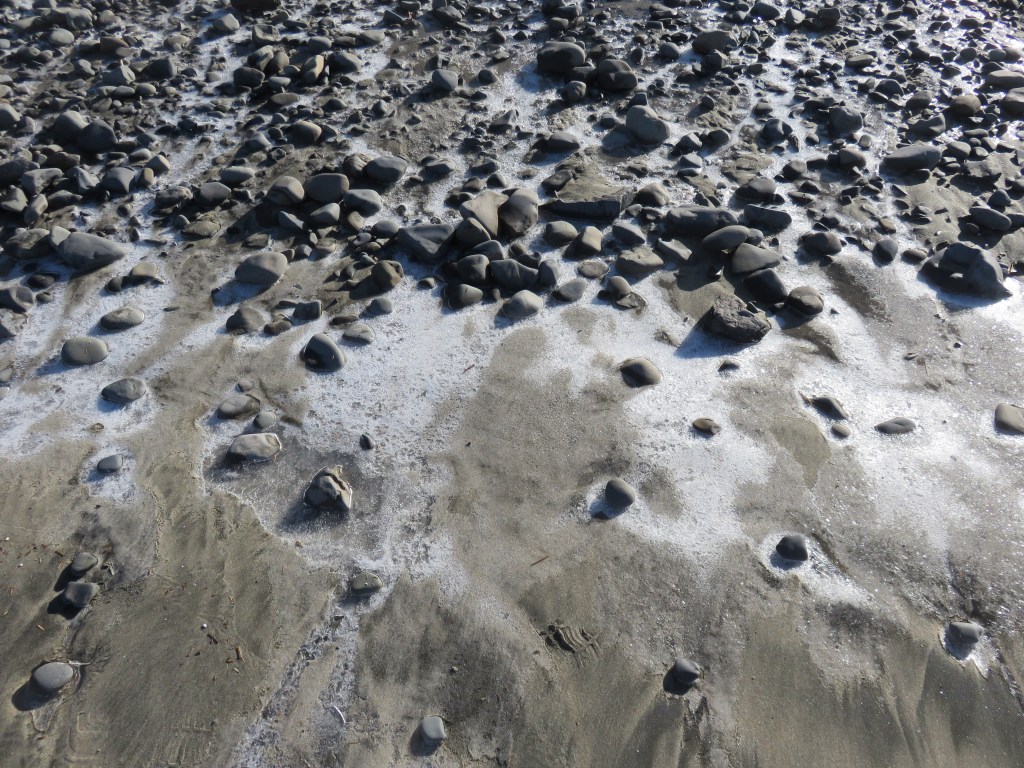
We thought we might not get out on the beach this morning. The rocks were slippery with frost. Streams had iced over. Castaway jellyfish were frozen. And there was an otter running down the beach.
In case you might wonder: neither of us have ever actually seen an otter run along the shore. It was big but probably a river otter. Adult river otters weigh between 11 and 30 pounds. Gary thinks the one we saw is about 20 pounds. It was chipper and on a mission, probably looking for stranded fish. Or maybe just out for a lark, just as we were.
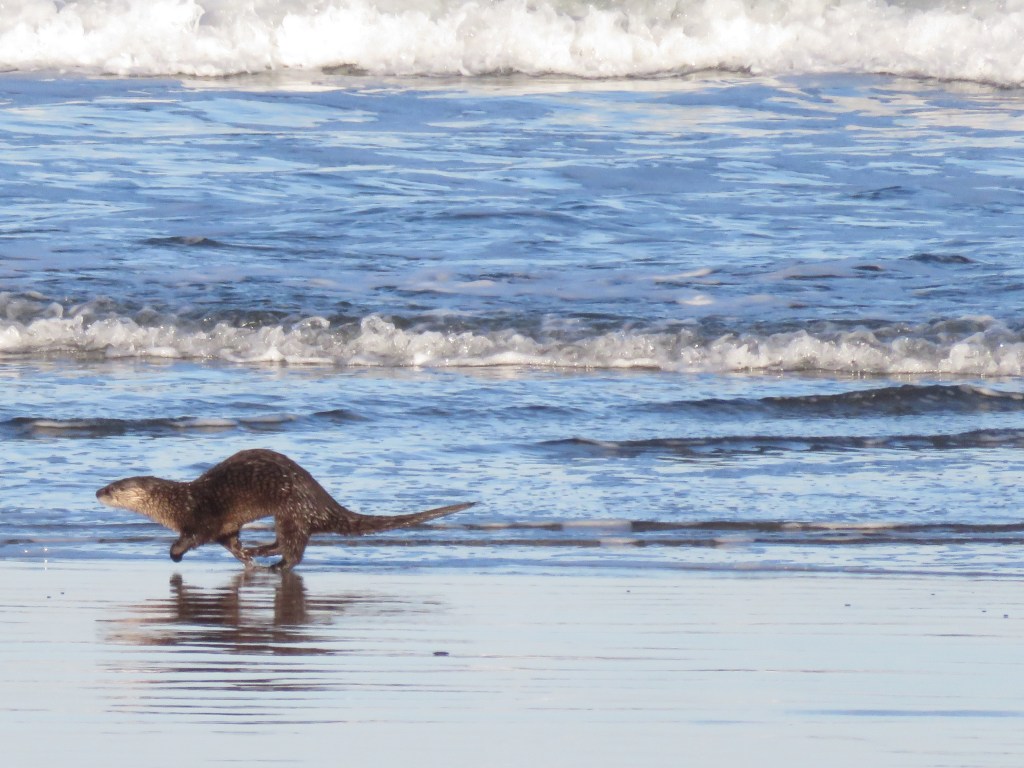
We’re grateful for the river otter and aware of its larger sea-going cousin.
Adult sea otters typically weigh between 14 and 45 kg (30 and 100 lb), making them the heaviest members of the weasel family, but among the smallest marine mammals. Unlike most marine mammals, the sea otter’s primary form of insulation is an exceptionally thick coat of fur, the densest in the animal kingdom. Although it can walk on land, the sea otter is capable of living exclusively in the ocean.
—Wikipedia
We’re hopeful that sea otters will be allowed back to their homes. I recall seeing them at the Woodland Park Zoo in Seattle and hearing stories from my dad about them, both from the Lab (Bureau of Commercial Fishes) and from the time he spent a month on assignment in Alaska when the King Crab fisheries were being established. The sea otters were once common all along the Pacific coasts—both on ours and on the other side of the ocean—until human hunting killed them here. “The last native sea otter in Oregon was probably shot and killed in 1906. In 1970 and 1971, a total of 95 sea otters were transplanted from Amchitka Island, Alaska to the Southern Oregon coast. However, this translocation effort failed and otters soon again disappeared from the state. In 2004, a male sea otter took up residence at Simpson Reef off of Cape Arago for six months. This male is thought to have originated from a colony in Washington, but disappeared after a coastal storm. On 18 February 2009, a male sea otter was spotted in Depoe Bay off the Oregon Coast. It could have traveled to the state from either California or Washington.”—Wikipedia
We watched our local river otter from a respectful distance, as the animal worked its way south back to Arch Cape Creek. We’d known there are otters in that creek. We were a little worried about loose dogs, but everything seems to have turned out fine.
We went on north for the rest of our walk—over two hours. It was so cold. I got a bit of a run myself and we found sea glass and then with our fingers and toes numb, we were glad to get home to toast and tea. We have not made it to Portland the way we usually do—the Coast Range did not look promising. Maybe next week. I am knitting a bright hat from yarn in my stash.
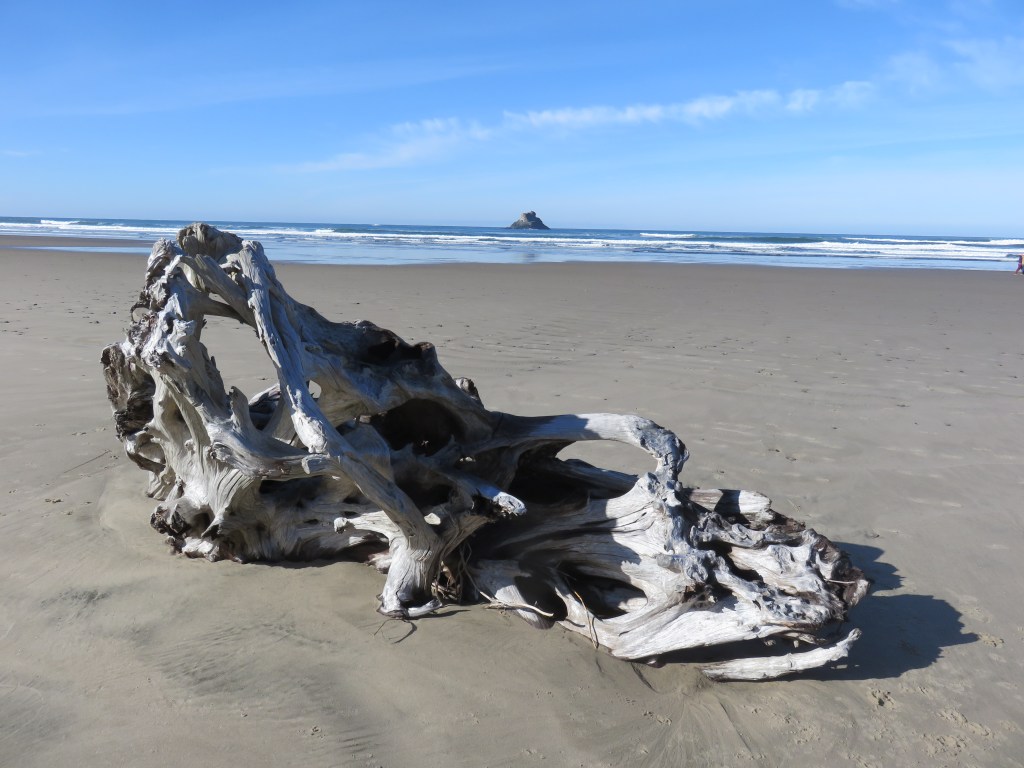
The otter made the day for both of us. [No burning allowed.]
 IMPERFECT PATIENCE
You are so LUCKY! That would make my day!
LikeLiked by 1 person
It did make our day.
LikeLike
ewe otter hear the one about the happy little swedes, but that was before me and 23–maybe another time and that was great cameraing
LikeLiked by 1 person
Oh, dear, I got him going…
LikeLike
It’s sad when humans squeeze out and/or kill off other animals.
LikeLiked by 1 person
Some species have come back. There were no eagles here when we moved to my great grandaunts’ home in 1979.
Most distressing to our shared environment, to me, is the quantity of poison we produce each year… pesticides, herbicides, general poisons, the cigarettes people smoke though they have known all their lives the habit is dangerous, in our plastics, comprising what passes for “medication”, used in the furnishing of our homes and the production of our food, and what derails off trains, drains into soil, floats in the air, rubs into our skin, and which shows up in the brain cells of infants, we house pets that most people recognize as dangerous… and we have the nerve to be surprised when alerted to toxins or faced with increasing allergies and systemic failures, of the killing of an 84-year old man. Wars are like that too. The very notion that someone gets to decide for someone else. That political boundaries have anything to do with personal needs. That producing or supporting something dangerous, objectively dangerous, cannot help building on itself, making the world less safe.
I rant… have struggled to find a way to write about all this. I dribble about the edges. Forgive me… I should get back to knitting.
LikeLike