Blue skies and pouring rain have alternated all day today so we did not get our walk. We were too busy yesterday and needed a break that not involve wind-driven rain. It was meant to be a peaceful day. Driving rain and sunshine pouring past my window at the same time. And then… the news.
Dr. Paul Farmer, the subject of Pulitzer-Prize winning author Tracy Kidder’s most famous book Mountains Beyond Mountains, has died. I taught that book for years, linking it to the Pacifica Projects that all students at my high school were required to complete for graduation. Service and research were significant aspects of that project.
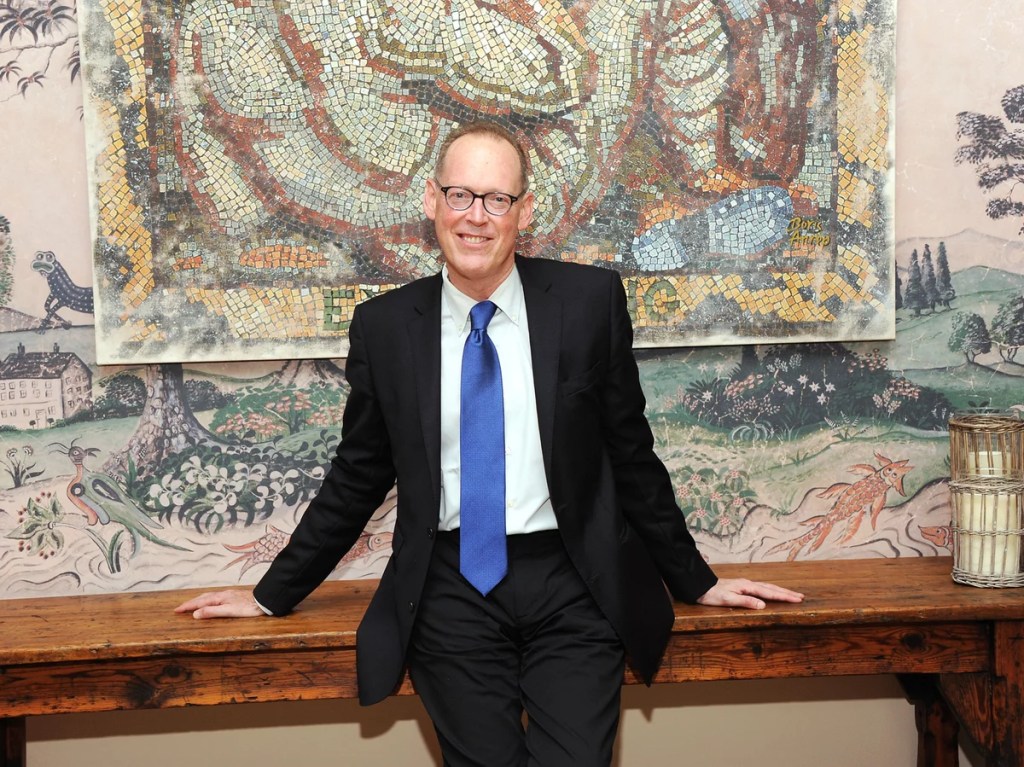
Dr. Paul Farmer, global health champion, Harvard Medical School professor, anthropologist and co-founder of the nonprofit health organization Partners in Health, has died at age 62. PIH confirmed his death in a tweet on Monday.
According to the tweet, Farmer “unexpectedly passed away today in his sleep while in Rwanda,” where he had been teaching for the past few weeks at the university he co-founded. A source close to Farmer said he had been in Rwanda for the past several weeks teaching at the University of Global Health Equity, the medical school that he helped found with the country’s former minister of health, Dr. Agnes Binagwaho.
In addition to starting hospitals in Rwanda and Haiti, Farmer helped bring lifesaving HIV drugs to the people of Haiti in the early 2000s.
“Paul Farmer’s loss is devastating, but his vision for the world will live on through Partners in Health. Paul taught all those around him the power of accompaniment, love for one another, and solidarity. Our deepest sympathies are with his wife Didi and three children,” said PIH CEO Sheila Davis, in a statement.
—NPR
I learned to write research papers in Social Studies classes, but today teachers of those classes expect the English department to teach research and writing essays, so that’s what I did throughout my tenure at Seaside High School. I am proud of the work my students did, proud of their commitment to participating in their world, and proud that they read Kidder’s book.
“Beyond mountains, there are mountains” is a Haitian proverb. It means that when you solve one problem, there will be more problems to solve, and so you keep going, keep pushing forward. Beyond mountains, there are mountains in journalism too. We must keep going until people everywhere feel powerful because they have the news and information they need in order to live good lives.
—Molly de Aguiar
 IMPERFECT PATIENCE
Thank you for writing about this wonderful man!
LikeLiked by 1 person
The news just knocked me down. Sixty-two.
LikeLike
many important contributions– gone so soon.
LikeLiked by 1 person
Musical aids to help get through this:
High Kings “The Parting Glass”
Brooks and Dunn “Believe”
Laura Nyro “And When I Die”
Gordon Highlanders “When the Battle’s Over”
Commodores “Night Shift”
the Catalan bank commercial with musicians performing “Ode to Joy”
or forget all that—light a candle, say a novena, have a drink,
and donate to PARTNERS IN HEALTH, which continues its good work.
LikeLiked by 2 people
He was called a saint, which he thought would be a wonderful thing to be, but he was adamant that Partners in Health could not depend on him for its existence—that it must renew itself, that no one person should be “essential.” Therefore, he ensured that local people in Haiti, for example, were trained to do the medical work.
By way of contrast, I knew a nurse who went repeatedly to the same third world country to perform the same necessary but simple procedure—I always wondered why, instead of cleaning the parasites out of their feet she did not train someone local to do that. It is the “teach-a-man-to-fish” ethic.
LikeLike
I learned of this man reading his obituary last night. Even having not heard of him before, reading the bits in the paper, his early death felt shocking, tragic. Thank you for telling so much more about him. Incredibly how much he contributed in such a relatively short time. A deeply meaningful life.
LikeLiked by 1 person
I would urge anyone and everyone to read Mountains Beyond Mountains: The Quest of Dr. Paul Farmer, A Man Who Would Cure the World by Tracy Kidder, which reveals Paul Farmer to be a genuinely astonishing human being. I read the book on recommendation from my principal, who found money to pay for copies so that I could teach it. [There have been others who tried to follow in the footsteps of that highly successful collaboration— My advice is to stick with Kidder and Farmer. Kidder has written many fine books, but years after MBM, we went to a reading by Kidder and inevitably, the bulk of audience questions were about MBM. It remains the one for which he is famous.] The biography is entertaining, interesting, and deepening moving. And you will understand how multi-drug resistant diseases are born.
LikeLike
Jan, thanks for expanding on the life of Paul Farmer. I read his obituary yesterday but that opens one window on the deceased and you’ve opened another. Tracy Kidder is an accomplished writer but I didn’t know about her book about Dr. Farmer. It is now on hold for me at Multnomah County Library. Can’t wait to explore this story.
LikeLiked by 1 person
It was an Everybody-Read book for a lot of college freshmen—including the entire University of Washington, my undergraduate alma mater. [btw Tracy Kidder is a man, older than Farmer, and yes, a wonderful writer.]
LikeLike
I’m sure you saw this https://www.nytimes.com/2022/02/22/opinion/paul-farmer-tracy-kidder.html yesterday –
LikeLiked by 1 person
Thank you for the reminder and link!
When I’d checked TNYT they barely had a notice, but promised more.
When I began teaching MBM, the Honors class already had a lot of short stories, nonfiction, poetry, and six novels to read, three videos and two films, not to mention the microfiction project, two research papers (both MLA, one a satire and the other exhaustive), literary analysis, fiction, a poetry project, and creative nonfiction writings. Without cutting anything else, I fit in Kidder’s powerful book by setting up teams who divvied up reading and note-taking responsibilities. Everyone read some chapters, partners were responsible for reporting back to their team. Their individual reading journals were accessible for the exam, another lengthy writing task. Some students, even in a team, completed their journal entirely on their own; some failed to do it at all. It’s always that way… but a primer for college study groups.
LikeLike
That’s a great way to teach a lot of reading! i wouldn’t be surprised if some ended up reading the whole book anyway. I’m teaching a course that way – they divvy up the syllabus and we have an online (written) discussion group with the ‘reader’ for each piece heading it up giving a summary, as our class (play therapy) is all about the actual doing of it. It has been good so far.
LikeLiked by 1 person
Yes! You are spot on in every way. Since another of our projects was Reading for Writers which involved creating and finding printed examples of literary devices and literary modes, the “reader” located a literary device and also a pithy quote. Then other students who had also read the chapter (as you predict) would chime in with their chosen quote and … discussion!
LikeLike