The largest fire in the nation is burning south of us. The Bootleg Fire has destroyed nearly 400,000 acres, the third largest fire in Oregon history, and it merged with another fire on the 19th. It is only 38% contained. We have a family member currently fighting that fire. On top of that, firefighters have been testing positive for covid.

Maybe have a care?
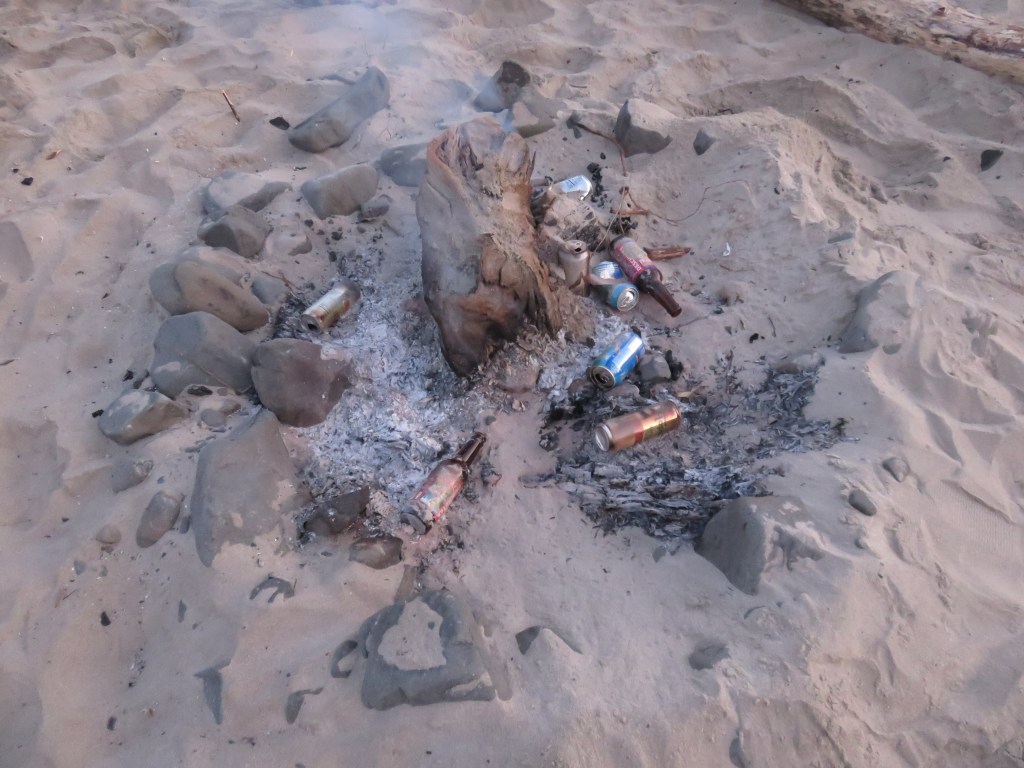
People seem to think beer cans and bottles will burn, not to mention plastic, which releases toxins and melts into an ugly lump.
We are relatively dampish here on the coast, but fire safety is still a concern. This is fire season and all burning is restricted east of I-5. Here, June was short on rainfall and our weather continues dry. Our fire danger in the Astoria District is ranked as “moderate.” Even so, Oregon Department of Forestry Fire Restrictions are in place:
- No Debris Burning
- Smoking in designated locations
- Campfires in designated locations
- Portable cooking stoves using liquified fuels OK
- No wood burning devices in temporary dwellings (i.e. tents, travel trailers, etc.)
- No Fireworks
- No exploding targets, tracer ammunition or sky lanterns
- Equip each power saw with a shovel and fire extinguisher or gallon of water
- Provide a 1-hour fire watch after the use
Beach fires in our area are not currently banned, but our public beaches are managed by the State Park system and there are laws and common sense practices to keep everyone safe. From the Oregon State Parks website:
- Maintain campfire flames at knee height, or roughly two feet high. A smaller flame helps prevent ash and embers from rising into the trees or dry vegetation. If you see the wind stirring up embers, play it safe and put the fire out.
- Build campfires in the existing fire ring in your campsite. Fire rings are placed in areas with buffer zones and away from vegetation. Don’t use the campfire as a trash can. Throw away leftover food in garbage and cans and containers can be recycled if available in the campground.
- Always keep plenty of water nearby so you can use it to safely put out the campfire. Drown the flames with water and carefully stir the embers to make sure everything is wet. The stirring step is important: ash and wood debris often maintain heat and embers unless they are drowned out.
- Beach campfires should be on open sand and away from driftwood or vegetation. Slowly pour water on your beach fire to put it out. Don’t pour the water too quickly because hot sand can fly up and hit anyone nearby. Also, don’t use sand to put out a beach fire. Covering the fire with sand will insulate the coals, keeping them hot enough to burn someone hours or even days later.
- Make sure everyone in your campsite is familiar with campfire safety, including children. Always keep an eye on your campfire; many accidental fires are started because campers left their fire unattended for “just a minute.”
If the dark basalt stones so often used to circle beach campfires get hot enough, they will sometimes crack open or even explode. People have been cut by flying shards of rock.
We have freedoms, but we also have responsibilities. I think most of us were taught that as children.
My mother recalled playing in a warm ocean during the Tillamook Burn of 1933 accidentally started by a logging operation. She and her sister came out of the surf covered in soot. Their father drove to pick them up. She said the drive back to Portland was terrifying. That August over 350,000 acres burned until a change in weather brought rainfall and fog off the ocean. There is not weather change in our current forecast.
There would be three more Tillamook burns in 1939 (also started by logging), 1945 (started by a discarded cigarette and my mother was in Berkeley at the University by then), and 1951 (a smaller fire of “only” 32,000 acres in the year before I was born).

In the 1970s traveled across country with a friend. The husband of my friend was a smoker and tossed his cigarette butts out the window as he drove. We were in eastern Montana. It was the end of summer. Picture mile after mile of dry grass. Wind. I asked that maybe he could stub out his cigarettes in the ashtray because of the danger of starting a fire. He responded, “What do you care? You don’t live here.”
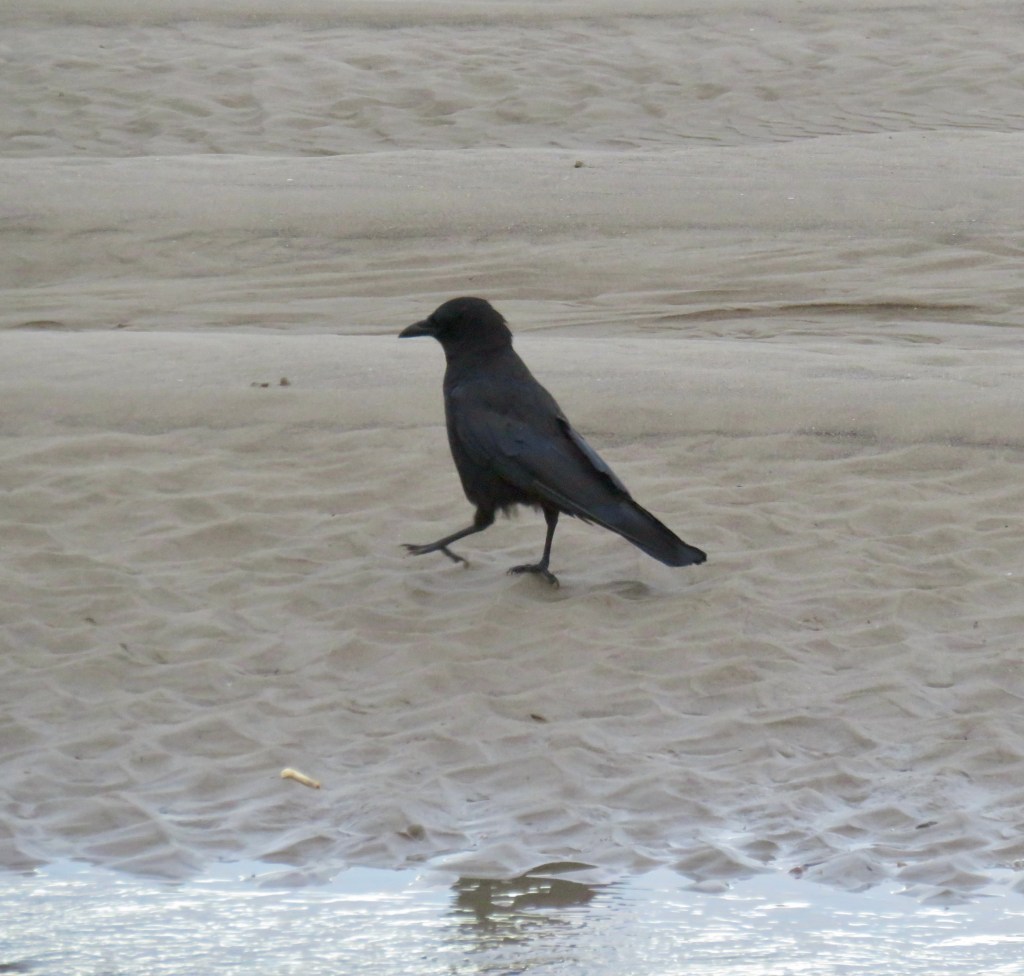
Our world is where we all live, all of us, every single person and our children and their children after. And the birds and the insects and small crawly things. Raccoons and coyote and deer, whose prints we see in the sand every morning. Forest and flowering salal and little mosses. Wild emus and leopards and wolverines I will never see and the crows and ravens and black oystercatchers and pelicans flying in like Pterodactyls. Deserts and wetlands, and snowy peaks. All sorts of things and places, animals and people live here in this world and although I will never meet most of them, I owe it to them to have a care for their world. Because we all live here.
We live here.
 IMPERFECT PATIENCE
We have rain. You have fire. The world is bouleversé.
LikeLiked by 1 person
I was thinking about your rain when I wrote.
LikeLike
I have been through two floods and never want to go through another one. I have never been through a Fire and inshallah I will never never …,
LikeLiked by 2 people
Well, there was that blaze in the saucepan . . . my bad!
LikeLike
I still remember walking home from School one day – Ivy and I were living in an area that, shall we say, in transition. All of a sudden a door opened (on a yet-to-be-yuppified) house and a flaming frying pan went flying into the snow –
LikeLiked by 2 people
Wow! That is scary. I put the lid on the pan and the fire went out. But I had been on the phone long distance and Gary was pretty freaked by the time I responded to his alarm. I am so bad.
LikeLiked by 1 person
Well said, and I care too.
LikeLiked by 1 person
❤
LikeLike
It’s a small planet – and the only one we have – we should all care but some not so much
LikeLiked by 1 person
I was first confronted by that attitude of not caring, or only caring when it impacts us personally in college.
LikeLiked by 1 person
I remember some time ago when the governor of FL refused to send help to NY after some disaster. (Sorry I don’t remember what) saying that it didn’t effect him. NY replied that they wouldn’t hear from them after the next hurricane. Ha!
LikeLiked by 1 person
It goes to show: We’re all in this together. The philosophy of selfishness belies the survival of our species. We are not solitary animals but social beings. It is right and proper to rely on one another. It is a sin to ignore a cry for help.
LikeLiked by 1 person
We see the horrid destruction of your state forests on the news. The winds have carried the smoke all the way east to us in SE PA and now gone on to more eastern states. Yesterday it was more clear as the winds shifted more northerly. Thanks for the excellent tutorial. People are such idiots!
Oh we did have some torrential rains which caused massive flooding where people would never think that would happen. What a mess. Perhaps one shouldn’t watch the news anymore?
LikeLiked by 1 person
We read the wind has carried smoke across the country. The only smoke here today is from cigarette-smokers and beach fires. So far.
LikeLike
After that particular group of tourists left this morning, someone (Gary is not saying who) carried out our horse buckets filled with water and put out their fire from the previous night. Again.
LikeLiked by 2 people
Is there anyone you could call about those tourists? Seems like they should at least have to pay a fine. I just finished an Orion environmental writing workshop. Several people in my workshop live in the Pacific NW–upper Washington state and British Columbia. Fire, orange skies, and air quality (or lack of it) was a big part of their essays and the one in BC almost had to evacuate her home a few weeks ago. Meanwhile, we have catastrophic flooding elsewhere in the world. And people wonder why … .
LikeLiked by 2 people
My husband did, in fact try calling various officials. One suggested he contact the owner of the property—not really an option since the last time I talked to the owner he called me a “f—ing bi—“. Their reaction was basically, “What do you expect us to do about it?”
So he carted out water and put the fire out himself. Other locals have had to do as much.
We were grateful that this year the illegal fireworks only went off for a few hours. There is a complete burn ban east of Interstate-5. We are as far west as you can go. But we had a forest fire not so long ago up in the hills behind our house—in January—in the night, fire jumping in the wind from one spot to another. Our tenant was terrified and fled.
Wildfire is a wicked thing.
The tourists here are affluent people who feel no obligation to anyone else so long as they can afford to pay. Even one of the more responsible non-local property owners came whipping down our road the other day—too fast. There seems to be something mildly insane about being on vacation or not on their own street (where they would expect to follow rules and abide by common sense safety precautions). They light fires where they shouldn’t, leave them unattended, burn genuinely bad wood that smokes and smokes and we have to close our skylights that we count on to keep the house cool.
btw I have known people to be injured by exploding rocks they’d used to line and surround a fire pit. It doesn’t happen often because most people do not know how to start a proper fire other than to pile too much wood and lighter fluid on it. Then they are gone.
I rant.
LikeLiked by 2 people
Rant away. There’s no excuse for irresponsible behavior. Everyone with half a brain knows that most wildfires are started because someone did something stupid (gender reveal party, anyone?) so ignorance is not possible. My husband thinks people have become more nihilistic, like they just don’t care. It’s scary.
LikeLike