DROWNED TREE

fullsizeoutput_11b2

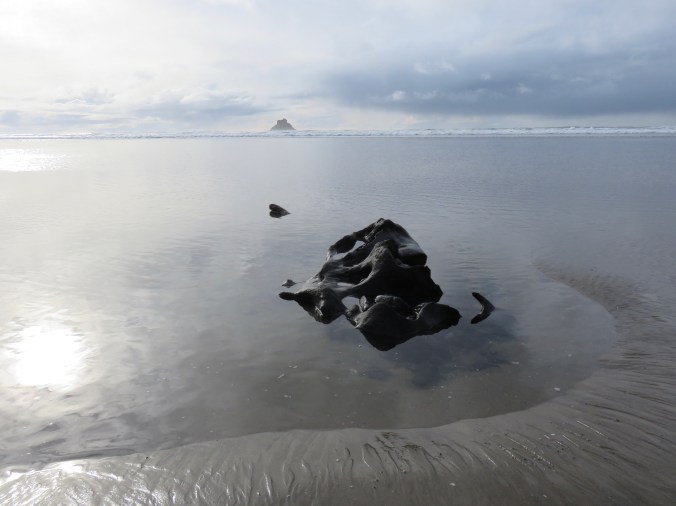
The drowned trees might be from 800 years ago (according to some) or from thousand of years ago. This is the one furthest from shore that appears only rarely. Well, to be precise, all of the drowned trees are generally buried under sand and rock. This one is buried again this week.

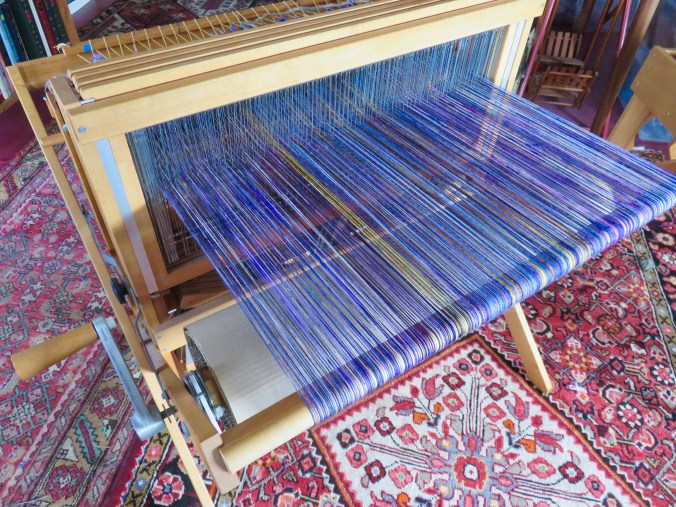
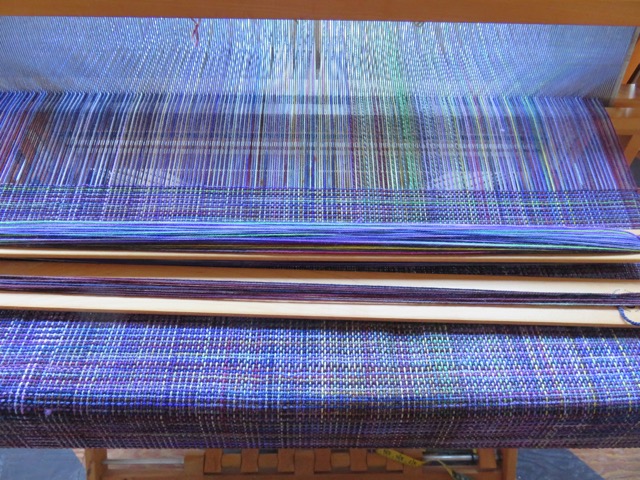
Last Wednesday I began winding a warp and today I am a few inches from completing the second shawl. I will work past dark to get this one done because I have already laid out the weft for the third shawl. This morning I wound off a skein of sock yarn. I will knit socks before beginning the next warp in a couple of weeks.

IMG_5507The last person I hugged other than my husband was Paul at the Twist sale on the 6th of March. That was a couple of weeks ago. By last Tuesday, I was not hugging anyone. I cancelled my Scrabble game. We took stock of supplies and are self-isolating. Gary was listening, just now, to Irish music of the sort that makes me cry even before I listen to the words. Continue reading

WEAVING STORY

fullsizeoutput_11bb

When my children were very small, and a long walk on the beach was not practical, I used to sing a little ditty I’d invented out of parental desperation: “Mommy’s going to run around, run around, run around. Everybody run around, run around, run around.” We would jog in circles from the living room to dining, past the kitchen and into the hallway to the entry and then back to the living room—all the while shouting that line over and over.

In the mean time, I am weaving.

January I wove three shawls on a blue warp. February I completed a red one. Last Wednesday evening I began winding a purple warp of over 300 ends from my stash with one handspun skein from a spinner just a couple of hundred miles north. Less than 48 hours later I was weaving the first shawl with blues, teals, ands gold. Yesterday I began weaving the second shawl using mostly purple weft. I begin first thing in the morning and continue until after sunset.

The work is going well. These shawls are intended for a group show in December. That gallery is closed just now. The schools are all closed. Events are cancelled. One of our sons is working from home. The other who works in the theater is completely out of work. Gary kept talking about getting fuel for the car, and I stopped him right there. We are not leaving the house except for walks on the beach. Mail will have to pile up at the post office. We have plenty of food in the freezer, fridge, and pantry shelves. I am not hoarding, it’s always loaded. Gary only worries about running out of coffee. I want pasta and jarred tomatoes, coconut milk and pesto frozen at the end of last summer. I have half a bag of onions and a few sweet potatoes, and an entire dozen untouched eggs. When all of this is gone, we will go out to see what we can find.

IMG_4272My husband is 70 and I am 67. Neither of us have health issues except thinning bones. We walk for an hour or two each day on the beach without coming closer than ten or twenty feet from anyone other than dogs. Both of our tenants are over 65. One just had a triple bi-pass. When emergency vehicles showed up yesterday, we feared they were for him, but no. It was another neighbor who is also over 65 and had a heart attack, then a more serious one and was eventually Life-Flighted to a Portland hospital yesterday.

If you or someone you love has a high fever and other cold or flu symptoms, you might just have the flu (colds generally present with only a slight fever, if any) or you might have covid-19. You are unlikely to be offered a test to determine what’s going on because despite what other countries have managed and what the president keeps promising, our country is not yet, after two months, up to speed.

In the mean time, many people should be practicing social distancing. Many local governments are closing schools across the country, restaurants and malls, gatherings of all sorts.

Stay away from public places, avoid touching others or surfaces that others might have touched. Small children are as likely to become ill as anyone, but are unlikely to die. (In over 72,000 closely studied cases, China had no deaths of children under the age of ten.) But children are still carriers while they are sick. They can transmit the disease to more vulnerable populations, and we are all assumed contagious before we are symptomatic and for at least a day or two afterwards. There is also some evidence that even if it does not make a person ill enough to be hospitalized, covid-19 weakens the immune system and makes people more susceptible to other illness.

So be careful out there. Turn to your inner resources. Read. Tell your children stories. Run around the house. Make a mess.

Once the purple warp is completed, I will start another.


I will note that a friend’s son has a fever of 102°. They could not get a test (of course they couldn’t), but have accepted that their child’s having covid-19 is a possibility, and that it has likely spread everywhere. They are self-isolating.

TREASURE, TRASH, & TROUBLE

IMG_5417

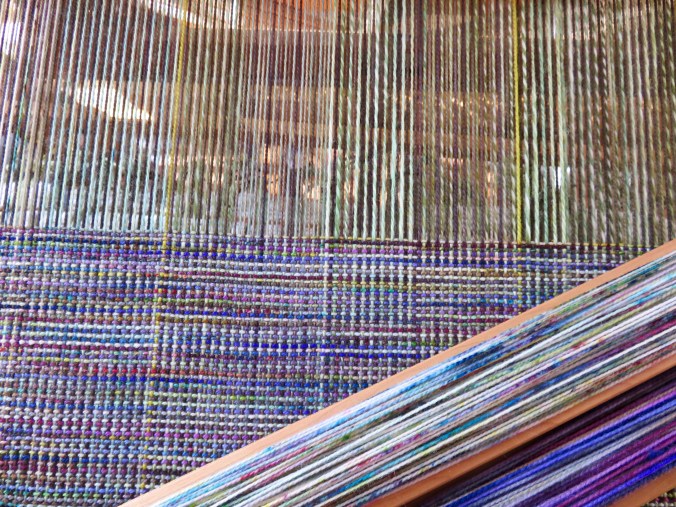
This is a partially threaded warp, just strung through the reed, looking at the back of the reed. The new warp is red and soft violet-and-purples and ashy pinks. All hand-painted or dyed-in-the-wool fingering weight merino. I have begun threading the heddles since I took this photo and might begin weaving tomorrow. The weft will be half handspun and mostly red. Three shawls.

We picked up almost 40 pounds of trash yesterday. We meant to walk a mile north and not begin collecting until we turned for home. But there was too much to ignore and we were overloaded by the time we’d walked a mile.  On the way home we realized we could not even complete our stretch of the shore and left the beach to drag our load on the road. The beach was littered with tiny bits and pieces, but also major chunks of heavy stuff. Usually we find plastic bottle lids, but yesterday there were so many! Many blue and with embossed Japanese characters. Two short lengths of heavy braided rope, poly-styrene foam, and my favorite green plastic twine that I often find in four-inch sections, usually with a knot. There were plastic bottles and a huge hatch lid Gary found late and just in time to use as a sled to drag the junk home. Some trash was stashed and we hope to bring it home today. We will need an extra trash pick-up. Recycling will not take it. No one will take poly–styrene foam in any condition. It is an enduring menace to the environment.

Perhaps it’s understandable that halfway through our walk I held perfectly still when the dog ran up close to me barking. In the past I would have assumed that the wagging tail was counter to the bark. I will not be making assumptions anymore.

Continue reading

LIFE EXPECTANCY

fullsizeoutput_1185

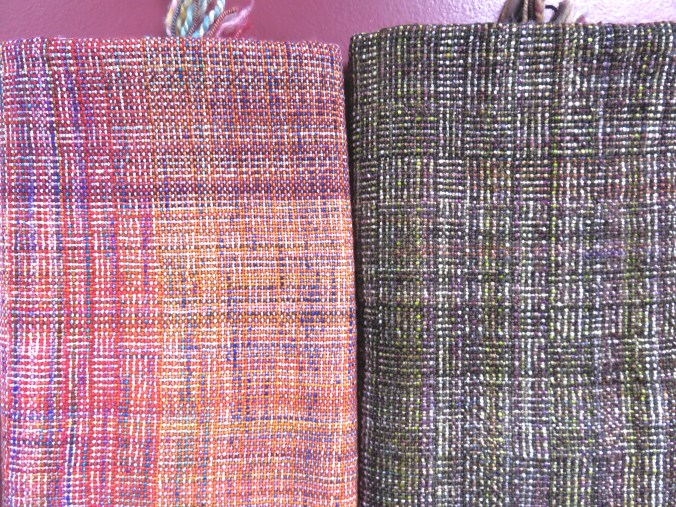
completed last night: The “Shelley” warp with “Storm” (mostly blues) “Water” (mostly greens), and “Wave” (mostly peacock) shawls. Each woven with dozens of Canadian hand-painted merino wool and handspun dyed-in-the-wool yarns, and about 25″ wide by 65″ to 75″ long plus fringes. This is the first warp of the year and two of them will be in the sale this coming December.

People often look at life expectancy statistics and assume that people died at the age of 46 in 1900 because medical care was poor and that people seldom lived past age 46. In fact, anyone reaching the age of 46 in 1900 was probably as likely to reach age 75 or 80 or even 95 as someone is today. Life expectancy is an average, and children more often died of diseases and then-untreatable infections and pneumonia. Families died from eating tainted food or because their water system was poisoning them. People also died at work more often, but that has changed in the last hundred years.

Continue reading

PROGRESS

We each found a piece of sea glass this morning on our walk. “Our work is done,” Gary said. It is a common line between the two of us, a joke, but also reflects our sense that gathering abandoned graham cracker packets and finding pretty things is our excuse for walking.

Recently, while we were gone, the people staying in the house next door lifted two sitting-logs over their fire and then deserted it. It was still smoldering two mornings later and Gary lifted the one end that was still hot and managed to toss it into the sea. People sometimes try to use sand to put out their beach fires, which rarely works and a smoldering fire stinks. I think people simply have an unrealistic idea of how fires burn. A tourist once built a tower of beachwood well over his head. Locals tried to talk him out of it, but he set it alight on a Sunday morning and then was gone home a couple of hours later. He seemed to think it would all go up in a blaze of (his personal) glory and be done. Gary helped put that one out too.

The tourists now staying in the house north of us put out their beach fire—ten barely-burned pieces of firewood!—so Gary didn’t have to this morning.

When we left the other day we had fog rolling in from the sea and it was thicker, unusually thick, the next day when we got home. Though we have back-up baseboard heaters in some rooms, we don’t leave the heat on when we are gone. The house was cold and the power had been out since early morning. Our neighbor said it was supposed to be back on by 1:30, but that didn’t happen. We were grateful for our wood heat as there is no natural gas and power does go out now and again.

The sun came out and a roll of clouds rested out on the horizon, one of my favorite things. It rained on us on our way home from our walk today. Now the world has gone pale gray, ocean and sky, a color I enjoy but not what most people declare as “good weather!” Nevermind.

fullsizeoutput_8f8I am doing well with NaNo, 22k words and over 80 pages as of this morning (about 4k are not new).

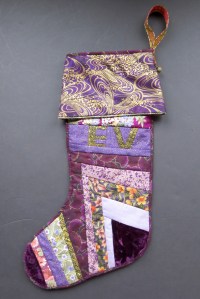
Yesterday I learned my visual art has been accepted for a local gallery show in December 2020. I will be putting on warps all spring. Purple, blue, pink. Green. I expect to have a dozen shawls, three large quilts for sale, and maybe a couple of pieced Christmas stockings.

I have been asked to lead a workshop for Willamette Writers in April. The coming year . . . fullsizeoutput_bed

In the mean time, My most problematic story is still waiting on a response since July 2018, and is short-listed at two other journals. I am resigned  to rejection all around.

THE COLOR PURPLE

IMG_1989 - Version 2

““I think it pisses God off when you walk by the color purple in a field and don’t notice it.”—The Color Purple by Alice Walker

My favorite pair of gloves are purple. They are not quite dark enough because I want the shade to conceal stains. That sounds practical, but I also prefer the shadows, which are not always practical. Just now I have fabrics spread out over the floor again. I am looking at a triad of deep purples and lime-sage greens and brilliant bittersweet, all batik. Waiting all over the floor because I have no wall space. Not practical.

My walls are painted pale tints of plummy gray, but what draws me to purple is the darkness. Purple has a royal association for many people, a sophisticated color. It might remind me of pain. As one example, I have been thrown from horses, kicked and bitten by them. People do die falling from a horse, but for pure suffering during recovery, I cannot recall anything more painful than that perfect purple-dark bruise risen on my shoulder that took a month to begin fading. That is what I think of first when I think of purple.

Violets have volunteered in our front garden. There is mostly only sand from where we removed the deck, the montbrecias coming up everywhere and mowed half down by the rabbits. (The rabbits have become large, and yesterday we watched one eat an entire dandelion—good bunny.) but just at the edge, between the expanse of sand and the hedge. a violet.

Many things that are called purple are not purple at all. Male purple finches have a reddish head. Purple prose is the overblown decorative fluff that gives English teachers a headache. On the other hand, blueberries are more purple than blue. The indigenous blue huckleberries make purple pies. Carrots were originally a purple root—the orange we know today is a sport that became so popular in Europe the original color is an oddity in modern markets. Few would consider purple carrots anything but fantasy. 

The tall flower spikes of Digitalis purpurea, as its name suggests, is usually light purple. When we were young, my girlfriends and I plucked the hollow flowers from foxglove spires as tall as ourselves. They bloomed on the edge of the woods and we slipped a glove onto each finger. We knew the flowers (and the stems, leaves, and roots) are toxic. Digitalis is the medicine my grandfather took for his heart, and too much can kill, but we ran with our purple-gloved fingers fanned before us in games. I always assumed that the foxglove of childhood games and that I saw along my drive to work each June was native. But it is an invasive species, just another European, like most of my ancestors. Maybe this is the source of my complicated love affair with purple.

The Purple Heart is a military medal for physical injury in the field of battle—implying nothing about the actions of the wounded, other than to honor the wound. An award for suffering.

Pretty purple things: amethyst and iolite and tanzanite and the opaque sugilite. The thick petals of orchids can be many colors, but the color “orchid” is violet. I have dyed wool lavender with iris flowers. That iris tint fades in sunlight. It is fragrance as much as hue: violets and lavender, the tuberose, iris, lilac scents. Somehow I associate purple as much with folly as with bloom—the pain bruises.

Yet, as a textile artist, it is the color I reach for, covet, value and strand in weaving. I choose to spice yellows or orange in a composition, to spark pinks or green. It is a hue that wants to shove gray around. And that is probably appropriate since purple has a long association with power. The ancient Tyrian purple dye worn by popes and sovereigns for thousands of years was harvested from the mucous of three species of predatory sea snails, known collectively as Murex. The fluid protects the unhatched eggs of the shellfish and drives off predators. It can be harvested by killing the snail, but also through “milking” the mucous gland of the creature. Rare but stubborn, the color, a clear reddish-violet to my modern eye, withstands fading through wear, light, and washing. The dye was already ancient when Aristotle, who was so right about some principles and so very wrong about so many particulars, detailed its production.

In the mid-nineteenth century, a British chemist invented the first aniline dye, originally called Tyrian purple and then marketed as mauve, a delicate, slightly grayed, reddish-purple. (Mauve pronounced with a long O, not a soft ah sound.) The first chemically created color ever. It is on the edge of being a cool color, found on the color wheel opposite yellow-greens. 

In youth I leaned to warmer colors—orange, vermillion, russet reds, dusty pinks, burgundy, and wine red. My preferences changed over the years and purple moved from a supporting role in accessories to center stage. This shift is reflected not only in what I wear, but in what I want to touch. I wore bellbottoms striped in black, lime, pink, and purple when I was fourteen. I dyed my hair purple when I was sixty, a joke on the old ladies of my childhood who used rinses to counter yellowing that turned their gray hair from murky yellowing gray to distinctly violet. 

Purple is the foil that makes paler, more timid tints dance. Purple is the look-at-me color, associated with power, with royalty, nobility, Lent, Easter, and Mardi Gras, but very rarely named as favorite. Studies suggest that it is a color preferred by artistic folk, more often women than men, older adults rather than younger ones, and that was the character of the room when I took a class taught by Jungians on Art Therapy. 

Sandra Cisneros had to fight conservative design review to paint her San Antonio, Texas Victorian home purple, a periwinkle blue, and pale blue-violet tint by my estimation, but the color proved to be historically accurate. There are painted ladies in San Francisco—not women, but the grand tall Victorian mansions of that city—painted in shades of violet. A favorite house in Seattle is a smokey violet shade I found on a paint chip called “Stetson” with a bright red door in the 70s before that became cliché. Hyacinth macaws are purple, and the queen of England is known to wear tints of that particular blue-violet. It is stitched into the border of a a sari or the facing of an Afghan dress. 

It makes a pattern in concrete sidewalks, city sidewalks built with glass “prisms” faceted to direct light to anyone working in the spaces beneath. Clear glass pavers were made with manganese to clarify the glass, but eventually the iron that once clouded the glass swaps ions with manganese and over years of exposure to sunlight, the clear glass turns purple. There are such sidewalks across the country in Texas and British Columbia, Seattle and New York City. Nearby in Astoria, broken pavers have been replaced. Many have been damaged over the years, but the surviving glass in sidewalks is generally quite purple. 

Violet is on the edge of wavelength in light that humans can see. Shorter X-rays and gamma rays and ultraviolet exist beyond the visible violet, just as microwaves and radio waves lie on the other side of the light spectrum beyond red. The rainbow shows purple inside the sweep to fairy gold. Some gifts seem the work of the supernatural. In The Color Purple, while discussing their view of God, Shug tells Celie she thinks God wants to be loved, “I think it pisses God off when you walk by the color purple in a field and don’t notice it.” We are supposed to appreciate the gift. 

We are supposed to appreciate the gift of that richness and precarious pleasure, the flower that blooms for a day, the shellfish that guards its eggs with purple mucous, the semi-precious gemstone, the pebble in the water, and even the fresh bump on an elbow, the toxic flower that cups a fingertip, the fine line between the violet we can see and the next shade over that is invisible to our eyes. There is beauty, but concealment too, a warning both ways. My purple gloves are meant only to protect my hands from the cold. In sunny weather I require some other protection. It is ultraviolet that burns our skin.
The BLANKET

IMG_2968.jpg

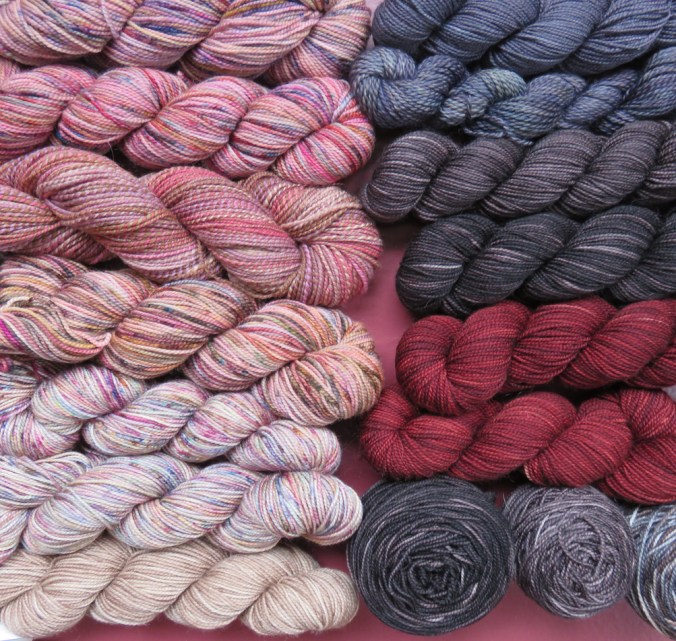
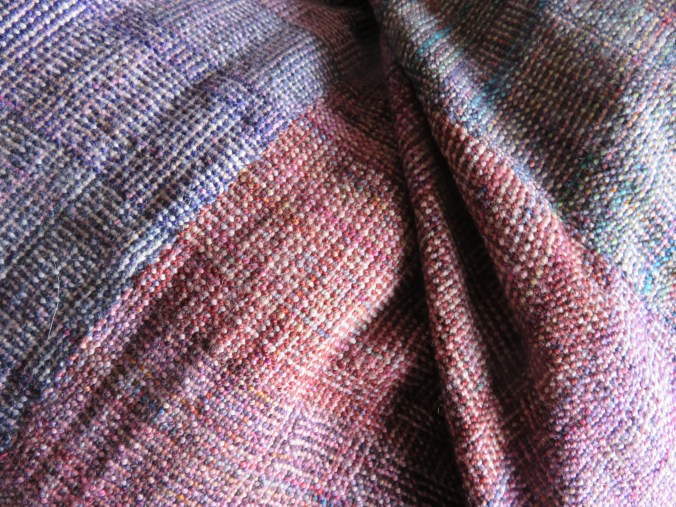
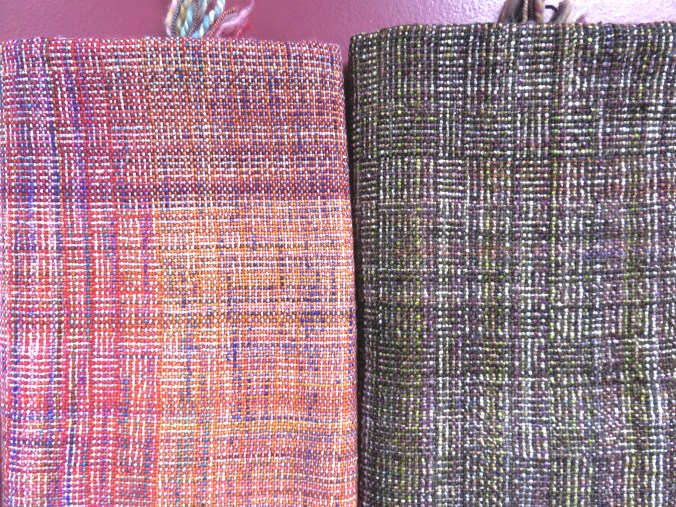
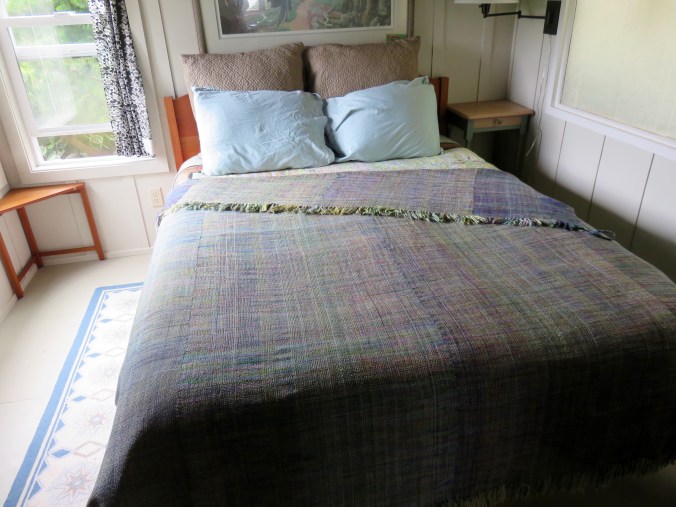
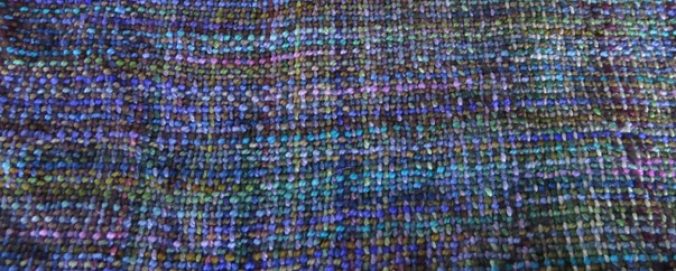
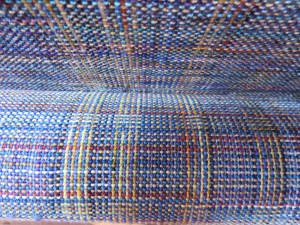
The yarn above is from the blanket I just completed. The warp was 8.5 yards, and I wove three 82.5″  lengths and then seamed them to make a blanket of 75″ x 88″  including fringe. One of the lengths used weft very like the warp and the resulting fabric is warm-toned and reddish. The other two used neutrals, dark blue and purple and green, as well as a scattering of sparky contrasting colors. The neutral weft lengths went on the outside and the reddish one in the center.

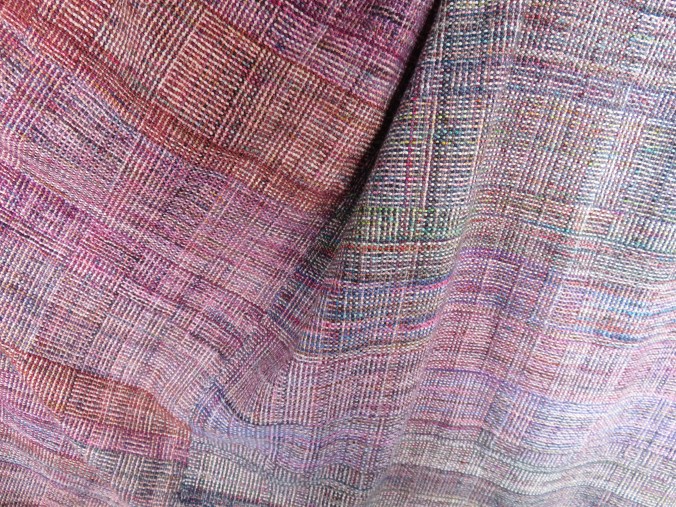
The pattern I wove is called “log cabin”  that is quite different from quilter’s log cabin. Weaver’s log cabin starts with alternating light and dark warp threads; the weft threads also alternate dark and light. You can see how I set darks against lights in the photo at top. The color contrasts reveal a pattern of horizontal and vertical bars. The three strips (each 25″  wide) on the same warp are seamed together in the two photos immediately below.

IMG_3118

IMG_3121

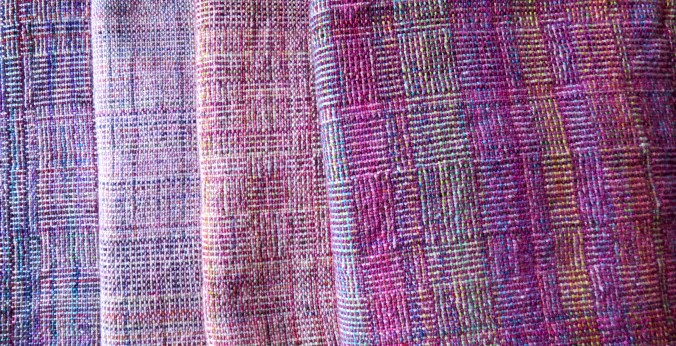
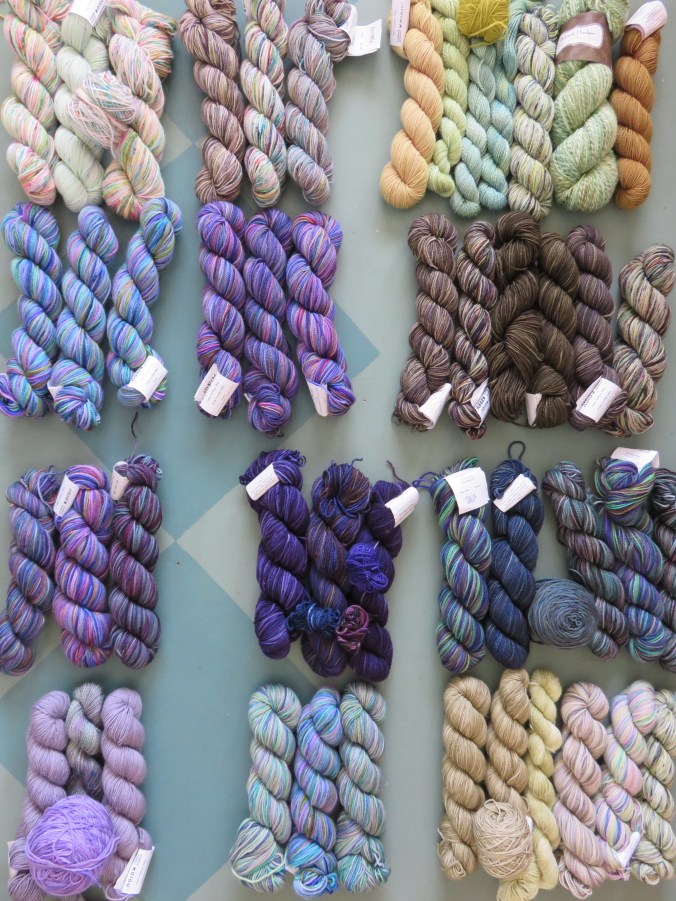
The pattern sounds simple, but I am fond of it. There is a bit more to it than that, of course, but that’s the gist. You can see how the pattern varies in the four woven lengths stacked in the photo below. This is a different warp and shows four different approaches to weft. The one on the left is blue/purple. The one on the right used a handspun yarn in gradually shifting dark hues. There’s a dyed-in-the-wool skein from Washington state, shown up top, third from top on the left. Everything else on this page is woven of Koigu, a Canadian hand-painted merino yarn.

IMG_0778

Years ago, weaving my first project, I played with a classic balanced coverlet pattern called “Snow Ball and Pine Tree to make a weft faced rug of Swedish cow hair. You could say that I took a pattern from one tradition and used it in another. I did that with weavers log cabin, too, stitching a quilt in alternating vertical and horizontal bars. One creative effort feeds another.

Some days feel abandoned, wasted and lost.

Other days feed the soul. A friend just became a grandmother, and I sent her a baby blanket for the little boy, the one at left below.

IMG_3117

Some days pass without incident or accomplishment. Some days there is kindness in the air.

WEAVING


IMG_2695

I won the July Make-It-Koigu! (Mine was the only entry.) Above are the skeins I laid out as I was figuring out the warp below. All but one handspun skein is Koigu.

IMG_2698

The final blanket was woven in four strips on two warps.

IMG_3075

IN BETWEEN

IMG_0278

When I am not teaching and when I want a break from writing, or I am feeling wounded and drained (it happens), I weave. Sometimes I quilt.

I have a friend who sells a lot of work urging me to join a group, open an Easy account, or in some way make some money from my work.

It’s not going to happen. I give weaving to friends and charities. I make baby blankets for expectant parents. I give them to friends. New Mexico children’s illustrator and YA author Betsy James, Russian sculptor Marina Globova, and Oregon novelist Molly Gloss have my shawls/scarves. (See below.) I don’t have a photo, but professor of animal scientist Temple Grandin has one draped on the back of her couch in Colorado. My shawls live on shoulders in Alberta and Washington and California. Each one gifted.

I put on warps and choose weft colors specifically to suit what I understand about their preferences.

I make a quilt and knit a blanket for each grandchild at birth. I make another when they turn two. When they go to college, I will make them each another. I try to use their favorite colors, though children change their minds. A sweater begun in July may no longer appear by the time it’s finished in October.

In the mean time, I weave.

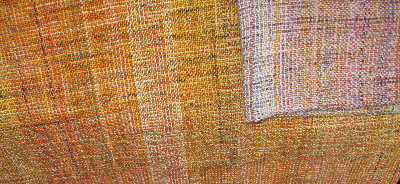
Tomorrow, I will begin my first warp of the year. I am thinking red and browns this time. There was a saffron warp a few years ago and I still haven’t found a home for two very special pieces. There was the “Peacock” warp and one for Ruby and seasonal warps where the weft varied to take me through Spring, Summer, Autumn, and Winter. Each warp yield two or three or even four pieces. I like color, but sometimes the more subtle combinations appeal. Each piece is meant to be distinct.

saffron_warp IMG_0778

cropped-img_0404.jpg

I will begin pulling skeins and winding tomorrow.