‘DO THE MATH’

THE MARTIAN (2015) is one of my favorite movies. Even though it’s romantic nonsense, even though, even though I barely care about a space program, even though Matt Damon. As I write, it’s playing on Netflix, and at this moment I am playing hooky from cutting and sewing my quilt border in order to focus on the ending. Every time his character Mark Watney follows the science, every time he goes to the numbers, I want to cheer and laugh. That determination to find a solution in listing what he has available to work with, to calculate how long till this or that runs out, and every time he recognizes an opportunity, my heart sings. Mark Watney, Space Pirate. “Everywhere I go, I’m the first.”

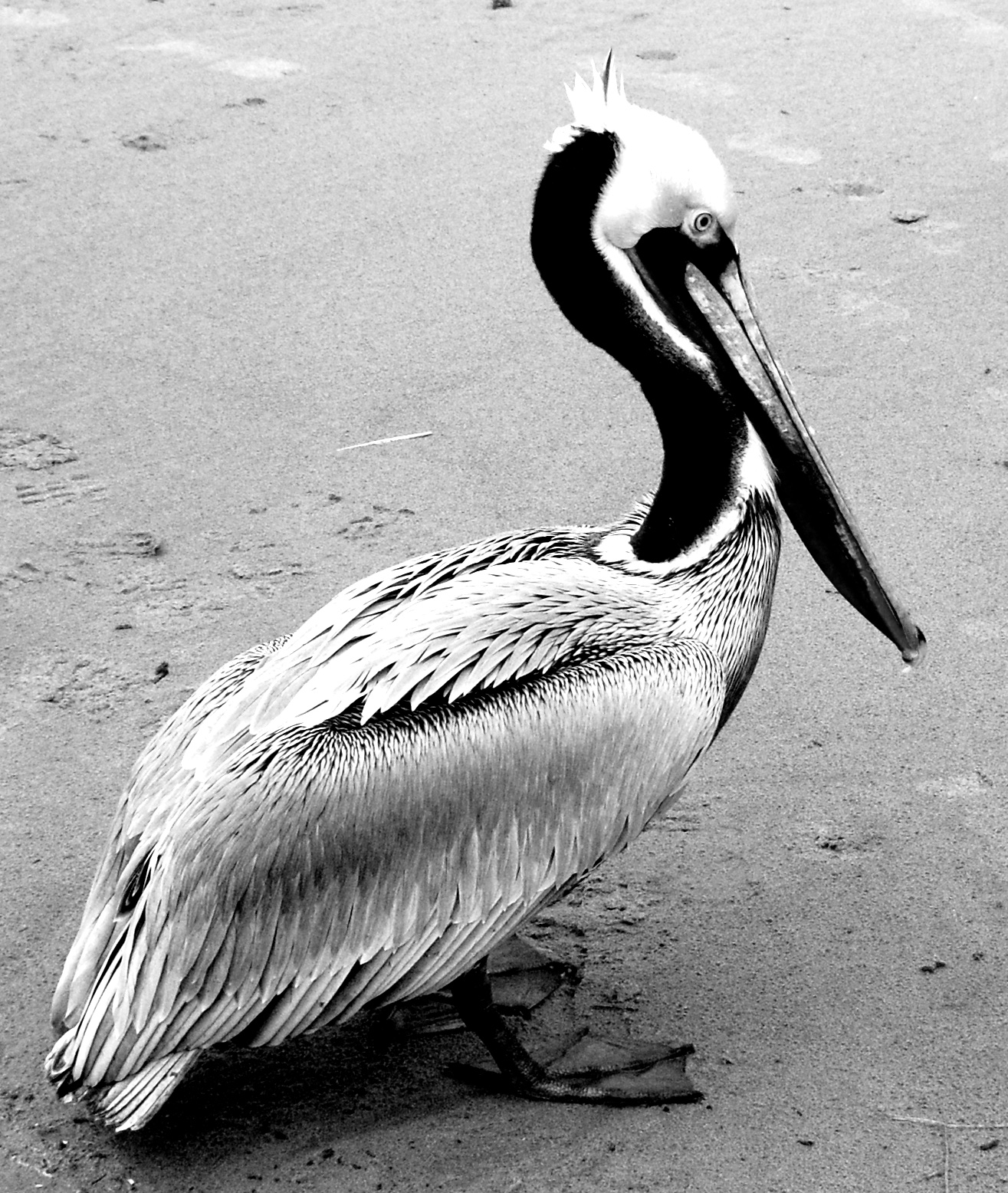
They are always bright and silvery, brighter than shows in this photo, even though “the little silver fish” are dead when we find them on the sand. Maybe this is a tiny bit of a missed pelican meal. There were still six pelicans fishing offshore that day.
Continue reading

CATCHING UP

A lot. My injured foot is still a problem. No publisher for my novel. We’ve canceled an anniversary vacation. A neighbor is not doing well. And I am assured by a former student that, “There is hope in this world, ya know. And it’s okay to get depressed; it just means you’re paying attention. And while anyone is still paying attention, there is still hope for everyone who is not.” Walking, submission, altruism, A Christmas Carol, righteousness, and hope. The ocean of my business.

A couple of weeks ago on a trial 1-mile walk that went well.
Continue reading

GOOD NEWS

Our granddaughter had her second heart surgery this morning. It went well. Minimally invasive and she may go home this afternoon. Incredible.

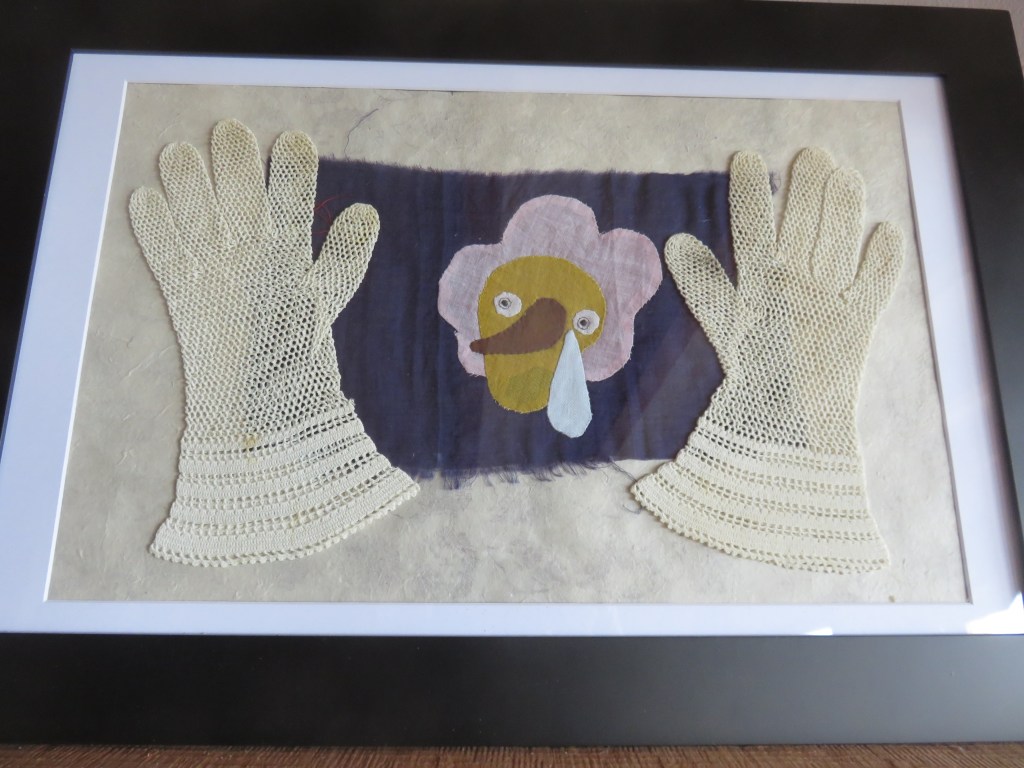
This photo shows a trapezoid, but is in a rectangular frame I already had, photographed at an angle to avoid most of the glare on the glass. The crying bird appliqué is by a friend who is living in exile and missing her home, but still making art. I’d lost track of Marina for a few weeks after she left Etsy, and then I discovered her posting on Behance and was able to get in contact and send her a card with a pieced leaf. She sent me a card in return that included this incredible hand-stitched linen piece. The crocheted cotton gloves on each side were my grandmother’s. Ladies used to wear gloves in public places. I am old enough to remember my mother putting on a hat and gloves to go shopping downtown.

There’s more goodness…

Continue reading

SHE IS NINE & FINE

Only invasive flies die in her story.

Three months ago a nine year old girl, a Fourth Grader wearing pink glasses and named Bobbie Wilson was collecting Spotted Lanternflies. She’d learned about the dangerous-to-trees invasive species and how important it was to stomp them out. That’s what she was doing on the sidewalk where she’d lived since she was a baby: stomping on huge flies. The man who lived across the street watched her out his window and became frightened. He called the police to report her.

“There’s a little Black woman walking, spraying stuff on the sidewalks and trees on Elizabeth and Florence,” Lawshe told the dispatcher, according to a call obtained by CNN.

“I don’t know what the hell she’s doing. Scares me, though,” Lawshe added.

NPR, 3 February 2023
I feel certain that there is more brownish beer bottle glass on the beach than any other color, but we don’t often find it. Beer bottles are thin and their color is harder to spot, easily mistaken for rock, wood, or other debris. Old glass is thick. That big green piece is exceptional and probably from the base of a bottle.

Want to guess the race of the two people in this news story?

Continue reading

WHY I READ [science] FICTION

Finally getting cell phones (yes, two, one for each of us) and putting together a simple Ikea bookcase on the same day was probably not a good idea. We took long naps, each had two drinks, and went to bed early. I did not read or work on my novel. This morning I ran two miles. Then I attended a Board meeting that lasted nearly three hours. I will not be reading much today either beyond budgets and emails.

Over the course of a year, I generally read fifty to seventy books. I have always read a wide range of books going all the way back to grade school when I was mostly reading books with horses, but also How to Raise and Train everything from goats to hamsters, Winnie the Pooh, a biography of George Washington Carver, and even struggled through Huston Smith’s World Religions. These days I read nonfiction, poetry, memoir, history, and fiction. All sorts. There are a few books I have read over and over when I was teaching them, and several I reread for pleasure. One of those is Dreamsnake.

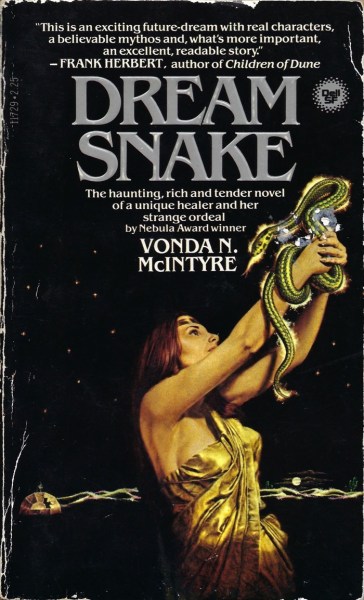
The author photo and novel cover used in The New York Times obituary for Vonda N. McIntyre. This highly fanciful cover was on my first paperback. The first edition hardcover has a better image. SF covers are often unrepresentative of the book.
Continue reading

POSSIBLE

iu

The novelette “Of Mist and Grass and Sand” was expanded into the novel, Dreamsnake (1978), winning the 1979 Hugo Award, the 1978 Nebula Award, and the 1979 Locus Award. This is the cover of the copy I first read and not representative of the story at all.

In addition to classes called “What If” about speculative fiction and “Utopia and Dream” about idealistic societies both real and imagined, I taught genre fiction to my sophomores and juniors. Science fiction, fantasy, mystery . . . I found short story examples and we read and discussed the expected tropes and the real-life satisfactions, explorations, and potentials of each.


One story I enjoyed teaching was “Of Mist and Grass and Sand” by Vonda N. McIntyre, which I first read in editor Pamela Sargent’s collection, Women of Wonder (1975). Continue reading

about BUTTERFLY FONTANELLE

“Butterfly Fontanelle” was the title of a short story I began writing more than three years ago. The fontanelle is the soft spot in the top on a baby’s skull where the bone has not yet quite closed over the brain. A “butterfly fontanelle” is the shape of such a soft spot, like two paired wings. Human babies, like most all mammals, are born before they are mature. A newborn cobra can already bite and kill you. Mammals may be able to stand but most are still becoming. For example, most people know a puppy’s eyes remain closed for a couple of weeks after birth, but her ears are sealed shut too. A puppy cannot learn until she is about three weeks old. Human babies . . . must gain sight and depth perception. Infants are becoming human.

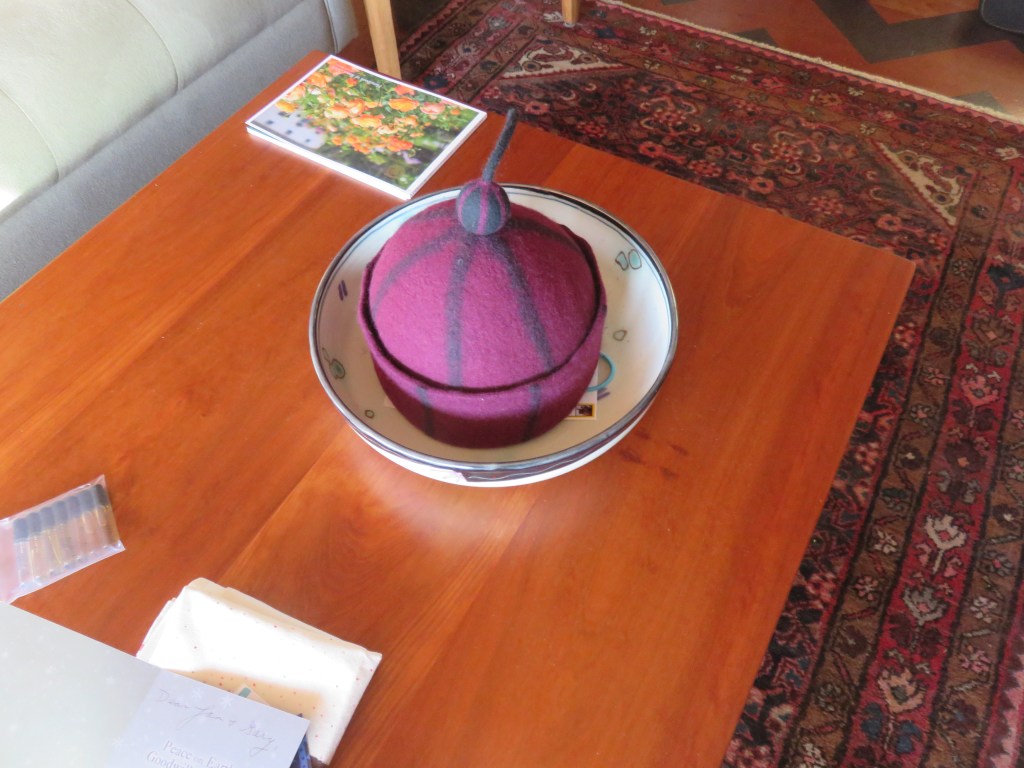
But first, because this has been a hard week, I want to share a publication on the Brevity blog: “Art Saves Lives” I am wearing my felted Acme hat, handmade on the east slope of the Olympic Mountains.

Continue reading

A BETTER WORLD

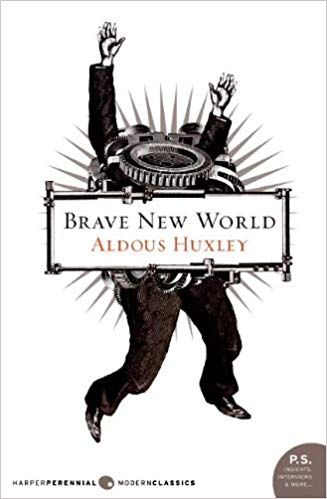
41l+4UobkRL._SX325_BO1,204,203,200_.jpgDystopias extrapolate the fears of the day while utopias project our dearest hopes and ideals.

Science fiction writers from the Golden Age of post-WW2, for example, often address the disastrous impact of the potential for nuclear powers to obliterate the planet. They were concerned about global and intergalactic peace and the trade-off in freedom resulting in a governing body with so much power. They recognized how population pressure and a shift toward manufacturing with machine rather than human power might dehumanize our future.

Huxley missed all that.

Brave New World was written at a time when the world economy was in the midst of a Great Depression and there was concern about finding the minimal 1000 calories necessary to maintain human life. Huxley addressed the need to stimulate the economy, reinforce social class and bigotry concerning gender, sexual orientation, race, and language. In a world rapidly opening to new ideas, Huxley maintains the status quo.   

Most languages are defunct, which is nice for the UK when English remains the lingua franca, but most languages from Polish to Spanish and French are so far extinct as to be gone from general consciousness. Women (always referred to as “girls”) exist as nothing more than inferior beings necessary for procreation. Sex. It is a white and male future. Casual lines about “negroes” within the first pages had my hackles up. There is ample evidence that he actually failed to notice that some of what he presents in his nightmare future, was already a nightmare. What Huxley knew was the rigid class system (which he then codifies here into biological law) and the need to regulate markets via absolute control of both production and consumption.

It is satire, with a lively and smug tone that reports in dizzying detail about a society that is irrational and repressive. Perhaps most societies are, but this is not a warning but arrogant. Not to mention how much he gets wrong.

What does he get wrong? Basics of biology, psychology, technology, communication, education, gender, race, nationalism, and the future importance of the British Empire. As one example, exhaustive detail about artificially breeding and rearing children is ridiculous. From specifics of harvesting eggs to programing children to be fearful of flowers, none of it is plausible. His story advances hundreds of years into the future, without considering how unimportant physical human labor is to society—a shifting paradigm evident in his day. He should have seen that coming.

What else does he miss? Dangers of post-WW2 pesticides and poisons, nuclear energy, wars, global warming, population pressure. These are the threats on which most science fiction of the 20th and 21st centuries focus. It is fair to note that Huxley could not have foreseen that the “War to End All Wars” was only the beginning, that military might would overtake social controls as a threat to world peace, that toxins such as DDT would create havoc on the natural environment, that global warming would alter climate and coastlines and food sources, that all these changes and the threat of nuclear war and a world population four times larger than the one he knew would threaten human existence.

Even Huxley recognized within a decade or so that his options of “Utopia or Savagery”/insanity or idiocy are inadequate, and he belatedly offers a third option, also inadequate.

Abuse of power is central to any dystopia, but Huxley’s book is hopelessly inaccurate in terms of science and fails to predict specific concerns nearly everyone in the world worries about today. His cheeky voice and sex-driven plot (in a future where the very word “father” is vulgar) may appeal to some. He can’t be faulted for most of his mistaken assumptions about the future, but the rampant nationalism, sexism, and racism in the novel do beg the question: Why is anyone still assigning this novel to high school students?

And I know the answer, surely I must. But still.

Utopias are harder. We do not accept them as a possibility. With a unique human determination to find fault, we grasp at the dystopia as representative of everything that might go wrong. But perfection? Oh, no, we cannot imagine that.
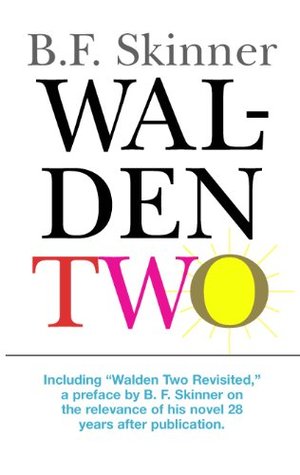
9636460.jpgAnd then most utopian novels I have read are no better at creating perfection than Huxley was at predicting disaster. Walden is utopia, but somewhat false as nonfiction since Thoreau did not actually live the life he writes about. The novel Walden Two, by behaviorist B.F. Skinner, on the other hand, does a a more honesty job by not pretending to be true.

“We are only just beginning to understand the power of love because we are just beginning to understand the weakness of force and aggression.”—Walden Two

B.F. Skinner asks if you knew how to manipulate people into living in an ideal society, wouldn’t you do it? We are all products of our experiences and responses to societal conditioning. Wouldn’t it be best if we deliberately created a society that conditioned us to live harmoniously and happily?

If readers are looking for a conventional novel, there is a plot here, a beginning and middle and end. But that story is mostly beside the point.

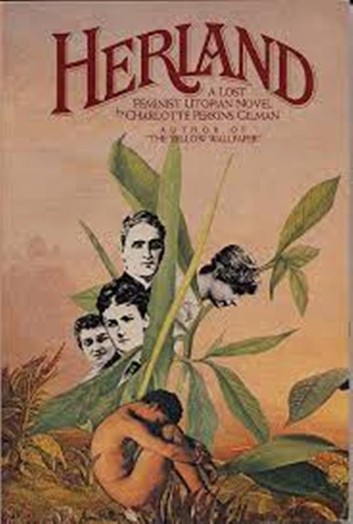
The story is a thought experiment first conceived immediately after WW2. Here an academic psychologist Burris visits another psychologist, Frazier, taking with him a pair of veterans, their “girls,” and a philosopher Castle, also an academic. The structure of visitors observing and interacting with members of a utopian community has been used many times. Herland by Charlotte Perkins Gilman (1907) is an earlier example. The visitors argue against the workability of a society that clearly is working just fine.
herland-14.jpgIn 1970, my first term at the University of Washington, I took a psychology class taught by a recent retiree from the US Navy. The man was a behaviorist, of course, and had spent 20 years training porpoise to commit acts of war. I worked hard in that class, harder than was typical for an intro class. I read the novel and wrote a paper about Walden Two. Mostly what I remembered was the clever way work was set up in this imagined utopia. Everyone had to do at least a little manual labor, but all work was chosen. Payment was in credits and each member of the community had to earn 4 credits per day. Some jobs such as cleaning out sewers earned more than a credit/hour. Some, such as working in a flower garden, earned less than one credit/hour. “Payment” was adjusted if more or fewer workers were needed than takers. I loved that system.

I also recall that the founder, Frazier, was not liked much but was tolerated in his utopia, and was actually not very good at following his own utopian guidelines.

There was a great deal I did not recall after all this time, and mostly that is because Skinner got so much wrong. Like Huxley, he even got the science wrong. He is wrong to remove children from one-on-one care by parents. He is wrong in the way he describes “teaching” young children to withstand frustration, and ironically he is wrong to underestimate the impact of “delayed gratification” as a necessary skill for adolescents and teenagers. I would have recognized some of this at the time since I was aware that group-raising infants in the USSR had proven unsuccessful. Promoting childbearing by age 15 or 16 is not “much better” than waiting to have children when the body is mature. Child-bearing is not something to be got out of the way while still a child. And since Skinner is squeamish about religion and extra-marital sex, he fails to address the issues that come with promoting marriage among very young teenagers.

“In a cooperative society there’s no jealousy because there’s no need for jealousy.”

He insists there are no laws in Walden Two, yet there is a Code and violating the Code has consequences. That is law. His Managers and other officials are not government because government is irrelevant unless it is local. Citizens of Walden Two are told how to vote in local elections.

“The majority of people don’t want to plan,” the novel’s protagonist insists. “They want to be free of the responsibility of planning. What they ask for is merely some assurance that they will be decently provided for. The rest is a day-to-day enjoyment of life. That’s the explanation for your Father Divines; people naturally flock to anyone they can trust for the necessities of life… They are the backbone of a community—solid, trust-worthy, essential.”

Skinner argues hard for his scientific approach and claims that his invented society is egalitarian about race and gender. What he refers to as “Girls” and women are supposed to be on an even footing, yet we have mostly all men everywhere in charge in this novel. There is a cheerful woman dentist. All the childcare givers are women, though he insists men help too. All the characters seem to be white, and all the girls are pretty—this is actually remarked upon early. Men are “caught” by women—an out-of-date notion about marriage. (“The man chases the woman until she catches him.”) The character Castle is said to be a strong debater, but he is a peevish straw man opponent here, often failing to make his point in arguing with Frazier. Frazier himself is set up as a failure to his own cause, which is probably the most compelling and realistic detail.

There is a great deal to argue with in the specifics of this imagined utopia. I might wish he knew more about biology and anthropology, especially the latter. I am sorry he demeans history repeatedly as mere “entertainment”, while freely referencing [Western European white] history to make his case. He is actively hostile to every other scientific field. That last is particularly unfortunate.

Yet I am still intrigued by his underlying question about a perfectible society, by his approach to labor, and his emphasis on cooperation rather than competition. He might have made a stronger case had he focused less on specifics such as his tea carrier and more on how humans have cooperated for millennia, for all time. He failed to see the population bomb coming and his setting this confrontation in an agrarian society during summer is a sort of naïve cheat that repeats in many discussions and debates between characters. Remove the favoritism of parents and their poor knowledge of scientific method, remove competition, use behavioral principles and there will be no envy or jealousy? Snap! Problem solved. (I can hear the whining from here.) I found myself repeatedly thinking that Skinner’s daughter was fortunate that it was her mother who was the primary caregiver.

I still contend that Skinner’s task was more difficult than Huxley’s, and neither accomplished it very well.

“In the summer of 1945, B. F. Skinner wrote The Sun Is But a Morning Star, a utopian novel he published in 1948 as Walden Two (Skinner, 1948). An impetus for the book arose over the course of a dinner conversation in the spring of 1945 with a friend whose son-in-law was stationed in the South Pacific as World War II was coming to an end. Skinner mused about what young people would do when the war was over. “What a shame,” he said, “that they would abandon their crusading spirit and come back only to fall into the old lockstep American life—getting a job, marrying, renting an apartment, making a down payment on a car, having a child or two” (Skinner, 1979, p. 292).
. . .
“Skinner’s utopian vision, then, was not about any of Walden Two’s practices, except one: experimentation. His vision was to search for and discover practices that maximized social justice and human well-being. This was Skinner’s unique contribution to the utopian genre; it distinguishes Walden Two from all the others. As he later exhorted, “Regard no practice as immutable. Change and be ready to change again. Accept no eternal verity. Experiment” (Skinner, 1979, p. 346).—B. F. “Skinner’s Utopian Vision: Behind and Beyond Walden Two” by Deborah E Altus and Edward K Morris

And then there is Ursula K. Le Guin’s classic short story, “The Ones Who Walk Away from Omelas.” She knows we find it hard to believe in perfection—how certain we are that someone else must pay for our pleasure.

MY WRITING LIFE

IMG_2766

I began writing fiction in 1990 when I was hired to teach English at Seaside High School. I believed myself wholly unqualified to teach English (and others have agreed), but I had taught art in an elite prep school for three years, picked up a Social Studies endorsement through exam, and substituted in the Seaside District for eleven years. I had 20 undergraduate English credits. I had never considered teaching English. Nevertheless, the Chair of the English Department at that time knew me well as a substitute teacher and argued that I was better read than she was and urged me to apply.

My hiring was contingent upon gaining a certification in English. I took another test and began taking graduate classes that summer. In the fall, I was teaching English. Among my advantages were an excellent public school education and substantial experience as an essayist.

My first novel was written over the summer of 1995, working with a student who also wrote a (better) novel. Both were read my the editor of a major publishing house. My student’s manuscript received the better response.

My second novel, Clean Away, was written from multiple points of view, nine women representing several generations of a family over many decades. Certain experiences seem to repeat themselves through the generations. I began that in 1999 and it was funny.

My third novel, A Single Fact written in 2002, was the very rough draft I later rewrote in 2017. The main character of this novel is a teenager who is having a rotten senior year and afraid the only thing worse than high school might be that nothing better will come next. The title story was published by CALYX in 2006 as “A Single Fact Can Spoil a Good Argument.”

All this time I was working 60-80 hours a week teaching English and advising the yearbook. When I crawled out from under the yearbook in 2002, I found I could not slow down. I wrote more.

In 2007, while completing my MFA, I compiled Blonde Indian, later retitled Living in Snake Land. These linked stories about a poor white boy are set in 1961 in Phoenix, Arizona. That novel-in-stories is number four.

In 2007 I completed an MFA in fiction from Pacific University. Three of my dearest friends came to my graduation—two of them from Seattle. It was a great day, and Gary preserved that for me by not telling my that my mom had been back in the hospital until all my obligations in defending my thesis, a public reading and craft talk, were complete. She died a week later.

I dropped 40 pounds in the next few months. I stopped writing. I struggled to regain optimism, to regain my stride, whatever that might be.

Revision happens in people’s lives, too. I retired from teaching full time in 2015 after nearly 40 years of teaching art and English in private and public high schools. I think I am, I was good at my job. My greatest joy is hearing from former students who discover I taught them something useful. I think most of us hope to be useful.

In November of 2016, I  took the 4k short story, “The Promised Hour,” that I wrote to apply for my MFA and wrote from there. I had rewritten that story dozens of times (literally) and submitted it dozens of times but it couldn’t find a home. I hoped that maybe what it needed was to become a novel. National Novel Writing Month (NaNoWriMo) offered me an opportunity to race through a much longer version of that story.

Since then, I revised the novel going-on eight times. I originally hoped for 60k but did better than that, ending the month with over 75,000 words. By it’s 8th draft, it was retitled Escape My Heart of Sorrows. By the eleventh draft it had seen several new names, the best of which was suggested by a former student who got it from her husband, Painting Over. I am working on draft 14 now and still dithering about the title. Maybe Everybody’s Mother Dies. This is novel number five and it is not finished.

My work has earned many awards including an Oregon Literary Arts Fellowship, Arts & Letters fellowship, Soapstone residency, Pushcart nomination, and publication in the Brevity blog (several times), The MacGuffin, CALYX, Work Magazine, Raven Chronicles, Ink Filled Page, The Humanist, North American Review, and anthologies about running and race. There is a list of all my publications, or most of them, under “Publications” on this site. There are links to all the works available online.

I thought my second NaNo year in 2017 was time for something completely different, stories or fantasy, but I changed my mind at the last minute. Instead of a new piece, I returned to an earlier effort, the novel from 2002. I altered verb tense, added and changed characters, and introduced the crime I originally intended to provide more tension. So those were the differences. A familiar first person voice but an entirely new book. I hoped to complete 80k and I got 75k. I was okay with that, but since then I have completely lost track of that novel and begun working in a new direction.

Last year I surprised myself by writing a fantasy story, “If It Were True Owls Dream,” which will be published in August in Liminal Stories. (When that goes live, I will provide a link.)

In April 2018, I wrote 15k of a science fiction novelette. Writing science fiction is new for me though I have been a fan for many years. In the fall I intend to add 50k to an existing short manuscript. But I might be still busy rewriting novel number five, the one that began as “The Promised Hour”:

The way back from loss may seem unimaginable, but people do it all the time. Thena Justice was building a new life near Seattle after the death of her mother and breakup of a terrible marriage when her former husband murders the babysitter and their daughter before committing suicide. Lost in grief and guilt, Thena first hides in a friend’s converted garage, then in a tiny cottage on the Pacific coast, thrashing her way through anguish, apathy, anger, and routine. Instead of returning to Puget Sound, she moves to Portland, Oregon, the city where she was born, takes the bus to a retail job each day, and keeps her head down until a child crying in the night wakens her sense of agency and hope.

It sounds a sad book, I know, but it is all about survival, about hope. My interest is in how we regain an active role after a calamity and that is the focus of this story. Would you read it?

For several years I blogged at Quiet Minds, which is now renamed and active here on WordPress as Imperfect Patience. I send work out. I am still teaching college writing in Winter and Spring Term, at least I hope I am.

I walk the beach. I weave. I write. I am mostly retired, but I am not done.


SaveSave

BIRD STORIES

CSC_0322

In the last week: band-tailed pigeons and Eurasian doves, Steller’s jays and a single scrub jay, robins and goldfinches, red-wing blackbirds, song sparrows, hummingbirds, crows and ravens, bald eagles, red-tailed hawk, black oystercatchers, gulls, whimbrels, Canada geese and brown pelicans, and a mixed flock of semi-palmated plovers and dunlins (this latter with distinct dark bellies—I wish I’d had my camera). Gary calls the black birds with bright eyes “cowbirds”, but I wonder if they are the same as a bird called a Brewer’s blackbird? They are new in our neighborhood.

The other day I watched three pairs of Canada geese herding 15 goslings across tidal flats fifteen miles south of my home. One pair had 8 babies, one pair had 4, and one pair had 3, and the tender care of both parents was genuinely touching. I was at the dentist having my teeth cleaned, but everyone stopped what they were doing to admire the three families.

There is a story there.

At least twenty years ago, my writing partner Rebecca Olson noted that my stories always had birds in them. I had not noticed. It is my husband who loves birds. As a result, I think about birds more than I would otherwise.

That impulse to focus on birds has resulted in stories. I imagined children falling asleep and becoming owls; then the owls fall asleep and slip back into being children. My story “If It Were True Owls Dream” was accepted for publication by Liminal Stories and will be available online in July. The first day I sent it out was to Shimmer and the editor E. Catherine Tobler rejected it but urged me to send it to Liminal. I owe her for that excellent advice.

Most recently, I began a science fiction story wherein I imagined all the birds in the world dying. I originally meant it to be a short story, but the early draft grew longer and longer and more and more complex. I have drafts that are nearly 20,000 words long. This fell into three parts, one in the near future, one hundreds of years later, and a third part even further into the future. Then I worked just on the first section, which was also the longest at nearly 10k. A friend urged me to cut most of it, which I did.

I had the idea of the vanished birds, but also other ideas about veganism and overpopulation. Then it became a story of about 6,000 words that began working as a story. It was not done, of course. Not in four drafts or ten, since I have only been working on it for a few months, but still. It is science fiction and it is about birds . . . and mostly about life on Earth.

I carved back that shorter story and carved back some more. It is less than five thousand words now and maybe it works. Probably it lags in the middle because my stories often lag in the middle, and there is not enough action—there is never enough plot in my stories.

There are usually birds.

I want another story, and I have one, but it is not quite figured out. “On Cherry Street” is about a young woman returning to the house where her mother died. She is very much aware that crows are watching. Birds again. I still don’t know what it is trying to be. Is it a horror story? I’ve not explored horror. Is it magic realism? This story is about four thousand words and I am not even sure what it is about.

Back to thinking. Back to visualizing.

When I create a story, as when I create anything, I need a solid visual. This is true when I am piecing a quilt or, just recently, designing a program cover for an event. Most often what I am creating must be complete in my mind before I actually make it. Even the weaving where I deliberately provoke randomness and choose yarns that vary in color, I have a vision. When I was painting, I would spend far more time imagining what I wanted to create than actually painting it. The stories are harder as I build them up and tear them back down on the page.

Creative work is like that. How and what we create must be first born in the imagination. Only when that vision has grown can the work be realized for others to see. Sometimes the ideas come home to roost.

There is always the danger they will simply fly away.