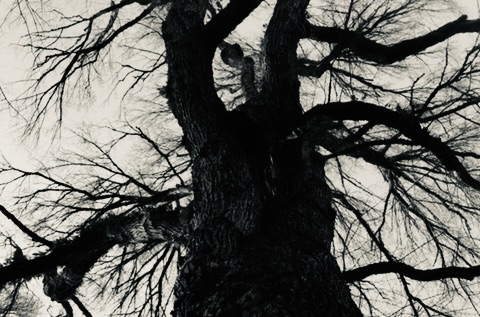
A favorite Heritage Tree in Portland, shown in winter. It began dying a few years ago. It’s gone, but a sapling thrives in its place.
A favorite Heritage Tree in Portland, shown in winter. It began dying a few years ago. It’s gone, but a sapling thrives in its place.
Six months ago, Gary and I stopped drinking altogether. Gary tells people who ask that he stopped because I asked him to as a birthday present. Okay. Maybe. It saves money, spares us hangovers, and mostly preserves our minds. We would deal with the pile of diapers, the alcove deep in gin bottles, and the damage—the work cleaning up the mess in our rental ADU had only just begun. For years, Gary talked to our longtime tenant most every day, sometimes for an hour or more. He’d been afraid the man would kill someone or at least himself driving drunk. Fortunately, he survived. We finished the repairs and improvements right at the beginning of last month.
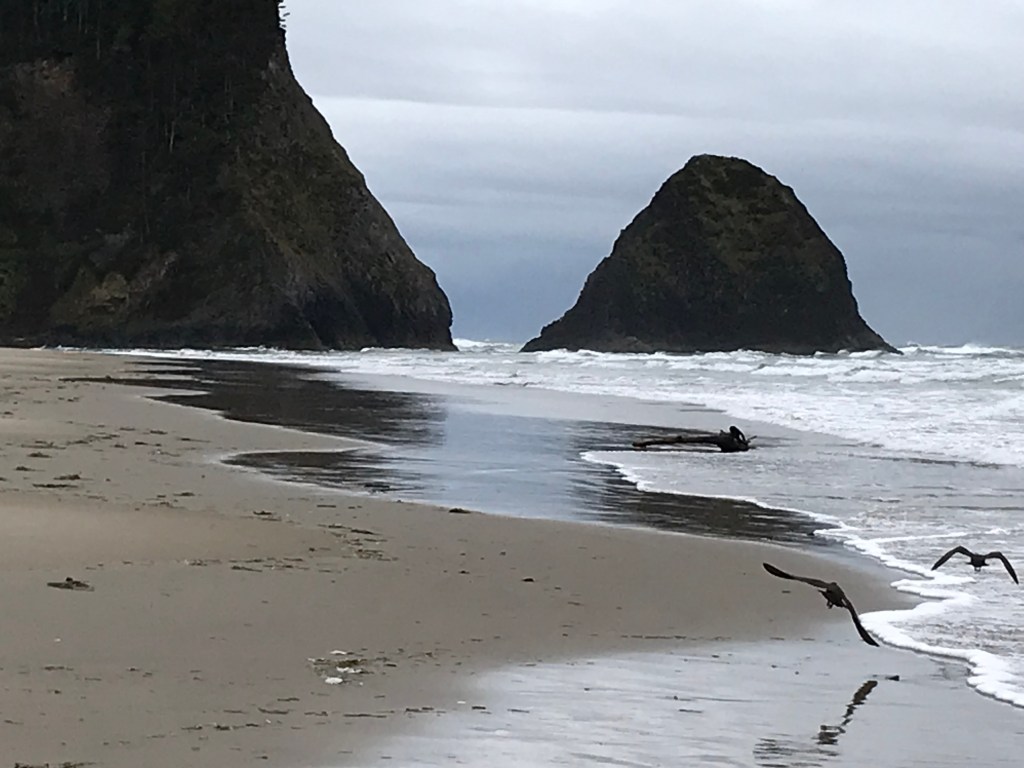
Yesterday, we disagreed about how far to walk before heading out for the day. I said four miles, Gary lobbied for two. We were a few hundred yards out when the hail began. If we’d waited ten or fifteen minutes, we wouldn’t have been wet by the time we scampered home!
I’m running a mile every other day now. Not easily, but I’m making quicker progress than I had any right to hope for. I started with a challenging half mile on the April Fool’s Day—yes, a joke on myself and also the anniversary of my first run decades ago. I’m starting from scratch—no condition at all. Last year, I injured my feet doing very long planks, and then again while on my hands and knees working on that rental. Gary pruned (butchered) the escalonia in order to give the new tenants a broader and clear view of the ocean. Apparently, they don’t look west and hadn’t noticed. sigh I’ve been walking daily but had been injured out for most of a year. At my age, “coming back” is not a given.
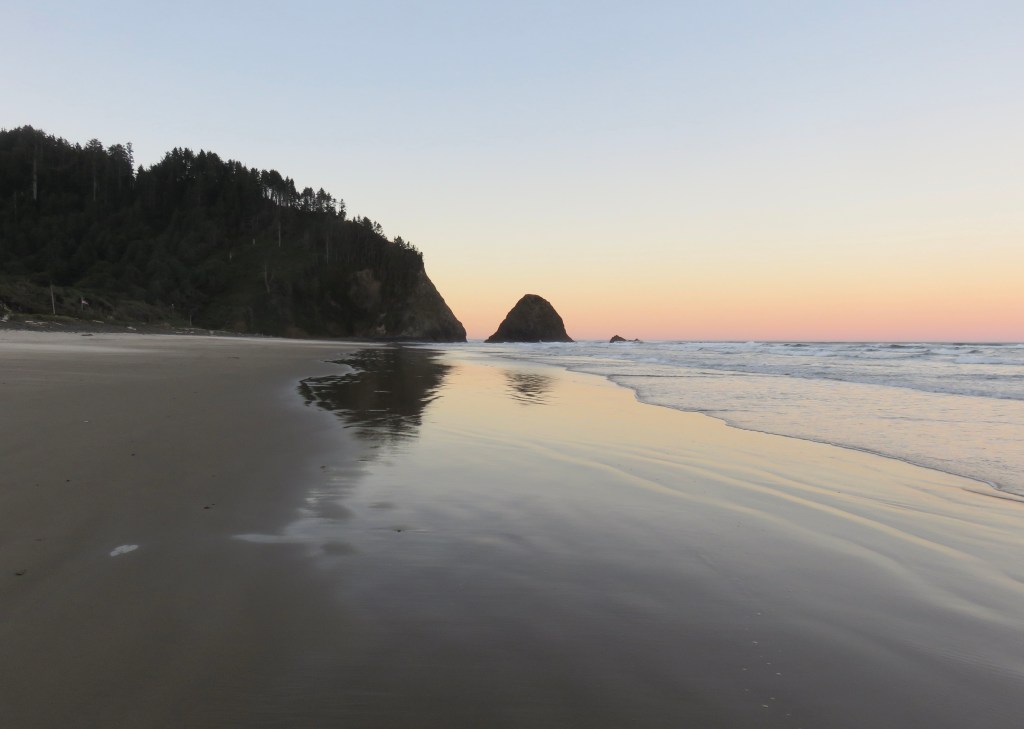
The other morning there was only the gale wind and a little rain. Tuesday, there was a “dust devil” in the sand just up shore from where we walked. We walked about four miles, all the way to the waterfall just south of Hug Point. The rain started right then and poured all the way home, right into our face with a full gale. A dead owl, we think, lay in the tideline, head naked, short and dark hooked beak, dark flight feathers well over 12″ long, barred tail. By the time we got home, we were soaked and cold, had oatmeal for breakfast, curry for dinner, and went to bed early. But this morning I managed my planned 1-mile run. Best I can tell, I’m managing miles in under 12 minutes, which is not bad considering everything. My realistic goal is a 5k run by August. My “secret hope” is to do the Bridge Crossing in October again. That’s a 10k, 6.2 miles, and usually bad weather, but I’ve done it several times. At least Gary I expect to do the Zoo walk/run in Portland on Thanksgiving—that ranges from a 5k to 6k, with no warning in advance of distance—and we can walk as much of it as we choose. I ran it last fall.
In the mean time, Gary is playing his guitar as I began writing this post on Wednesday morning. That alone could make me cry. It’s been too long, his fingers sore and cracked, but he rested after our soaking walk, and maybe he’s back. He’s taken each one out and tuned it, played a bit. He says his guitars are “not in bad shape. I don’t see any bad things.”
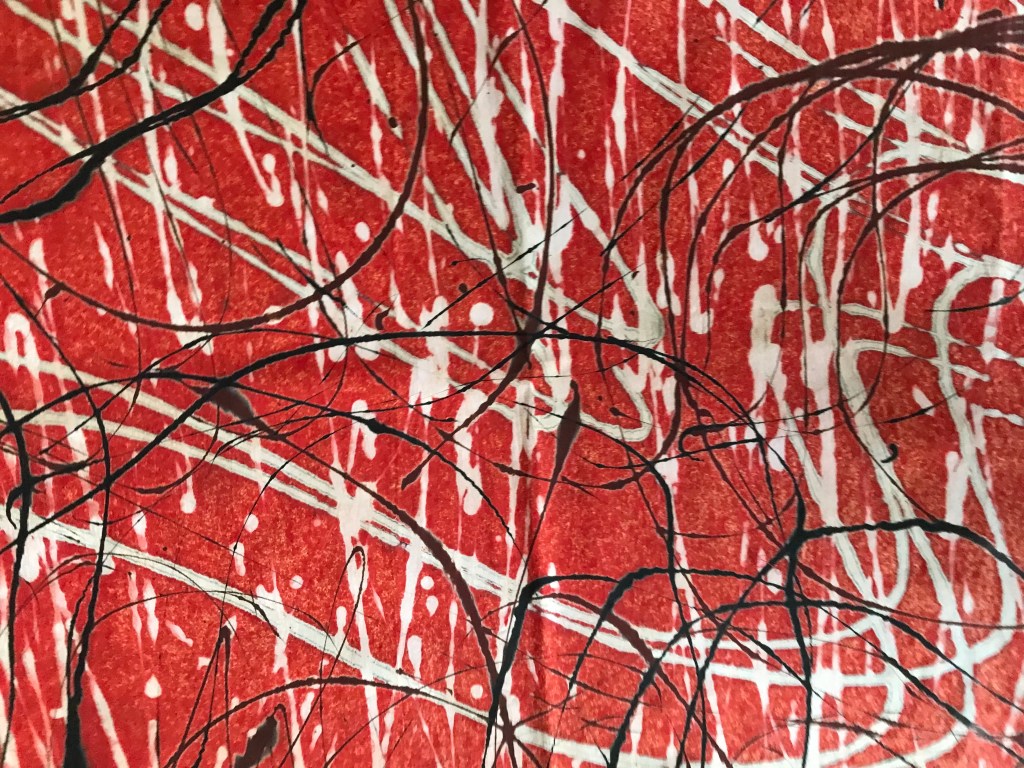
The focal fabric of my next quilt, “Otherland II”. This is a hand-dyed “batik” and I’ve studied on it for a couple of decades, maybe, trying to decide how to cut it. It’s just so gorgeous on its own. Last month, I thought I’d cut triangles—a design I’ll save—because this will zigzag.
.
It’s a rare fabric, not stenciled or printed, but with both color and resist hand applied—spaced and dripped—and similar in process to the fabric in the quilt top waiting for quilting in my closet. I hope to be able to have this new quilt and the earlier “Otherland I”, below, machine quilted this summer.
In other news, I have chosen a press for self-publishing my novel. No money for it at the moment since it all went on repairs, but in the fall, perhaps. I am thinking of my birthday in October. A friend has given me notes on my ghost story, so there’s that to work on.
The sun is peaking through.

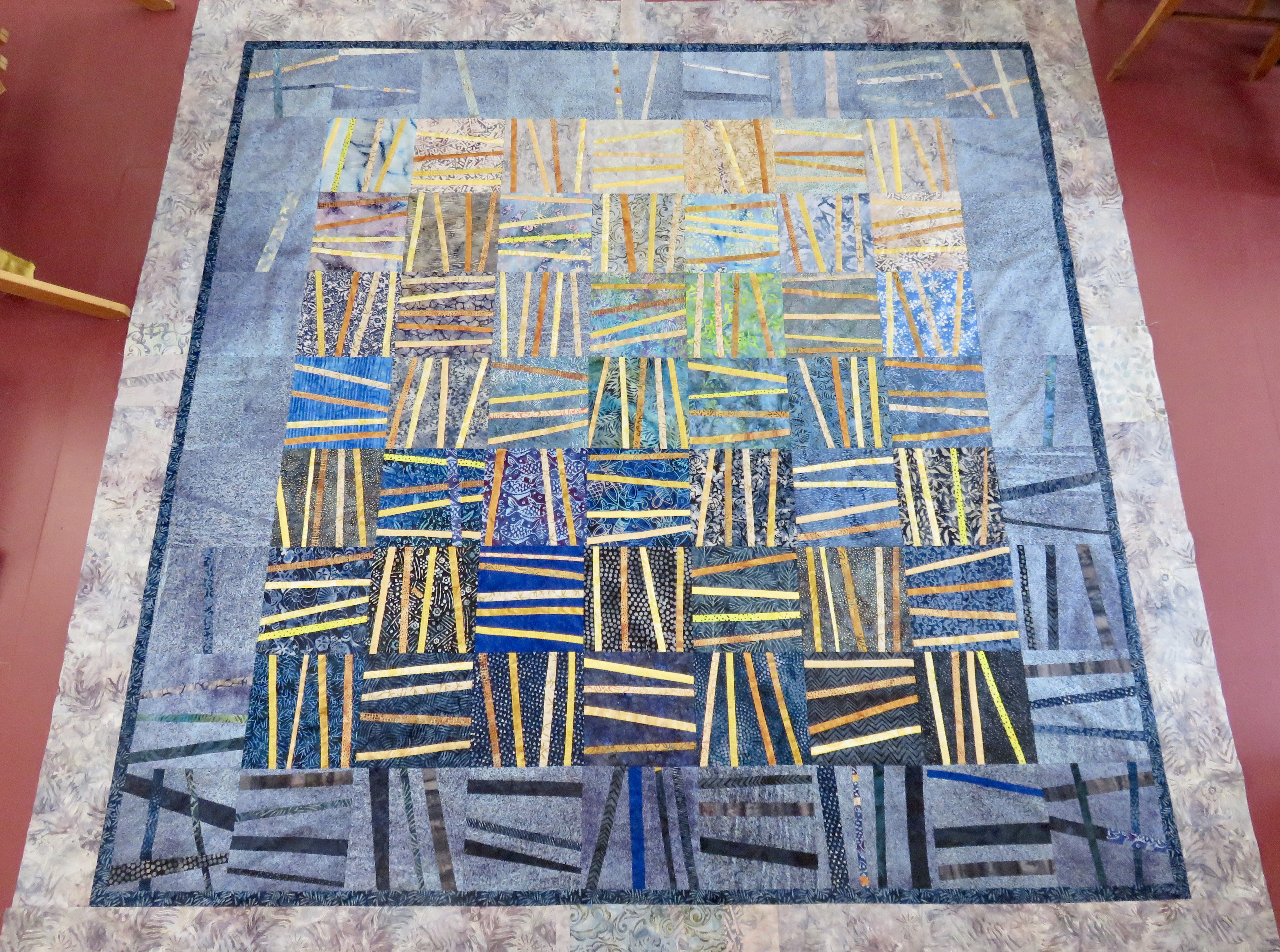
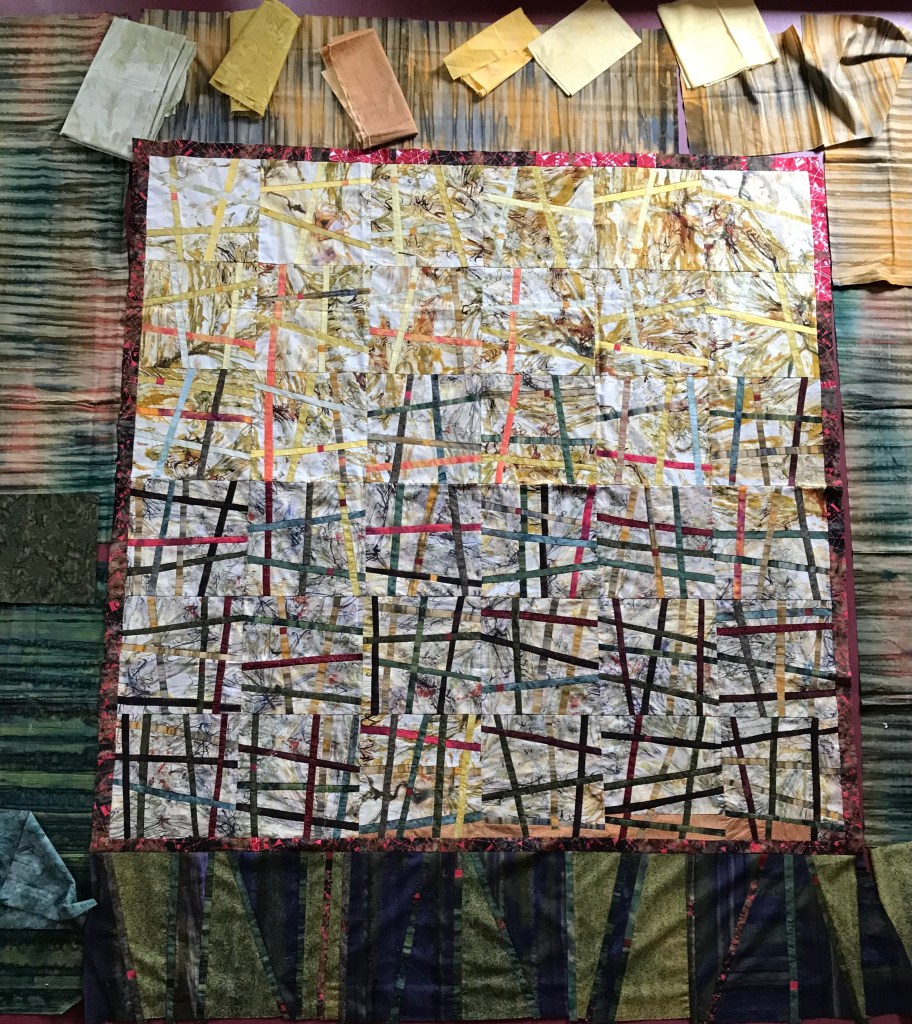
BlueToo, the second blue-and-yellow quilt top. In life, it is an 84″ square, not a trapezoid.
I completed two quilt tops this month, and pieced the back of one of them too. To be perfectly honest, I have completed two quilts at once before. But this was especially fun. I could, in the simplest form, sew two lengths of cloth together to make a front and do the same for the back, adding an additional strip because the backing must be larger than the front to accommodate the machine quilter. In real life, it’s not so simple.
The theoretical simplest quilt would require at least ten or eleven yards of 44″ fabric. And in the old days when quilts were created to use up scraps of fabric (a practice not actually as common as the mythology suggests), a quilter would gather bits of fabrics for years from making shirts and dresses, wool pants and skirts. In practice, many quilts were made with specially purchased fabric or fabric dyed for use in piecing a quilt. All quilts result in ever smaller scraps. I have a small mound of blue-and-yellow scraps and thread trimmings from my work this month.
I make quilts from ordinary fabric and still hand-quilt such quilts on occasion because I really do like the look and the control. Most of my quilts these days are made of Asian batik fabric which is hand-dyed and boiled making a tight, smooth cloth that is not easily pinned, much less hand quilted. I took a hand-quilted batik quilt in to show a friend who owns a quilt shop. (“You hand-quilted this?” she said. “Didn’t your fingers bleed?” Well, yes, as a matter of fact they did. I could only work for a short time each day until my fingers were too bloody to go one without staining the fabric.) She’s the one who urged me to find a machine quilter. “No one hand-quilts batik.”
I made a small quilt for my mother from Liberty cotton lawn. I made quilts for each on my sons when they turned two and when they went off to college and when they married. My grandchildren have each received three so far.
Each of these quilts incorporate dozens of fabrics, a few thousand yards of thread, and often have pieced backings. The two shown here, except for the backing on one and a third of the backing for the other, were made entirely from fabrics I have collected in what textile people would call my “stash.” I have, let us say, several large plastic bins (and several smaller ones) filled with fabrics to use in quilting. These cottons are mostly purchased in quarter-yard pieces (about 9″ x 44″) and some of them are over forty years old. The newest are a few months old.
I made my first pieced quilt when I was pregnant with Alan, my first-born son. That was thirty-nine years ago. I took the bus to Spokane to visit a friend and she took me to a quilt shop where I bought small pieces of red on white and white on red prints of conventional cotton. The quilt I made was a double nine-patch. I backed it with one of my grandmother’s pilfered hospital sheets. Over the years since, I made an Ocean Waves and a Snail quilt. I have made variations on log cabin several times. Mostly, though, I make them up. I think through not only the appearance, but the construction of the piece—what must be done first and how.
All this planning is not the result of an orderly and methodical personality. I am what is called an Abstract/Random. I am inclined to mess and disorder and risk.
I had to learn how to be linear and meticulous instead of lazy and meandering because the things I wanted to make demanded those processes that from me. I draw thumbnails. I make lists. I stare and stare and lie awake at night figuring things out.
There is a skinny line in the quilt above, the dark blue between the grayish outside border the bluer inside panel. That narrow piece is called a “frame.” I am fond of frames in my quilts, but this one was not supposed to have one. When I realized it needed that narrow dark blue frame, I felt a kind of despair, just for an instant. I was not sure the backing I had would be large enough to add two more inches both ways. Otherwise I would have to dig through my stash to find enough fabric to enlarge the already-huge backing for my already outsize pieced top. I laid the backing out on the bare floor and measured. Fortunately it was plenty big, though out of square and longer on one side than the other from the way it was cut from the bolt (not my fault, that).
Most of my quilts run around 80″ square or a bit larger. I meant to make a pink quilt for a twin bed once and it turned into a 90″ square. Things just got out of hand. Making a special size is another whole struggle for me. I made one for a king-size bed that was a nightmare. The size (106″ square) was more than I could manage and I swore I would never do it again. I would do it differently now but smaller pieces would be nice for a change. Doll quilts are fun. A hanging would be fine but I do not have space to hang anything. But smaller, perhaps. I could try out ideas without committing eleven yards. Or I might be ready for the plastic bin with silks.
I have been collecting silks the way dress-makers did in the nineteenth century: an entire bolt of 14″ wide kimono silk, scraps salvaged from saris and other projects. I have a couple of yards of orange silk velvet, pink charmeuse, crepe with red apples on green. Bits and pieces. They would all be interesting to piece and quilt. Slippery and shedding but precious and variable in texture. It is the shifts in texture that attract me. I once pieced fabric for a jacket—all sorts of textures including corduroy—in long narrow strips. I wish I’d kept a piece of that. The textures are what I want, in addition to the play of color and value. Something quite different. Soon.
I cast on a knitting project last night and completed a couple of rows in a fancy pattern—unlike me in knitting. I like to think I can start something new because the quilts are done.
But first, these pieces go for machine quilting and when they return in a couple of months, I will still need to bind them. So . . . not really done. Close.
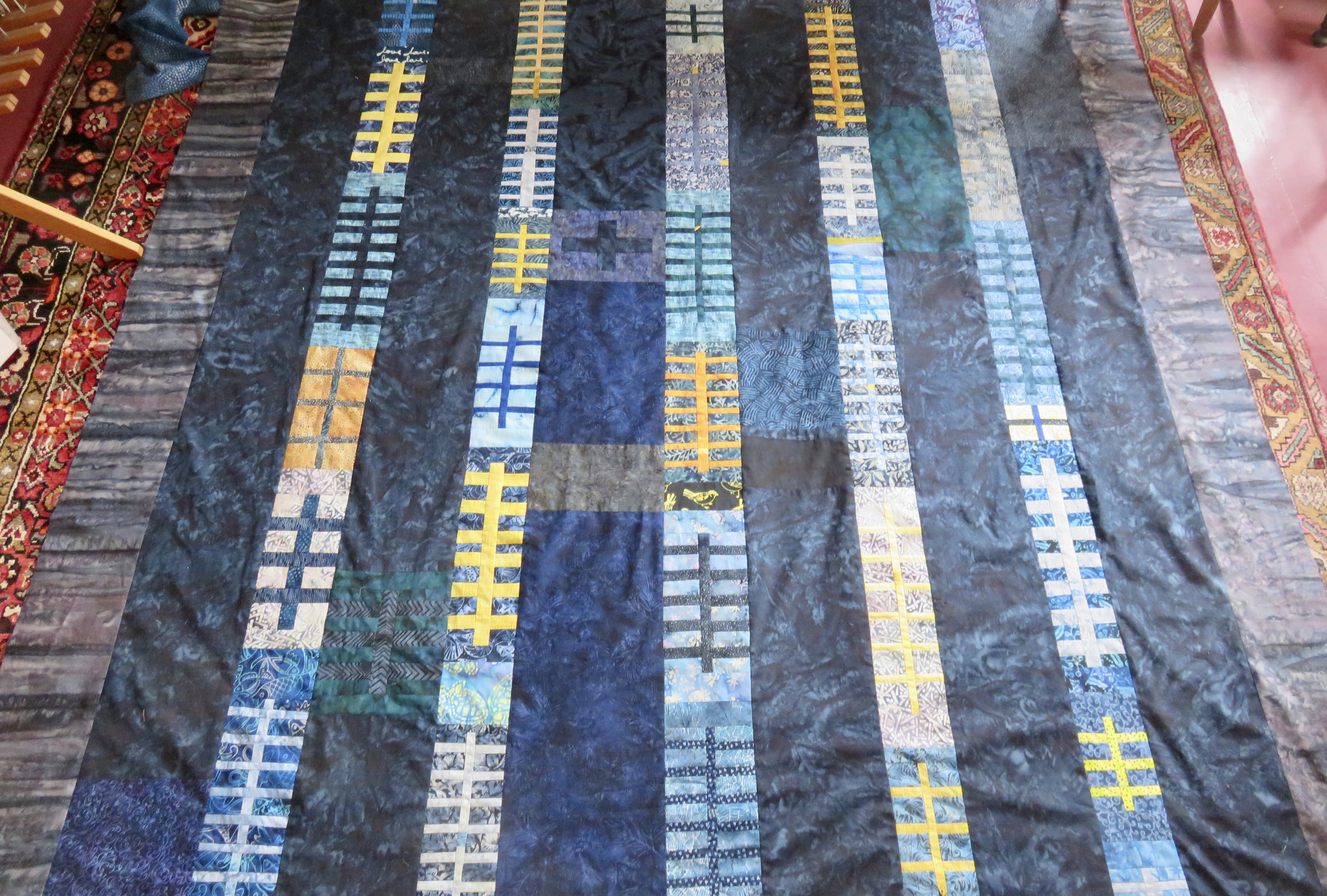
This is Blue Ladders, the quilt I originally set out to make this summer. I will negotiate with Linda Pinkstaff from Astoria Quilting about thread color tomorrow. Her advice is always good. I feel the need for a fancy quilting pattern here. We’ll see what Linda says.

[CLICK TITLE TO READ MORE] I made my youngest grandchild a birthday cake for her party today. She is two years old. I also made a 2-year-old quilt, something I also did for each of her cousins. Pink is her favorite color. For now.

EV’s quilt, completely pieced but before it was quilted.
The quilt is cotton with a cotton filling and a pieced backing that is partially pink with metallic gold dots. The cake is yellow, some of it tinted pink from the addition of black Oregon huckleberries. I made lemon curd and raspberry jam for the fillings, and a huge batch of blackberry buttercream for the frosting. It is the most incredible pink. I knew this trick with blackberry juice in buttercream from a previous series of cake made to please my oldest grandchild, who turned six last fall. Fresh organic raspberries. Organic everything, because we do not like to take chances with toxins.
Two cake batches, blackberry syrup to flavor and color the double batch of buttercream, and lemon curd. I completely thrashed the kitchen. Powdered sugar everywhere. Crumbs. Gary was cleaning my mess for me as I began typing this.
Gary is good to do this cleaning, but he reminds me that I was in the kitchen all day. He had a hard day himself. We had to make a correction to our taxes, he cleaned the walkway and trimmed shrubs on the north side of the house, and his brother called to complain and then hung up on him. This brother is afraid of all sorts of things that might not worry me in the slightest. That’s because he is mentally ill and unable to step away from himself long enough to think about others. Others are always dangerous to his mind.
Years ago I heard the poet Naomi Shihab Nye say that even as a child she felt this strange homesickness for a place she’d never been. She realized that what she missed was the place where poetry resides. At least, that is what I remember her saying.
Another poet, the marvelous Tracy Smith, recently discussed the terrible hunger she sees for literature: “I have this belief that we are so vulnerable when we open ourselves up to literature. We’re reminded of these real parts of ourselves.” Perhaps it is that willingness to be vulnerable, that we pursue. It is some vestige of glory in our souls—not paychecks or adoring crowds or battlefields, but something more like what e’re inclined to term humanity.
Some see vulnerability as weakness, when it is actually strength. To be open and accepting requires that we have the strength to remain standing under the weight of chance, of betrayal and error. Not everyone can manage that.
The alternative is continual anger and fear. No one is wise while continually angry and fearful.
Ursula K. Le Guin writes: “All old people are nostalgic for certain things they knew that are gone, but I live in the past very little. So why am I feeling like an exile?” No time to lose—yes, that’s it exactly.
I willingly call myself old and I am grateful to Le Guin for reinforcing my sense that aging is inevitable, but has its perks. I will die, but I have lived long enough to know what might be missed if I fail to pay attention.
The past is not my usual space to dwell, though I fret over lost friends and family. I fret over misunderstandings concerning recent history and that my students do not know the parts of speech or how to construct a formal outline. I am nostalgic for my own excellent education. More often, I look ahead to what I might still accomplish. Most often I am here and now, figuring out my life one step forward at a time.
I have thought about my place in time often over the years. Just now, reading Le Guin’s last book, I am thinking a good deal about what I might do with whatever time I have left. I might have as many years as Ursula. She was younger than I am now when I first met her, and her lifespan suggests I might still be living and writing sensibly into my 80s. I hope during this time to find the poetry in myself.
More of us might seek that strength that risks communion, that loves and forgives, that locates the heart of our hearts. I think, at least, that I might have time to do that, to continue looking forward. To open myself. To hear. And to give voice without fear.
And pink cakes.
 IMPERFECT PATIENCE