PERFECT GIRLS

I watched a TED talk that insists women could be better. They should be more like men. We’re raising our girls to be perfect, and we’re raising our boys to be brave, says Reshma Saujani, the founder of Girls Who Code. Girls need to be more like boys, she suggests. They need to take more risks and demand jobs they are unqualified for. It works for the boys.
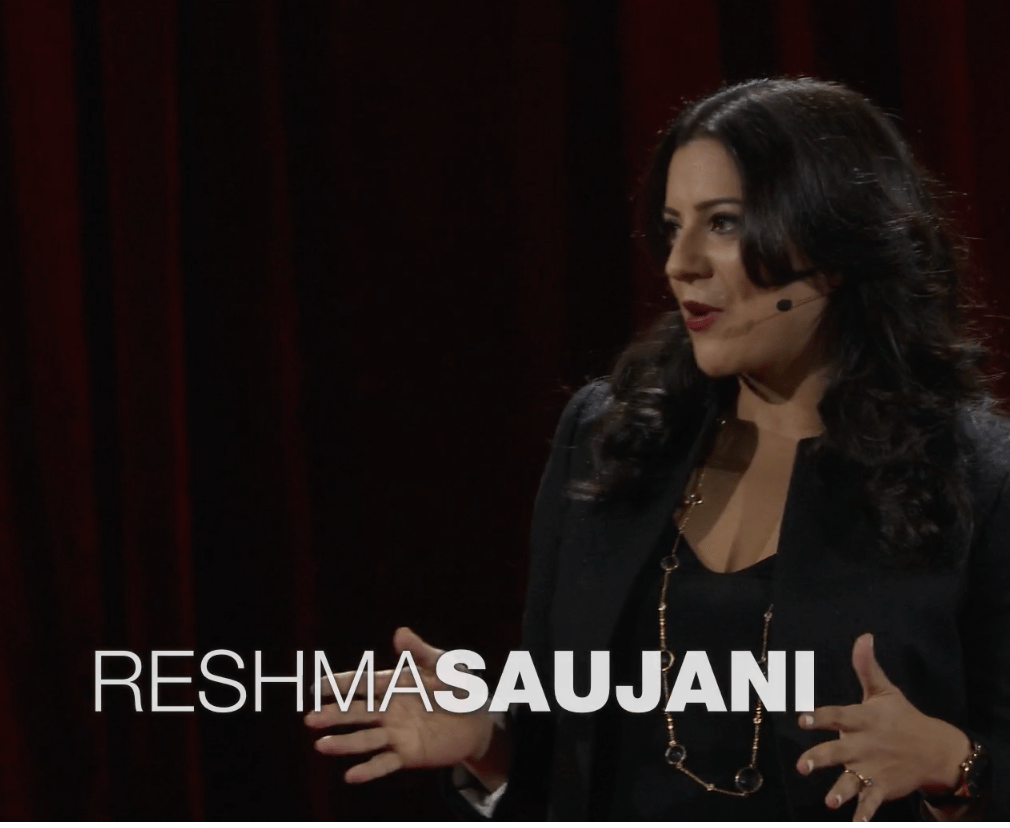
I appreciate Ms. Saujani for urging girls to be brave, for encouraging women to enter STEM fields. Too right. That should happen.

It’s a worthy goal to identify what holds girls and women back and to offer encouragement. Surely we underestimate the potential of girls and women in our culture. We actively stifle their potential. We should identify changes in their behavior and in our system that hold them back.

But. I am also tired of people urging women to behave more like men at their worst. Saujani describes how, in an experiment, 5th grade girls, especially the smarter ones, give up on “an assignment that was too hard for them.” I’d argue it’s a waste of time struggling against something they can’t do, an assignment specifically designed to be impossible for them. Recognizing that might even be termed smart because that’s not “giving up,” that’s sensible. Just as it’s possible to be persistent without being foolish, it’s possible to be sensible without being a coward.

Continue reading
A SENSE OF HUMOR

iu-1.jpeg

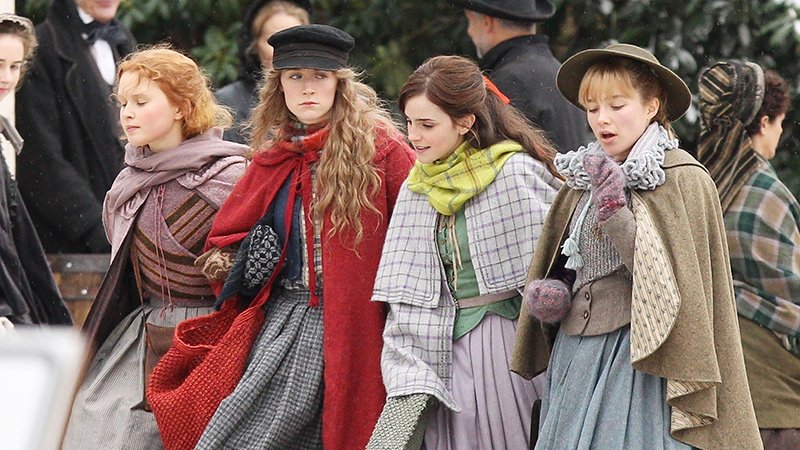
Monica Hesse in the Washington Post has a tongue-in-cheek article about men she’s talked to who are afraid to see Little Women alone: “The Little Women Men feel slightly nervous about going to see the movie without a female chaperone, for the same reason that some men have told me they are nervous about attending a yoga class solo, or assisting a lost toddler in the supermarket: because our society still — still! — gets confused by men displaying traits of nurturing or sentimentality, and these kindly men don’t want to creep anyone out.” I laughed.  Continue reading

FAIR PLAY/FAIR PAY

Photo_51_x-ray_diffraction_image.jpg

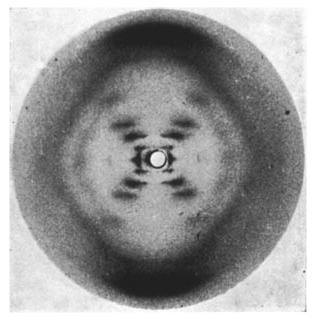
Photo 51, showing x-ray diffraction pattern of DNA. Photo 51 is the nickname given to an X-ray diffraction image of crystallized DNA taken under the supervision of chemist Dr. Rosalind Franklin. It was critical evidence in identifying the structure of DNA. Dr. Franklin was not credited for this work by two men who later won the Nobel.—Wikipedia

“Our science can only benefit the whole of society if it’s done by the whole of society. And that’s not currently the case.

—Dr. Jessica Wade, a British physicist who has added 670 profiles of women and people of color in the sciences to Wikipedia since 2017

Women and people of color are underrepresented throughout Wikipedia, which is an issue Wade and others hope to repair. Dr. Franklin is there, but for many years her pioneering work, and especially her contributions to the discovery the the double-helix in DNA, was not properly acknowledged.

As a girl in the 50s and 60s, I was fortunate to be aware that women had made scientific contributions.

My father cited a UK researcher who had published as a young woman, then later under her husbands’ names, and how he wished she’d stuck with a professional name so that her work was not scattered all over his library.


I learned two lessons from that brief story: women are scientists and a public name need not indicate a private identity. I used to tell that story when students asked me why my last name was not the same as my husband. (On a good day, I could cite eight or nine reasons I kept my name.)